

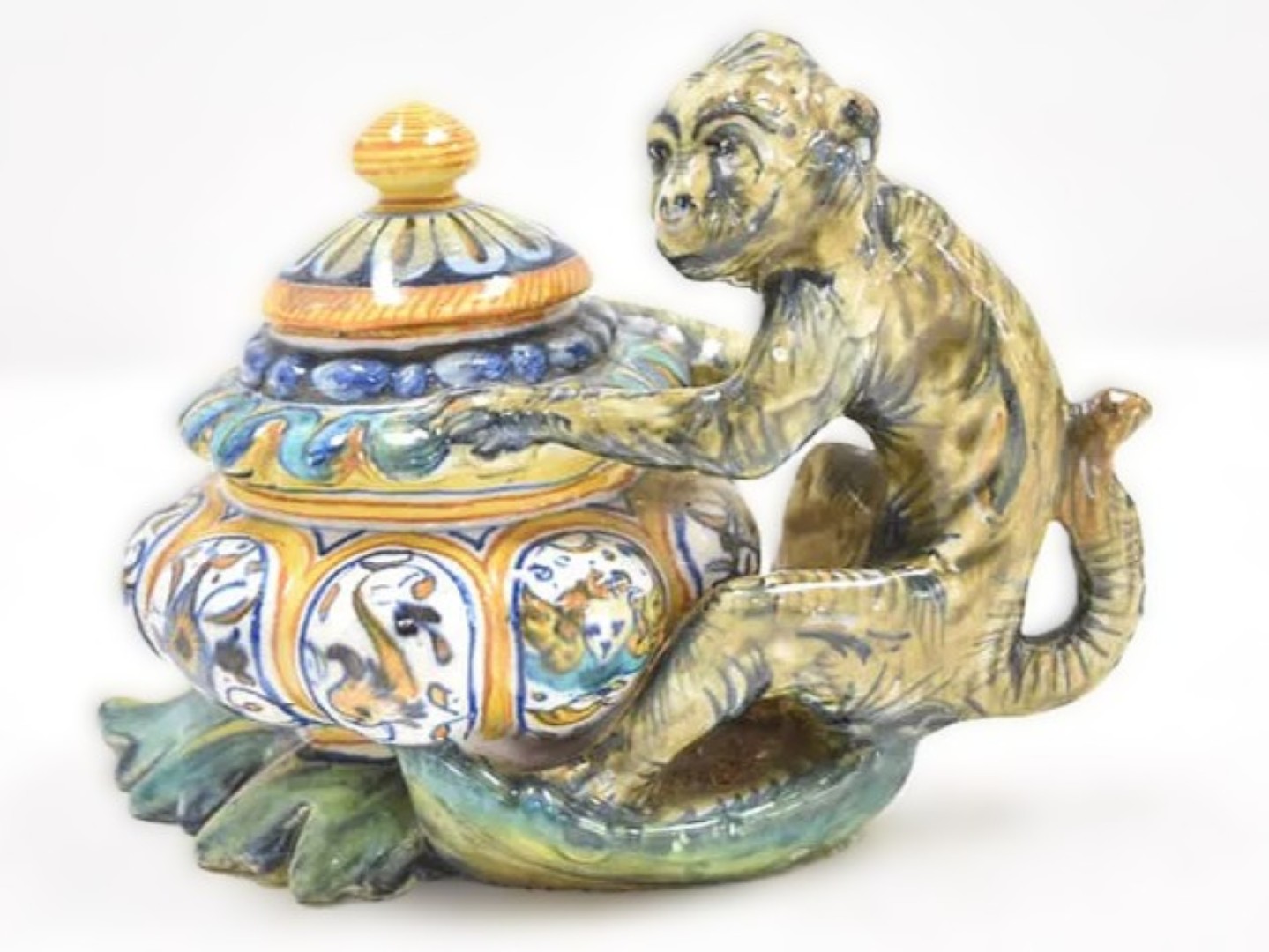
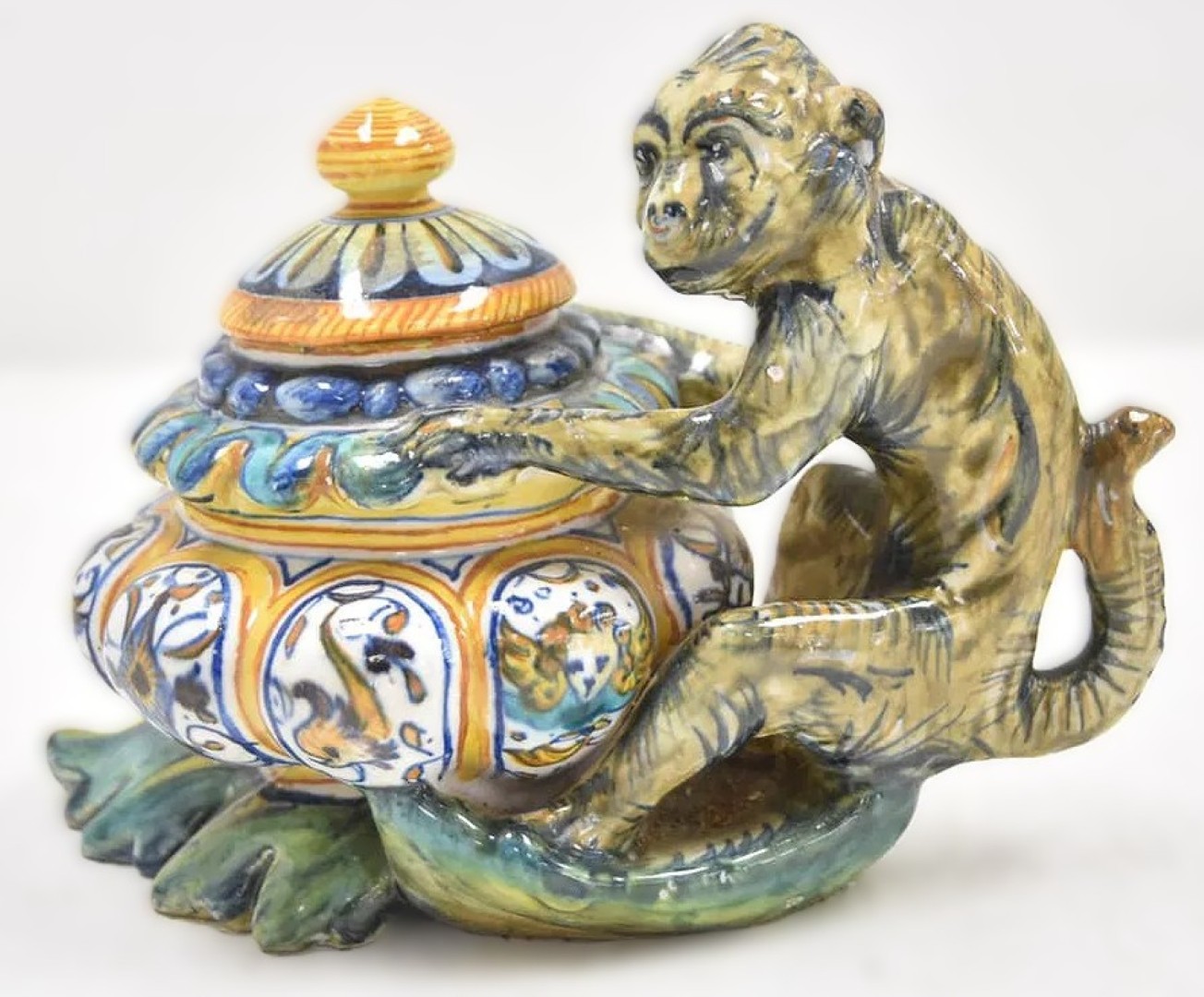
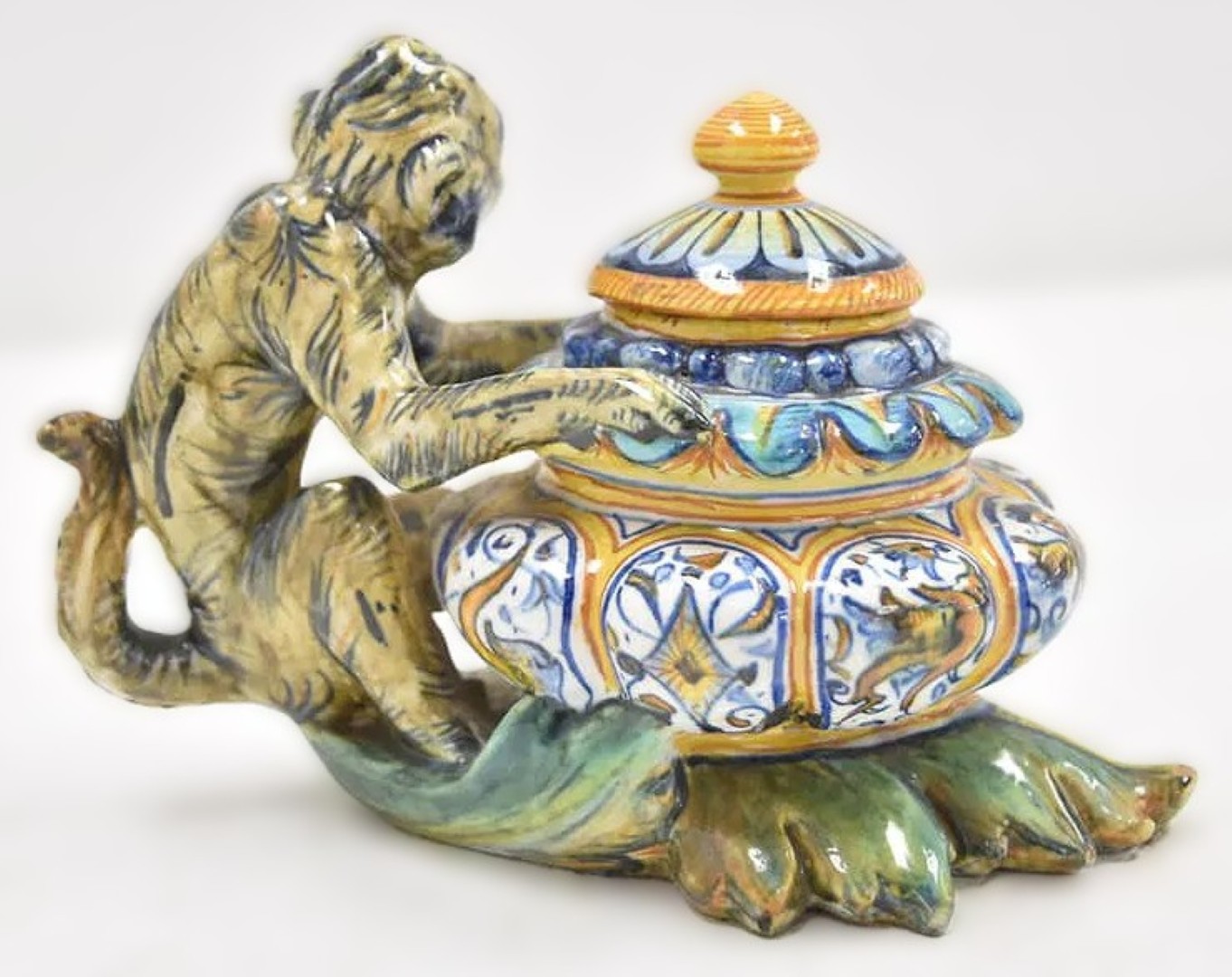
Majolica Inkwell and Monkey
| Categories | Ceramics/Porcelain Figural |
| Type | Monkey |
| Material | Majolica |
| Markings | See Narrative |
| Manufacturer | Cantagalli |
| Origin | Italy |
| Date or Era | circa 1900 |
| Measuring | 6” x 3 ½” x 4 ½” high |
Description
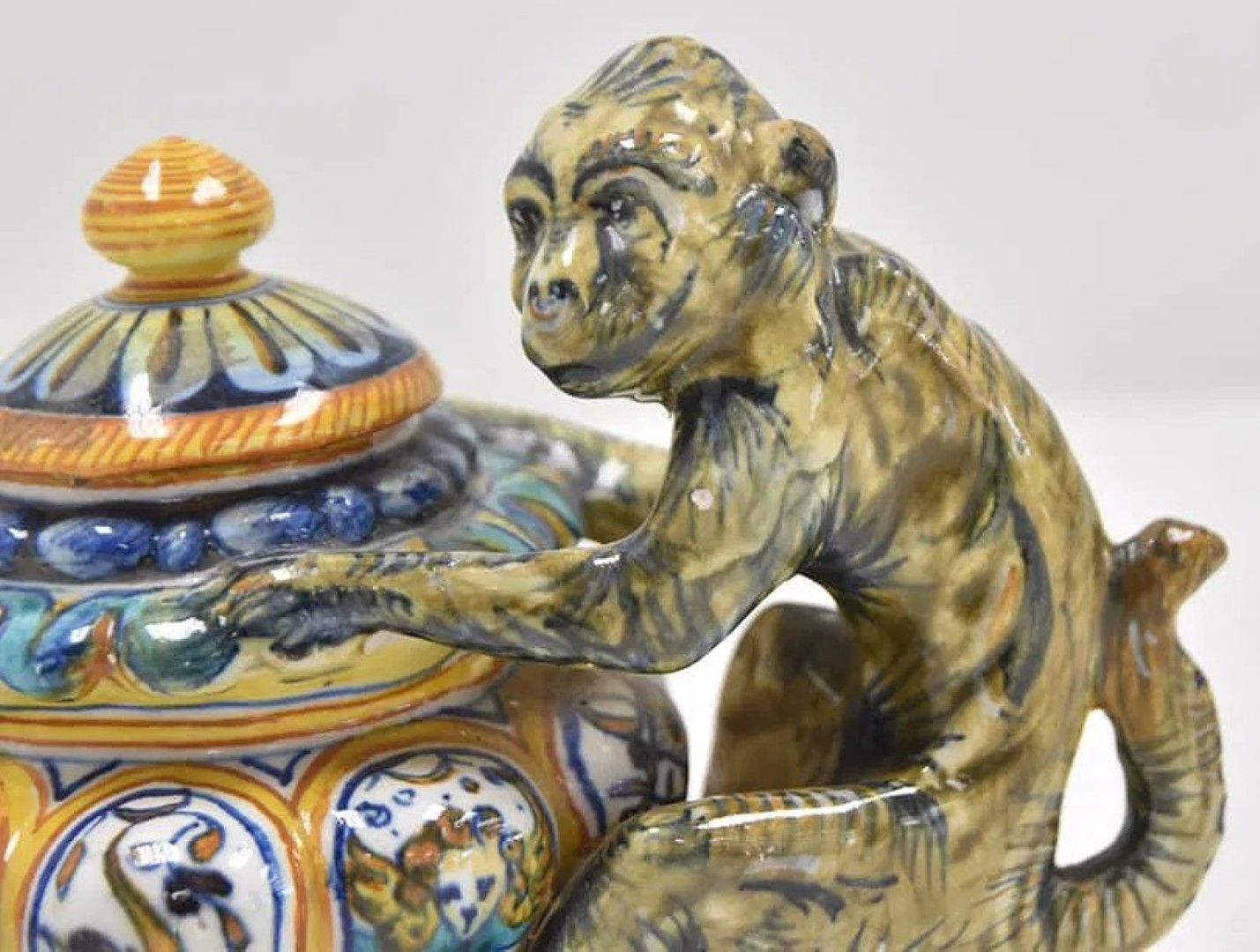
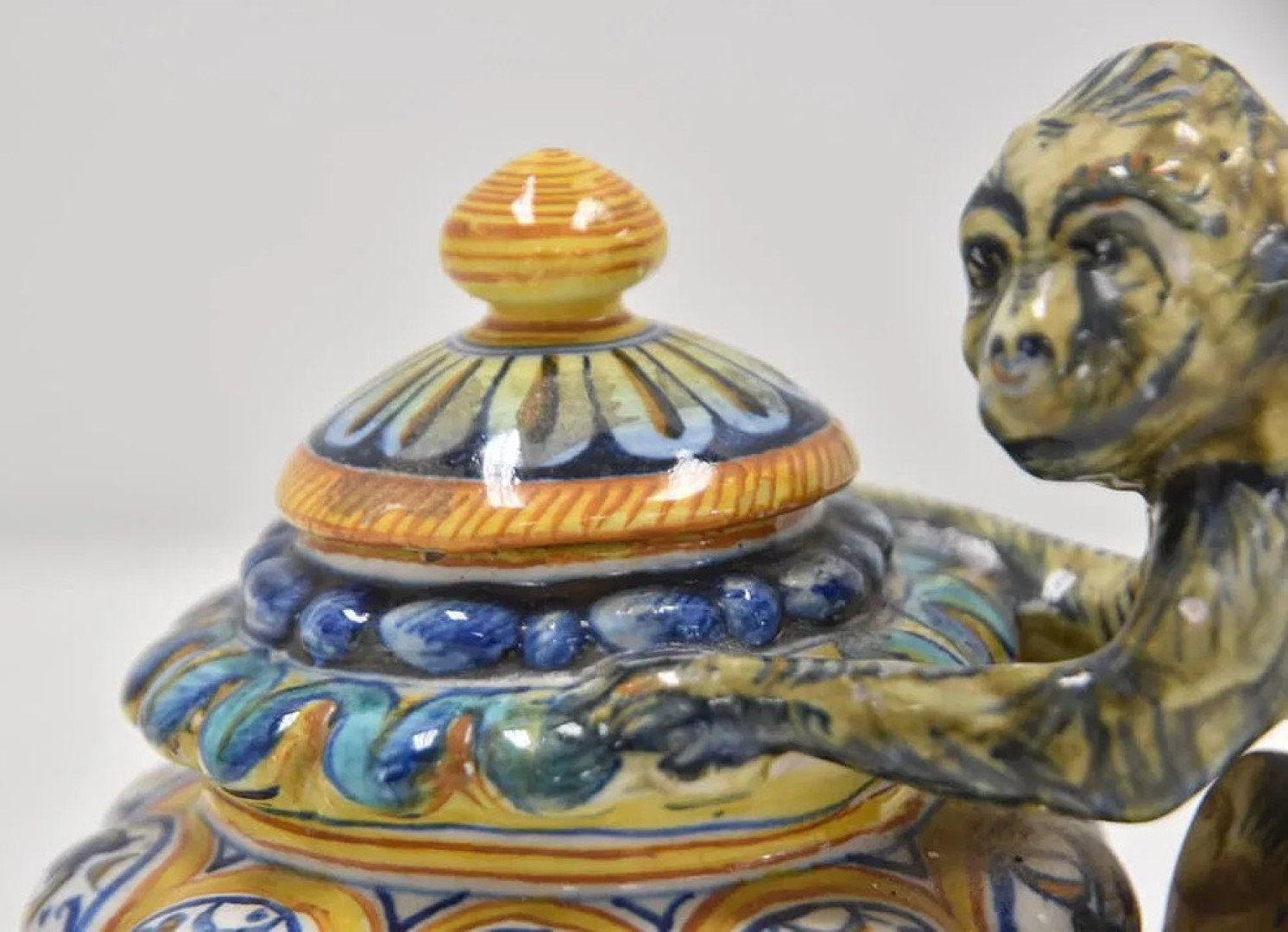
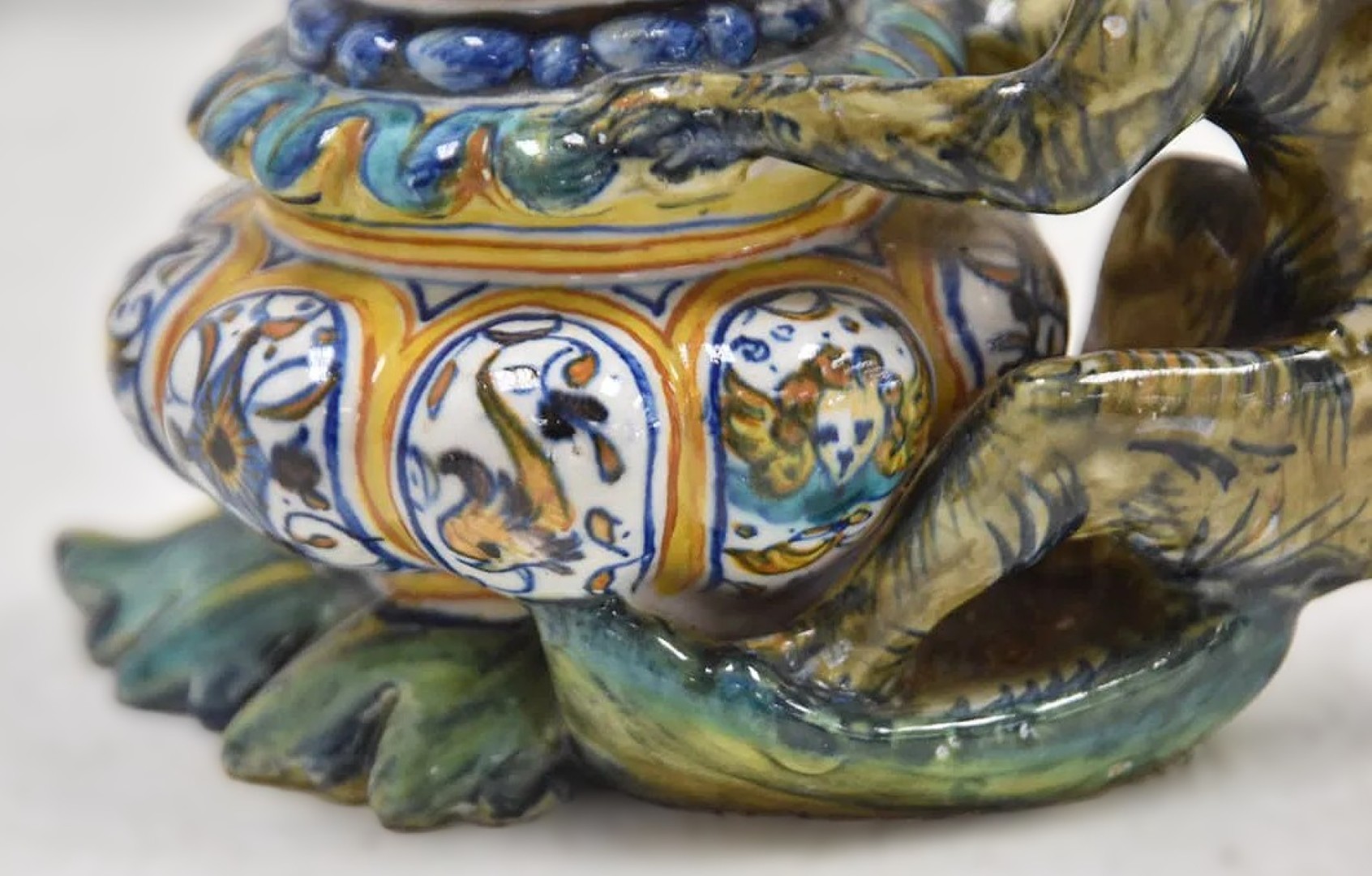
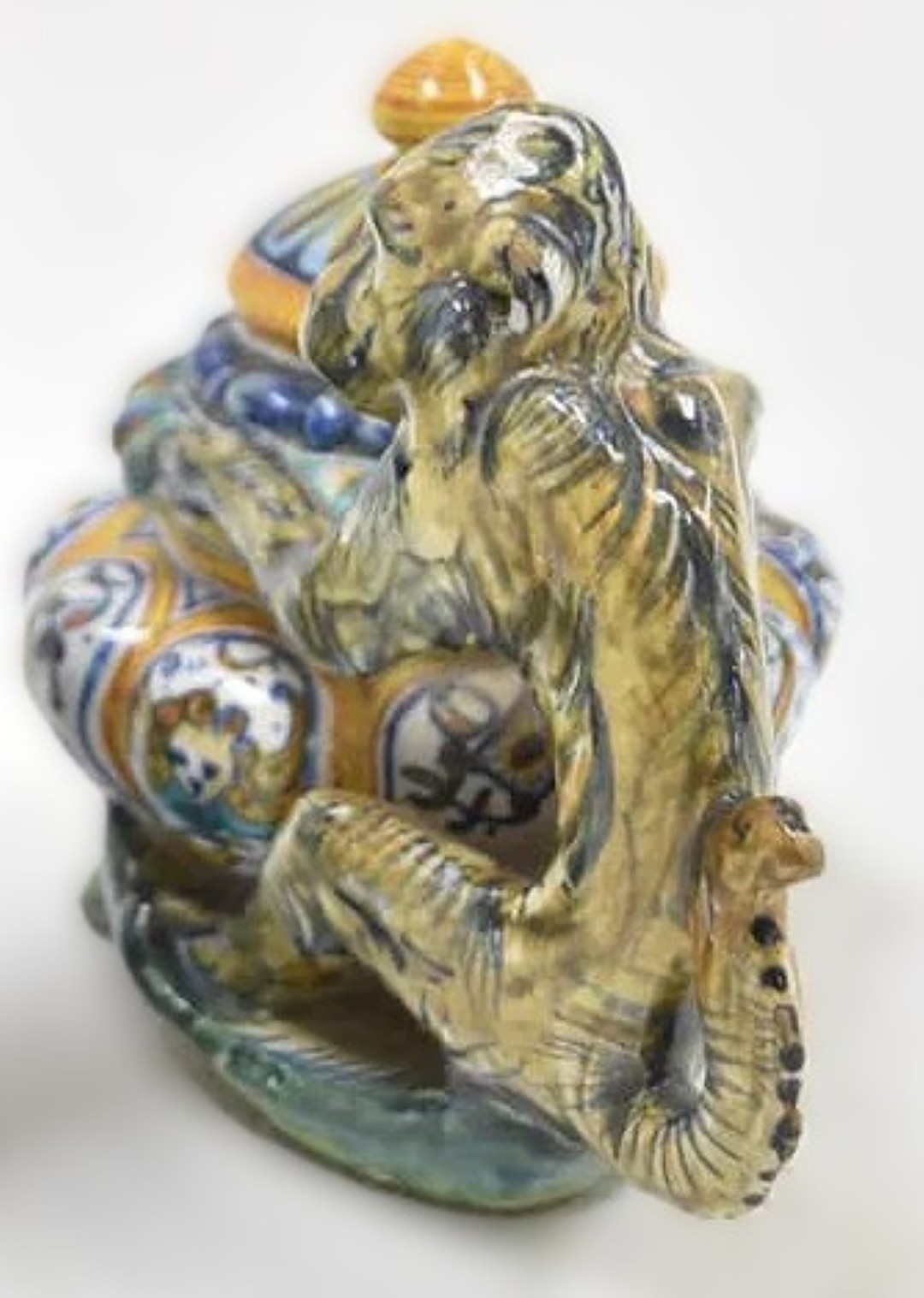
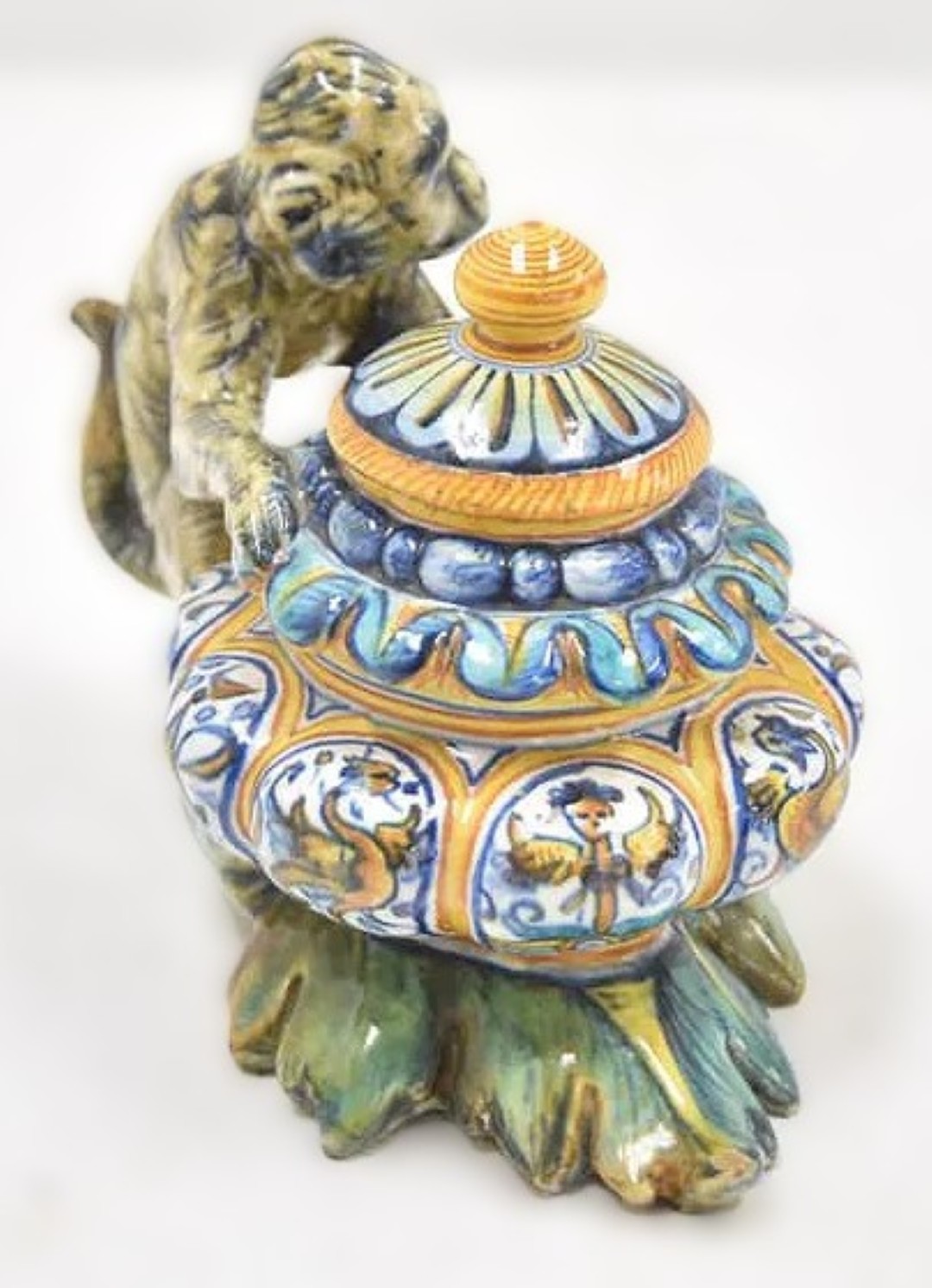
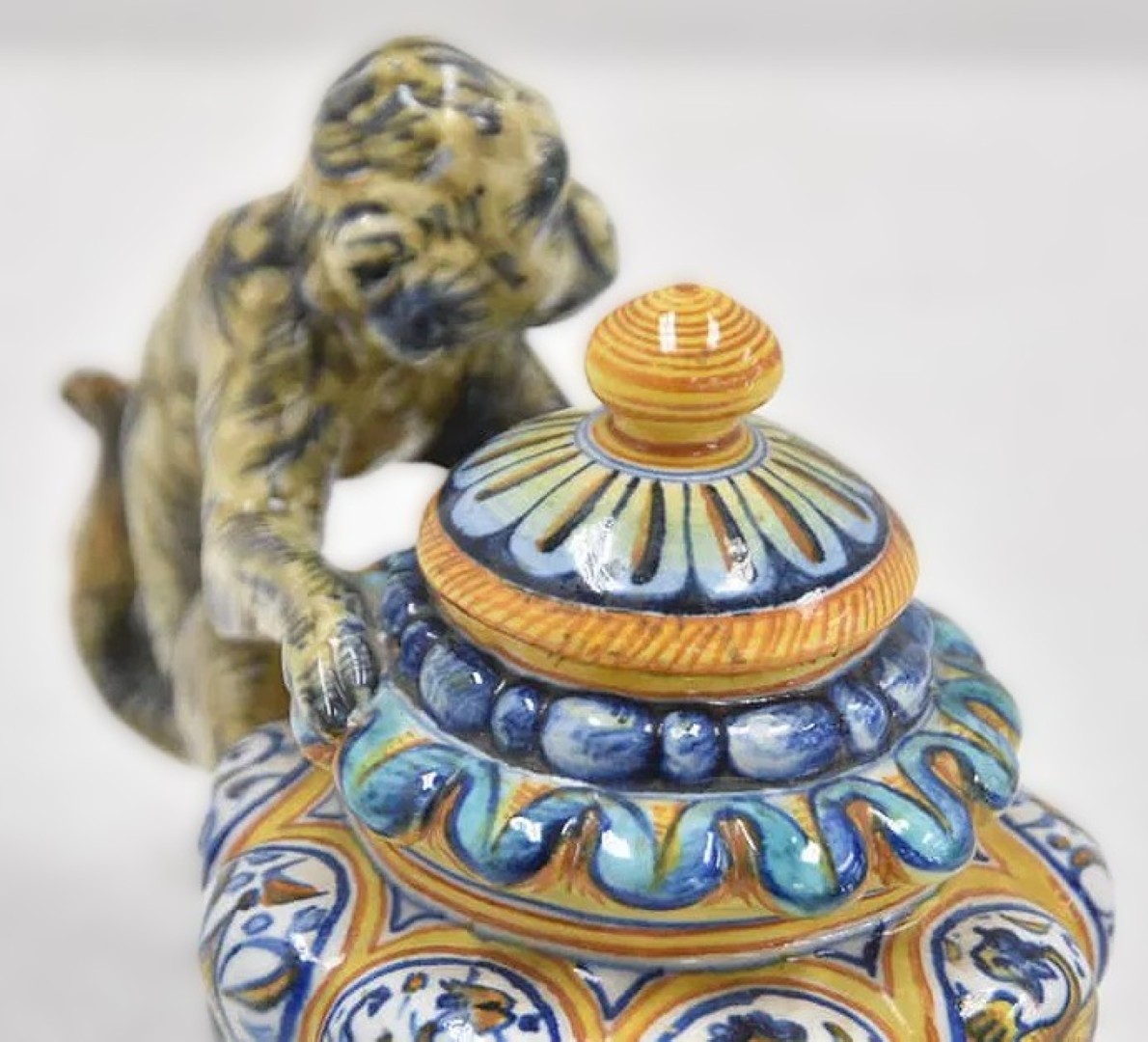
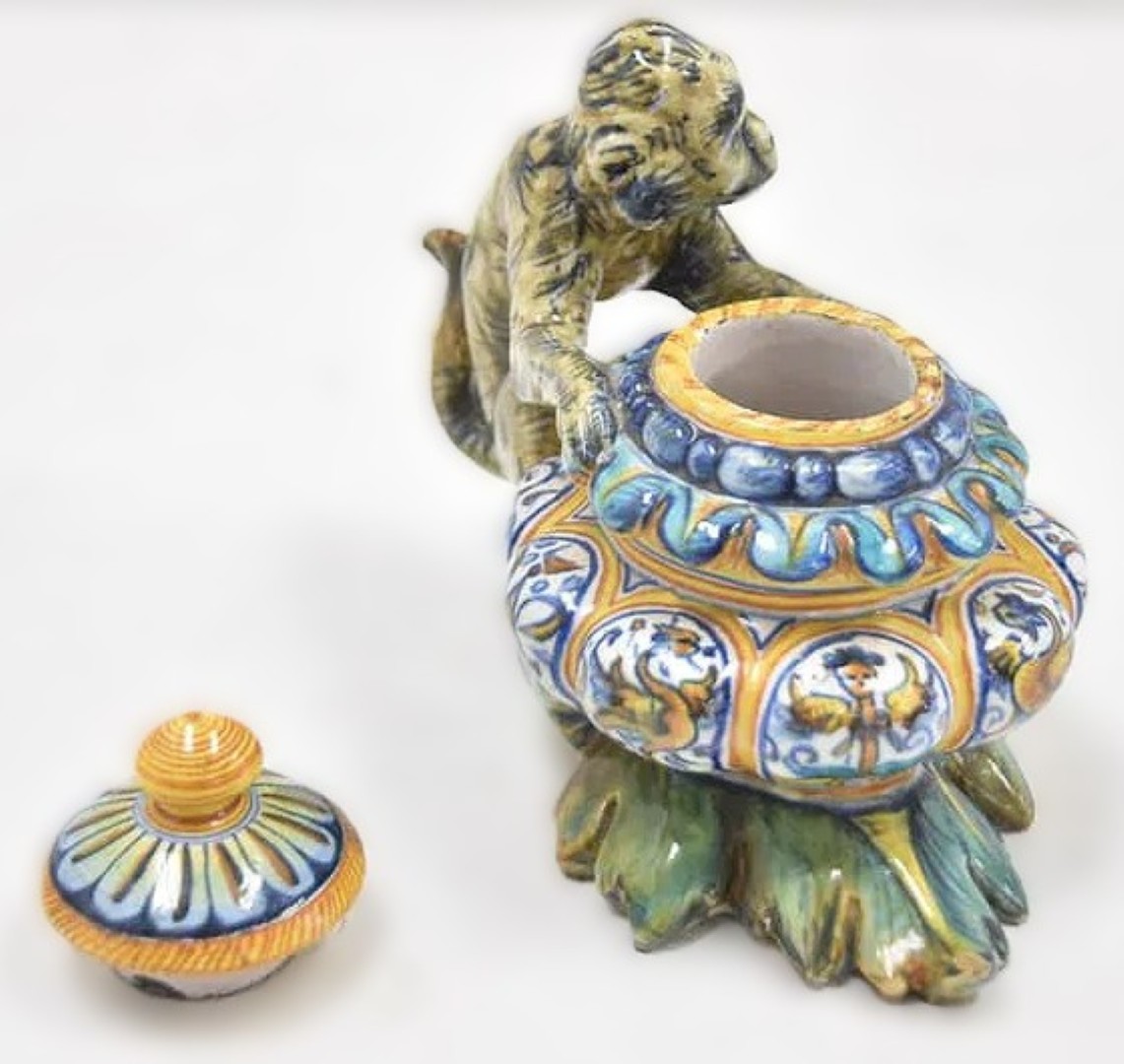
- Subject & Form: The inkwell features a naturalistically modeled, seated monkey perched upon a stylized green leaf base. The monkey is clutching a spherical, lidded ink pot. The cover lifts completely off to access the inkwell.
- Palette & Glaze: It is decorated in a classic Renaissance-revival palette dominated by rich ochre yellow, deep cobalt blue, copper green, and manganese brown line work. The glazes are thick, vitreous, and glassy, giving the piece its signature high-shine, reflective surface.
- Decorative Motifs: The Monkey: Painted with free, sketchy brushstrokes to emulate the texture of fur, giving it an expressive, slightly mischievous face.
- The Ink Pot: Decorated with a historicist “Raphaelesque” (Raffaellesco) style, featuring segmented panels containing whimsical creatures—specifically stylized dolphins or sea dragons and small winged cherub/grotesque faces against a white background.
- The Lid: Domed with a spiraled ochre finial, featuring alternating radiating petals of blue and pale green.
The Underside Mark Identification
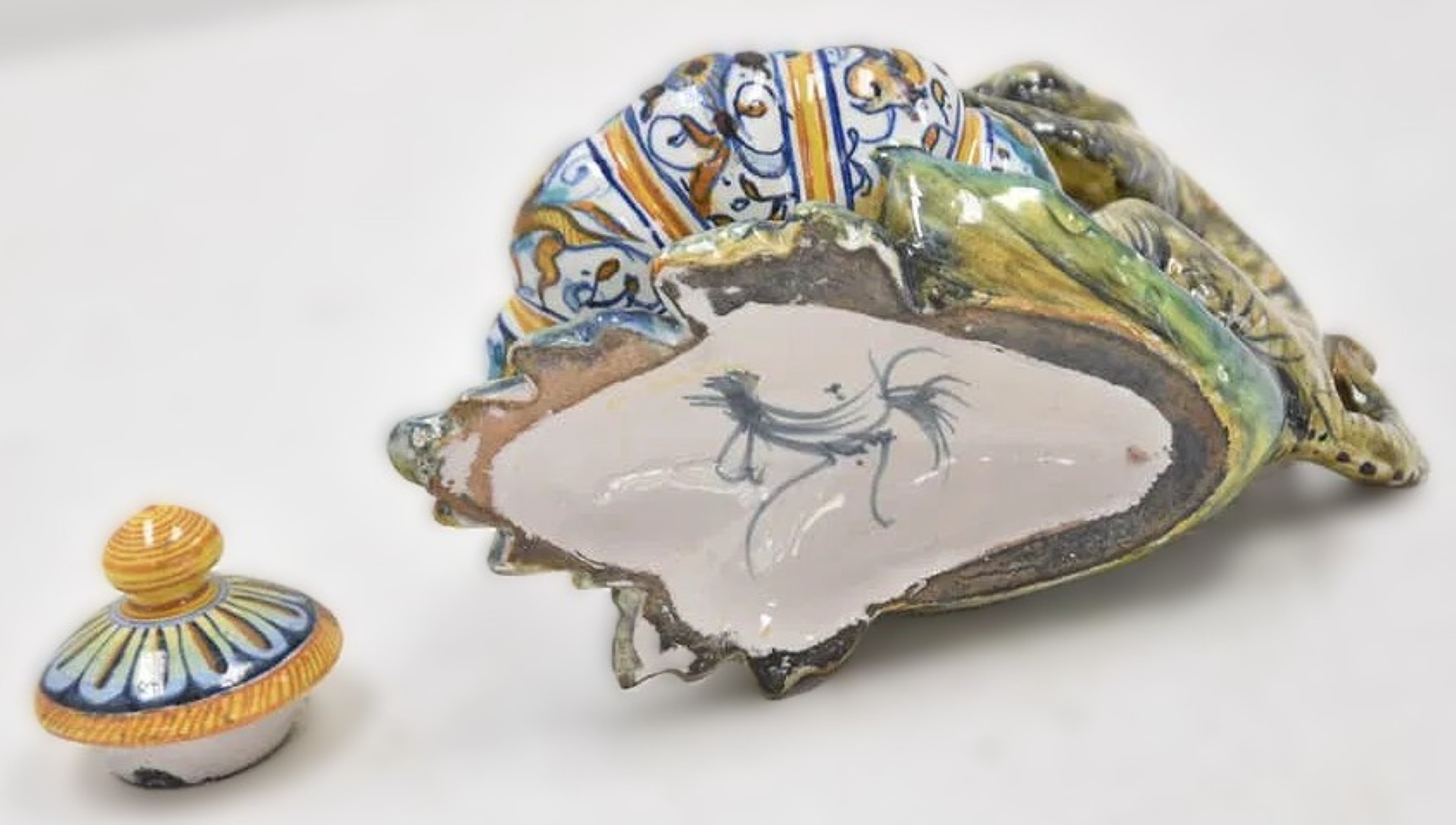
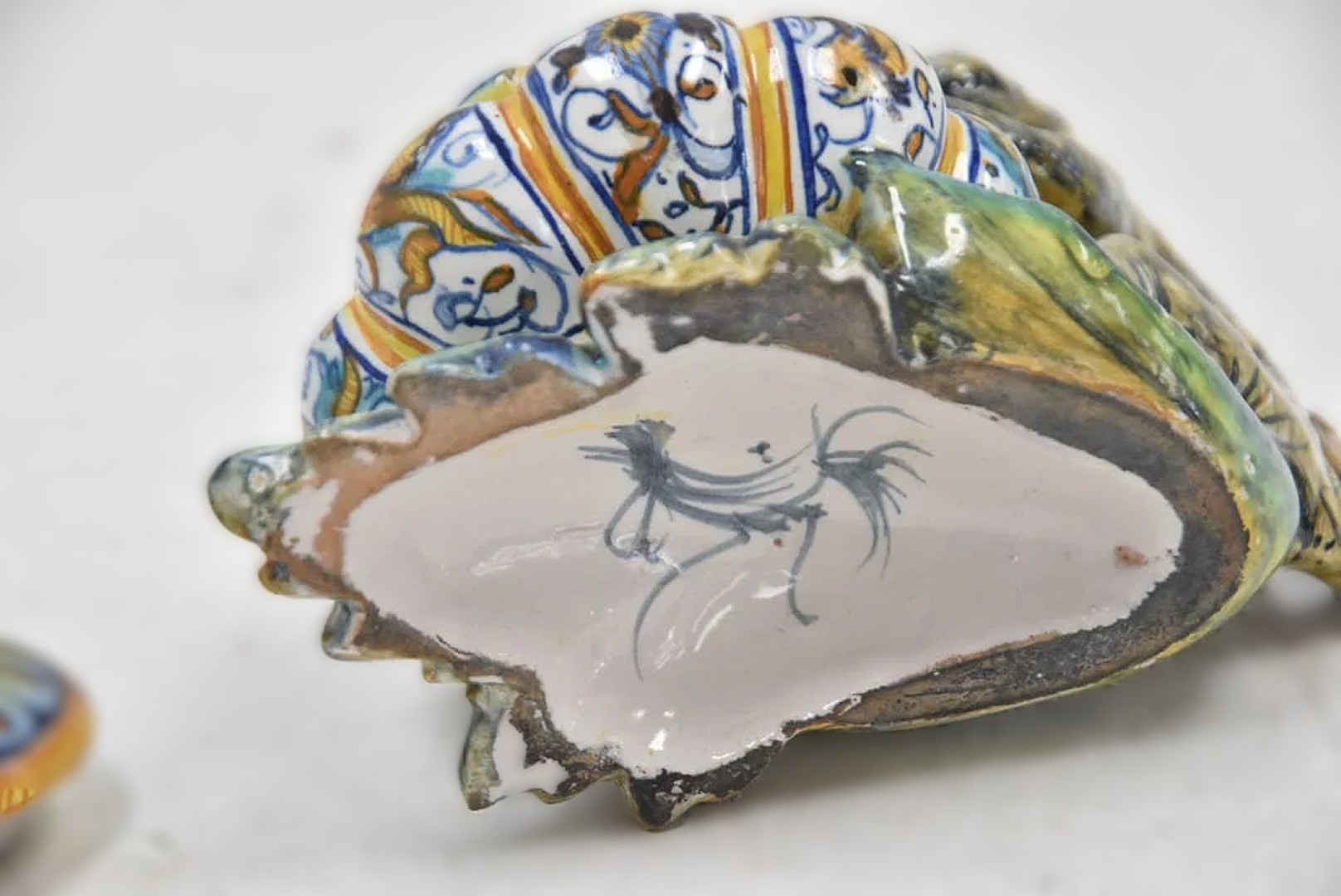
The hand-painted blue sketch on the glazed underside is the highly stylized factory mark of Cantagalli.
The Maker’s Mark: The sketch represents a crowing rooster (or cockerel). Because “Cantagalli” translates from Italian to “singing roosters,” the factory cleverly used a visual pun of a rooster as their signature trademark.
While it looks like an abstract flurry of feathers or a bird on a branch at first glance, you can discern the sweeping tail feathers on the right, the two stick-like legs at the bottom, and the head/beak area on the far left.
Origin and Date
- Who Made It: The Cantagalli Workshop (Manifattura Cantagalli).
- Where It Was Made: Florence, Italy (Firenze).
- When It Was Made: Circa 1880–1910 (Late 19th to early 20th Century).
Historical Context
The workshop was famously revitalized by Ulisse Cantagalli in 1878. He specialized in high-quality, artistic revivals of 15th and 16th-century Italian Renaissance maiolica. This particular style of mark—quickly dashed in blue or black underglaze—is classic for Cantagalli pieces from their peak artistic period around the turn of the century.
Sold for $415 in July 2013
Content disclaimer. The information posted is the owner’s best knowledge and may not have been vetted by the SOIC. We welcome comments, corrections, and additions, working to make our website information comprehensive and accurate.
Join the Society of Inkwell Collectors (SOIC) – it’s free!
Founded in 1981 as a non-profit organization,
we are documenting inkwells (and accessories).
We’re here to help and inform!