

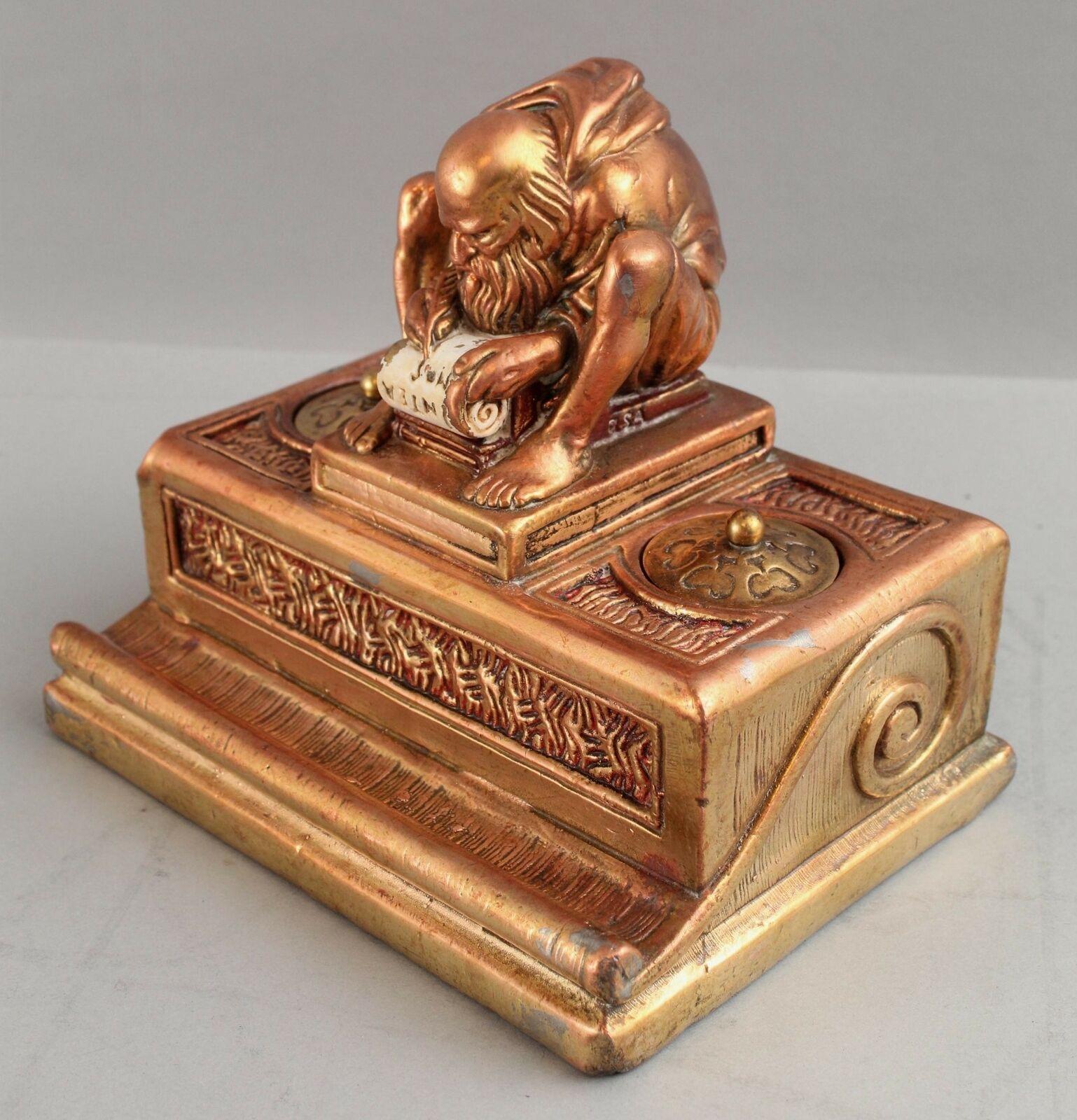


“The Scribe” – Bronze Clad Art
| Categories | Figural - Persons |
| Type | Monk |
| Material | Bronze finish |
| Markings | See Narrative |
| Manufacturer | Armor Bronze Company |
| Origin | United States |
| Date or Era | circa 1920 |
| Measuring | 8 ¼” x 6 ¼” x 7” high |
The Artist: Gregory Seymour Allen
While the cursive script on the back can easily be misread as “C.C. Allen,” it is actually the signature of Gregory Seymour Allen (1884–1934).
- Background: Born in Orange, New Jersey, Allen was a highly talented American sculptor and painter. He worked extensively in the New York metropolitan area before eventually moving west to Glendale, California later in life.
- Style & Output: Allen was highly celebrated for his works featuring complex historical, classical, and allegorical themes. While he is well known among collectors for designing premium bookends, plaques, and statues, he also sculpted high-end desktop utilities like this inkstand. He was also a gifted Impressionist painter, particularly known for his California landscapes.
The Manufacturer: Armor Bronze Company
The stamped emblem on the lower right corner is the distinctive shield mark of the Armor Bronze Company.
- Origins: The firm began its life in 1910 as The National Metalizing Company based in New York and New Jersey. Around 1920, the company rebranded to the Armor Bronze Company to better highlight their primary line of artistic wares.
- Timeline: The company operated out of the New York/New Jersey area during its heyday in the 1920s, later relocating to Taunton, Massachusetts in the 1930s. They continued creating art objects, lamps, and bookends until they ceased production in the late 1940s.
The Manufacturing Process: Bronze Cladding
This inkstand is an excellent example of bronze-clad (or electroformed) art, a technique popularized during the “Golden Age of American Bookends and Desktop Accessories” (roughly 1915–1940).
Instead of casting a piece in solid bronze—which would have been prohibitively expensive and incredibly heavy at this scale—the Armor Bronze Company used a sophisticated electroplating method:
- A highly detailed, heavy core was molded out of a dense composition material, typically a special plaster, ceramic, or gesso blend.
- This core was coated in a conductive material and suspended in a chemical bath.
- Through electrolysis, a thick, genuine outer jacket of pure bronze was slowly deposited over the plaster core, perfectly capturing every fine line of the sculptor’s original model.
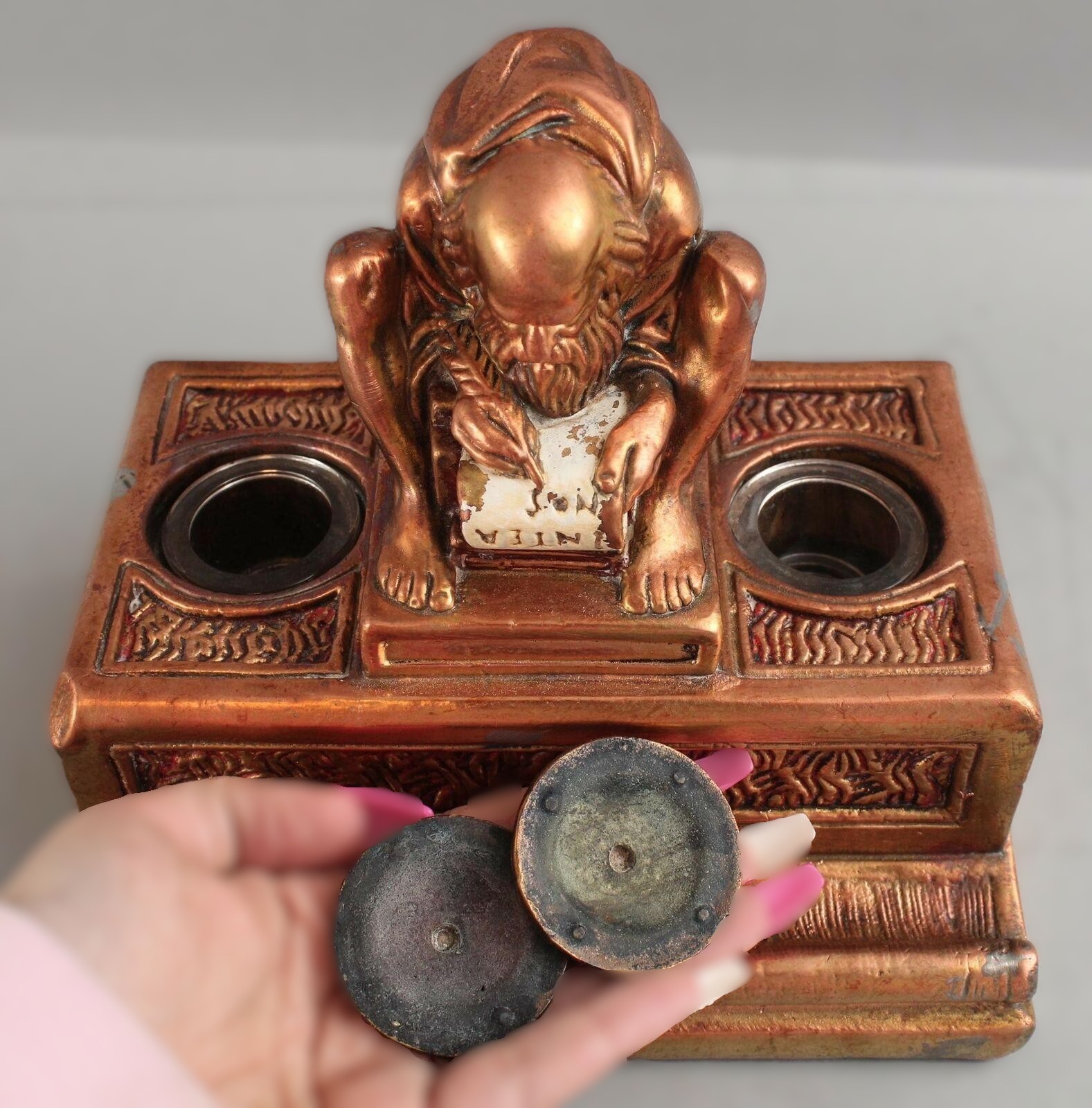
The fact that this inkstand weighs nearly 10 pounds is a testament to the high quality of Armor Bronze’s dense composition core and the substantial thickness of the outer metallic layer.
Significance of the Figure & Scroll
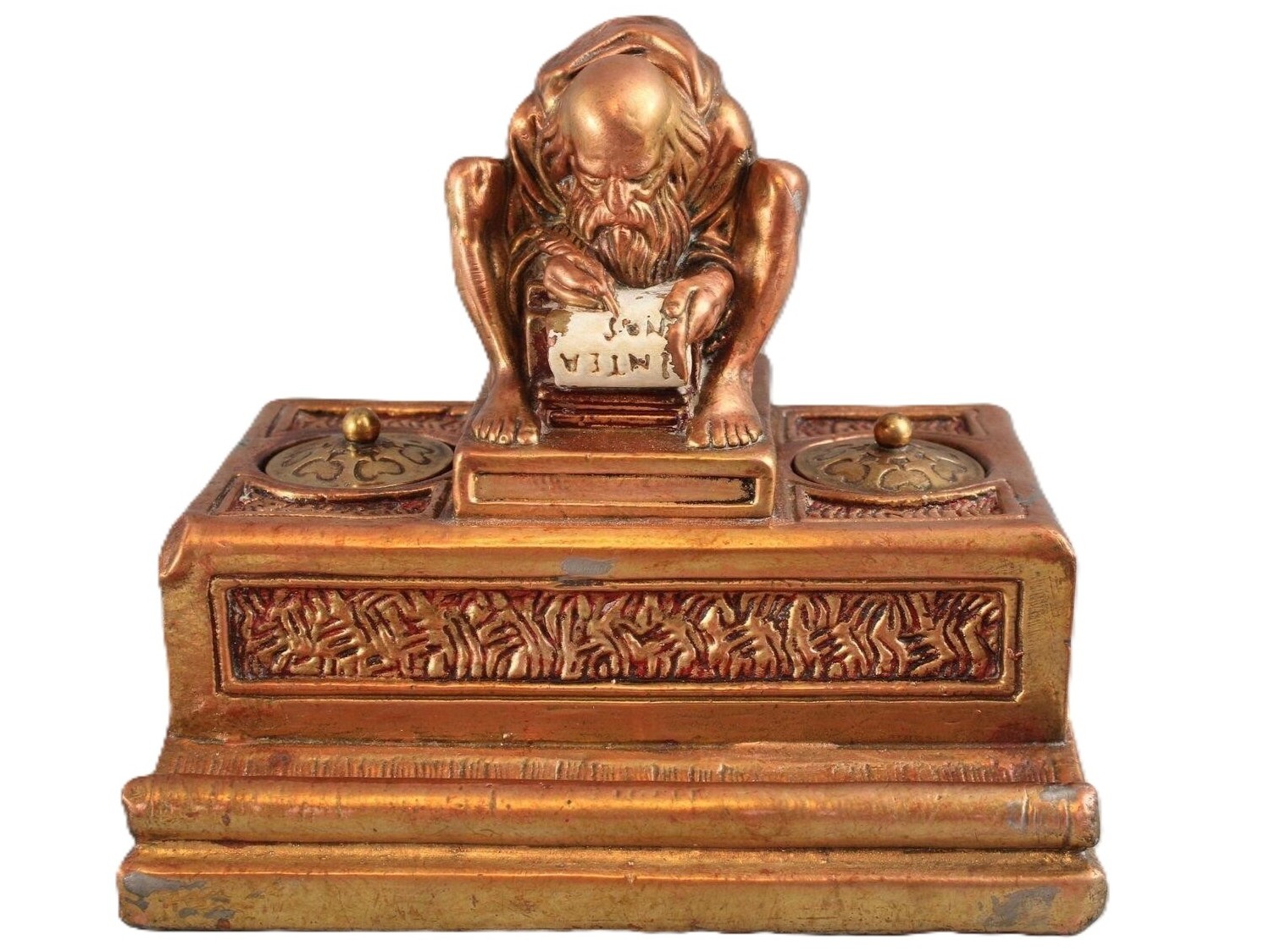
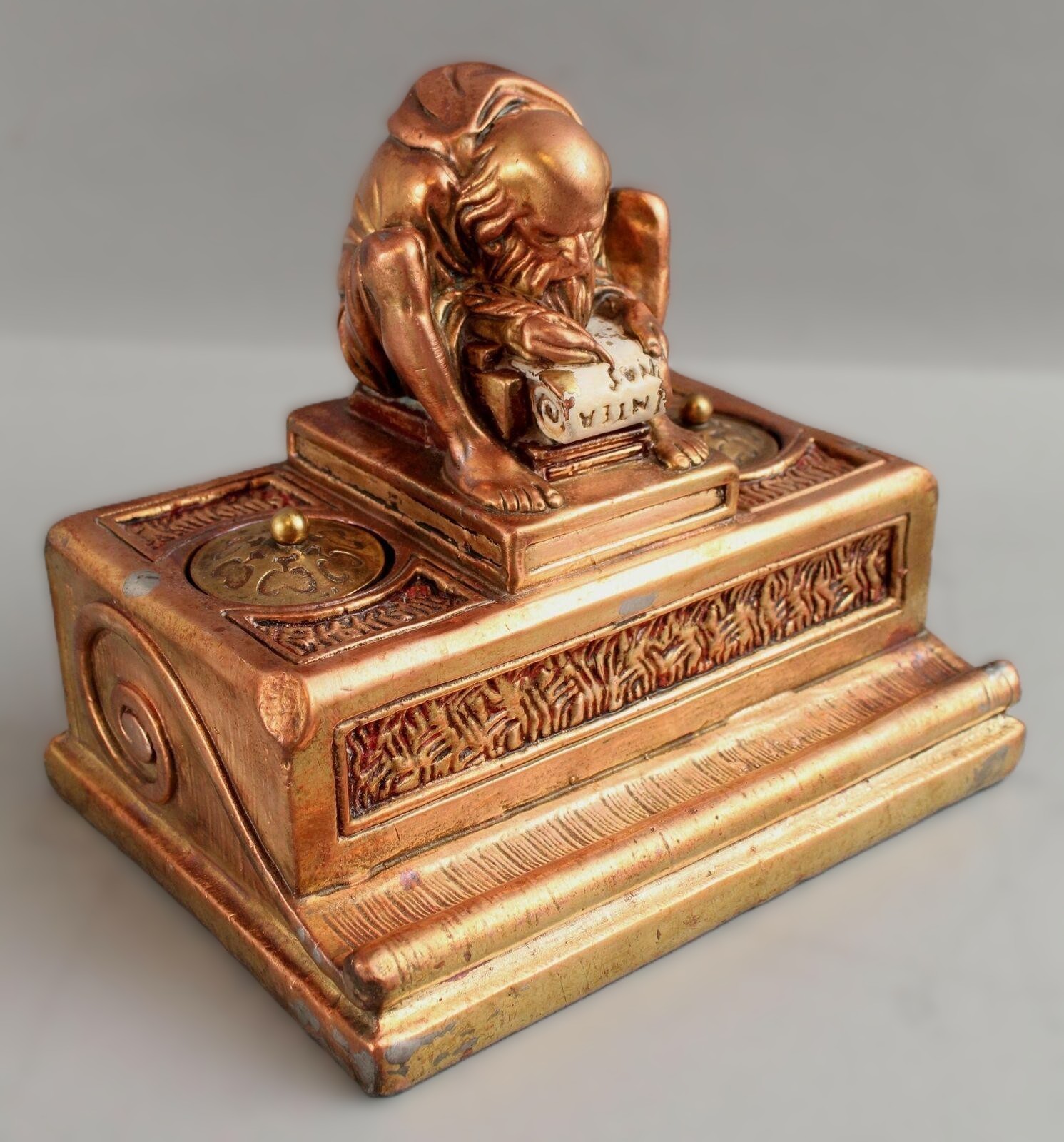
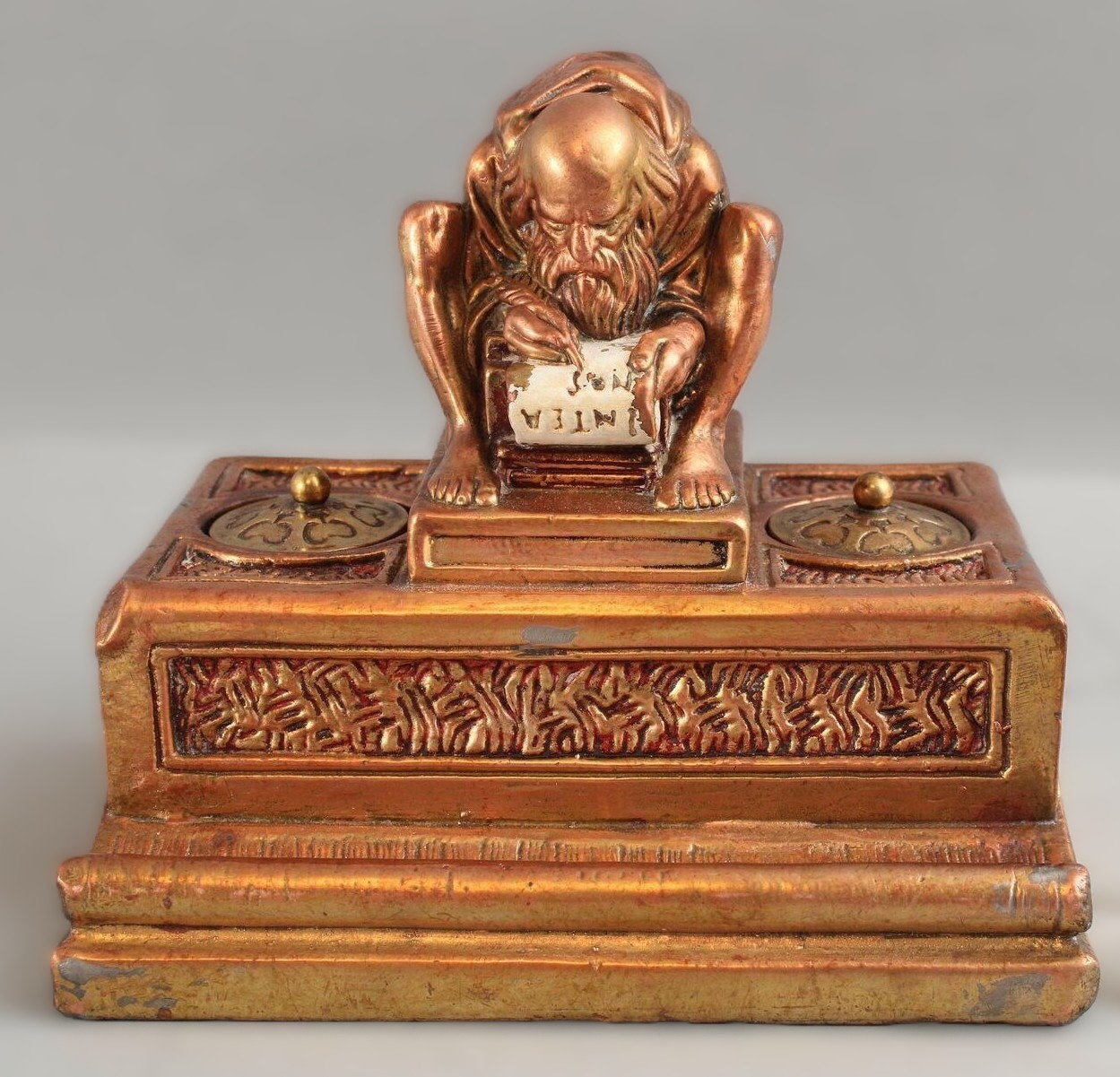
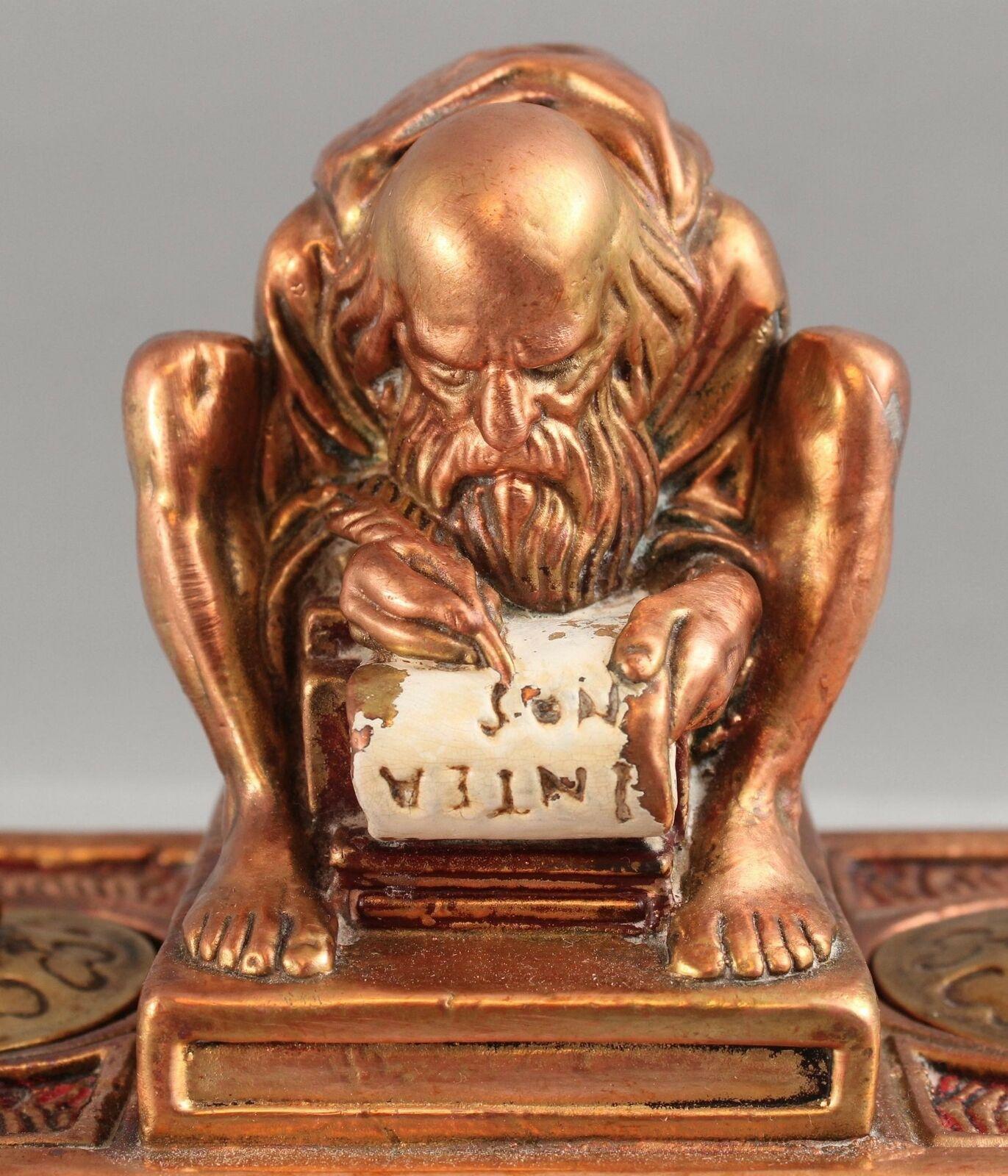
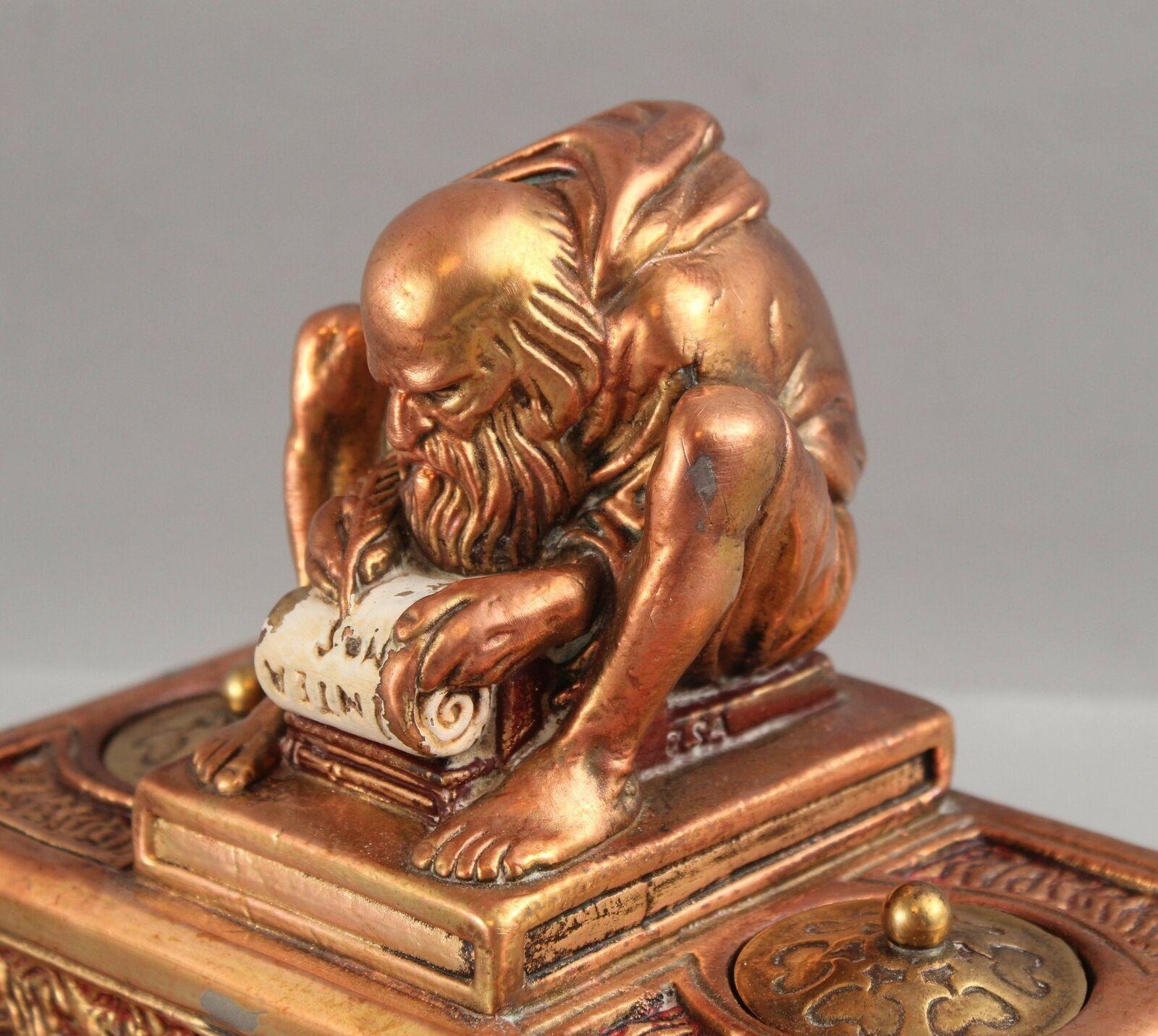
The figure is historically cataloged as “The Scribe” or “The Scholar.” Hunched in intense concentration, this barefoot, heavily draped old philosopher or monk represents the ancient, primal act of preserving history and wisdom.
The Scroll Inscription
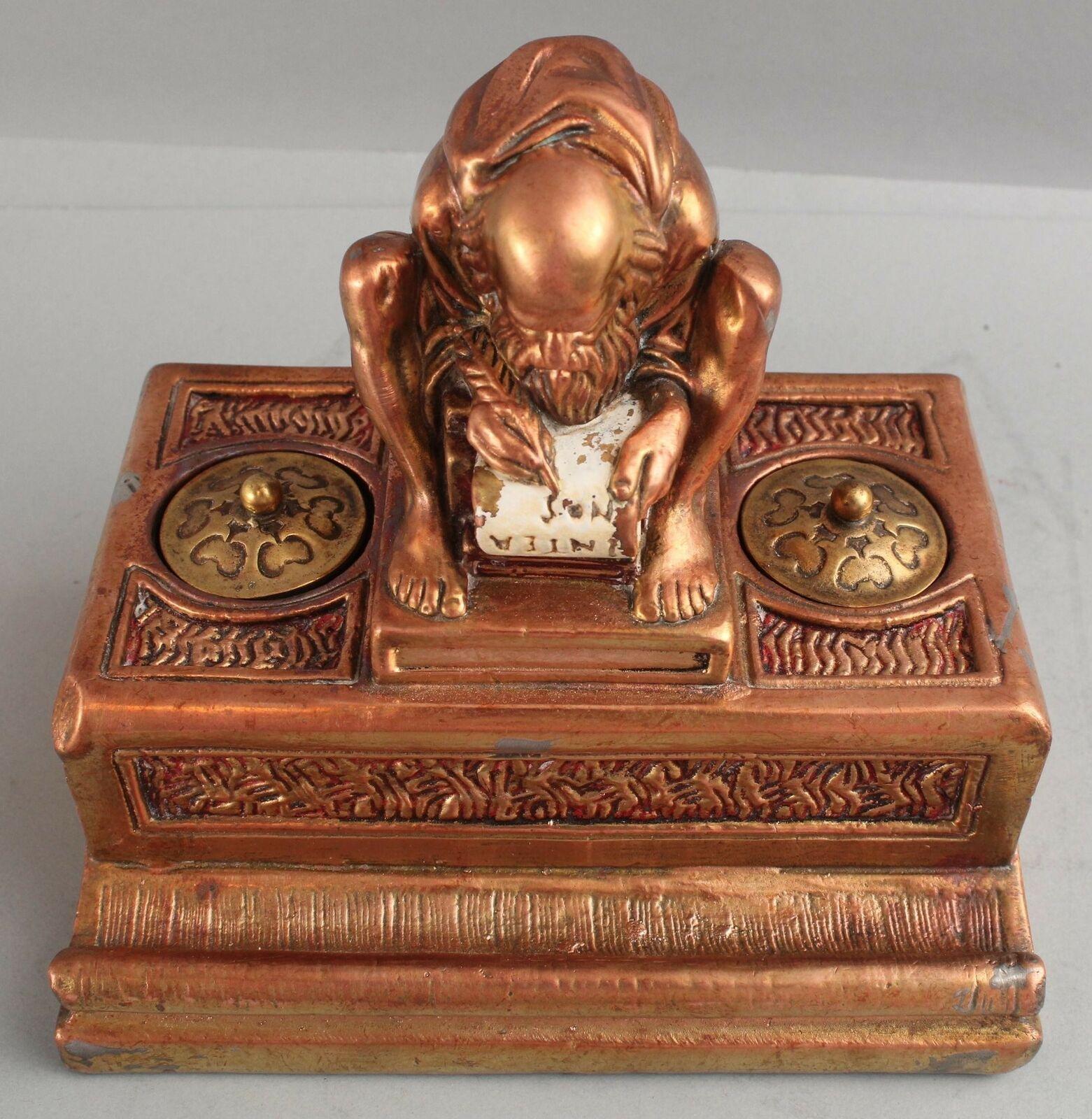
If you look closely at the porcelain scroll held in his hands, you can decipher the text. Written in two stacked tiers, it reads:
SCI
ENTIA
This spells SCIENTIA, the Latin word for knowledge, science, or wisdom.
Contextual Symbolism
Having a classical scribe intensely recording “Knowledge” on a scroll using a pen—while sitting directly atop the very ink chambers meant to fuel a writer’s pen—is the ultimate desktop allegory. It serves as a visual celebration of literacy, literature, and the timeless preservation of human thought.
Age and Origin Summary
- Estimated Age: Circa 1920–1925. This specific piece dates perfectly to the early years of the “Armor Bronze” rebranding, matching the peak era of Allen’s commercial sculpting work in the Northeast.
- Where it Was Made: Crafted in the New York City / New Jersey industrial area.
- Condition Note: The small gray areas where the bronze has worn away to reveal the lighter plaster underneath (visible on the base corners and edges) are entirely typical for a bronze-clad piece of this age.
Estimated value: $125
Content disclaimer. The information posted is the owner’s best knowledge and may not have been vetted by the SOIC. We welcome comments, corrections, and additions, working to make our website information comprehensive and accurate.
Join the Society of Inkwell Collectors (SOIC) – it’s free!
Founded in 1981 as a non-profit organization,
we are documenting inkwells (and accessories).
We’re here to help and inform!