


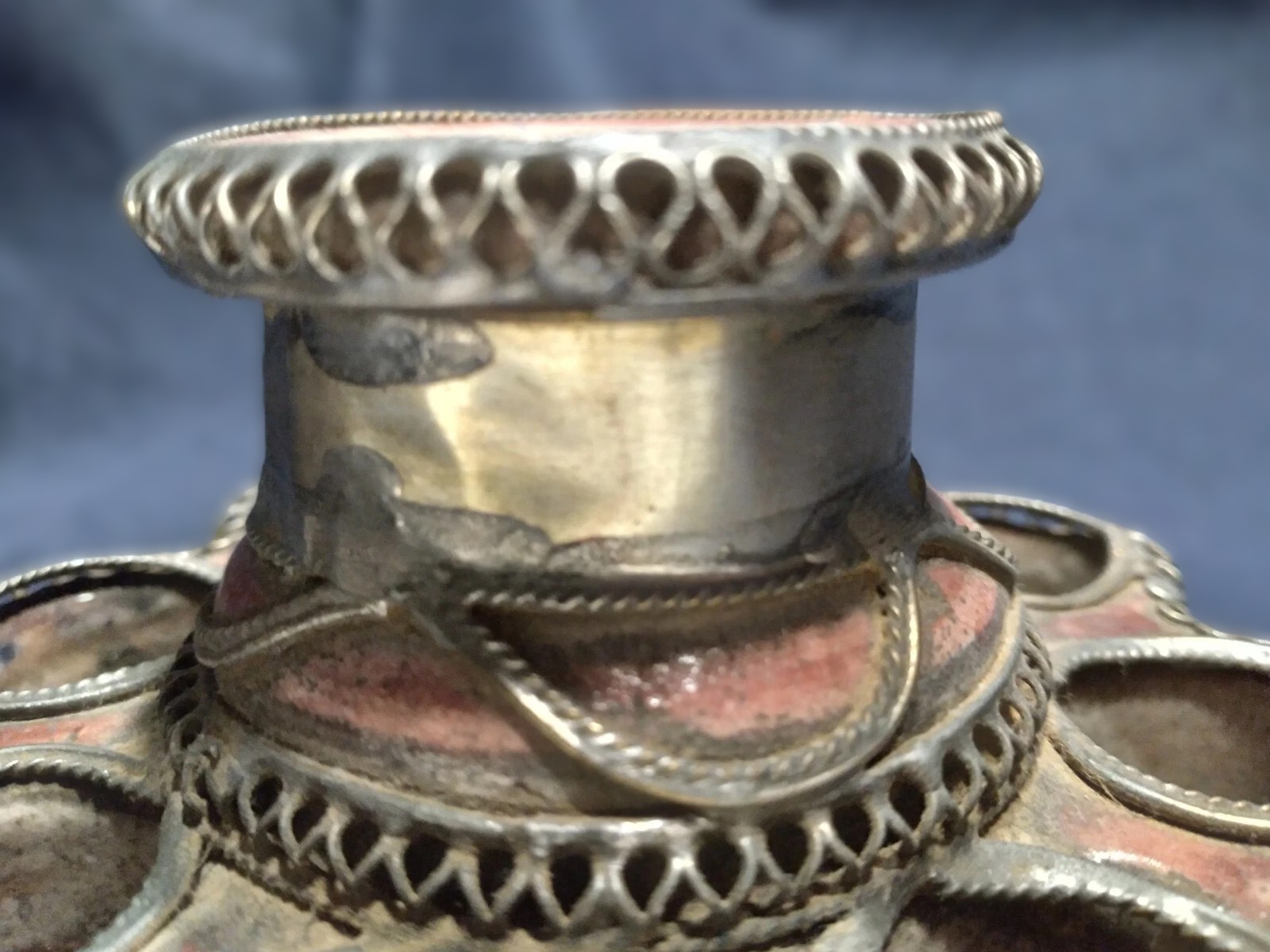
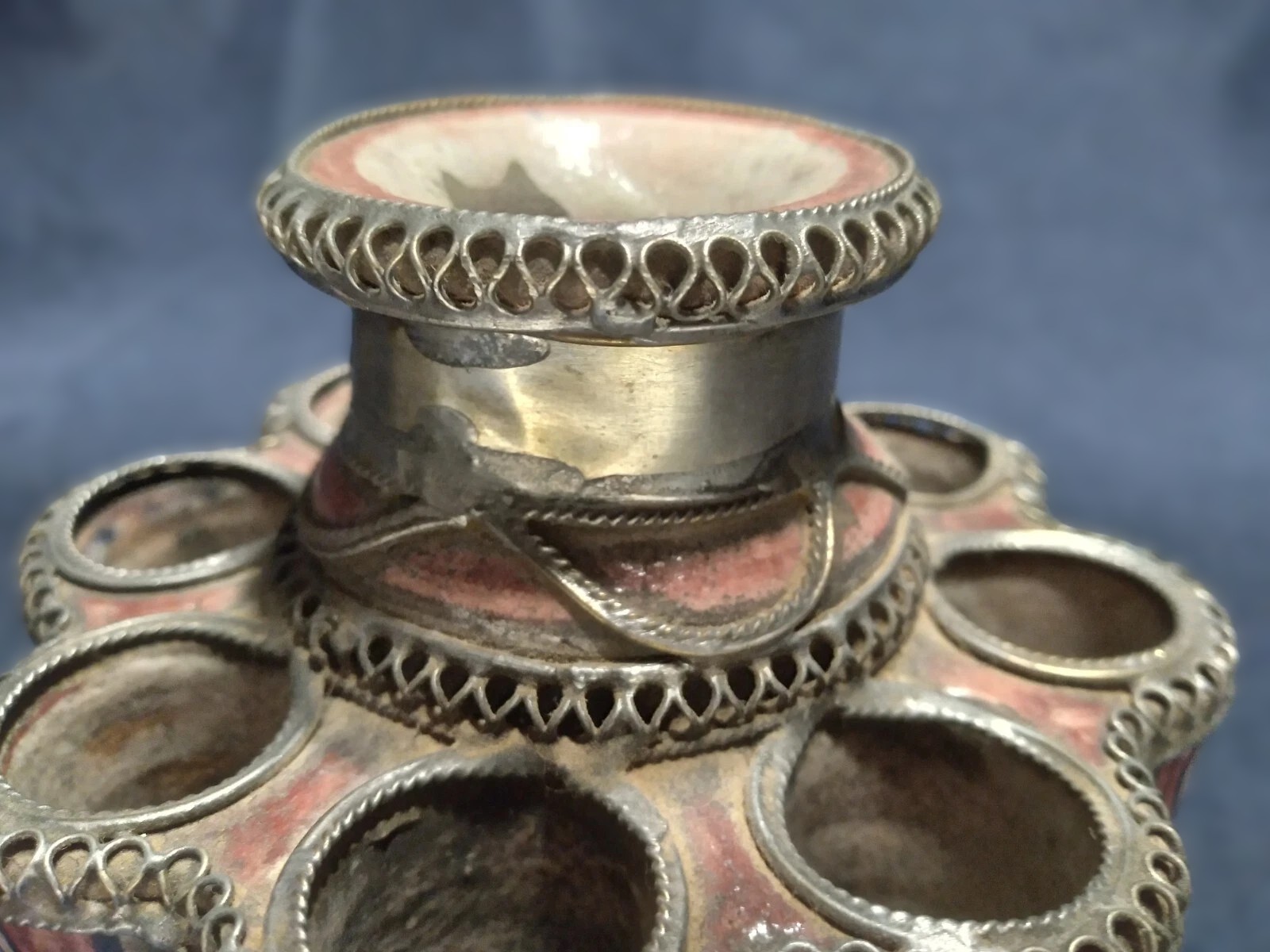
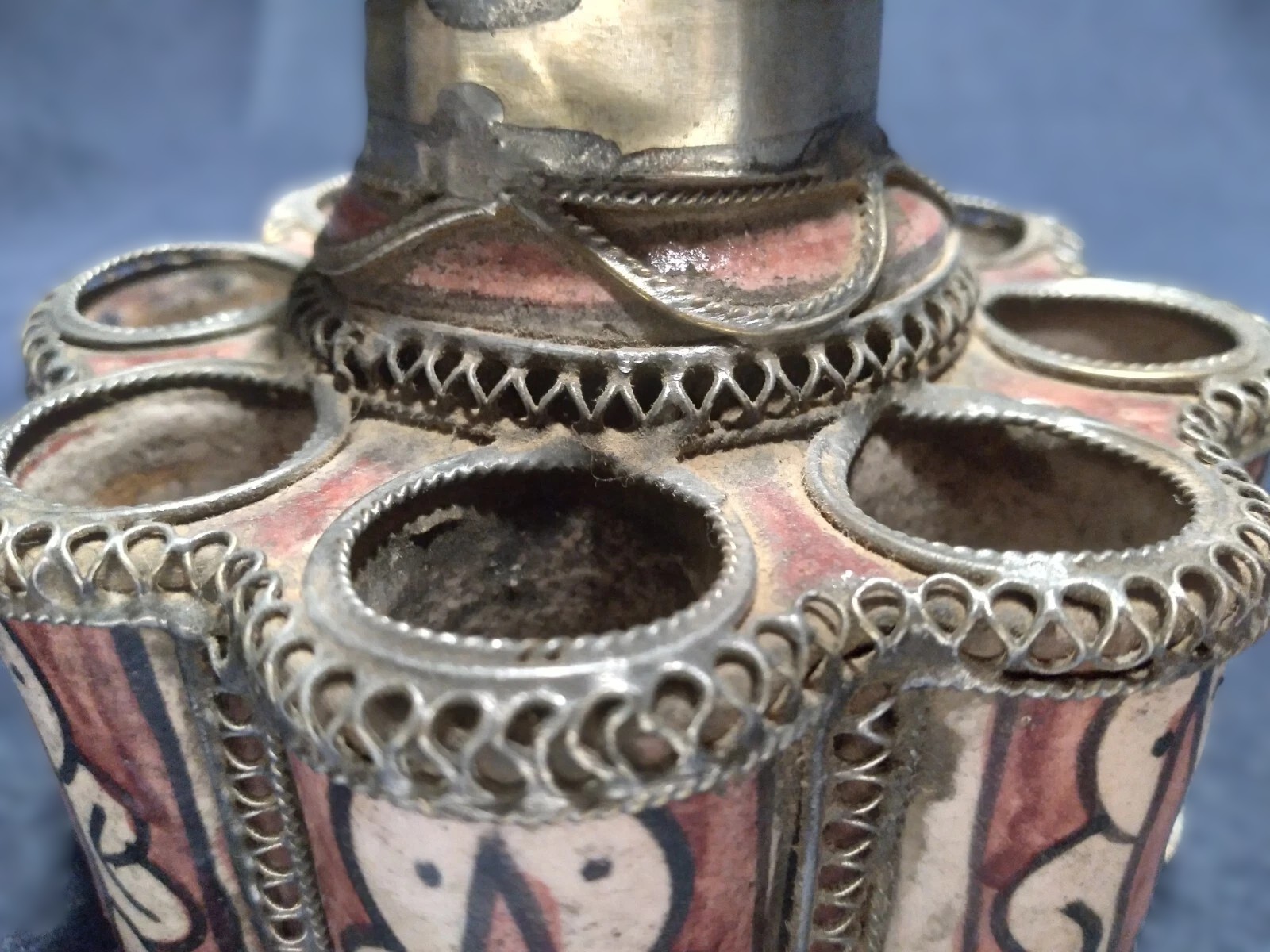
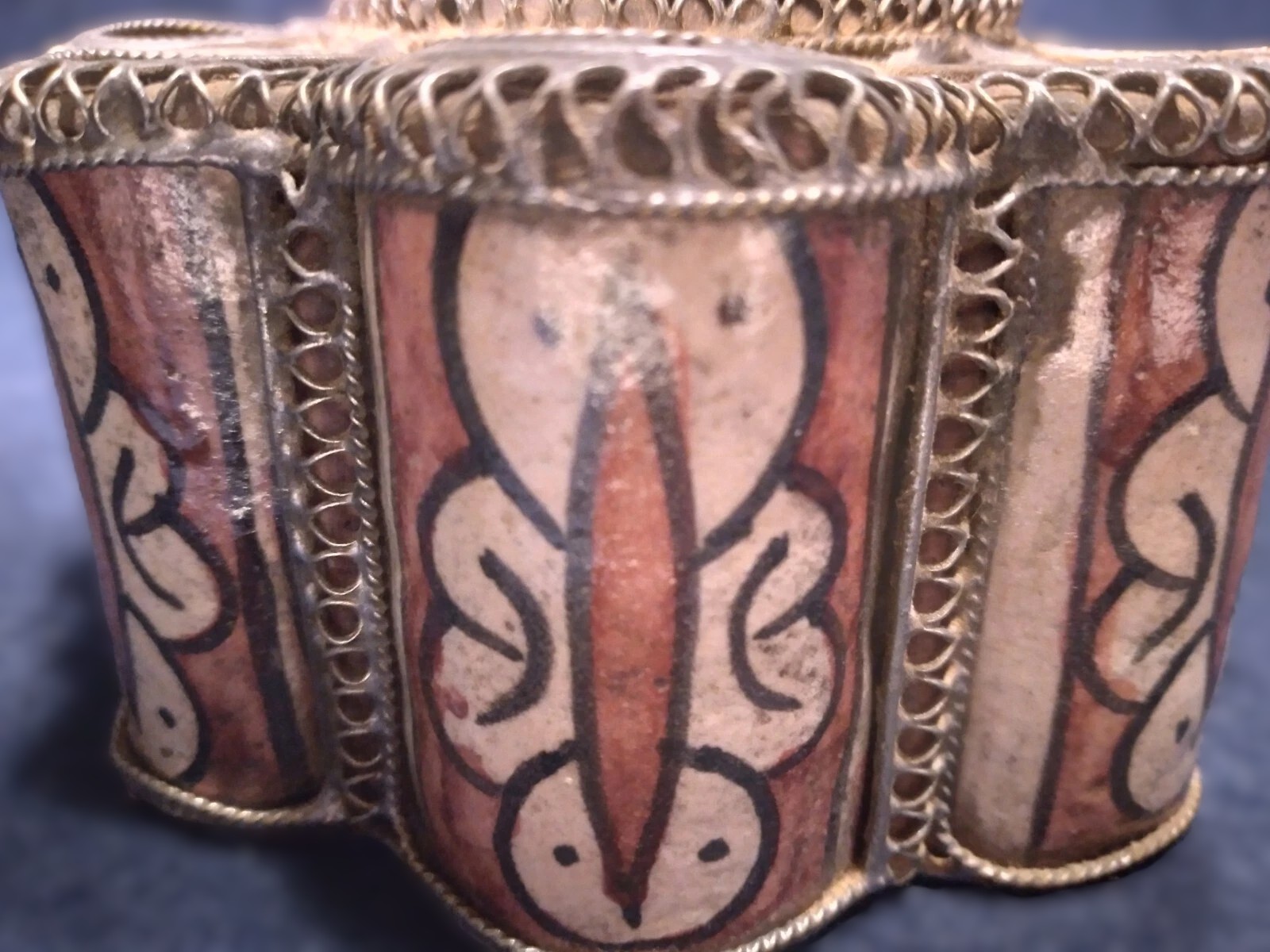
Moroccan “Douia” Inkwell
| Categories | Middle East / Africa |
| Material | Earthenware, Metal |
| Markings | Unmarked |
| Manufacturer | Undetermined |
| Origin | Morocco |
| Date or Era | circa 1910 |
| Measuring | 4 ½” wide; 4” high |
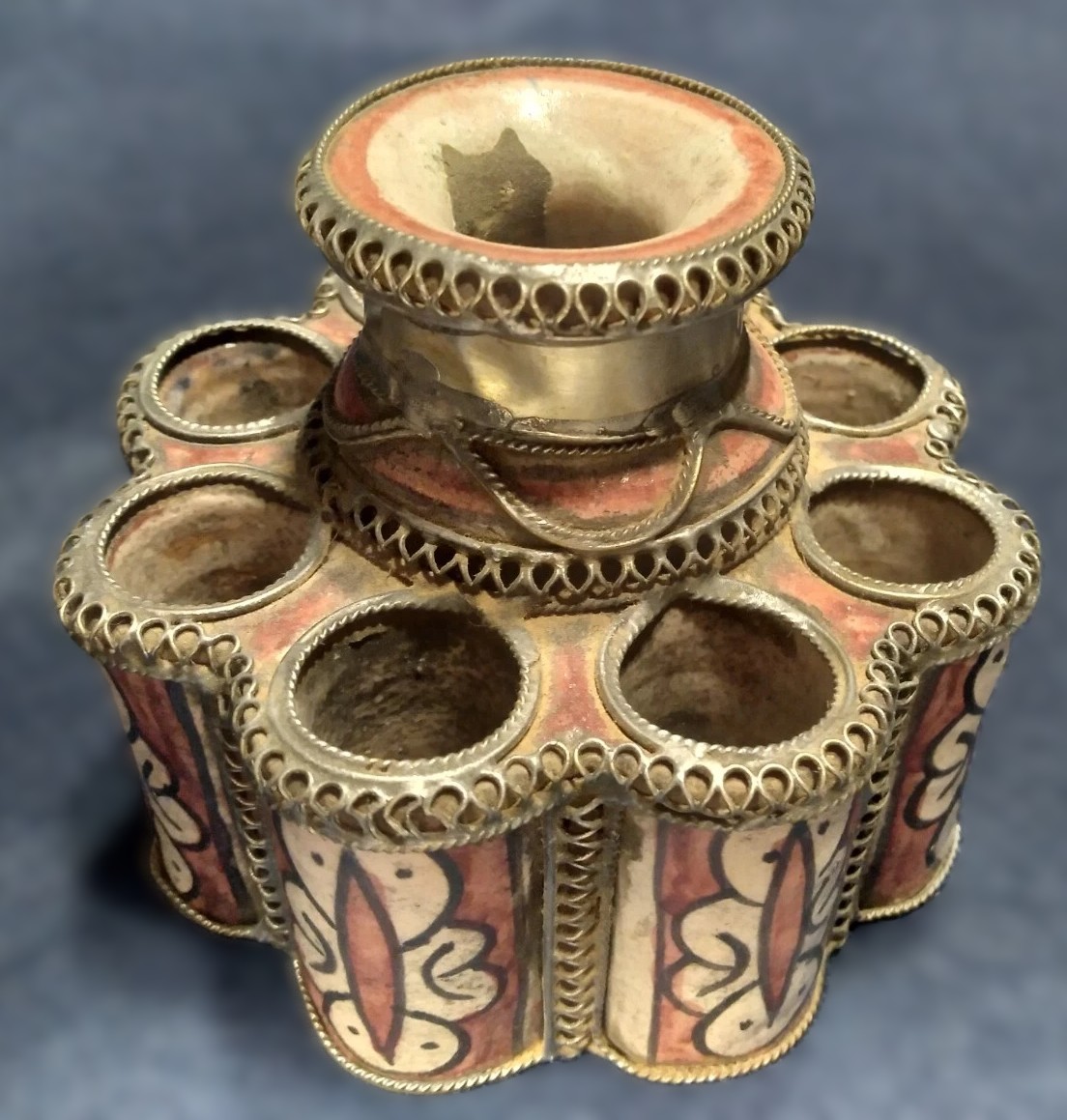
This is a classic example of a Moroccan Douia (also spelled Dawaya), a specialized inkwell traditionally used by calligraphers and illuminators in the Maghreb. These pieces are appreciated for their marriage of ceramic artistry and intricate metalwork.
Description
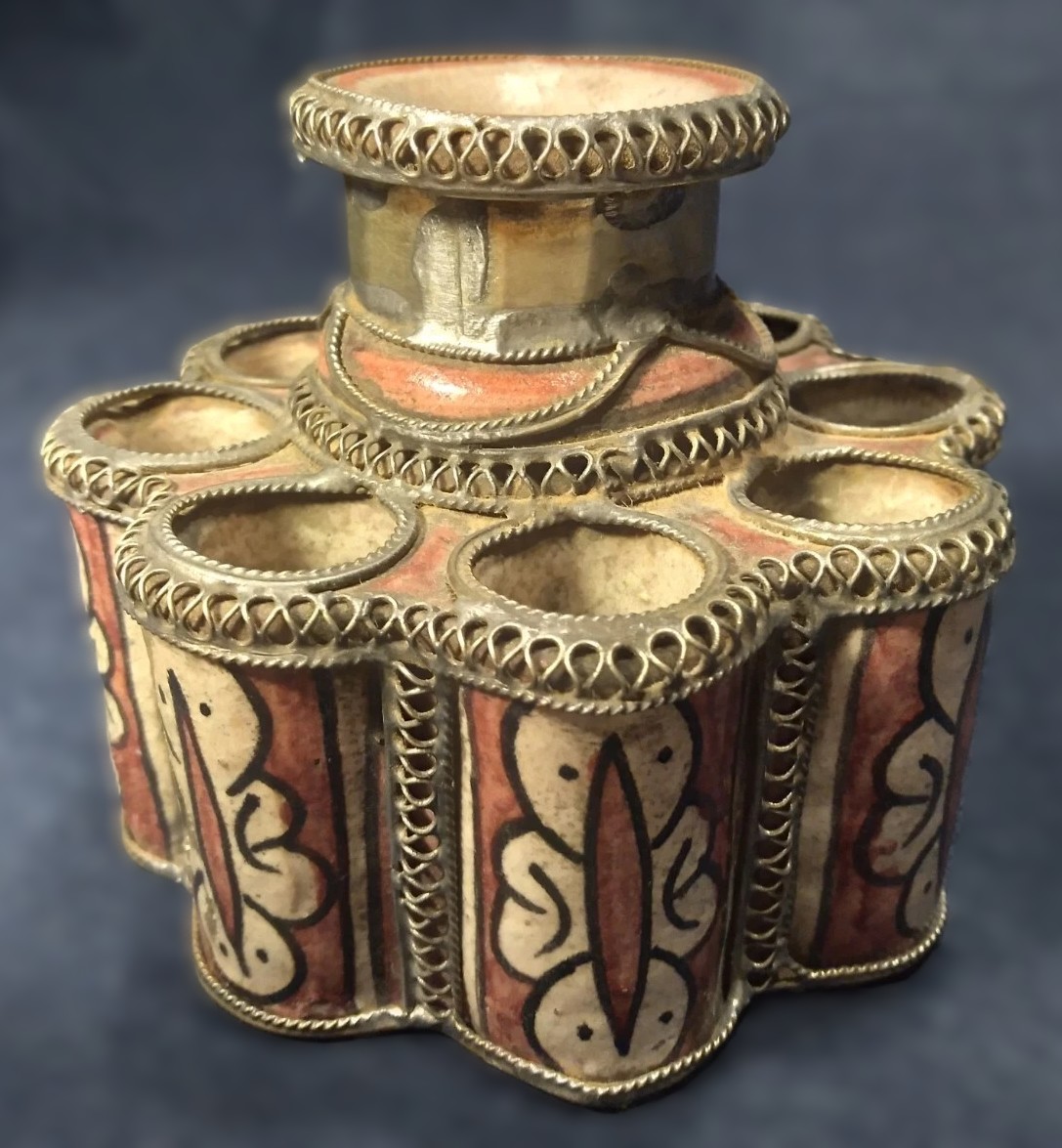
Antique Moroccan Polychrome Faience & Filigree “Douia” Inkwell
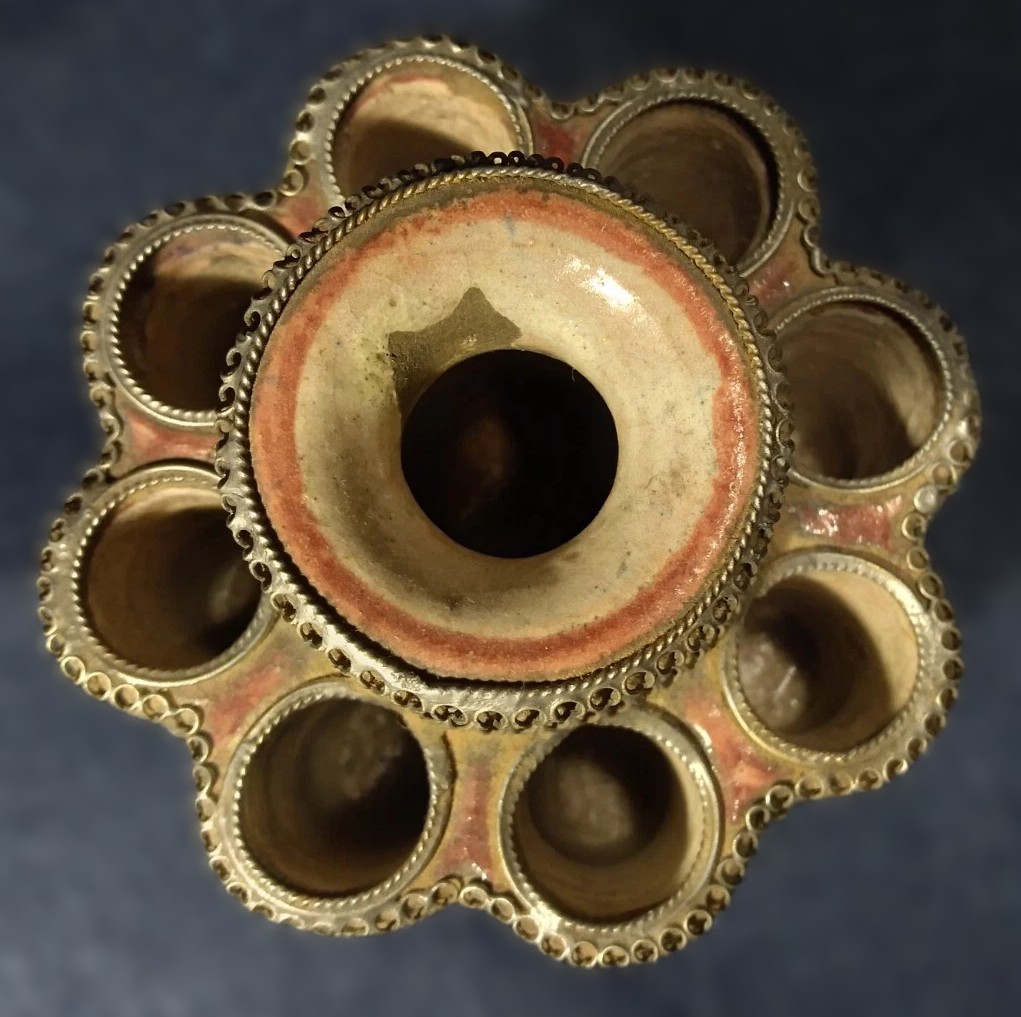
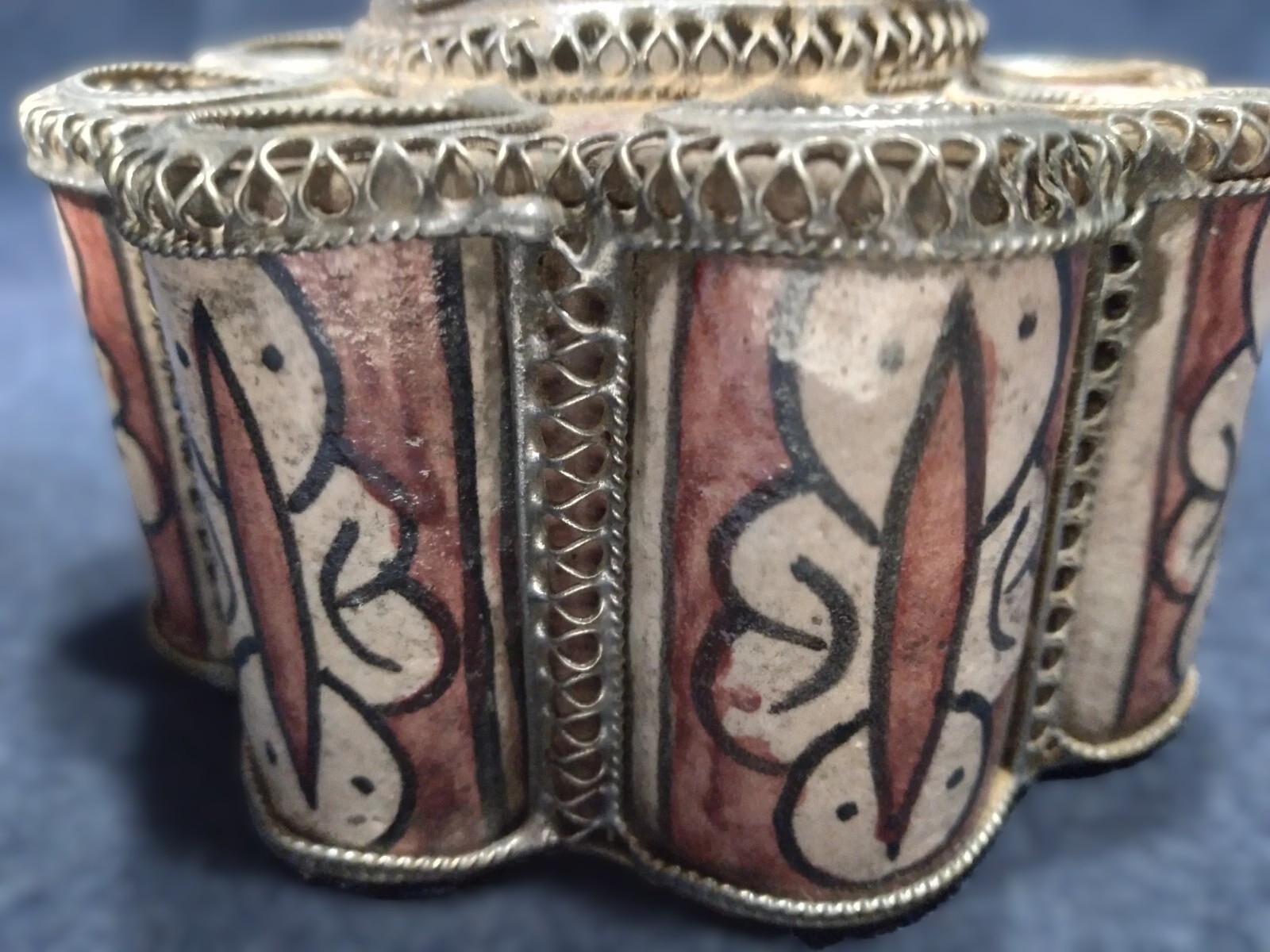
An early 20th-century Moroccan “illuminator’s” inkwell, featuring a hand-thrown faience (glazed earthenware) body with a rare nine-well configuration. The vessel consists of a tall, central master reservoir surrounded by eight subsidiary circular wells, designed to hold a variety of pigments or colored inks for manuscript illumination.
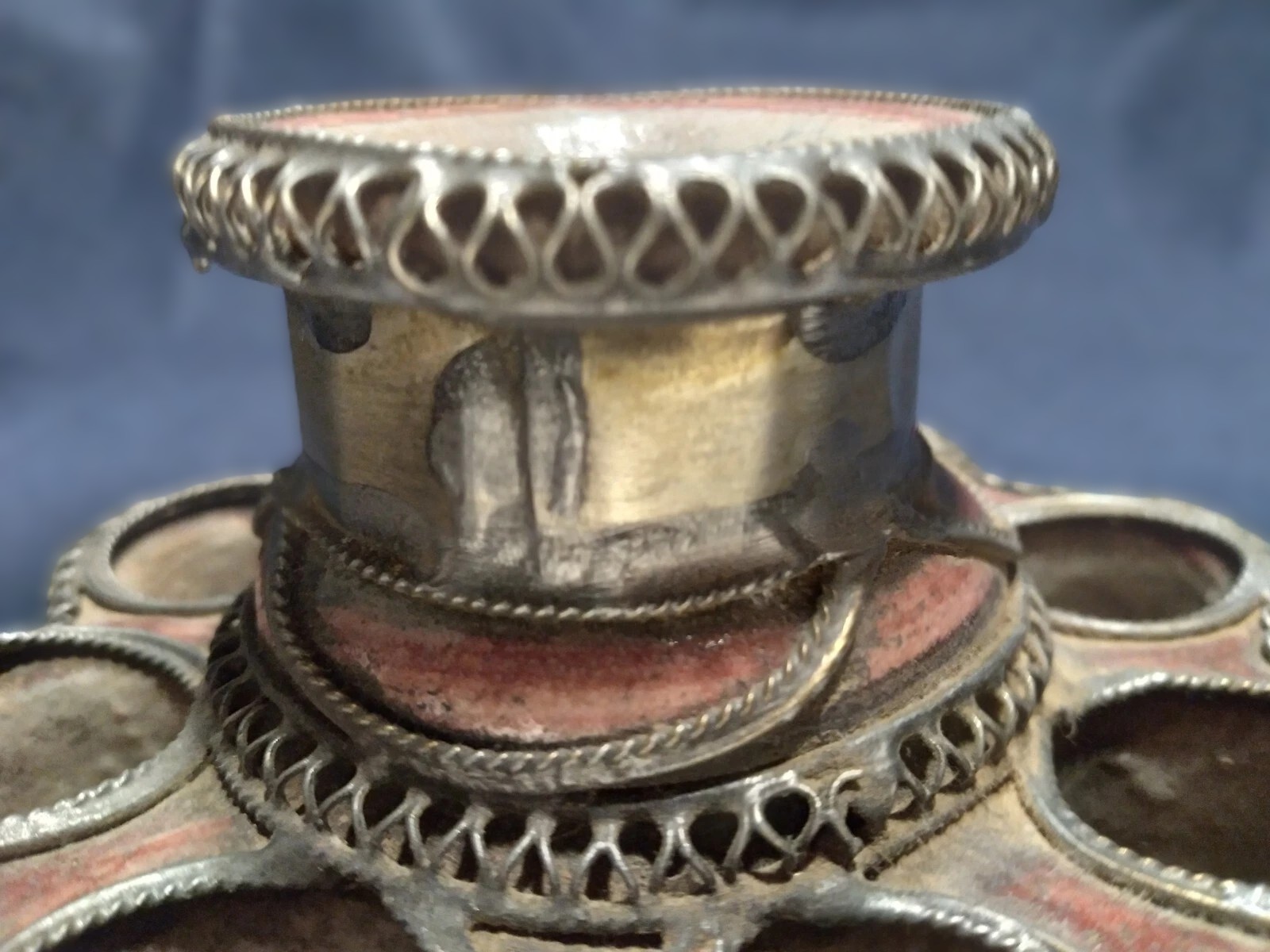
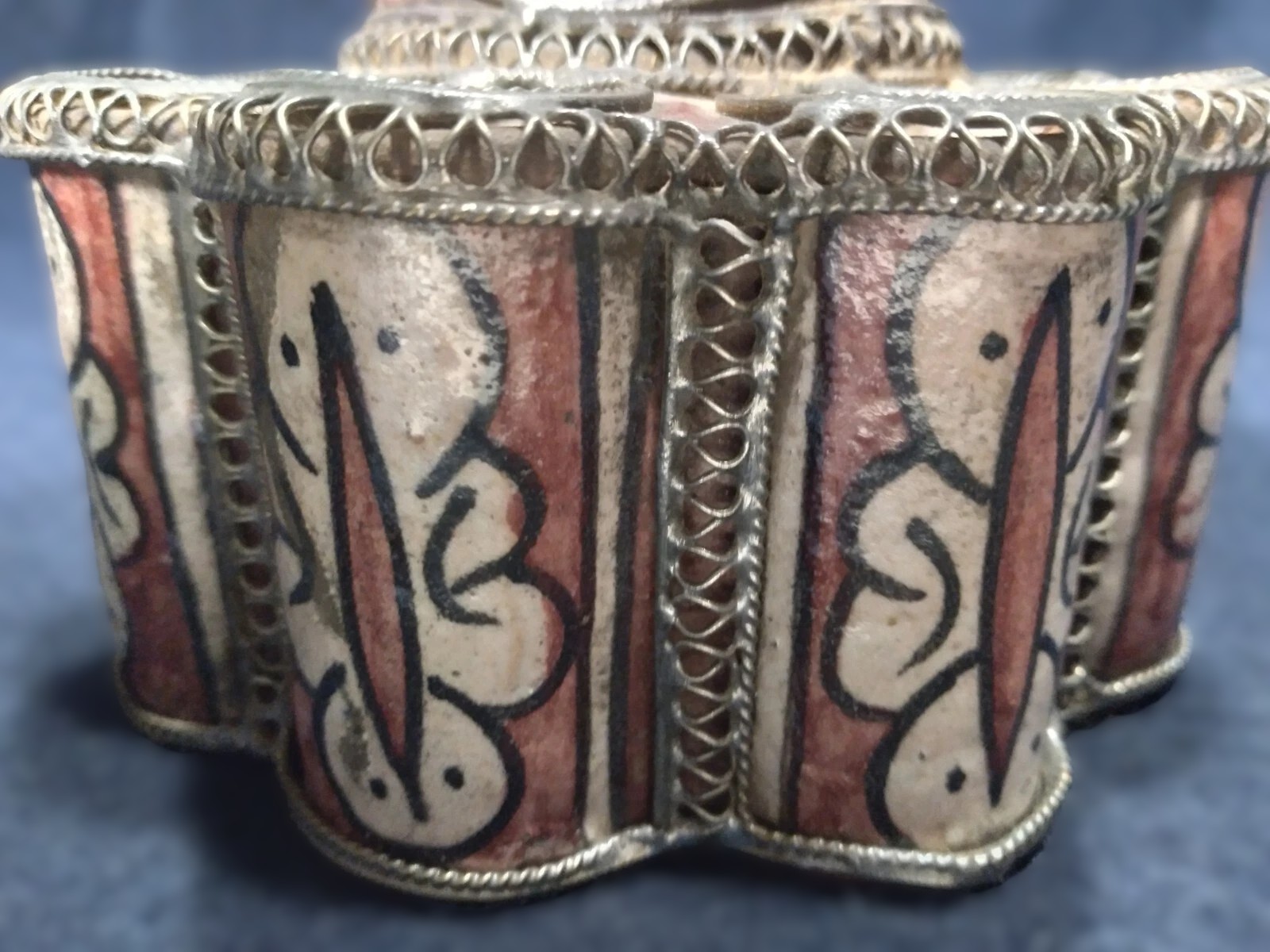
The ceramic is decorated with hand-painted polychrome underglaze motifs in a traditional Moorish palette of terracotta-red, cream, and manganese black. The geometric “medallion” or palmette patterns on the perimeter wells are framed by a complex Maillechort (nickel silver) or low-grade silver alloy encasement. This metalwork features hand-soldered twisted wire filigree, scalloped “ajoure” (openwork) borders around each rim, and vertical cable-stitch reinforcements that secure the ceramic segments.
Technical Details
- The Metal: The “spiraled metal” is technically twisted wire filigree. In Morocco, this is traditionally made of Maillechort—an alloy of copper, nickel, and zinc. It was favored for its silver-like luster and durability.
- The Form: While single-well Douias are common, an eight-bucket (plus center) arrangement is a premium form. It allowed a scribe to keep a full palette—typically black, red, blue, green, and various gold or mineral pigments—readily available without cross-contamination.
- The Palette: The use of the reddish-pink (iron oxide) and black against a cream slip is characteristic of the Fassi (Fez) style, though similar work was also produced in Safi.
Age and Origin
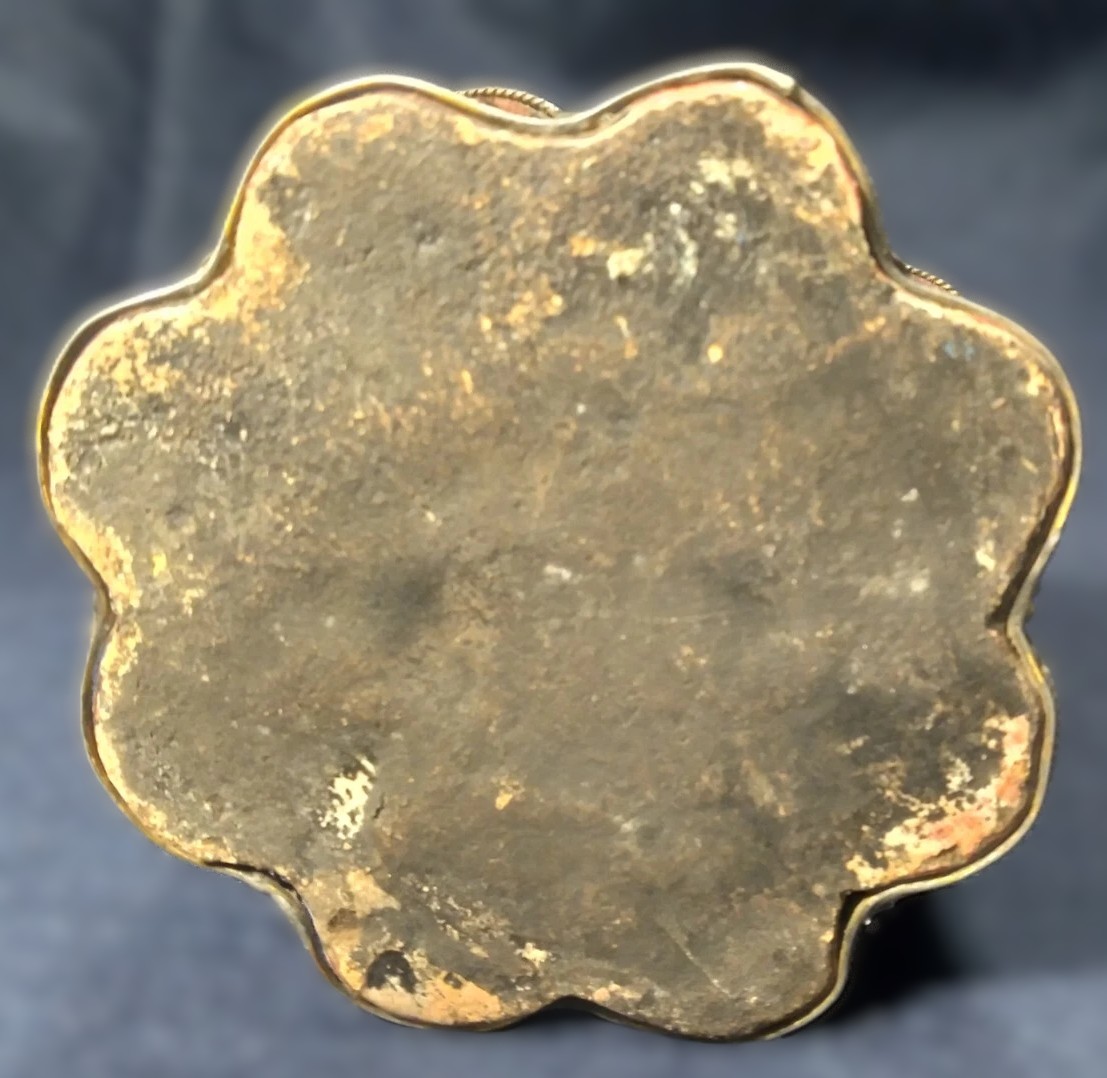
Estimated Age: Late 19th to Early 20th Century (c. 1890–1930) The patina on the metal and the “crackle” in the glaze suggest this piece dates to the peak of Moroccan artisan export during the French Protectorate era. The wear on the unglazed base shows the characteristic “buff” or light-red clay used in northern Morocco during this period.
Origin: Fez, Morocco Fez was the primary center for high-quality polychrome pottery (Fassi ware). While Safi also produced metal-encased pottery, the specific “medallion” geometry and the refined nature of the 8-well layout strongly point to a Fez workshop.
The Maker These were almost exclusively produced by anonymous master potters and metalworkers (Maâlems) in the Fez medina. It was common for the ceramic body to be made in one workshop and then sent to a specialized jeweler or “Encaisser” to be fitted with the metal filigree. Because they were artisan-made for the local market and the early tourist trade, individual maker’s marks are exceptionally rare.
Condition
The presence of the original ceramic dividers between the wells (often broken in these fragile pieces) and the intact filigree “cage” makes this a superior collector’s specimen. The minor oxidation on the central neck adds a desirable “authentic” character to the piece’s history.
Sold for $238 in April 2026
Content disclaimer. The information posted is the owner’s best knowledge and may not have been vetted by the SOIC. We welcome comments, corrections, and additions, working to make our website information comprehensive and accurate.
Join the Society of Inkwell Collectors (SOIC) – it’s free!
Founded in 1981 as a non-profit organization,
we are documenting inkwells (and accessories).
We’re here to help and inform!