

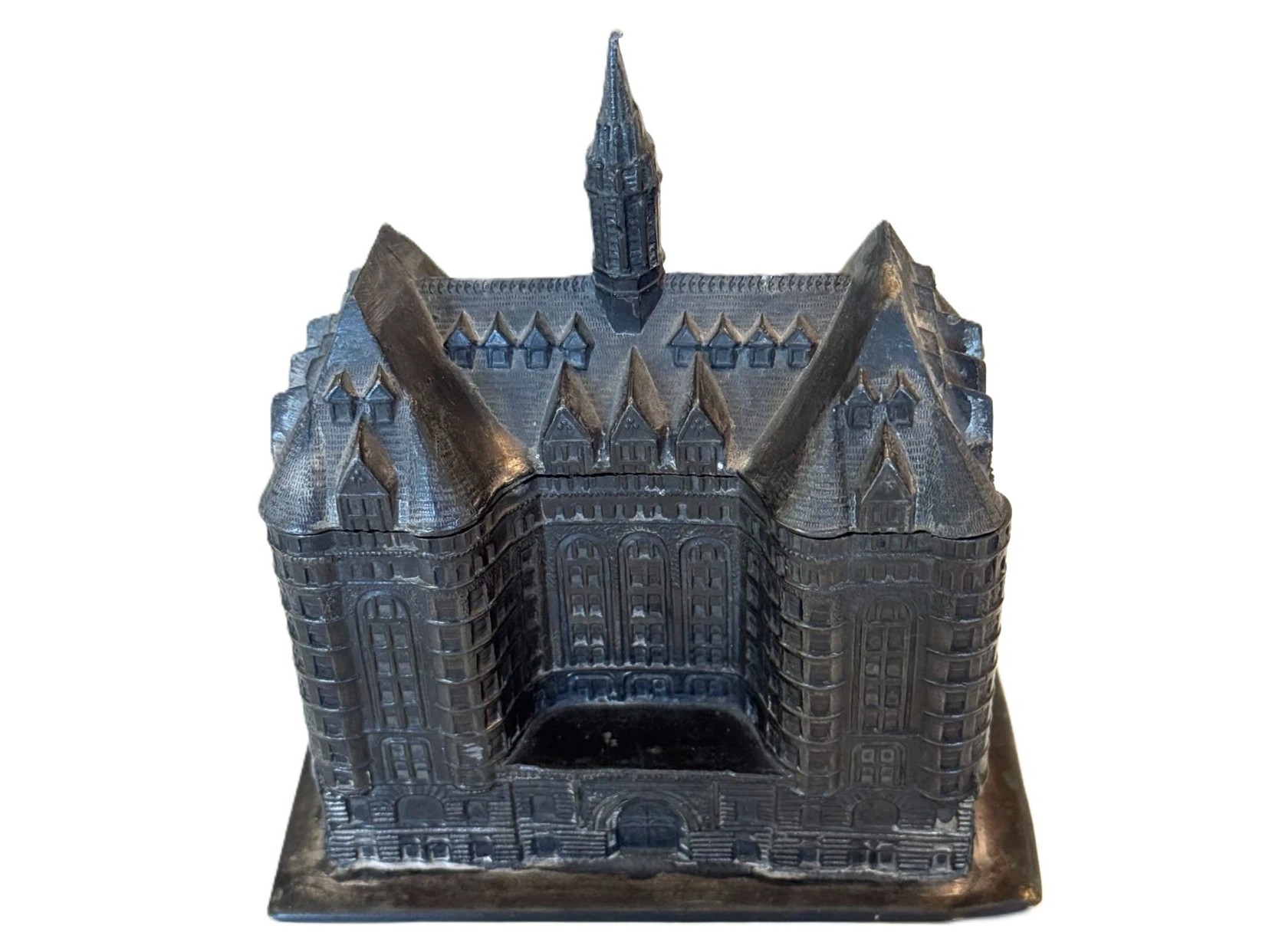
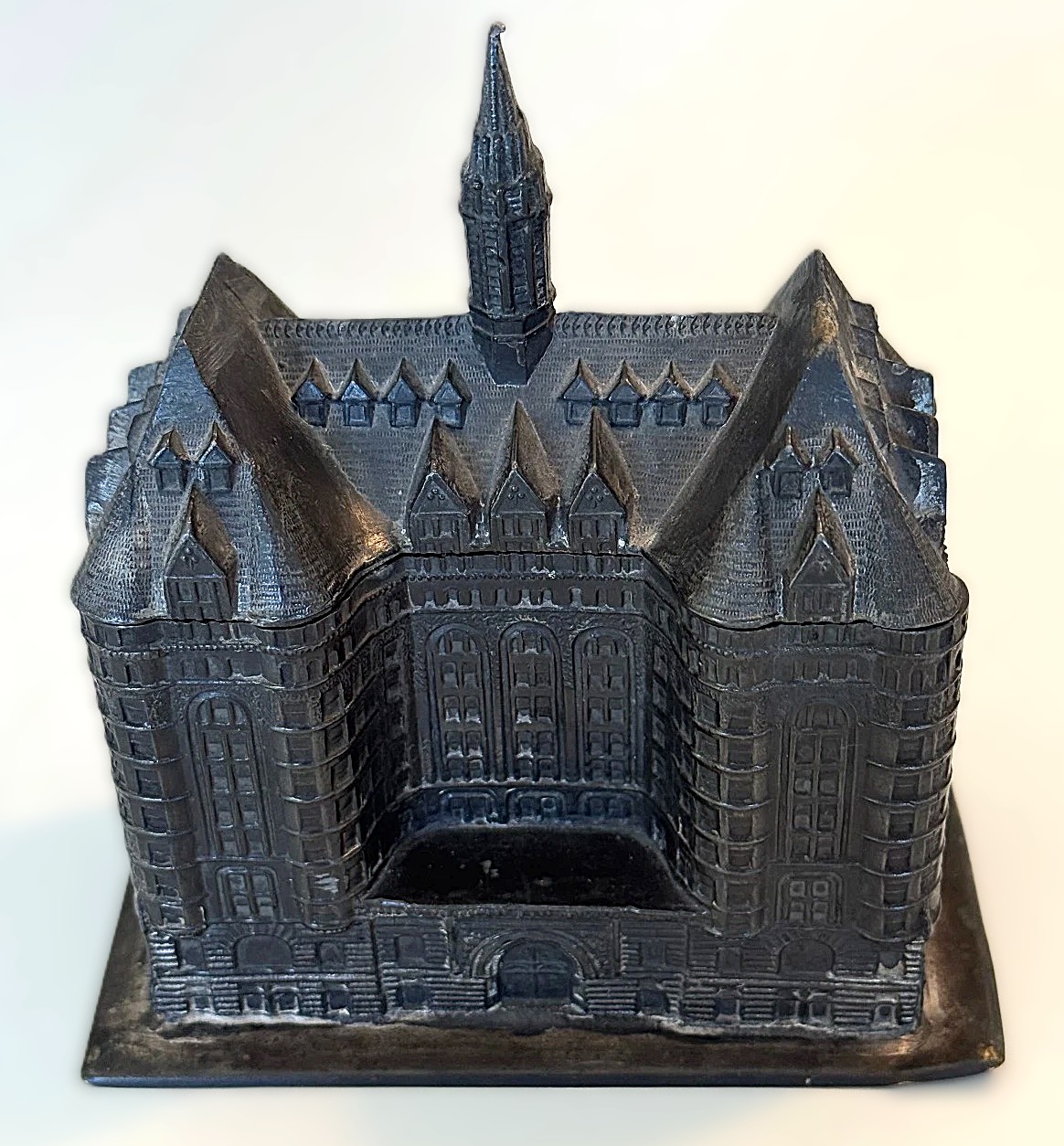
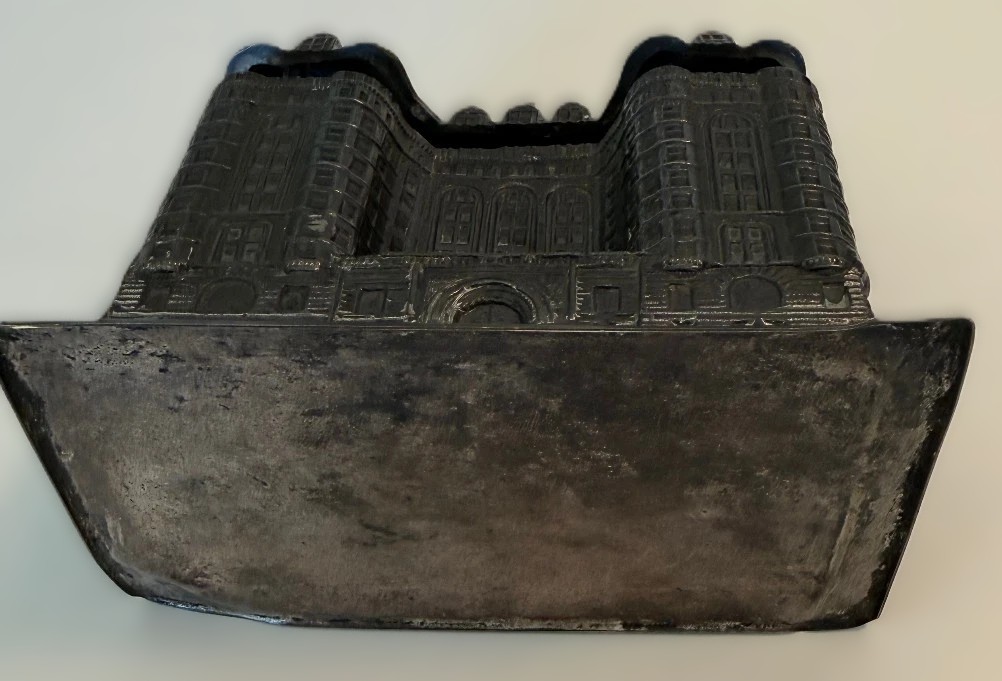
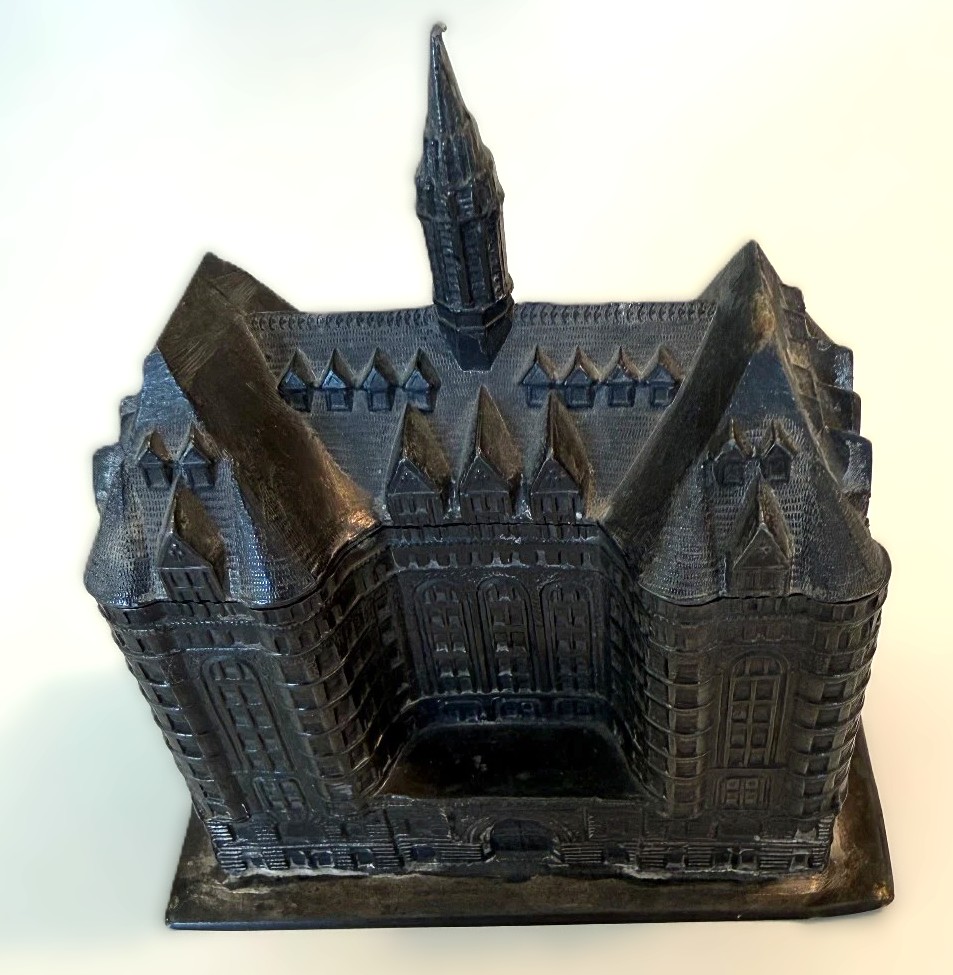

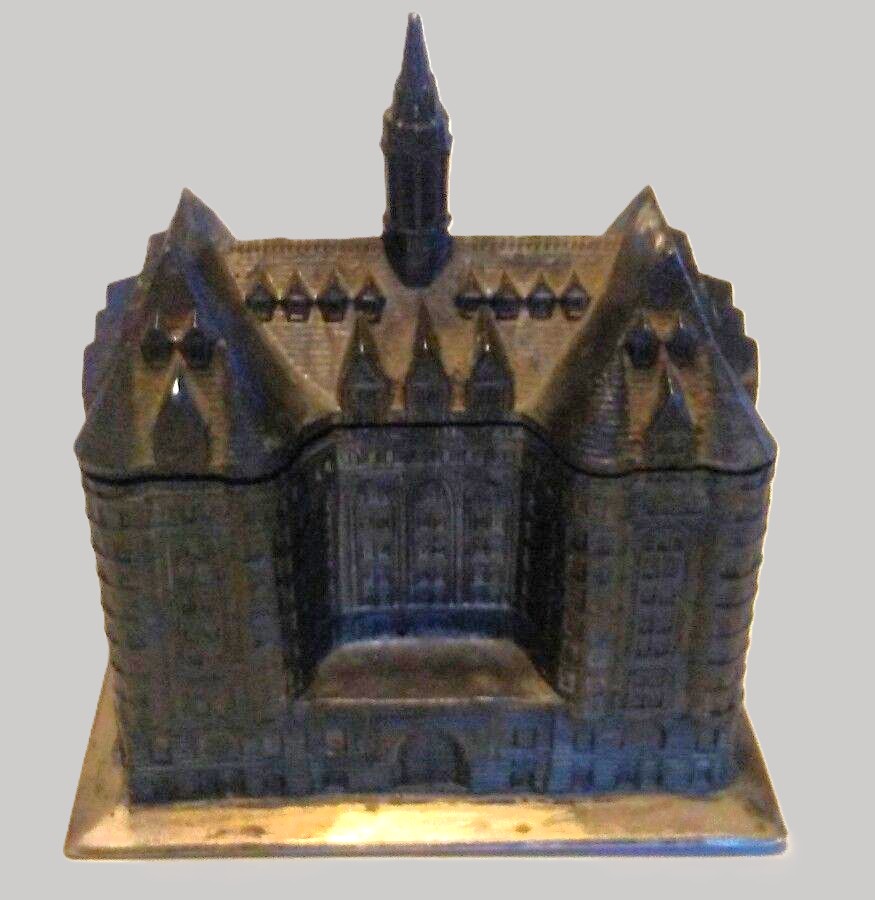
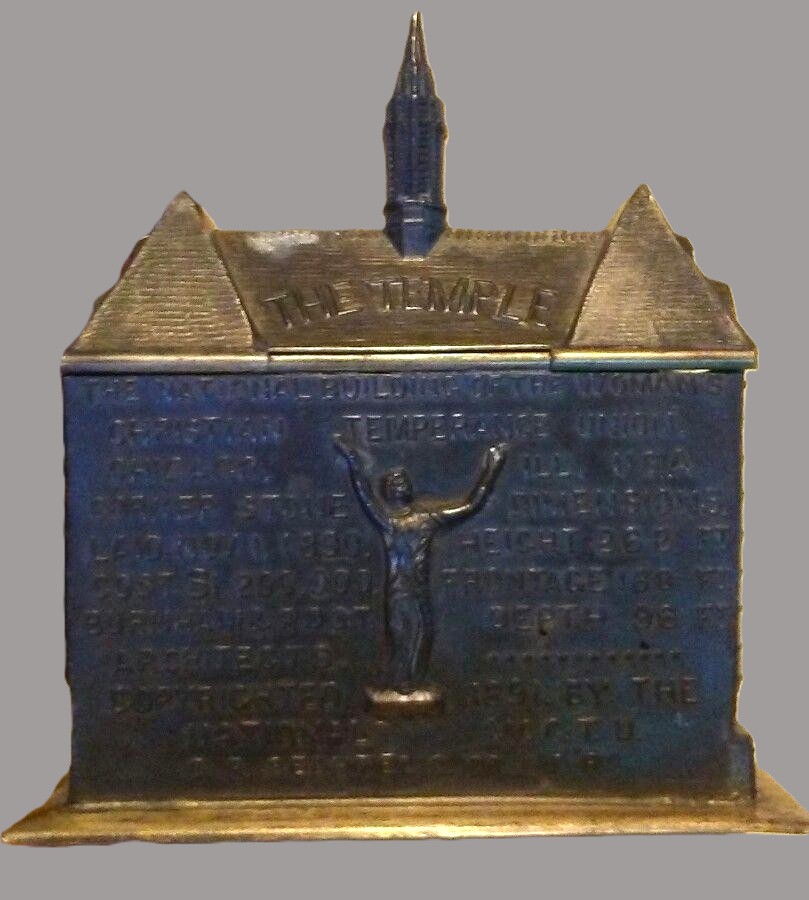


The Woman’s Temperance Temple Souvenir Inkstand (1891)
| Categories | Advertising, Figural - Inanimate |
| Type | Buildings / Structures |
| Material | Spelter |
| Markings | See Narrative |
| Manufacturer | C. R. Bechtel & Co. |
| Origin | United States |
| Date or Era | circa 1891 |
| Measuring | 5” x 3” x 5” high |
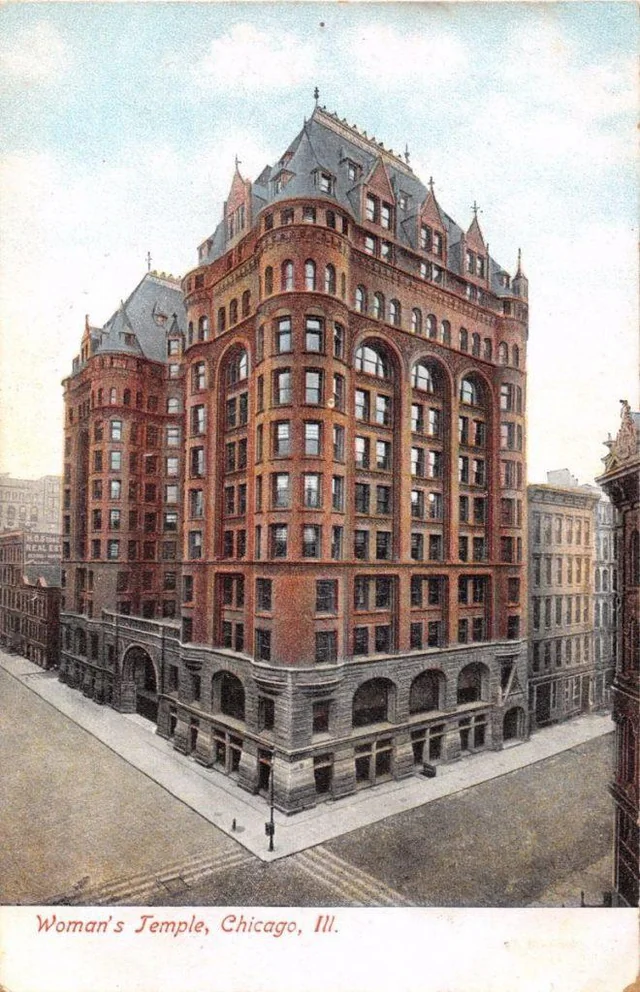
This piece is a highly detailed architectural model of The Temple (also known as the Woman’s Temperance Temple), which stood at the corner of LaSalle and Monroe Streets in Chicago.
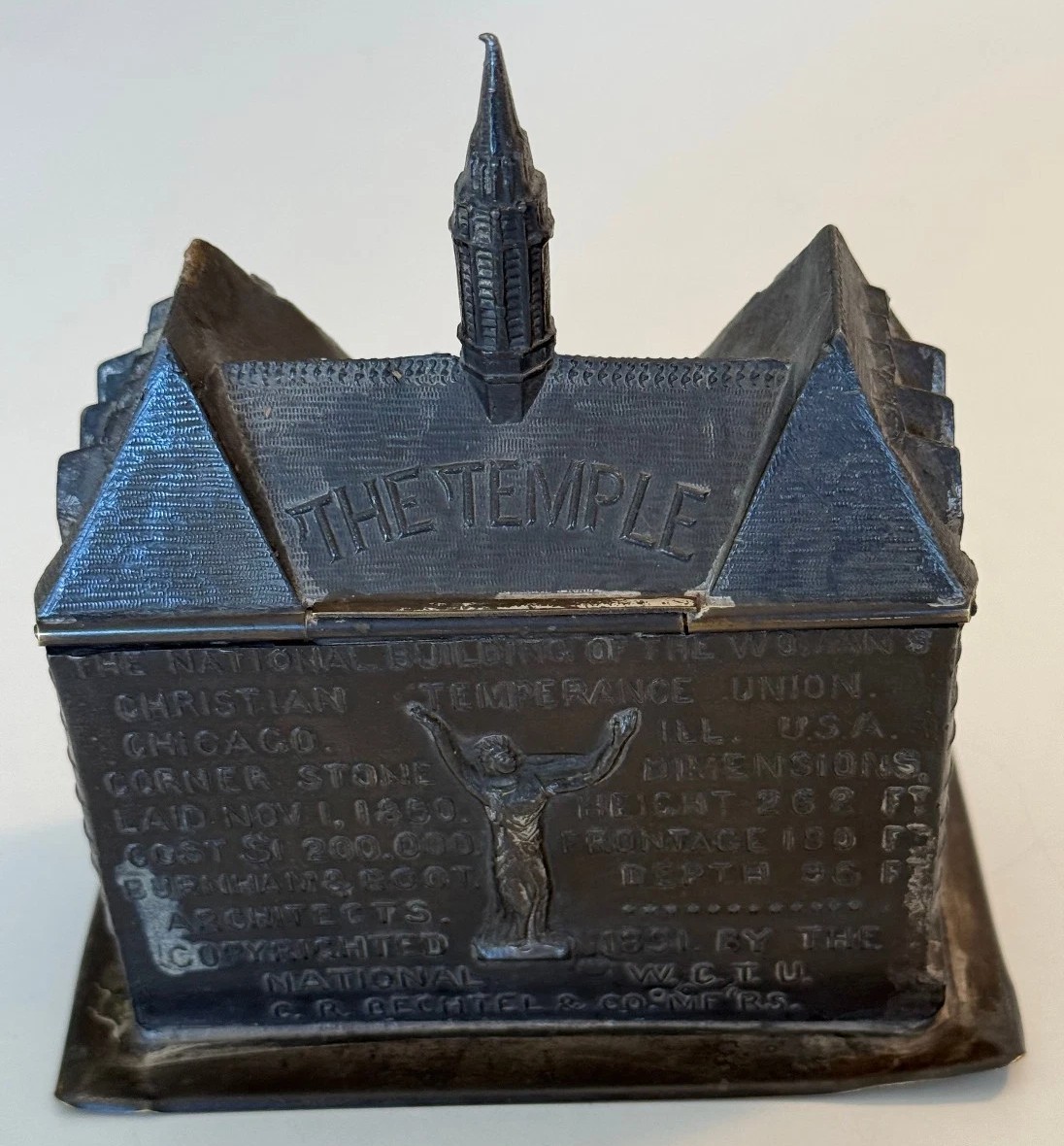
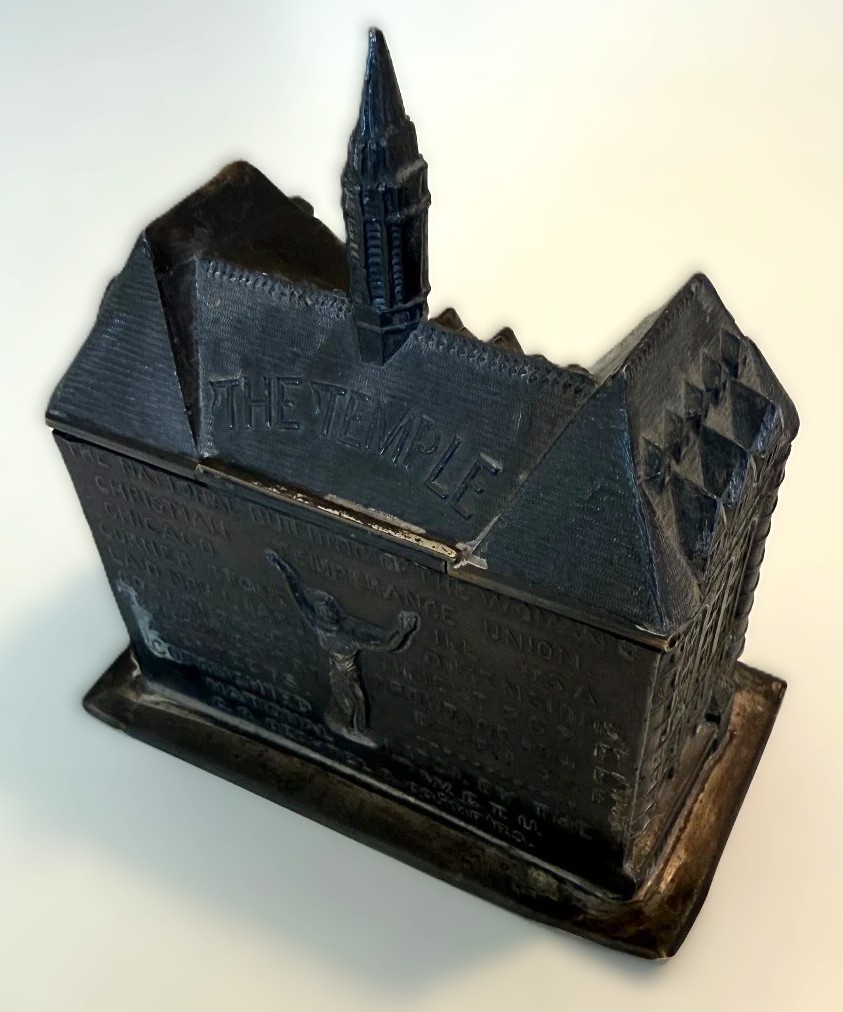
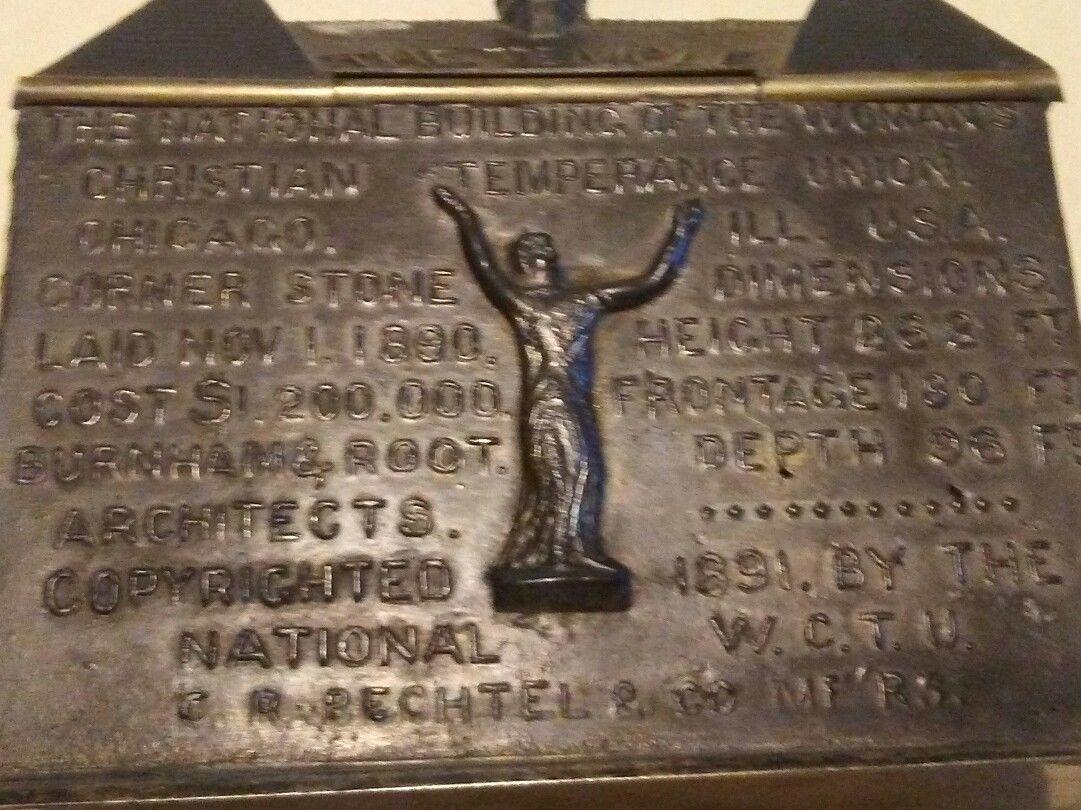
Transcription of the Back Panel
The text on the rear of the inkstand is a primary source for the building’s original ambitious statistics:
THE NATIONAL BUILDING OF THE WOMAN’S CHRISTIAN TEMPERANCE UNION. CHICAGO, ILL. U.S.A. CORNER STONE LAID NOV. 1, 1890. DIMENSIONS: HEIGHT 262 FT. FRONTAGE 190 FT. DEPTH 96 FT. COST $1,200,000. BURNHAM & ROOT, ARCHITECTS. COPYRIGHTED 1891 BY THE NATIONAL W.C.T.U. C. R. BECHTEL & CO. MFR’S.
Manufacturing & Material
- Manufacturer: The piece was made by C. R. Bechtel & Co. of Chicago. They were a specialty manufacturer of metal novelties and premium items active in the late 19th century.
- Date: It was manufactured in 1891, coinciding with the building’s construction phase to generate immediate interest and capital.
- Material Correction: While often called “lead” due to its weight and dark patina, these were typically cast in spelter (a zinc alloy) and then finished with a “Japaned” or bronzed lacquer to give it an antique appearance.
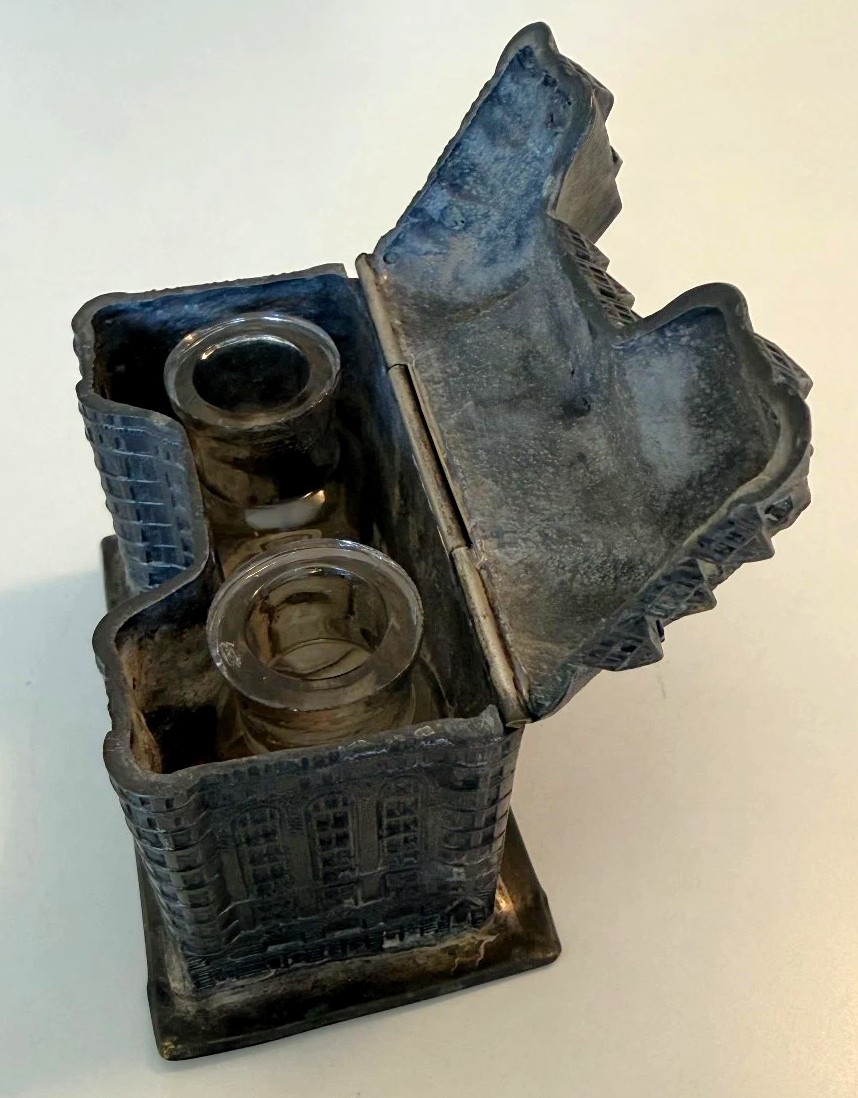
- Features: This is the “deluxe” version of the souvenir. While many smaller solid-cast models were sold, this functional inkstand contains two original glass wells and a hinged roof labeled “THE TEMPLE.”
Purpose: A “Temple” Built on Pennies
The primary purpose of this inkstand was fundraising and propaganda.
Frances Willard, the president of the WCTU, envisioned the building as a “monument of women’s work.” However, the project was controversial even within the WCTU. To fund the massive $1.2 million cost, the Woman’s Temperance Building Association (WTBA) sold “shares” of stock to local chapters and individual members.
Souvenirs like this inkstand were sold at WCTU conventions and via mail order to:
- Directly raise cash for the construction fund.
- Market the building to potential office tenants as a prestigious, modern Chicago landmark.
- Build morale among members by providing a tangible “piece” of the architectural triumph they were supposedly co-owners of.
Historical Context
- The YMCA Conflict: The WCTU had shared space with the Chicago YMCA, but as the WCTU became increasingly political (moving into suffrage and labor reform), the YMCA leadership—feeling it was no longer “purely religious”—effectively evicted them. This “homelessness” was the catalyst for Matilda Carse and Frances Willard to push for their own skyscraper.
- The Architectural Tragedy: Designed by the legendary firm Burnham and Root, it was considered one of the most beautiful skyscrapers of the Chicago School. It featured a unique “French Château” style roof (visible on this inkwell) that stood out against the more utilitarian “Chicago boxes” of the era.
- The Financial Failure: The WCTU never actually owned the land; they held a 99-year lease from the Marshall Field estate. The “ground rent” was astronomical. After Willard’s death in 1898, the organization lost its driving force and its ability to keep up with the debt, leading to the loss of the building in 1903.
Summary of the Piece
This inkstand serves as a “time capsule” for a moment of extreme optimism for the WCTU. It captures the building exactly as it was intended to look before the financial reality of the Chicago real estate market dismantled the dream.
For more information: Temperance Temple (Chicago) – Wikipedia
Sold for $700 in April 2026
Content disclaimer. The information posted is the owner’s best knowledge and may not have been vetted by the SOIC. We welcome comments, corrections, and additions, working to make our website information comprehensive and accurate.
Join the Society of Inkwell Collectors (SOIC) – it’s free!
Founded in 1981 as a non-profit organization,
we are documenting inkwells (and accessories).
We’re here to help and inform!