


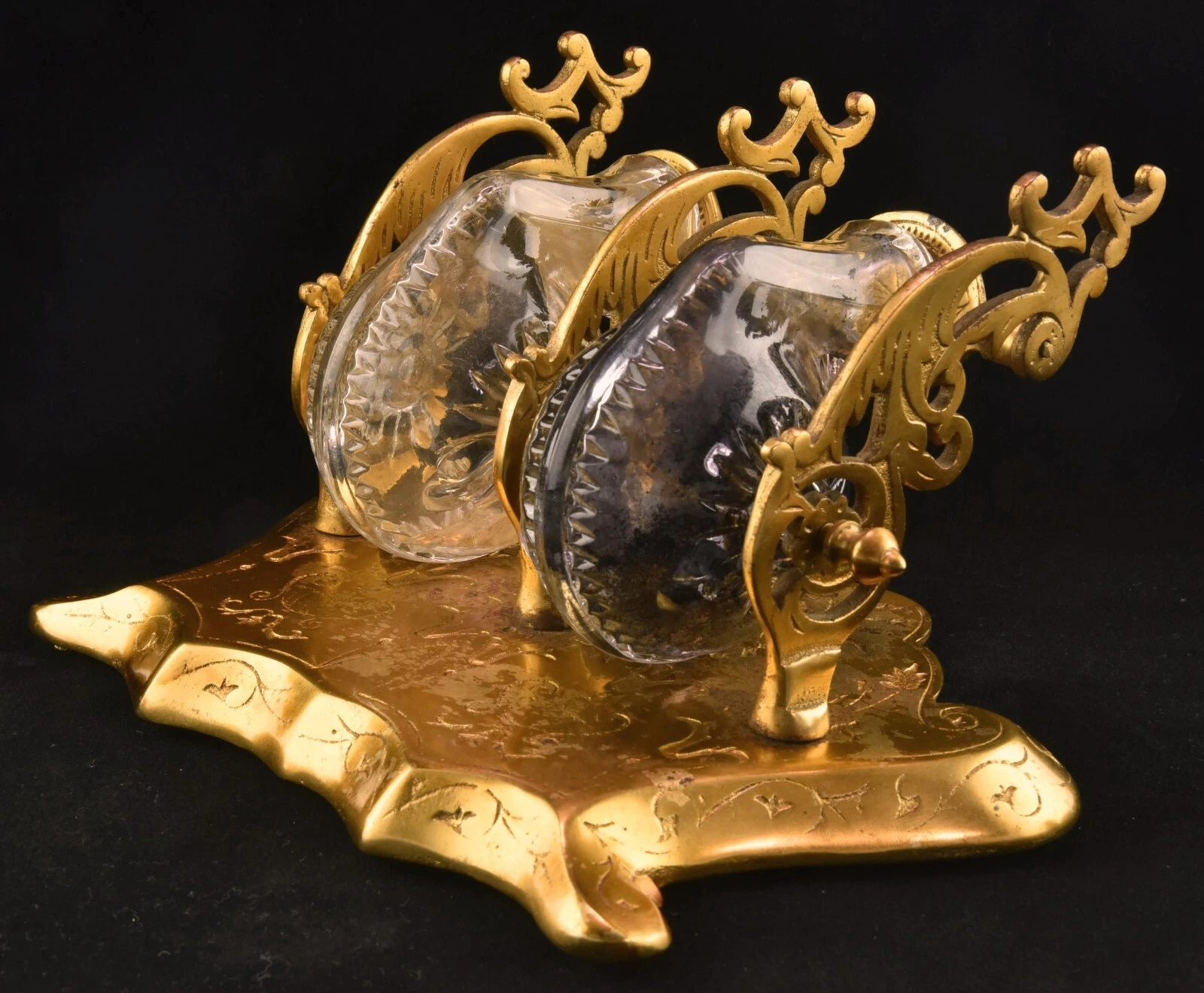
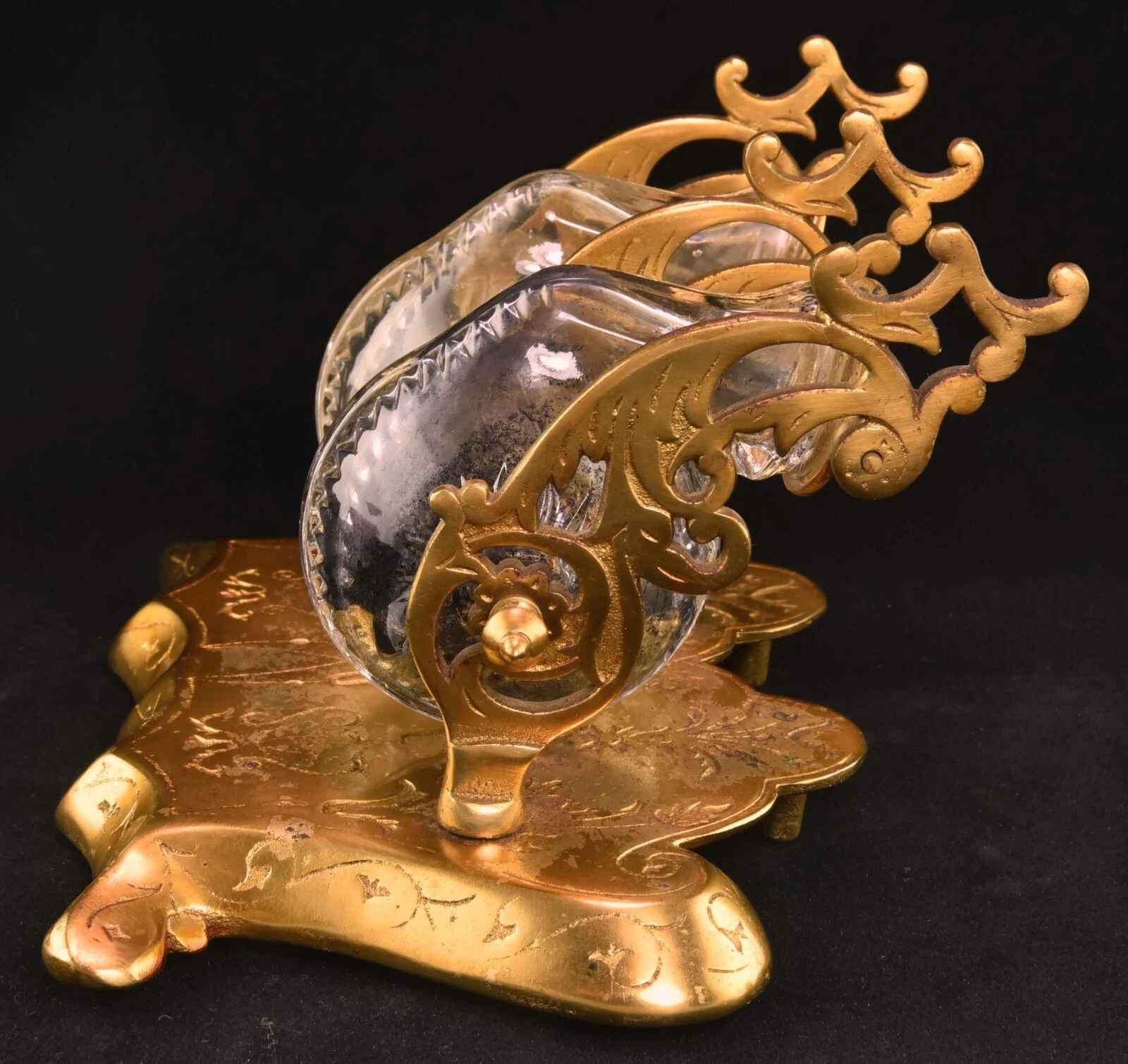
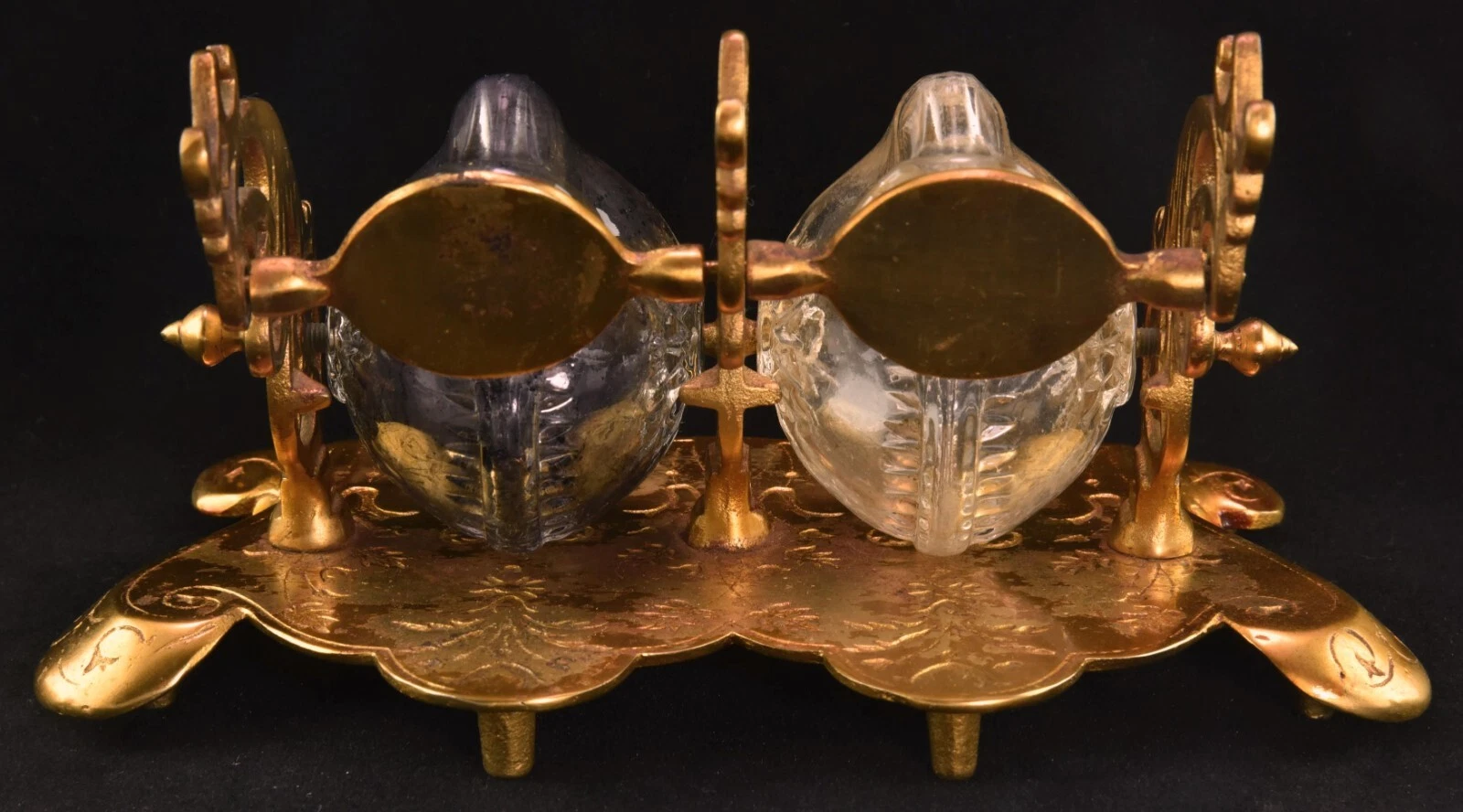
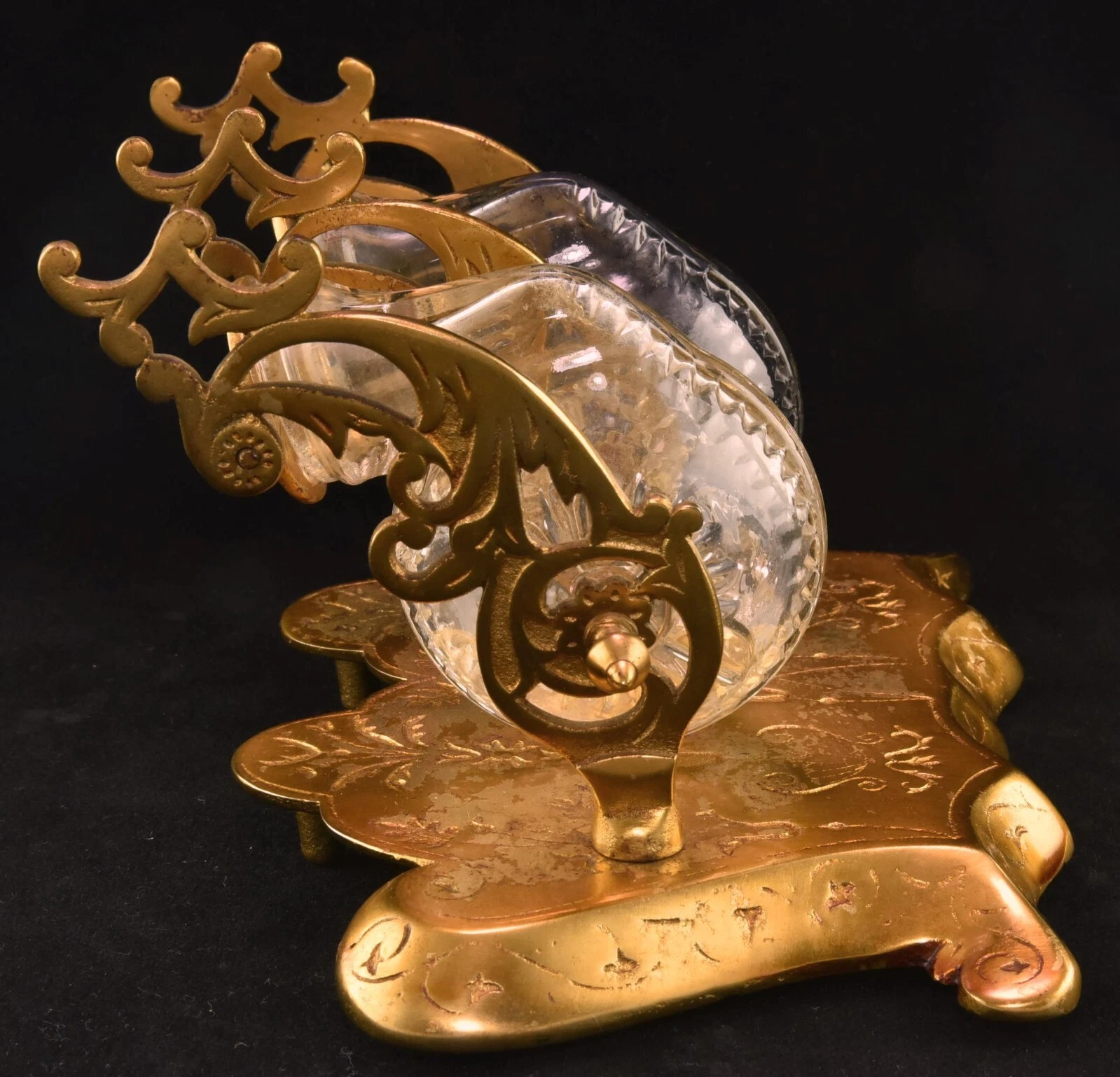
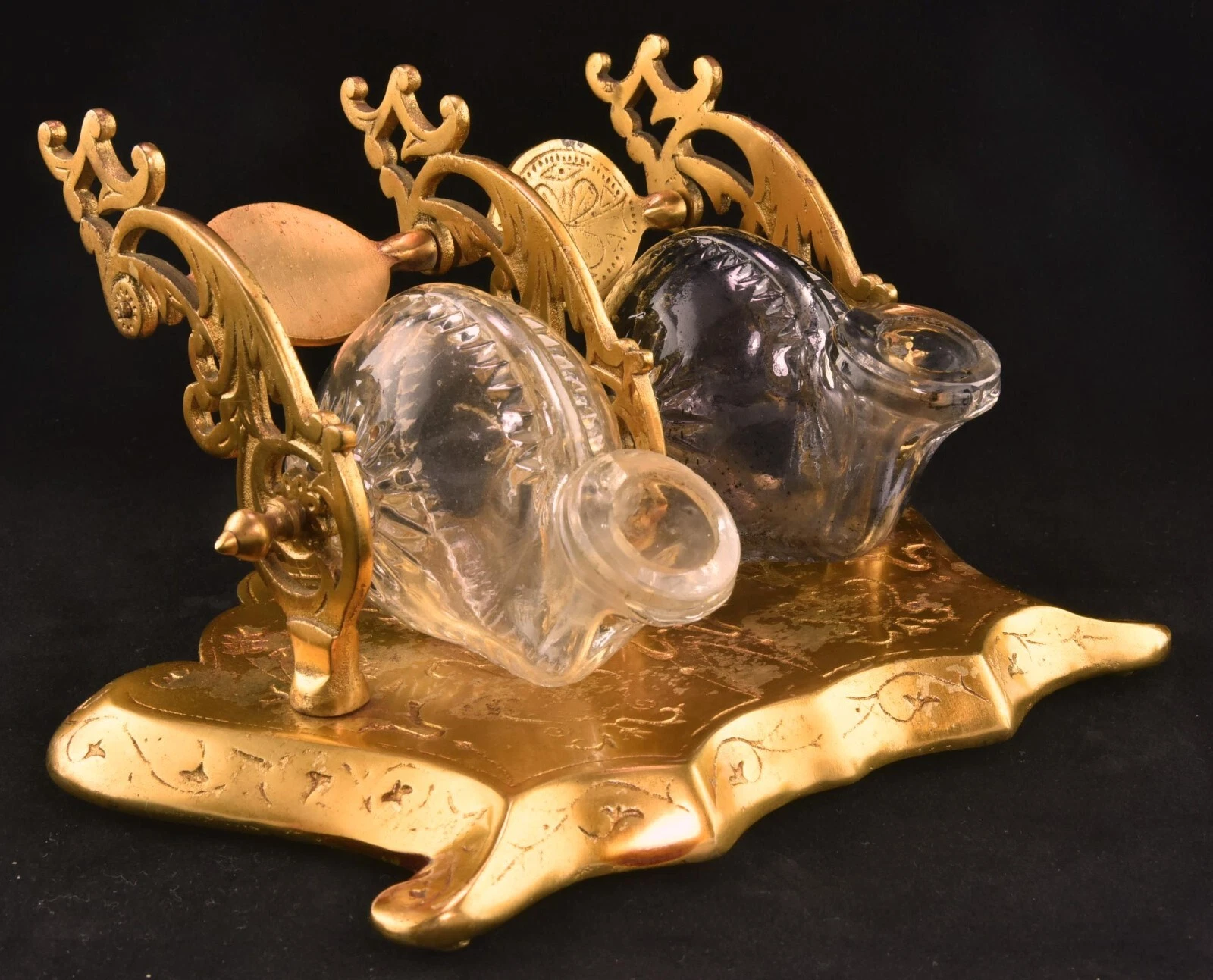
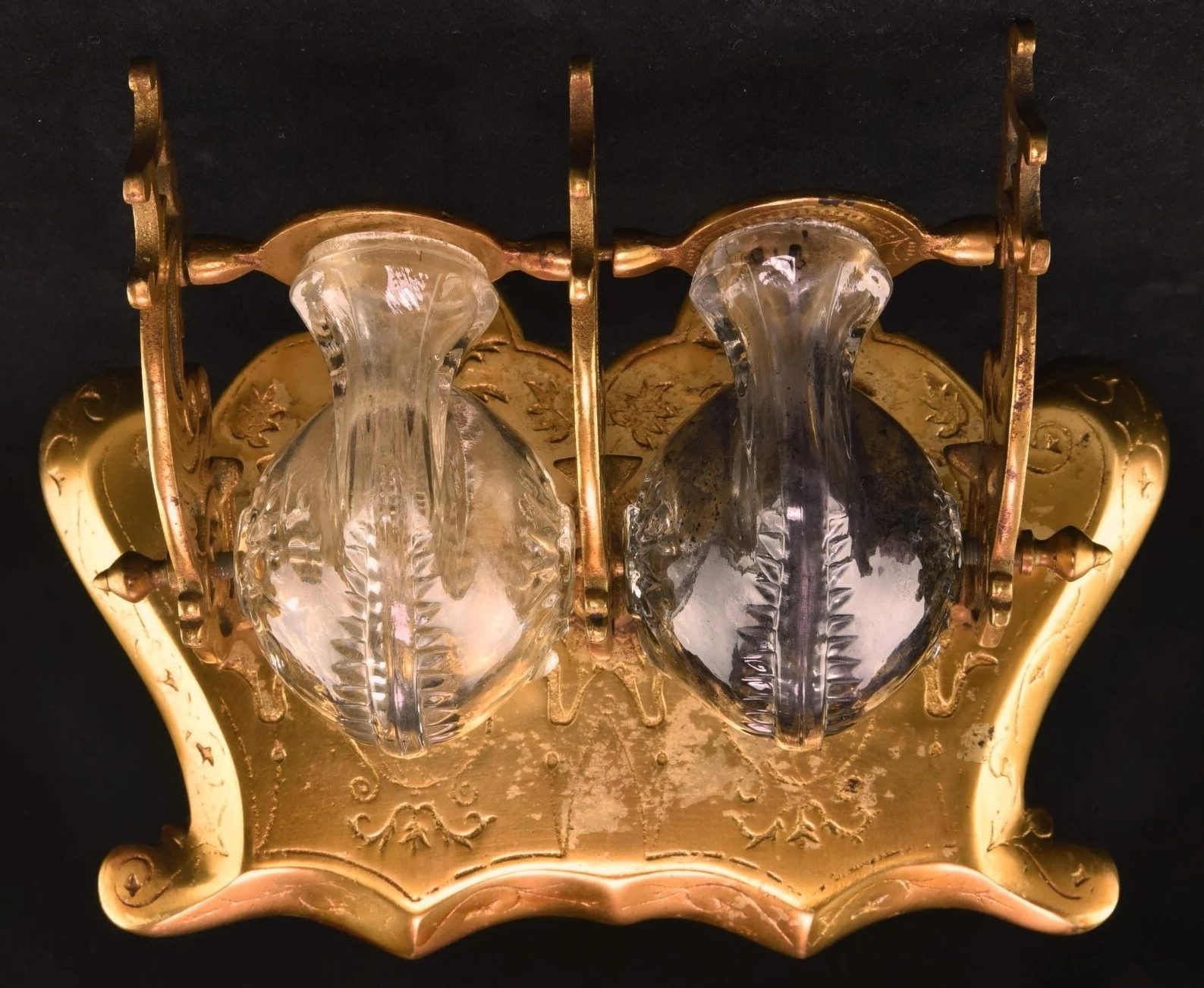
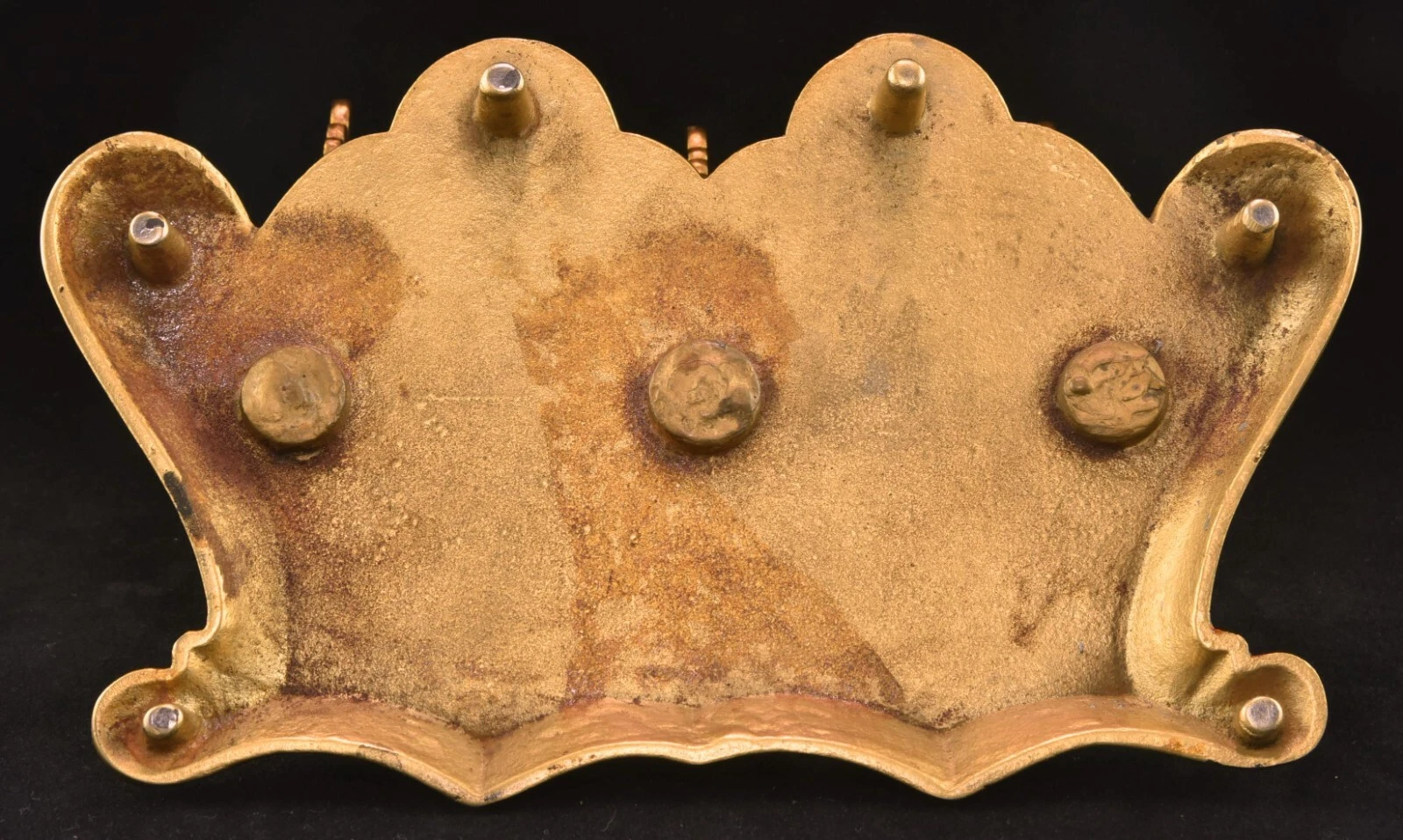
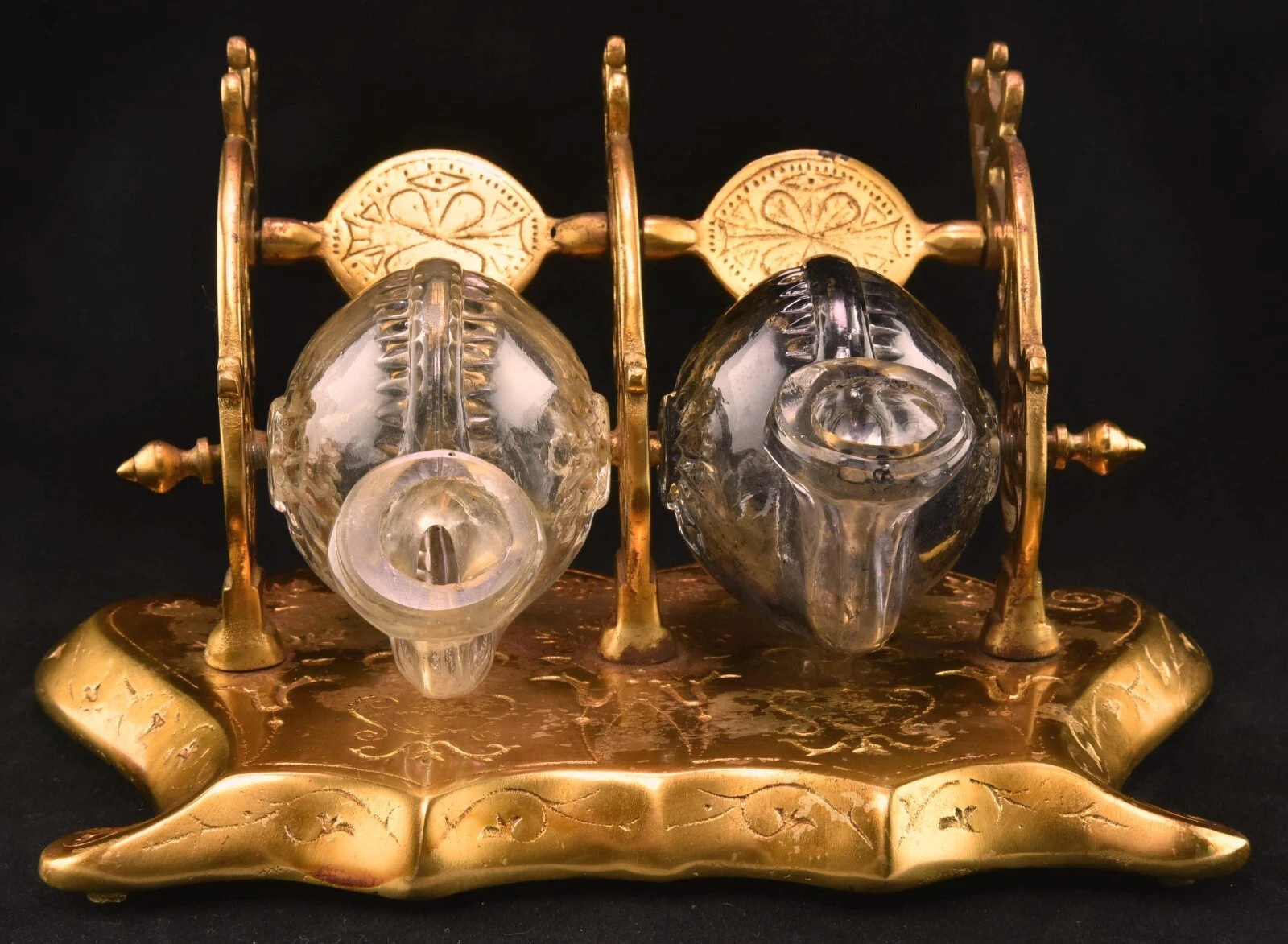
Hull Double “Snail” Revolving Inkstand
| Categories | Mechanical - Snail / Pivoting |
| Type | Patented |
| Material | Cast iron, Glass |
| Markings | Unmarked |
| Manufacturer | Peck, Stow, and Wilcox |
| Origin | United States |
| Date or Era | circa 1880 |
| Measuring | 7 ½” x 5” x 4 ½” high |
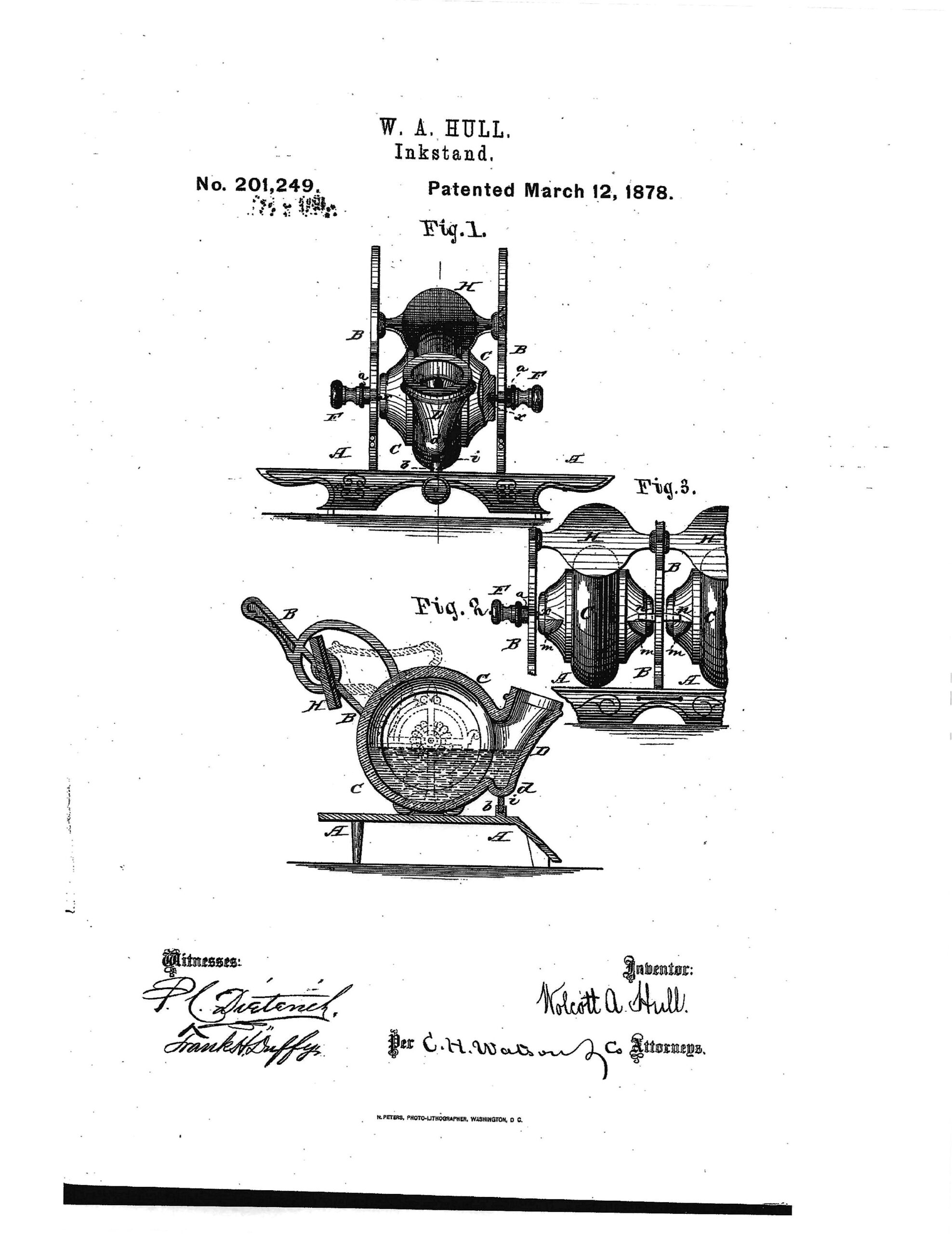
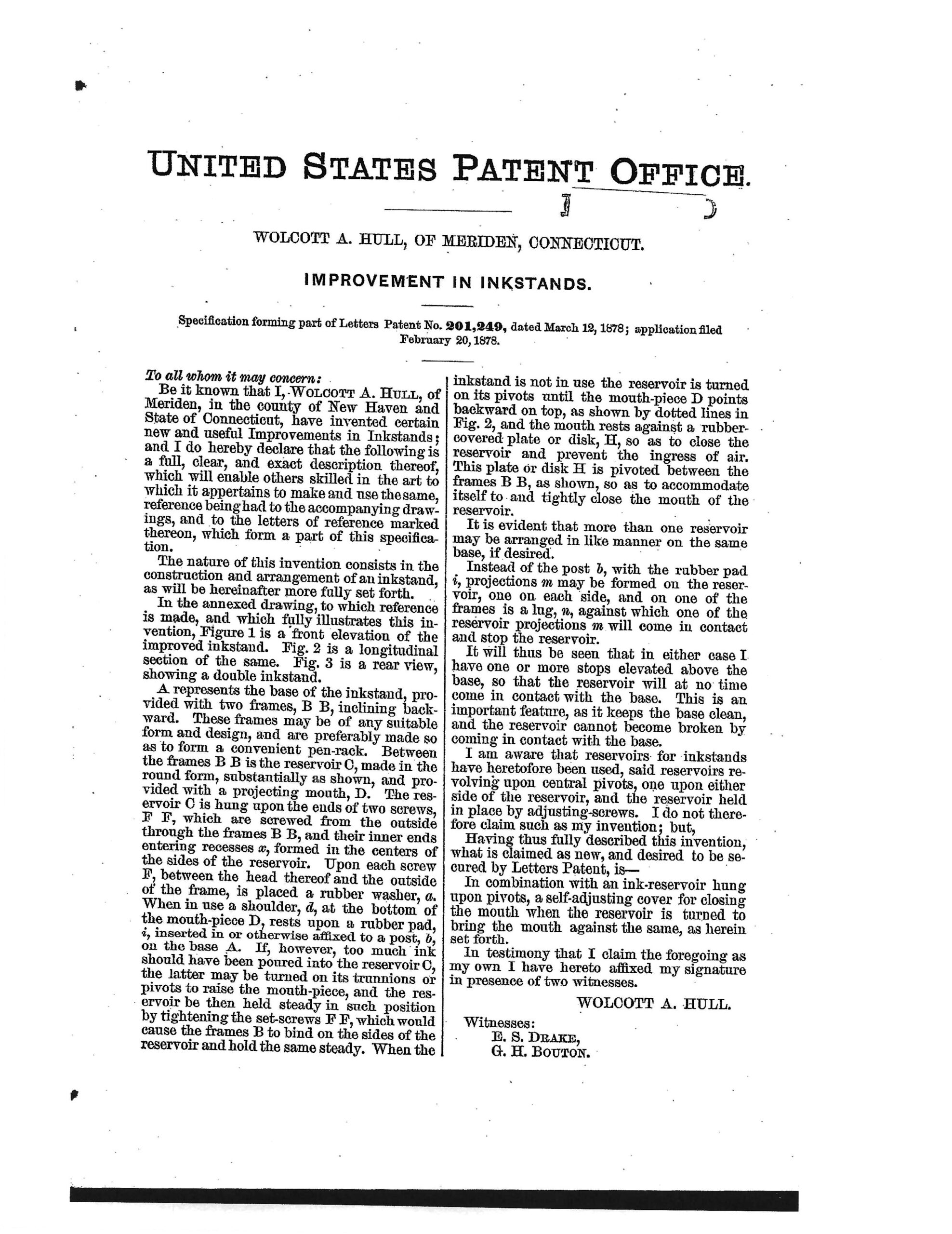
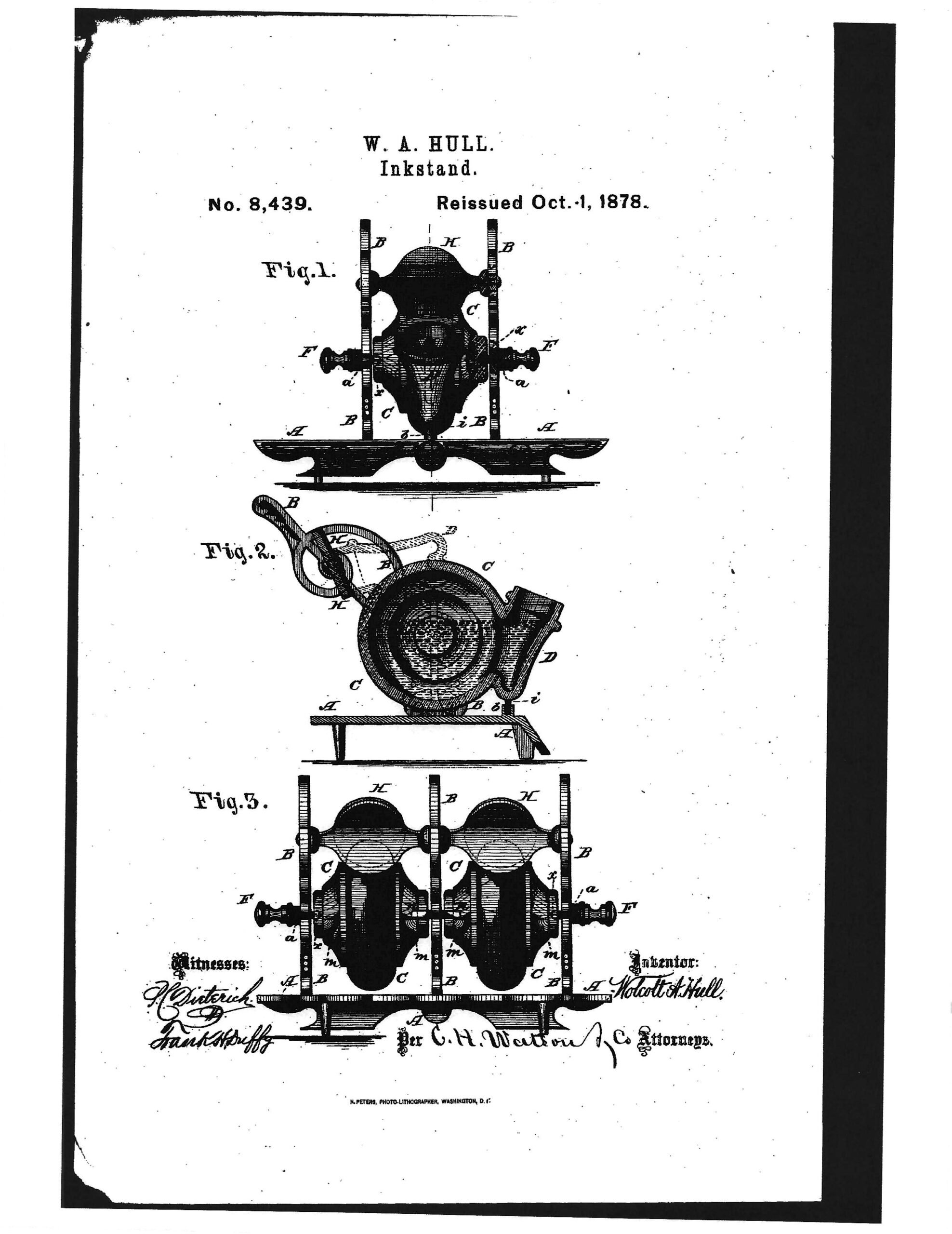
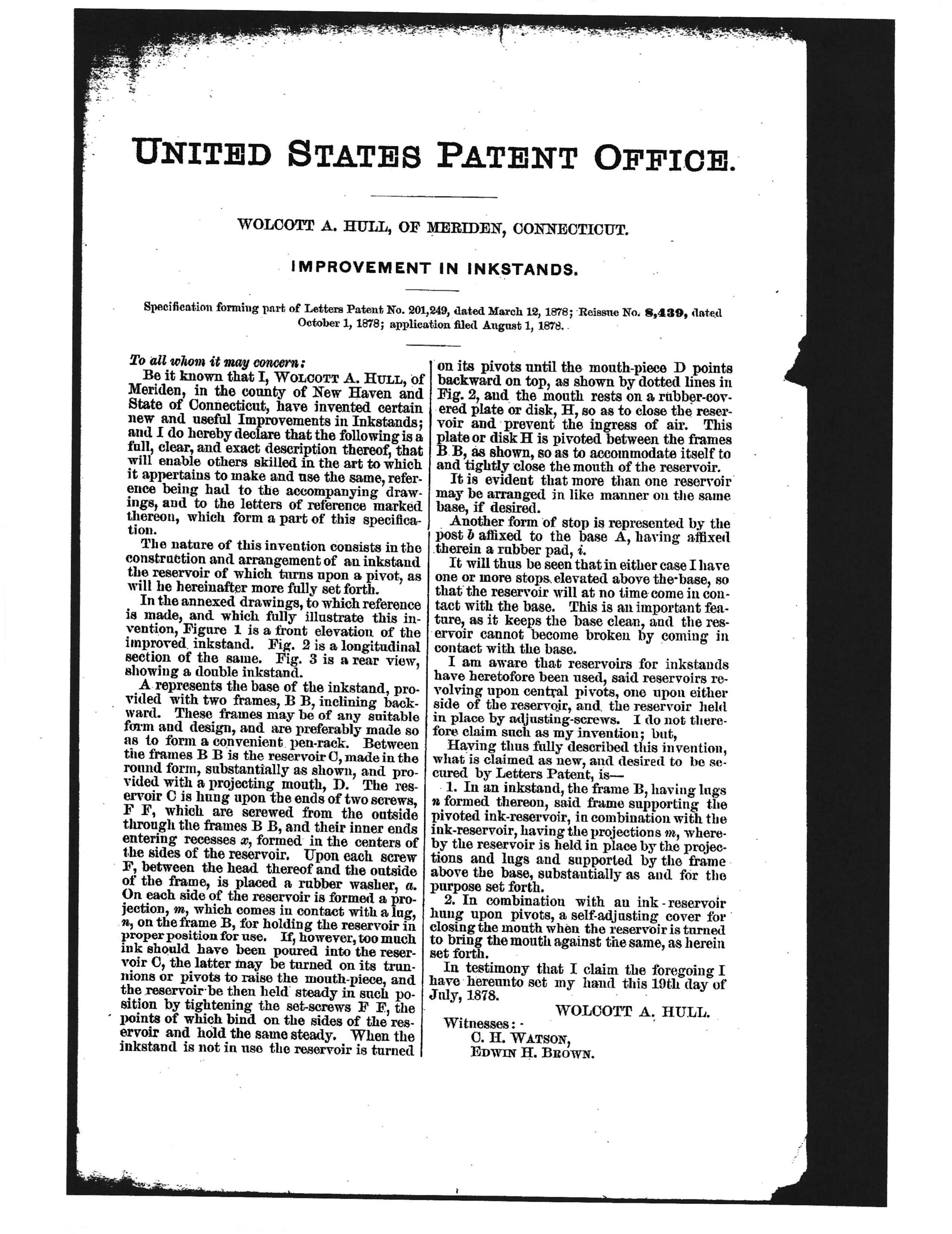
| Patent | No. 201,249 Patented March 12, 1878 / No. 8,439 Reissued October 1, 1878 |
Description: The Hull “Snail” Double Inkstand
This revolving double “snail” inkstand is a pinnacle of desk-top engineering. Patented by Wolcott A. Hull in 1878, it solved the two greatest frustrations of the 19th-century writer: ink evaporation and sediment buildup. Known to collectors as the “Snail” because of the distinctive spiral-molded glass reservoirs, this model is prized for its “industrial-chic” aesthetic.
Design and Manufacture
- The Manufacturer: Produced by Peck, Stow, and Wilcox (P.S. & W. Co.) of Southington, Connecticut. While primarily famous for heavy hardware and tin smithing tools, their late-19th-century stationery line applied rigorous industrial standards to decorative office goods.
- The Double Configuration: Unlike single-well versions, this double-reservoir model was designed for professional use—typically holding black ink in one side and red (ledger) ink in the other.
- Material and Finish: The frame is composed of ornate cast iron, finished in a “bronze” or “gilt” lacquer to mimic expensive solid brass. The base features a scalloped, foliate design that doubles as a cradle for multiple dip pens.
The “Snail” Gravity Mechanism
The genius of Hull’s design is the eccentric rotation of the glass:
- Gravity Feed: The “snail” shape is not merely decorative; the spiral reservoir holds a large volume of ink in a “tail” section that sits below the dipping neck when closed.
- The Stopple Interface: When rotated upward (the “closed” position), the mouth of the glass bulb rests against a fixed metal disc (stopple).
- Self-Agitation: The act of rotating the well forward to dip a pen naturally “stirs” the ink, preventing the heavy pigments (common in 19th-century iron-gall inks) from settling into a thick sludge at the bottom.
Summary of Patent Information
The inkstand is governed by two key filings from 1878, which together provided Wolcott A. Hull with comprehensive protection for both the “how” and the “look” of his invention.
| Patent Number | Date | Type | Significance |
| US 201,249 | March 12, 1878 | Utility | The primary mechanical patent. It covers the specific combination of a rotating reservoir with an eccentric mouth and a stationary stopple plate that seals the inkwell via the pressure of the frame. |
| RE 8,439 | October 1, 1878 | Reissue | This was a “Reissue” of an earlier patent (often done to clarify or broaden legal claims). It solidified Hull’s rights to the pivoted ink-fountain design, preventing competitors from making similar revolving “snail” or “teakettle” style wells. |
Pressed Glass Components
The pressed glass components of these “snail” inkwells were often produced by major glassworks in the Pittsburgh or Ohio River Valley regions (such as Bakewell, Pears & Co. or Richards & Hartley) to the specifications of the hardware manufacturers.
Common Pressed Glass Patterns
While the “Spiral” is the namesake of the “Snail” inkwell, several distinct patterns were produced to offer variety at different price points:
- The Classic Spiral (Snail): The most common pattern, featuring a continuous molded swirl that starts at the base of the bulb and wraps toward the neck. The “ribs” of the spiral are usually rounded and smooth.
- Diamond Point: A more geometric, high-Victorian look where the surface is covered in small, raised pyramids. This pattern catches the light significantly better than the spiral, making it a “deluxe” option.
- Vertical Ribbed / Fluted: Instead of a spiral, the lines run straight from the base to the neck. These are often seen on earlier “teakettle” style wells that preceded the official Hull patent.
- Paneled or “Hexagonal”: Features flat, pressed faces around the circumference of the bulb. This gave the glass a more architectural, heavy look.
Sold for $259 in April 2026
Content disclaimer. The information posted is the owner’s best knowledge and may not have been vetted by the SOIC. We welcome comments, corrections, and additions, working to make our website information comprehensive and accurate.
Join the Society of Inkwell Collectors (SOIC) – it’s free!
Founded in 1981 as a non-profit organization,
we are documenting inkwells (and accessories).
We’re here to help and inform!