

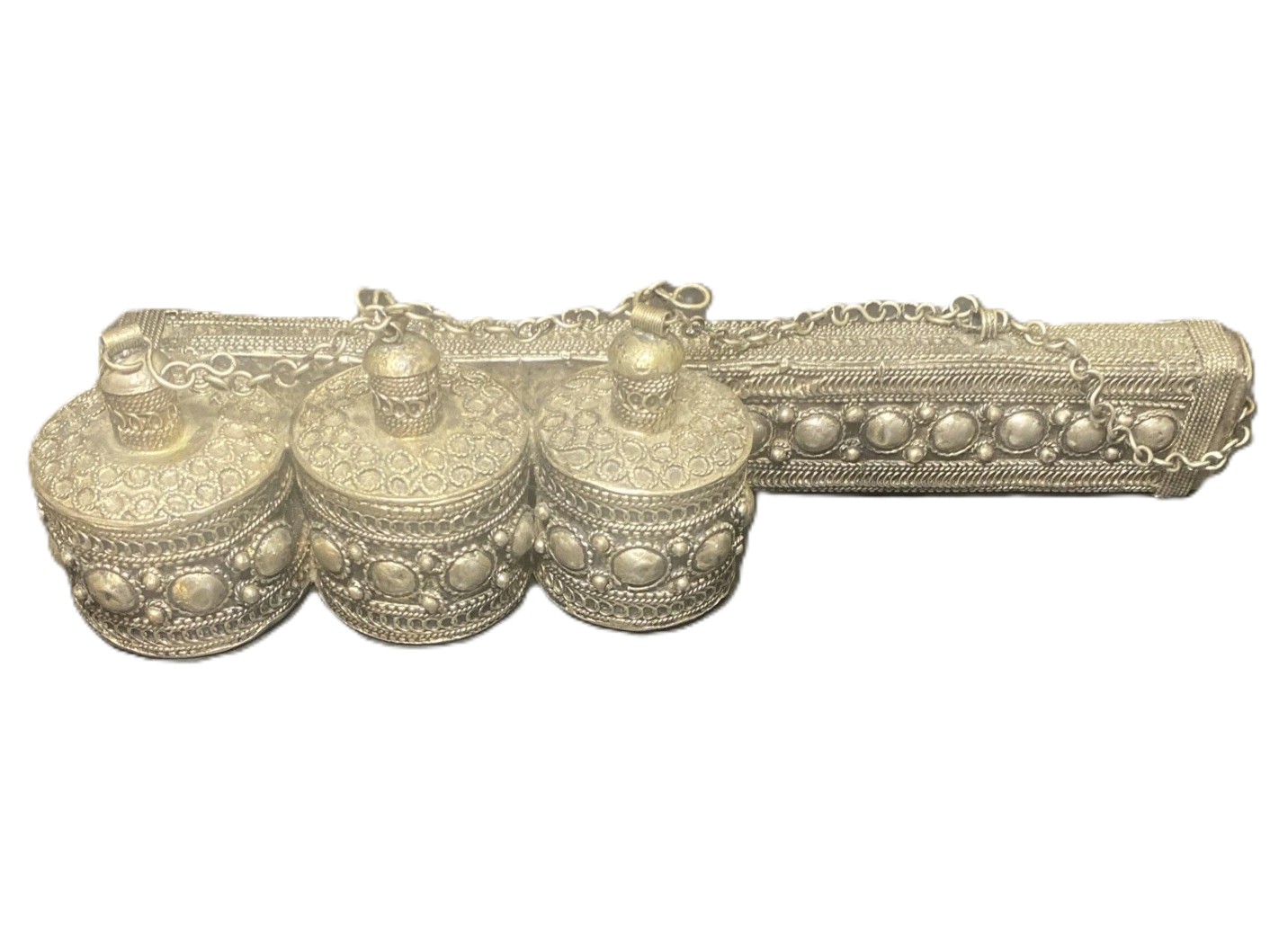

Ottoman-Era Divit with Three Wells
| Categories | Middle East / Africa |
| Type | Qalamdan / Divit |
| Material | Metal |
| Markings | Unmarked |
| Manufacturer | Undetermined |
| Origin | Undetermined |
| Date or Era | circa 1880 |
| Measuring | 8” x 2 ¼” x 1 ¼” |
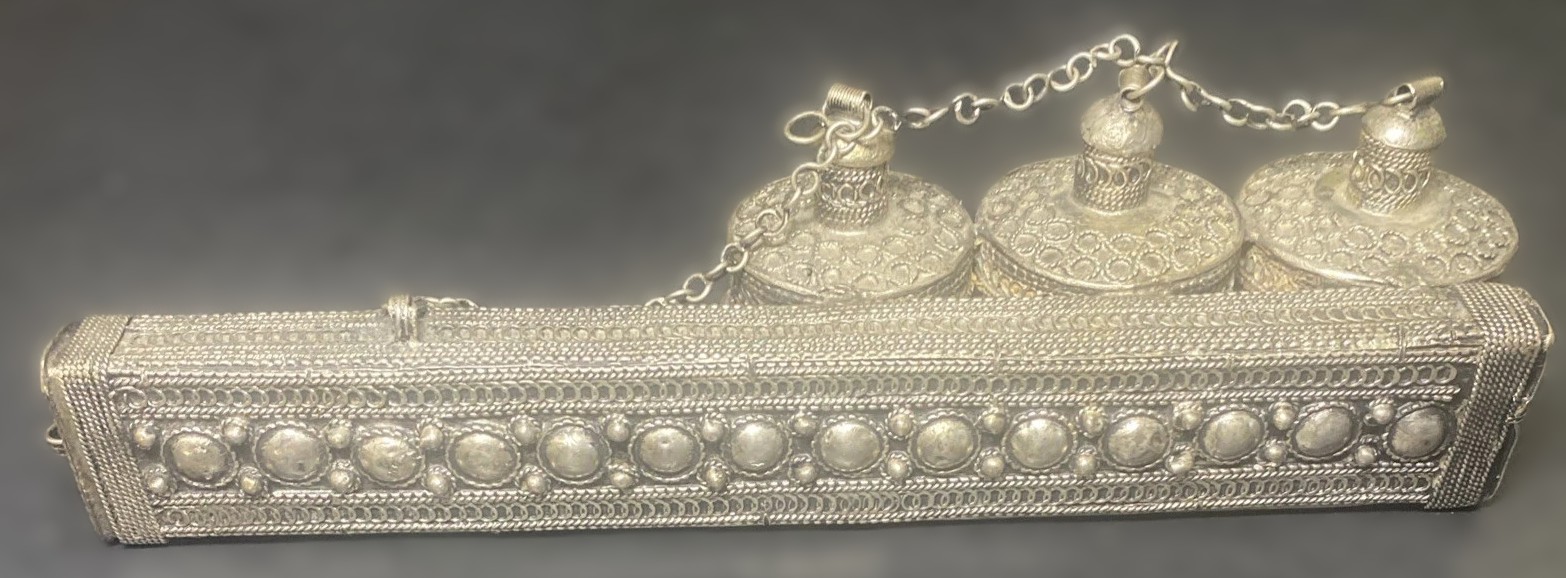
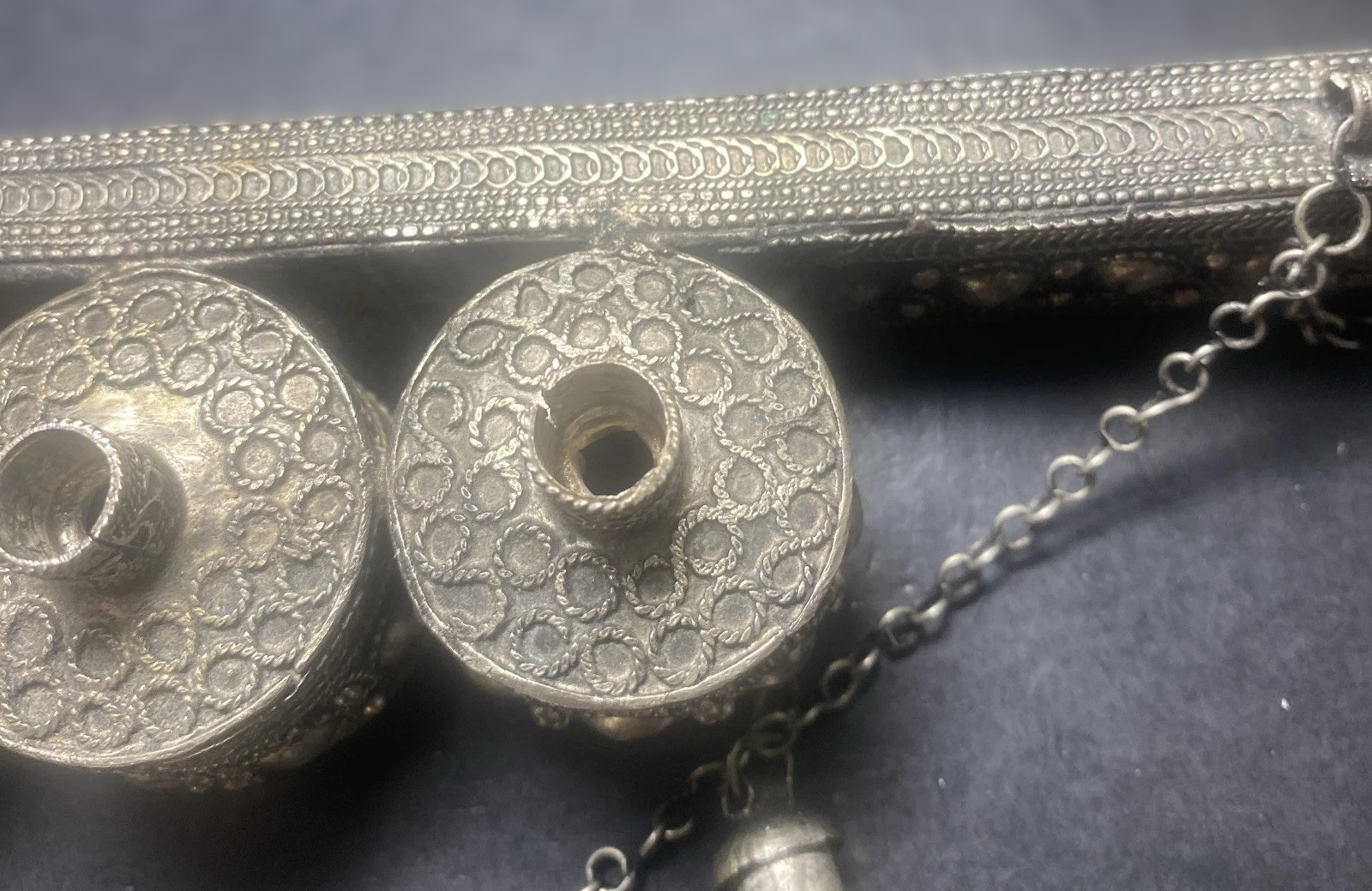
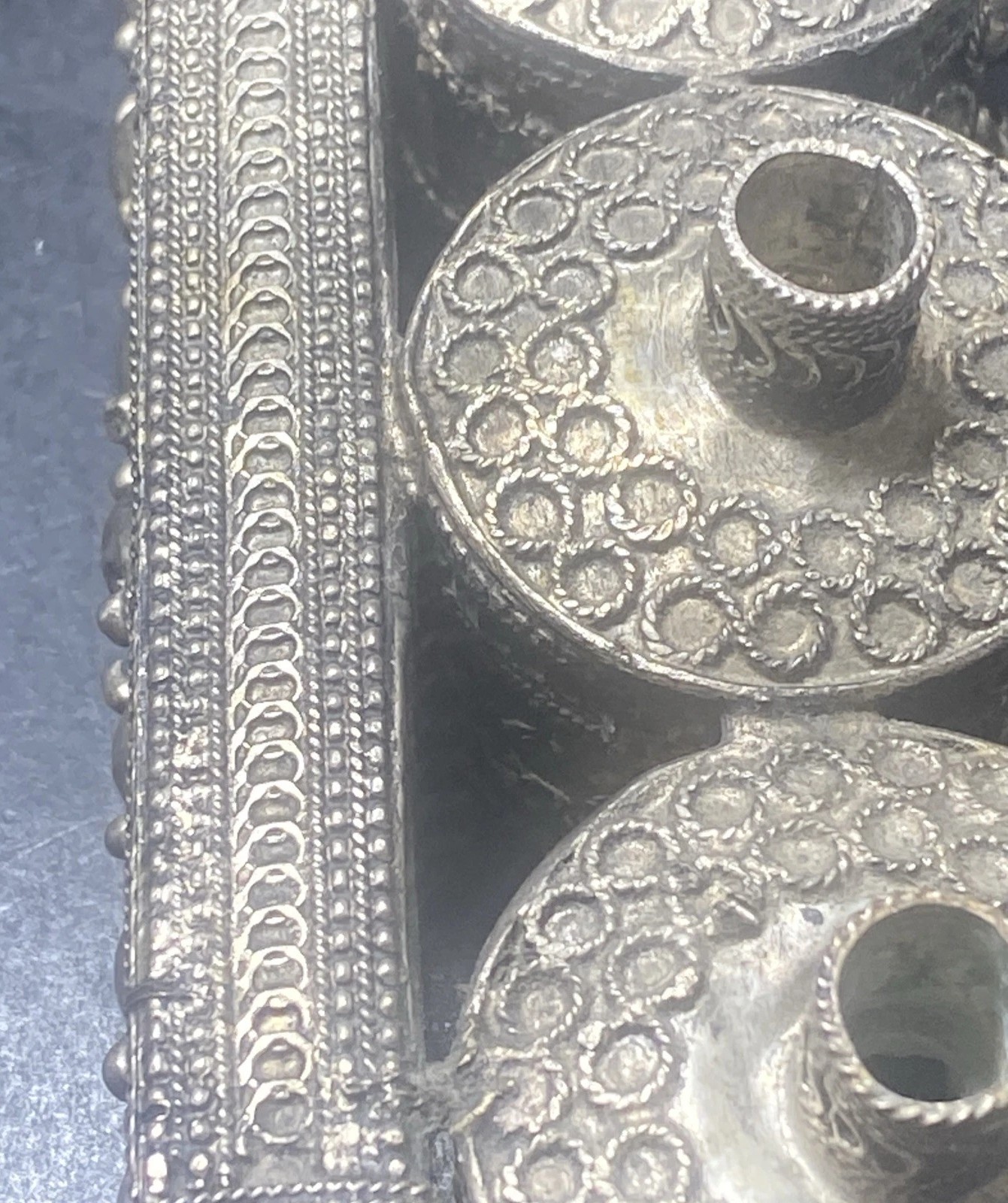
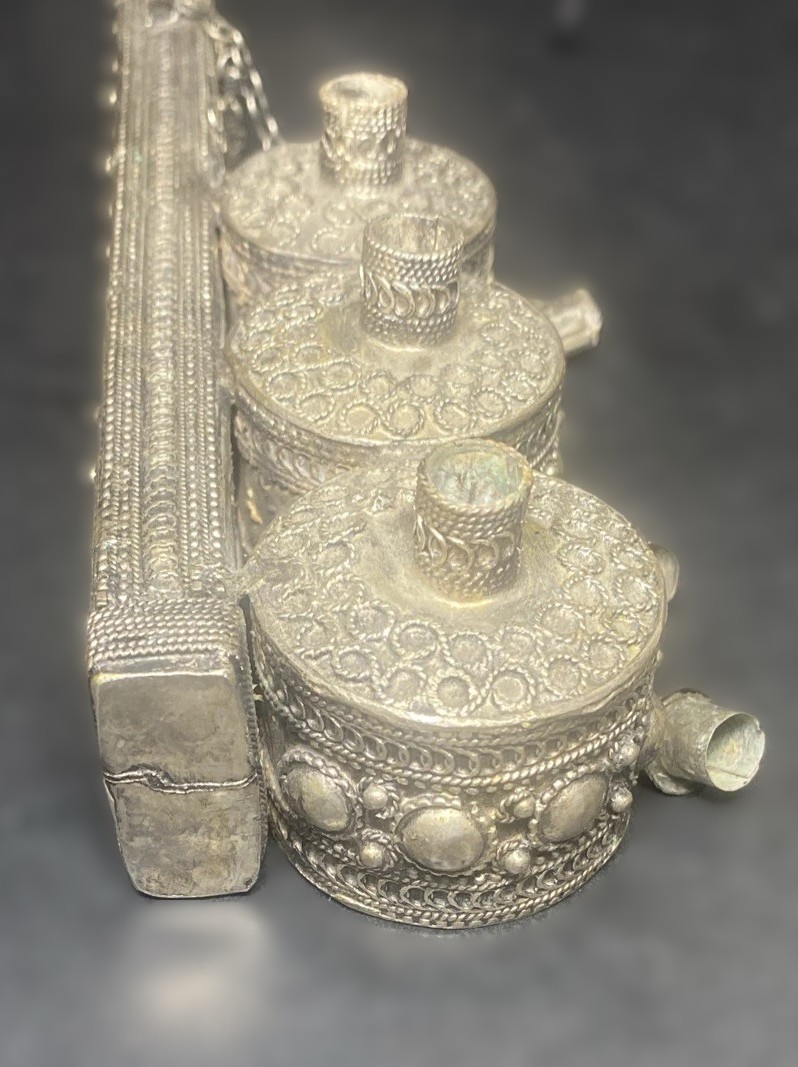
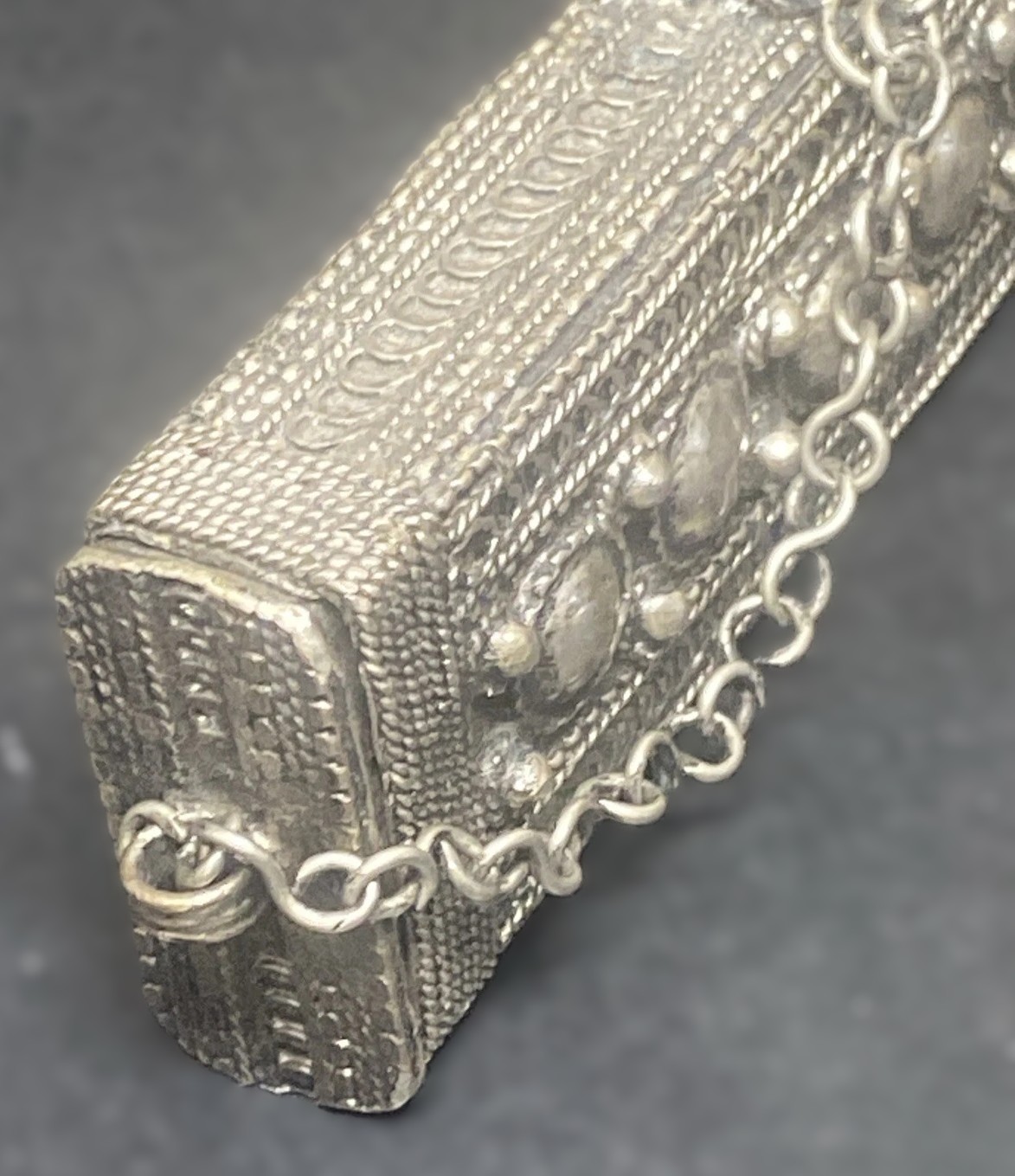
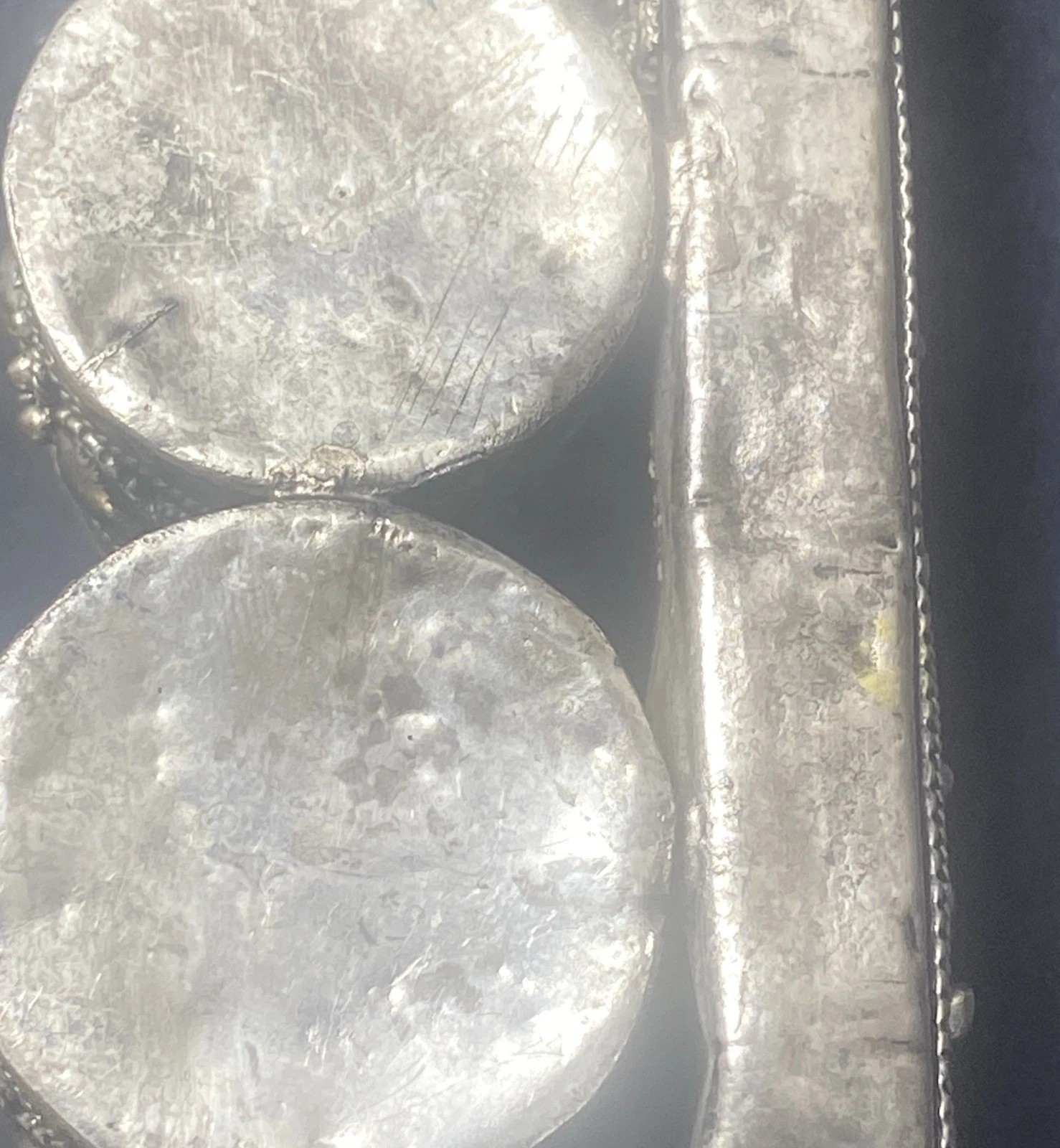
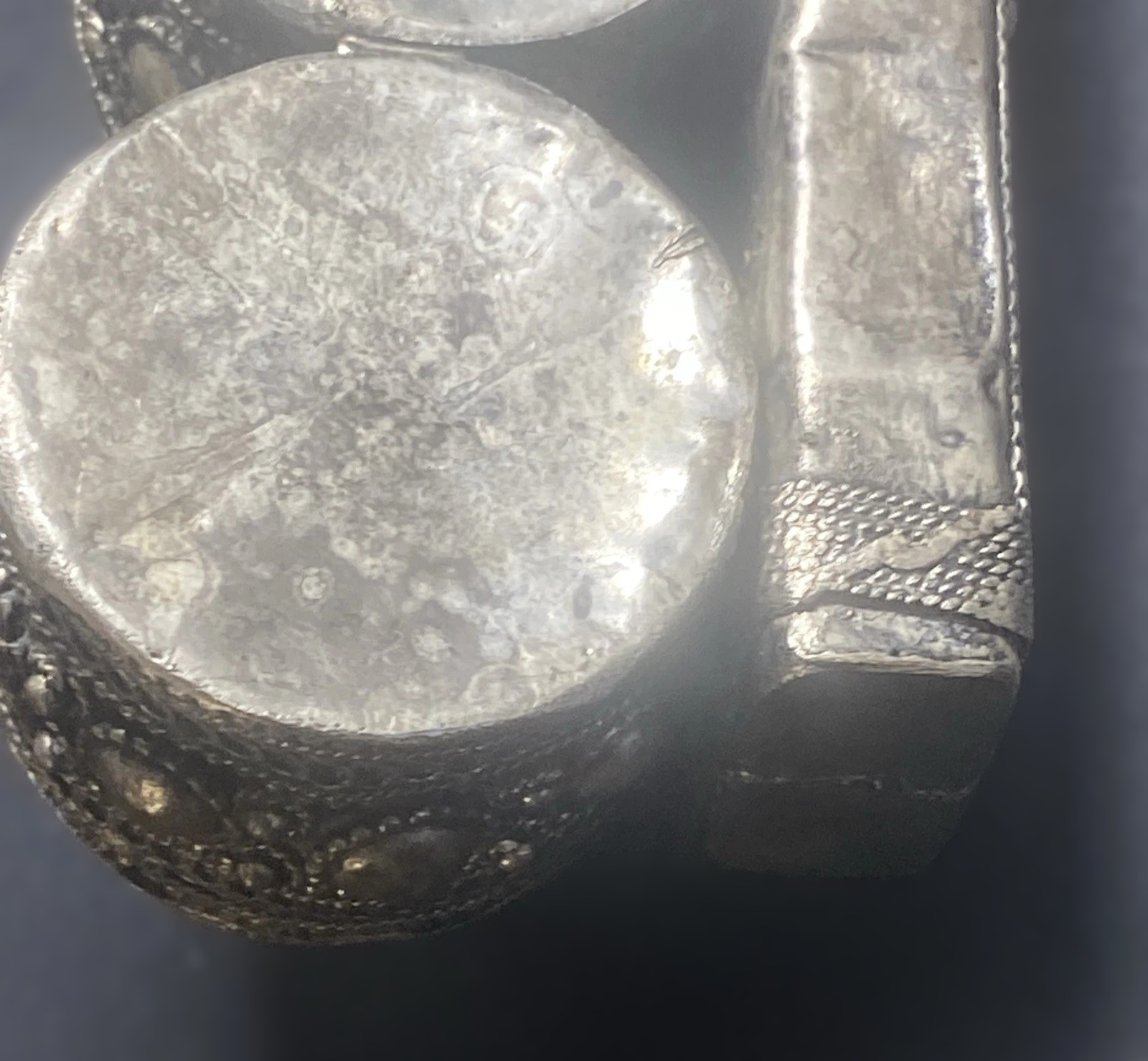
This is an unusual example of a traveling scribe’s set, traditionally known as a divit. While the long, rectangular case for housing reed pens (qalam) is a standard feature of these Ottoman-era writing tools, this piece is unusual due to the presence of three separate inkwells.
Evaluation & Metal Composition
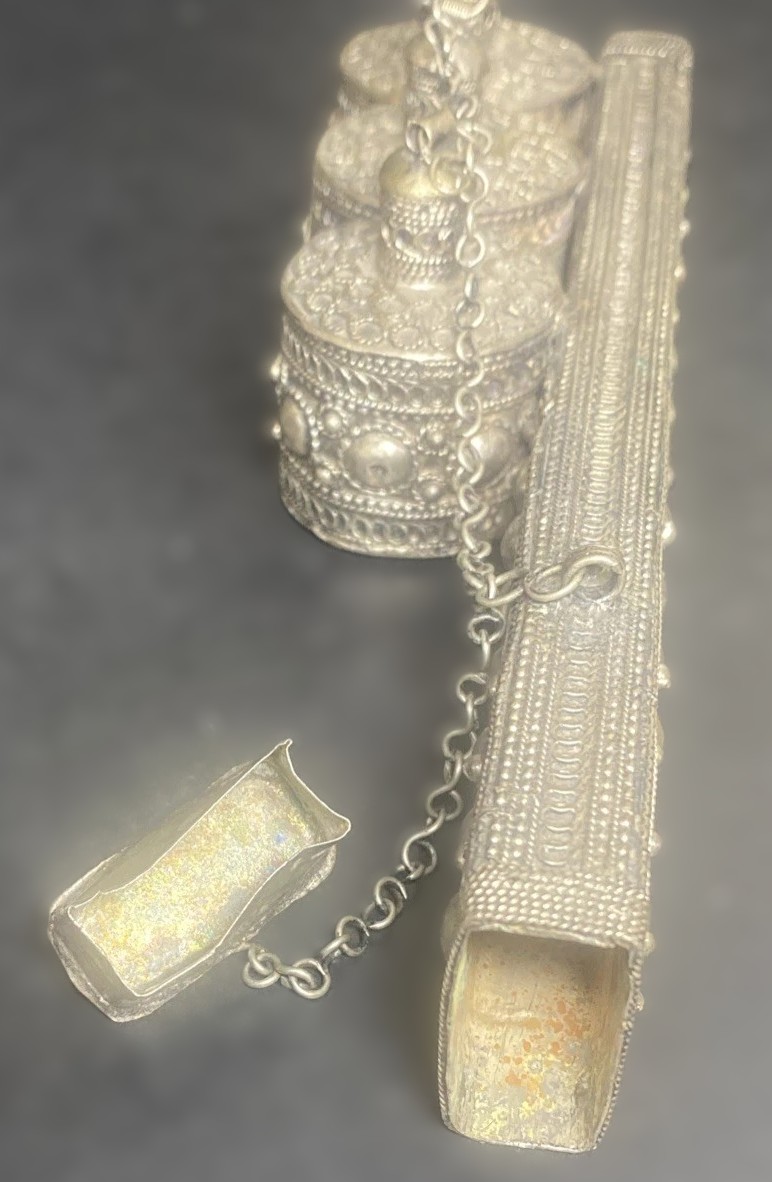
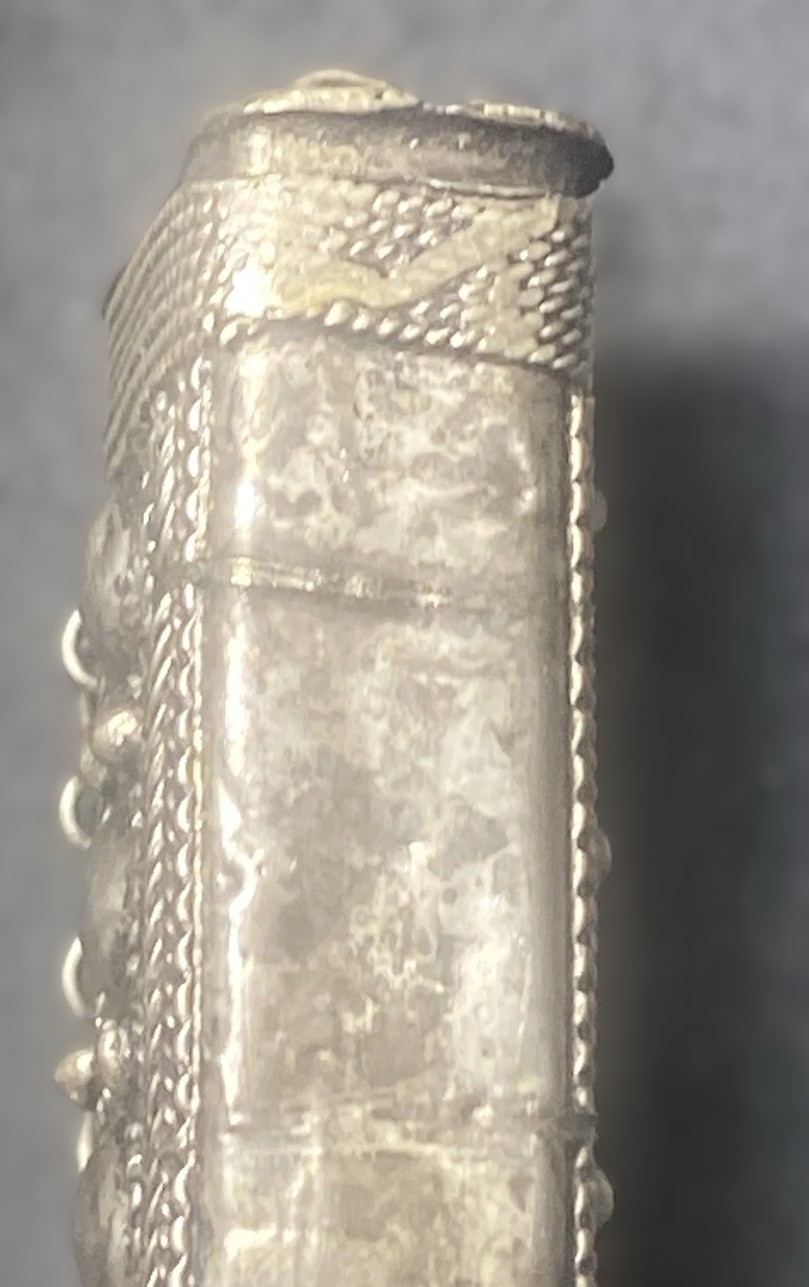
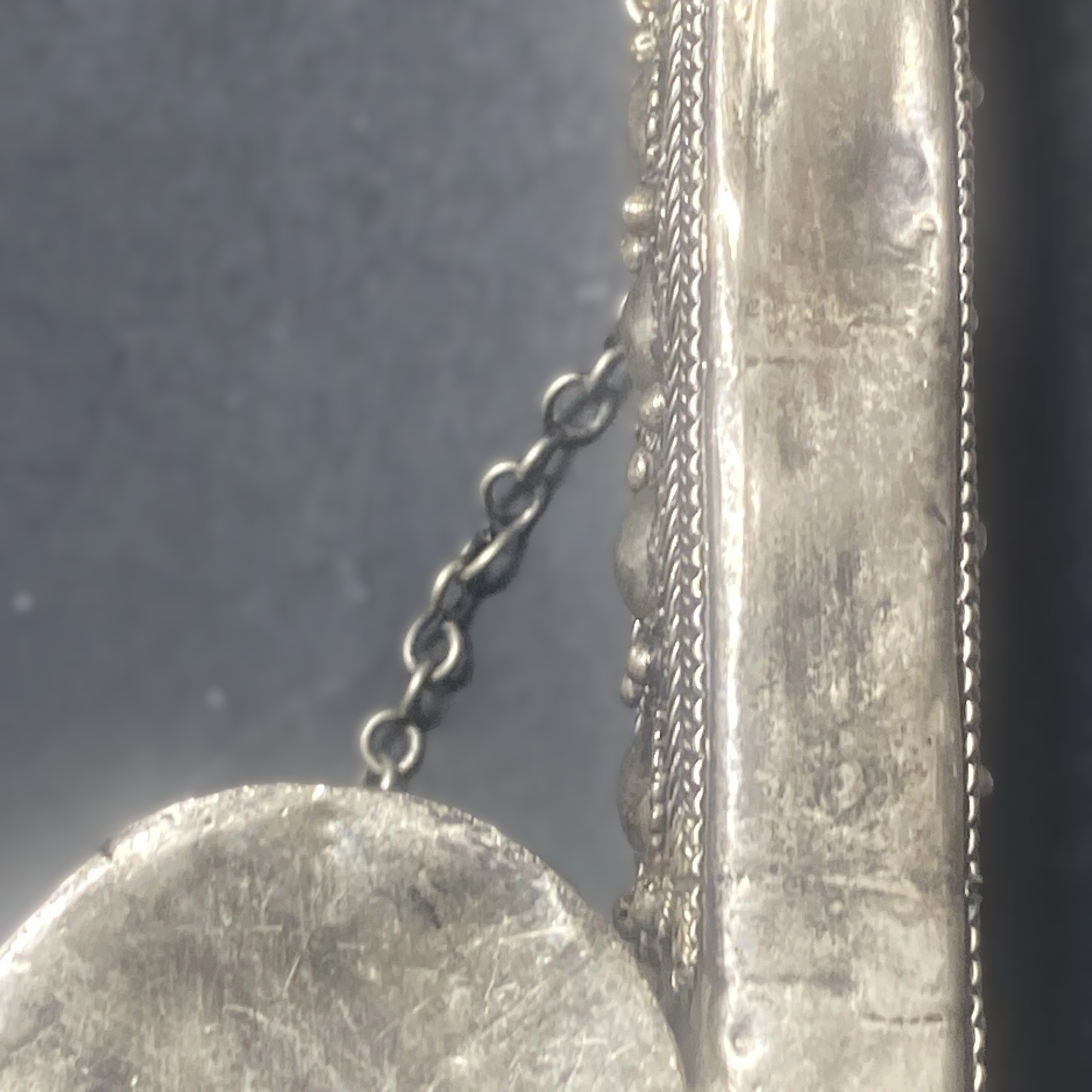
The metal appears to be a high-content tinned copper or silver-alloyed brass. The soft, white-grey patina visible in the areas of wear (especially on the underside and the interior of the pen case) suggests it was likely tinned to mimic the appearance of solid silver, a common practice for high-quality Ottoman metalware.
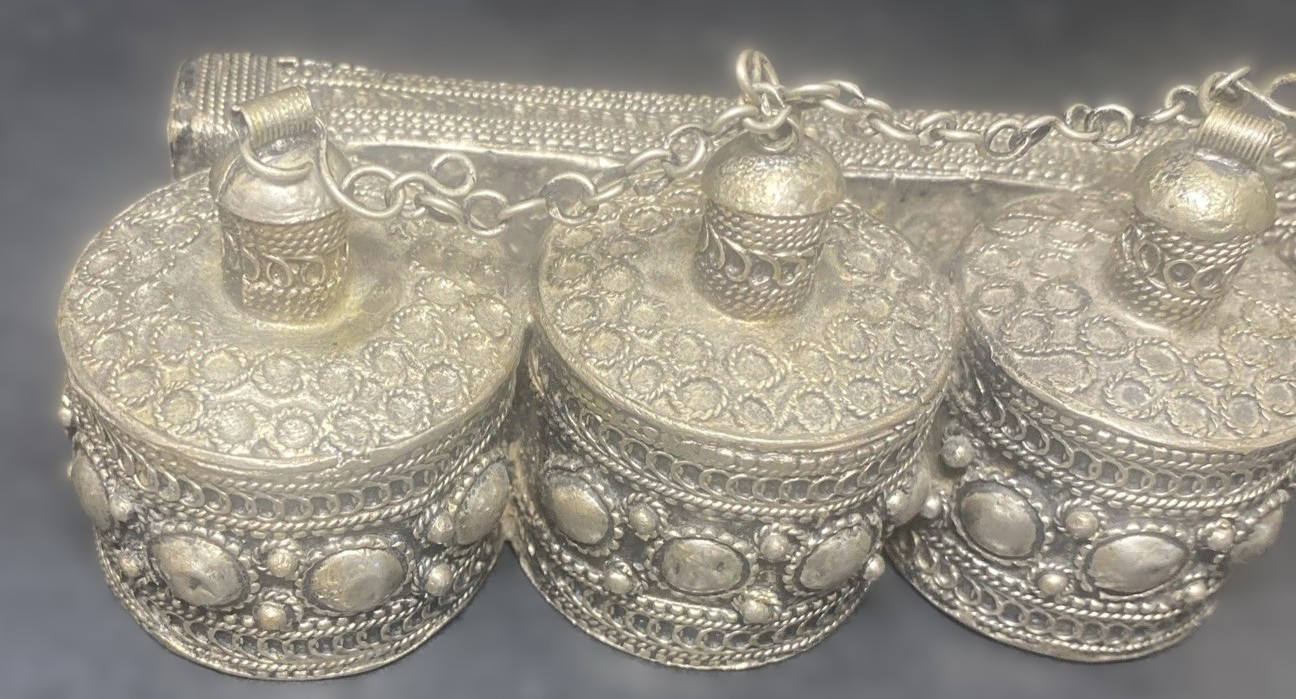
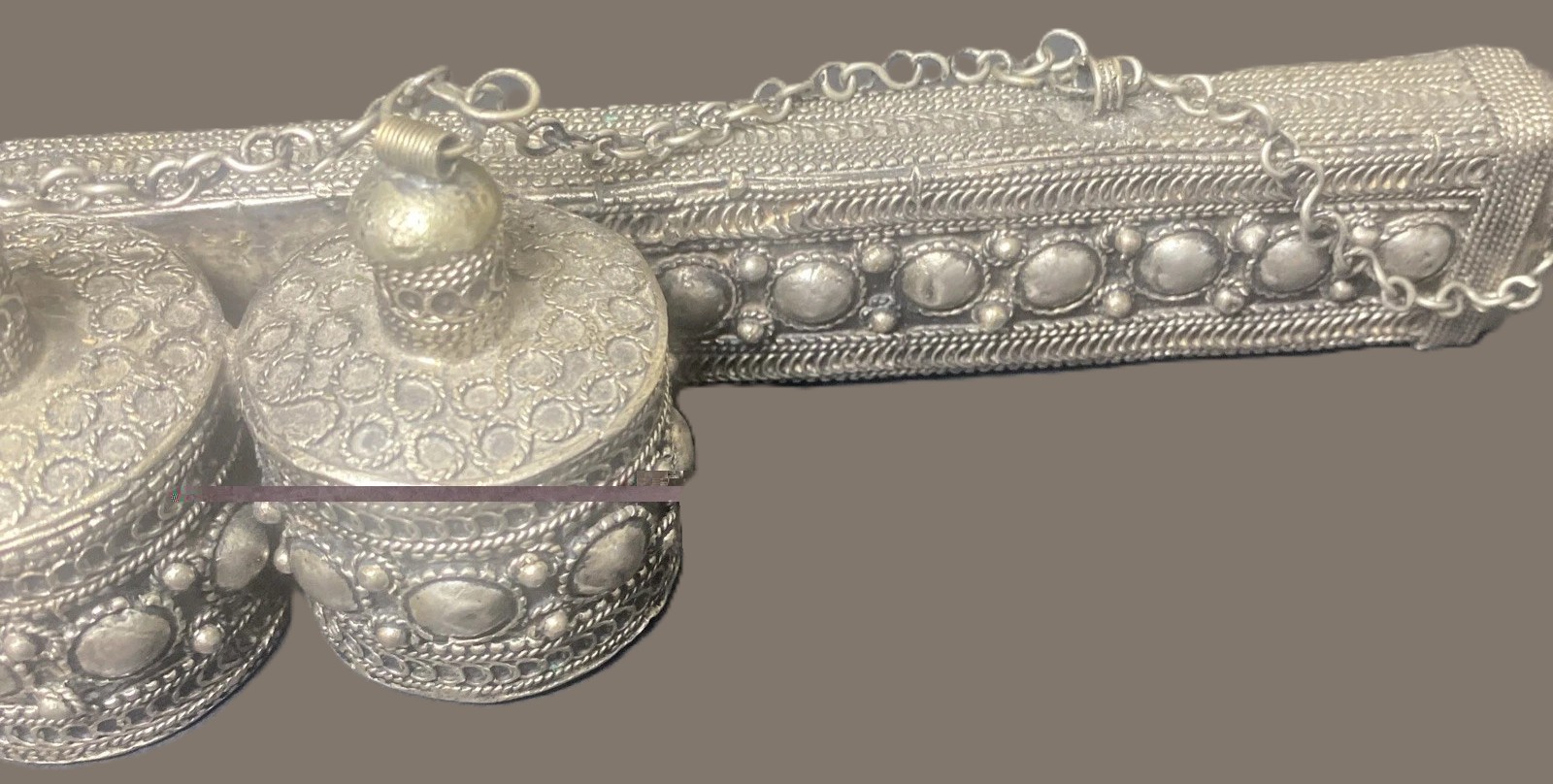
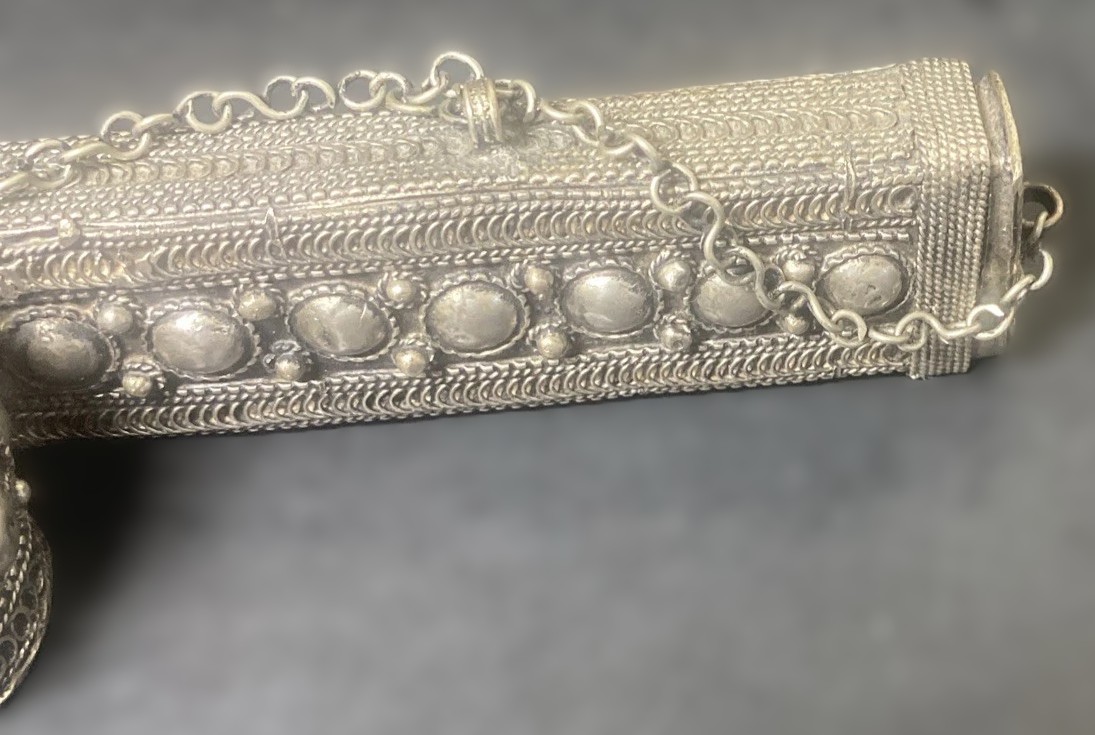
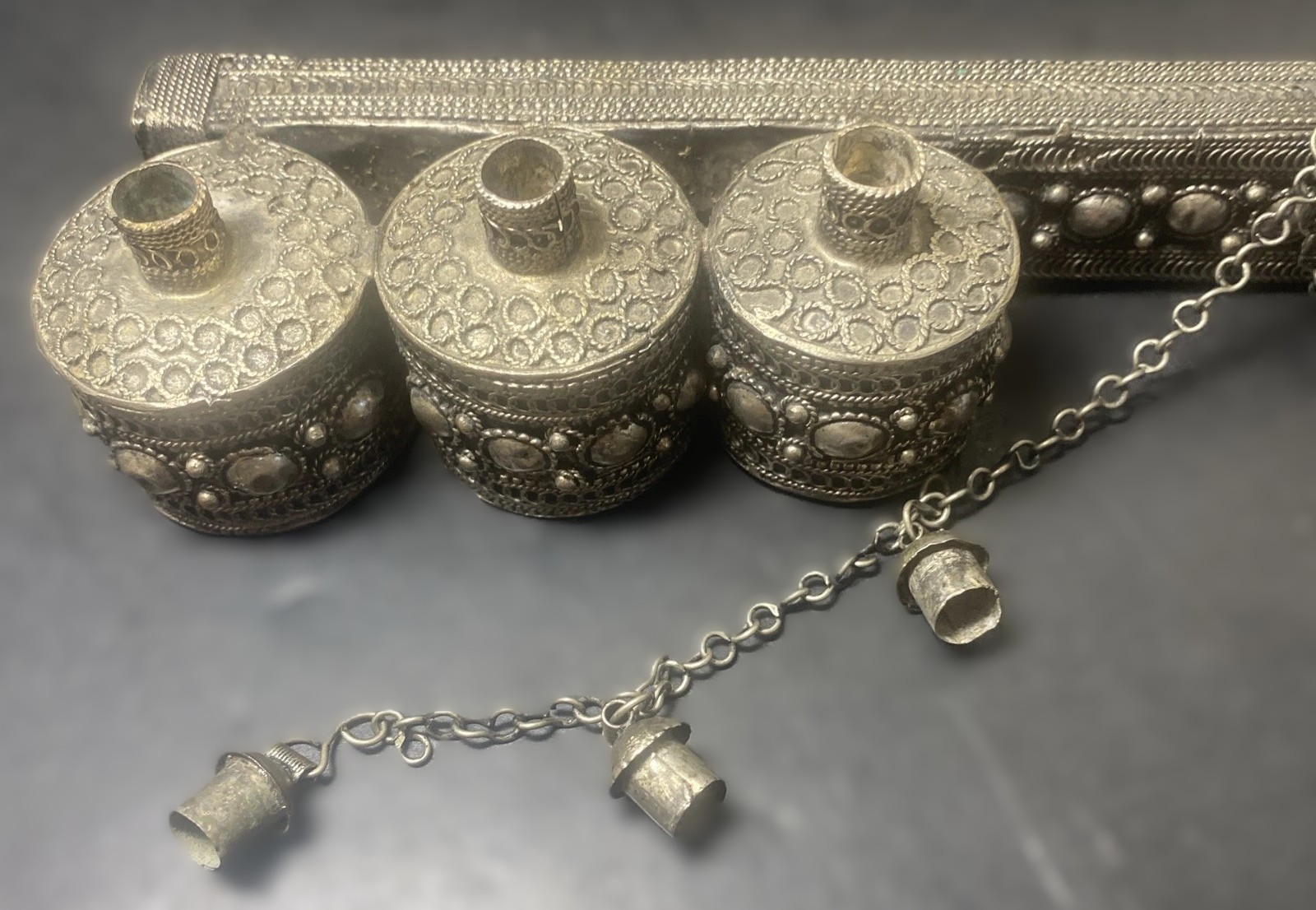
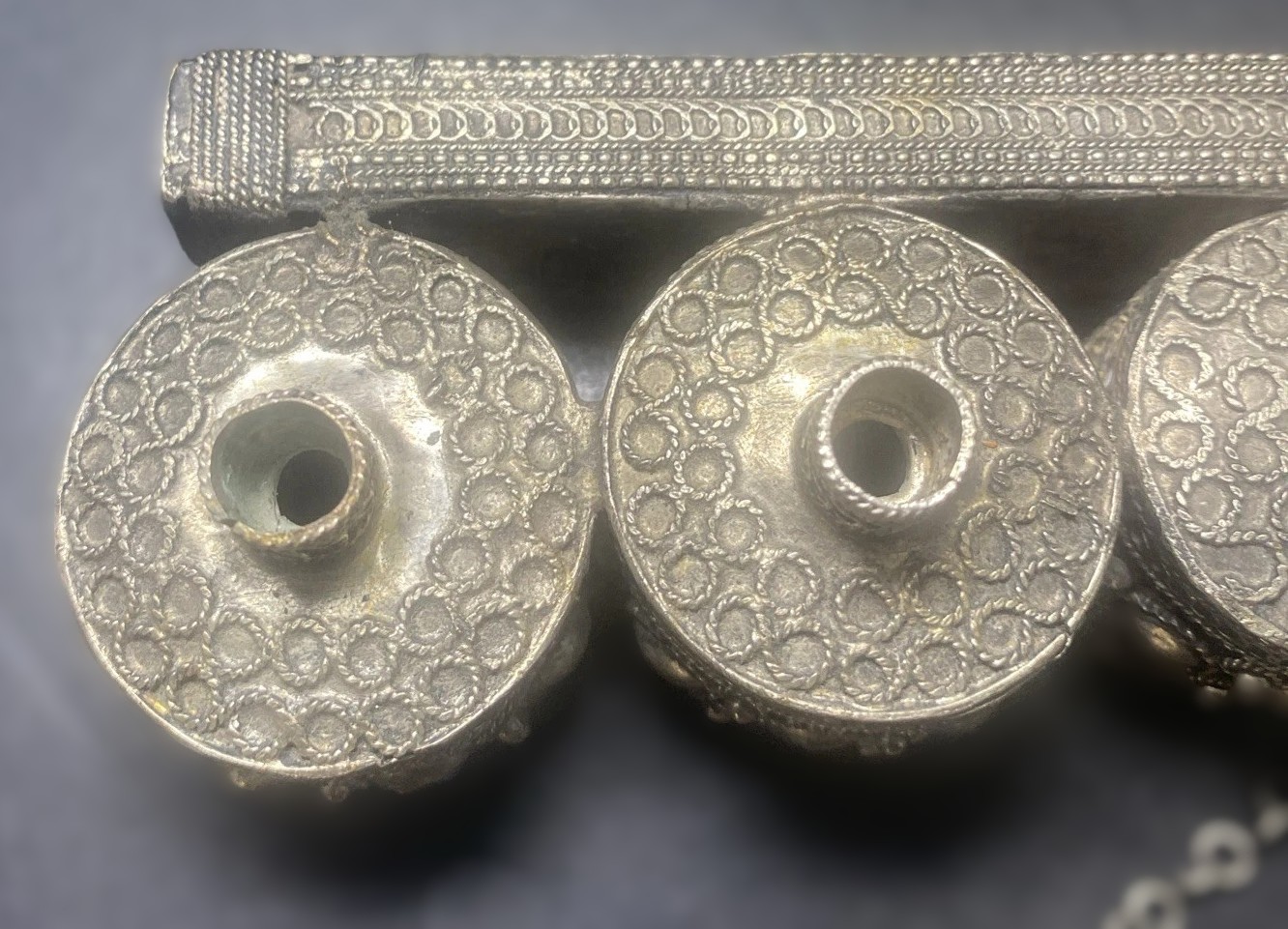
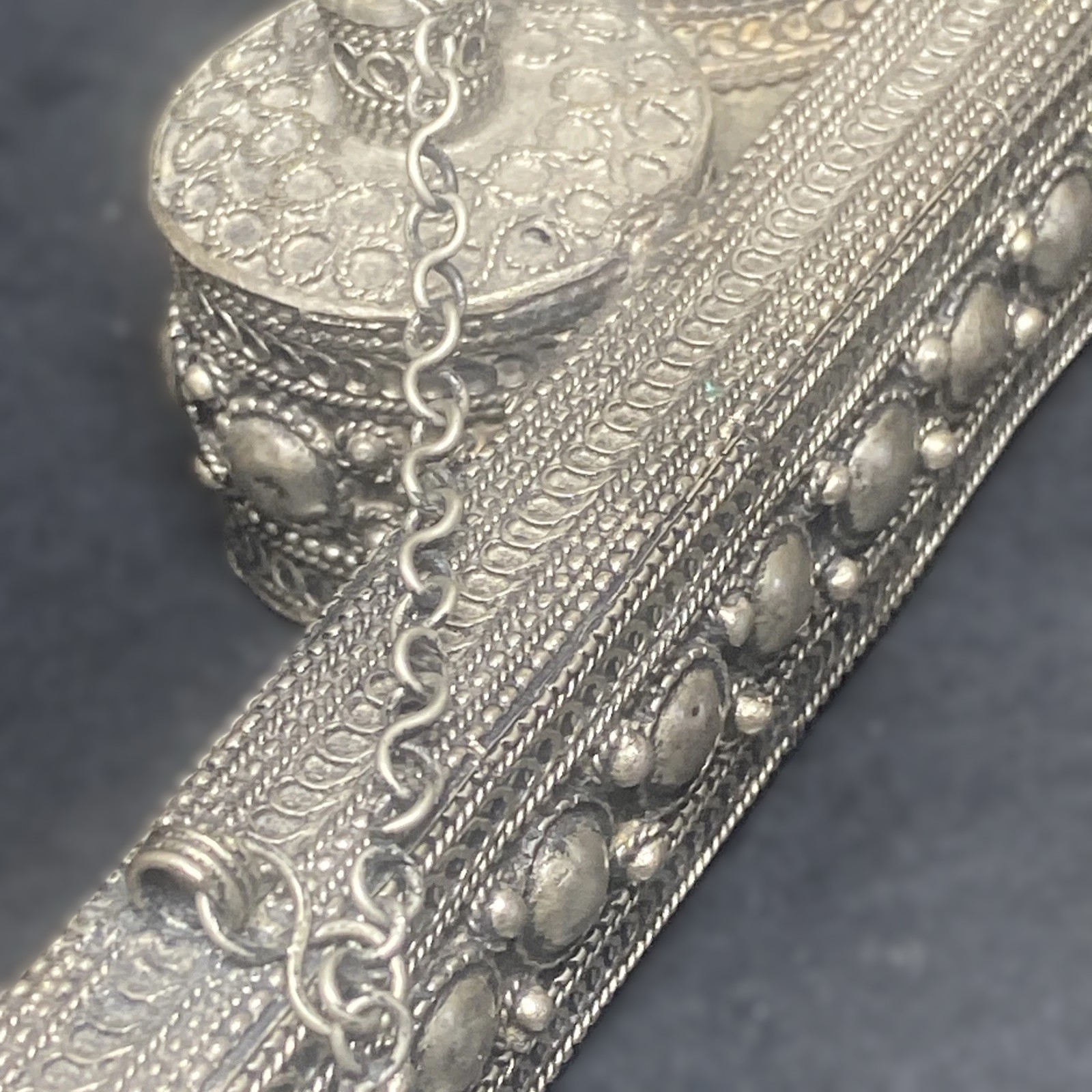
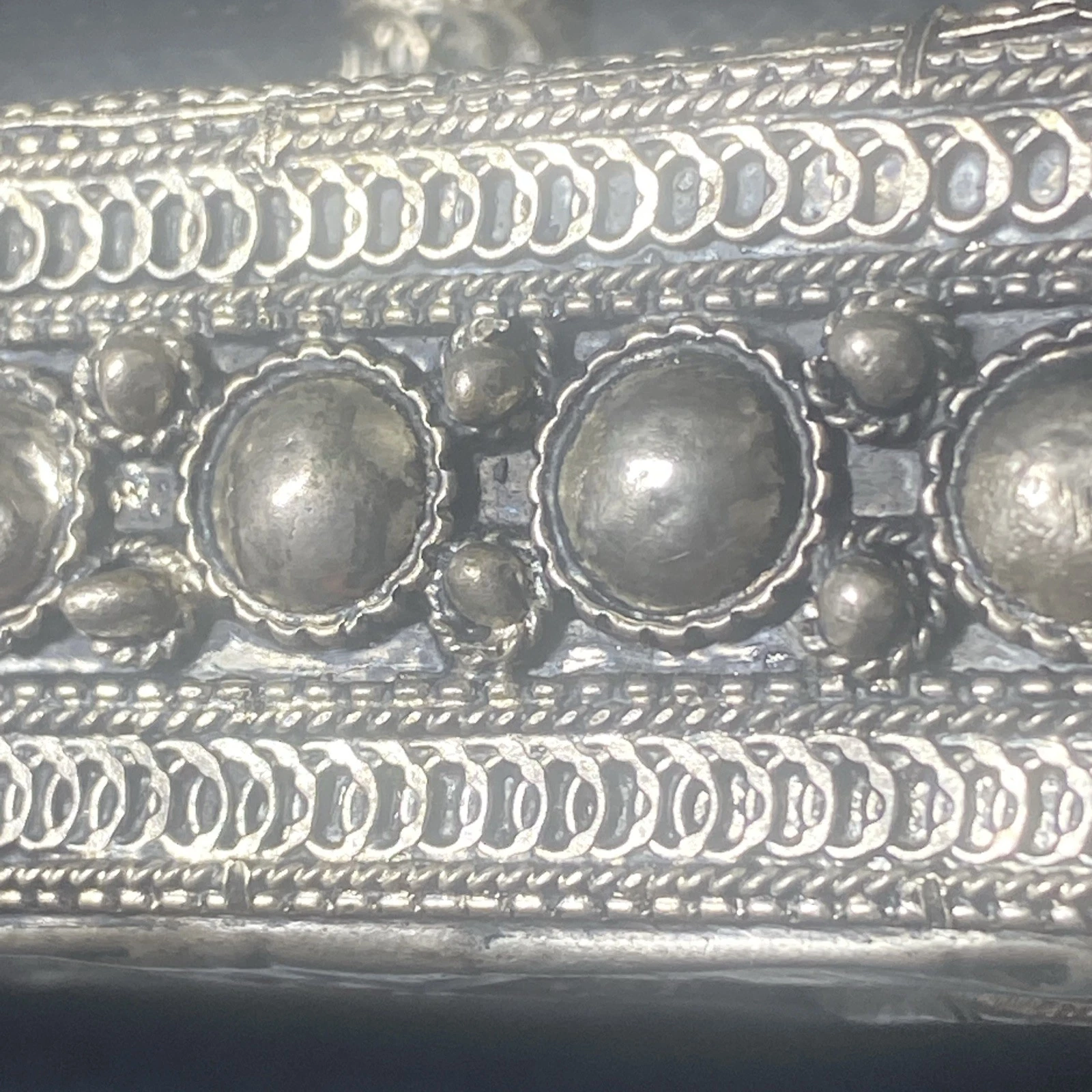
The construction uses a combination of repoussé (hammered relief), chasing, and applied filigree work. The heavy “beaded” or “jeweled” circular bosses surrounded by twisted wirework are characteristic of provincial Ottoman craftsmanship, often seen in the Balkans or Eastern Anatolia.
Analysis of the Triple Inkwell
The standard divit almost exclusively features a single inkwell (called a qabda). A triple-well configuration is quite rare and suggests a specialized professional use:
- Multi-Color Transcription: Scribes working on illuminated manuscripts or official legal documents often required black ink for the main body of text, red ink for headings or significant names, and occasionally a third color or a gold leaf adhesive.
- Ink Consistency: Different styles of script (such as the formal Diwani versus the more common Riq’ah) occasionally required different ink viscosities or formulations.
- The “Traveler’s Archive”: It is also possible one well was intended for sand (used as a blotter to dry ink quickly) rather than a third ink color.
Artistic Style and Origin
The intricate engravings and applied ornaments provide several clues:
- Age: The heavy, somewhat bold geometric repetition and the “bossed” style suggest a date in the mid-to-late 19th century. Earlier 18th-century pieces tend to favor more fluid, floral “Rococo” engravings, whereas later 19th-century pieces often moved toward this more textured, high-relief aesthetic.
- Origin: While Turkish in style, the specific use of heavy braided wire and large raised cabochon-like metal studs is frequently associated with Ottoman Balkan (specifically Bulgarian or Greek territories under Ottoman rule) or Caucasus metalwork. The sheer density of the ornamentation points to a piece intended for a person of status, such as a government official or a professional merchant.
Detailed Description for Display
Title: Rare Triple-Well Ottoman Traveling Scribe’s Divit Date: Circa 1850–1890 Material: Tinned Brass/Copper with Filigree Ornamentation
Description: This elaborate traveling writing set features a long, rectangular pen case (kalamdan) with a hinged, shell-shaped end cap, attached to a highly unusual cluster of three cylindrical inkwells. The entire surface is densely decorated with intricate filigree, twisted wirework borders, and raised circular bosses, creating a “jeweled” metalwork effect.
Each inkwell is fitted with a friction-fit lid secured by a hand-forged safety chain, preventing the loss of components during travel. The interior of the pen case remains hollow to accommodate several reed pens. Unlike the common single-well divit, this triple-well configuration likely allowed the scribe to carry multiple ink colors (typically black and red) or a combination of ink and drying sand. The heavy tinned finish and robust construction indicate a high-status professional tool from the late Ottoman period, likely originating from a major metalworking center in the Balkan or Anatolian provinces.
Sold for $95 in April 2026
Content disclaimer. The information posted is the owner’s best knowledge and may not have been vetted by the SOIC. We welcome comments, corrections, and additions, working to make our website information comprehensive and accurate.
Join the Society of Inkwell Collectors (SOIC) – it’s free!
Founded in 1981 as a non-profit organization,
we are documenting inkwells (and accessories).
We’re here to help and inform!