



Nautical Chain Link Inkwell
| Categories | Bronze - Brass - Copper |
| Type | Nautical |
| Material | Brass, Malachite |
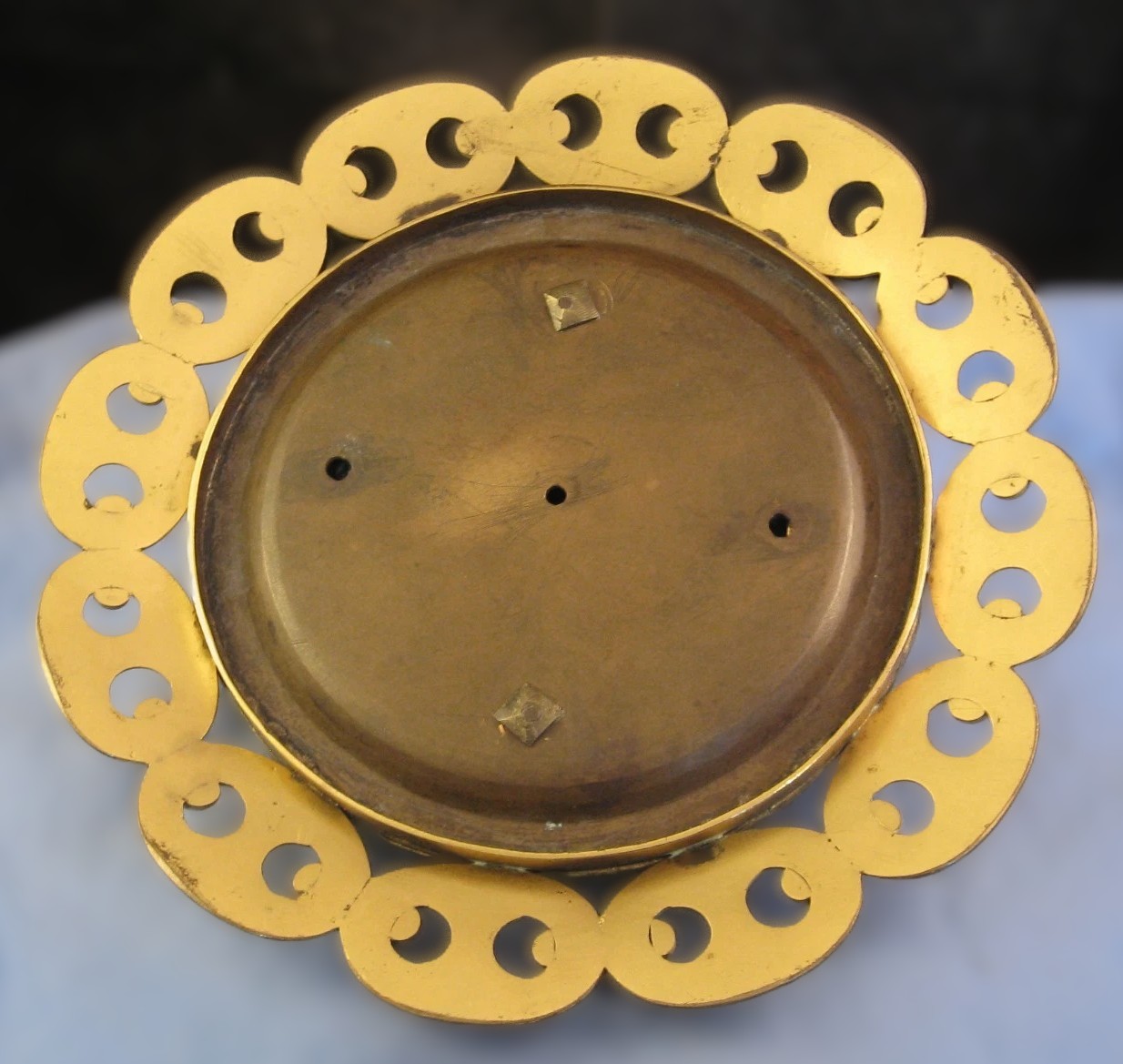
| Markings | Unmarked |
| Manufacturer | Undetermined |
| Origin | England |
| Date or Era | circa 1880 |
| Measuring | 7” diameter; 2” high |
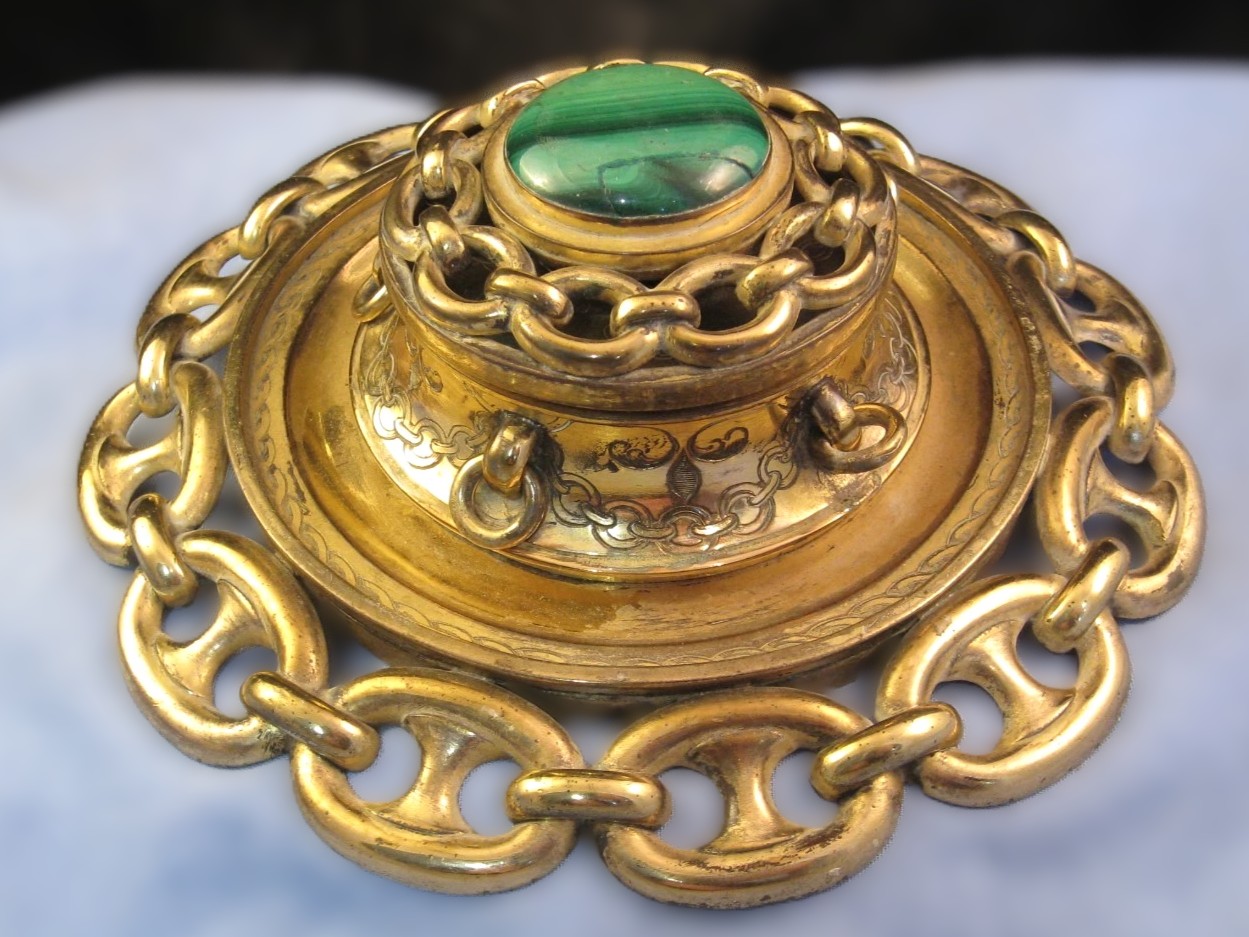
This nautical-motif inkwell dates to the late 19th century (circa 1870–1890). It is a quality example of the “novelty” brassware that was popular in England during the height of the British Empire’s maritime influence.
Description
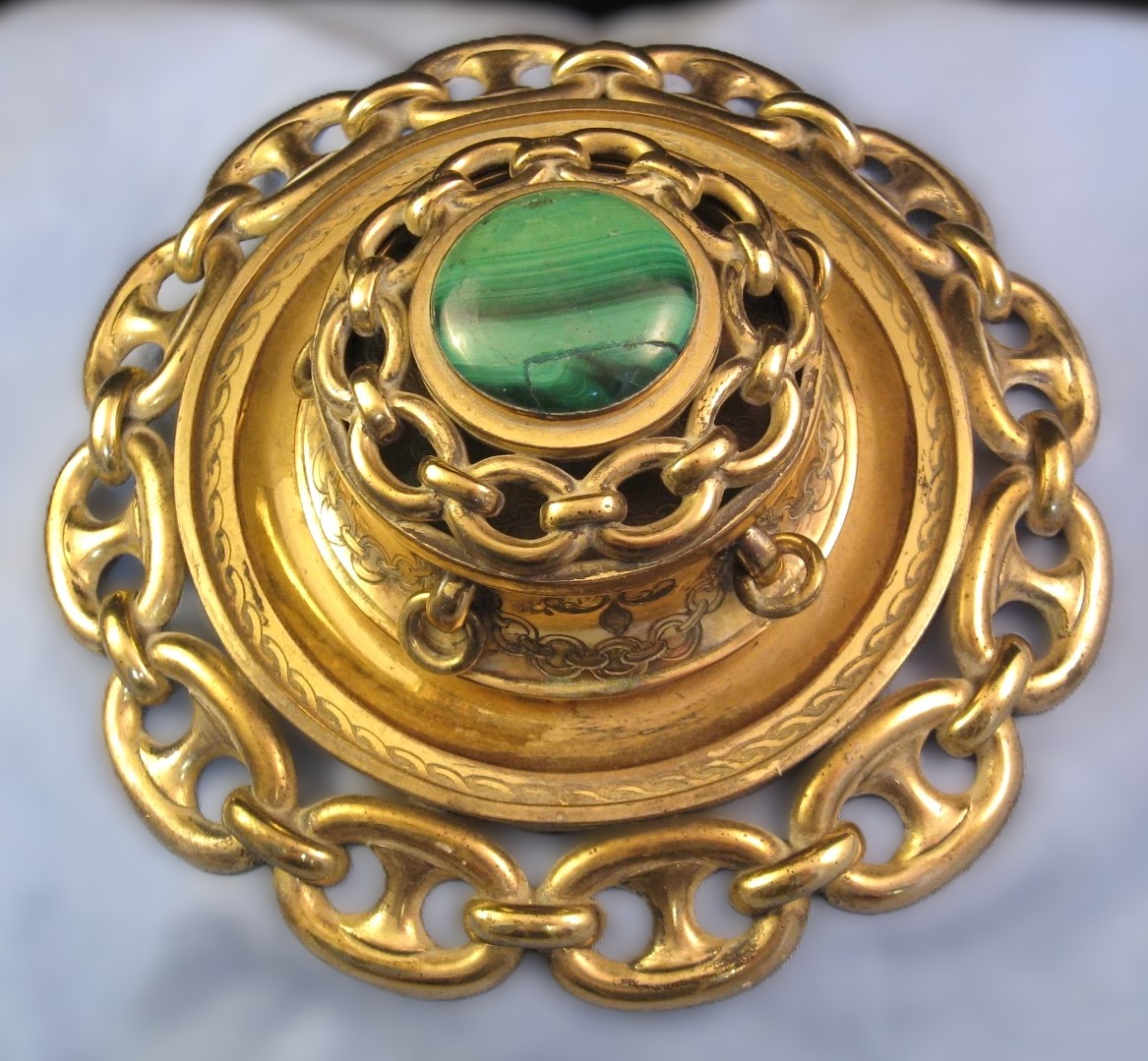
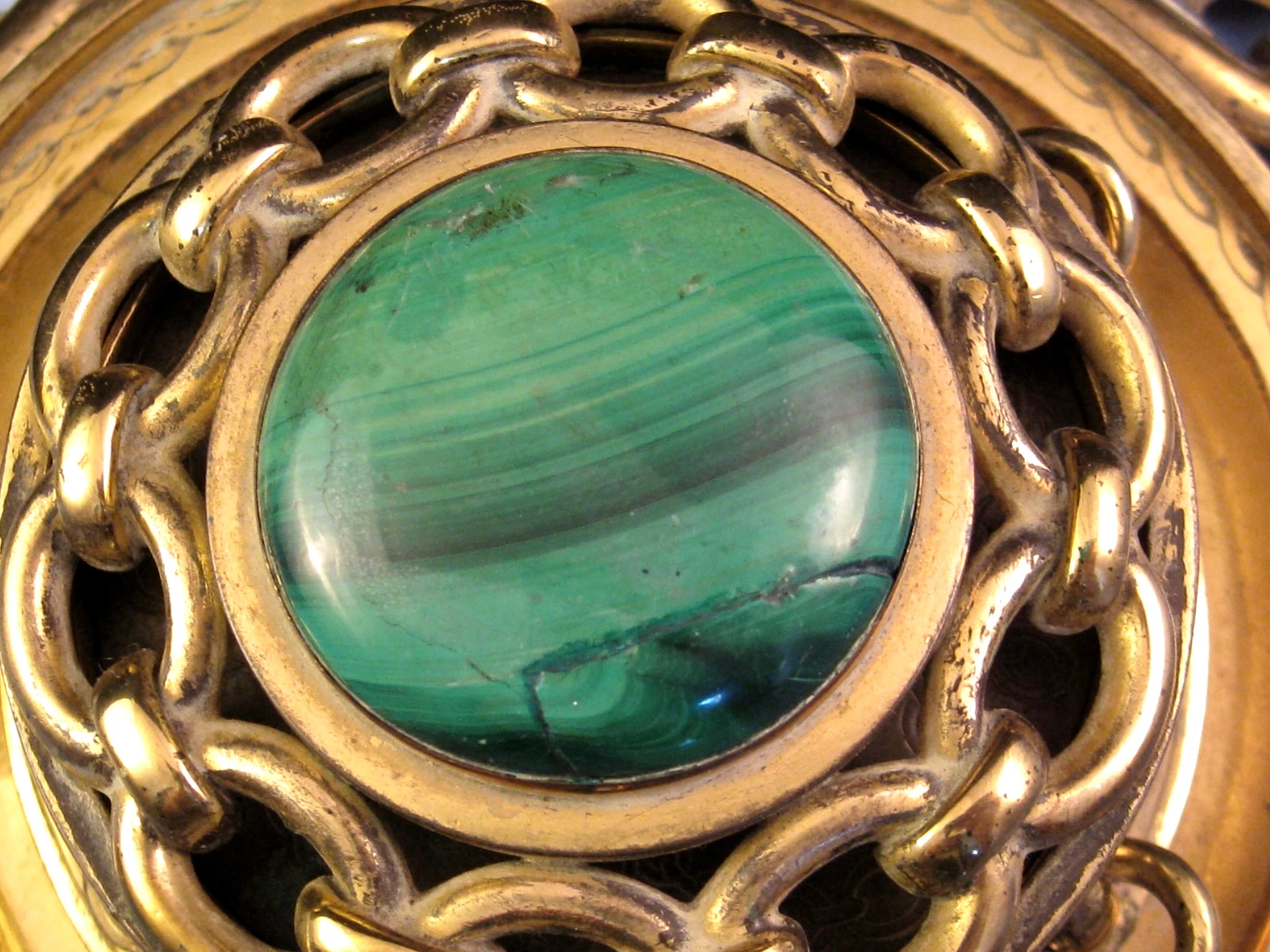
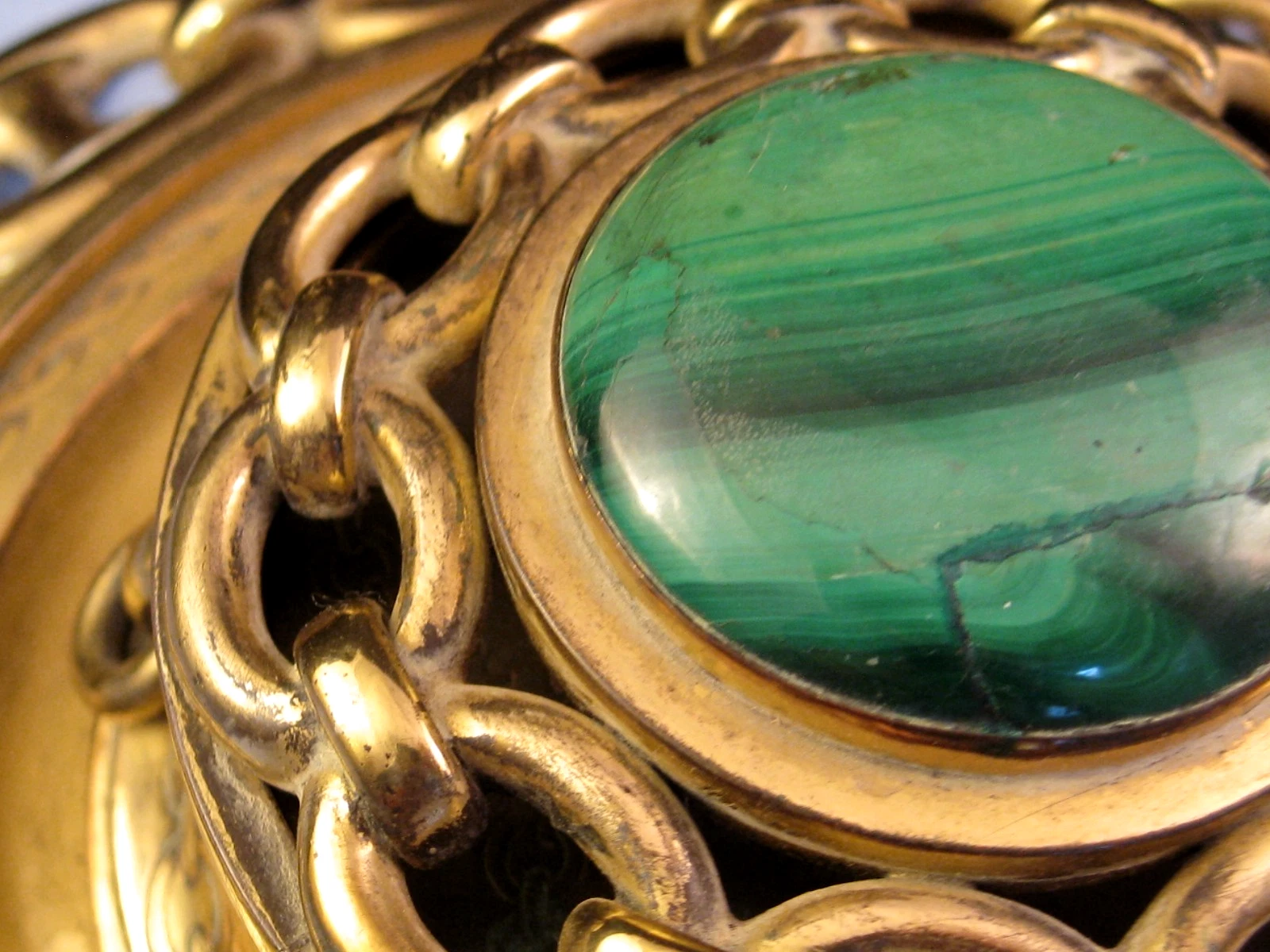
- Materials & Construction: The inkwell is crafted from heavy cast and turned brass. The focal point is a large, polished green malachite cabochon inset into the center of the lid. Malachite was a prized semi-precious stone in the Victorian era, often imported from Russia or Africa for use in high-end desk accessories. The lid is secured with a brass hinge and retains its original frame, though it is missing an insert.
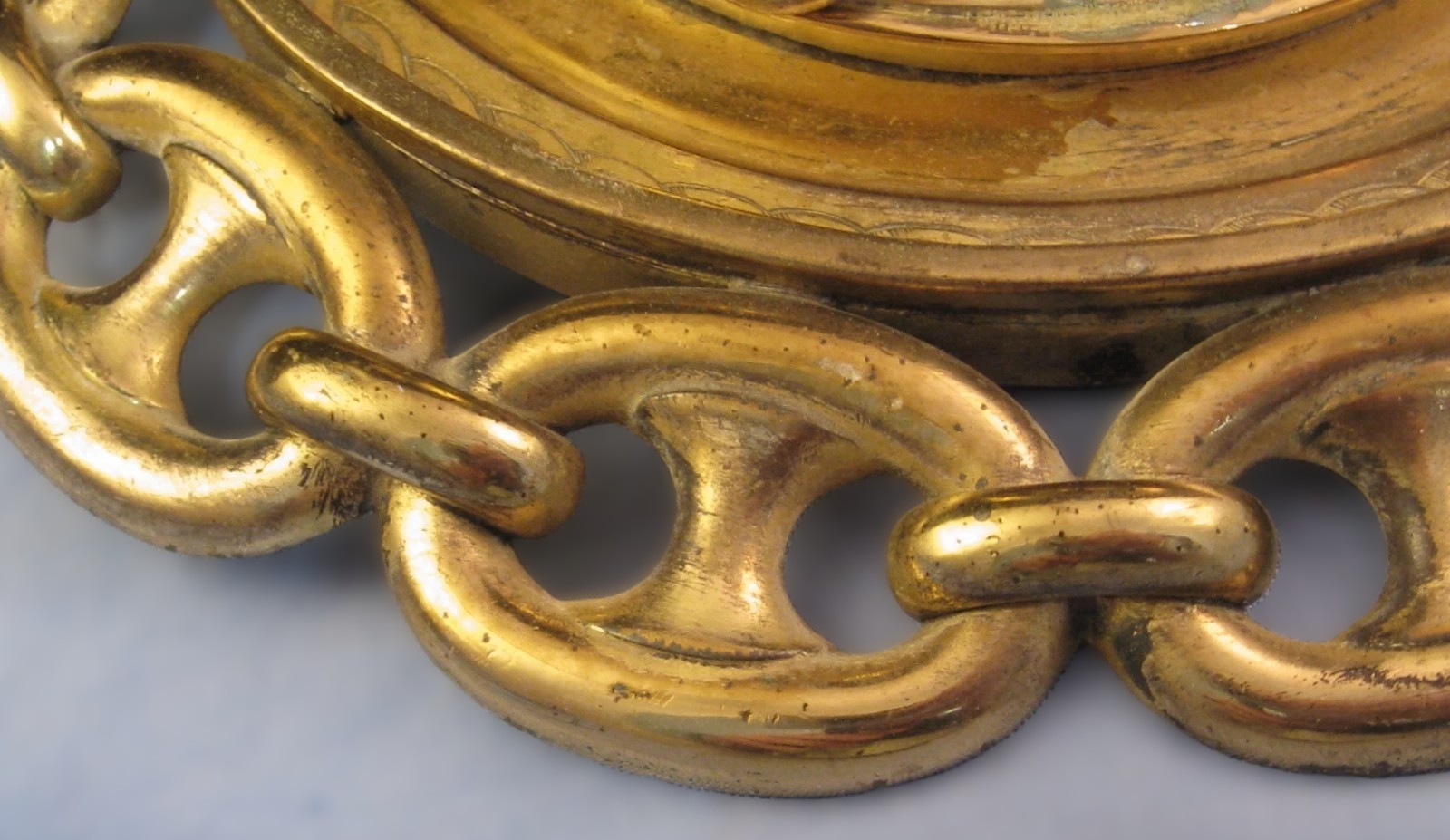
- Ornamentation & Motif: The design is centered on a “Mariner’s Link” (also known as an Anchor Link) motif. This specific style of chain link, characterized by the oval shape with a reinforcing bar across the center, was a classic symbol of the Royal Navy and maritime commerce.
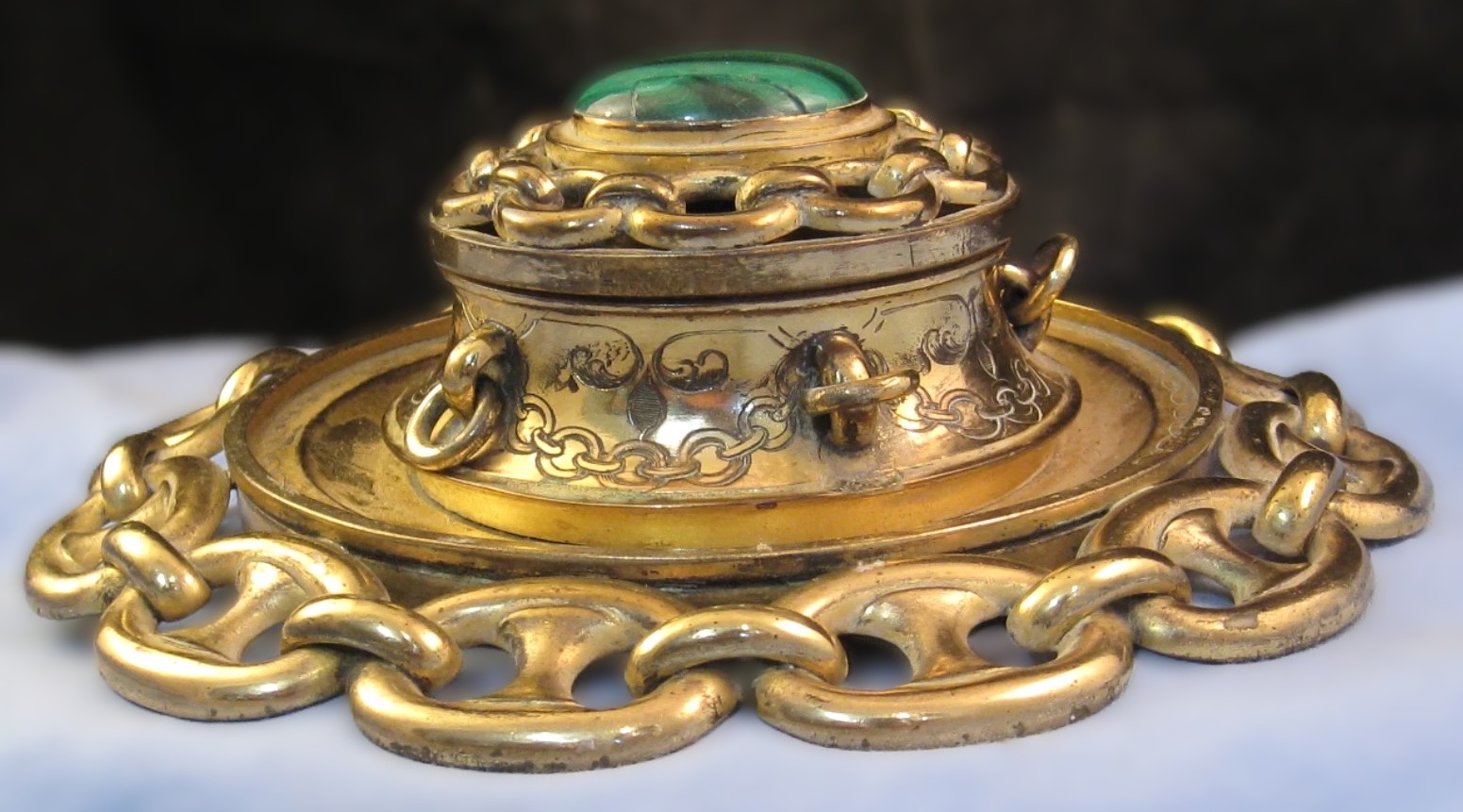
- The Base: Features a heavy, cast anchor chain border that serves as a decorative foot.
- The Lid: Encircled by a matching, smaller-scale chain link border that frames the malachite.
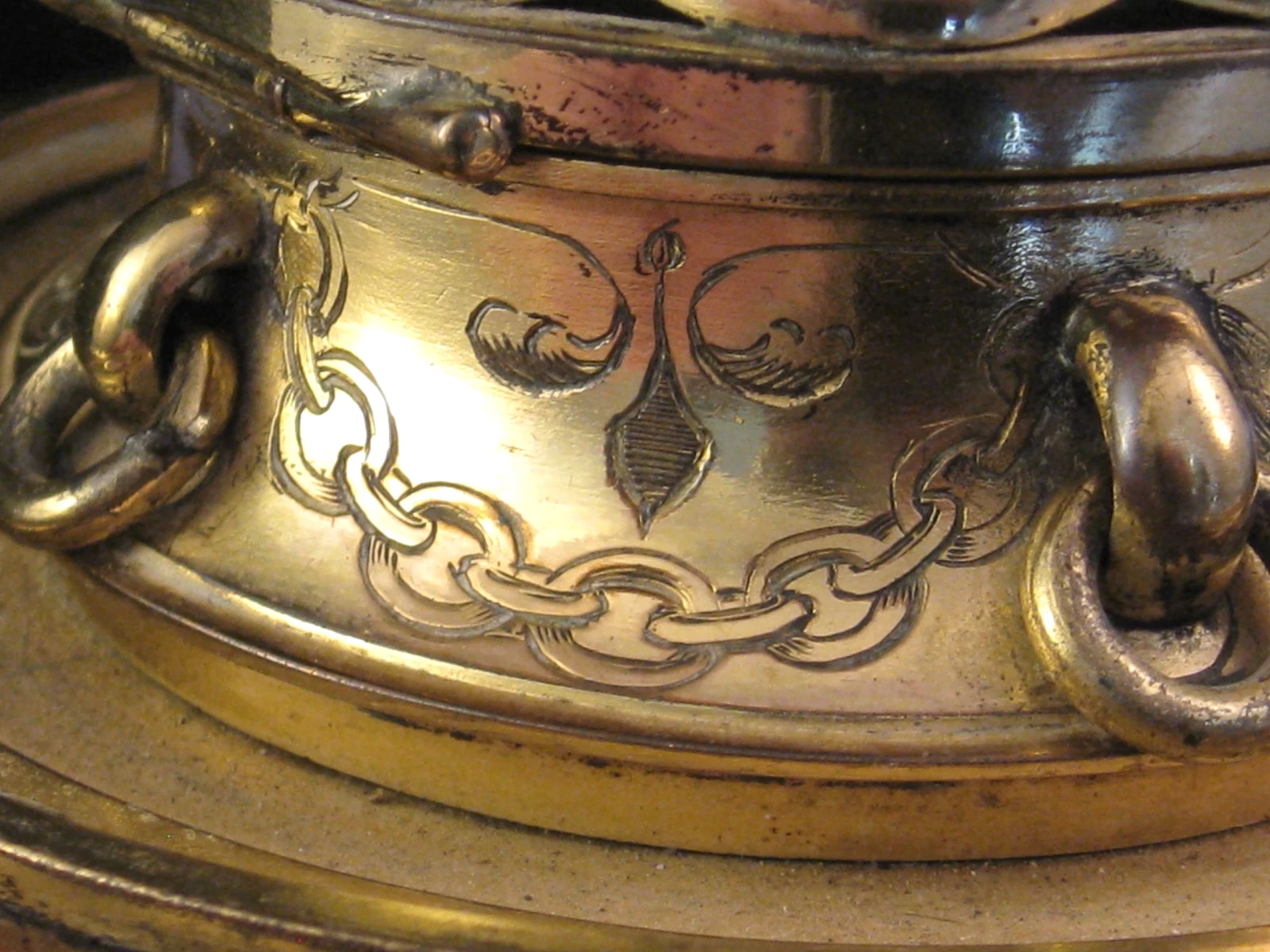
- The Body (Pot): Decorated with fine, hand-chased or engraved scrolling foliate patterns and a central “belt” of engraved chain links.
- The Interior: Notably, the chain motif continues onto the inner frame under the lid, demonstrating a level of detail usually reserved for premium manufacturers.
- Condition: While the malachite shows a visible hairline crack, the stone remains stable and intact. The brass has a warm, aged patina with expected wear to the high points of the chain links.
Origin and Maker
- Where was it made? This piece was almost certainly manufactured in Birmingham, England, which was the world center for high-quality brass founding and “fancy goods” during the 19th century.
- Who made it? While there is no visible maker’s mark on the base (which was common for these items), the construction and the specific “Anchor Link” motif are highly characteristic of two prestigious Birmingham firms:
- James Cartland & Sons: Famous for their heavy, cast-brass desk sets and registered “novelty” designs.
- William Tonks & Sons: Known for similar high-quality brassware, often incorporating semi-precious stones like malachite or banded agate.
The “anchor link” design was often commissioned as a presentation gift for naval officers, shipping merchants, or insurance executives (such as those at Lloyd’s or the Sun Insurance Company). It remains a sophisticated example of Victorian desk ware that combines industrial precision with the period’s love for symbolism.
Sold for $120 in May 2026
Content disclaimer. The information posted is the owner’s best knowledge and may not have been vetted by the SOIC. We welcome comments, corrections, and additions, working to make our website information comprehensive and accurate.
Join the Society of Inkwell Collectors (SOIC) – it’s free!
Founded in 1981 as a non-profit organization,
we are documenting inkwells (and accessories).
We’re here to help and inform!