

Inkipedia


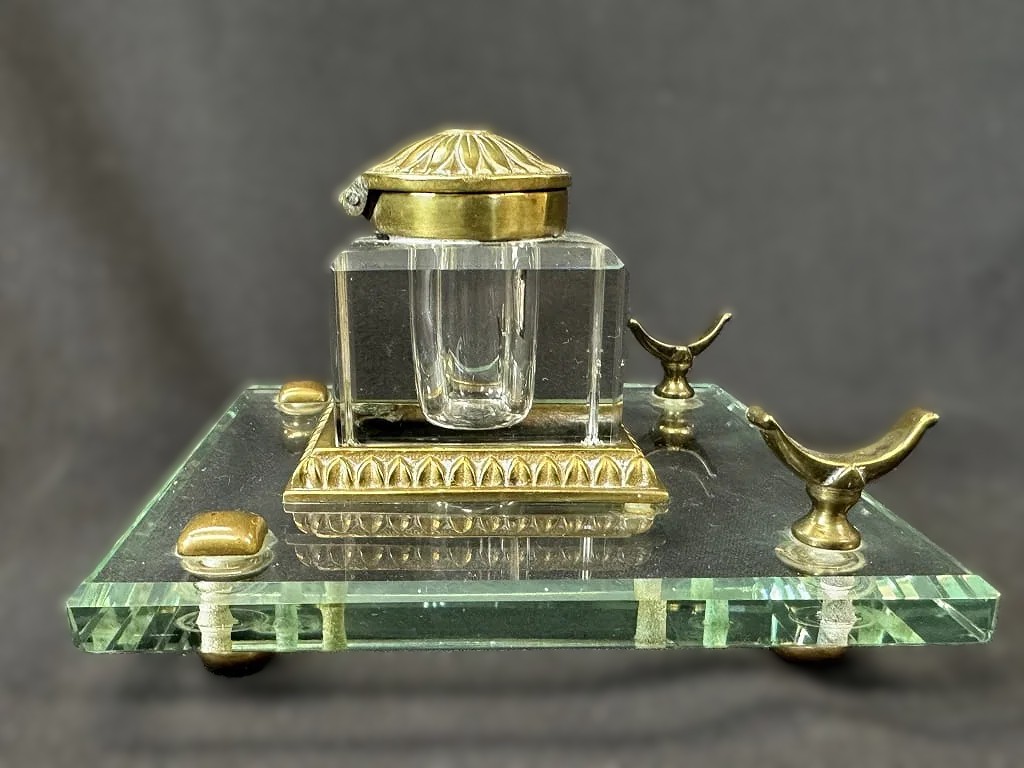
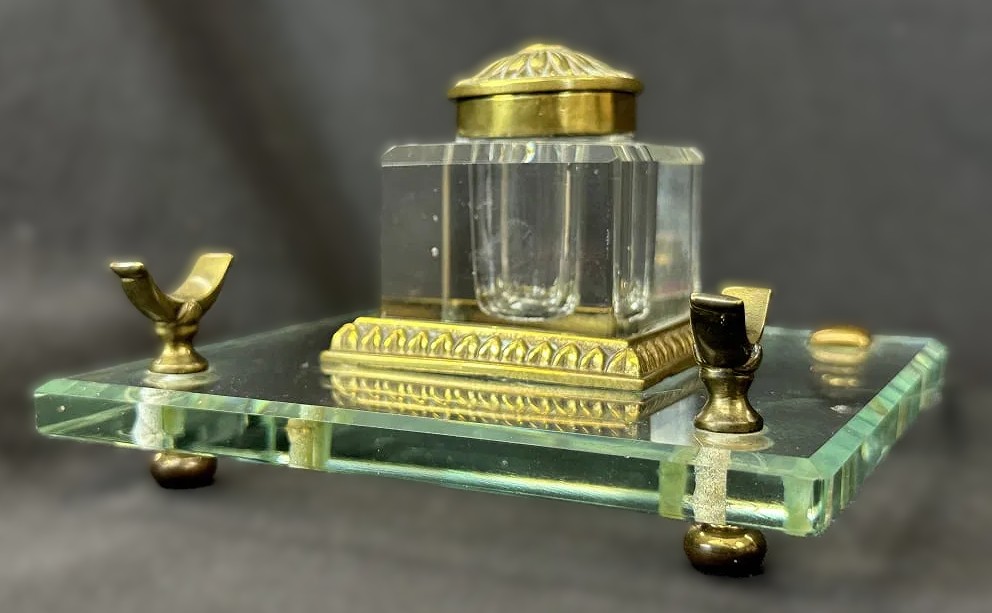
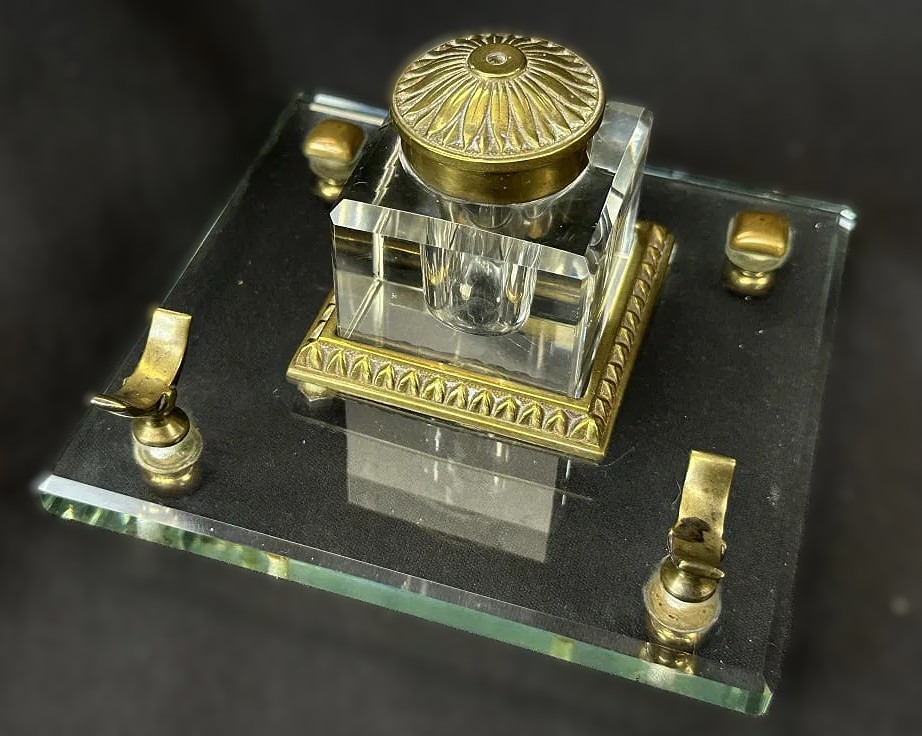
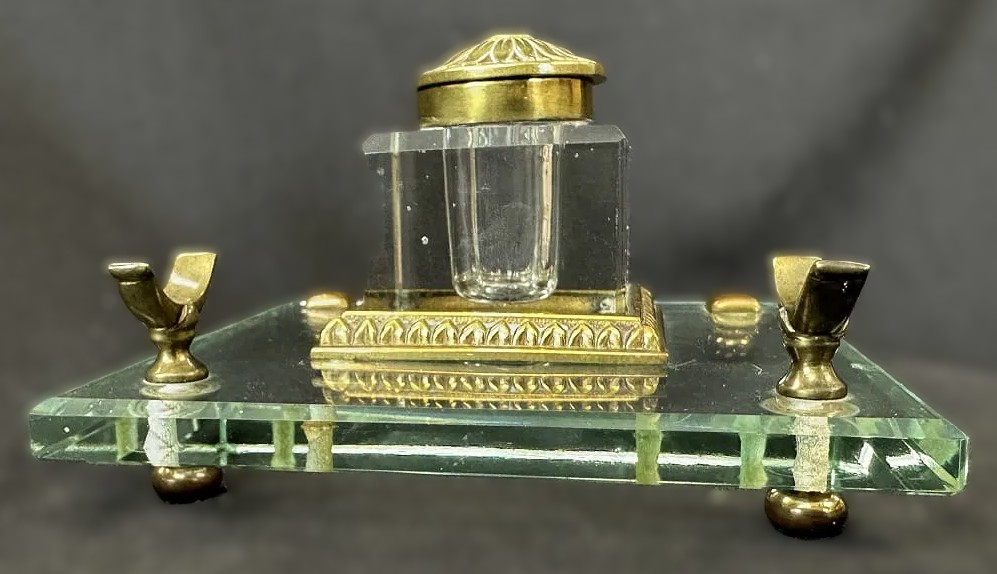


Crystal Inkwell on Glass Stand
| Categories | Glass - Non-figural |
| Material | Brass, Glass |
| Markings | Unmarked |
| Manufacturer | Undetermined |
| Origin | Undetermined |
| Date or Era | circa 1900 |
| Measuring | 5 ¼” x 5” x 3” high |
Description
The Base and Stand:
- Material: The base is crafted from a thick, heavy slab of beveled plate glass (or lead crystal). The glass exhibits a subtle greenish-blue tint at the edges, characteristic of high-quality period plate glass.
- Hardware: The stand is raised on four bun-style feet made of gilded brass with an ormolu finish. These feet are secured to the base by four decorative mounting posts that pass through the glass.
- Top Accents: The back two corner mounts are finished with square, beveled metal caps (studs). The front two corner mounts support a dual-post pen rest, designed to cradled a dip pen horizontally across the front of the desk set.
- Inkwell Gallery: Centered on the base is a square, gilded metal gallery frame that holds the inkwell securely in place. The frame features a decorative leaf-and-dart or gadrooned embossed border.
The Inkwell:
- Form: A heavy, solid clear crystal cube with a ground and polished finish. The interior features a deep, cylindrical reservoir for ink.
- Lid: The inkwell is fitted with a hinged, gilded metal lid. The top of the lid is decorated with a distinctive radiating petal design, a common motif in high-end late 19th-century metalwork.
Origin and Manufacturer
- Likely Origin: England or France.
- Manufacturer: This design is highly characteristic of the work of John Grinsell & Sons (Birmingham, England), a renowned firm that specialized in mounting high-quality glass and crystal in silver and gilded metal for desk accessories. Another possibility is the French firm Baccarat, which produced very similar heavy crystal desk sets, though English makers were more prone to this specific “bolted-through” plate glass base construction.
- Age: Circa 1895–1905. The transition from the ornate Victorian “Rococo” style to the cleaner, more geometric “Edwardian” aesthetic is evident in the square form and the use of beveled glass.
Condition Note
The clear glass and the preservation of the gilding suggest this was a well-cared-for piece. In “archival” terms, you might describe the metal as having a “mellowed gold patina” and the glass as “optical quality with high clarity.”
Sold for $248 in April 2026
Content disclaimer. The information posted is the owner’s best knowledge and may not have been vetted by the SOIC. We welcome comments, corrections, and additions, working to make our website information comprehensive and accurate.
Join the Society of Inkwell Collectors (SOIC) – it’s free!
Founded in 1981 as a non-profit organization,
we are documenting inkwells (and accessories).
We’re here to help and inform!