





Cast Iron Double Inkstand
| Categories | Cast Iron |
| Material | Bronze finish |
| Markings | See Narrative |
| Manufacturer | E G Zimmermann |
| Origin | Germany |
| Date or Era | circa 1900 |
| Measuring | 10” x 9 ½” x 3 ½” high |
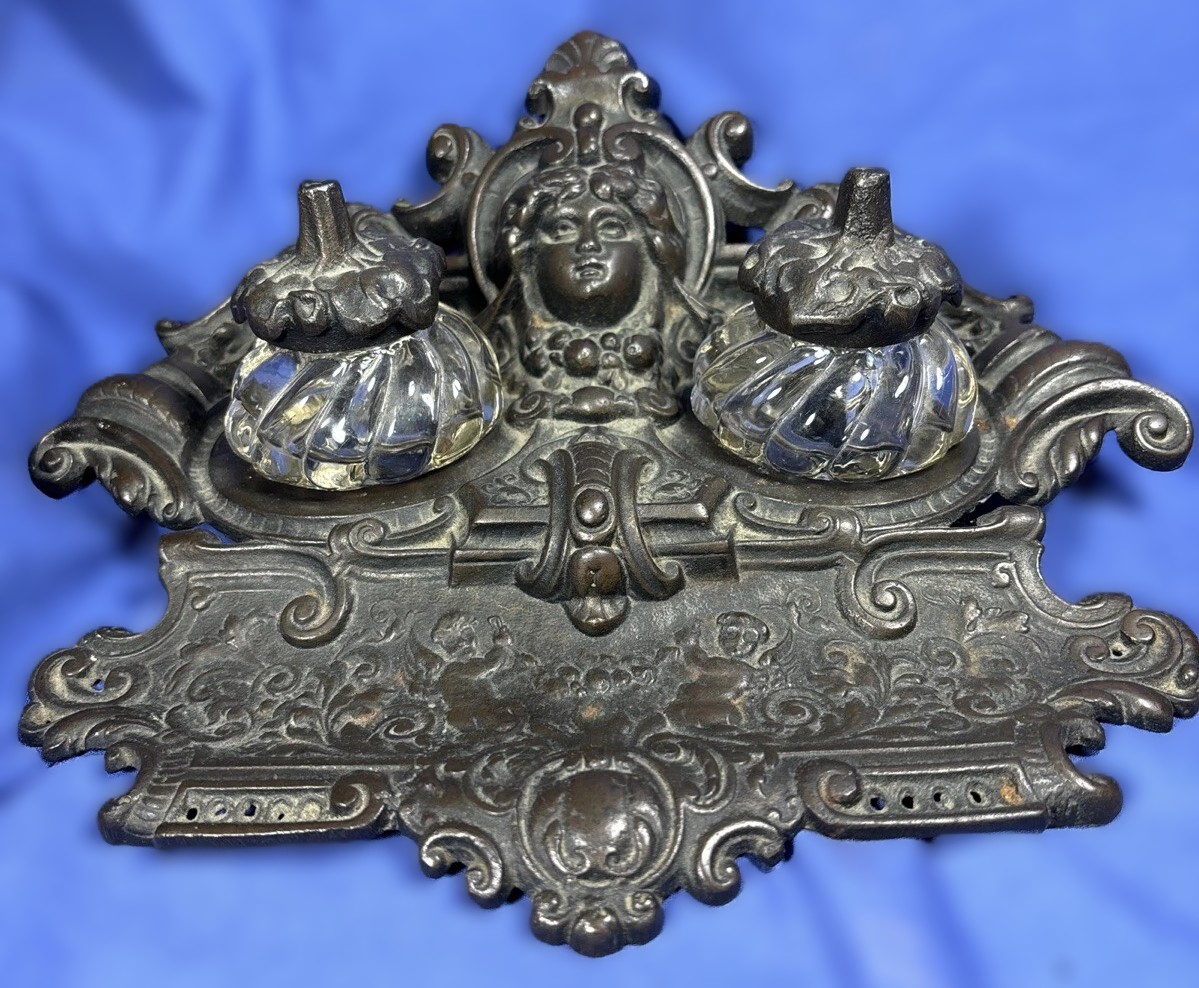
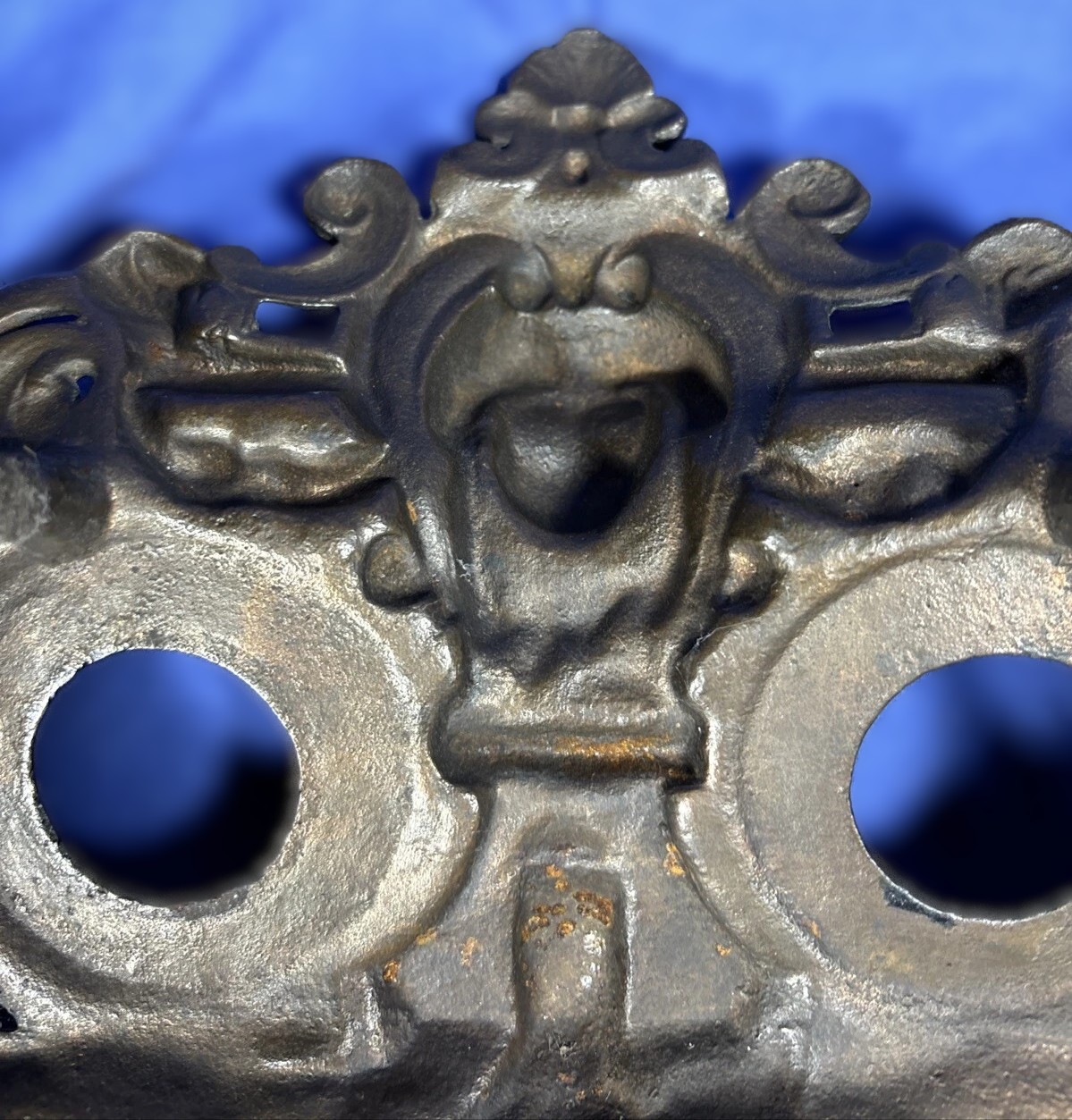
This is a nice example of a Late Victorian/Art Nouveau double inkstand. Based on the markings and style, it was manufactured by the renowned German firm E.G. Zimmermann in Hanau, Germany.
Identification of the Mark & Maker
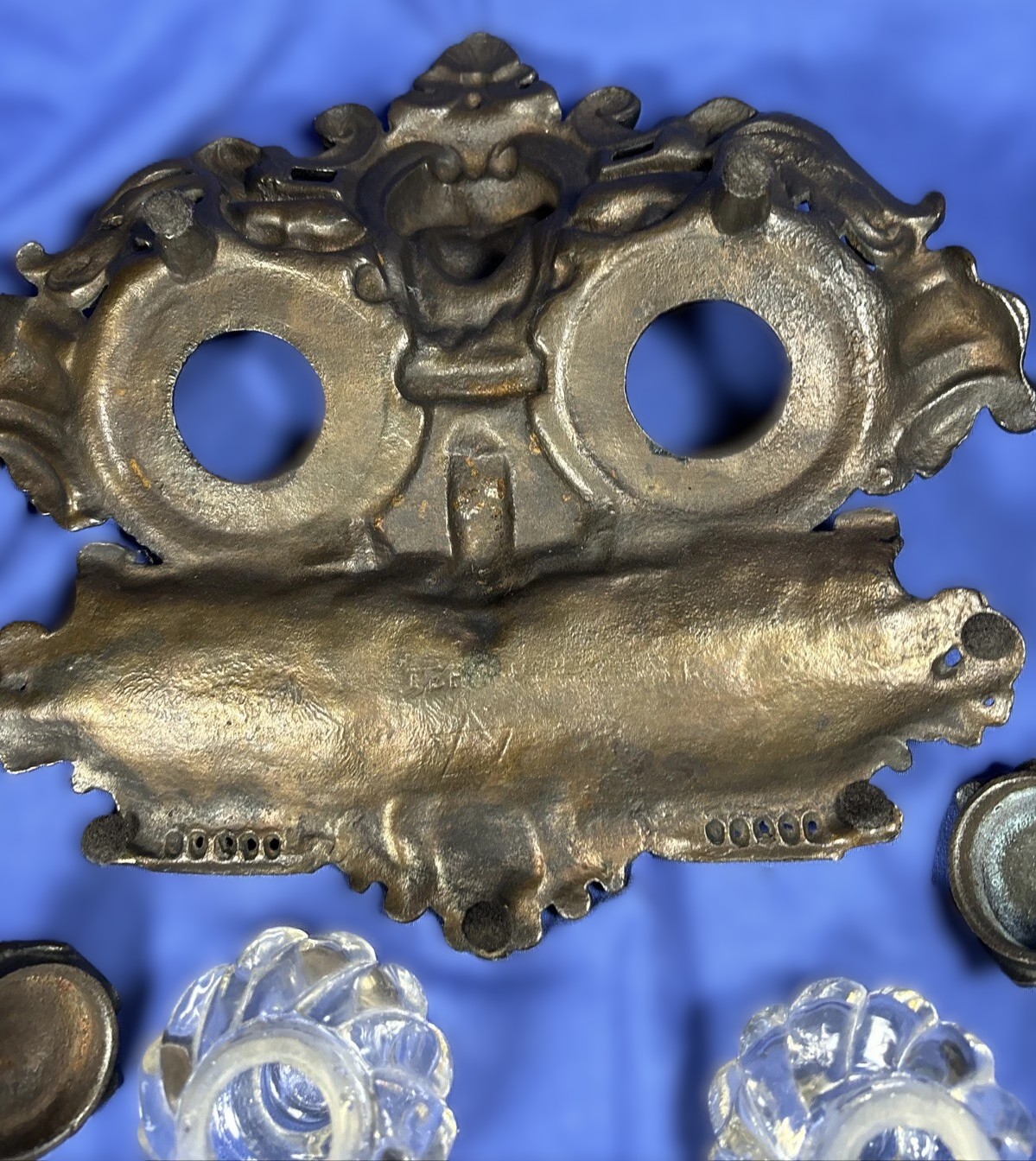
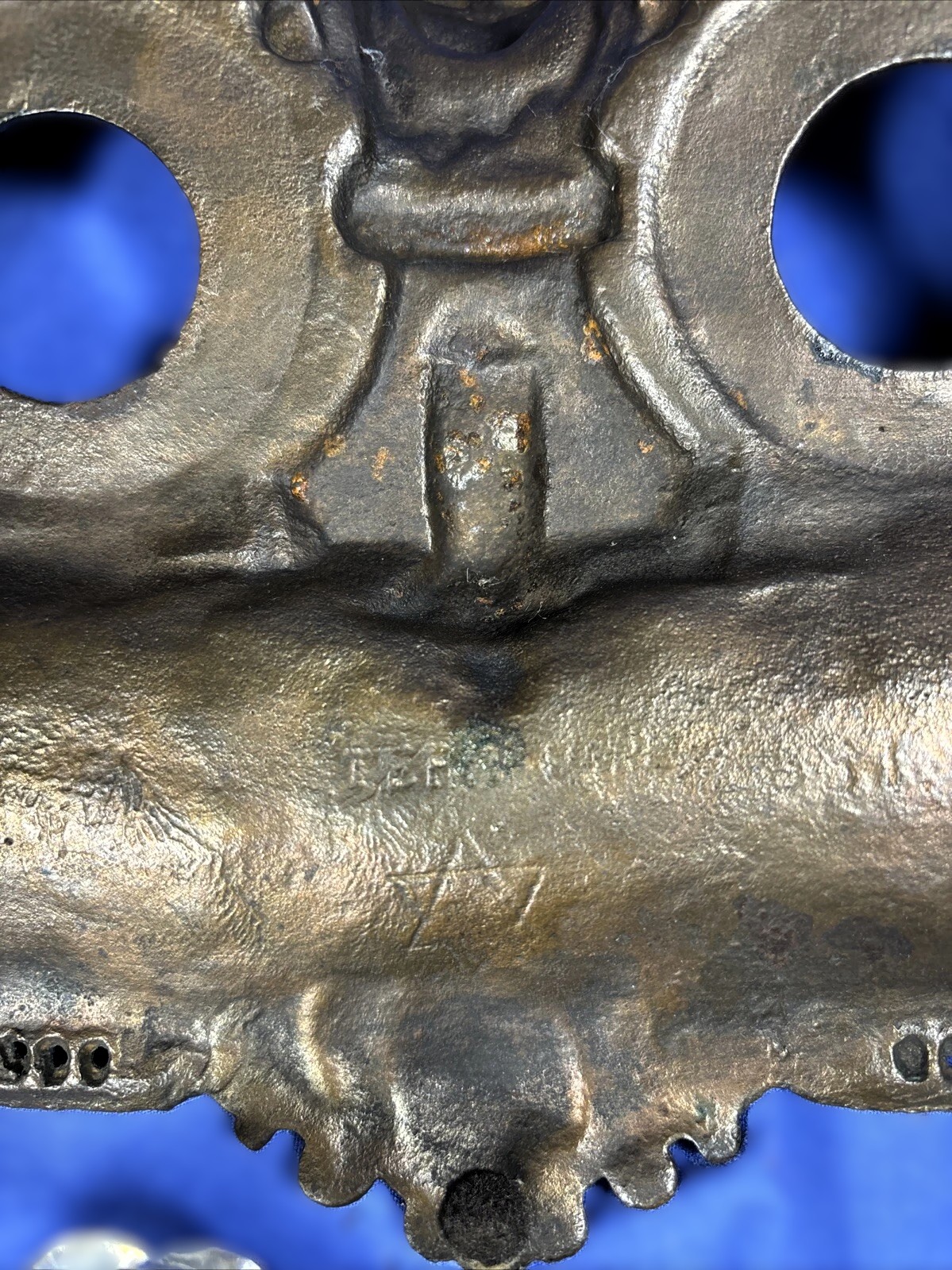
- Deciphering the Lettering: There is faint lettering of “DEP.”, which is an abbreviation for Déposé (the French and Continental term for “Registered” or “Copyrighted”).
- The Star Mark: The six-pointed star on the underside is the factory mark for Ernst Gideon Zimmermann (E.G. Zimmermann). If you look very closely at the center of the star, you may see the letters “EGZ” intertwined.
- Maker: E.G. Zimmermann was a prolific foundry in Hanau, Germany, active from 1842 until about 1939. They were world-famous for their high-quality decorative metalwork, particularly their finely cast-iron desk accessories.
Materials & Construction
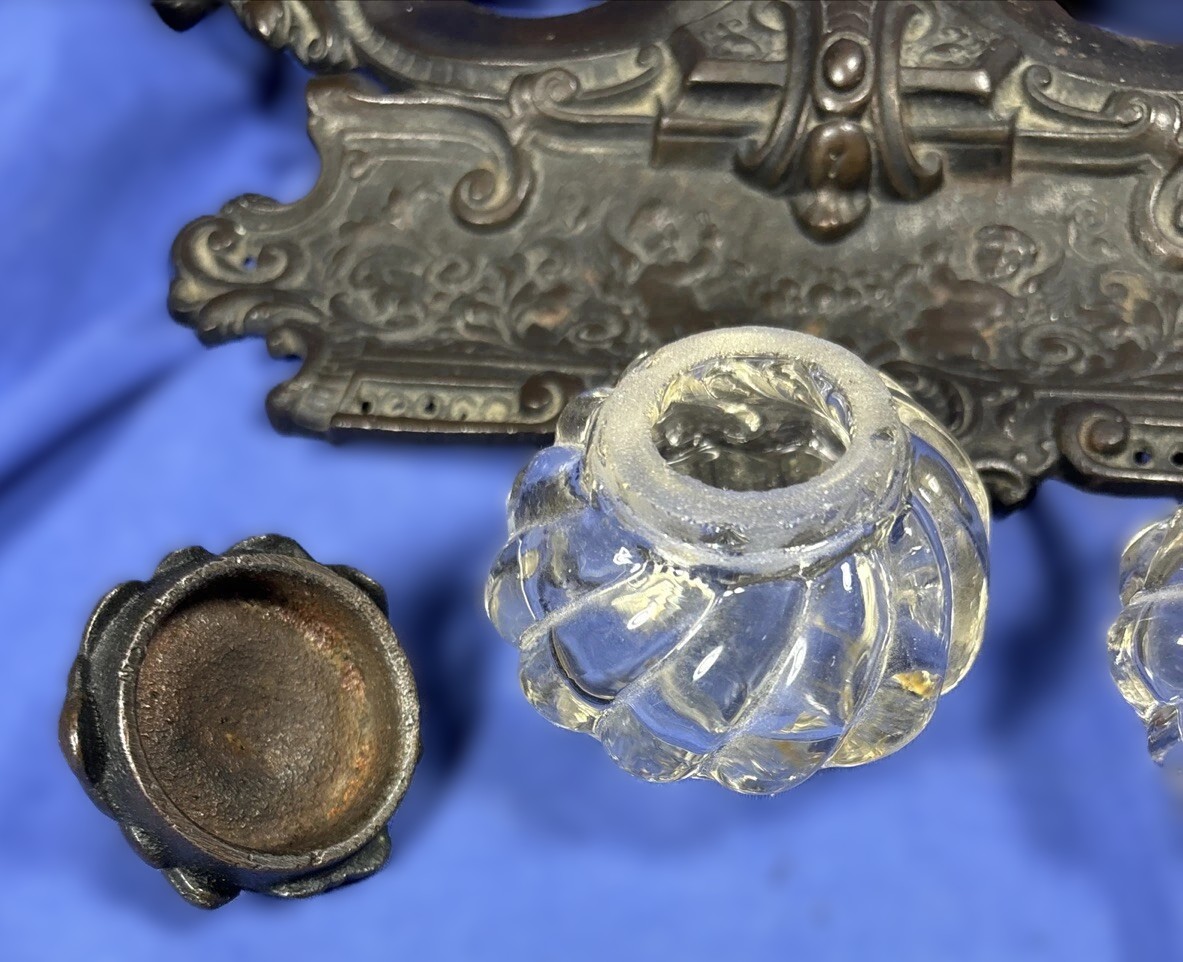
- Material: It is made of cast iron.
- Finish: This piece has a bronzed or “japanned” finish. Zimmermann was known for applying specialized coatings to their ironware to give it the appearance of more expensive bronze while preventing the iron from rusting.
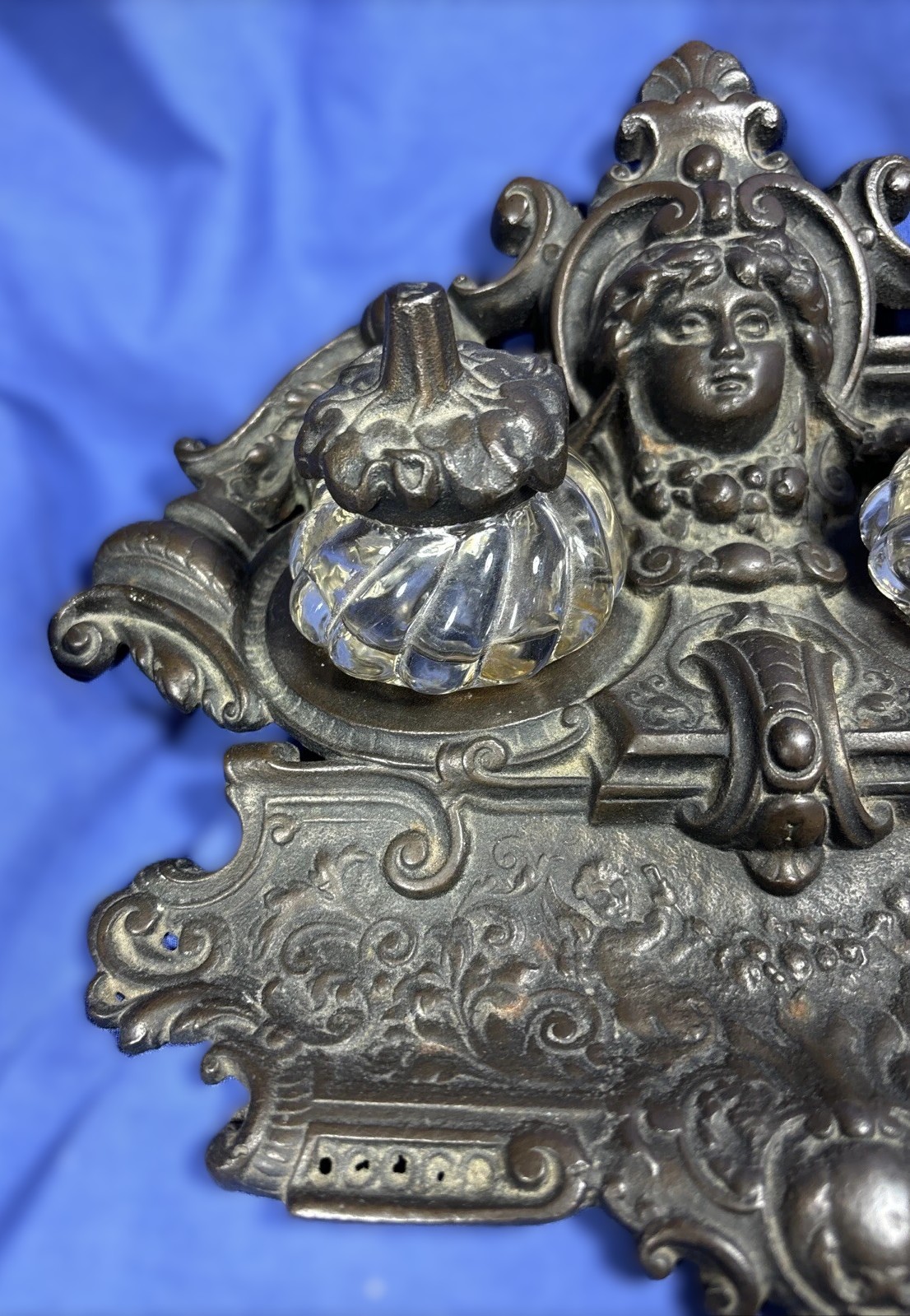
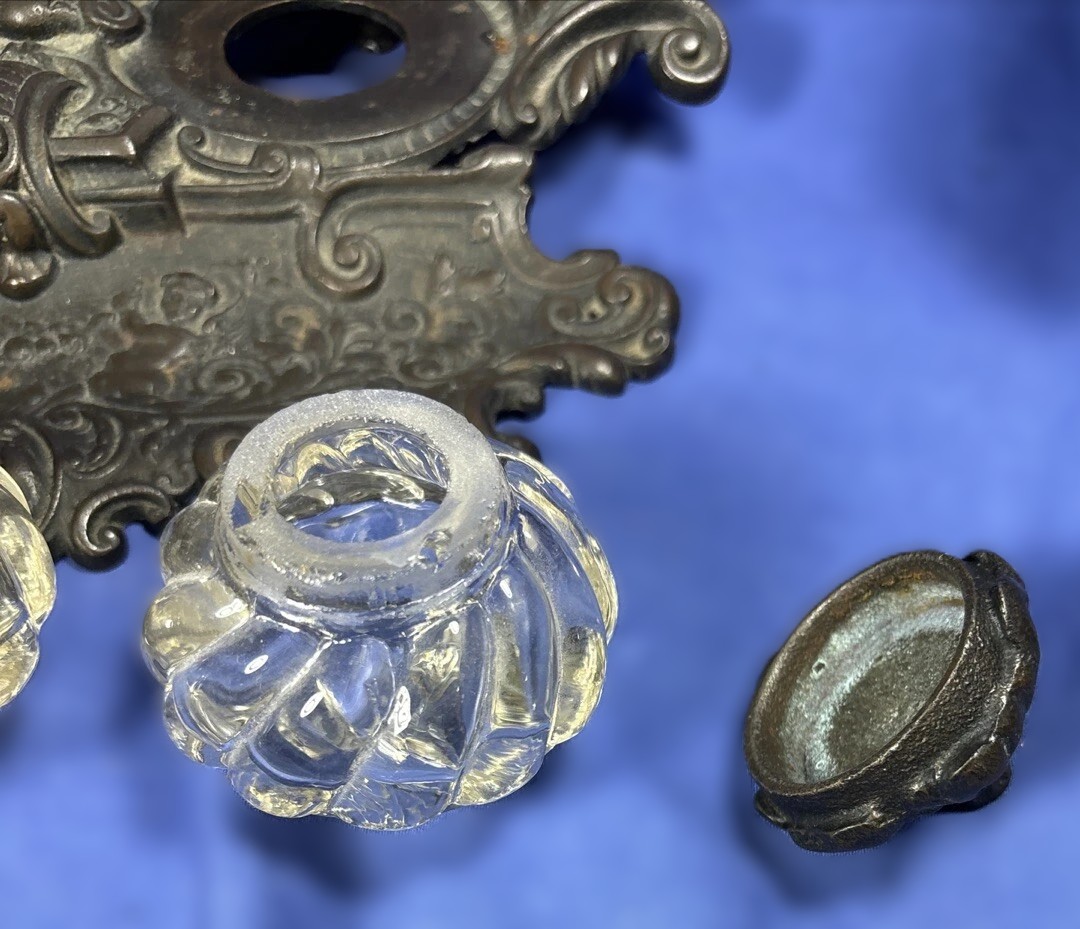
- Glass Components: The two clear glass inkwells feature a “swirl” or spiral molded pattern, which was a common Victorian design. They are fitted with matching cast metal lids.
Style & Description
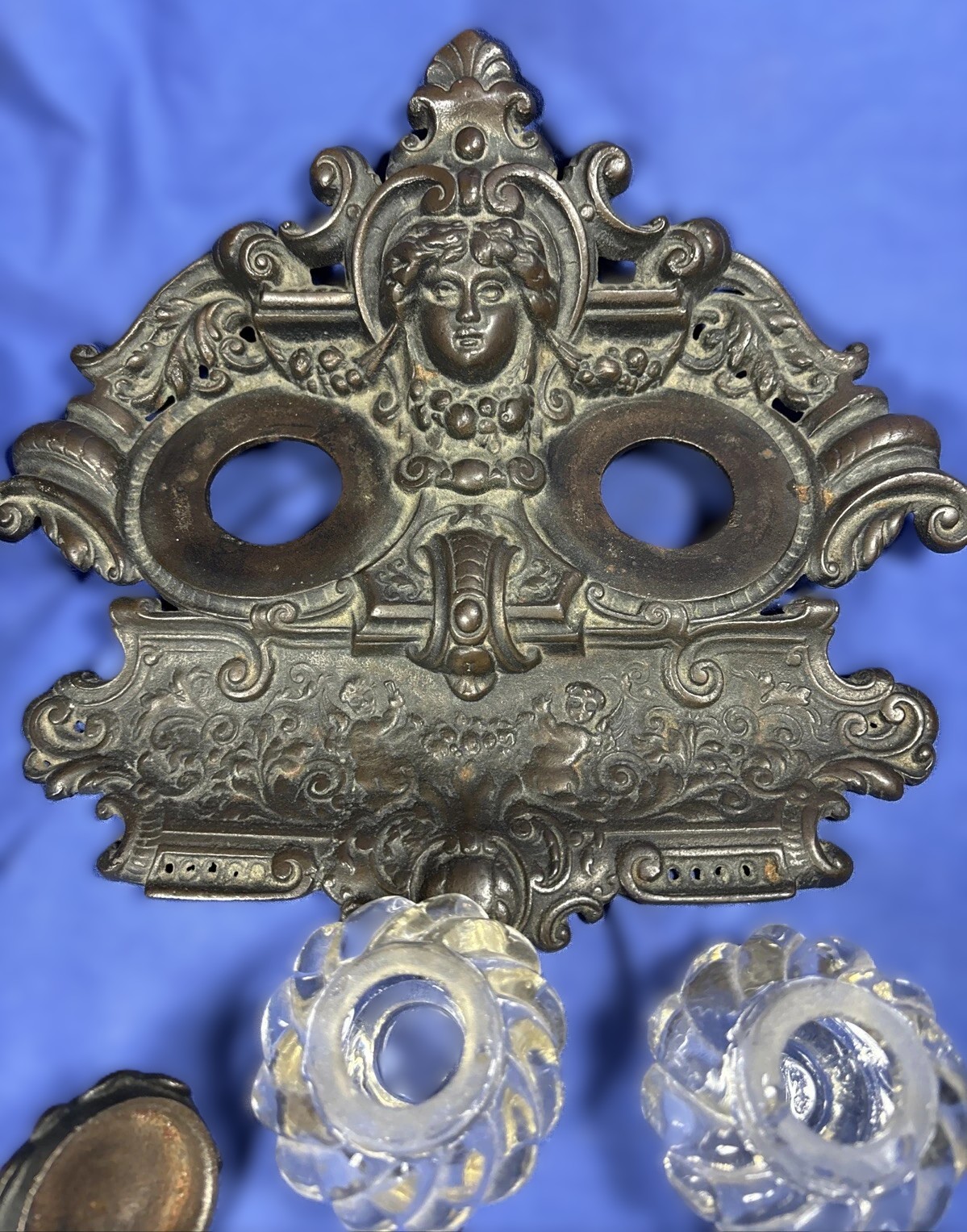
The design is a transitional piece, blending Neoclassical elements with the emerging Art Nouveau style:
- Central Bust: The focal point is a female head (often representing a muse or “Lady Liberty” style figure) with flowing hair and a floral necklace, very typical of the Art Nouveau movement.
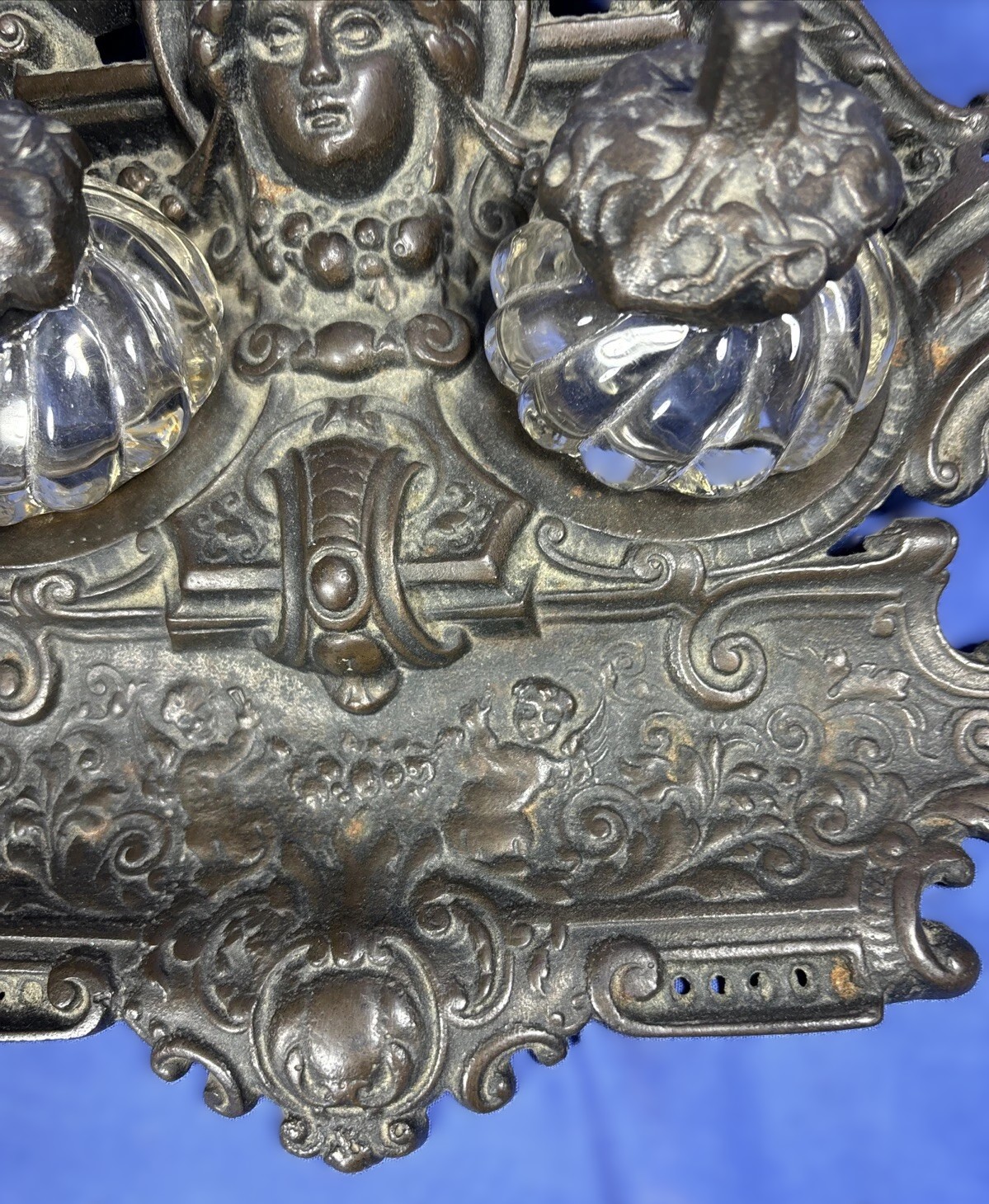
- Cherubs (Putti): The lower pen tray features two cherubs or putti lounging amidst scrolling vines and acanthus leaves, which is a more traditional Rococo/Neoclassical motif.
- The Tray: The wide, ornate front area is designed as a pen tray to hold dip pens or fountain pens.
Age Estimate
Given the presence of the Art Nouveau female bust alongside traditional Victorian cherubs, this inkstand dates to the late 19th or very early 20th century, likely between 1895 and 1905.
Note: E.G. Zimmermann pieces are collectible today, particularly because they achieved a level of detail in cast iron that few other foundries could match.
Sold for $89 in March 2026
Content disclaimer. The information posted is the owner’s best knowledge and may not have been vetted by the SOIC. We welcome comments, corrections, and additions, working to make our website information comprehensive and accurate.
Join the Society of Inkwell Collectors (SOIC) – it’s free!
Founded in 1981 as a non-profit organization,
we are documenting inkwells (and accessories).
We’re here to help and inform!