




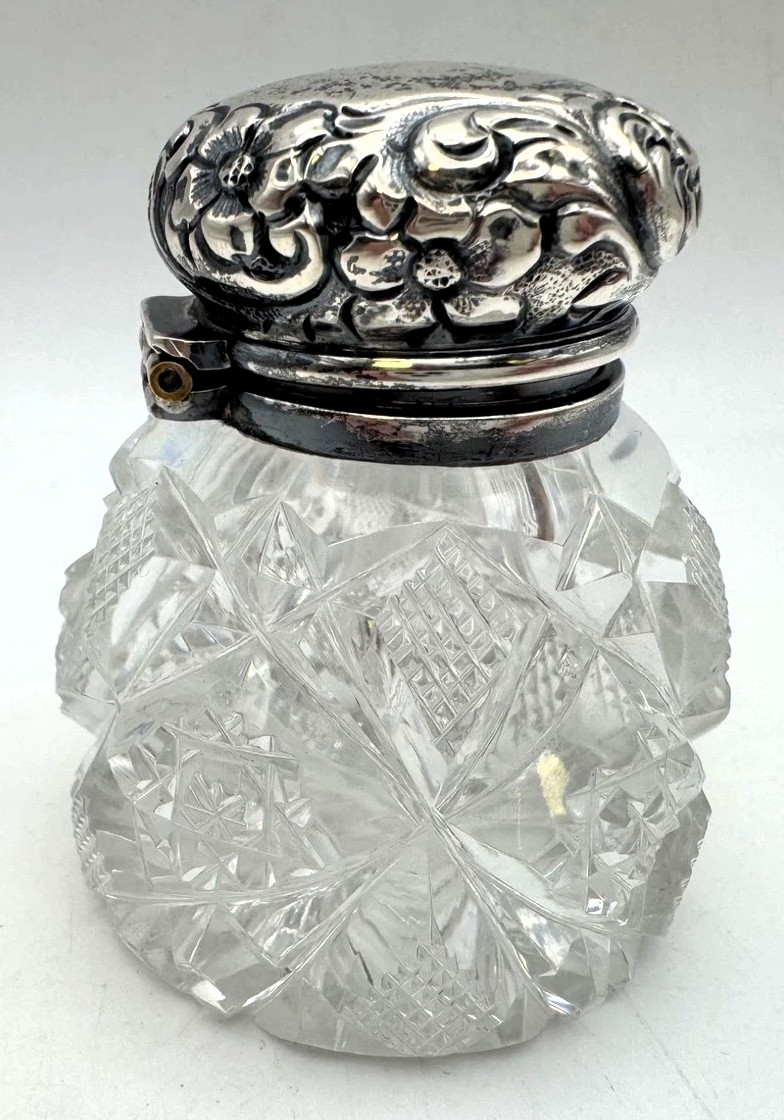

Sterling Silver & Cut Crystal Inkstand
| Categories | Silver |
| Material | Silver |
| Markings | See Narrative |
| Manufacturer | Hamilton & Diesinger |
| Origin | United States |
| Date or Era | circa 1890 |
| Measuring | Base: 7 ½” x 4”; Inkwell 2 ¾” high |
Description
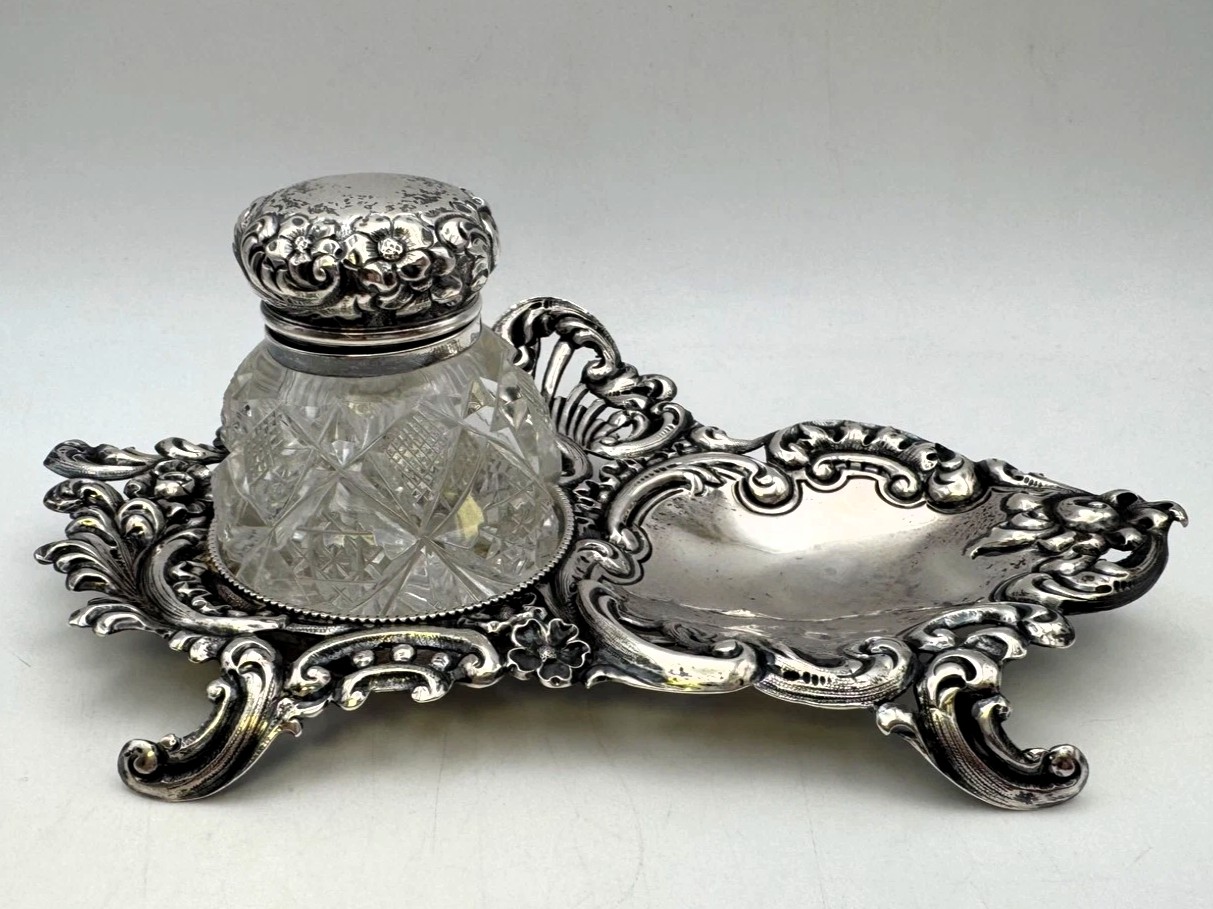
This ornate inkstand reflects the opulent Rococo Revival style popular in the late 1800s.
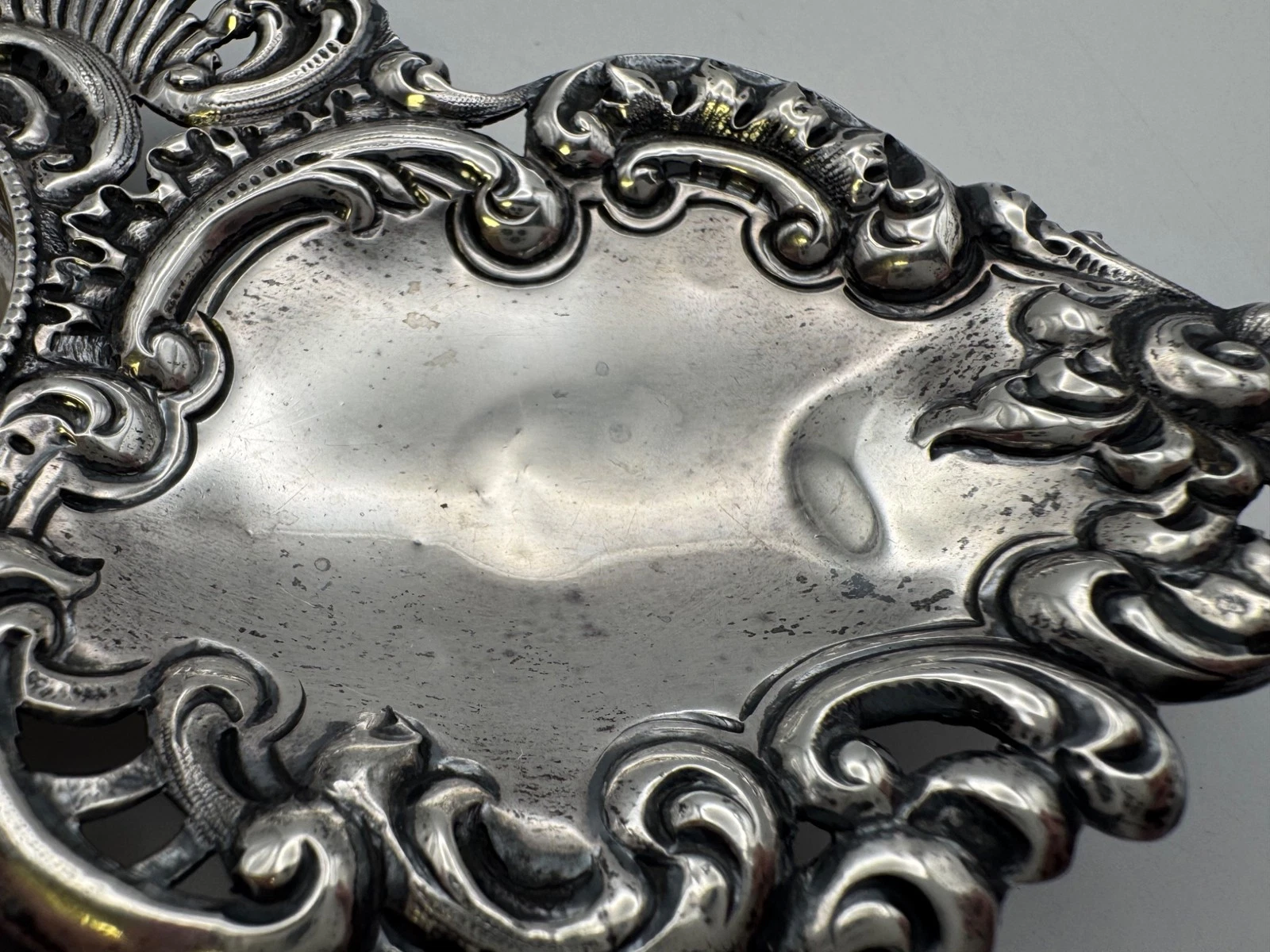
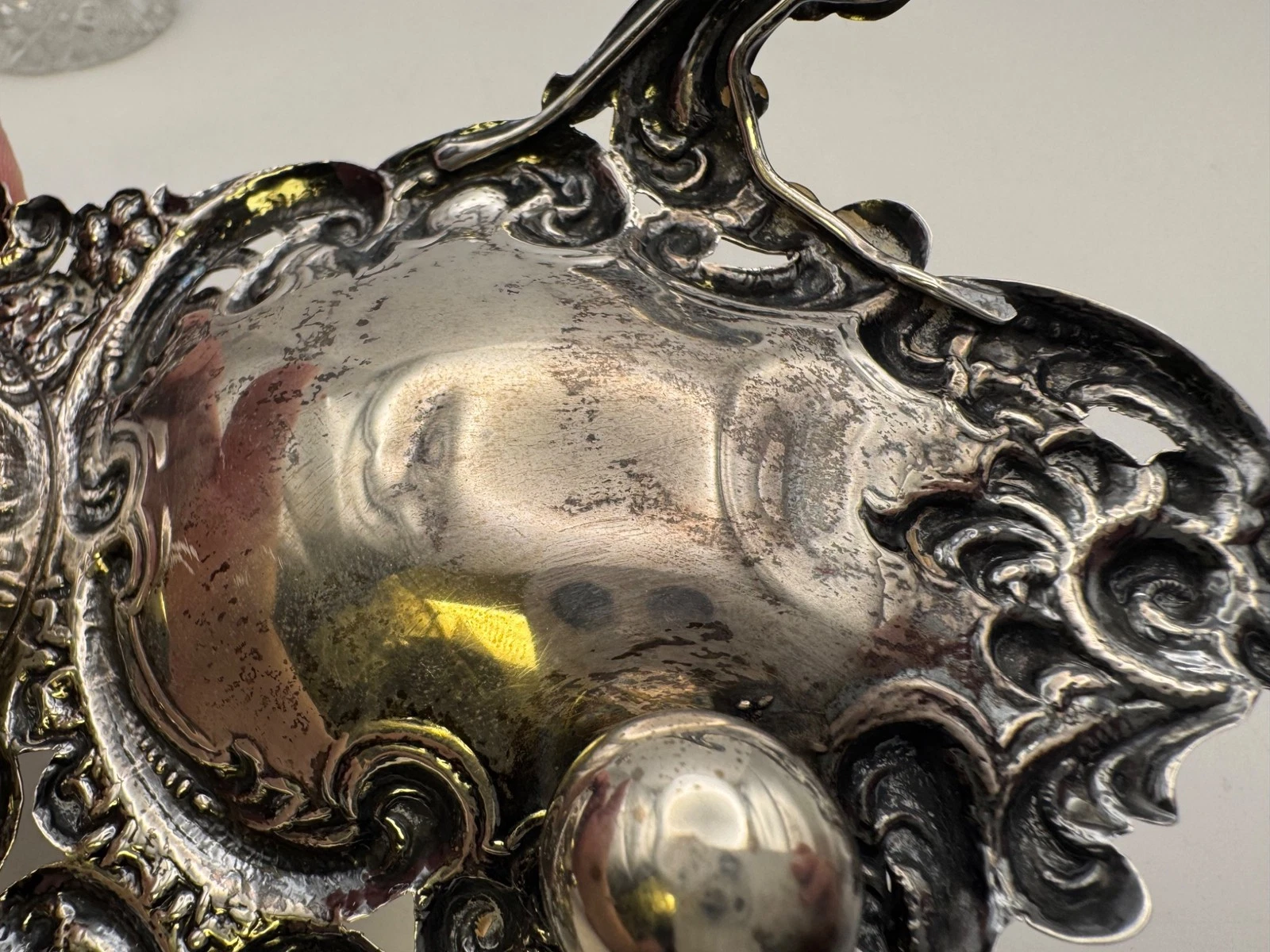
- The Tray: A heavily embossed sterling silver footed tray featuring a complex arrangement of scrolled acanthus leaves, floral blossoms, and a prominent scalloped shell motif at the rear. The tray is designed with two distinct sections: a circular recessed well specifically fitted to hold the inkwell and a larger, kidney-shaped basin used as a “pen tray” for nibs or stamps. It sits on four elegantly curved, scrolled feet.
- The Inkwell: A substantial, heavy American Brilliant Period (ABP) style crystal inkwell. It is intricately hand-cut with a “diamond and fan” pattern that creates exceptional brilliance and “fire” when it catches the light.
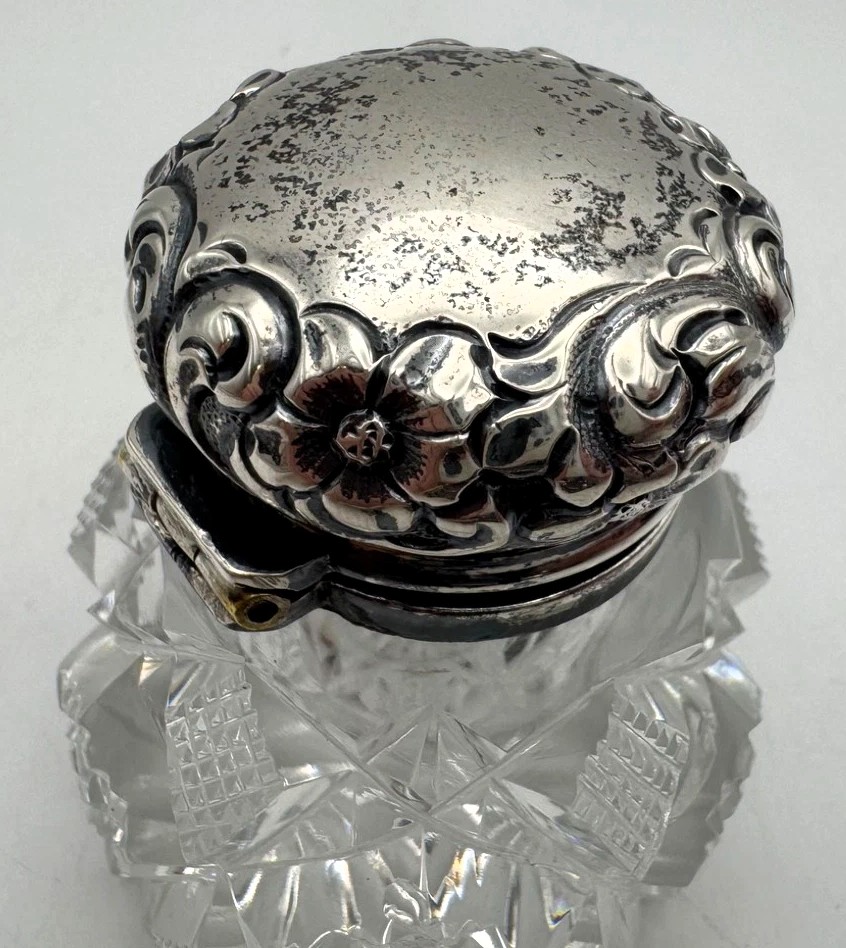
- The Lid: The sterling silver collar is fitted with a hinged, high-relief repoussé lid. The design features a cluster of blossoming flowers (roses or poppies) against a textured background.
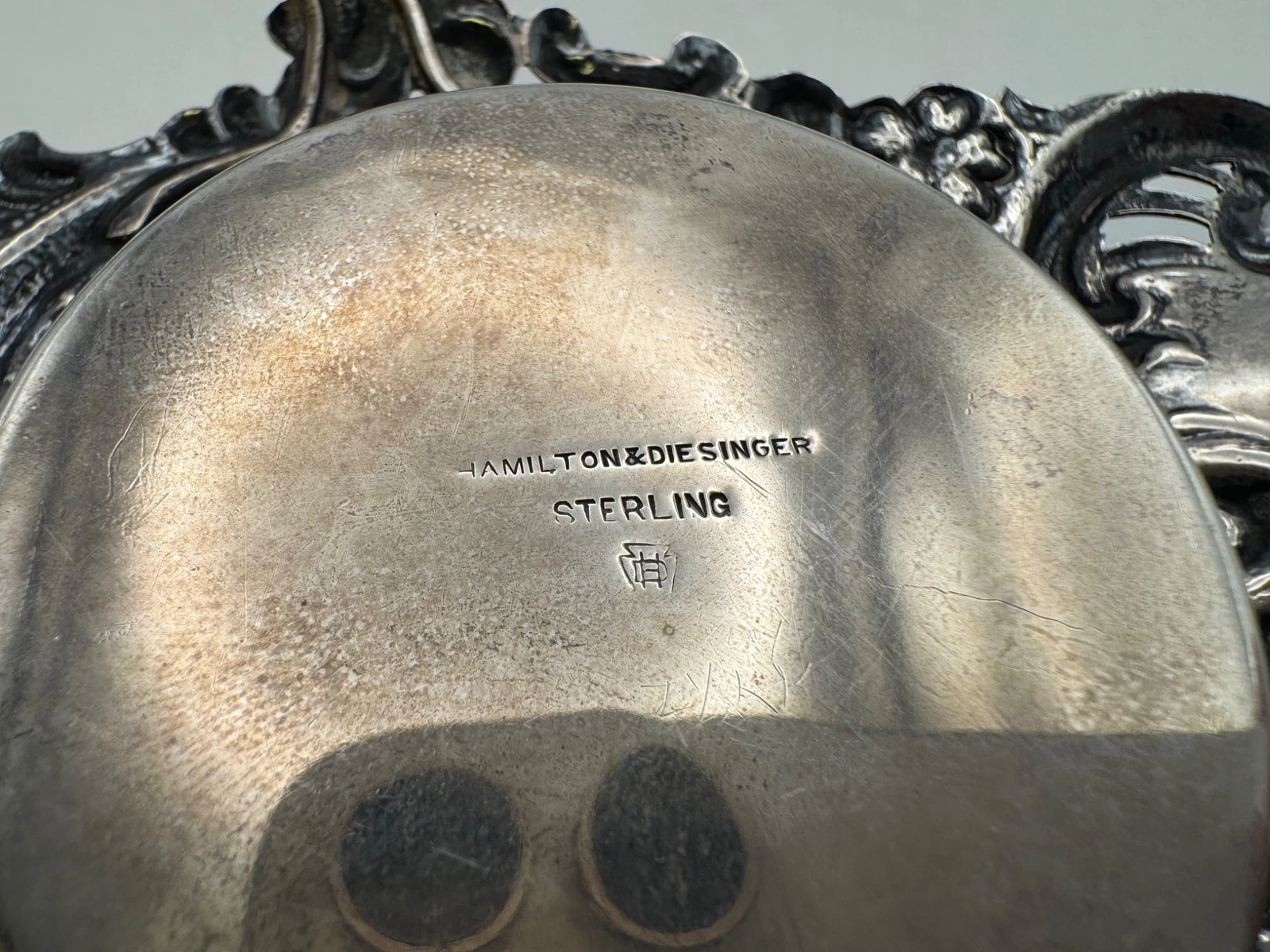
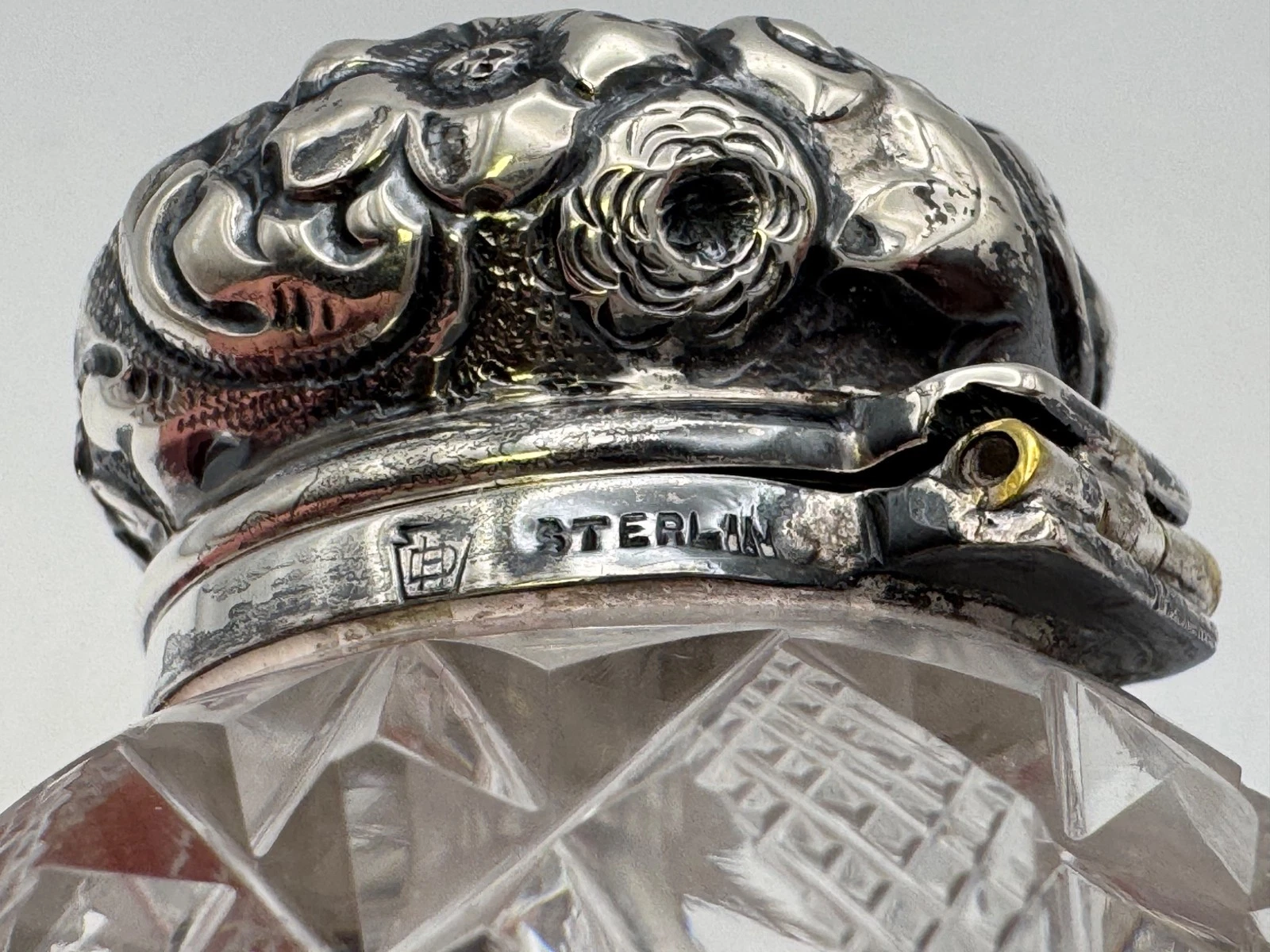
- Hallmarks: The base of the tray and the rim of the inkwell lid are stamped with the Hamilton & Diesinger maker’s mark, the “STERLING” purity grade, and the firm’s signature Keystone hallmark (featuring the initials “H” and “D”).
About the Maker: Hamilton & Diesinger
Hamilton & Diesinger was a prestigious firm of manufacturers and retailers based in Philadelphia, Pennsylvania, active between 1881 and 1900.
- Partnership: The firm was founded by Matthew F. Hamilton and Herman Diesinger. They were known for producing high-end sterling silver holloware, flatware, and highly collectible souvenir spoons.
- The “Keystone” Connection: Because Pennsylvania is the “Keystone State,” the firm incorporated a keystone-shaped shield into their hallmark to emphasize their Philadelphia heritage.
- Company Fate: Matthew Hamilton left the partnership in 1899. Herman Diesinger continued for one more year before selling the entire operation to Gimbel Brothers in 1900. Because the firm was only in business for roughly 19 years, their pieces are relatively scarce.
- Market Context: Pieces like this were the height of “desk culture” for the elite. A sterling and crystal inkstand of this quality would have been a status symbol, typically found in a well-appointed home office or on a lady’s desk.
Summary
Rare Hamilton & Diesinger Sterling & Crystal Inkstand Philadelphia, PA, c. 1881–1900
An exquisite late-Victorian desk standish featuring a footed sterling silver tray in the Rococo Revival style with ornate floral scrolls and shell motifs. Accompanied by a heavy, hand-cut American Brilliant Period crystal inkwell with a floral repoussé sterling lid.
Maker: Hamilton & Diesinger (Active 1881-1900) Material: Sterling Silver (.925) & Hand-Cut Crystal Condition: Excellent antique condition with original hallmarks.
Sold for $255 in March 2026
Content disclaimer. The information posted is the owner’s best knowledge and may not have been vetted by the SOIC. We welcome comments, corrections, and additions, working to make our website information comprehensive and accurate.
Join the Society of Inkwell Collectors (SOIC) – it’s free!
Founded in 1981 as a non-profit organization,
we are documenting inkwells (and accessories).
We’re here to help and inform!