

Inkipedia

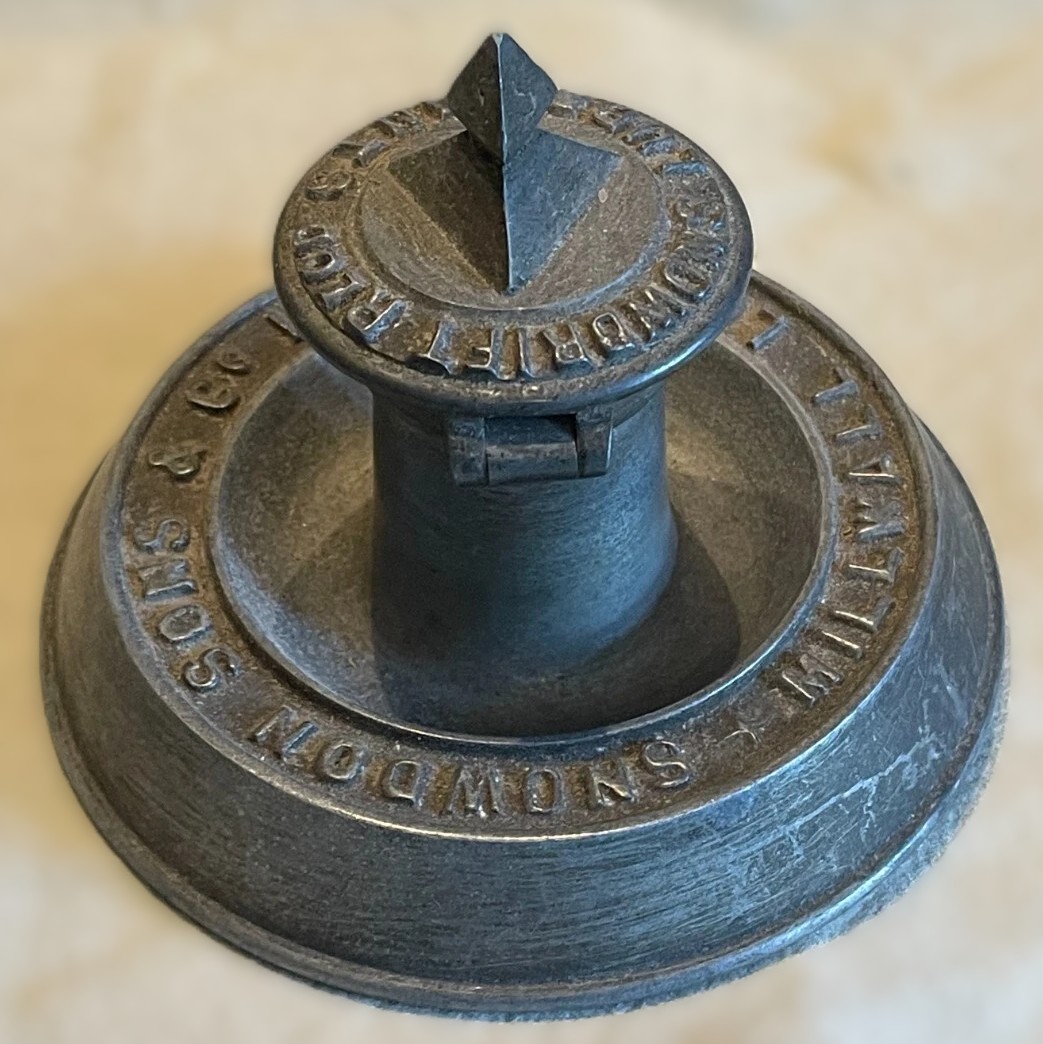

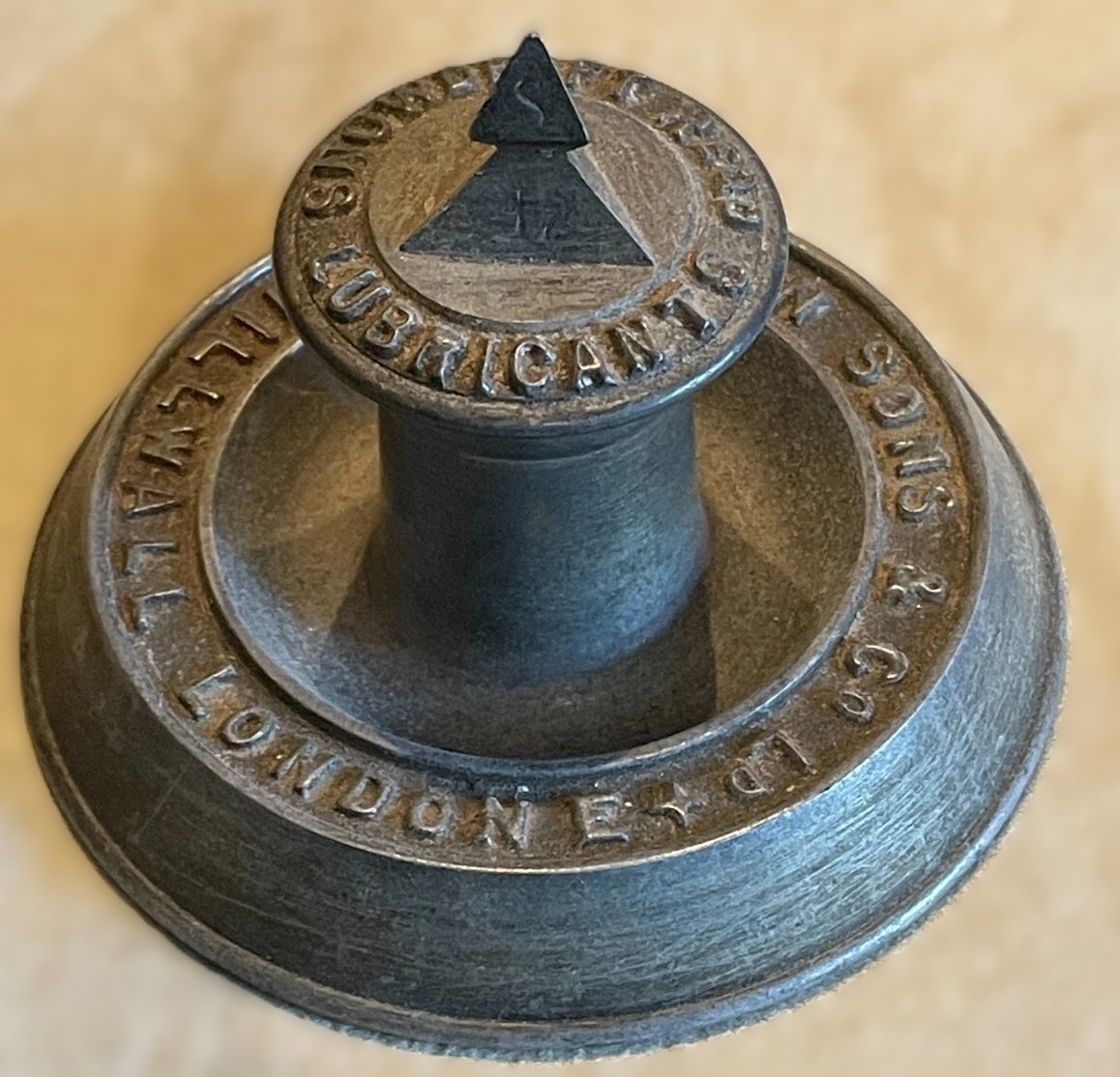

Advertising Inkwell – Snowdrift Lubricants
| Categories | Advertising |
| Material | White metal |
| Markings | See narrative |
| Manufacturer | Undetermined |
| Origin | England |
| Date or Era | circa 1910 |
Description
- Material: It is made of cast white metal, likely an alloy of pewter or antimony. This was a popular material for promotional items because it could be cast with high detail but was cheaper than silver or brass.
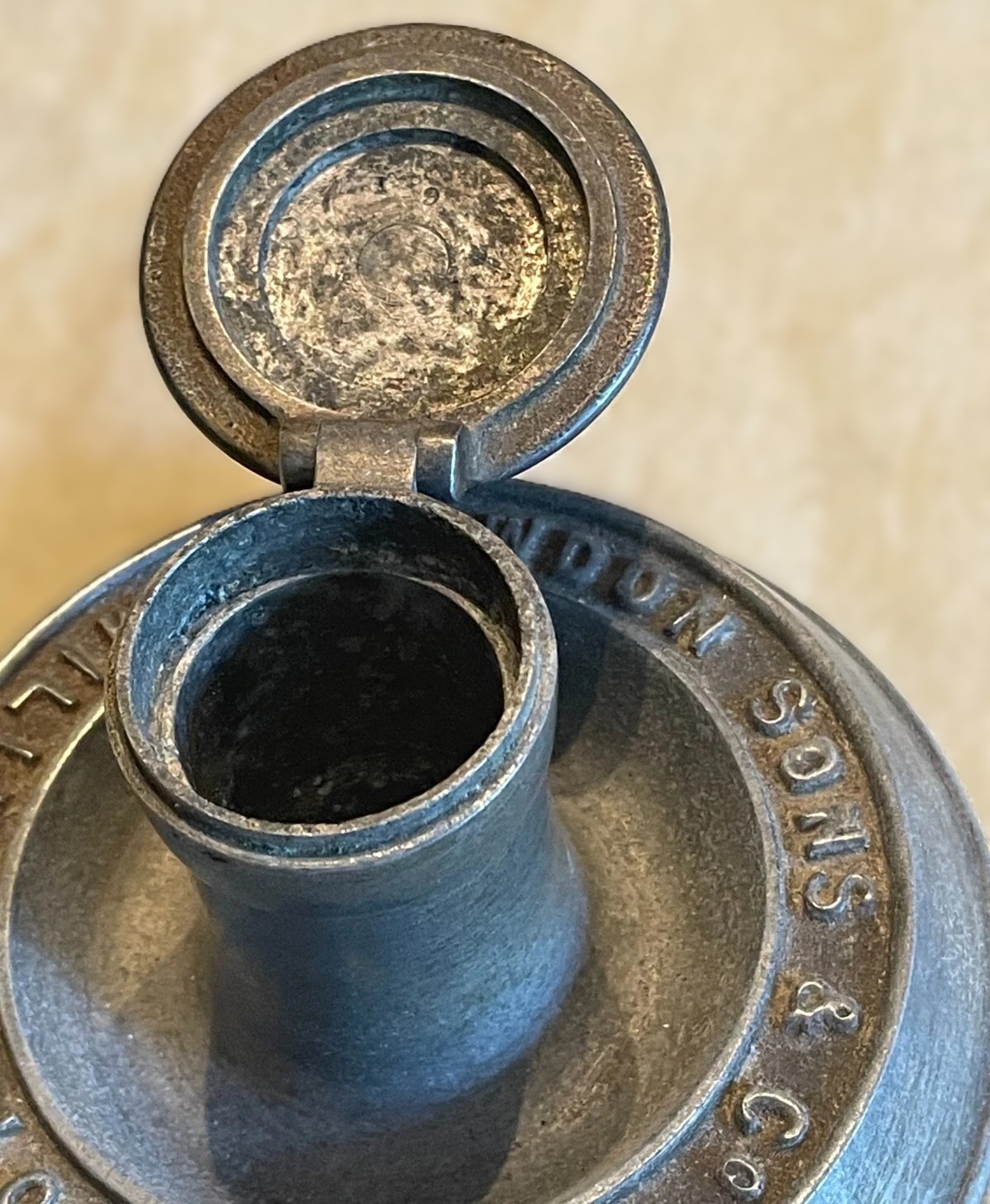
- Design: The piece features a wide, stable flared base to prevent tipping—essential in a busy industrial office. It has a central pedestal leading to a hinged circular lid.
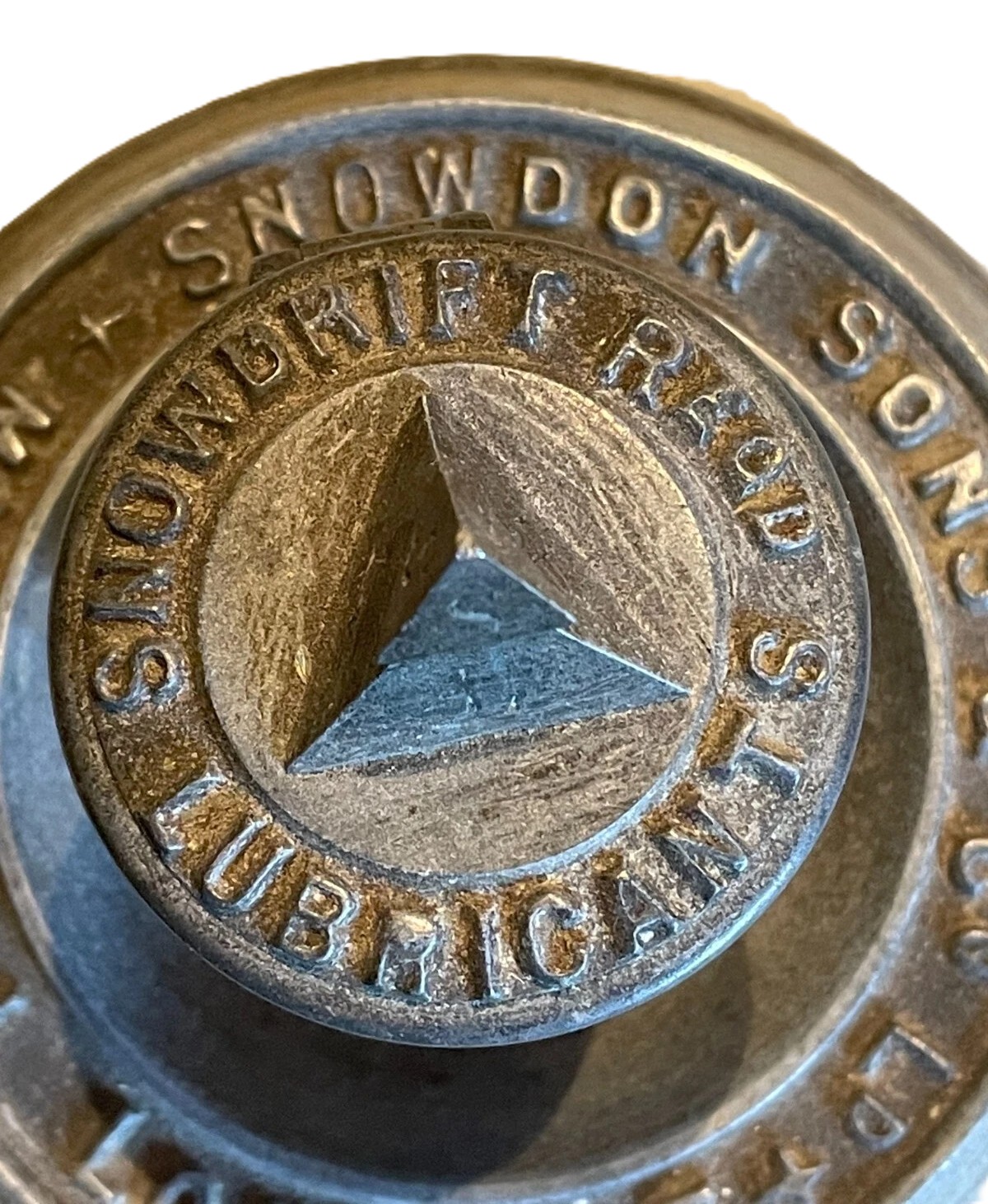
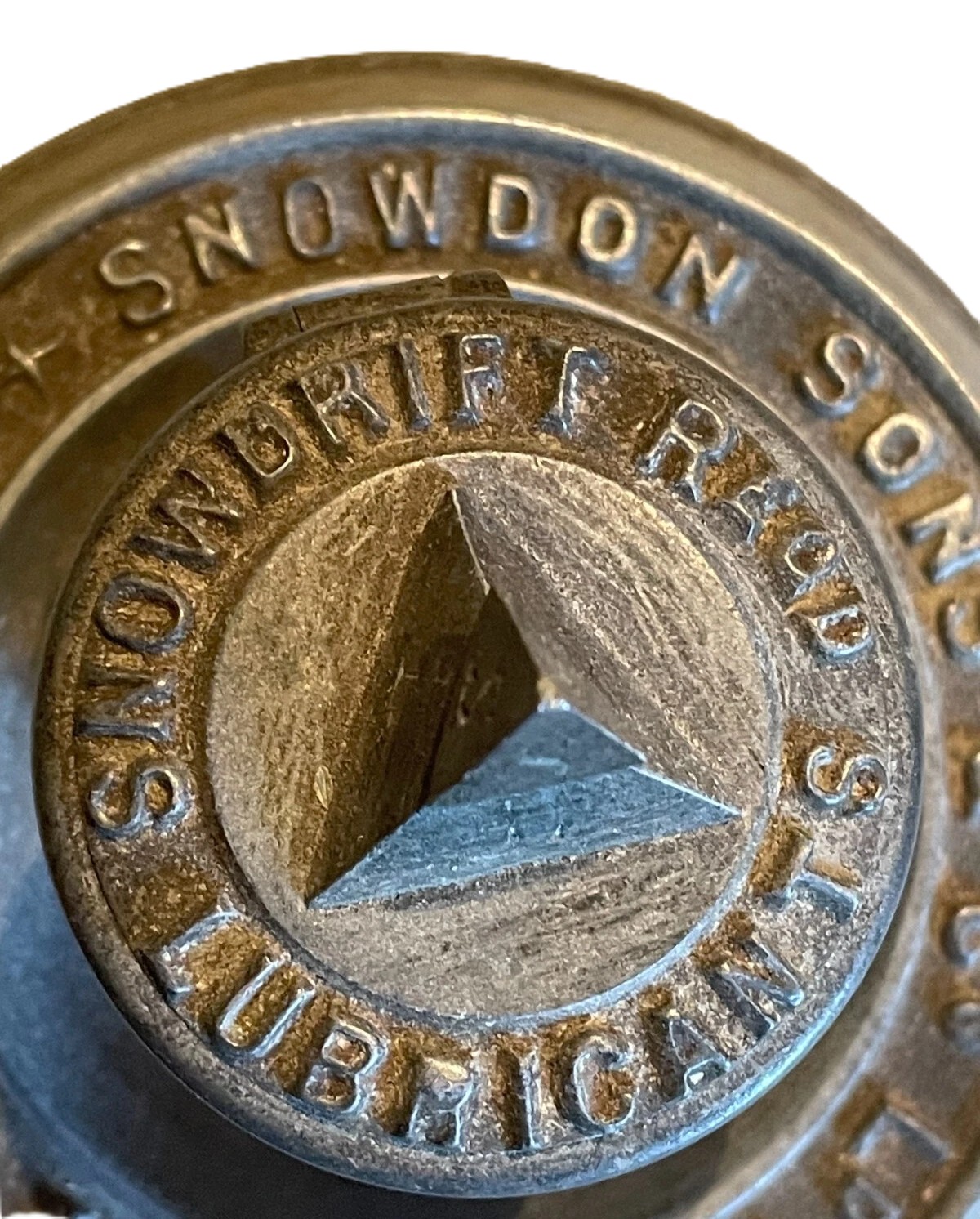
- The “S” Pyramid: The most distinctive feature is the handle on the lid: a four-sided pyramid embossed with the letter “S”. This serves as both a grip and a visual shorthand for the “Snowdrift” brand.
- Internal Detail: The lid opens to reveal a well that originally would have held a small glass liner (or “ink pot”) to hold the liquid ink.
Transcription of Markings
The embossed lettering is remarkably crisp for its age:
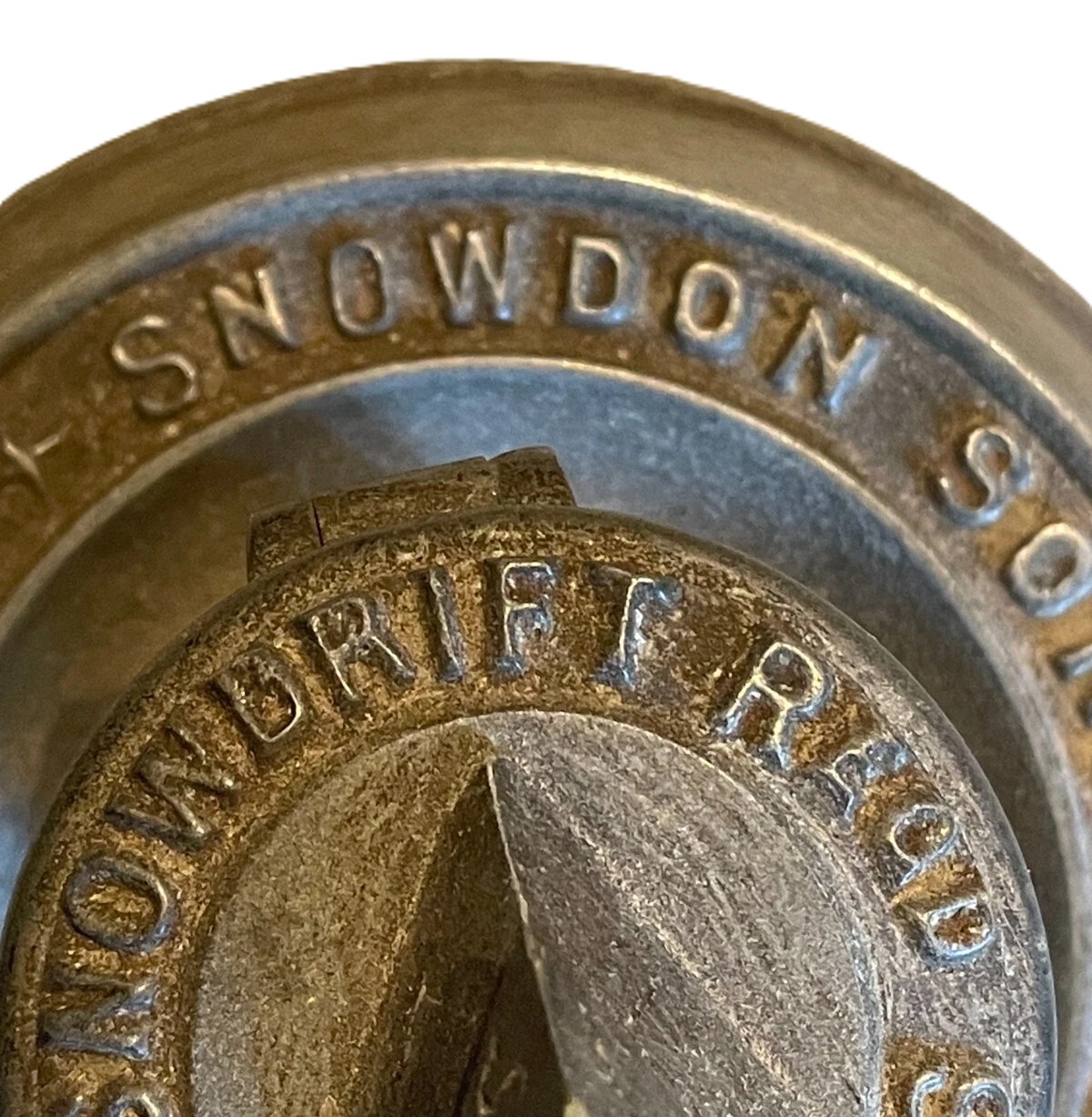
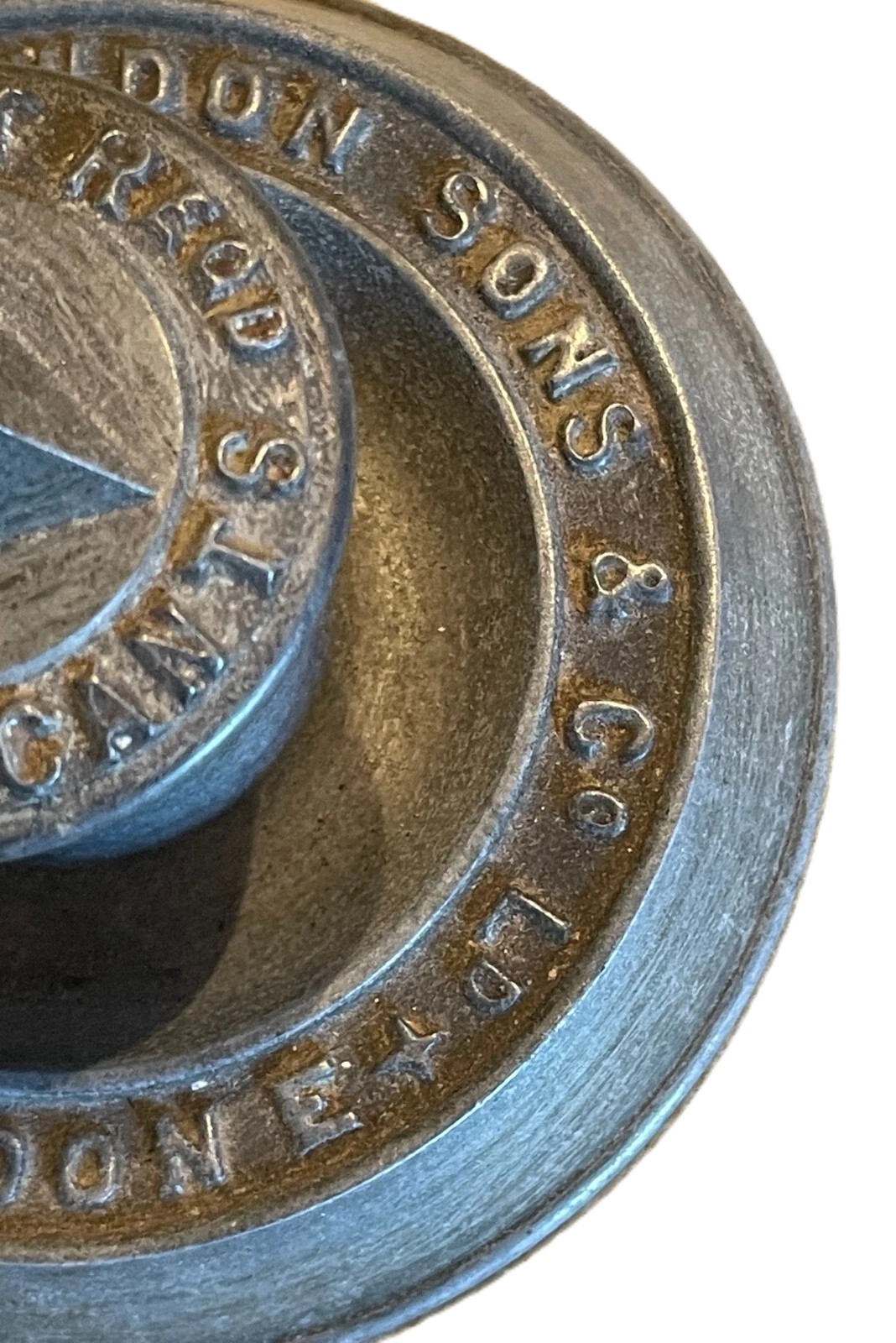
- Around the Base: SNOWDON SONS & CO LTD + MILLWALL LONDON E
- Around the Lid: SNOWDRIFT REGD LUBRICANTS
Company History: Snowdon, Sons & Co.
Based on historical records from Grace’s Guide to British Industrial History, here is the story behind the brand:
- Origins: The company was founded by John Snowdon in the North of England but moved to London in 1883.
- Location: Their works were located at West Ferry Road, Millwall (on the Isle of Dogs), featuring 200 feet of riverside wharfage. This was the heart of London’s shipping and heavy industry at the time.
- Incorporation: They became a “Limited” company (Ltd) in 1897. Since this inkwell includes “LTD” in the casting, it was definitely made after that year.
- Product Line: While “Snowdrift” was their flagship lubricant, they also produced “Sinol” (for cylinders), “Snowdene,” and “Snozone.” They specialized in motor car oils, greases, and lubricants for superheated steam engines.
- Fate: The “Snowdrift” brand name survived for decades, eventually being acquired by Century Oils in 1971, which was later absorbed by the global giant FUCHS in the 1990s.
How old is it?
This inkwell likely dates to 1900–1915.
The Evidence:
- Postal District: The address “London E” refers to the Eastern postal district. While the “E14” sub-district was introduced in 1917, companies often used the simpler “E” for years.
- The “LTD” Status: It must be post-1897.
- The Style: Promotional cast-metal desk items of this weight and quality reached their peak popularity between 1900 and the start of WWI. After the war, advertising shifted toward cheaper materials like Bakelite or tin-plate.
Sold for $125 in March 2026
Content disclaimer. The information posted is the owner’s best knowledge and may not have been vetted by the SOIC. We welcome comments, corrections, and additions, working to make our website information comprehensive and accurate.
Join the Society of Inkwell Collectors (SOIC) – it’s free!
Founded in 1981 as a non-profit organization,
we are documenting inkwells (and accessories).
We’re here to help and inform!