

Inkipedia
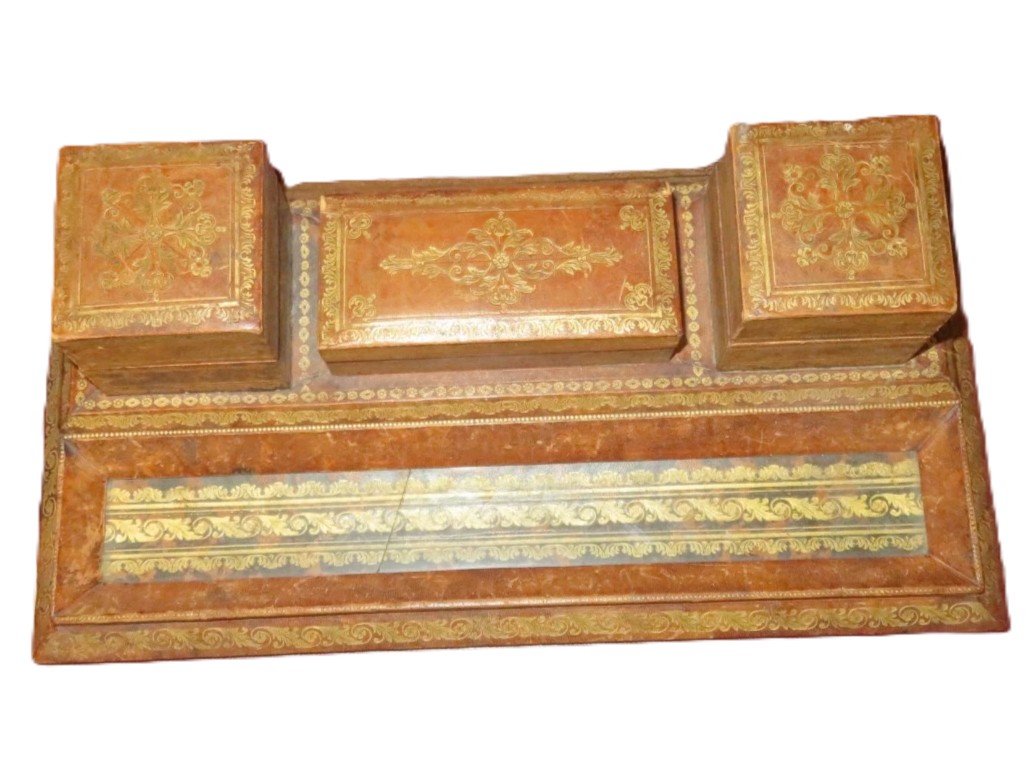
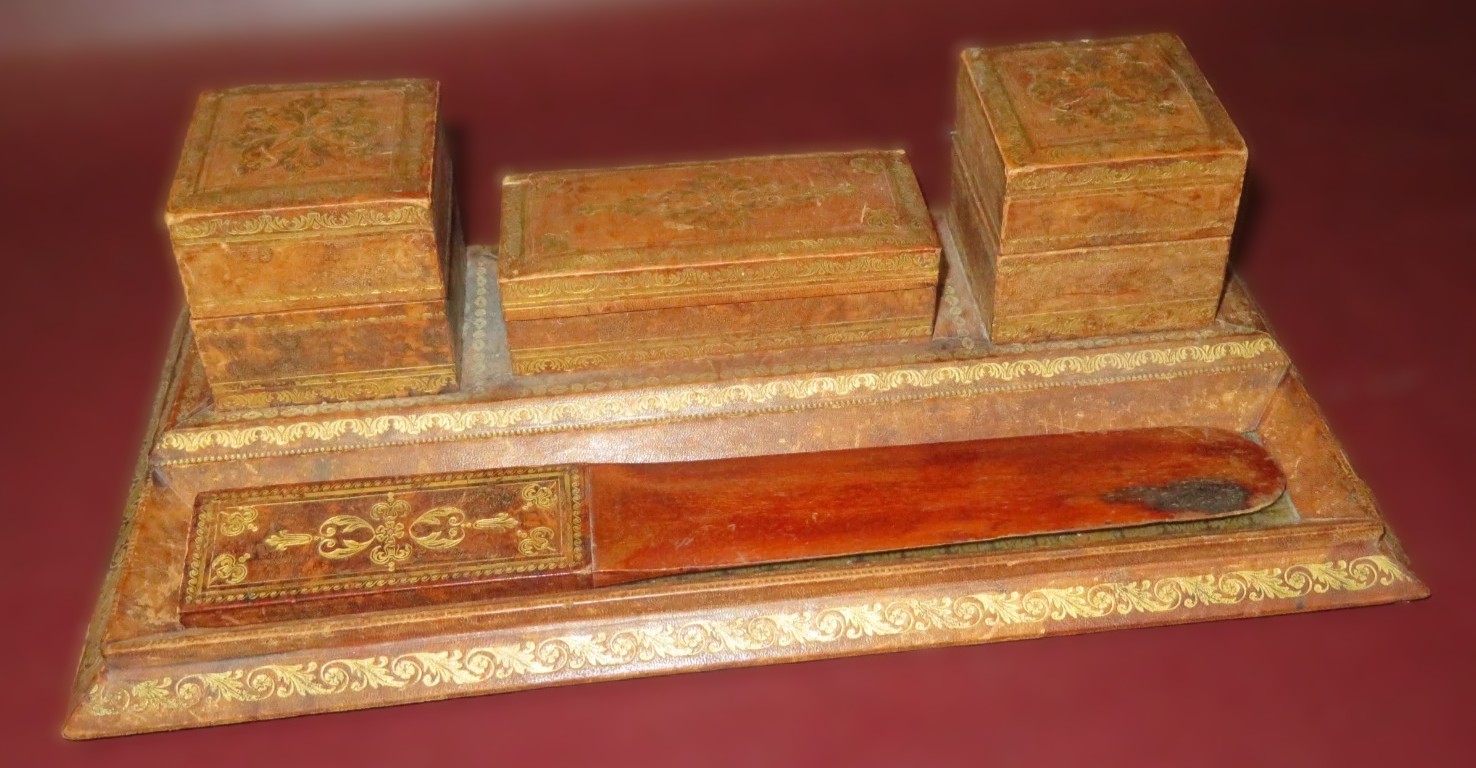
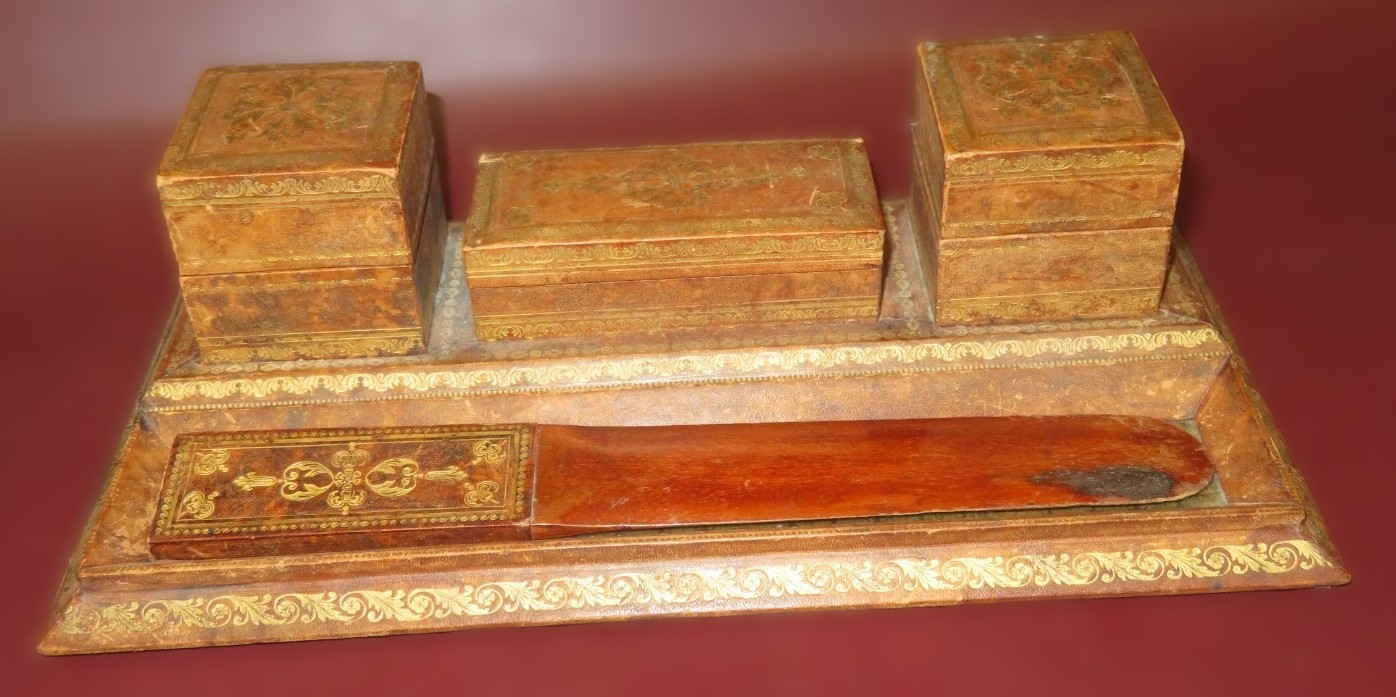
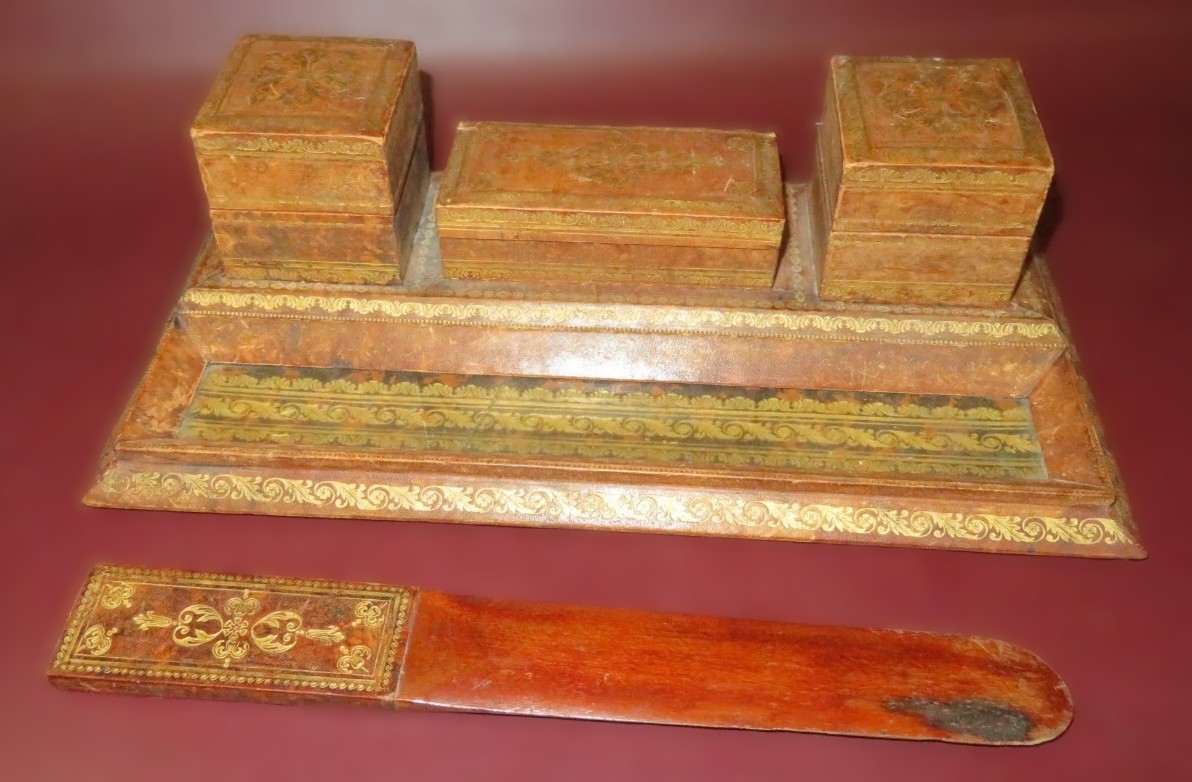
Leather-on-Wood Double Inkstand
| Categories | Stone/Marble/Ivory/Bone/Hoof/Leather |
| Material | Glass, Leather, Wood |
| Markings | Unmarked |
| Manufacturer | Undetermined |
| Origin | Undetermined |
| Date or Era | circa 1900 |
| Measuring | 12 ½” x 6 ½” x 3 ½” high |
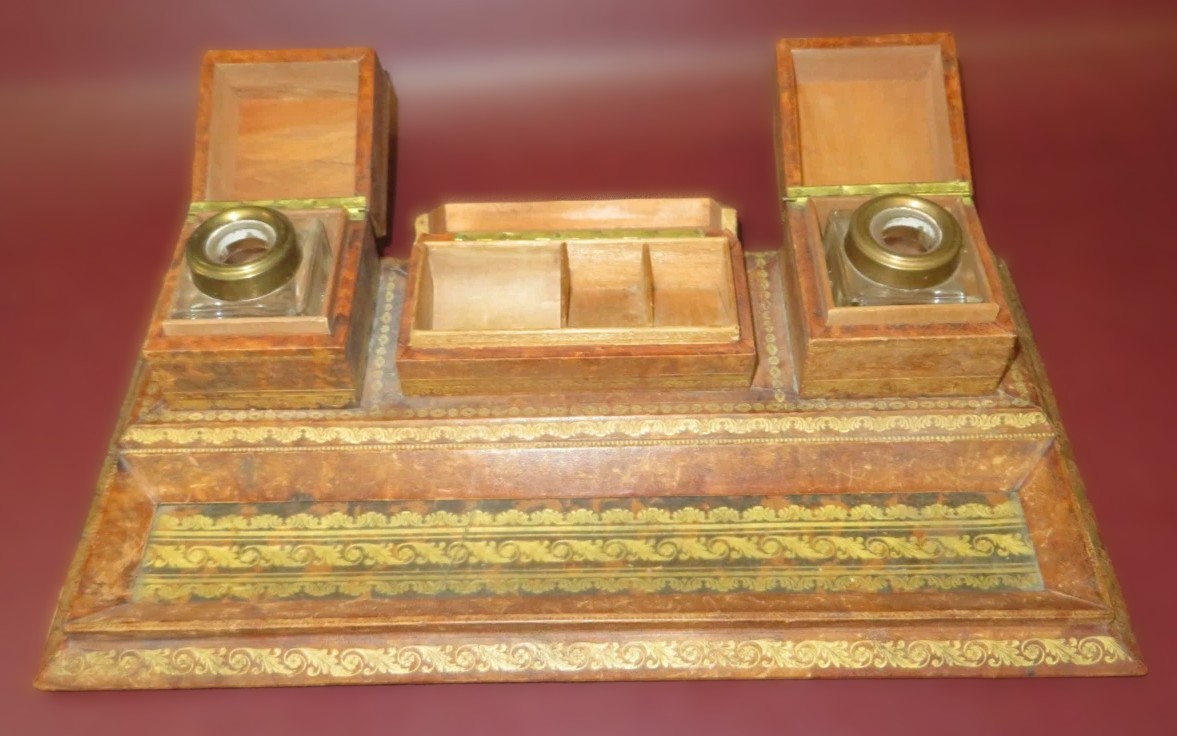
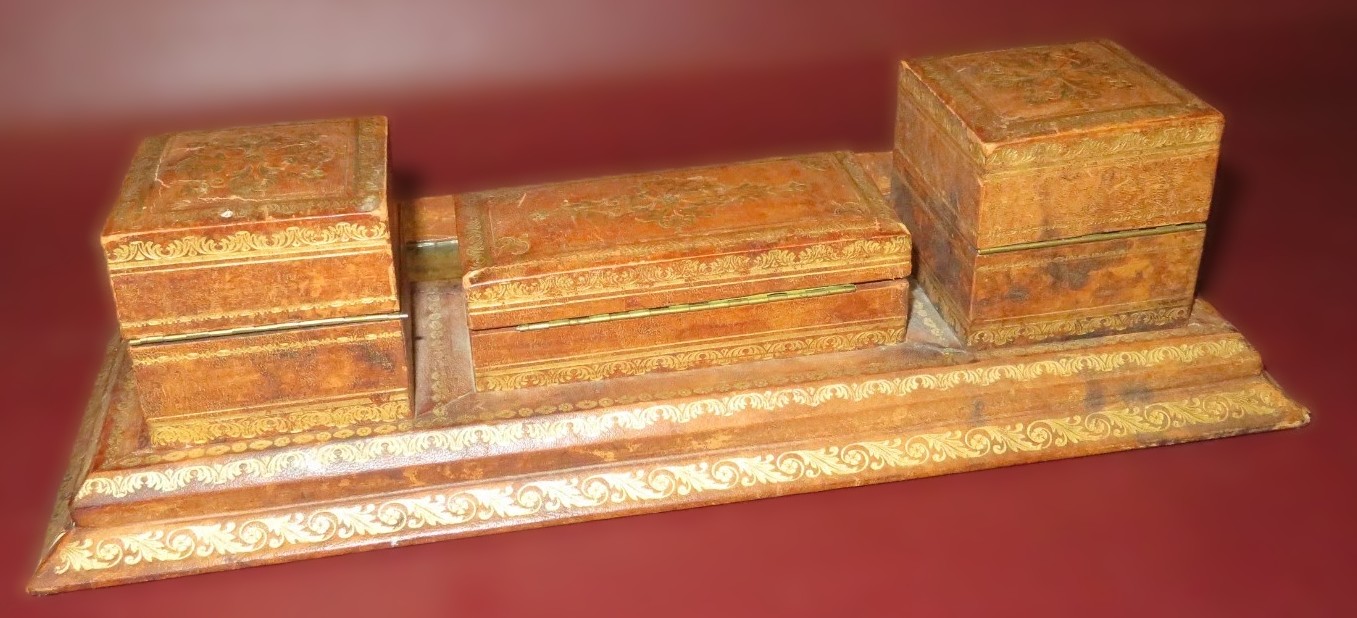
This gilt-tooled leather-on-wood double inkstand dates to the period between 1880 and 1920.
Description
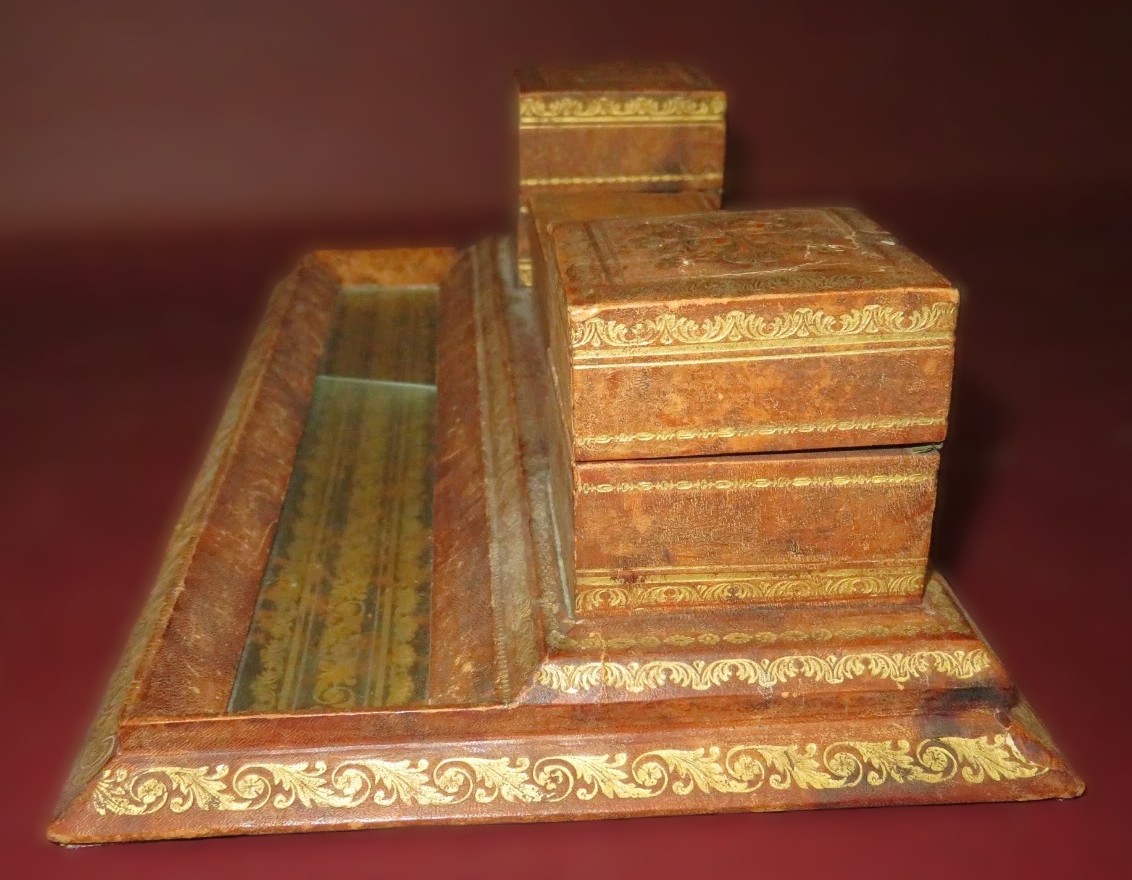
- Structure: The core of the inkstand is a solid wooden frame, which has been wrapped in fine-grained leather. The leather is “wet-stretched” and glued to the wood to create a seamless, durable surface.
- The Three Lidded Compartments:
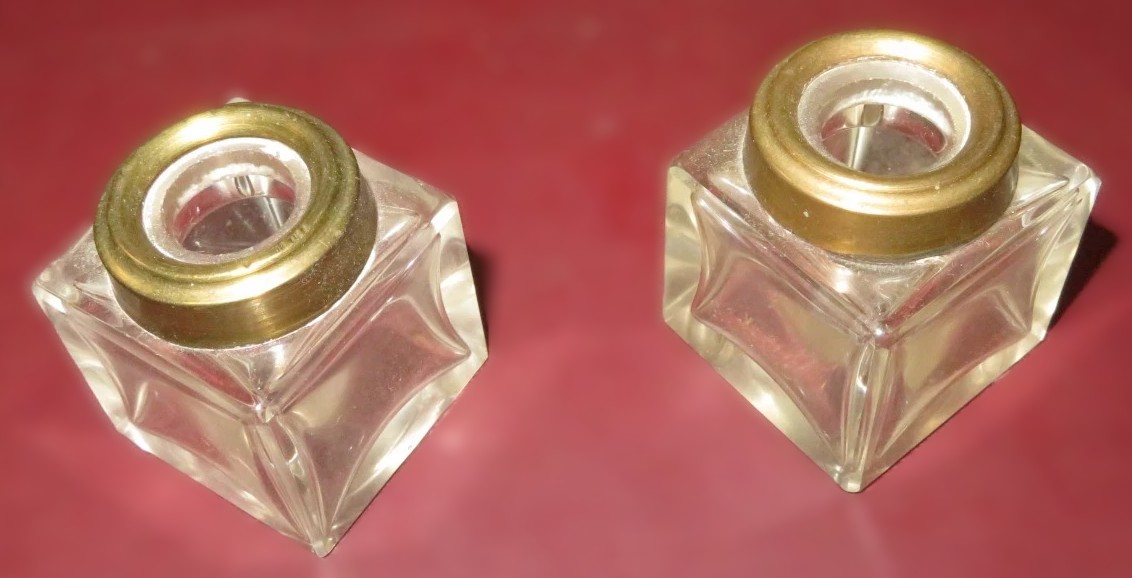
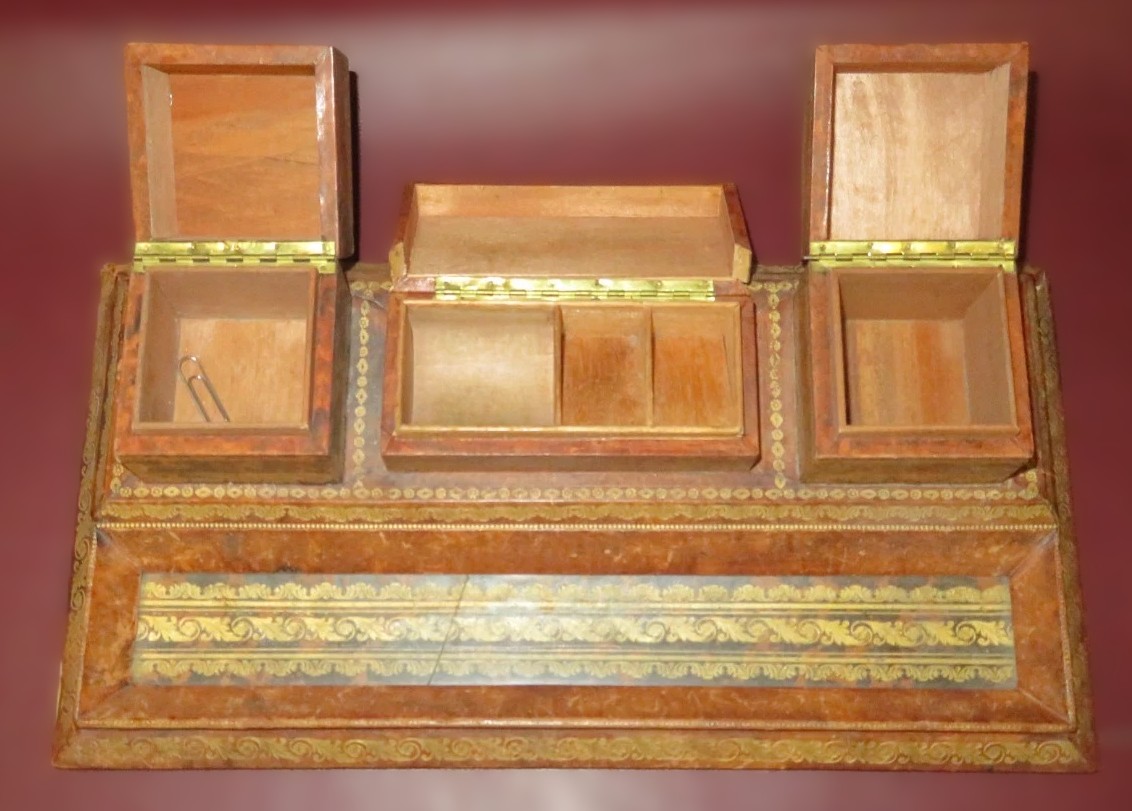
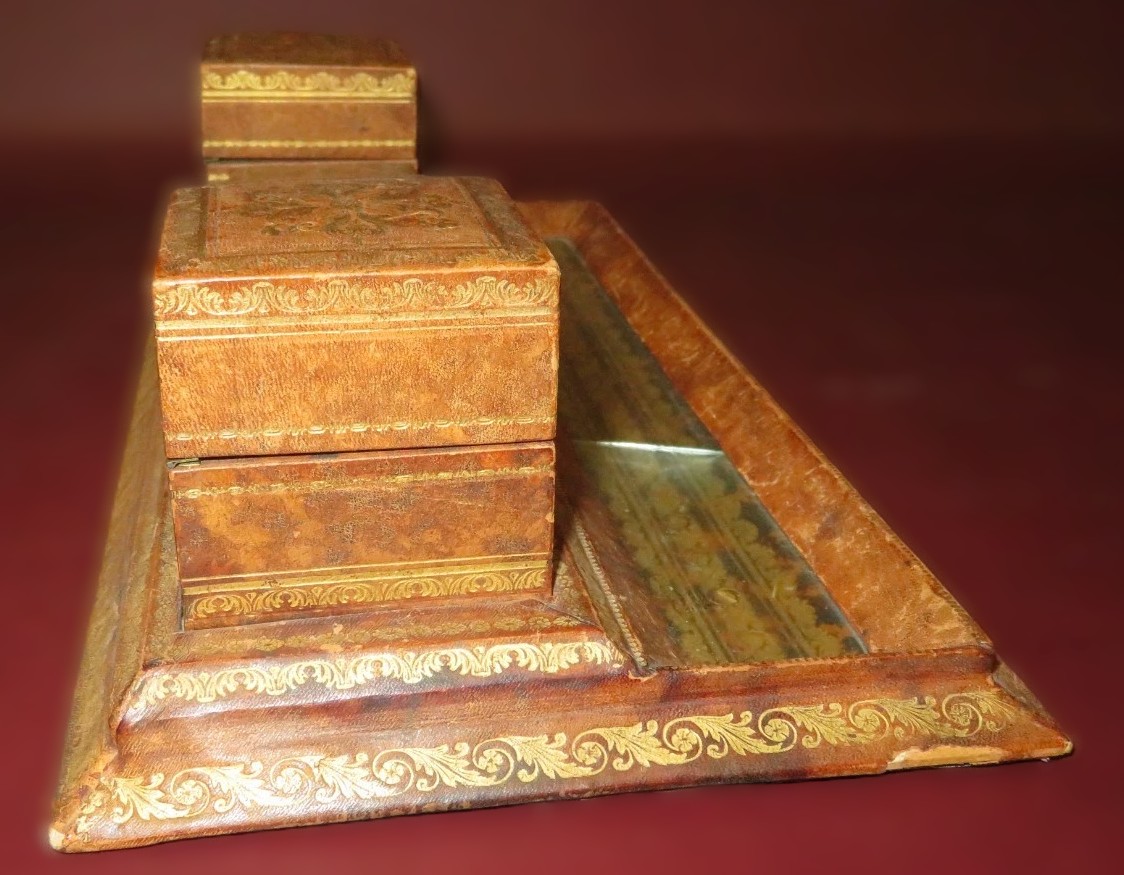
- The Outer Boxes: Two square, lidded compartments on either end house the square crystal/glass inkwells. These wells feature brass-colored metal collars.
- The Central Stamp Box: The rectangular center box is a dedicated “stamp and nib box.” Inside, it is partitioned into three slots (one large, two smaller), designed to separate different denominations of postage stamps or to hold spare steel pen nibs.
- Pen Tray: A long, recessed tray sits in the front to hold various dip pens and quills.
- Letter Opener: The matching letter opener features a handle wrapped in the same gilt-tooled leather. The blade appears to be a reddish-toned polished wood designed to match the mahogany-like tones of the set.
- Gilt Tooling: The decoration is achieved through a process called gold tooling. Artisans use heated brass stamps (dies) to press gold leaf into the leather. The patterns here—featuring acanthus leaves, scrollwork, and floral medallions—are classic Renaissance-revival motifs.
Manufacturing & Origin
- Where & Who: It was most likely produced by an artisan workshop in Florence (Italy). During this era, Florence was the world center for “Gilt-Tooled Leather,” known for this specific tan-and-gold aesthetic. However, many of these were sold through prestigious “fancy goods” shops in London or Paris.
- How: This was a multi-stage hand-crafted process. A woodworker would first create the “carcass.” A leatherworker would then select and thin the leather (skiving) before wrapping the wood. Finally, the “finisher” would hand-stamp the intricate gold borders and central medallions using a variety of small hand tools and larger corner stamps.
Sold for $140 in March 2026
Content disclaimer. The information posted is the owner’s best knowledge and may not have been vetted by the SOIC. We welcome comments, corrections, and additions, working to make our website information comprehensive and accurate.
Join the Society of Inkwell Collectors (SOIC) – it’s free!
Founded in 1981 as a non-profit organization,
we are documenting inkwells (and accessories).
We’re here to help and inform!