

Inkipedia
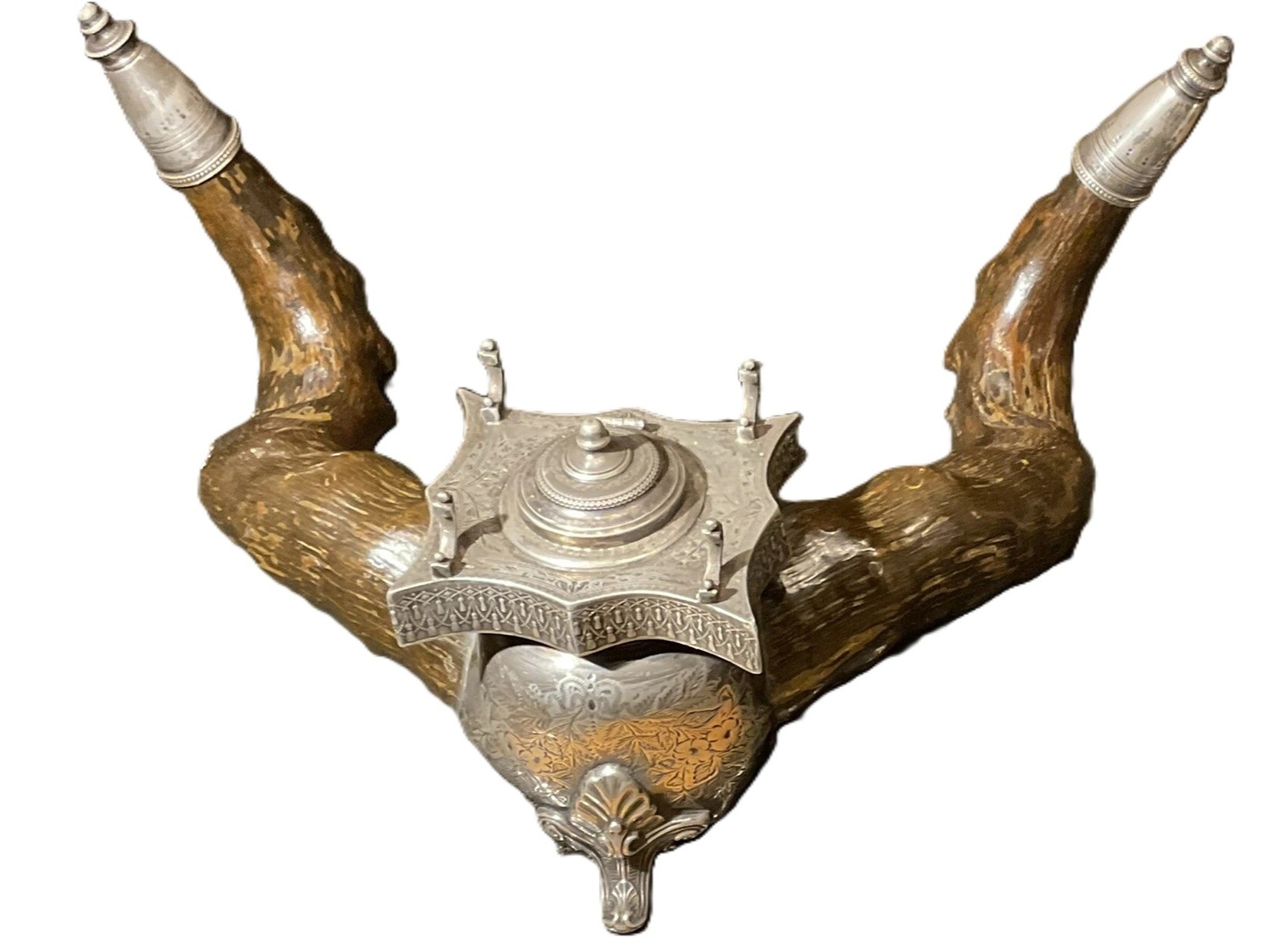
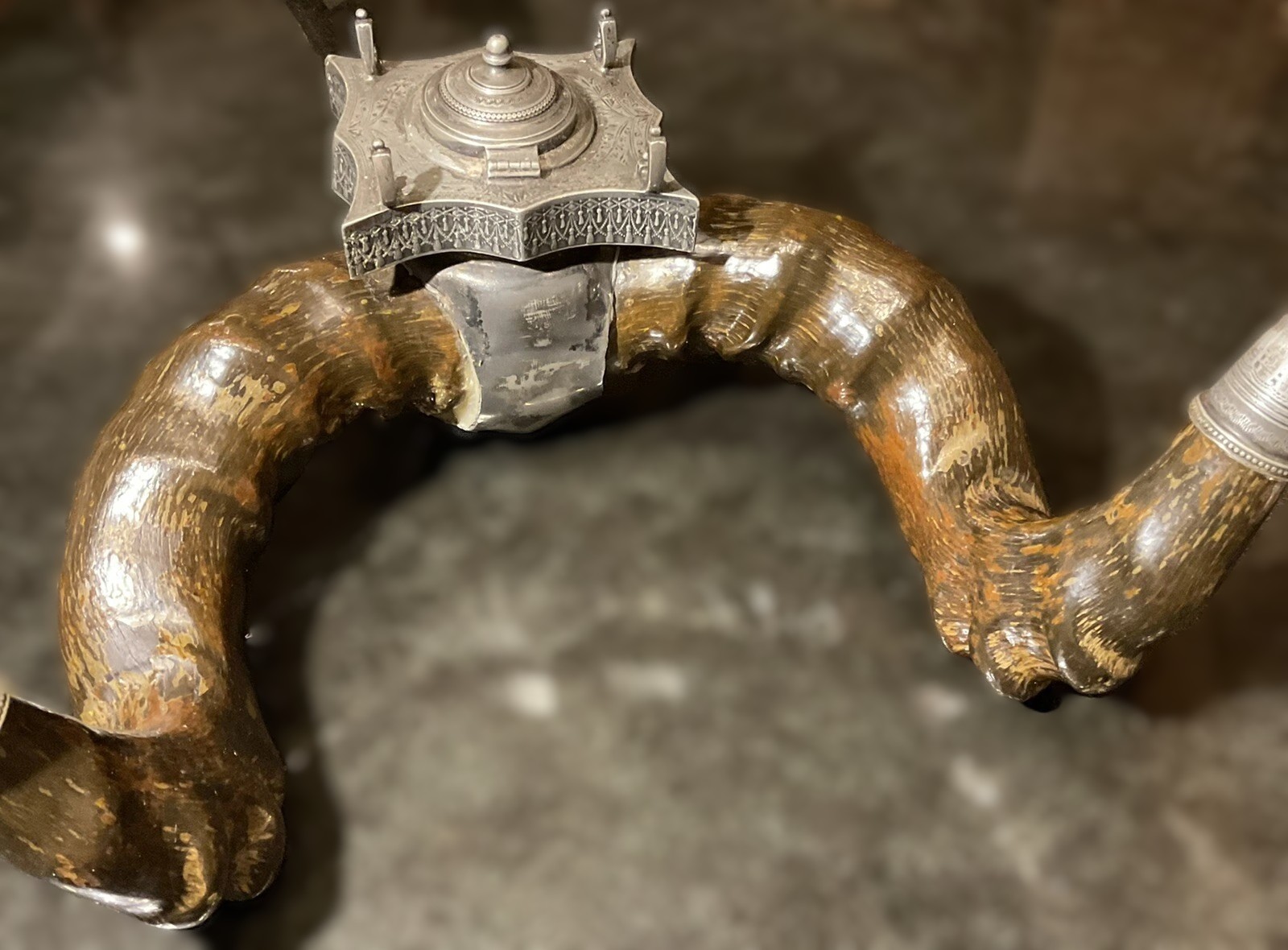
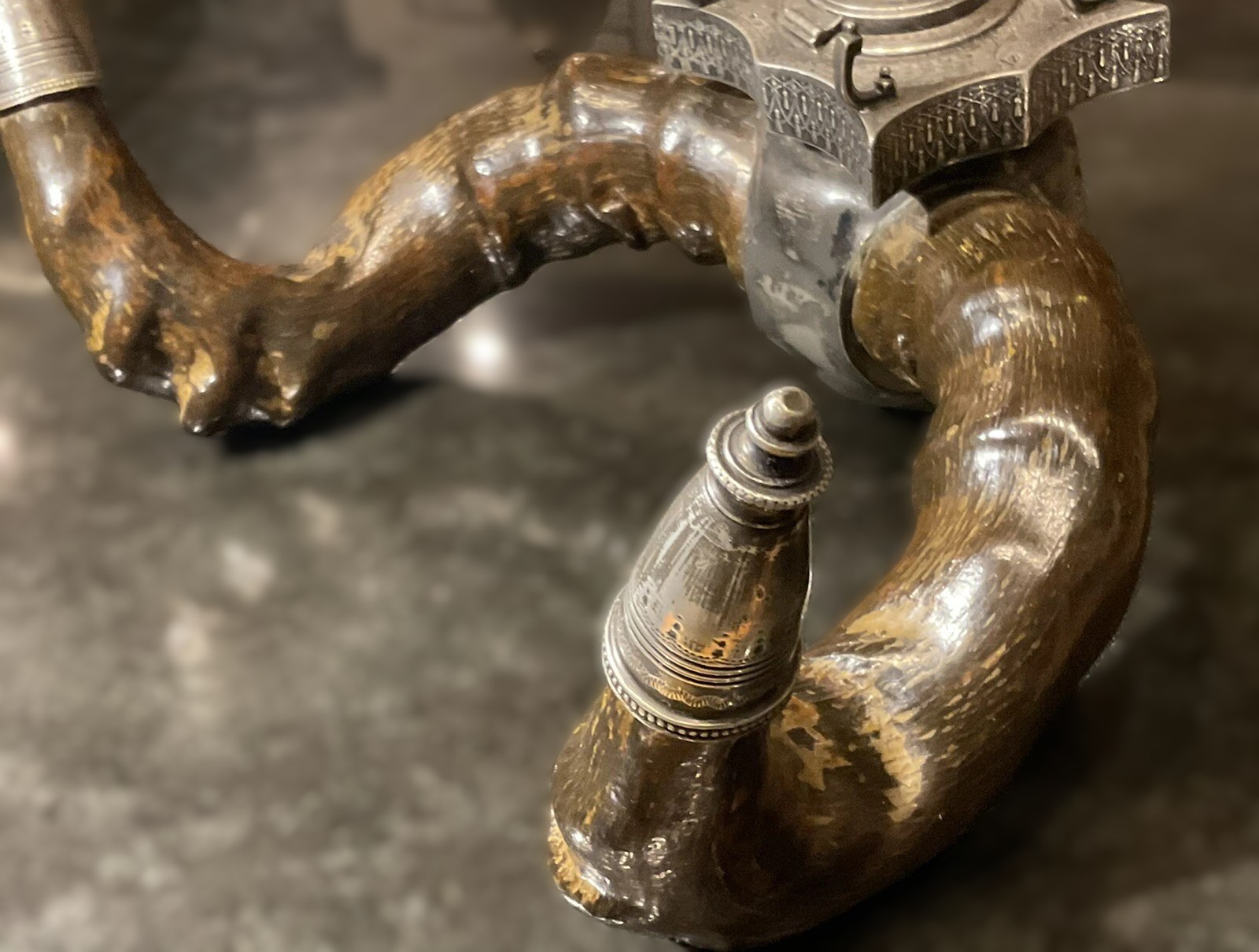
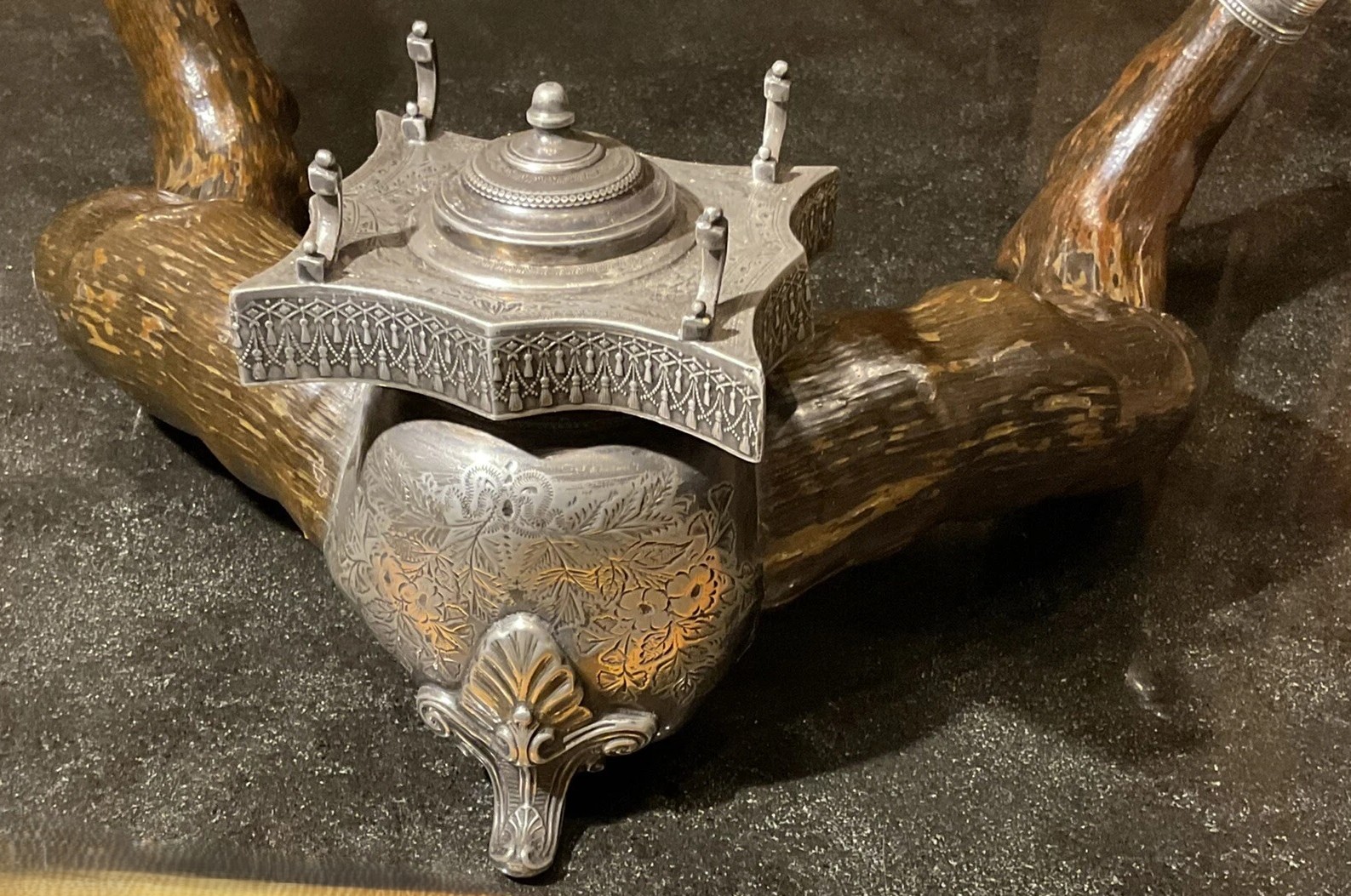
Ram’s Horn Inkstand
| Categories | Stone/Marble/Ivory/Bone/Hoof/Leather |
| Material | Horn/Bone/Tusk, Nickel Silver |
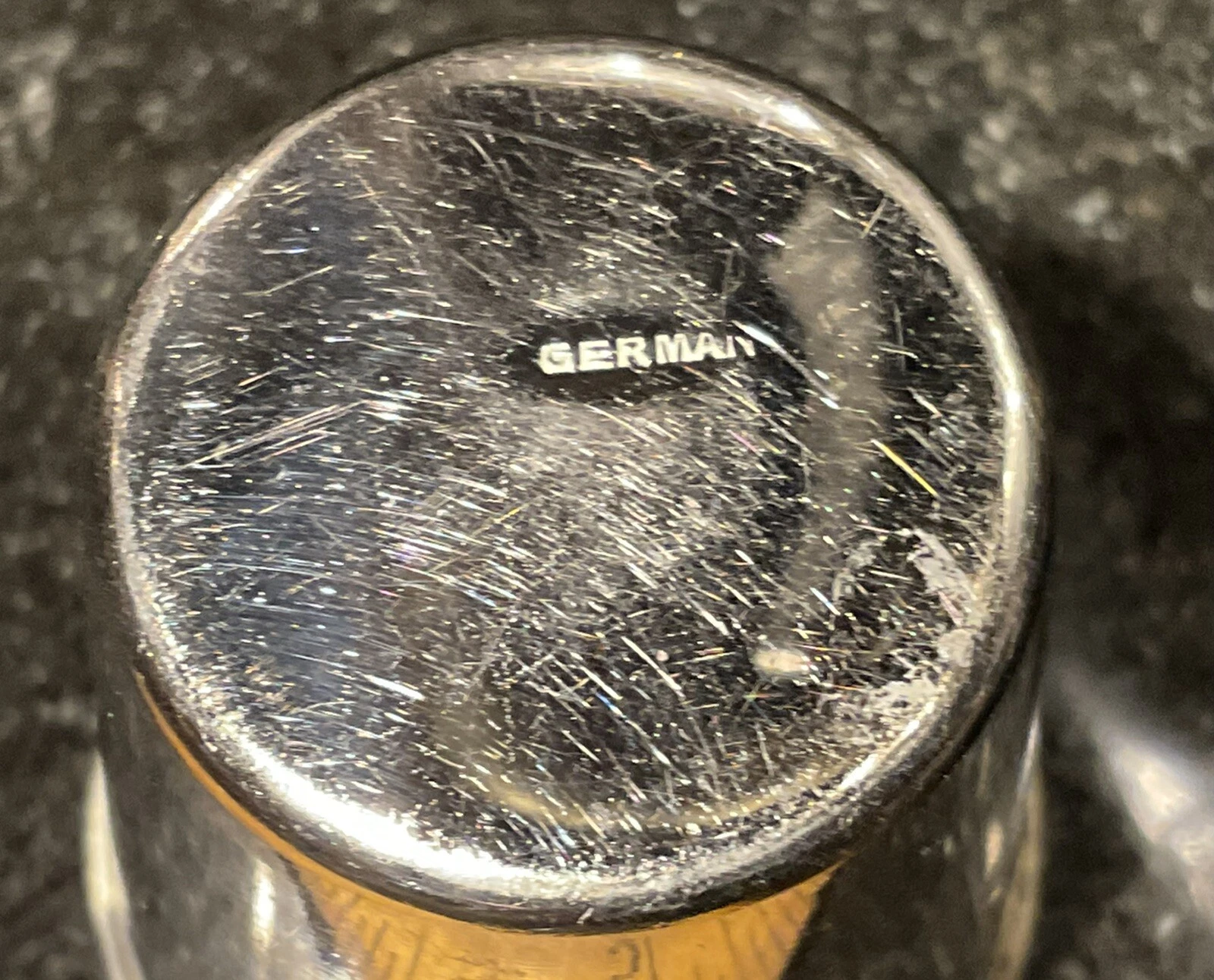
| Markings | "GERMANY" |
| Manufacturer | Undetermined |
| Origin | Germany |
| Date or Era | circa 1900 |
| Measuring | 15” across |
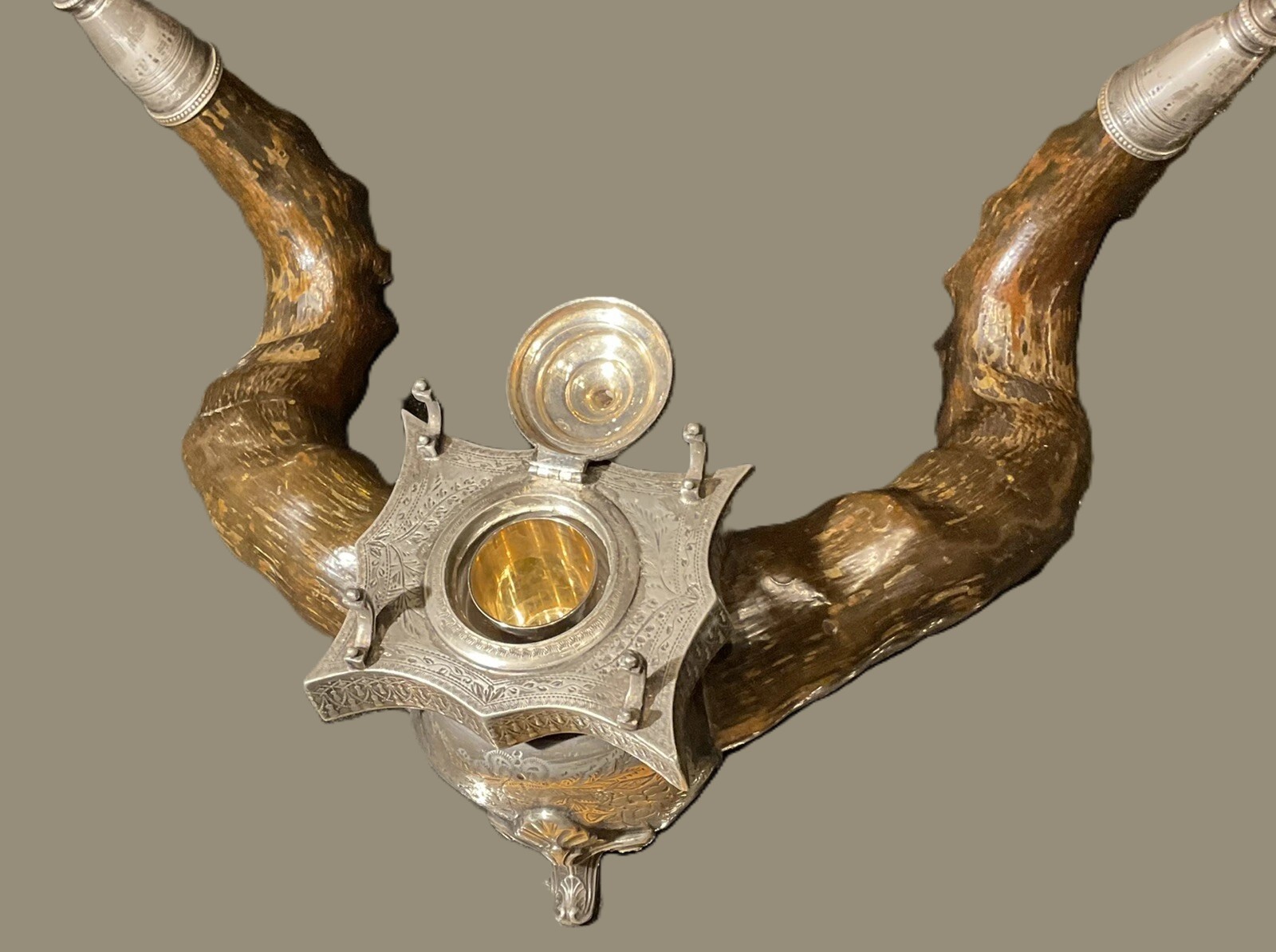
This ram’s horn inkstand marked “GERMANY” dates to around 1895 to 1915.
Identification & Materials
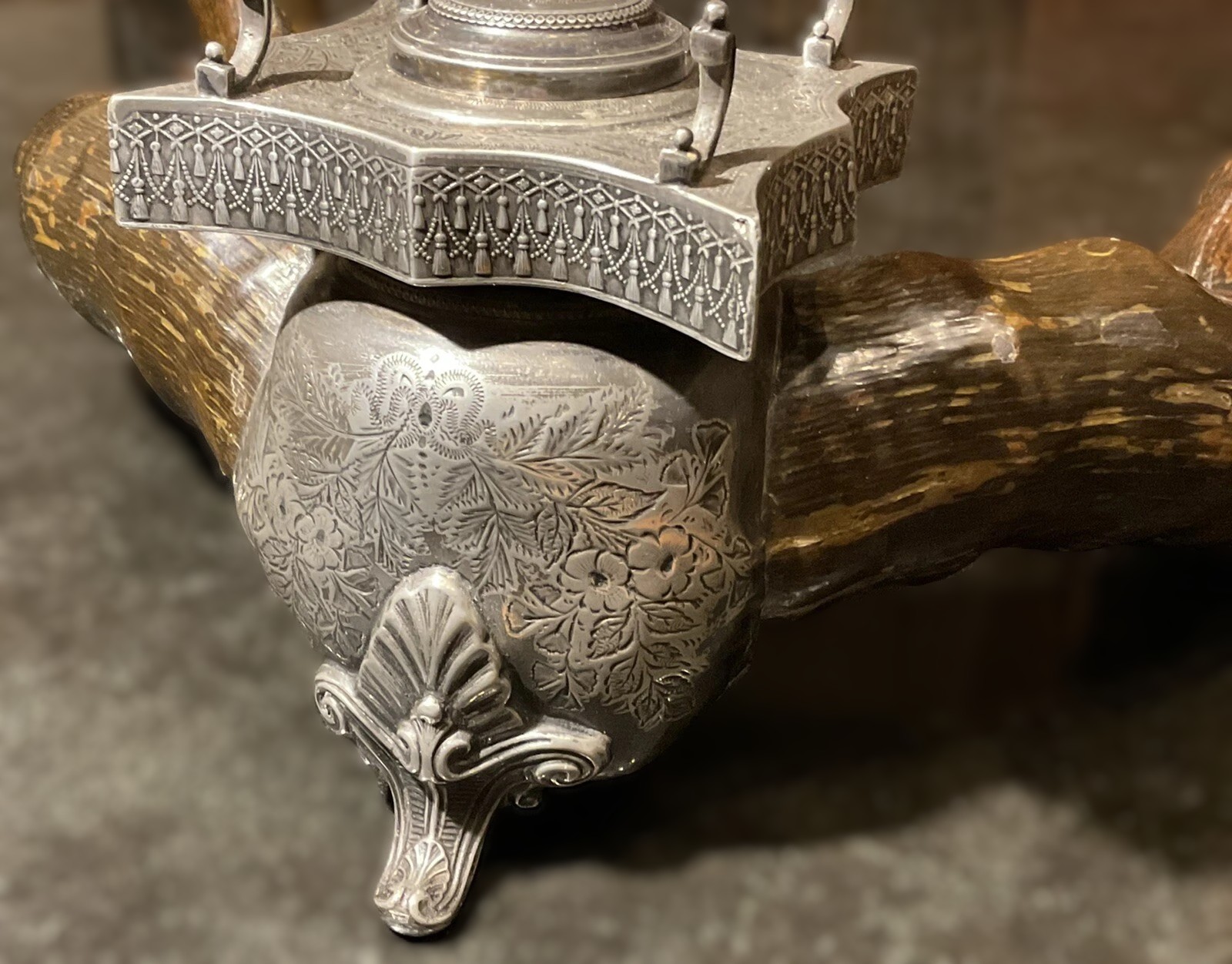
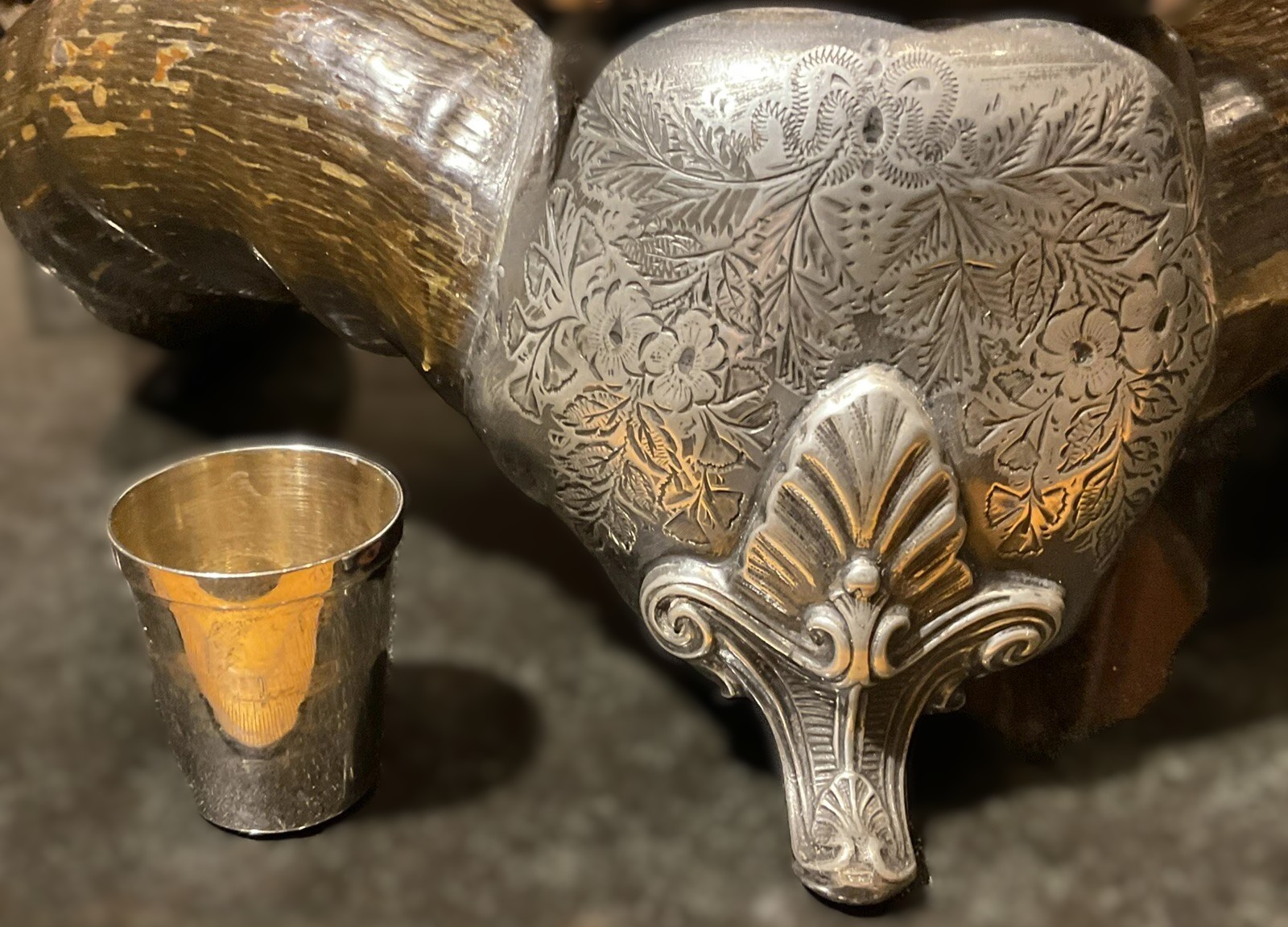
- The Horns: These are authentic ram’s horns. During the late 19th century, naturalistic decor was height of fashion. Horns were often used for snuff mulls, drinking vessels, and desk accessories to bring a “rugged” or “hunting lodge” aesthetic into the Victorian study.
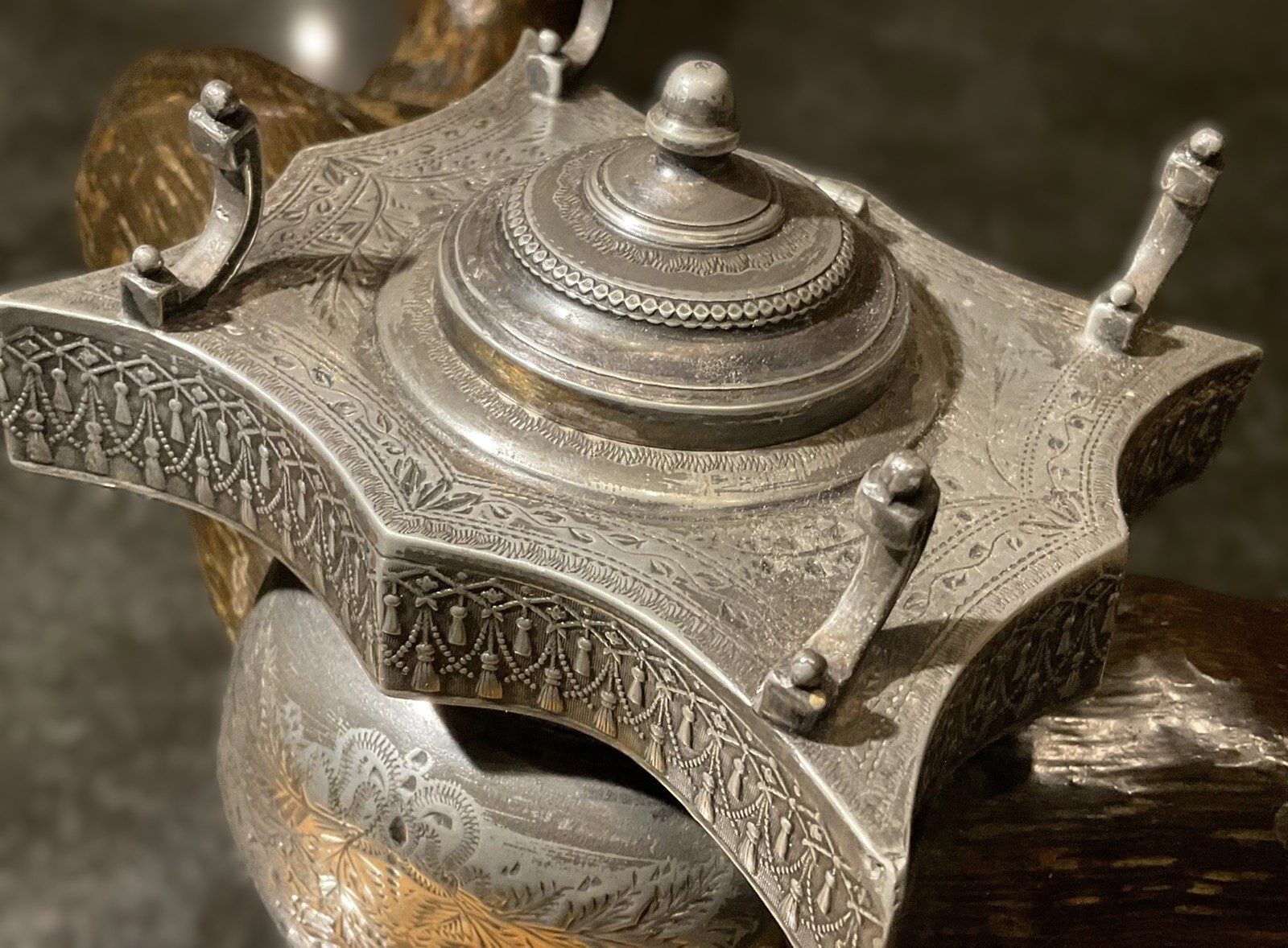
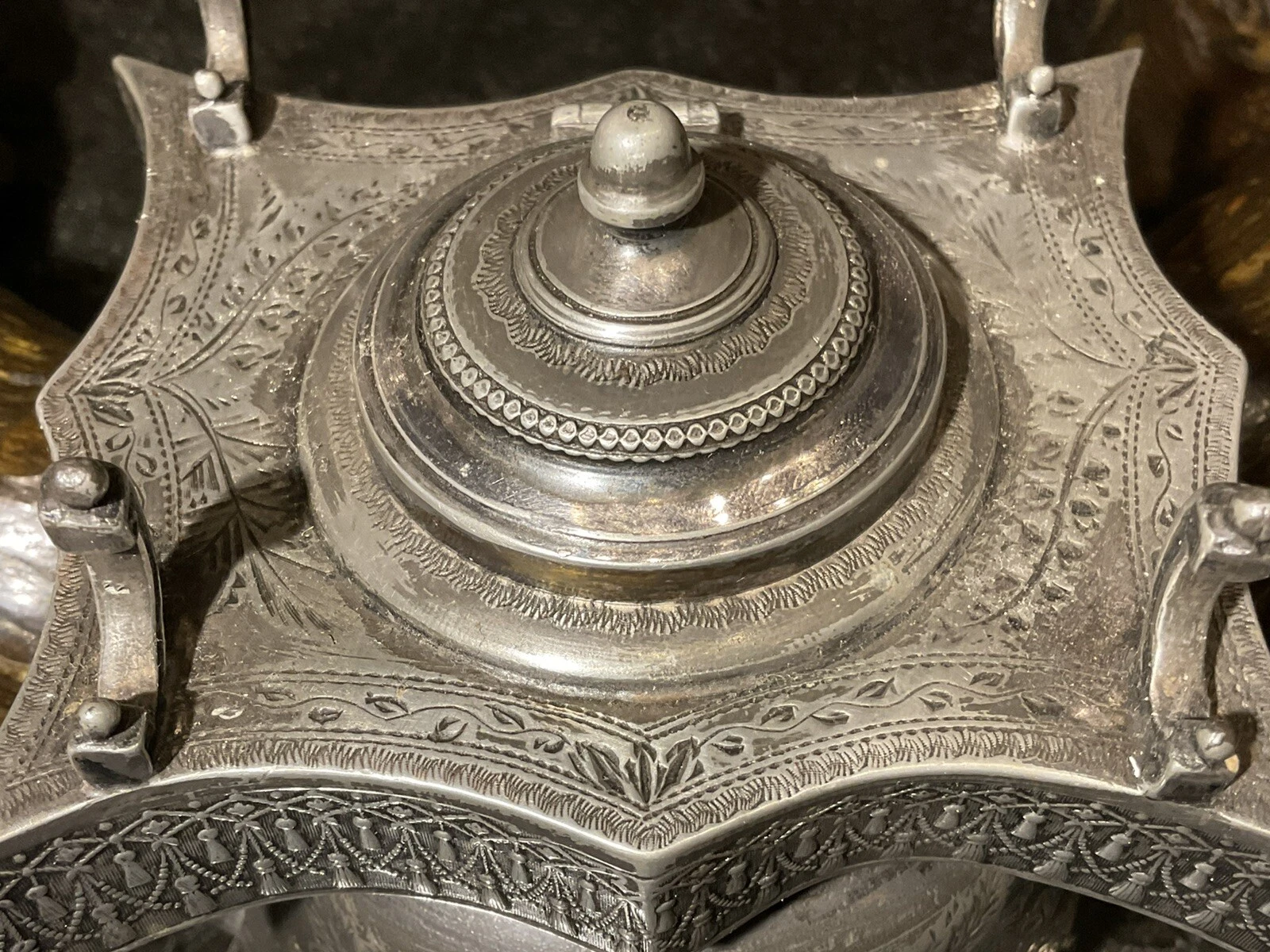
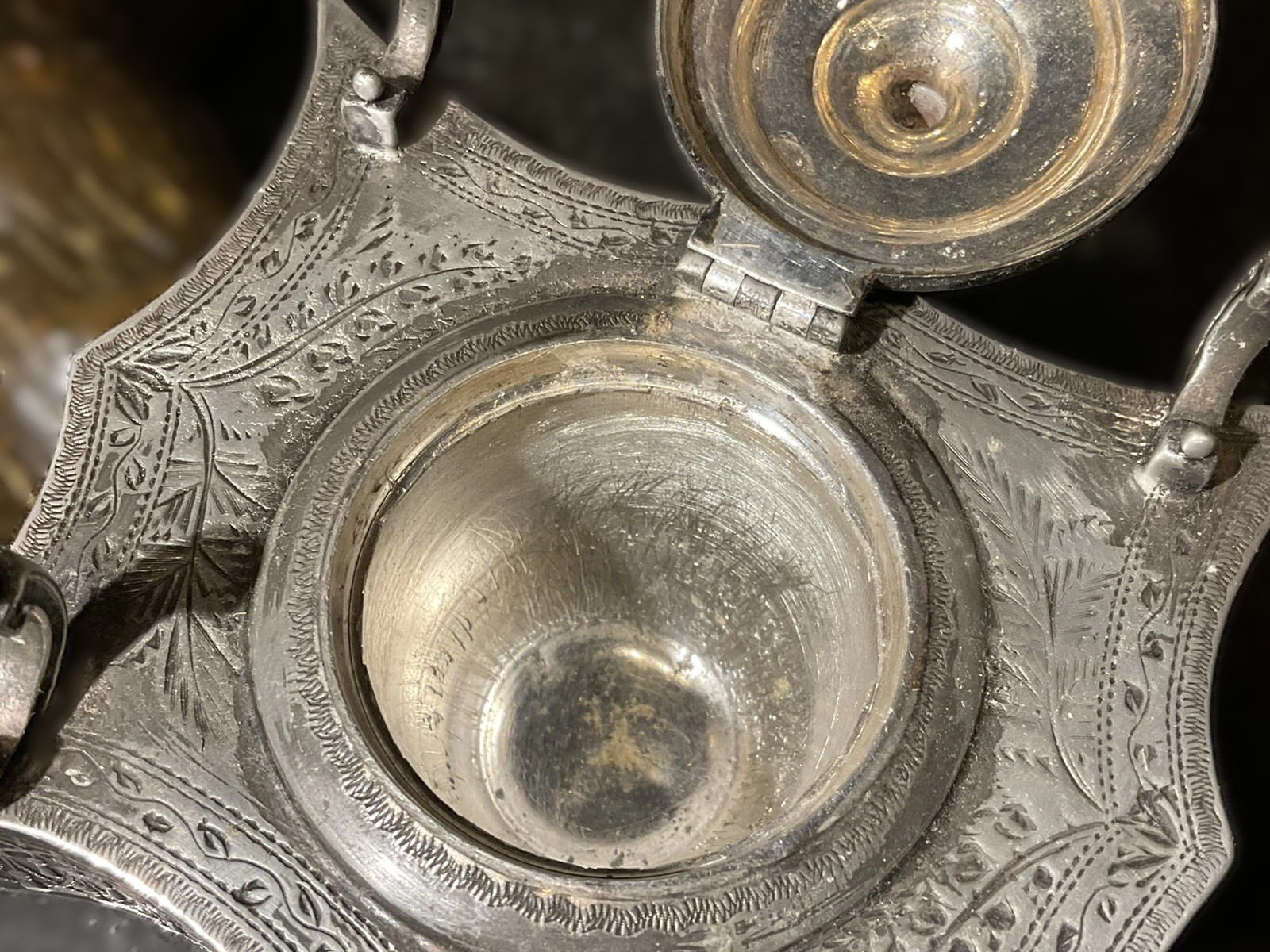
- The Metal: This is likely German Silver (also known as Alpacca or Neusilber). This is an alloy of copper, nickel, and zinc that contains no actual silver but was prized for its durability and silver-like luster.
- The “GERMANY” stamp is a classic export mark. After the McKinley Tariff Act of 1890, items imported into the United States were required to bear their country of origin. The lack of silver hallmarks (like a crescent moon and crown for German 800 silver) further suggests a high-quality silver-plated or nickel-silver base.
- The Design: The central metal platform features a “Lambrequin” or tassel-fringe motif on its vertical sides. This Historicist style was very popular in Germany and Austria around 1900. The four curved protrusions at the corners are pen rests, designed to hold one or two dip pens horizontally across the inkwell.
Age & Origin
- Date: Likely 1895–1910.
- Maker: While it lacks a specific manufacturer’s logo (like the WMF ostrich or Erhard & Söhne’s “E&S” mark), it was undoubtedly produced in one of the major German metalworking centers, such as Schwäbisch Gmünd. These firms specialized in “Galvanoplastik” (electroplating) and exported these ornate desk sets to the UK and US.
- The Insert: The separate metal cup (the reservoir) is designed to be easily removed for cleaning and refilling without moving the heavy horn assembly.
Historical Context: Trophy or Decor?
In most cases, these were not personal trophies or remembrances of a specific pet. Instead, they were luxury commercial goods sold in high-end department stores.
- The “Naturalist” Trend: In the late 1800s, there was a fascination with “Nature brought indoors.” This piece fits alongside Black Forest carvings and taxidermy decor. It was meant to suggest a cultured, well-traveled owner who appreciated the “Great Outdoors” from the comfort of their library.
- The Scottish Influence: The style originated in Scotland (often using ram’s horns for “snuff mulls”), but German manufacturers successfully “industrialized” the look, combining real animal horns with mass-produced, intricately engraved metal mounts to meet global demand.
Sold for $400 in March 2026
Content disclaimer. The information posted is the owner’s best knowledge and may not have been vetted by the SOIC. We welcome comments, corrections, and additions, working to make our website information comprehensive and accurate.
Join the Society of Inkwell Collectors (SOIC) – it’s free!
Founded in 1981 as a non-profit organization,
we are documenting inkwells (and accessories).
We’re here to help and inform!