



Woman Reading a Letter
| Categories | Art Nouveau |
| Material | Pewter |
| Markings | WMF Markings |
| Manufacturer | WMF |
| Origin | Germany |
| Date or Era | circa 1905 |
| Measuring | 7” x 6 ¾” x 8” high |
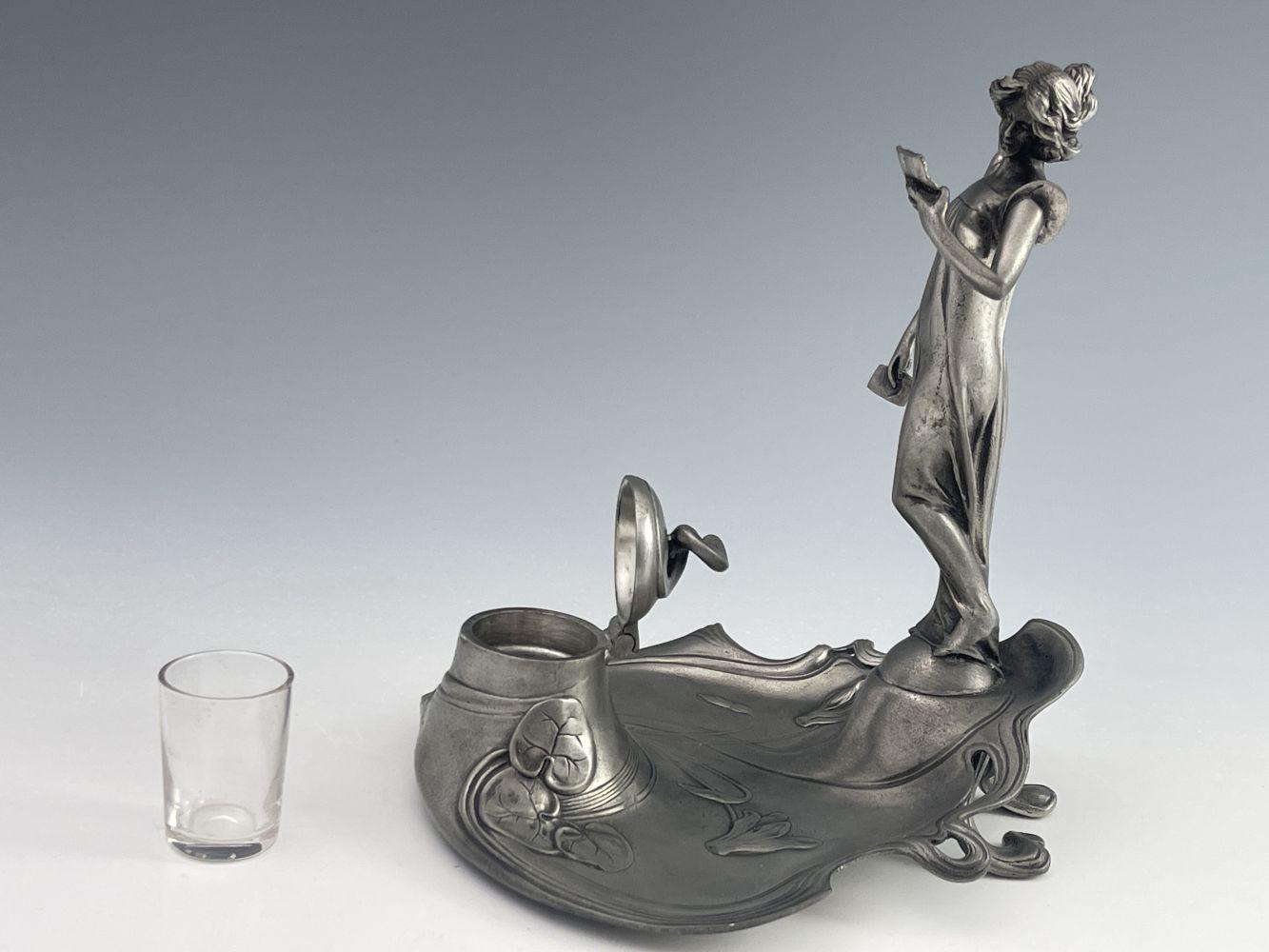
This is a classic Art Nouveau (Jugendstil) figural inkstand, officially identified as Model No. 168 by the renowned German manufacturer WMF (Württembergische Metallwarenfabrik).
The catalog page pictured confirms it was marketed with an “Old Silver” finish and sold for 21 shillings (about £1.05 or $5.10) in the early 20th century.
The Design
The piece features a graceful young woman in a flowing classical gown standing atop a sinuous, dome-like base. She is reading a letter, with the envelope held in her lowered hand – a popular romanticized theme of the era.
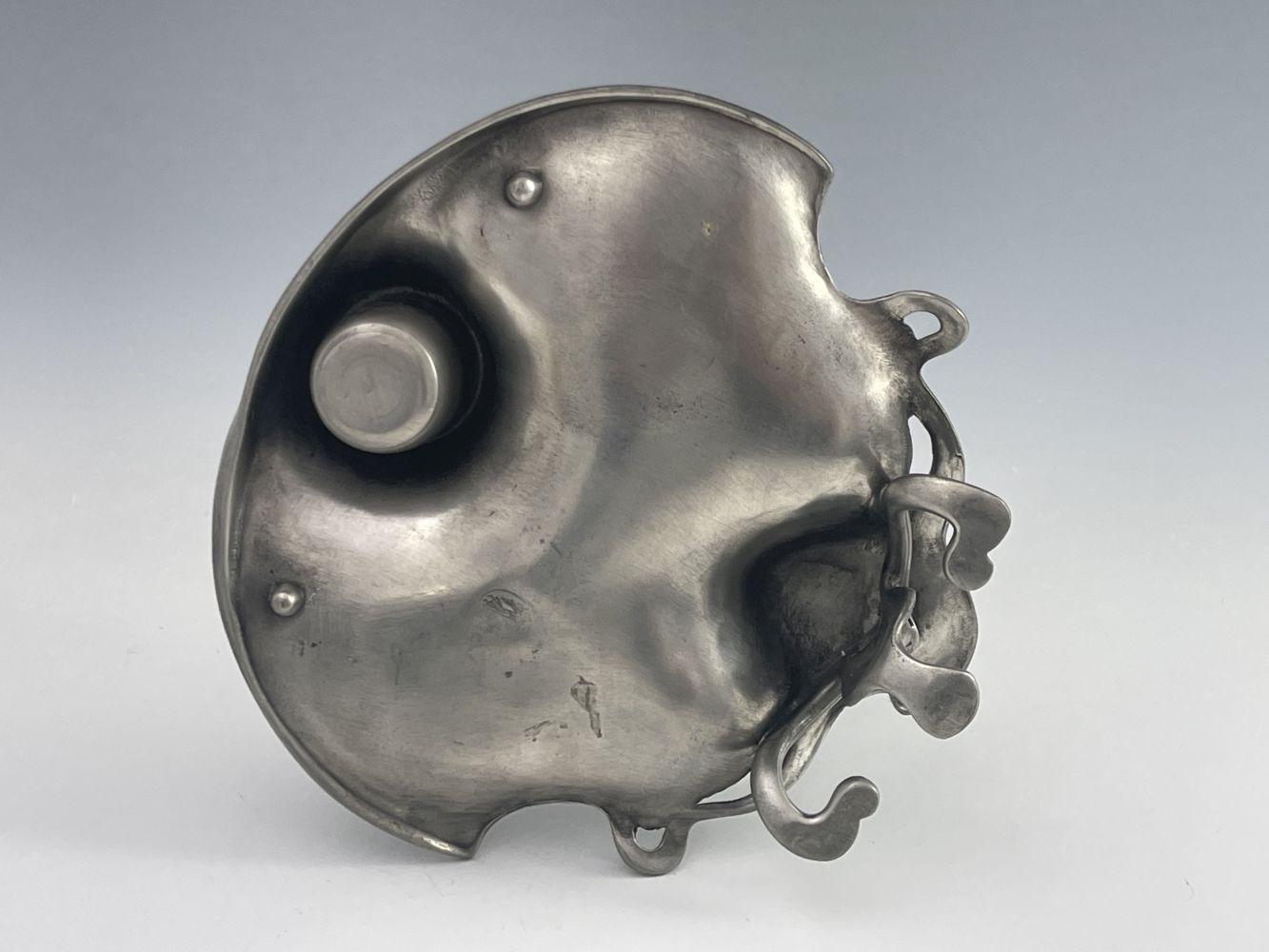
The tray itself is a masterpiece of the Jugendstil style, characterized by asymmetrical, whip-lash tendrils and organic floral motifs (water lilies or pond plants). This “sinuous tendril” section serves as the pen rest. The single inkwell is integrated into the flow of the base and features a hinged lid with a delicate swirl finial.
Decoding the Marks
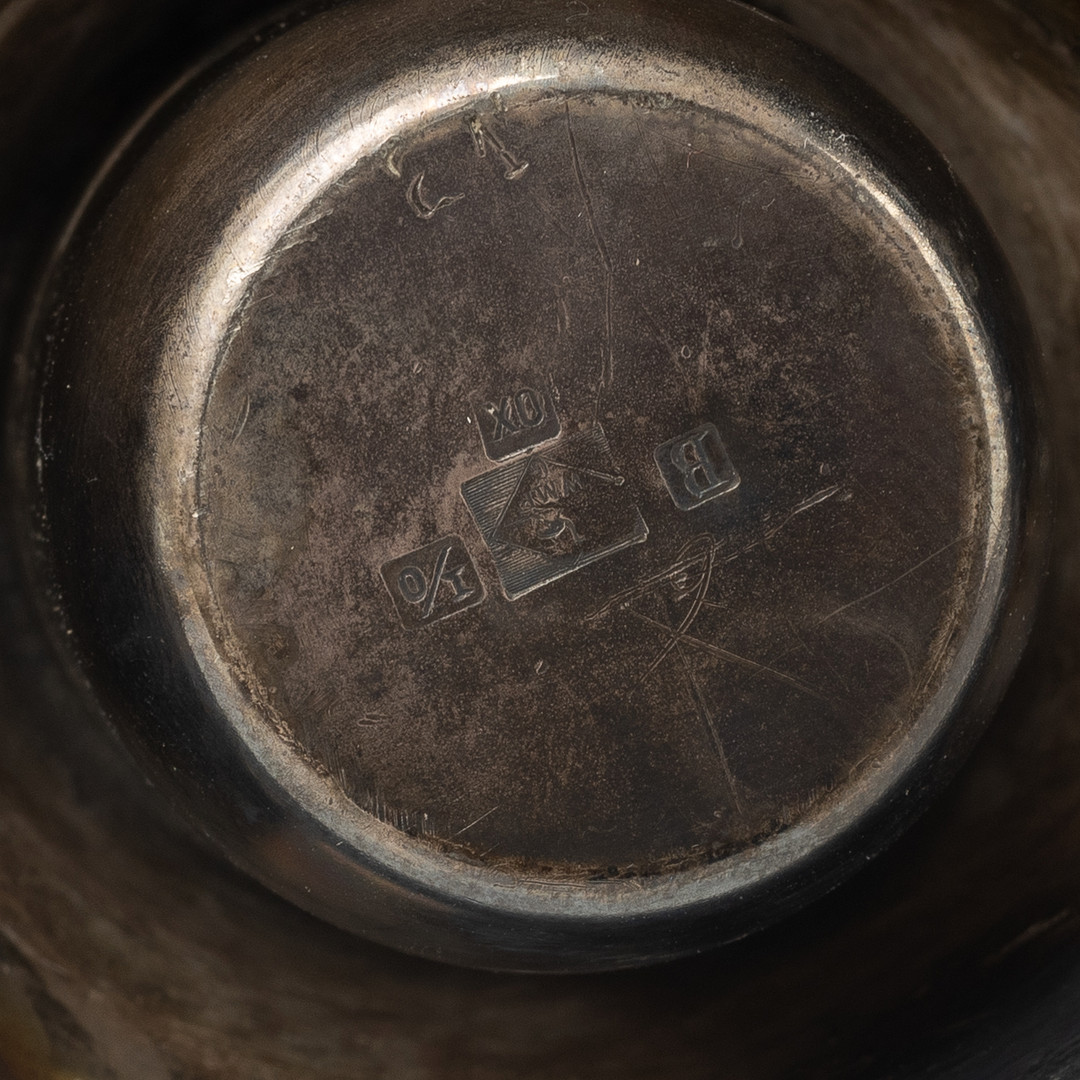
The marks on the underside tell us exactly how this piece was made:
| Mark | Meaning |
| Ostrich in a Square | The famous WMF logo. The ostrich (Strauss in German) was taken from the family crest of the company’s founder, Daniel Straub. This specific version (inside a rectangle) was used roughly between 1903 and 1910. |
| I/O | Indicates “Normal Silver Coating.” This means 1 gram of silver was deposited per 1 square decimeter of base metal. |
| OX | Stands for “Oxidized.” This was an artificial darkening of the silver surface to give it an antique “Old Silver” appearance, highlighting the details in the relief. |
| B | Indicates the base metal is Britannia Metal, a high-quality tin-based alloy (tin, antimony, and copper) that was easy to cast into complex Art Nouveau shapes. |
| 12 | Likely a factory internal code, size indicator, or worker’s mark, as the official model number is 168. |
About the Maker: WMF
Based in Geislingen, Germany, WMF was the world’s leading exporter of domestic metalware by 1900. During the Art Nouveau period, they were famous for their imaginative, high-quality silver-plated pewter and Britannia metal goods. Many of their most iconic figural designs, like this one, were created under the direction of Albert Mayer, who ran the WMF Art Studio from 1884 to 1914.
Sold for $204 in February 2026
Content disclaimer. The information posted is the owner’s best knowledge and may not have been vetted by the SOIC. We welcome comments, corrections, and additions, working to make our website information comprehensive and accurate.
Join the Society of Inkwell Collectors (SOIC) – it’s free!
Founded in 1981 as a non-profit organization,
we are documenting inkwells (and accessories).
We’re here to help and inform!