

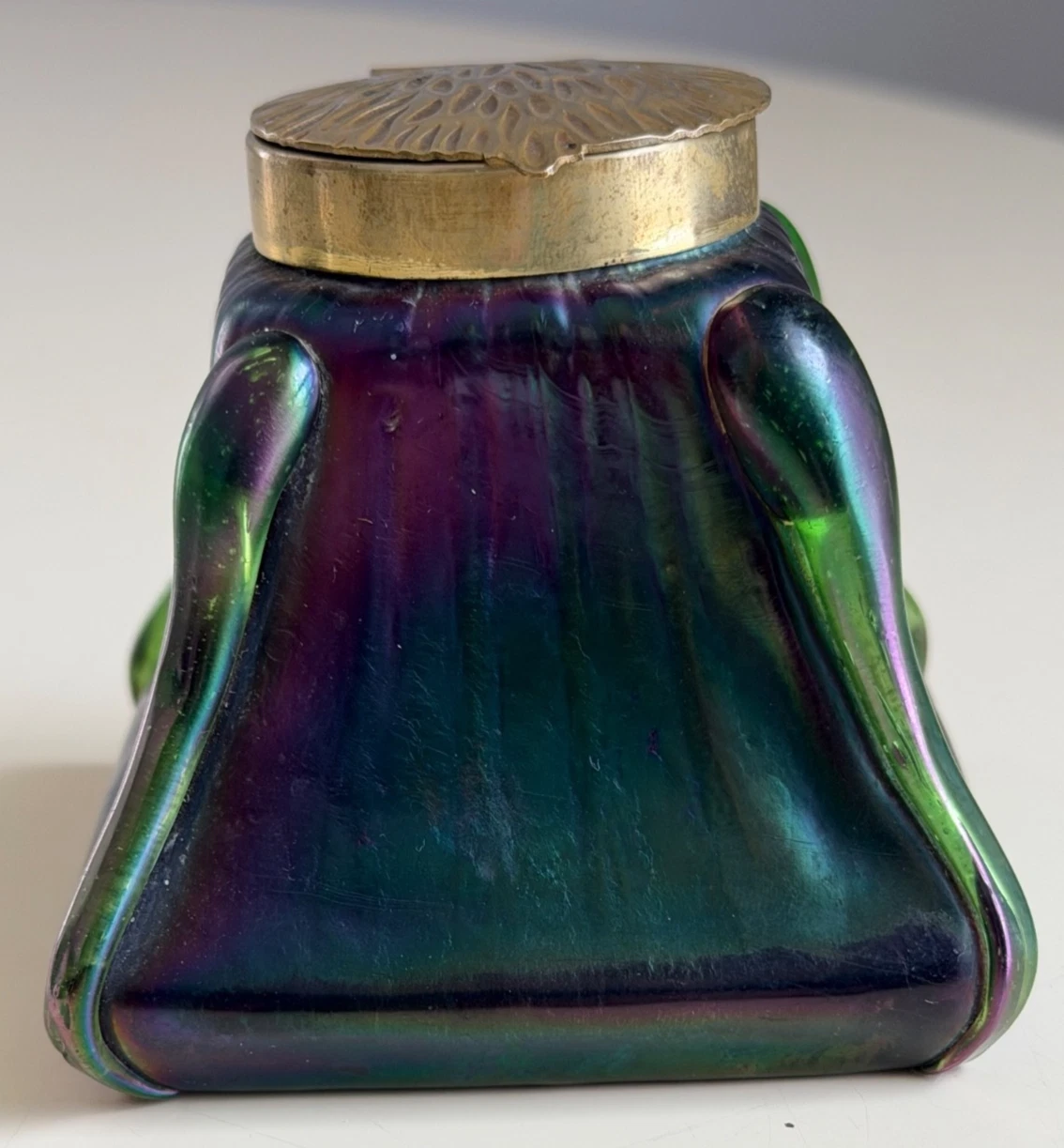
Kralik Iridescent Art Glass Inkwell
| Categories | Bohemian Art Glass |
| Material | Brass, Glass |
| Markings | Unmarked |
| Manufacturer | Kralik |
| Origin | Bohemia |
| Date or Era | circa 1905 |
| Measuring | 3 ½” x 3 ½” x 3 ½” high |
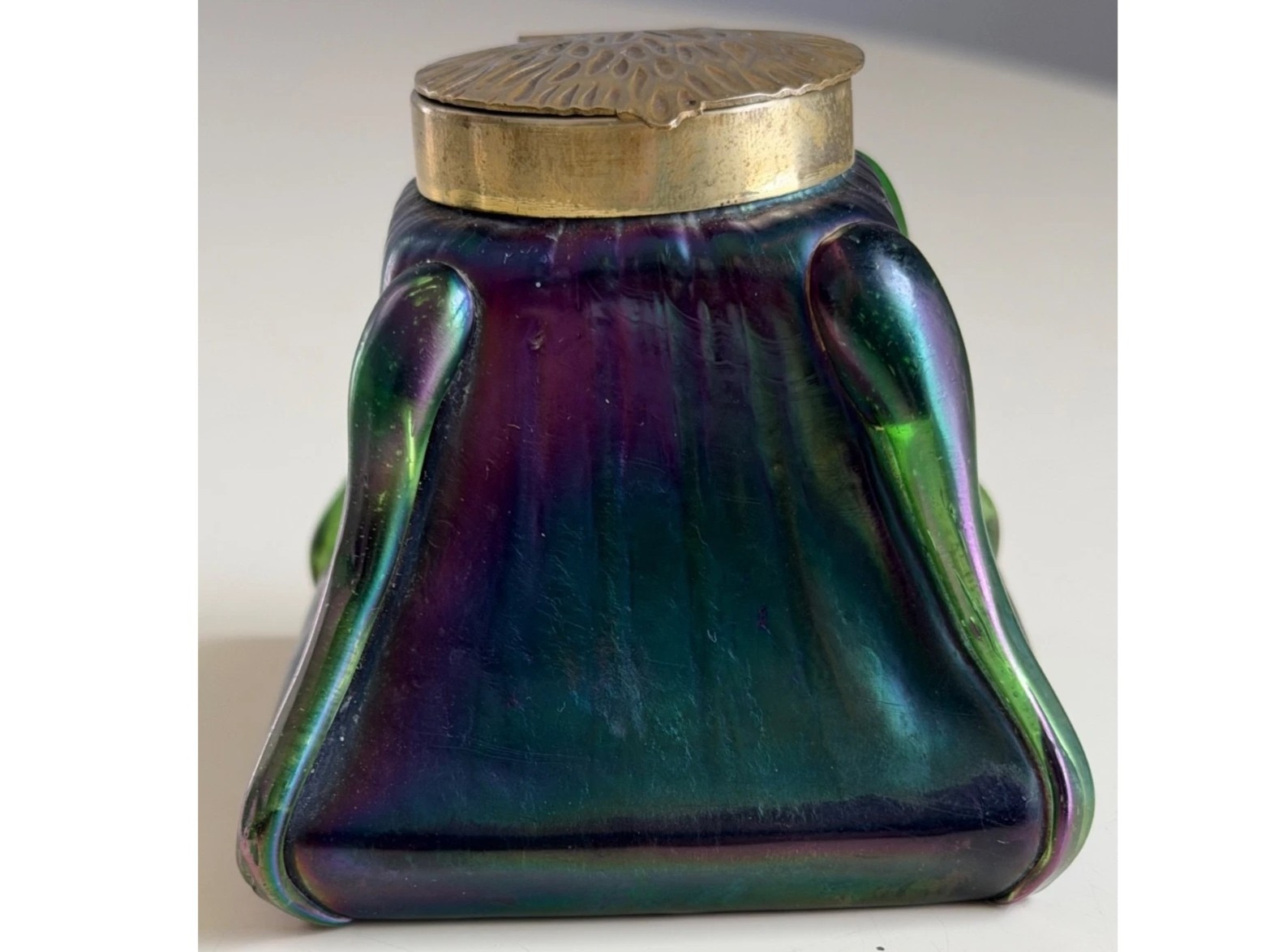
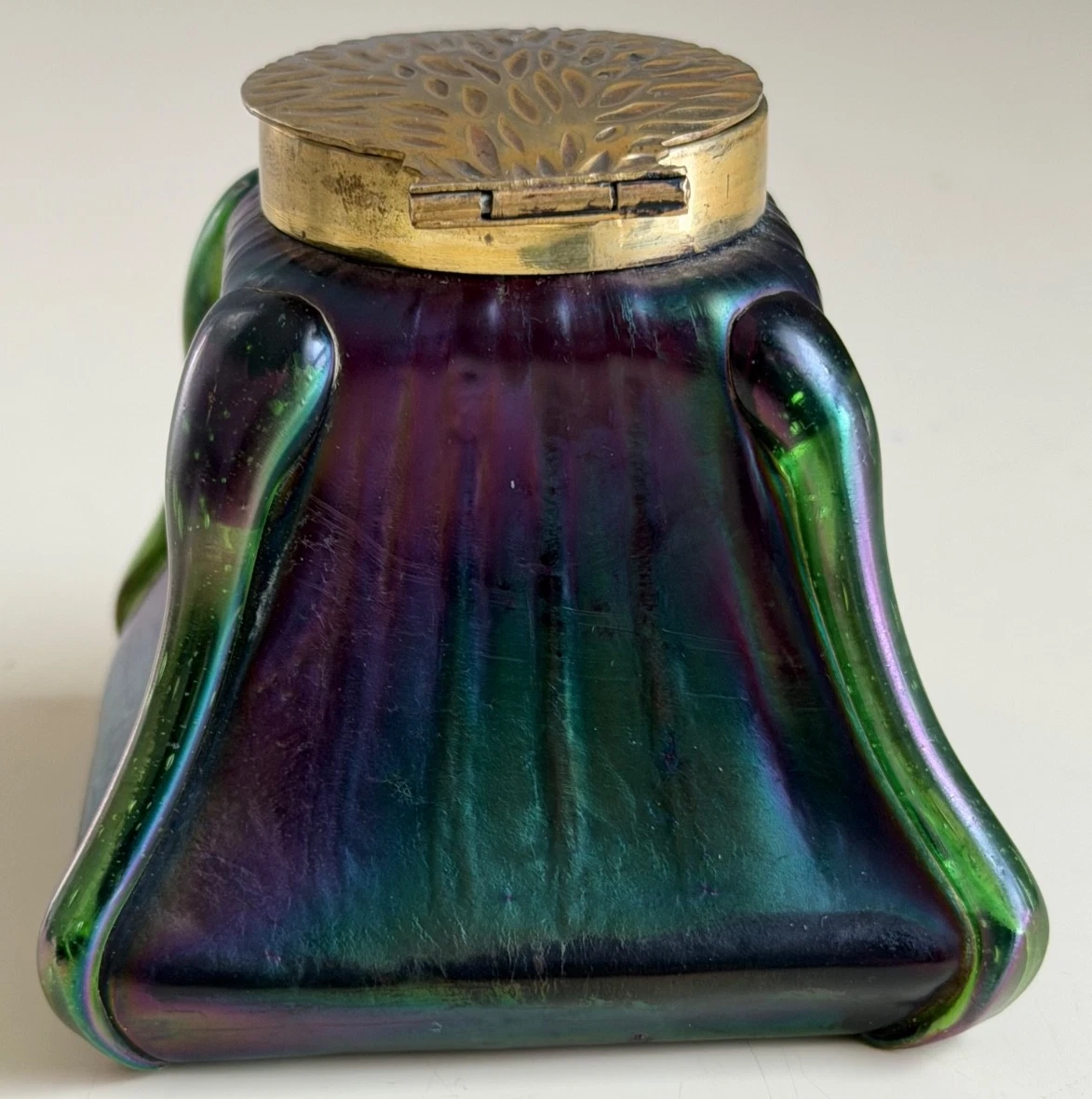
This is a striking example of Kralik iridescent art glass, specifically a “crested” or “four-lobed” inkwell, produced in the early 20th century (circa 1900–1910) during the height of the Art Nouveau movement.
Description
Glass Body
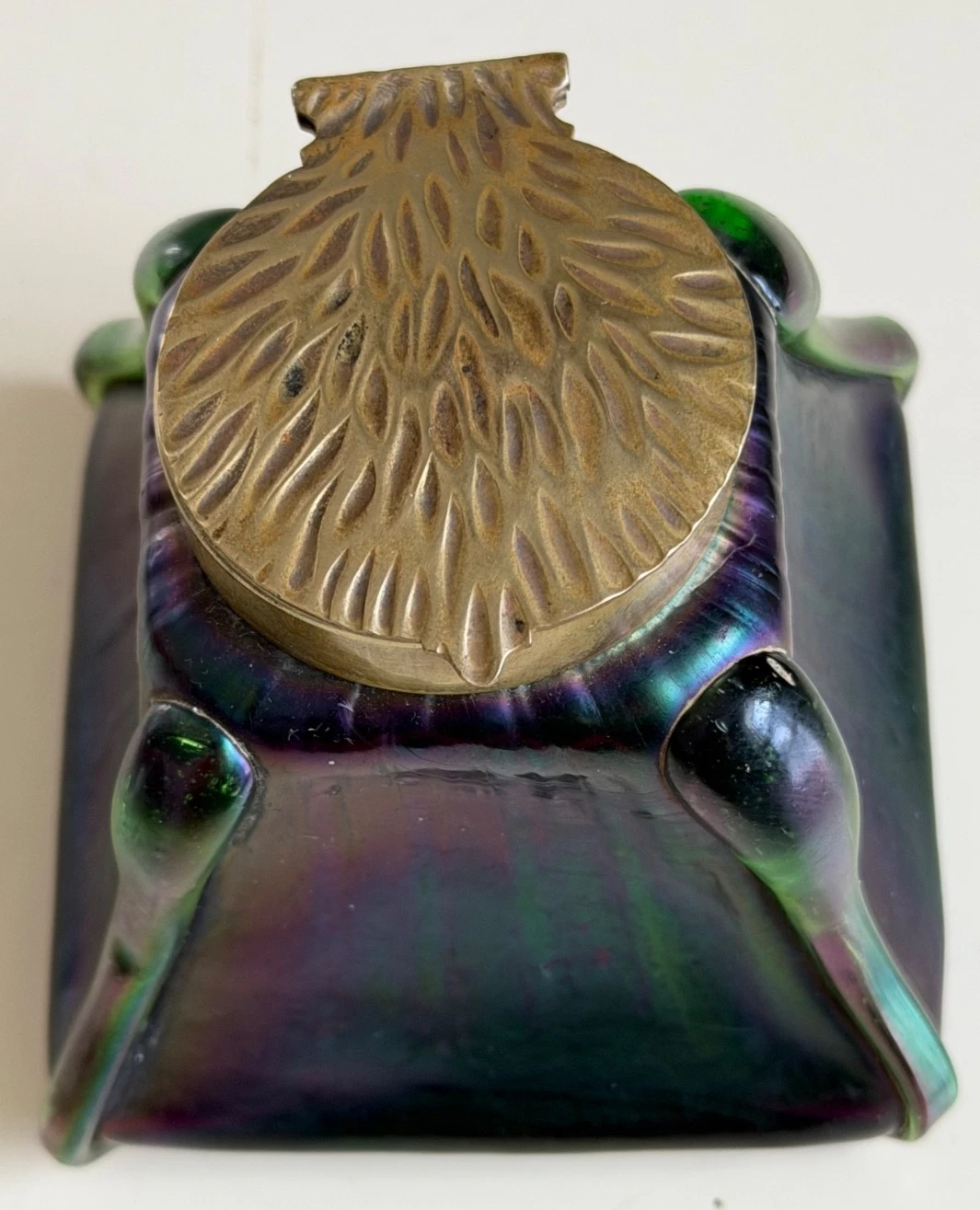
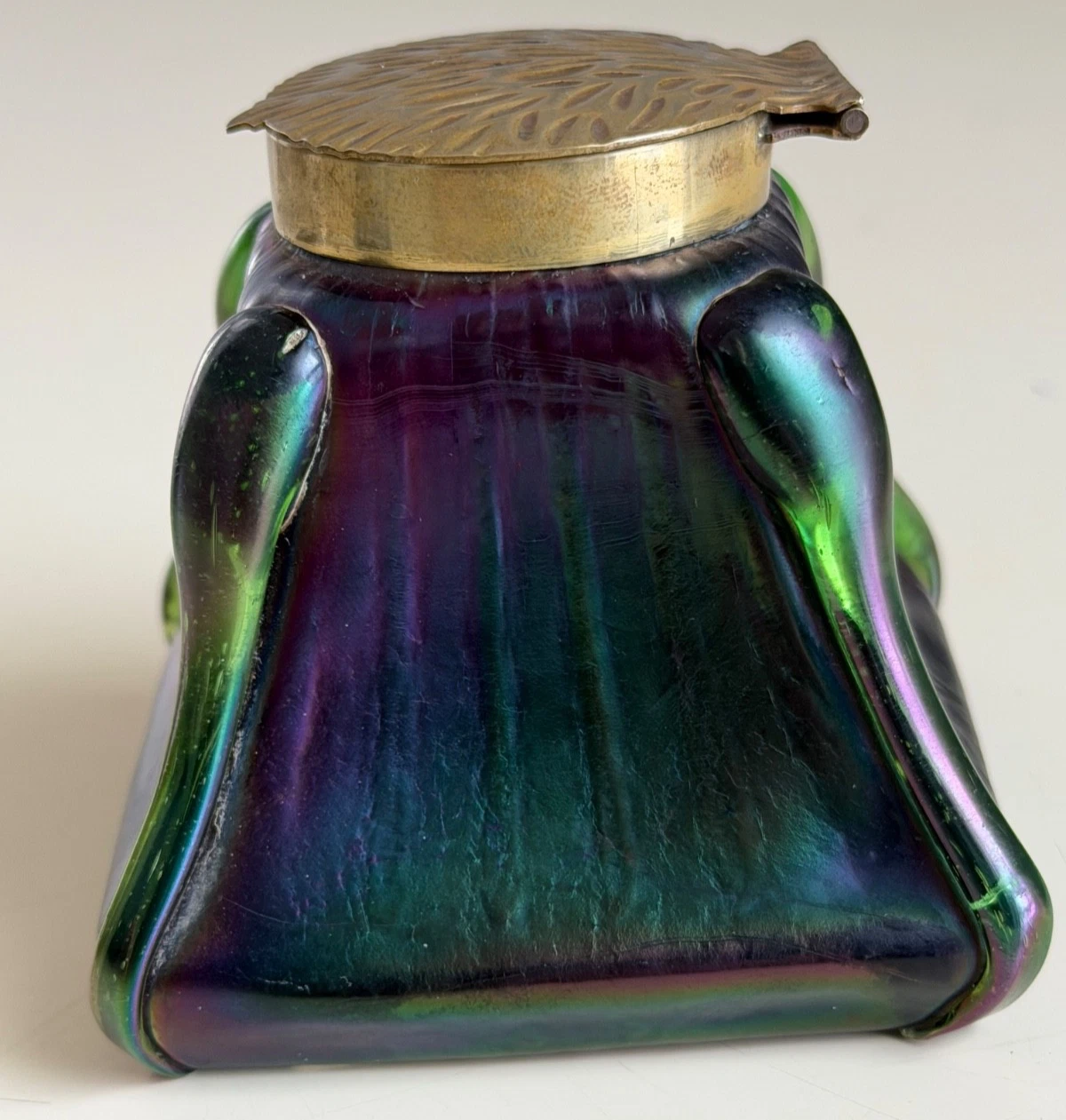
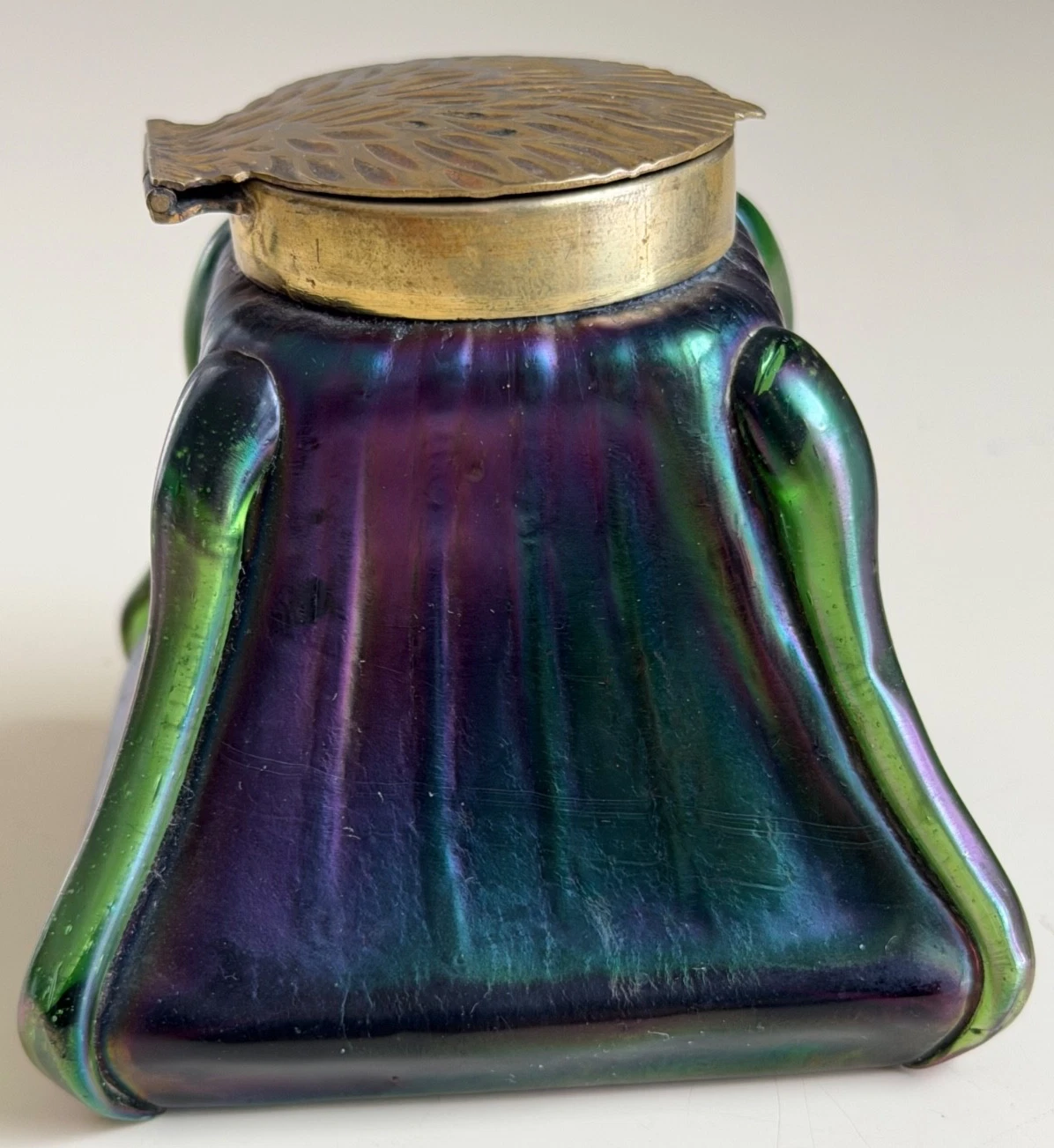
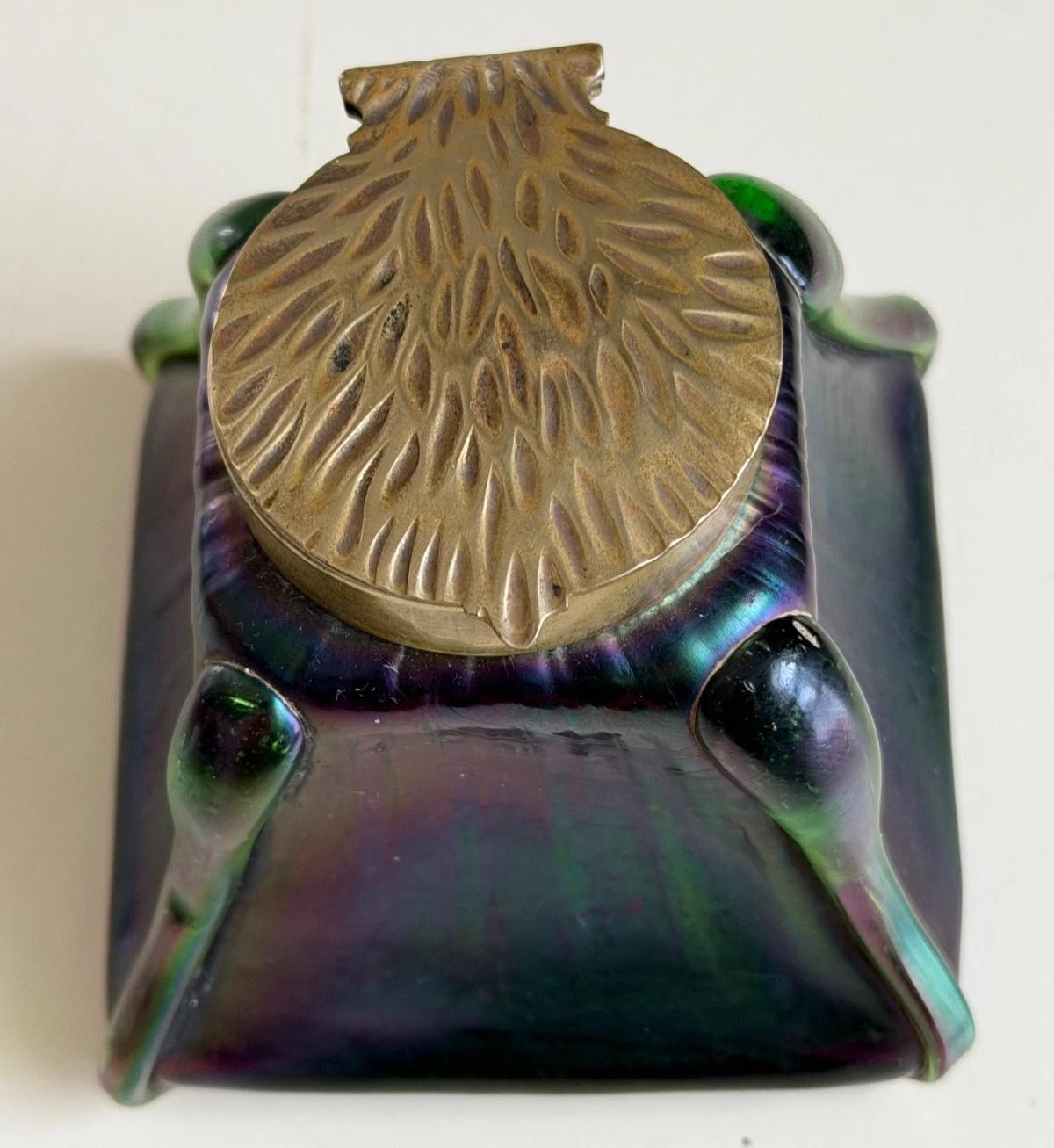
- Form: The inkwell features a square, pyramid-like base that tapers upward toward the neck. The most distinctive feature is the four applied glass “crests” or lugs that extend from the corners down to the base, acting as stylized feet. These pulled-glass elements give the piece a fluid, organic silhouette typical of the Bohemian glass tradition.
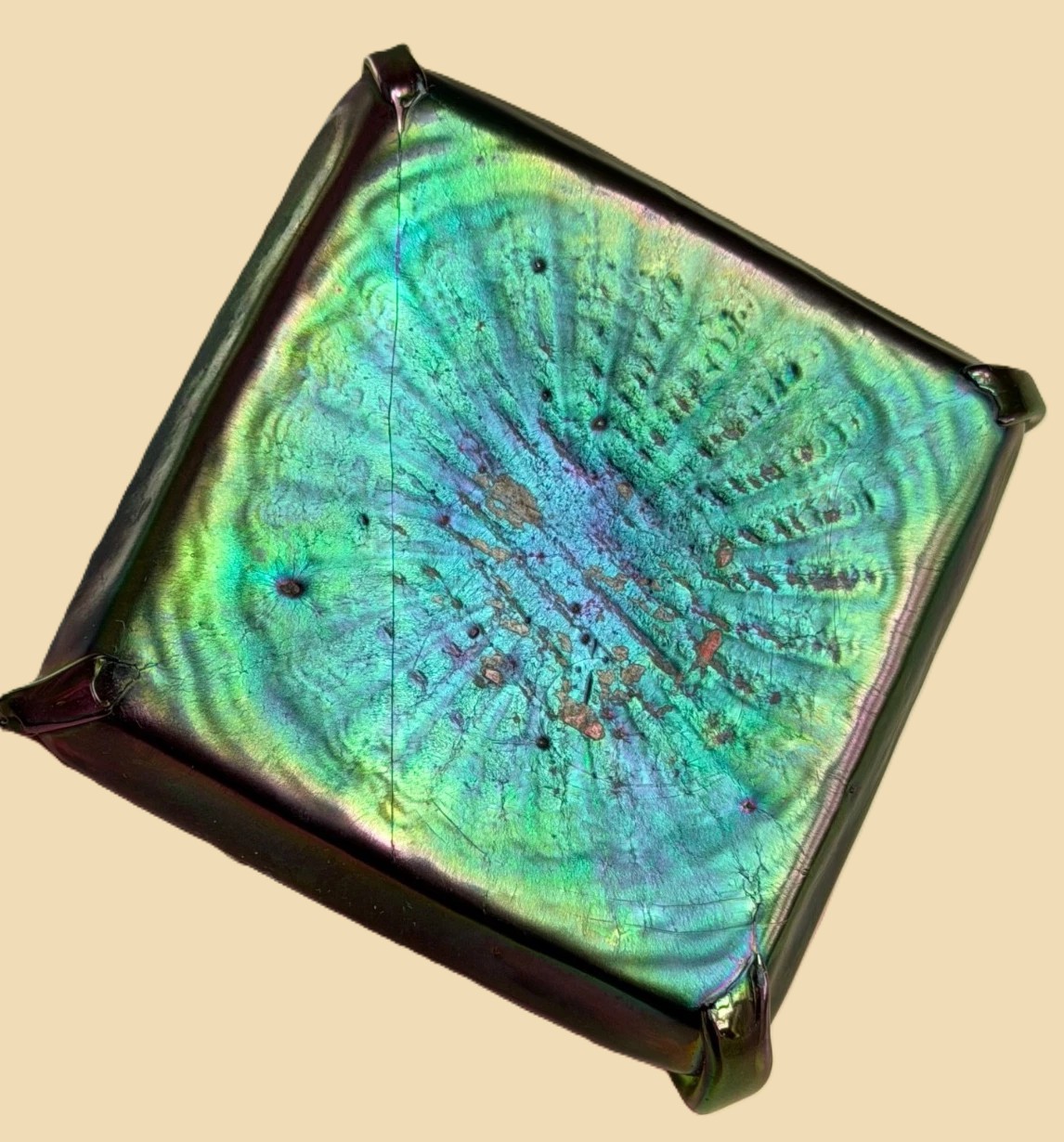
- Color and Iridescence: The glass possesses a deep, saturated base color—a “midnight” cobalt or dark violet—that has been treated with a high-luster iridescent finish. This creates a “peacock” or oil-spot effect, shifting between shimmering greens, purples, and blues depending on the angle of light.
- Texture: Subtle vertical ribbing or “molding” is visible on the sides, adding a sense of movement to the glass as it catches the light.
Metalwork
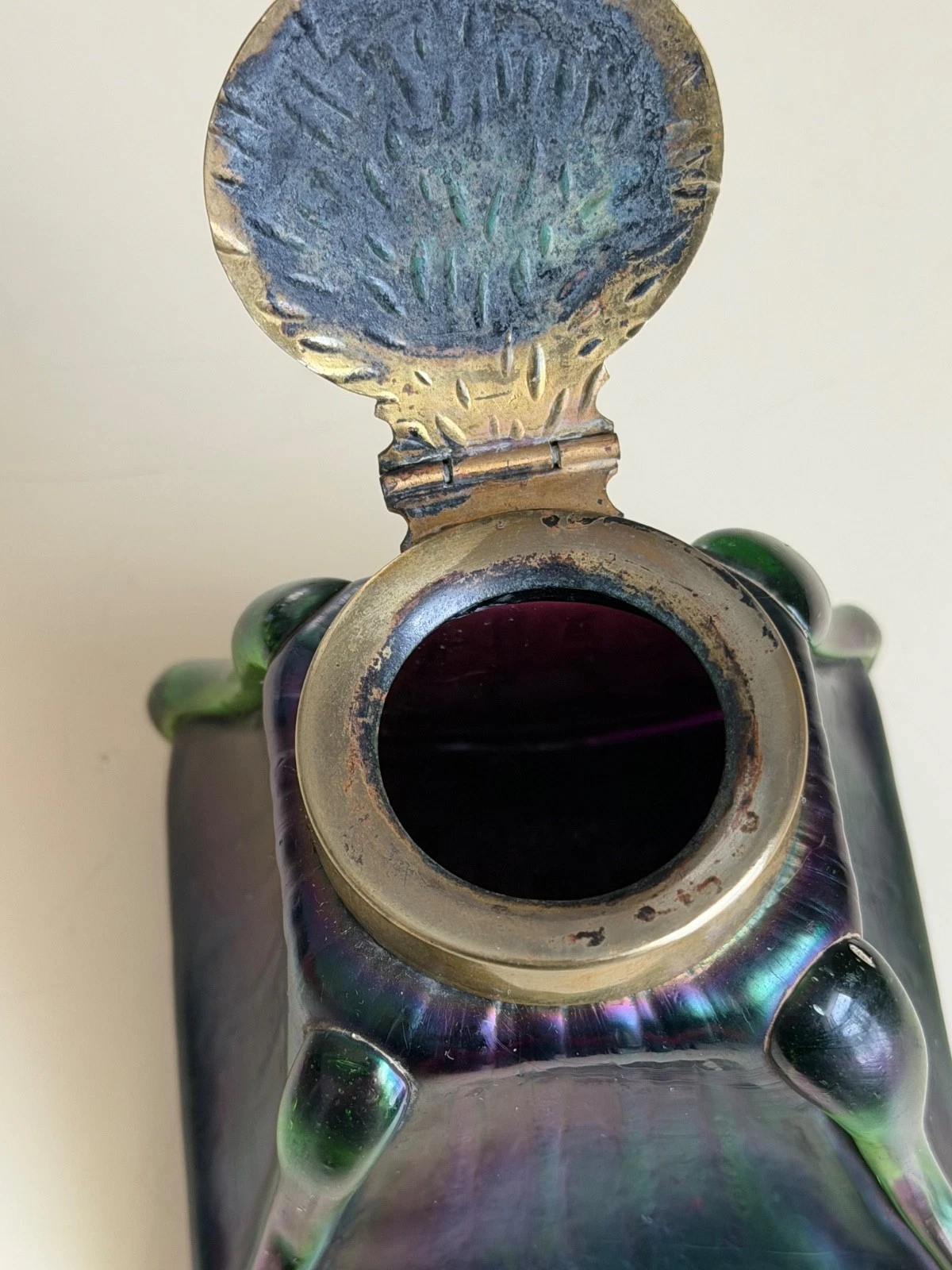
- Lid and Collar: The inkwell is fitted with a heavy brass hinged lid. The lid is decorated with a chased or embossed feather/leaf motif, echoing the organic themes of the Art Nouveau era.
History and Background
The Kralik Glassworks
Wilhelm Kralik Söhne was one of the premier glasshouses in the Bohemian region of the Austro-Hungarian Empire (now the Czech Republic). Established in 1815, the company became a major rival to the more famous Loetz factory.
- Innovation: Kralik was known for mastering complex “hot-worked” techniques, where glass threads or crests (like the ones on this piece) were applied while the main body was still molten.
- Comparison to Loetz: While Loetz is often credited with the highest-end iridescent glass, Kralik produced pieces of exceptional quality that were often sold to high-end retailers throughout Europe and the United States. Many of their iridescent lines, like the “Martele” or “Bacillus” decors, are highly sought after today.
Art Nouveau Context
This inkwell is a textbook example of Jugendstil (the German/Austrian version of Art Nouveau). The style emphasized “the whipstick curve” and organic forms inspired by nature—plants, water, and feathers. The iridescence was meant to mimic the natural shimmer of oil on water or a dragonfly’s wing, moving away from the rigid, geometric styles of the Victorian era.
Identification Markers
Bohemian glass from this period was rarely signed with a maker’s mark. Instead, identification is based on the specific decor (the color/texture combination) and the shape number. The four-lobed crested shape is a well-documented Kralik form. The underside shows a ground-down “pontil” mark, which indicates the piece was hand-blown.
Sold for $214 in February 2026
Content disclaimer. The information posted is the owner’s best knowledge and may not have been vetted by the SOIC. We welcome comments, corrections, and additions, working to make our website information comprehensive and accurate.
Join the Society of Inkwell Collectors (SOIC) – it’s free!
Founded in 1981 as a non-profit organization,
we are documenting inkwells (and accessories).
We’re here to help and inform!