




French Empire Style Inkstand
| Categories | Figural - Mythology; Literature; Religion; Fictional |
| Type | Cupid / Cherub / Angel, Eagle, Owl |
| Material | Bronze |
| Markings | Unmarked |
| Manufacturer | Undetermined |
| Origin | France |
| Date or Era | circa 1870 |
| Measuring | 12” x 4 ½” x 8” high |
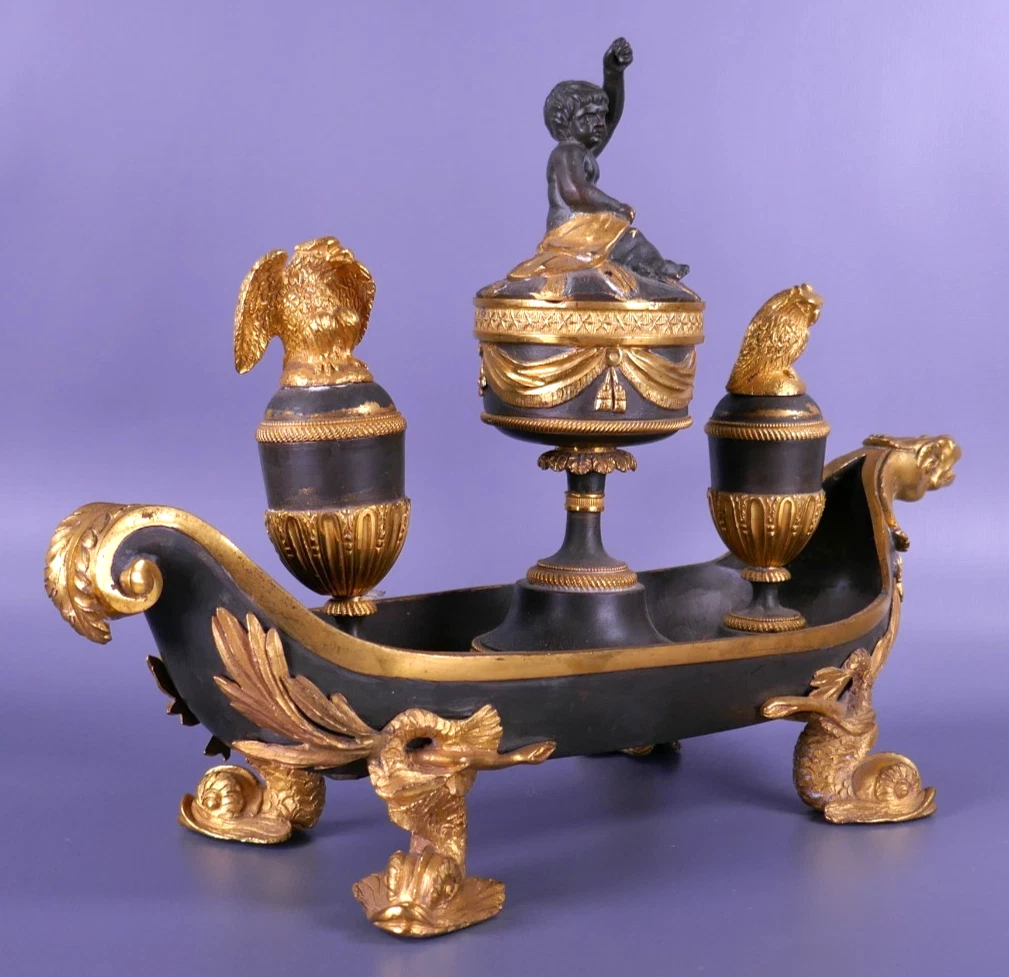
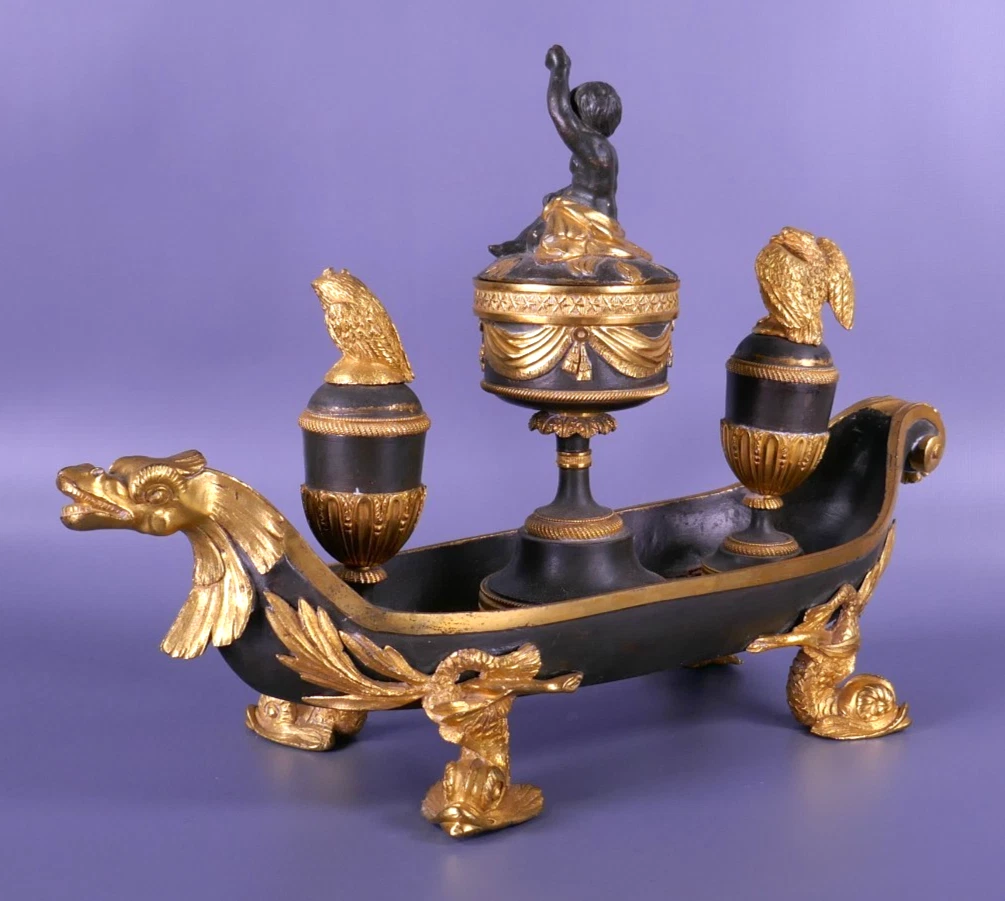
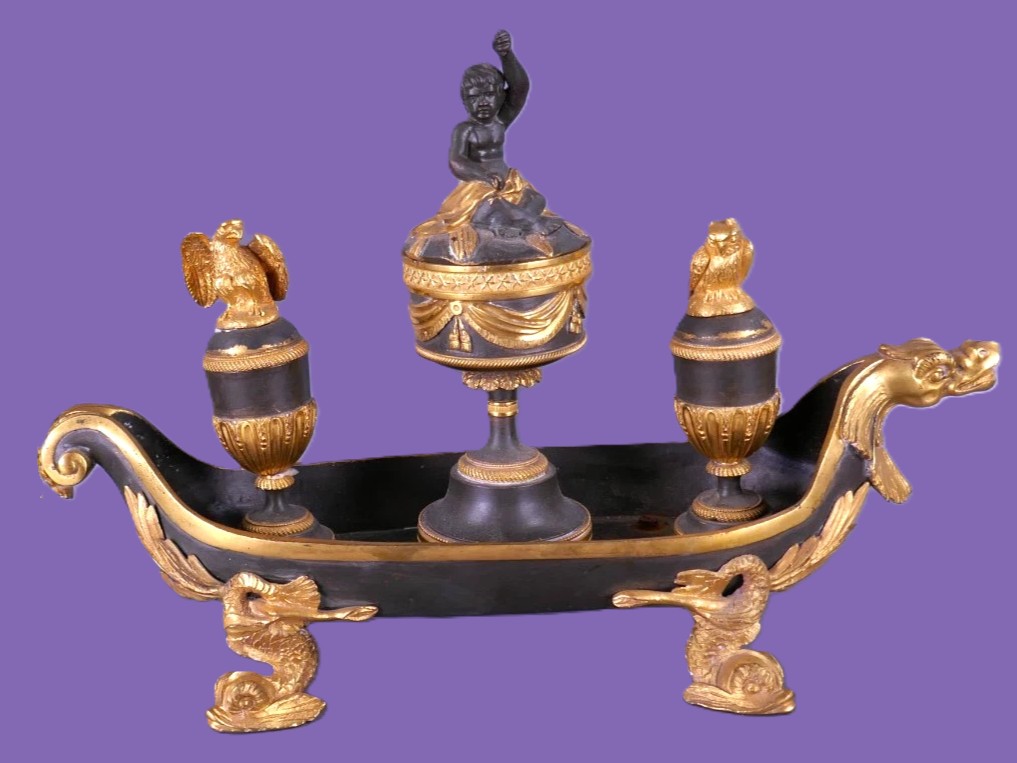
This is a magnificent example of a French Empire style (or late 19th-century Revival) figural inkstand, likely dating from the mid-to-late 19th century (circa 1860–1880).
The design is heavily influenced by the Empire aesthetic of Napoleon I, which favored dark patinated bronze contrasted with rich “ormolu” (gilt bronze) and classical, mythological symbolism.
Description and Features
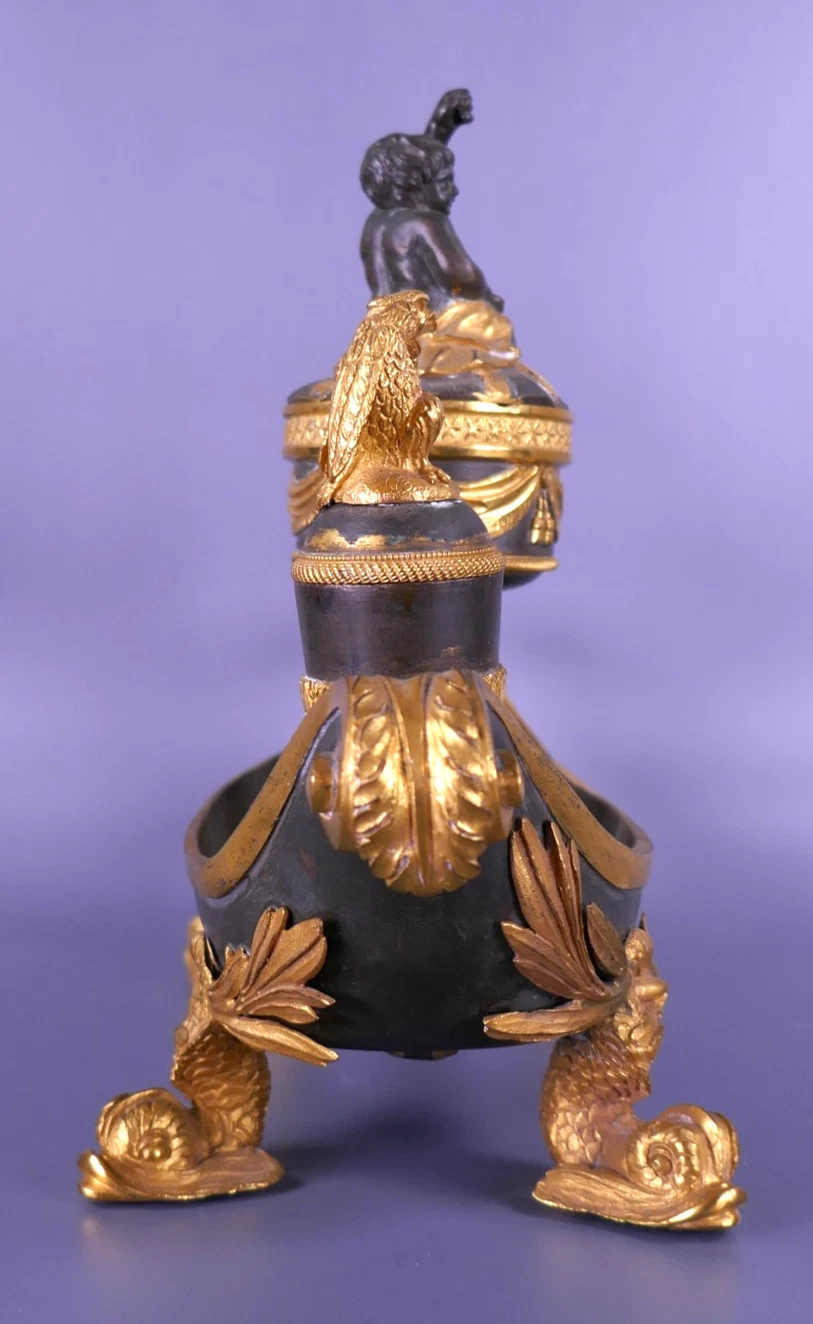
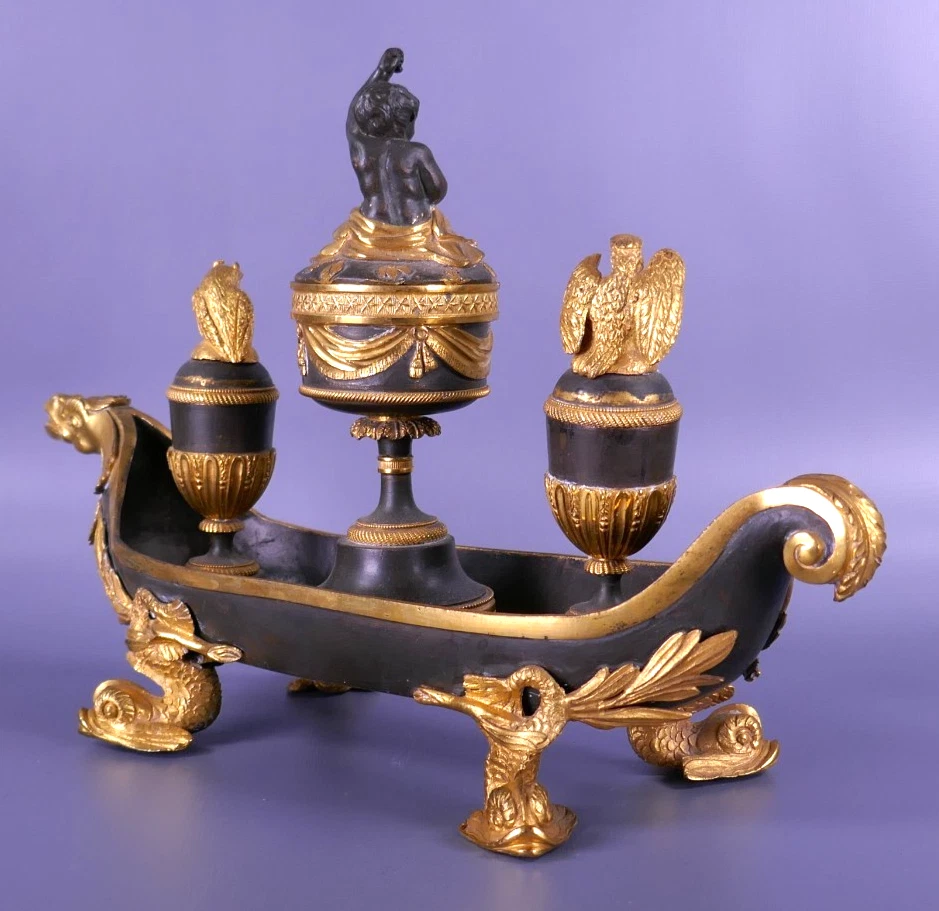
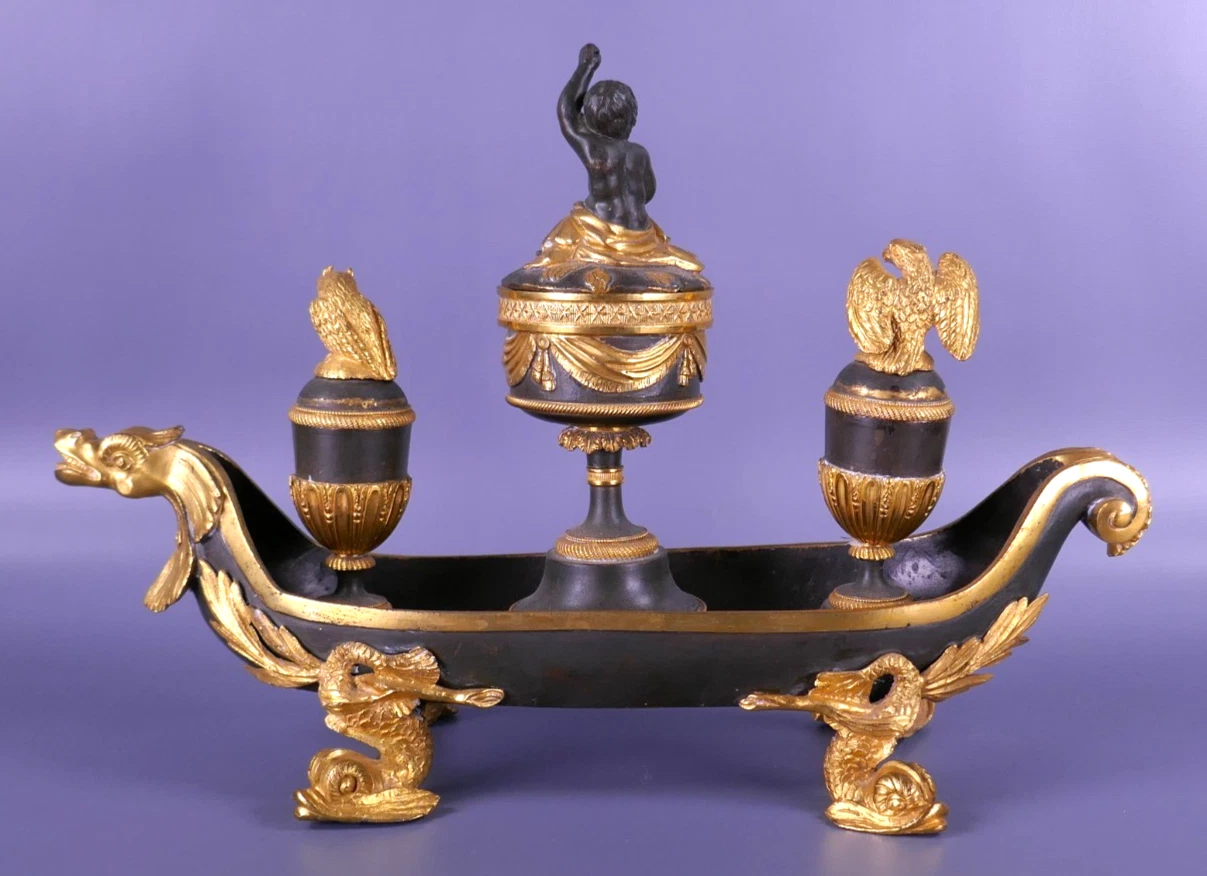
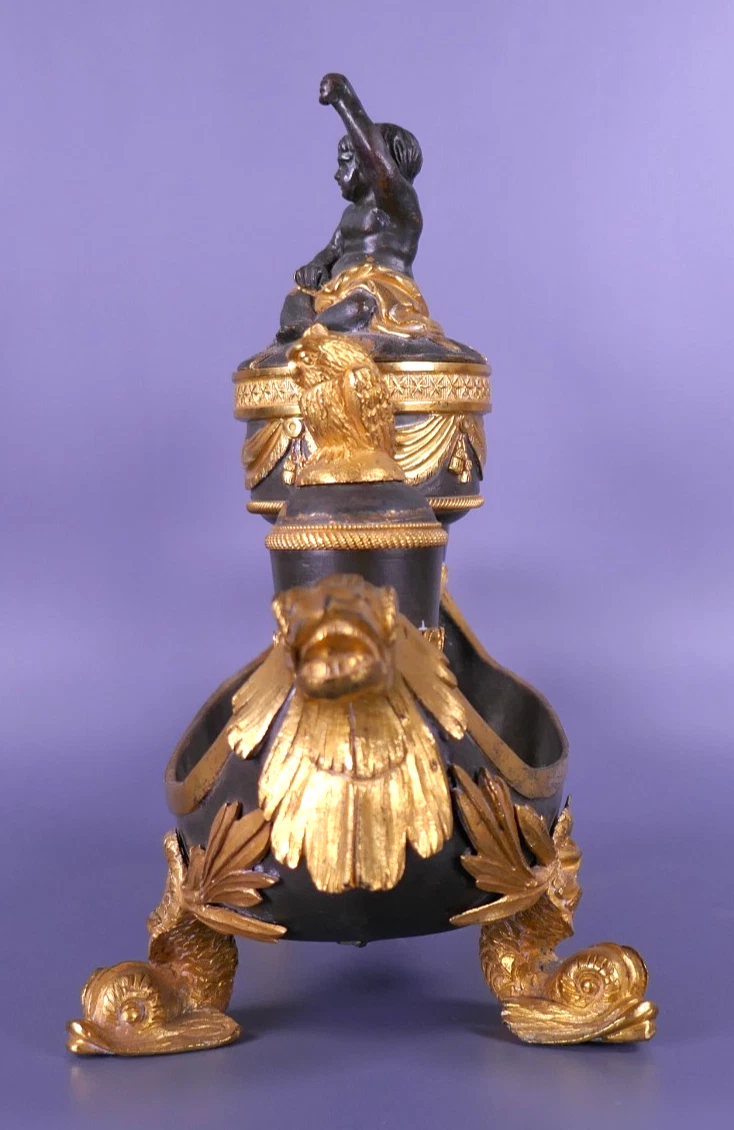
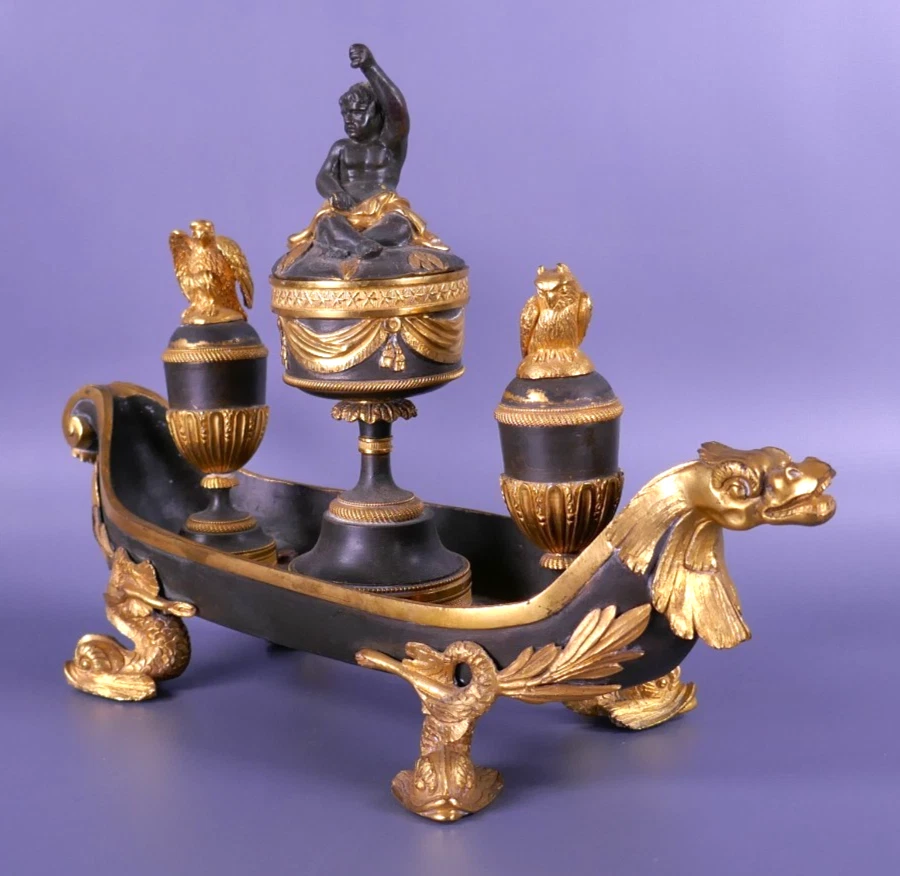
The inkstand is shaped like a galleon or a classical Roman liburna (warship). It rests on four ornate feet cast as winged sea-dragons or hippocampi, which were common motifs for furniture and desk accessories intended to signify power over the seas.
- The Bow: Features a dramatic, gilded dragon’s head as the figurehead.
- The Components: It features three main urn-shaped vessels set within the hull:
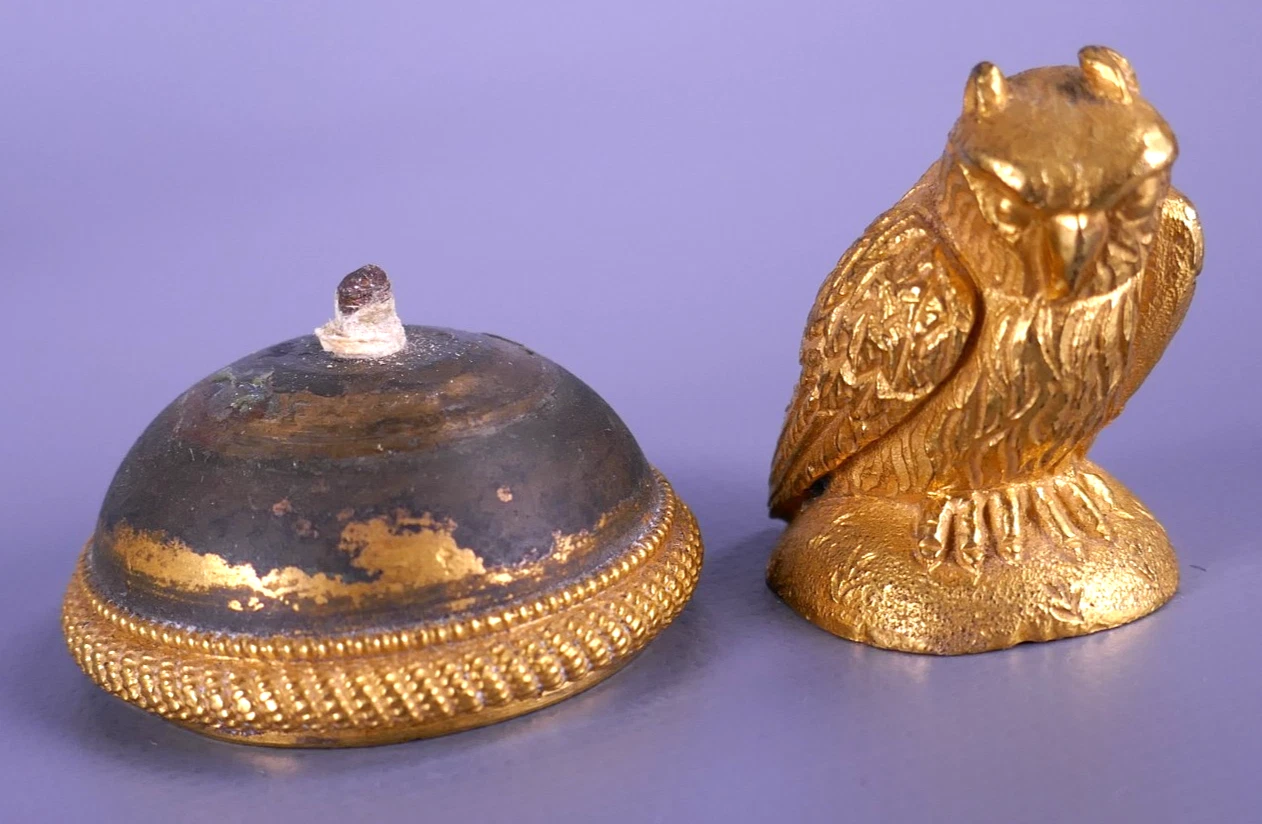
- Two Inkwells: The flanking urns with the bird finials.
- The Sander (Pounce Pot): The central, larger urn with the perforated lid used to sprinkle “pounce” (sand or gum sandarac) over wet ink to dry it.
- The Finish: The dark sections are patinated bronze, while the golden elements are gilt bronze.
Symbolism and Significance
The choice of figures on this desk set is a deliberate “program” of symbols representing the virtues of a scholar, a statesman, or a person of high status.
| Figure | Symbolism & Significance |
| The Eagle | Represents Jupiter (or Napoleon), symbolizing authority, power, and vision. In a desk setting, it suggests the writer’s words carry weight and far-reaching influence. |
| The Owl | The bird of Minerva/Athena, representing wisdom, prudence, and nocturnal study. It balances the eagle’s power with intellectual depth. |
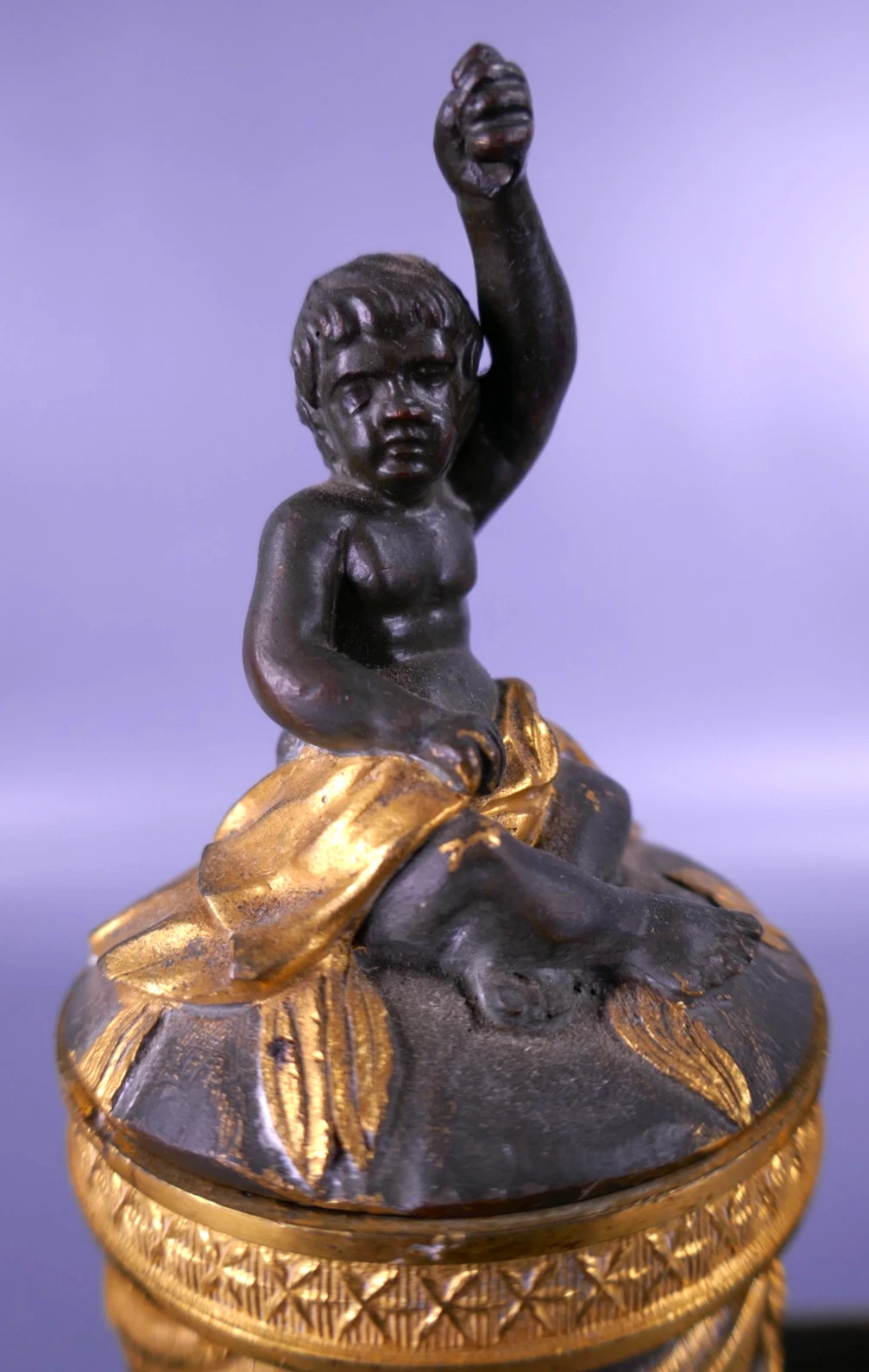
| The Cherub (Putto) | Often used in this context as an Allegory of History or Fame. He sits atop the sander (the final step of writing), and his raised hand likely originally held a small torch or a quill, signaling that the work written here will endure. |
| The Ship Form | Symbolizes the “Ship of State” or the journey of life and knowledge. It suggests that the desk is the “bridge” from which the owner navigates their affairs. |
Age and Origins
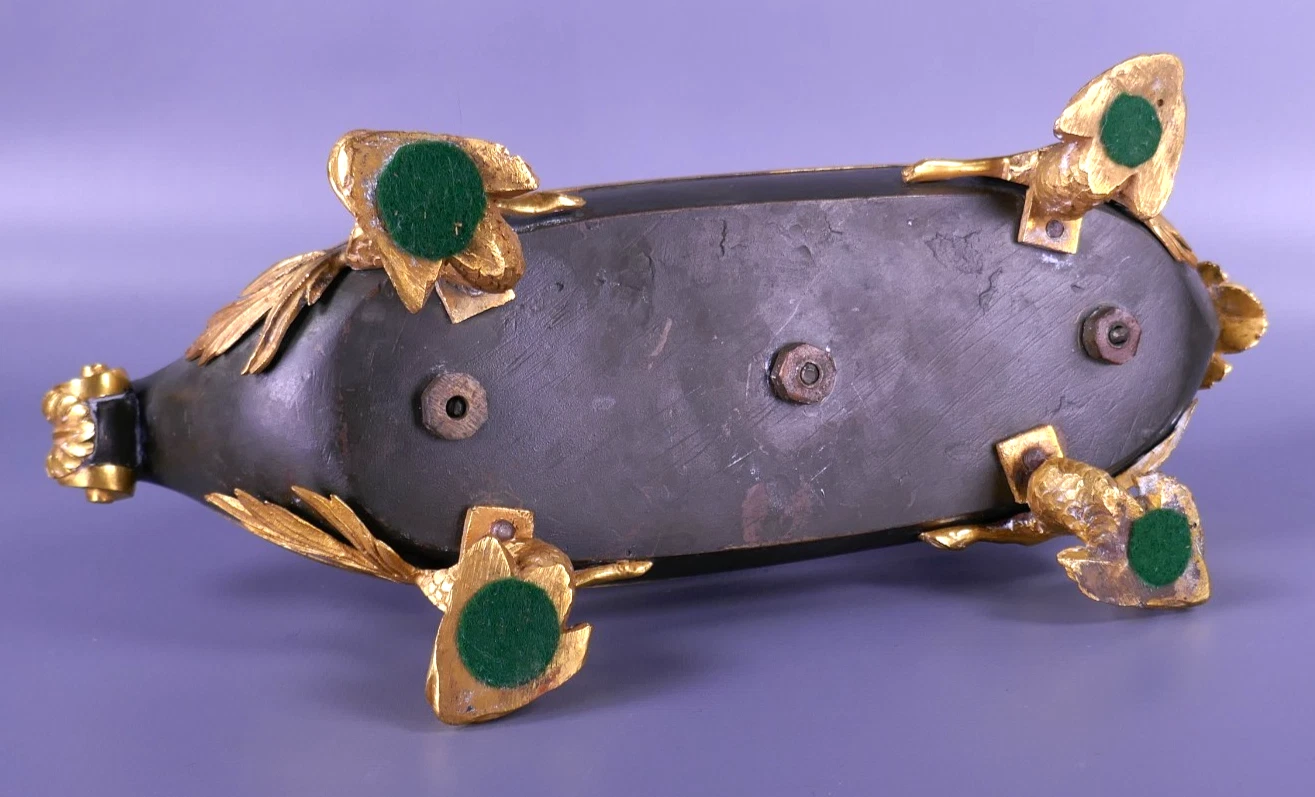
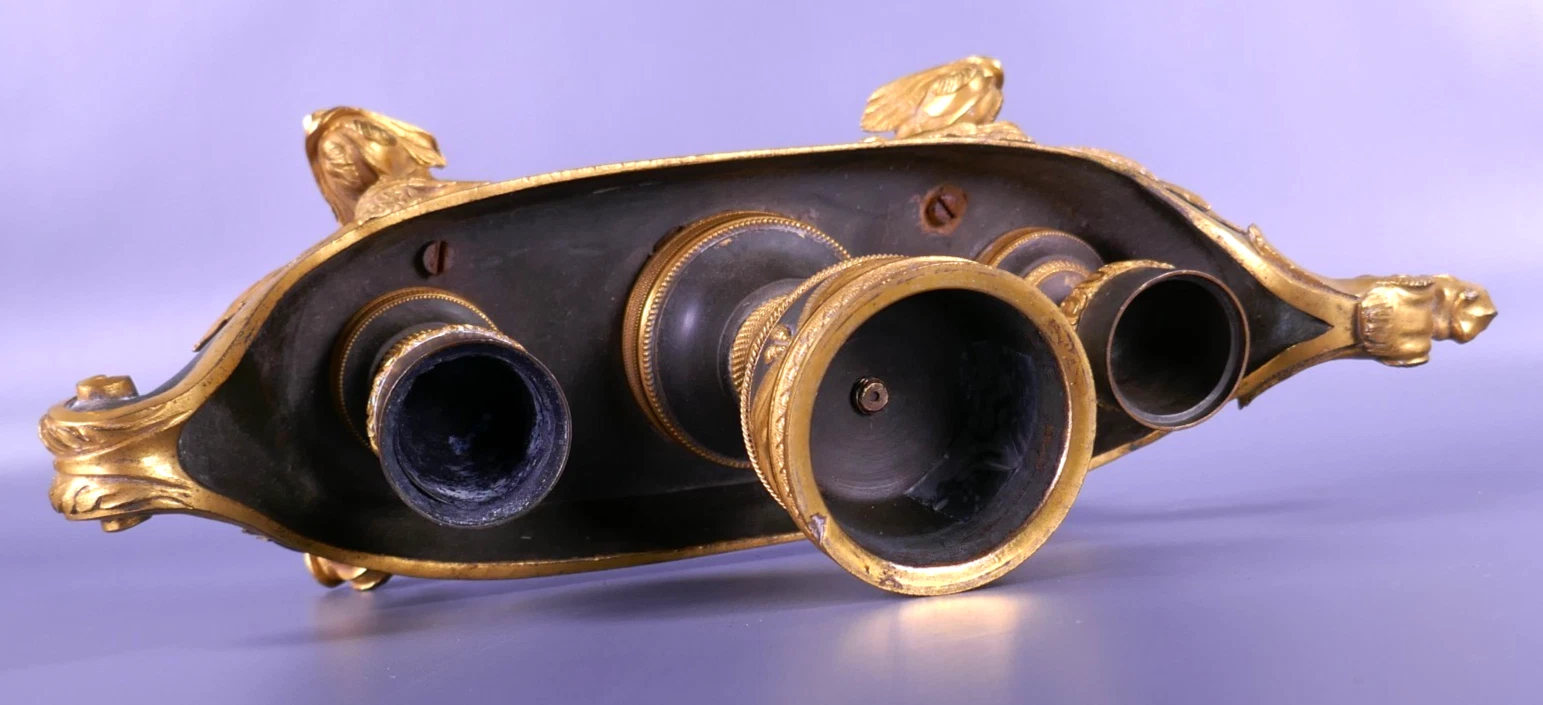
While the style is “Empire” (originally 1800–1815), the construction seen in the underside – specifically the use of hexagonal nuts and threaded rods—strongly suggests a Napoleon III (Second Empire) period production.
The craftsmanship is excellent; the “drapery” and “swag” motifs on the central sander are classic Neo-Classical elements used to give the piece a sense of architectural permanence.
Sold for $417 in February 2026
Content disclaimer. The information posted is the owner’s best knowledge and may not have been vetted by the SOIC. We welcome comments, corrections, and additions, working to make our website information comprehensive and accurate.
Join the Society of Inkwell Collectors (SOIC) – it’s free!
Founded in 1981 as a non-profit organization,
we are documenting inkwells (and accessories).
We’re here to help and inform!