

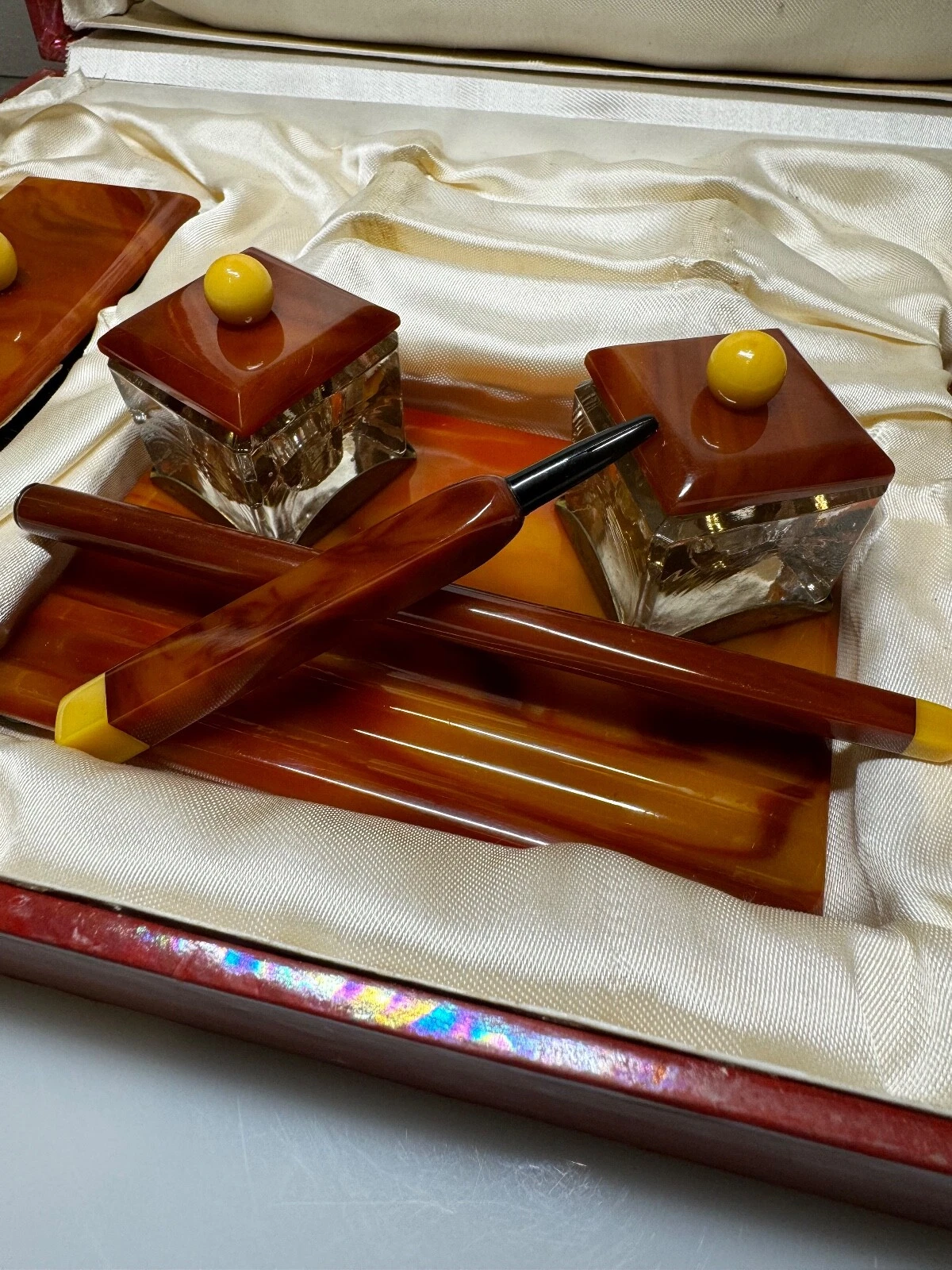
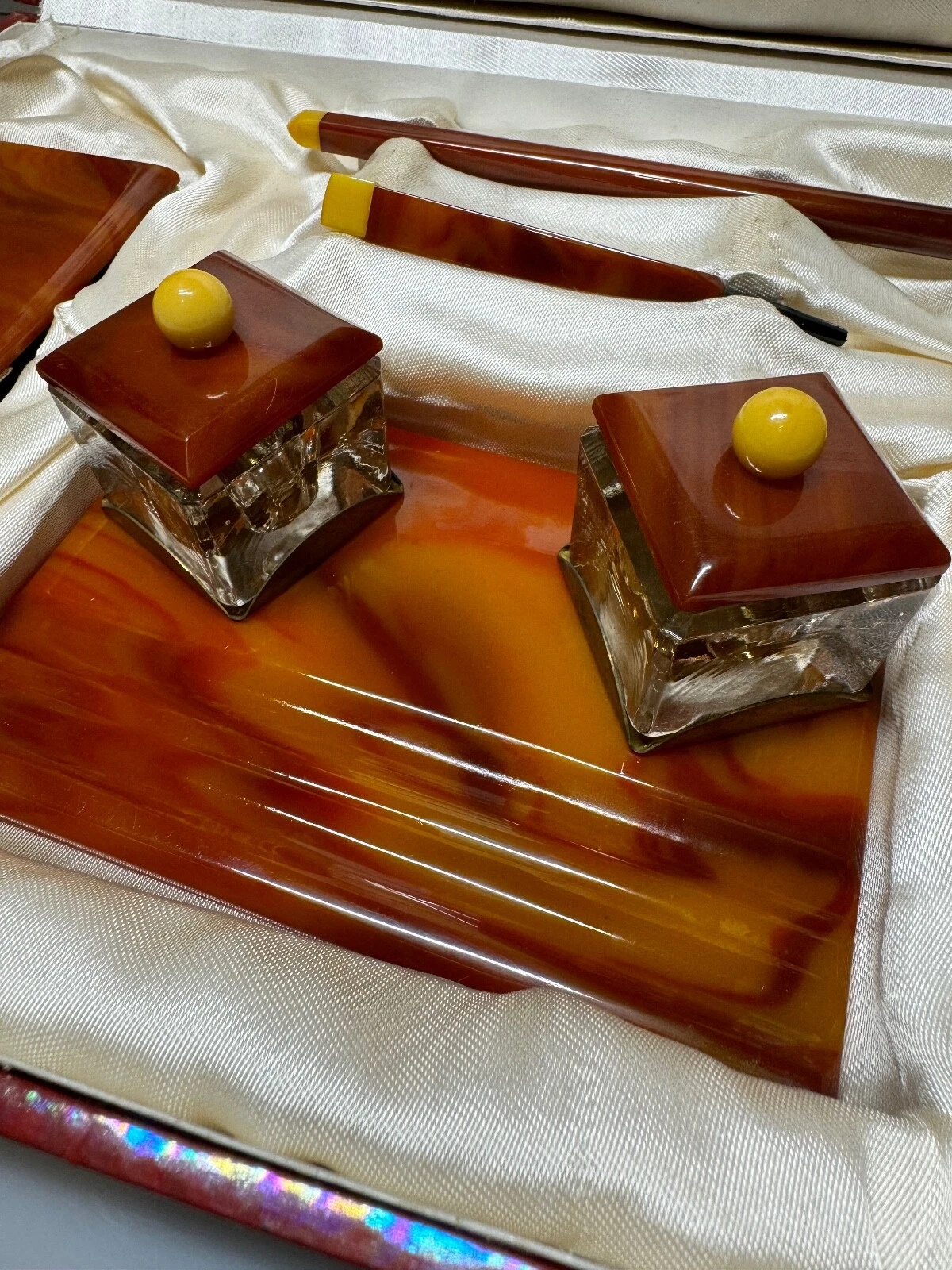

Catalin Desk Set in Presentation Box
| Categories | Accessories, Art Deco, Plastic - Bakelite - Gutta Percha |
| Material | Catalin |
| Markings | Unmarked |
| Manufacturer | Undetermined |
| Origin | Undetermined |
| Date or Era | circa 1930 |
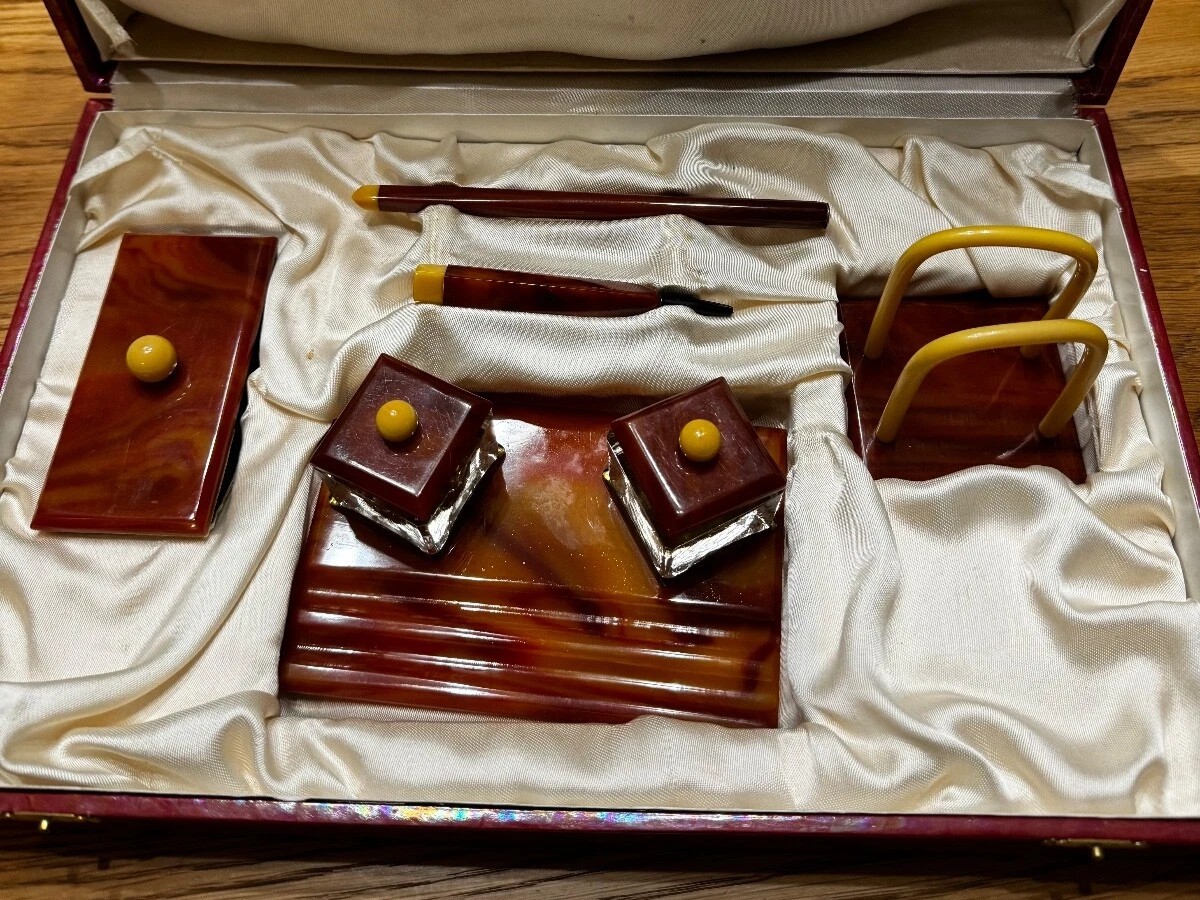
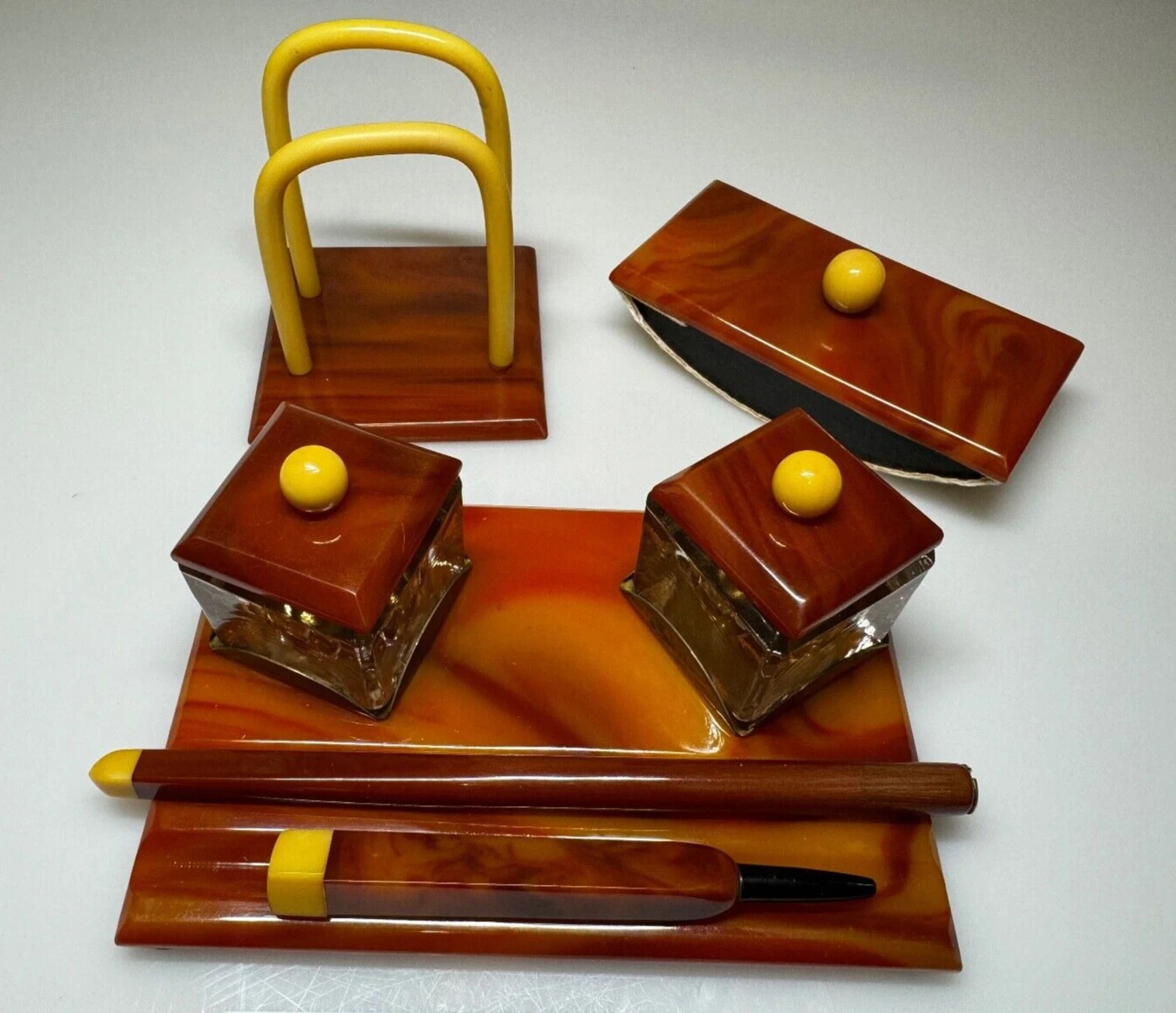
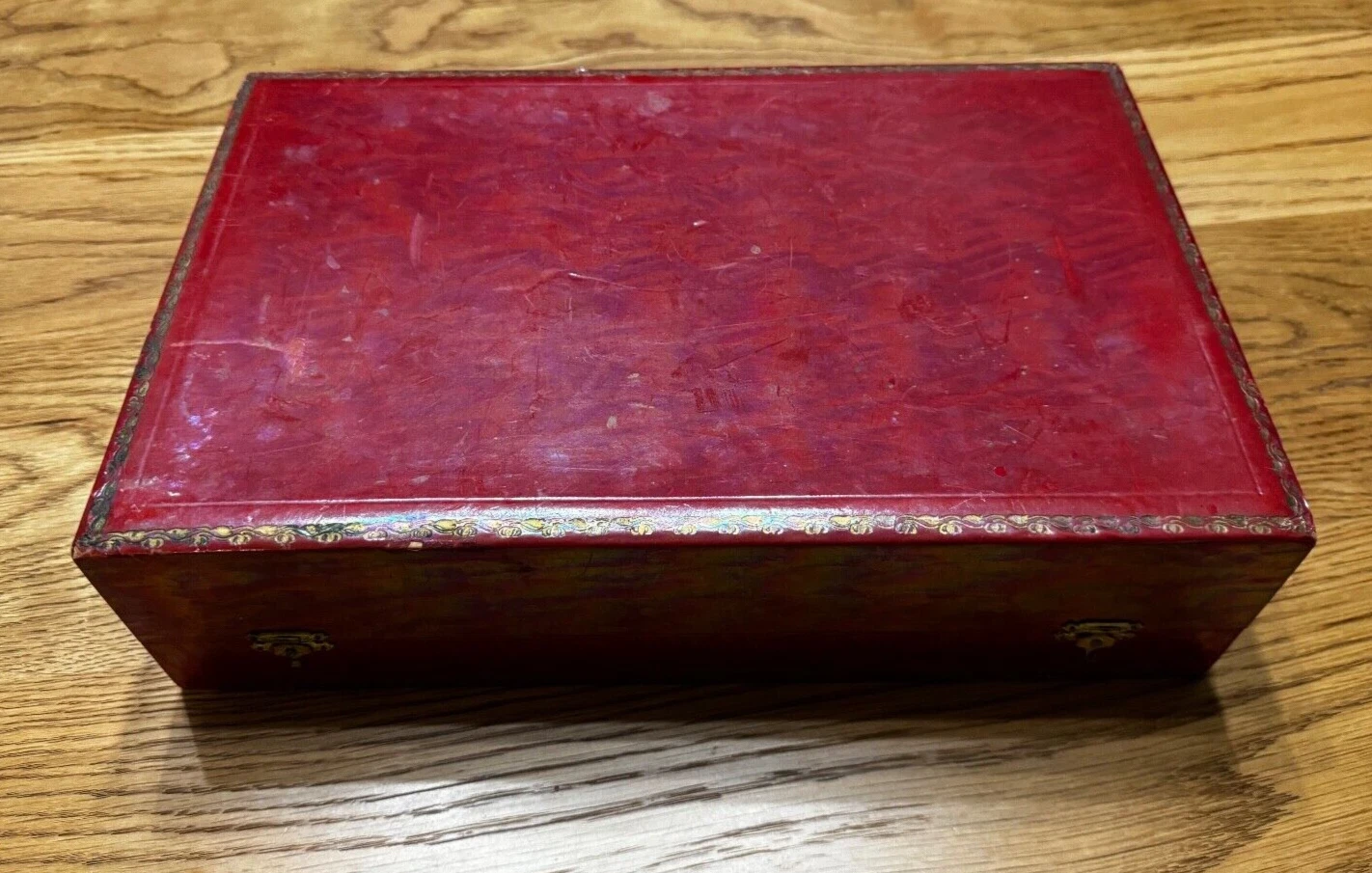
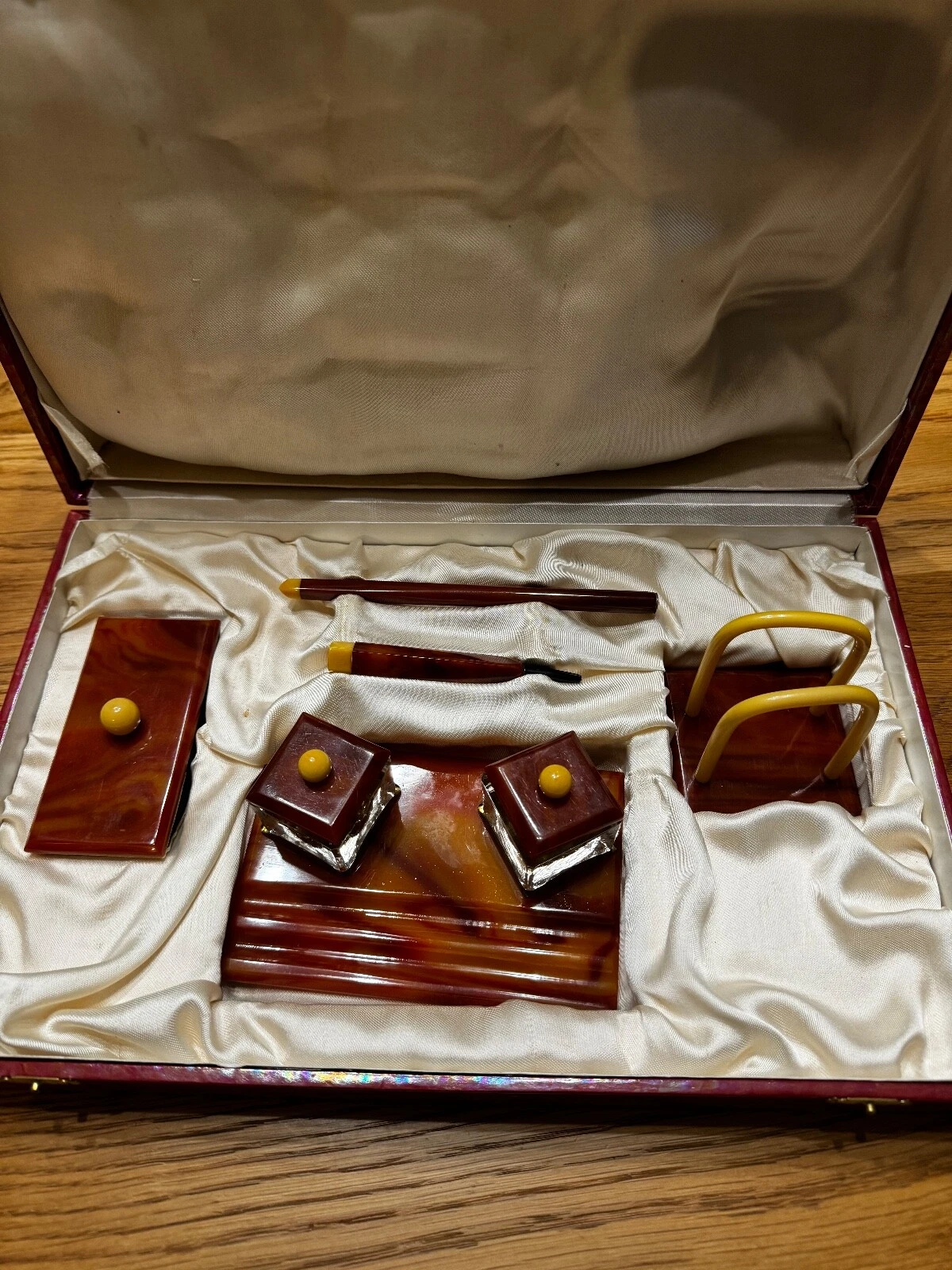
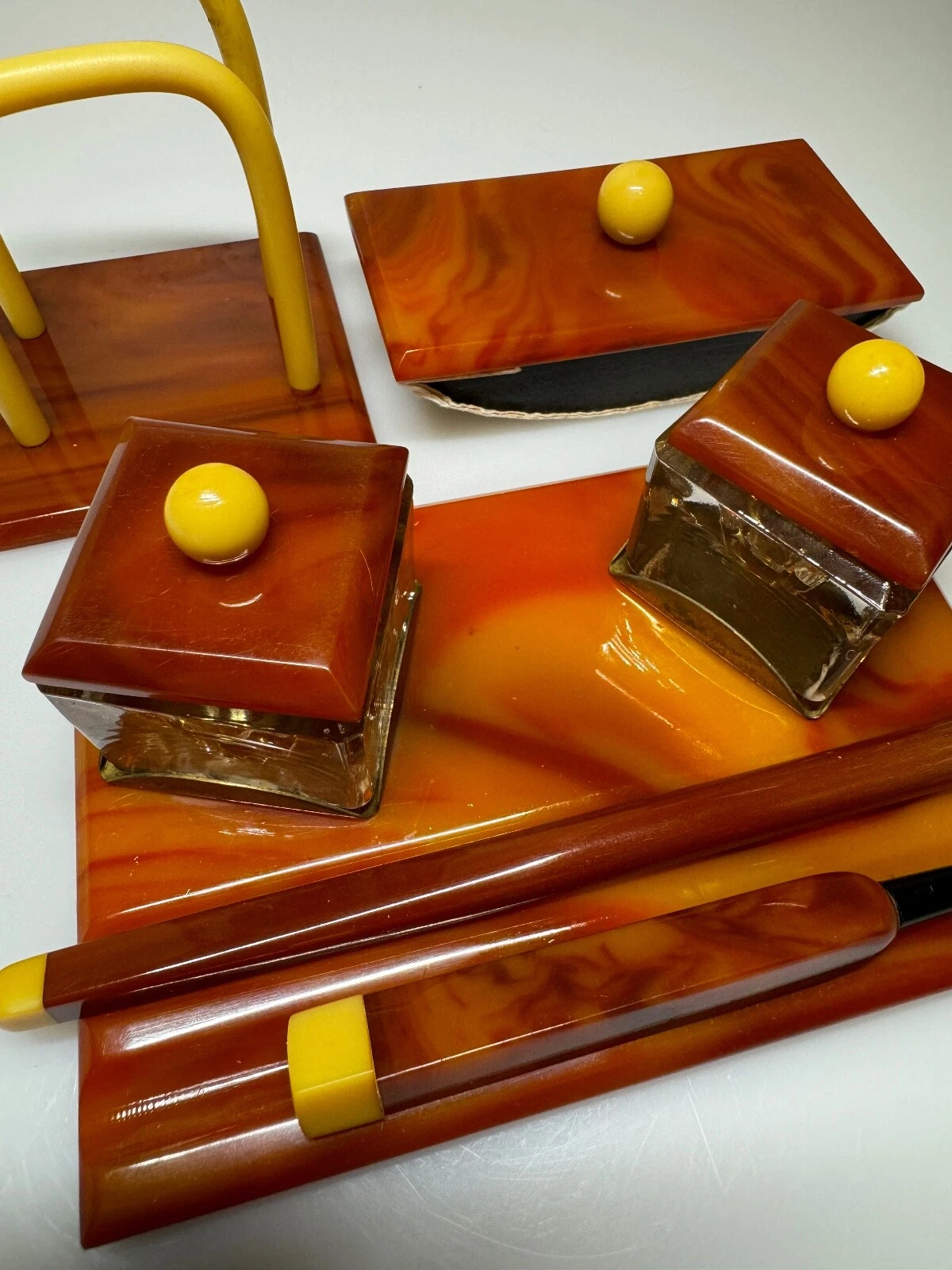
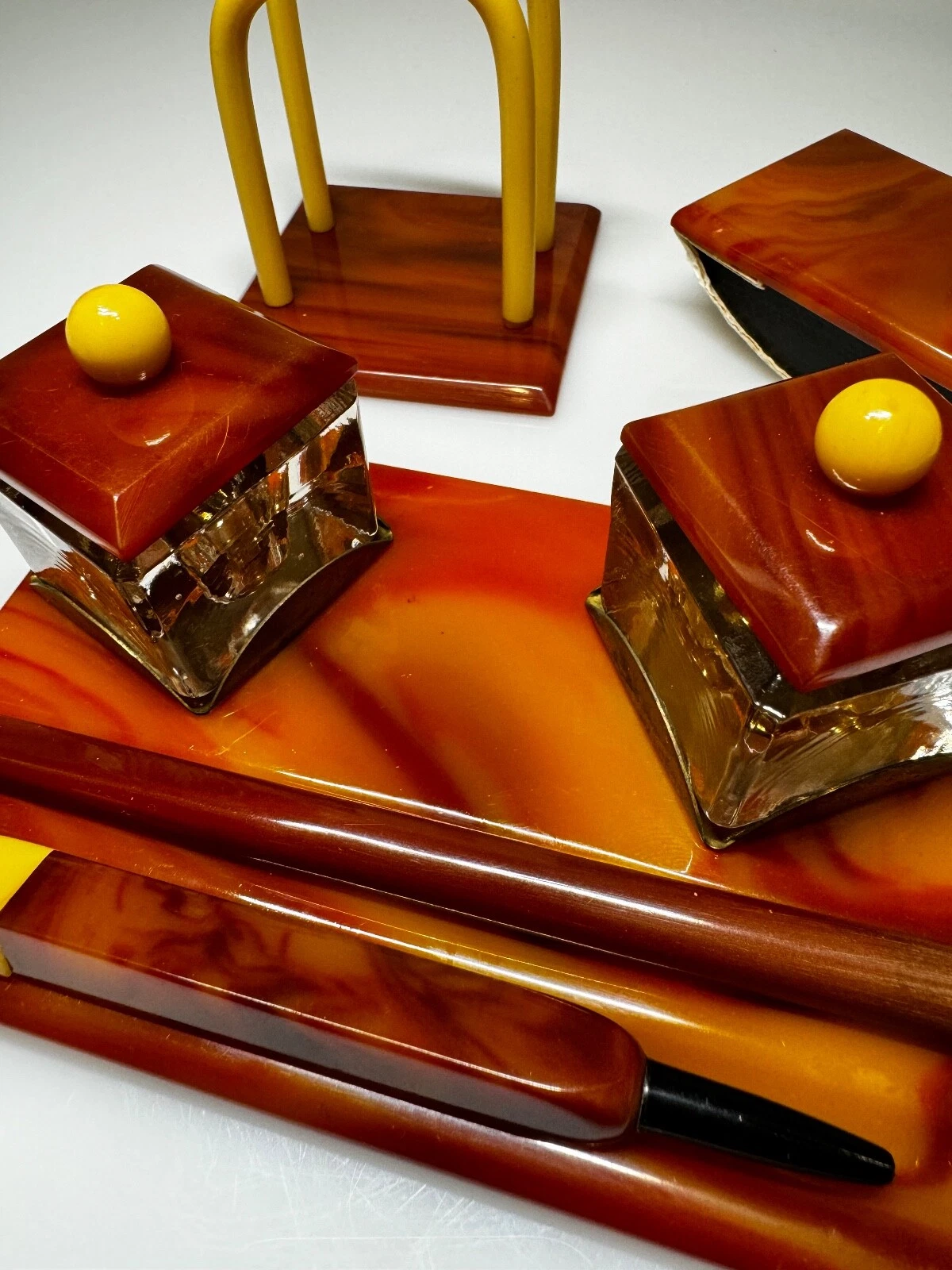
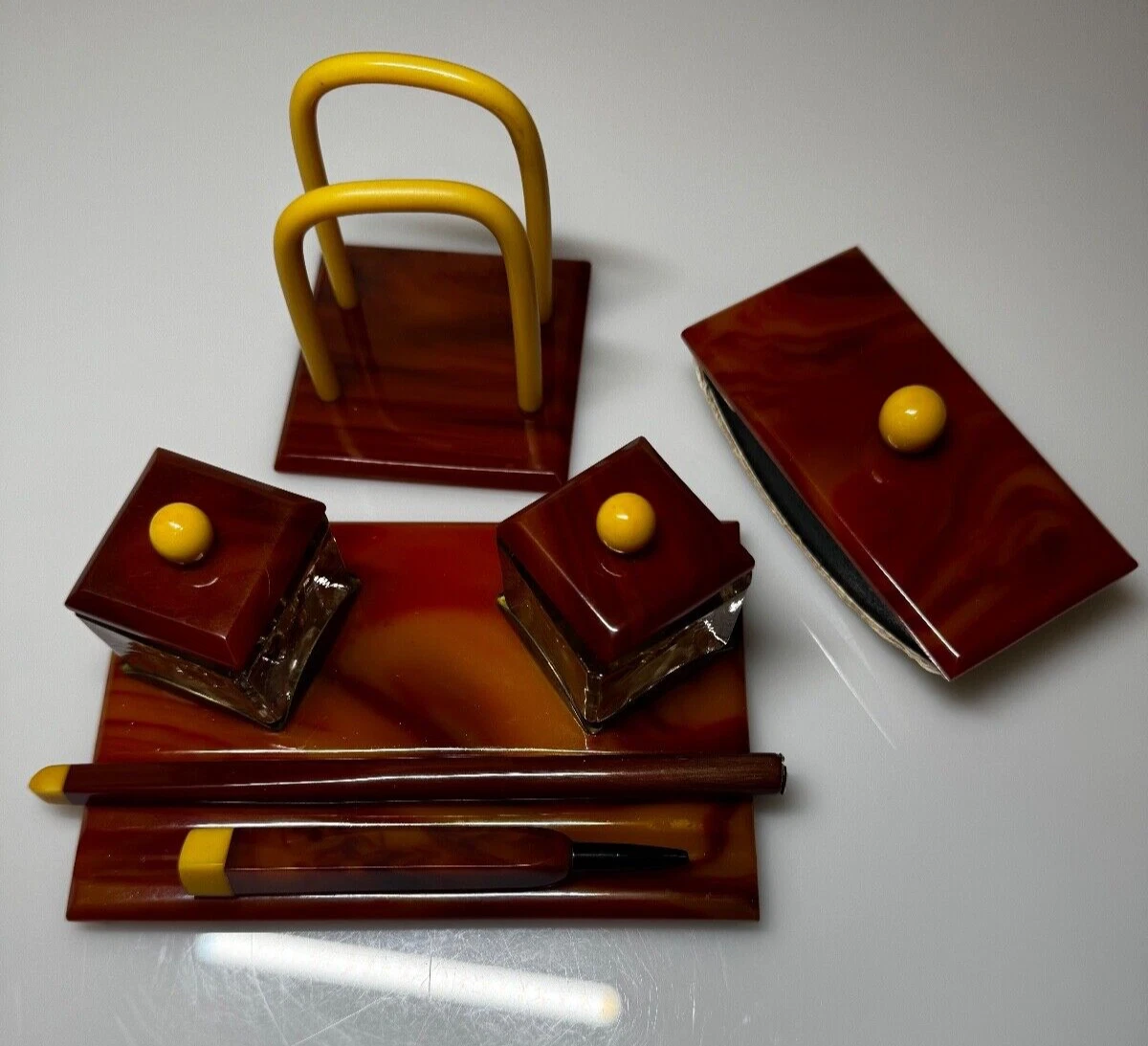
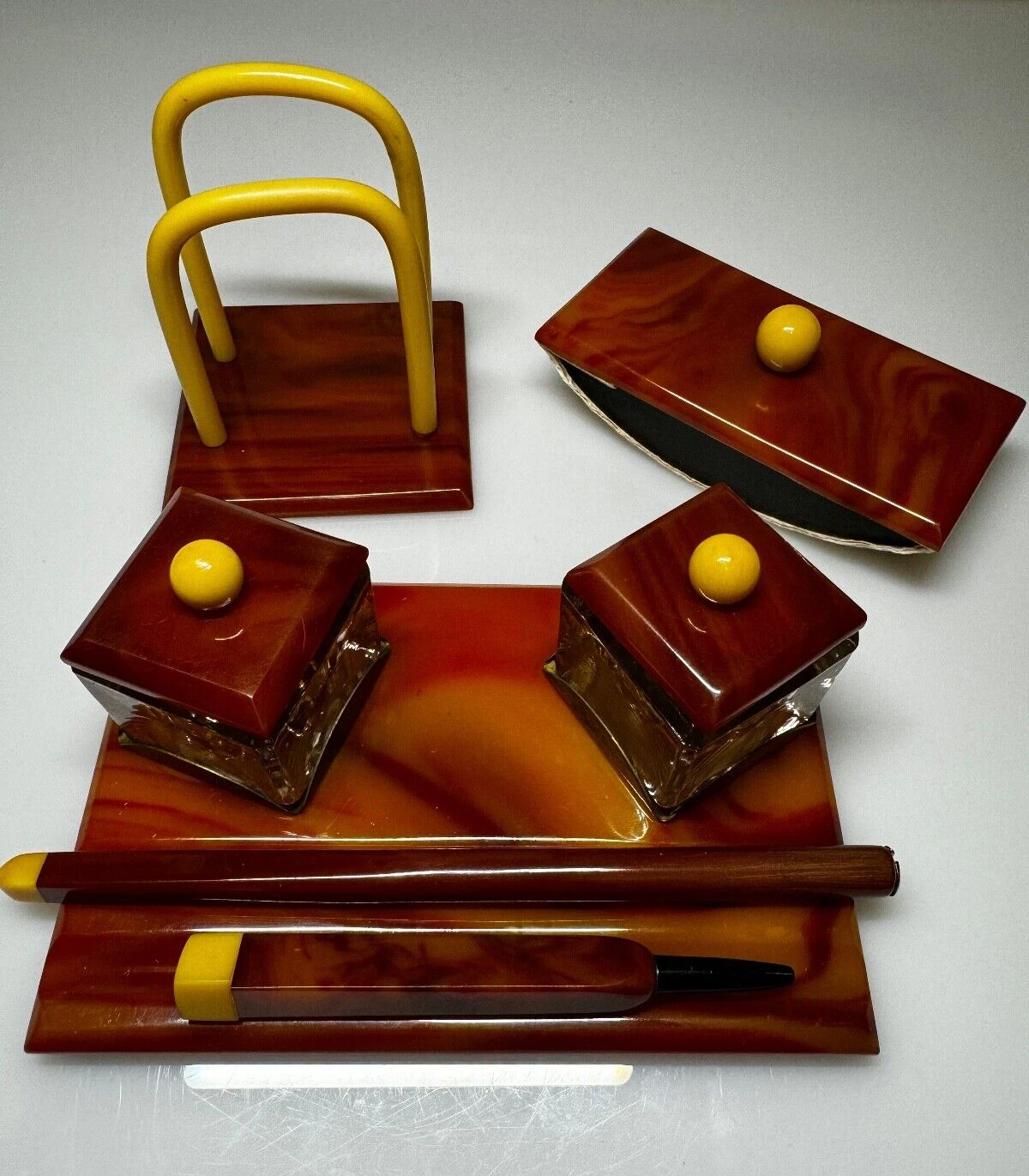
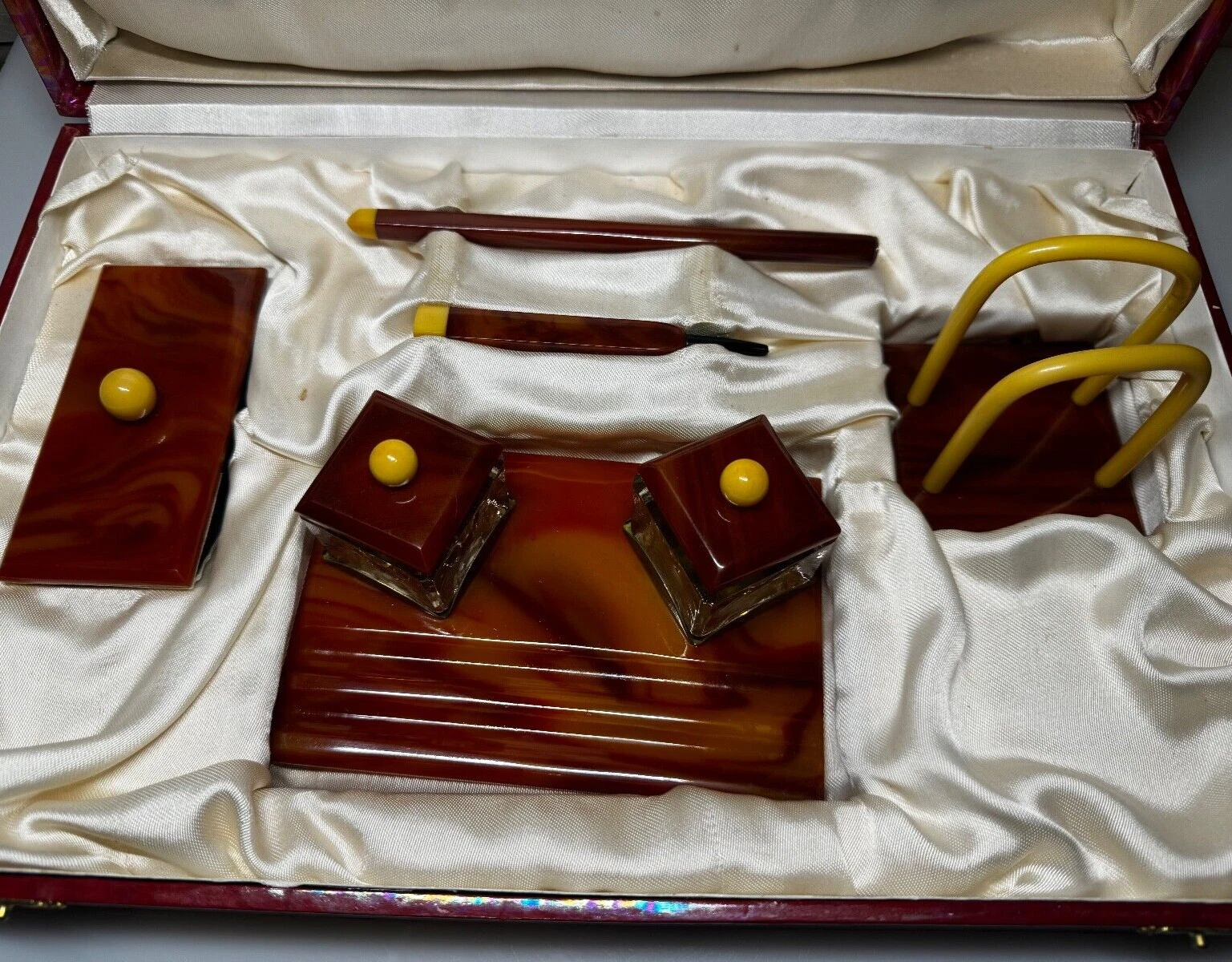
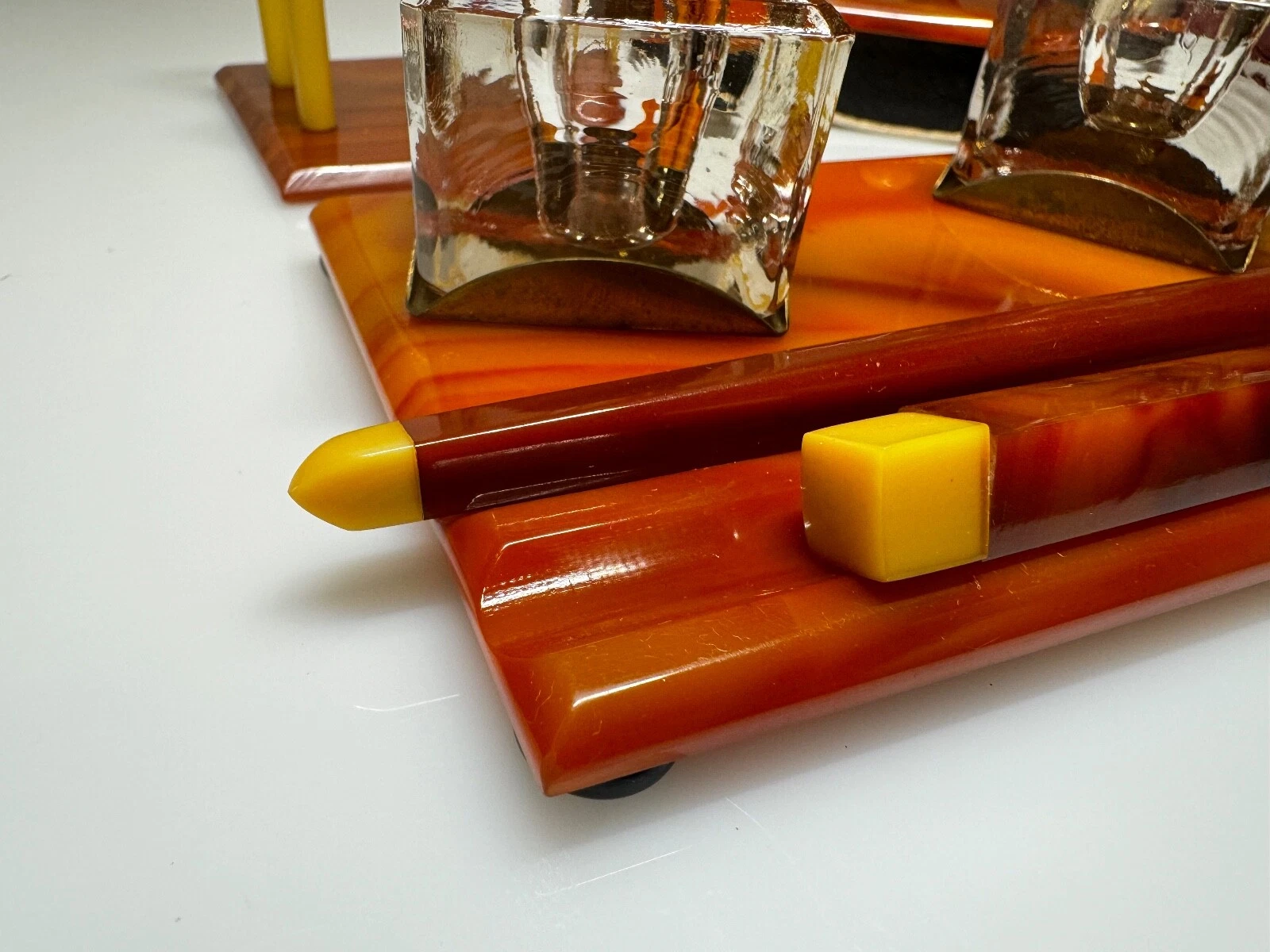
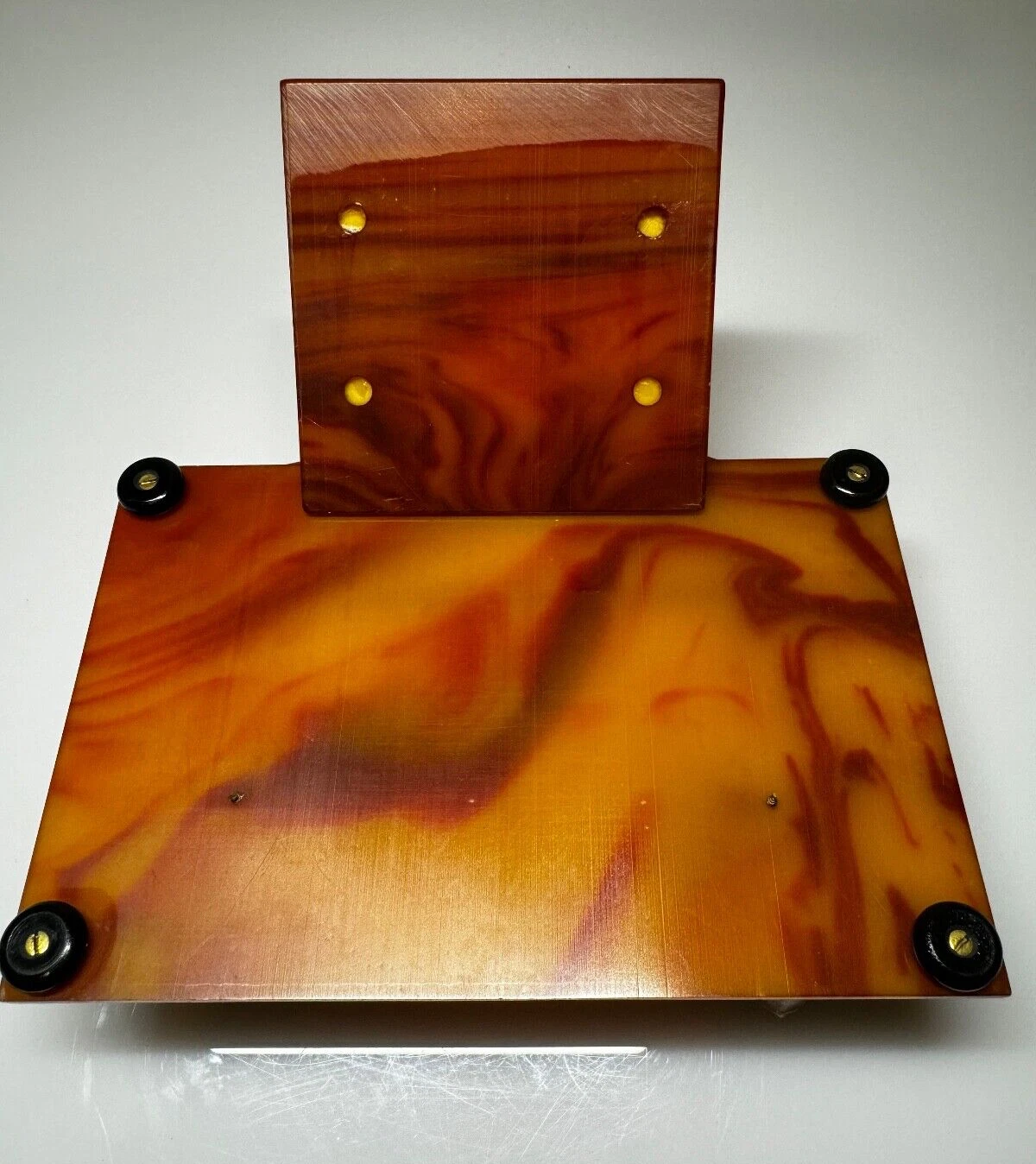
This is a striking Art Deco-era desk set, notable for its “butterscotch” and “cherry juice” marbled aesthetic. The set is housed in its original silk-lined presentation box, suggesting it was a high-quality gift or luxury item when new.
Included Items
The set consists of six primary pieces:
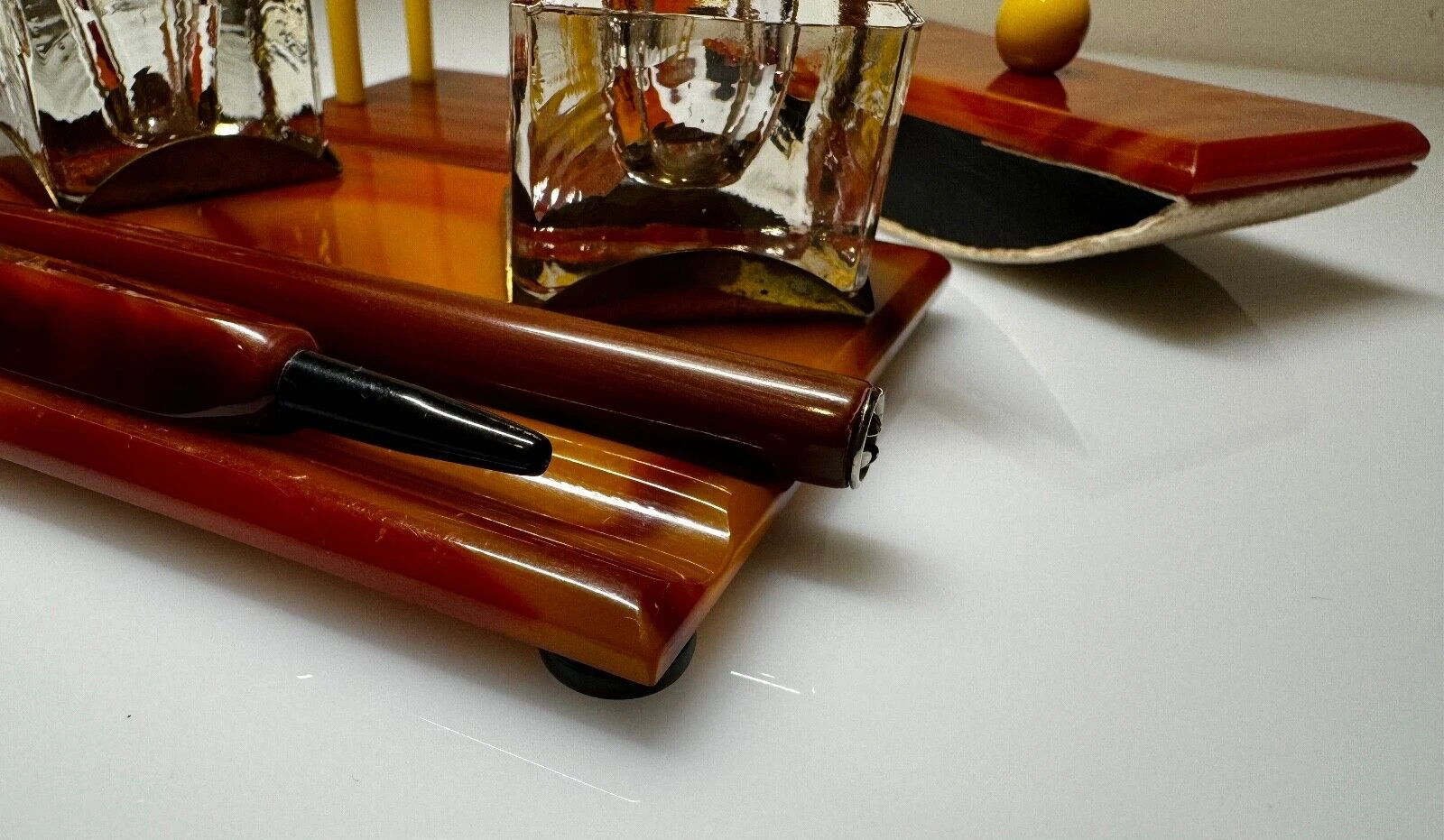
- Inkstand Base: A rectangular tray with a grooved pen channel at the front and two designated spots for inkwells.
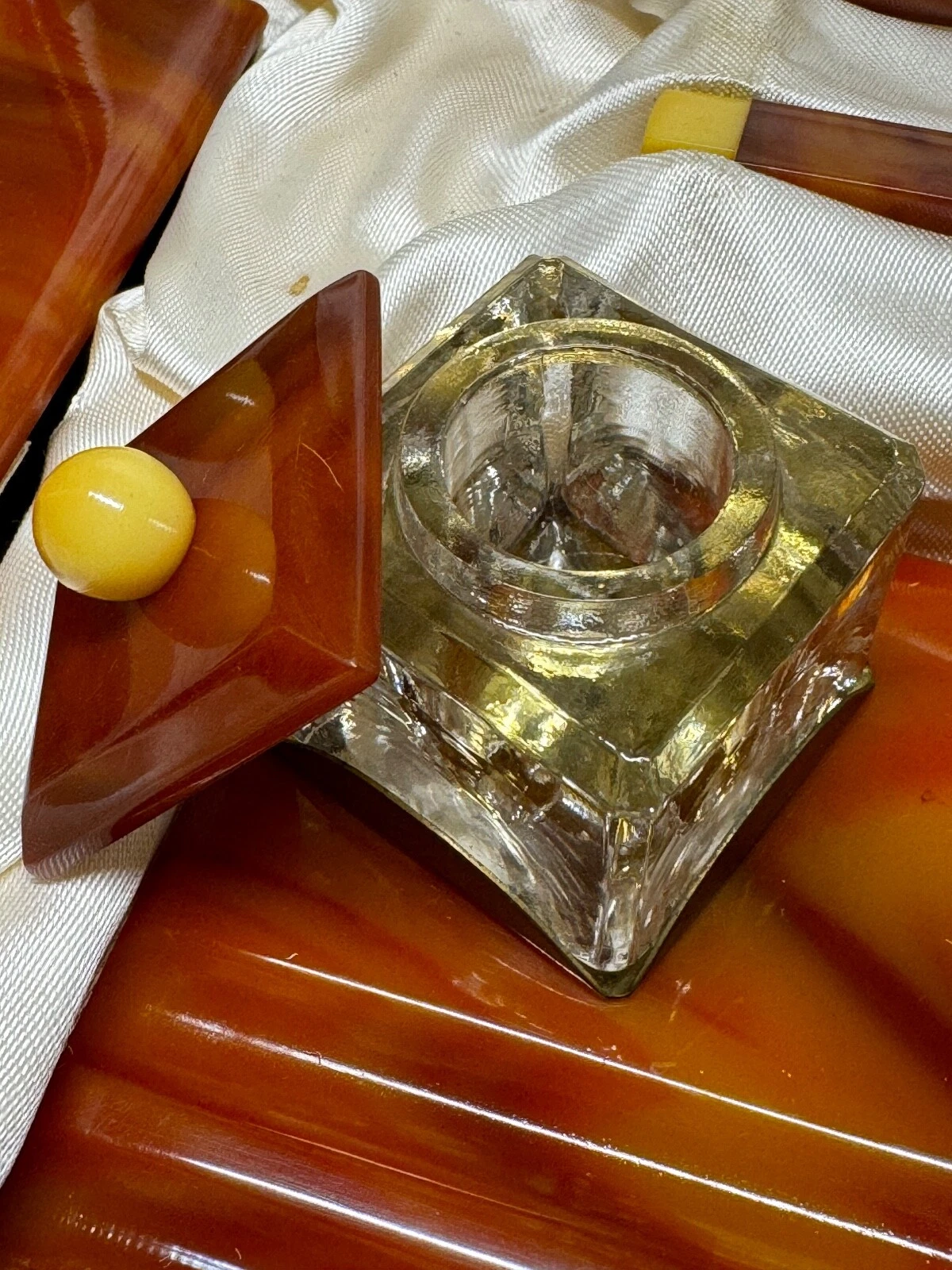
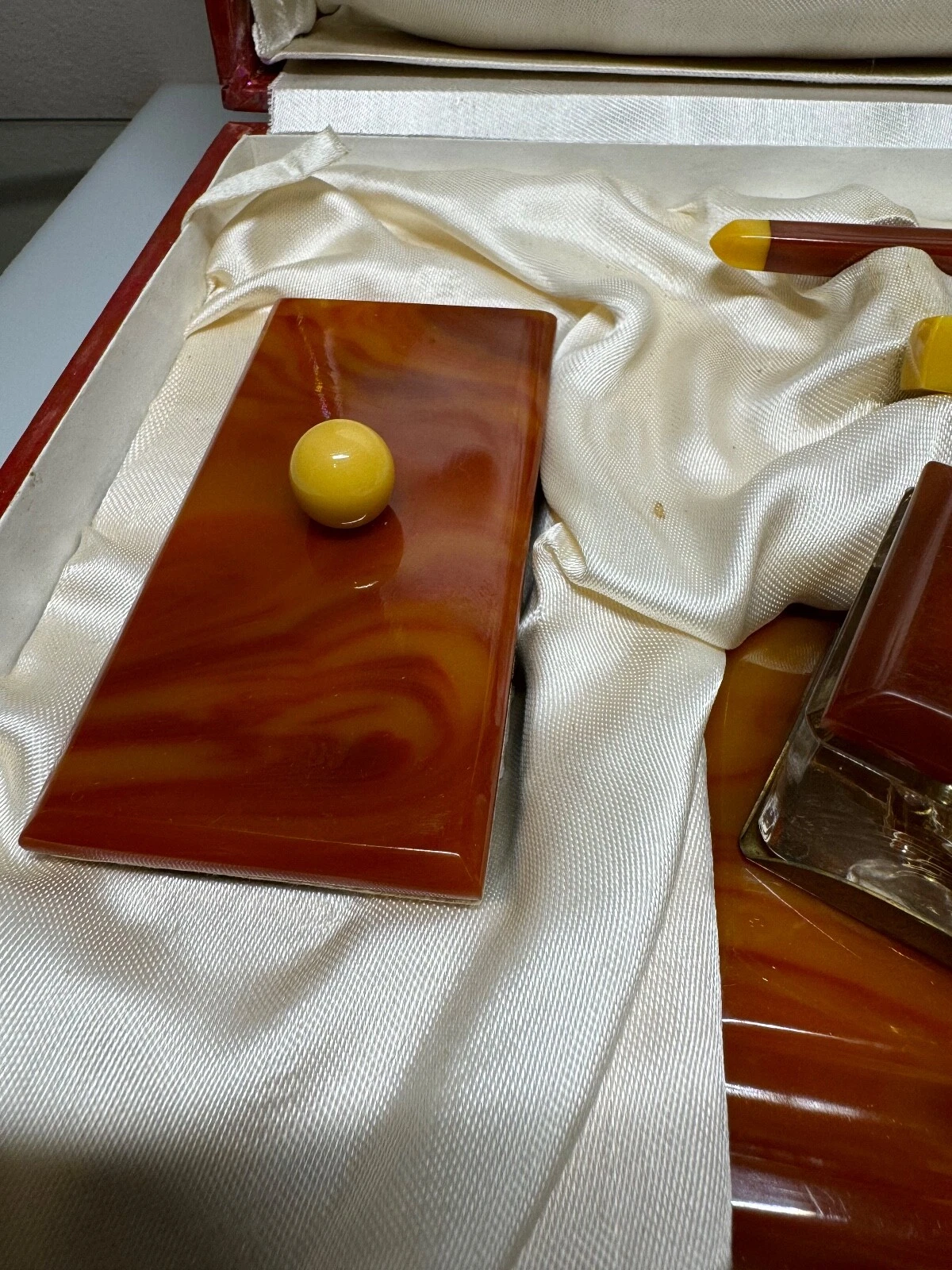
- Two Inkwells: Matching square glass wells with heavy, marbled lids topped by bright yellow spherical finials.
- Rocking Blotter: A rectangular blotter with a matching marbled top and a yellow knob.
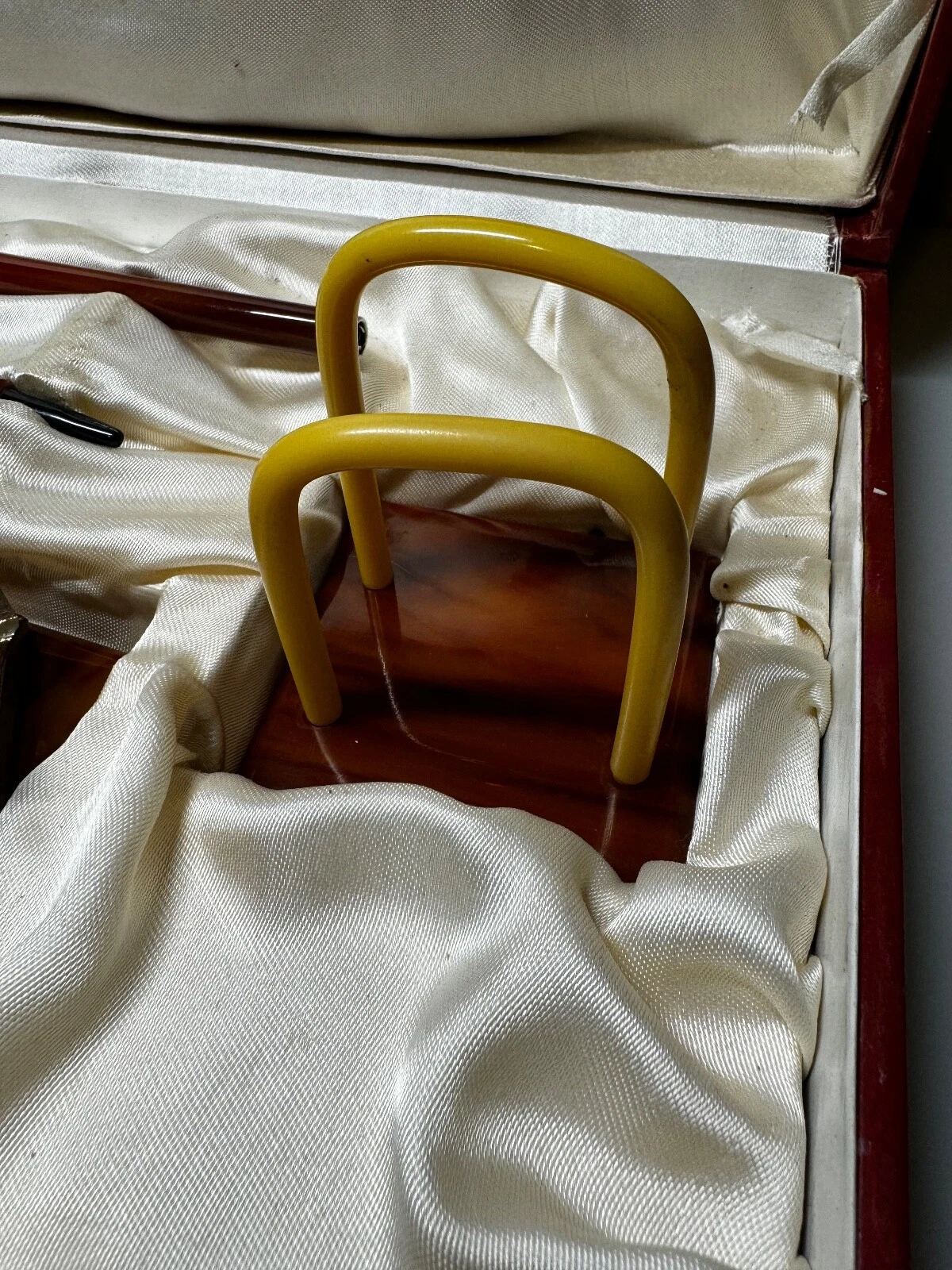
- Letter Rack: A base with two arched, butterscotch-yellow rails to hold envelopes or stationery.
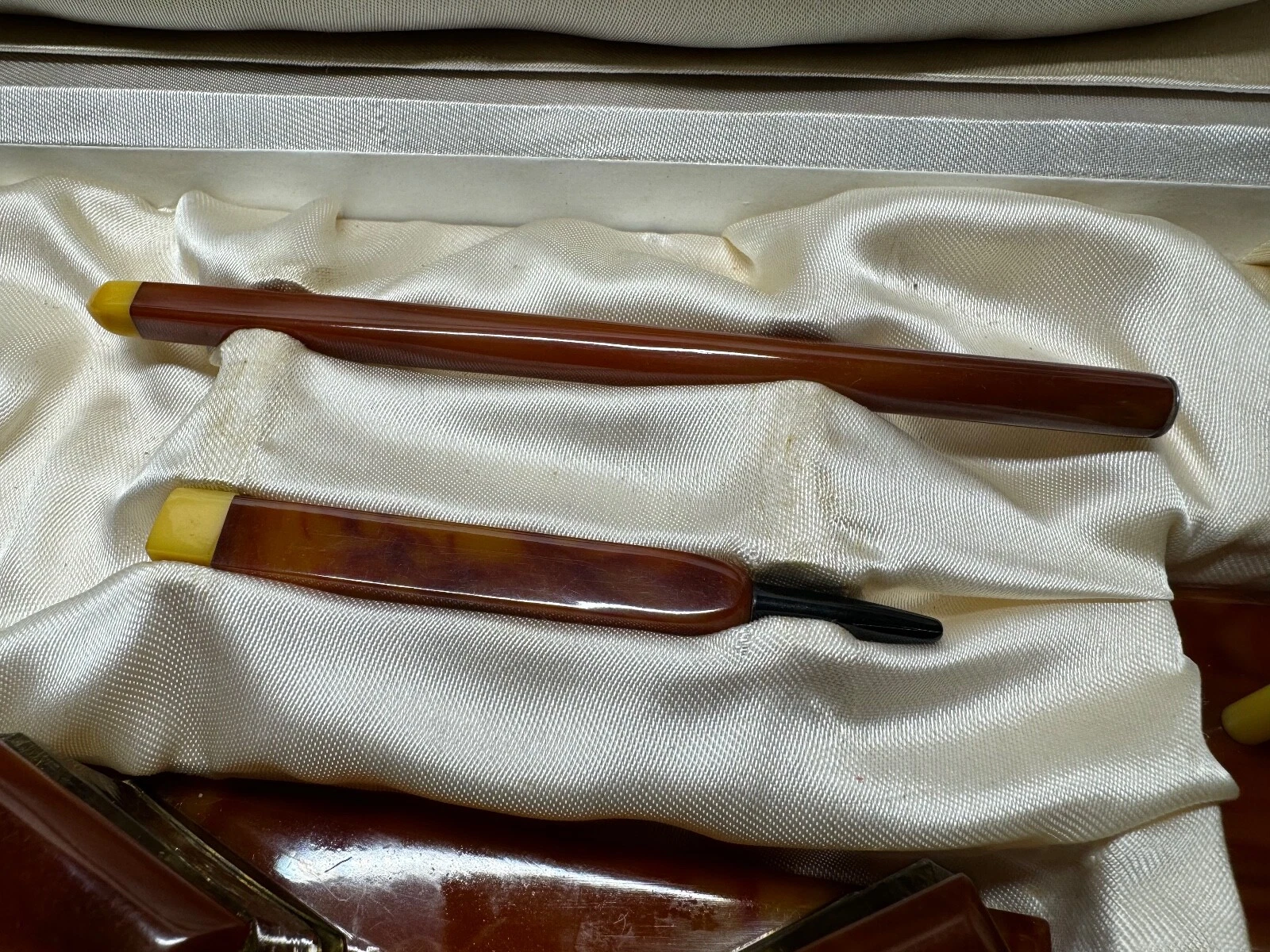
- Dip Pen: A sleek, tapered pen holder with a yellow tip.
- Letter Opener: A matching tool with a marbled handle.
Bakelite vs. Catalin: The Material Debate
While often grouped under the “Bakelite” umbrella, this set is most likely made of Catalin.
- The Difference: Both are phenolic resins, but the manufacturing process differs. Bakelite was usually mixed with fillers (like wood flour) and molded under high pressure, resulting in opaque, dark colors like black or brown. Catalin was cast without fillers and could be produced in translucent, vibrant, and “marbleized” colors.
- The Aging Factor: Catalin is famous for changing color over time. What you see as “butterscotch” or “cherry” today often started as white, alabaster, or bright red in the 1930s.
Origin and Era
- When: This set was produced during the 1930s, at the height of the Art Deco movement. The bold geometric shapes and the use of early plastics are hallmarks of that decade.
- Where: Sets of this style and material were predominantly manufactured in the United States (by companies like the American Catalin Corporation) or in Europe (notably Germany or France).
The presence of the original red leatherette presentation case is a rare find and significantly helps preserve the condition of these often-fragile early plastics.
Sold for $850 in February 2026
Content disclaimer. The information posted is the owner’s best knowledge and may not have been vetted by the SOIC. We welcome comments, corrections, and additions, working to make our website information comprehensive and accurate.
Join the Society of Inkwell Collectors (SOIC) – it’s free!
Founded in 1981 as a non-profit organization,
we are documenting inkwells (and accessories).
We’re here to help and inform!