


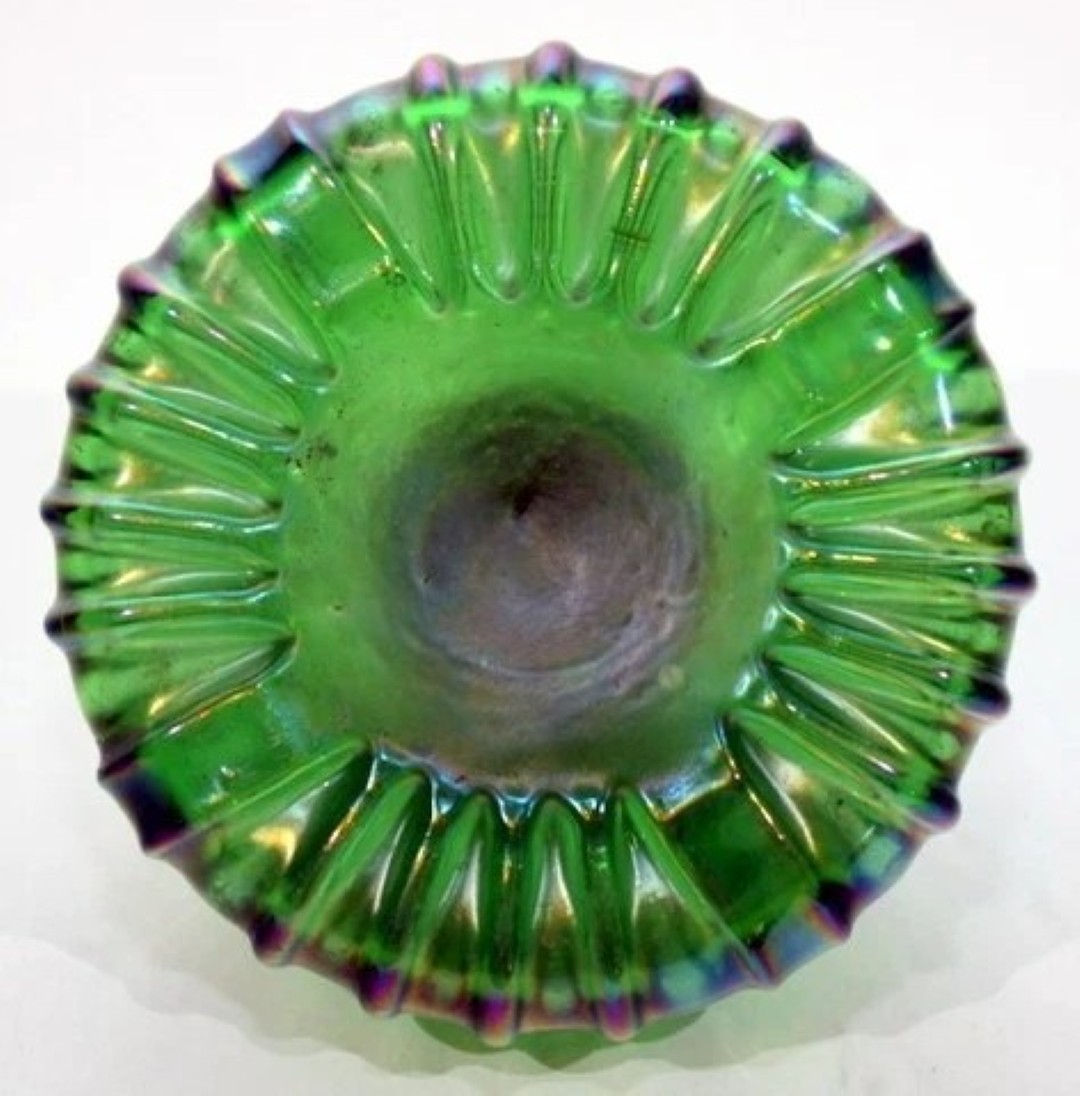
Iridescent Green Glass Inkwell by Kralik
| Categories | Bohemian Art Glass |
| Material | Brass, Glass |
| Markings | See Narrative |
| Manufacturer | Kralik |
| Origin | Bohemia |
| Date or Era | circa 1910 |
| Measuring | 4 ¼” diameter; 2 ¾” high |
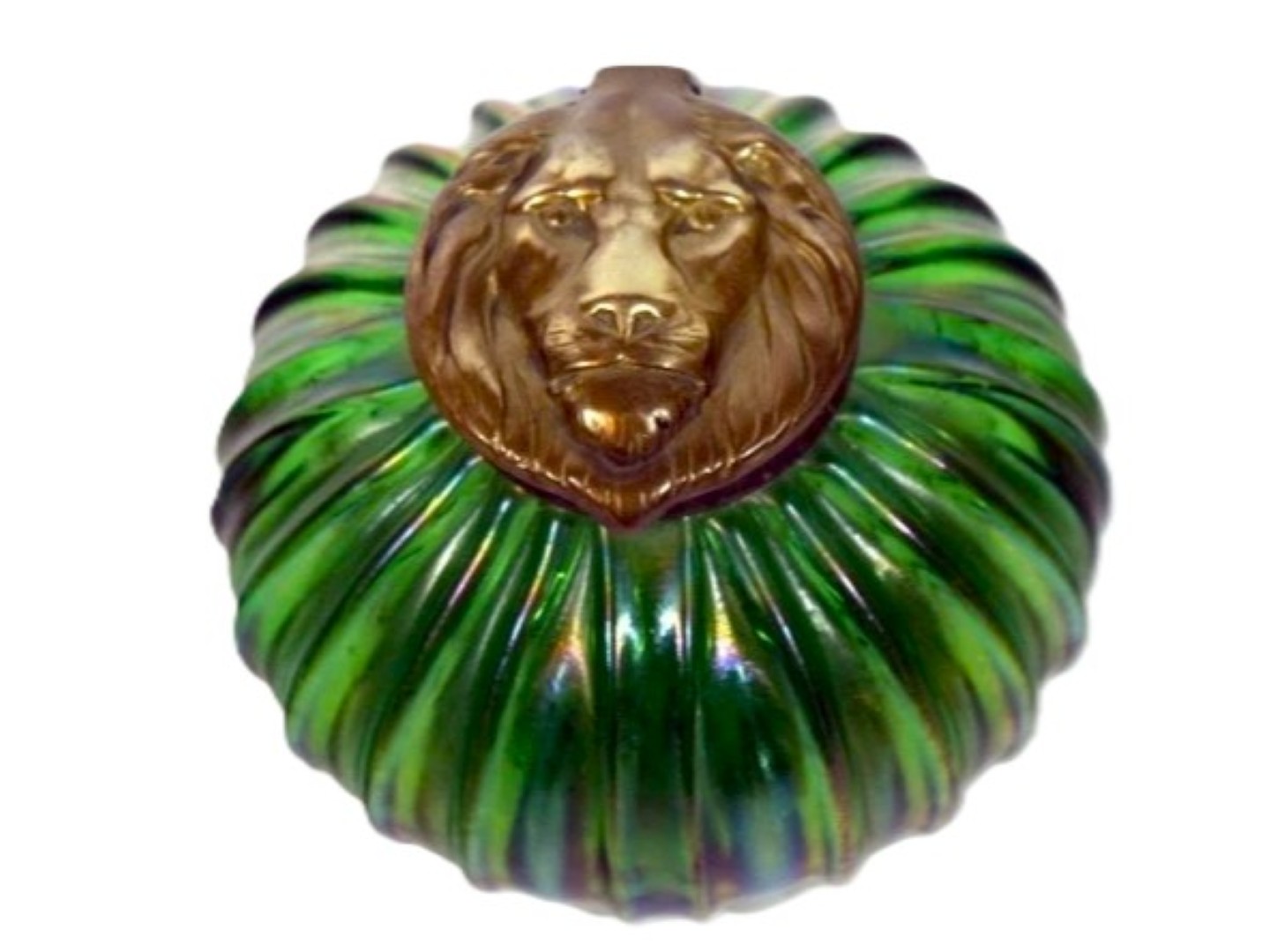
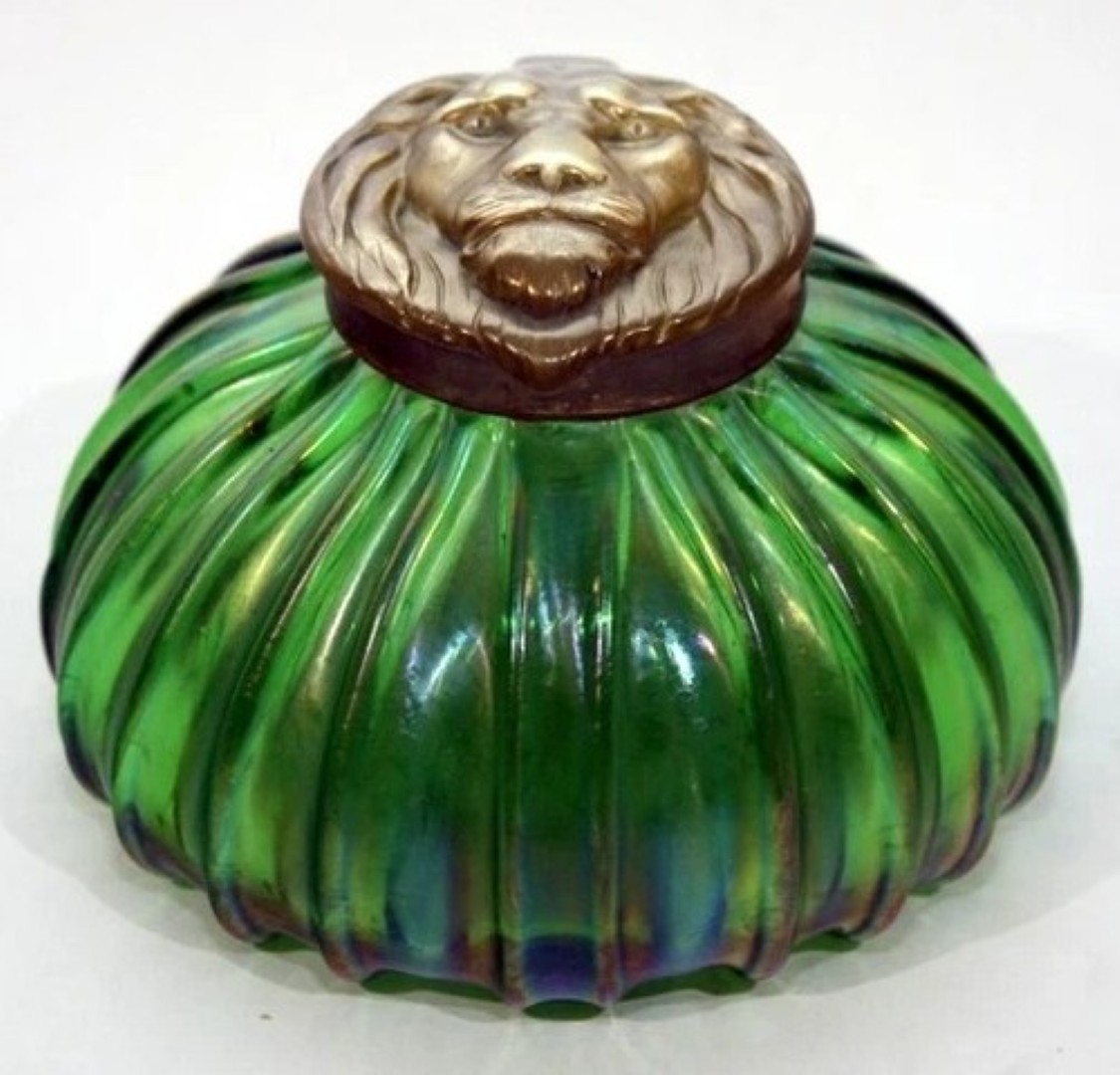
This Art Nouveau iridescent green glass inkwell is widely attributed to Wilhelm Kralik Söhne, a prominent Bohemian glassworks active in the late 19th and early 20th centuries.
Description of the Inkwell
- The Glass: The body is made of “Pampas” or “swirl” iridescent glass. It features a deep emerald-green base with a “ribbed” or “melon” shape, finished with a lustrous iridescence that reflects hues of blue, purple, and gold when it catches the light. This “oil-spot” or “rainbow” finish is a hallmark of high-end Bohemian glass from this period.
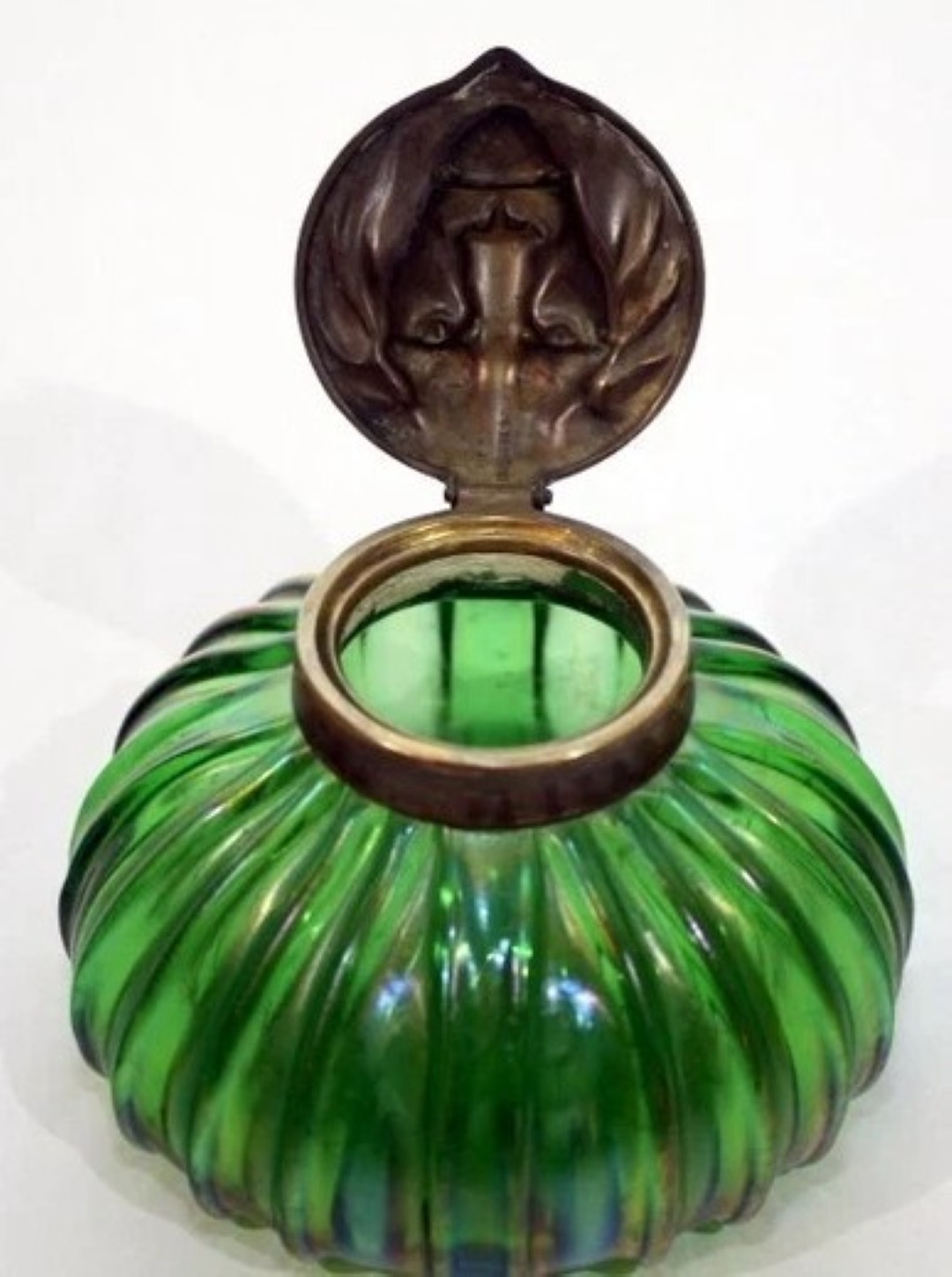
- The Lid: The hinged lid is cast from gilt brass in the form of a majestic lion’s head. The level of detail in the mane and the facial features is characteristic of the Jugendstil (the German/Austrian version of Art Nouveau) aesthetic.
Austrian and German Patent Registrations
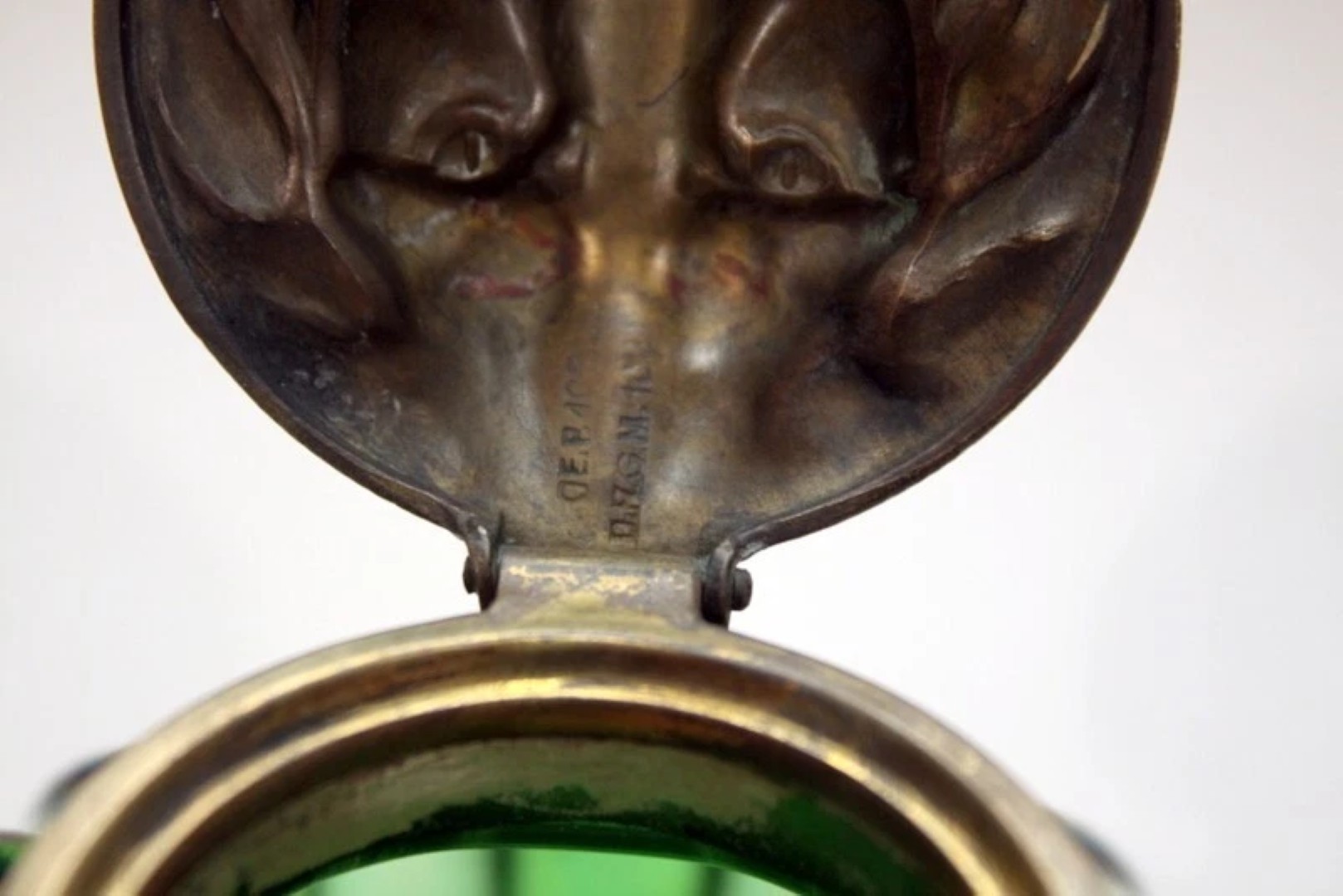
- O.E.P. 40555 (Austrian Patent)
The mark O.E.P. stands for Oesterreichisches Patent (Austrian Patent).
- Patent Year: 1910.
- The Details: Austrian Patent #40,555 was granted in early 1910 to G.H. Zechel for a “Verschlussvorrichtung für Tintenbehälter”—which translates to a closure/locking device for ink containers.
- This specific patent number appears frequently on high-quality Bohemian inkwells (Kralik, Loetz, and Rindskopf) because it covered the specific hinged spring-mechanism that keeps the lion-head lid sealed against the glass.
- D.R.G.M. 159… (German Design Registration)
The D.R.G.M. mark is a German utility patent (Deutsches Reichsgebrauchsmuster).
- Registration Year: If the number starts with 159, it points to a registration year of 1901.
- Why Two Dates? It was very common for these pieces to feature hardware that combined an older, widely-used German design registration (the hinge/base shape) with a newer Austrian patent (the specific airtight closure mechanism).
- This suggests this inkwell was likely manufactured between 1910 and 1914, just before the start of WWI.
Verification of the “Lion” Design
While the glass is certainly Kralik “Pampas,” the lion-head lid is a “stock” metal piece that Kralik purchased from a specialized foundry.
- The lion was a popular motif for the foundry of Gebrüder Bing and other Nuremberg-based metalworkers who supplied Bohemia’s glass giants.
- The iridescence on this piece is particularly well-preserved. This green “oil-spot” finish was designed to mimic the shimmer of ancient Roman glass that had been buried for centuries.
Sold for $700 in February 2026
Content disclaimer. The information posted is the owner’s best knowledge and may not have been vetted by the SOIC. We welcome comments, corrections, and additions, working to make our website information comprehensive and accurate.
Join the Society of Inkwell Collectors (SOIC) – it’s free!
Founded in 1981 as a non-profit organization,
we are documenting inkwells (and accessories).
We’re here to help and inform!