

WMF Butterfly Inkstand
| Categories | Art Nouveau |
| Type | Butterfly |
| Material | Glass, Silverplate |
| Markings | See Narrtive |
| Manufacturer | WMF |
| Origin | Germany |
| Date or Era | circa 1900 |
| Measuring | 7 ⅛” x 6 ⅝” x 1 ⅝” high |
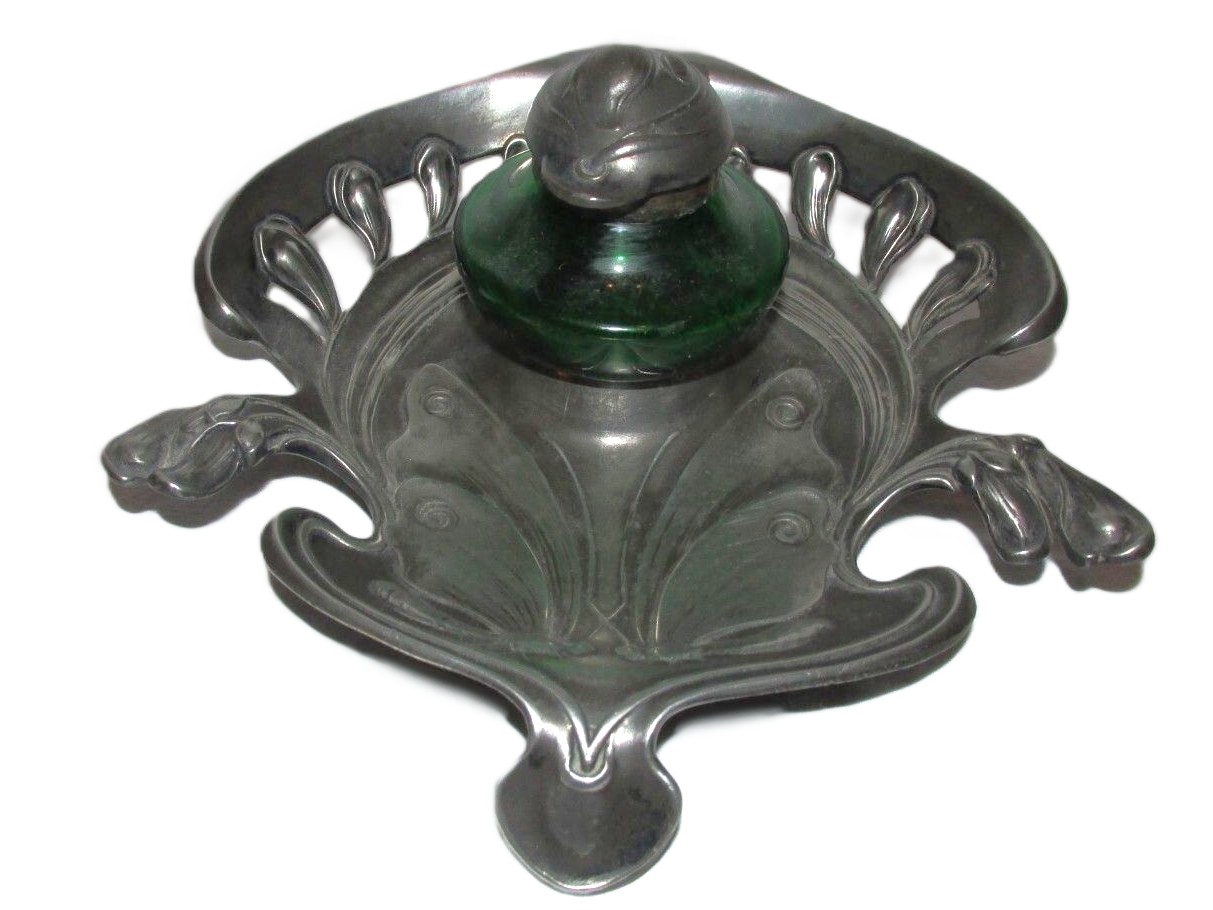
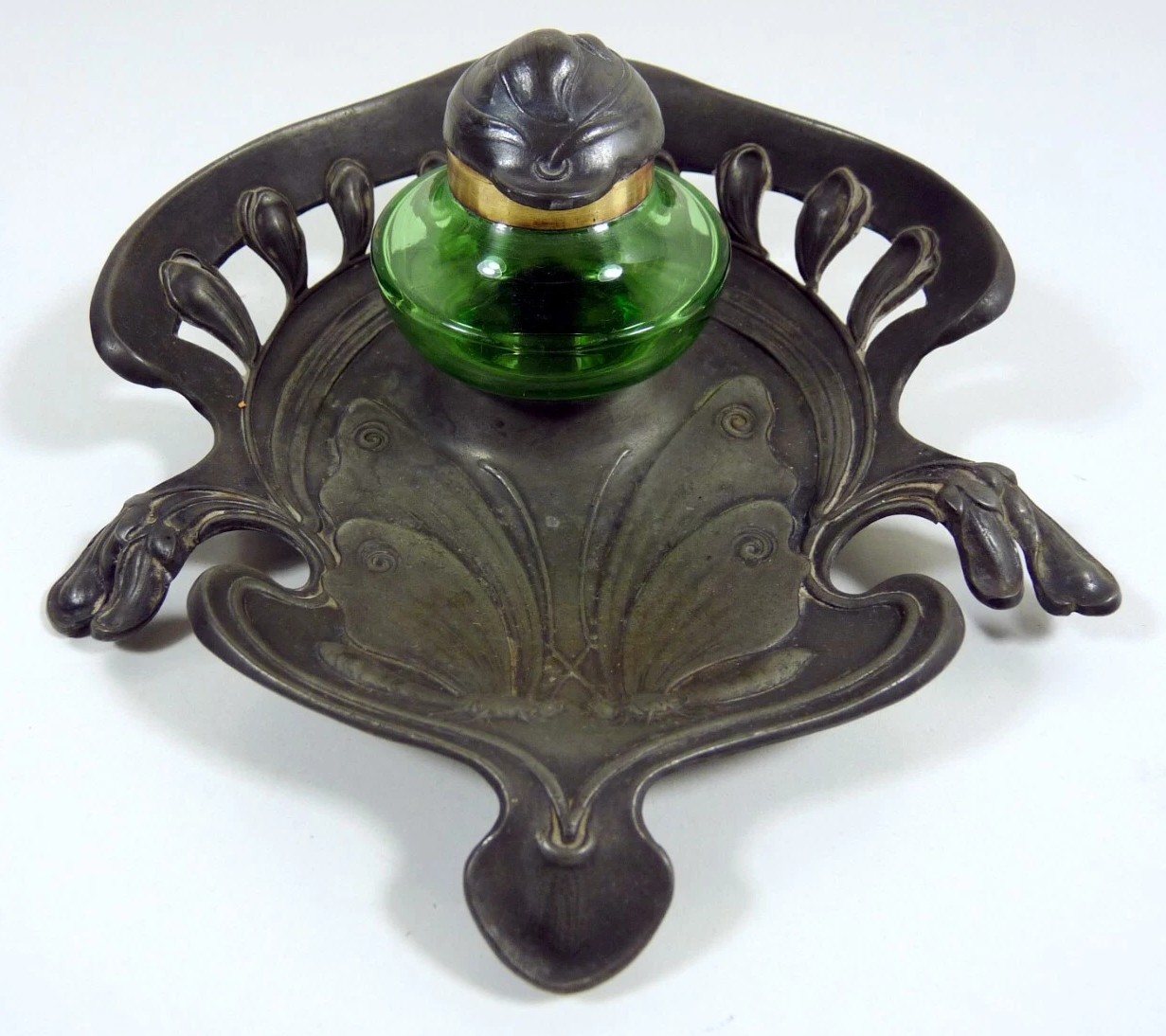
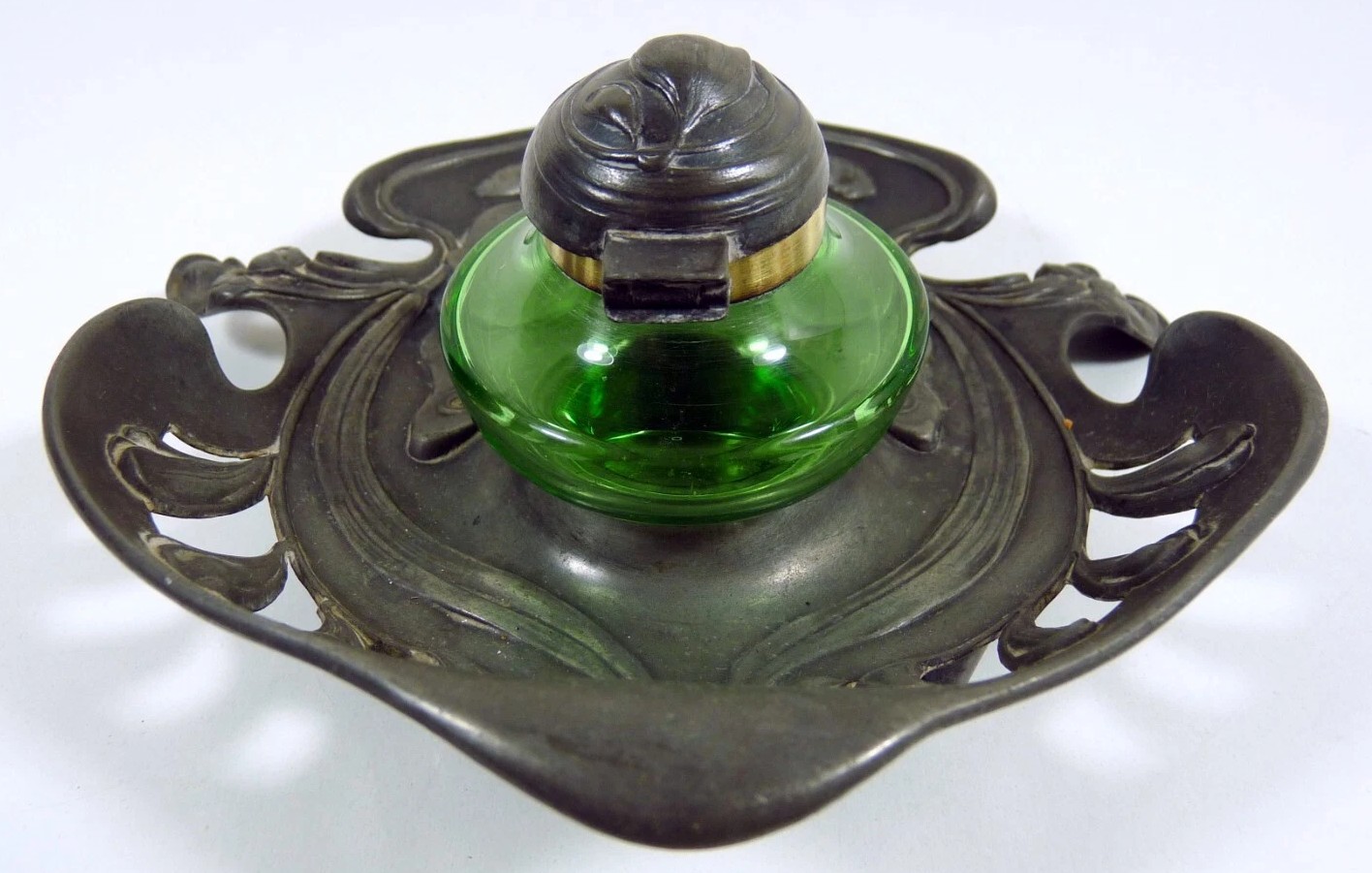
This Art Nouveau (specifically the German Jugendstil style) metalwork wasmade by the renowned German manufacturer WMF (Württembergische Metallwarenfabrik). Based on the hallmarks and design, this piece dates to the height of the Art Nouveau movement, approximately 1900–1910.
The Meaning of the Hallmarks
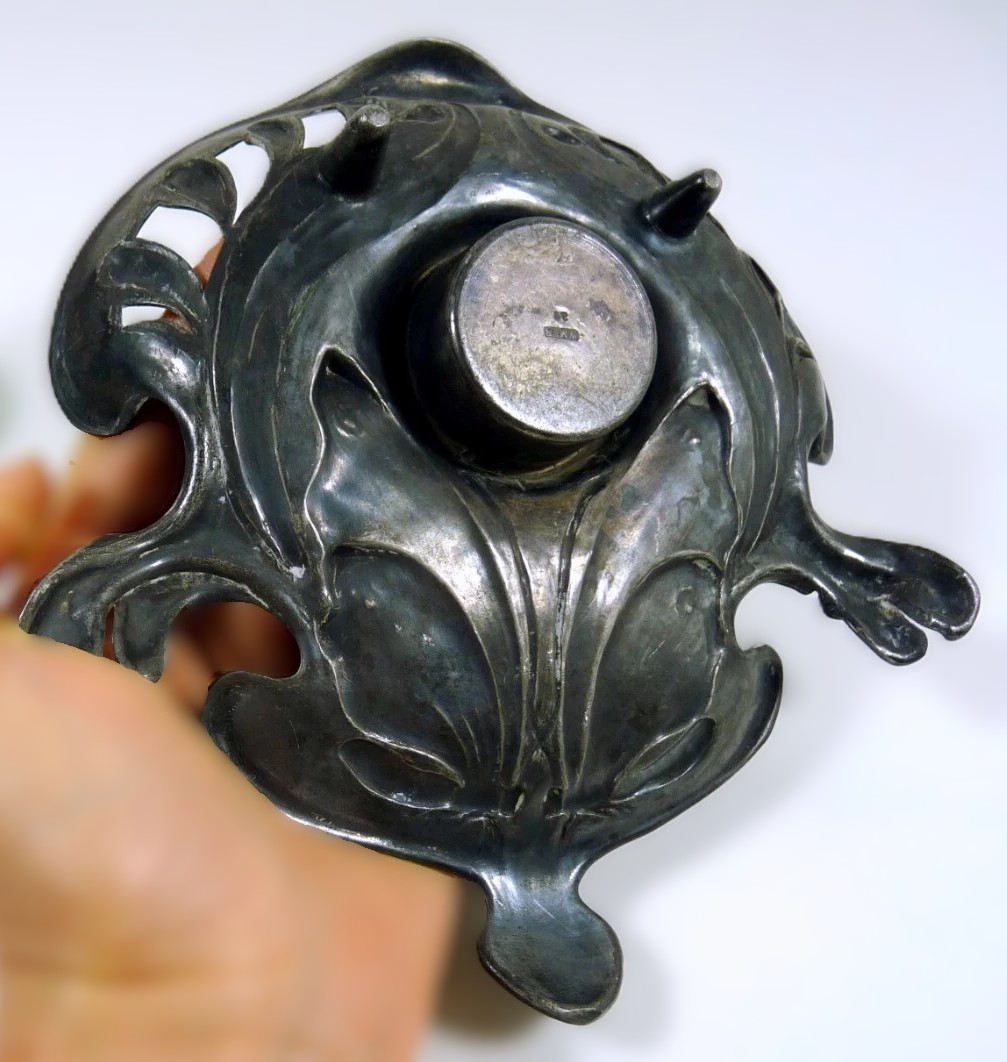
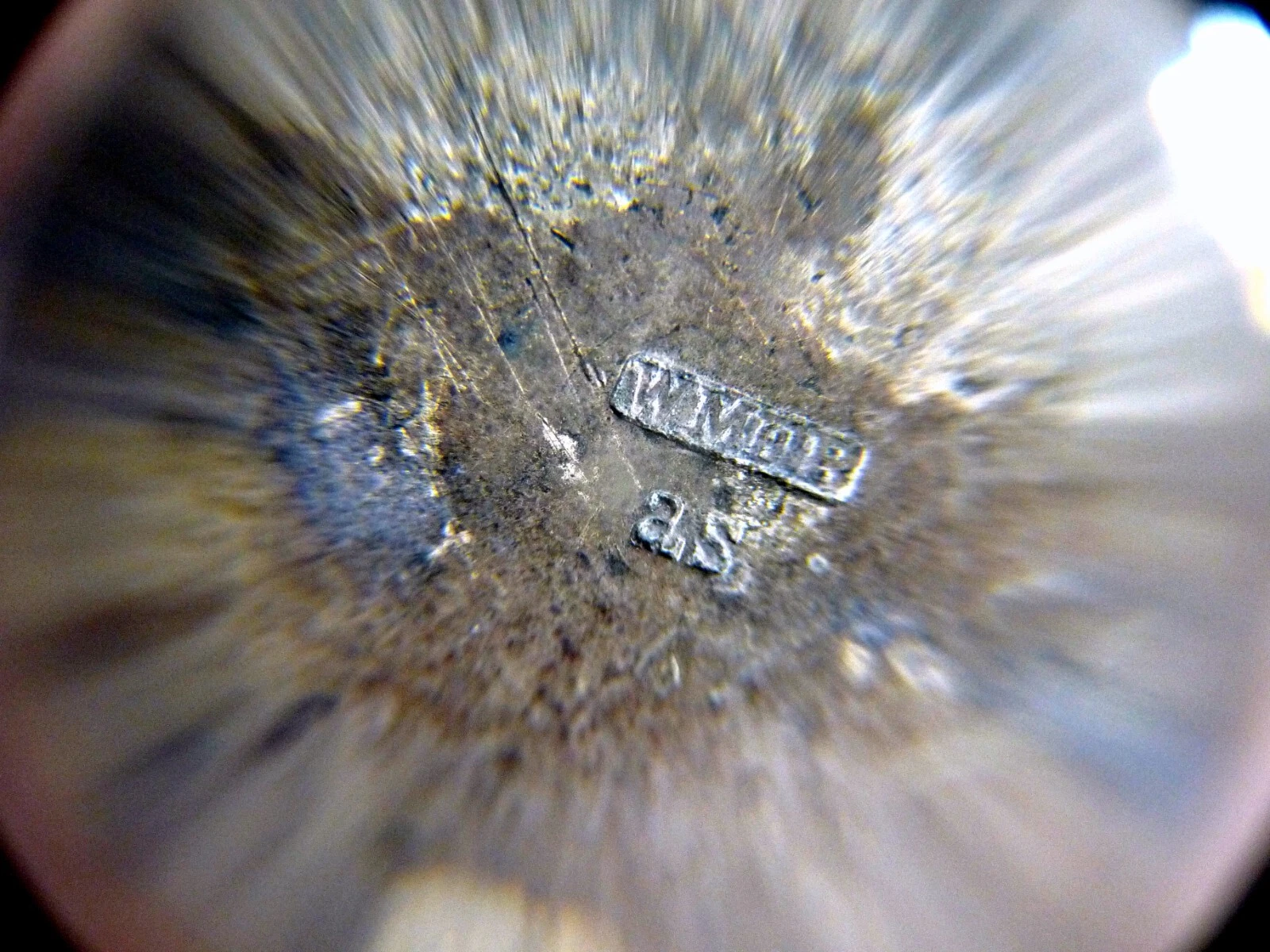
The marks on its underside provide specific details about the manufacturer and the materials used:
- WMFB: This is a composite mark. WMF represents the company name. The “B” suffix indicates the base metal is Britannia Metal, a high-quality tin-containing alloy (similar to pewter) that was the preferred base for WMF’s detailed Art Nouveau castings.
- as: This stands for “Antique Silver” (Antiksilber-Finish). It means the silver plating was intentionally oxidized or darkened in the recesses during manufacturing to highlight the relief work and give it an “antique” appearance right out of the factory.
Design and Composition
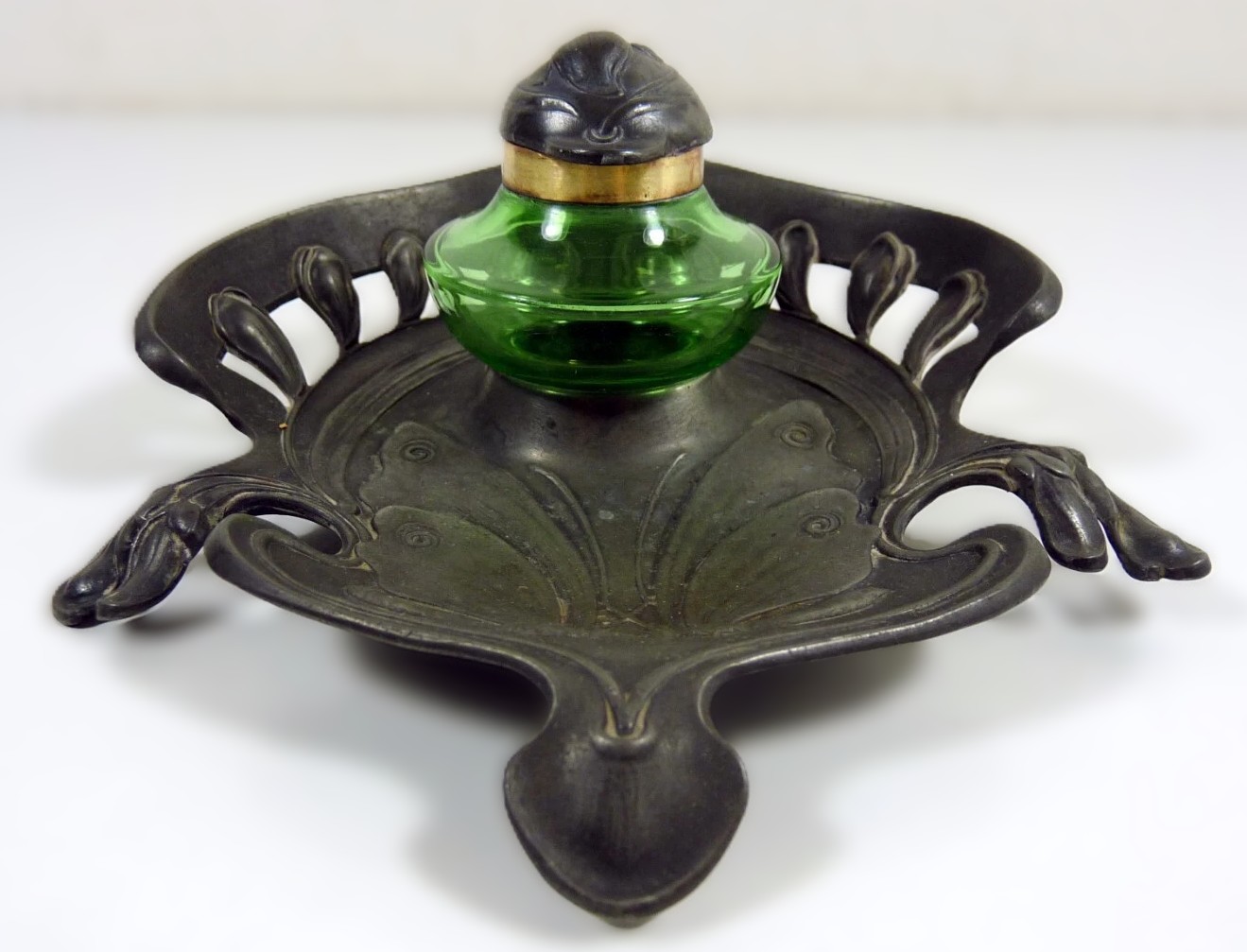
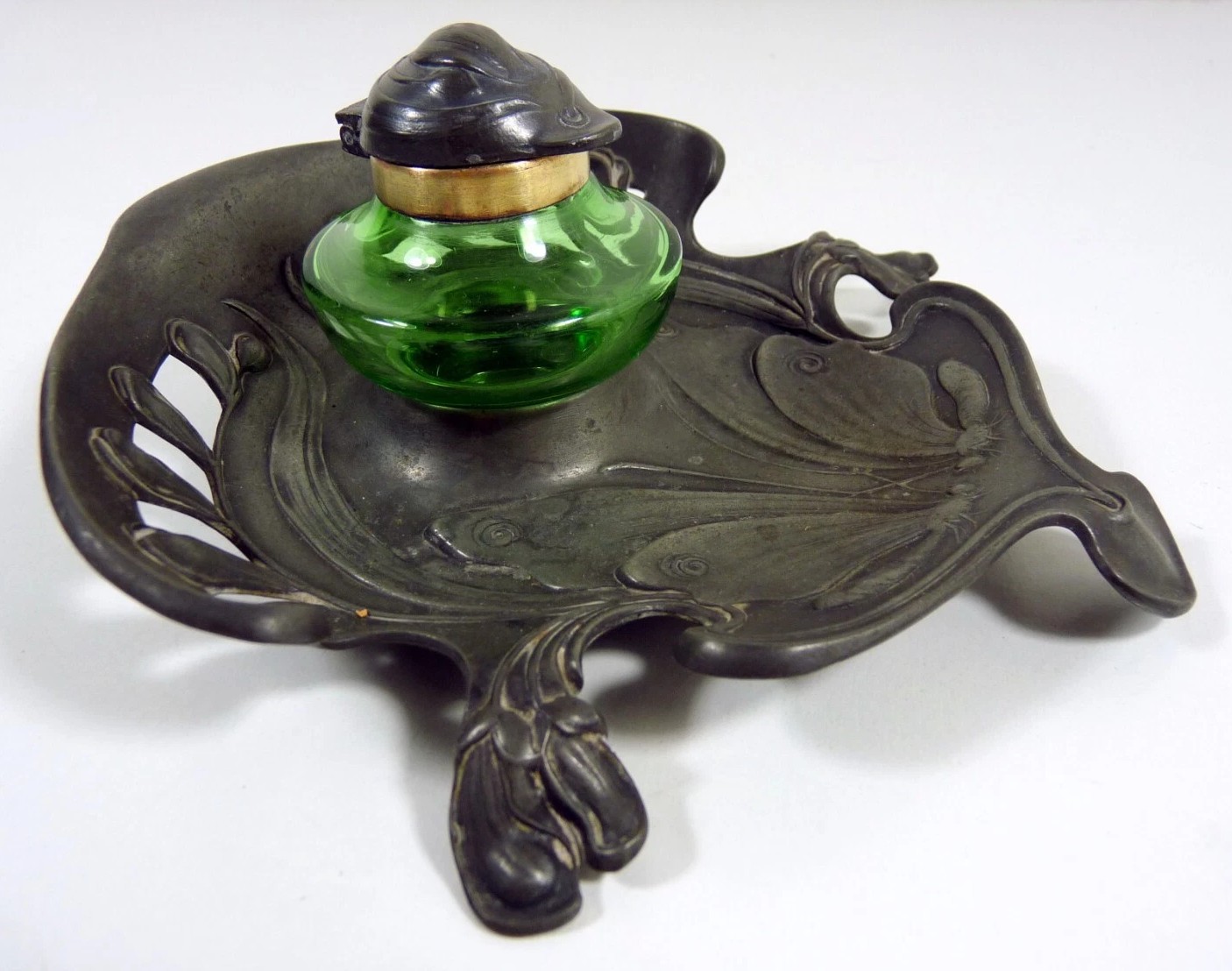
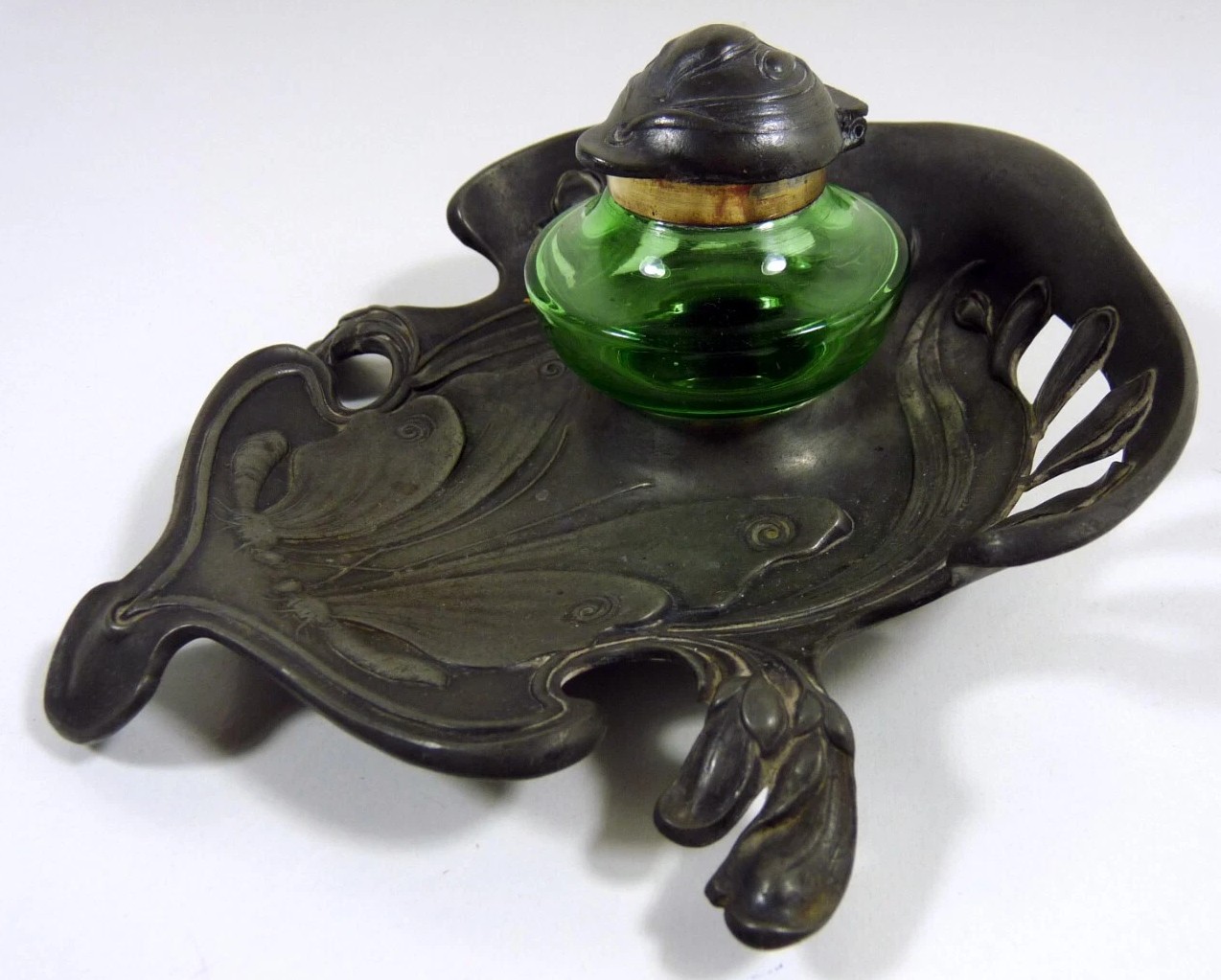
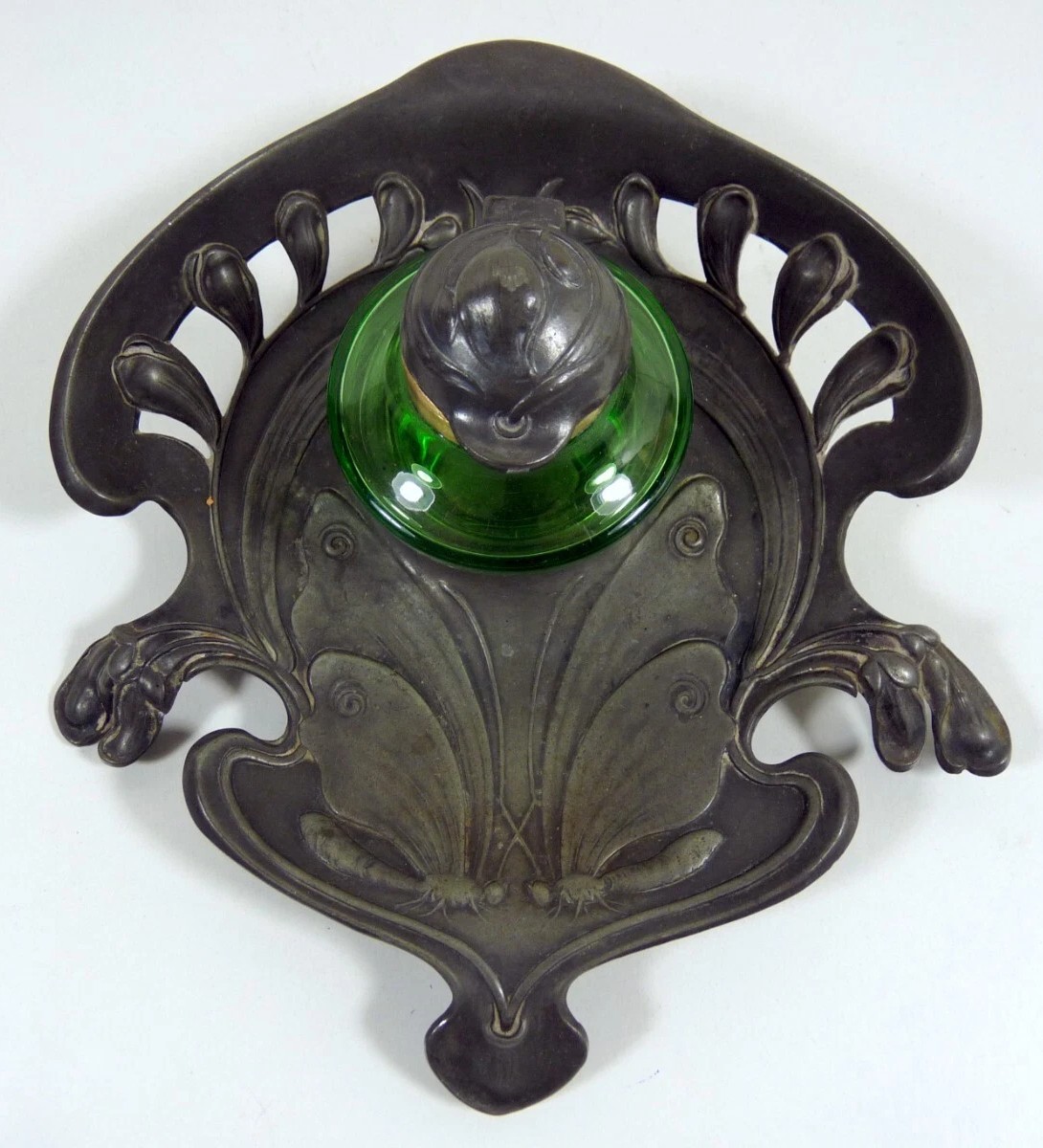
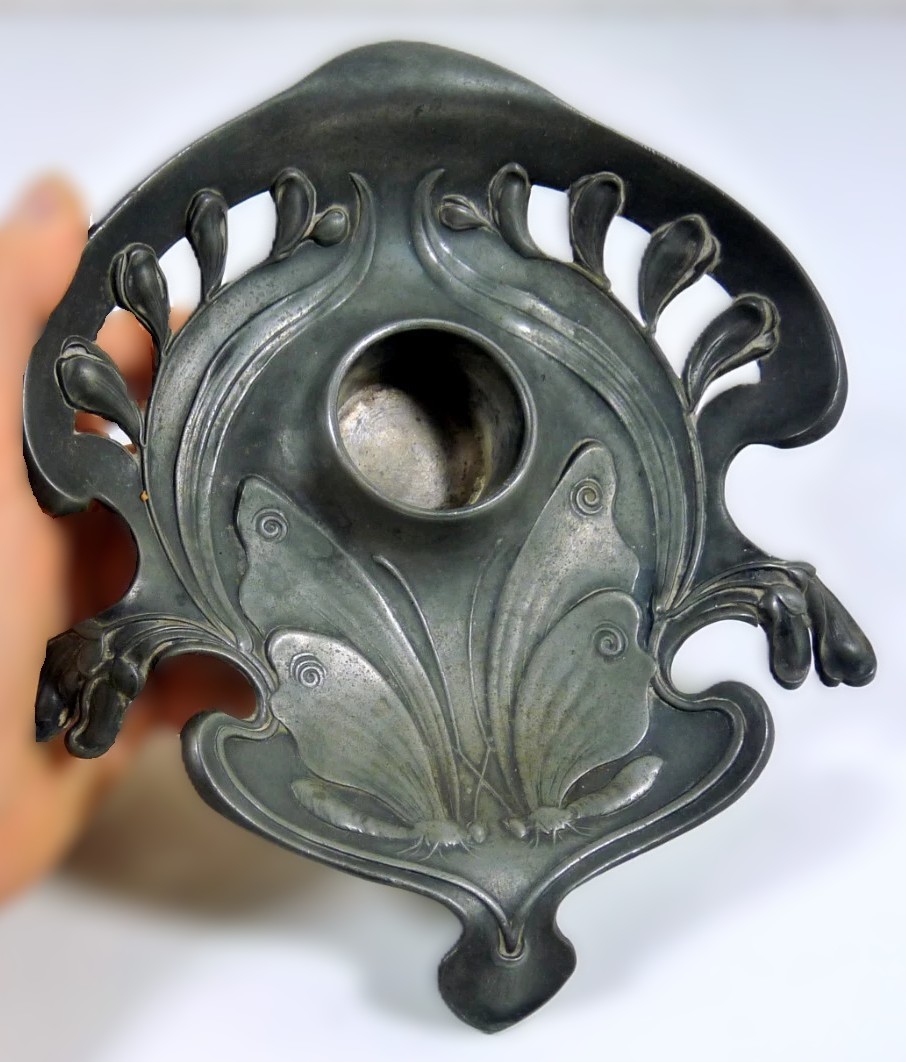
- Theme: The piece features a prominent butterfly theme. The tray itself is cast in the shape of stylized butterfly wings, with the body of the tray forming the lower wings. You can see the delicate “eye” patterns (ocelli) common on butterfly wings embossed into the metal. The handles and outer rim are designed with flowing, organic “whiplash” lines, which are a hallmark of the Art Nouveau aesthetic.
- Material: It is made of silver-plated Britannia metal. The silver has developed a natural aged patina over the last century, which blends with the original “as” antique finish.
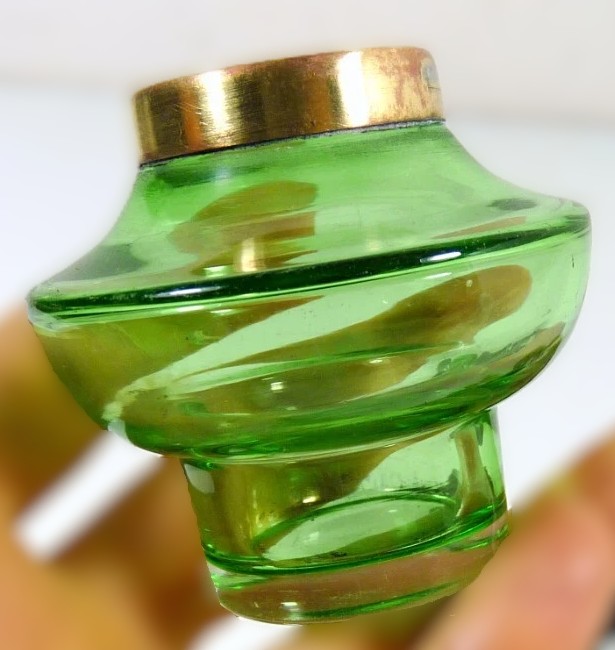
- Inkwell: The central glass insert is original to the style. WMF frequently used this vibrant emerald green glass for their desk sets. The glass is held in a central circular collar, and the lid is made of the same silver-plated metal, featuring organic, petal-like ribbing.
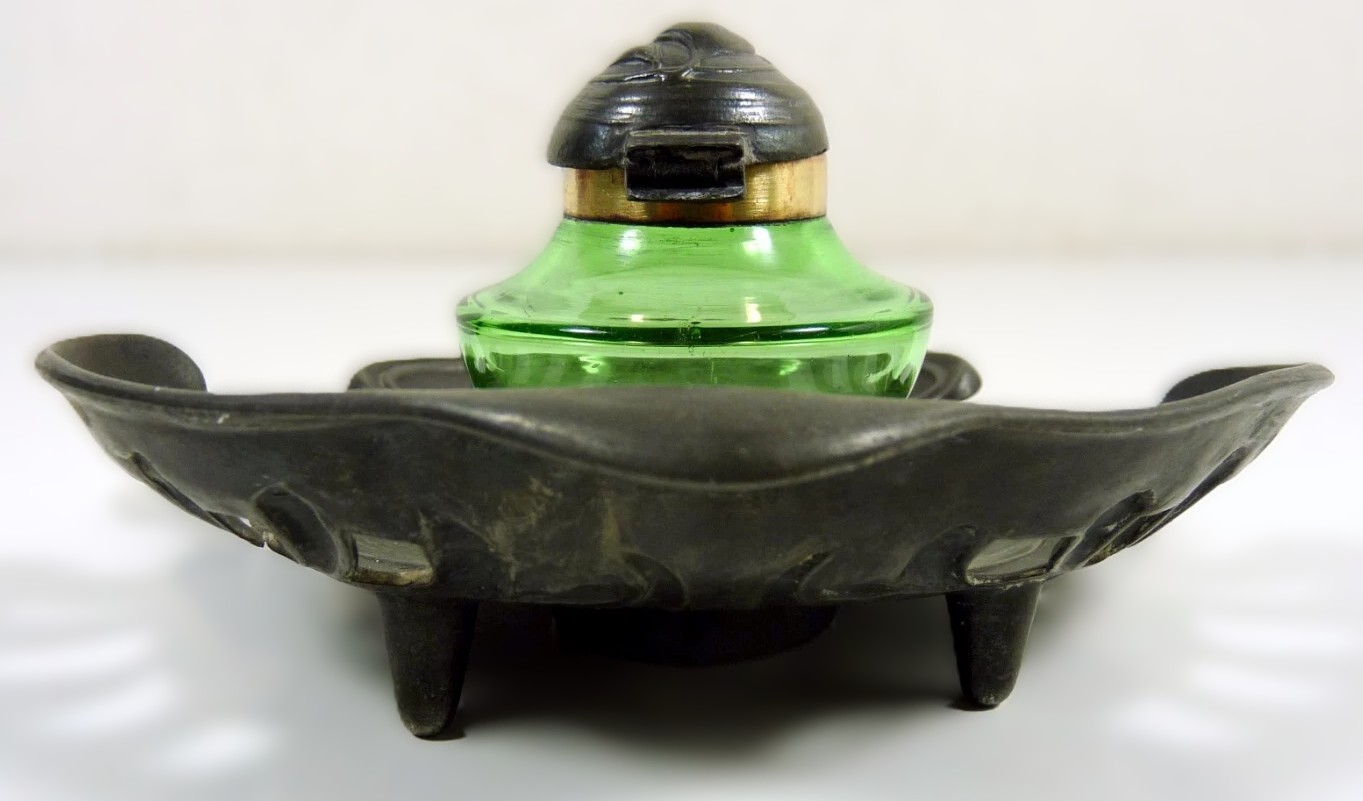
- Feet: The inkstand sits on three integrated peg-like feet, which elevate the tray and give it a lighter, floating appearance.
Historical Context
During the early 1900s, WMF was world-famous for its domestic metalware. They employed top designers like Albert Mayer (director of the WMF Art Studio) to create these “fantasy” pieces that combined utility with high art. Butterfly and dragonfly motifs were particularly popular during this era as they symbolized transformation and the beauty of the natural world.
Sold for $125 in January 2026
Content disclaimer. The information posted is the owner’s best knowledge and may not have been vetted by the SOIC. We welcome comments, corrections, and additions, working to make our website information comprehensive and accurate.
Join the Society of Inkwell Collectors (SOIC) – it’s free!
Founded in 1981 as a non-profit organization,
we are documenting inkwells (and accessories).
We’re here to help and inform!