


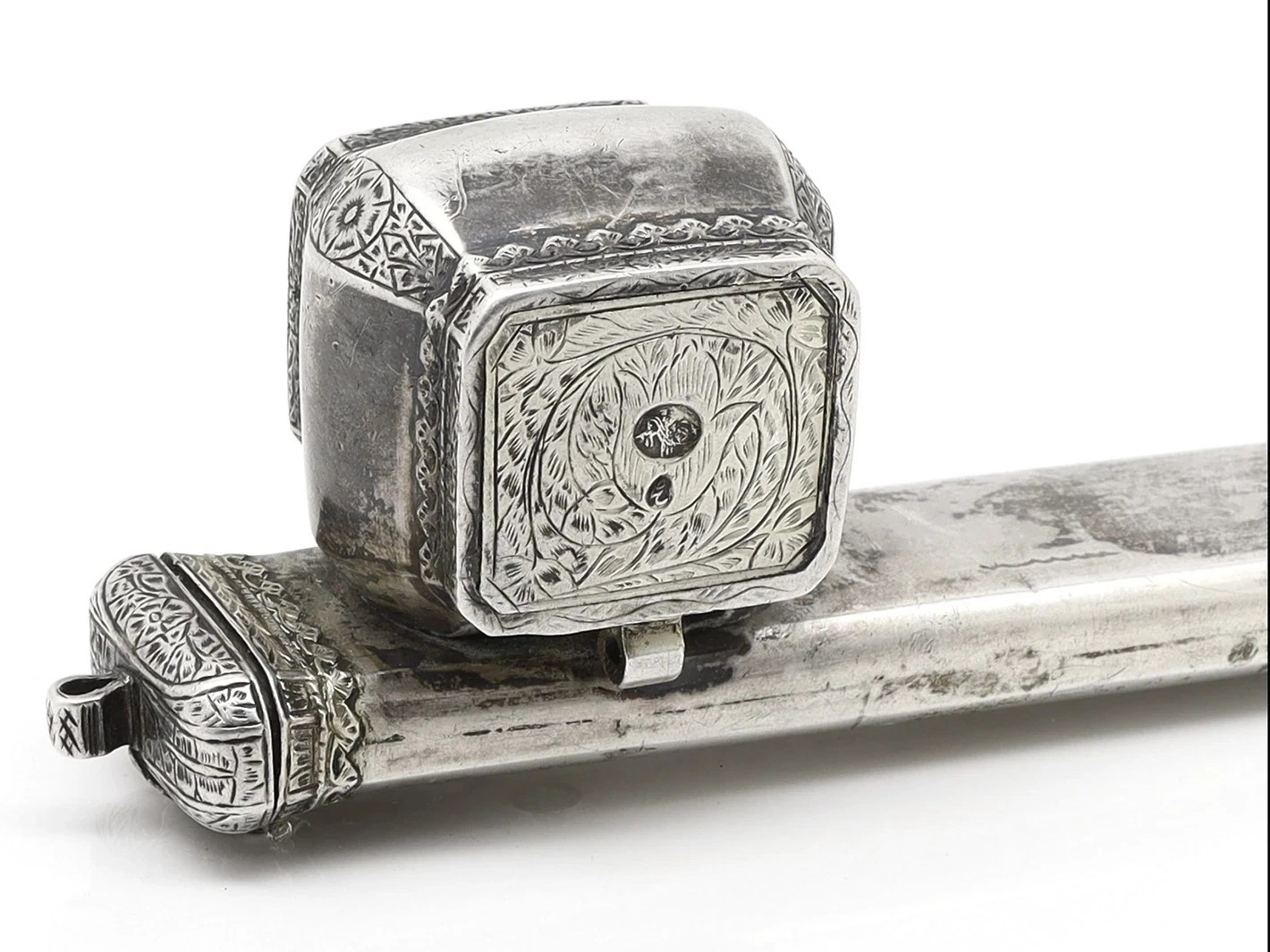

Silver Ottoman Divit (Qalamdan)
| Categories | Middle East / Africa |
| Type | Qalamdan / Divit |
| Material | Silver |
| Markings | See Narrative |
| Manufacturer | Undetermined |
| Origin | Turkey |
| Date or Era | circa 1890 |
| Measuring | 10” long |
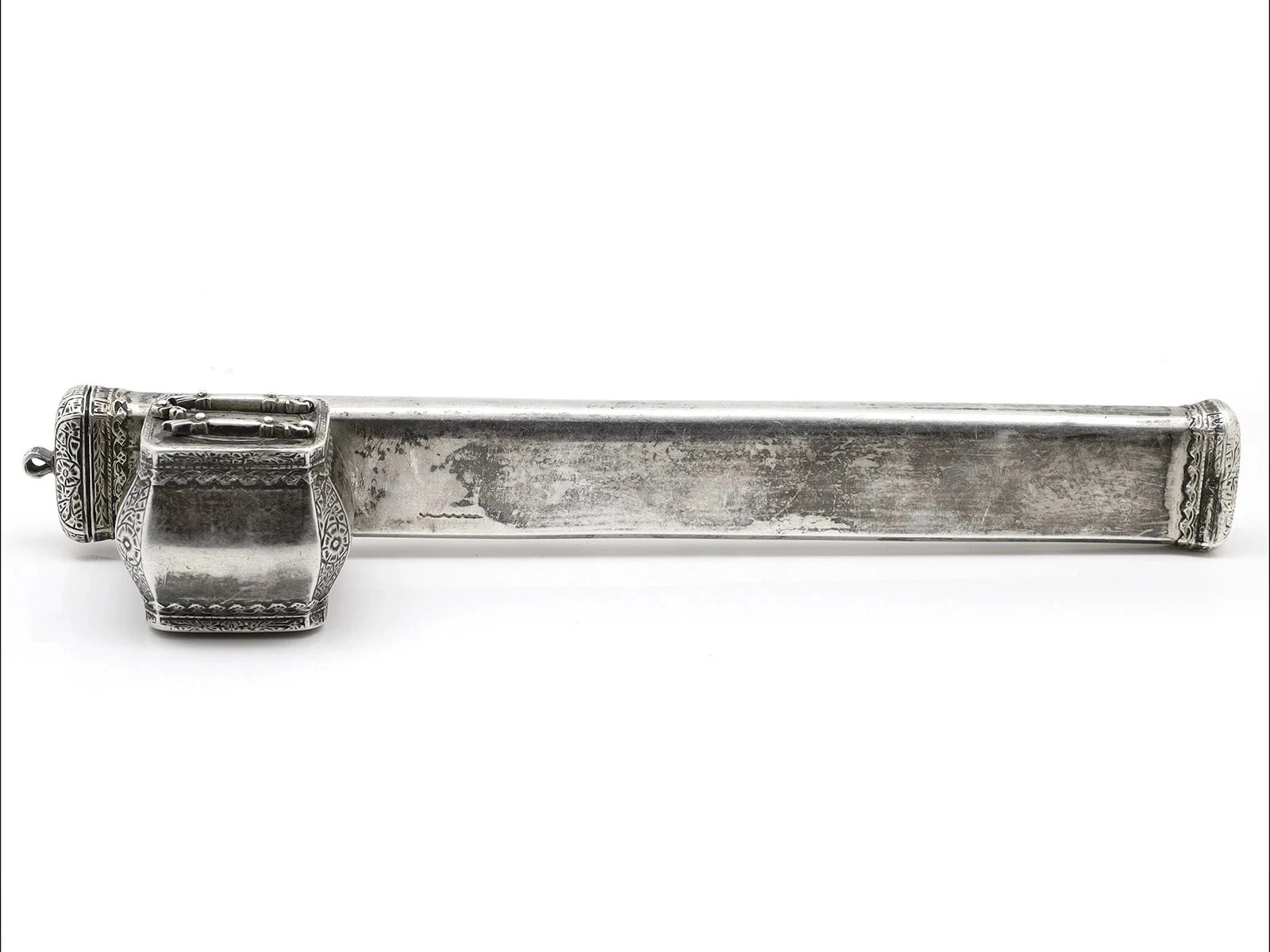
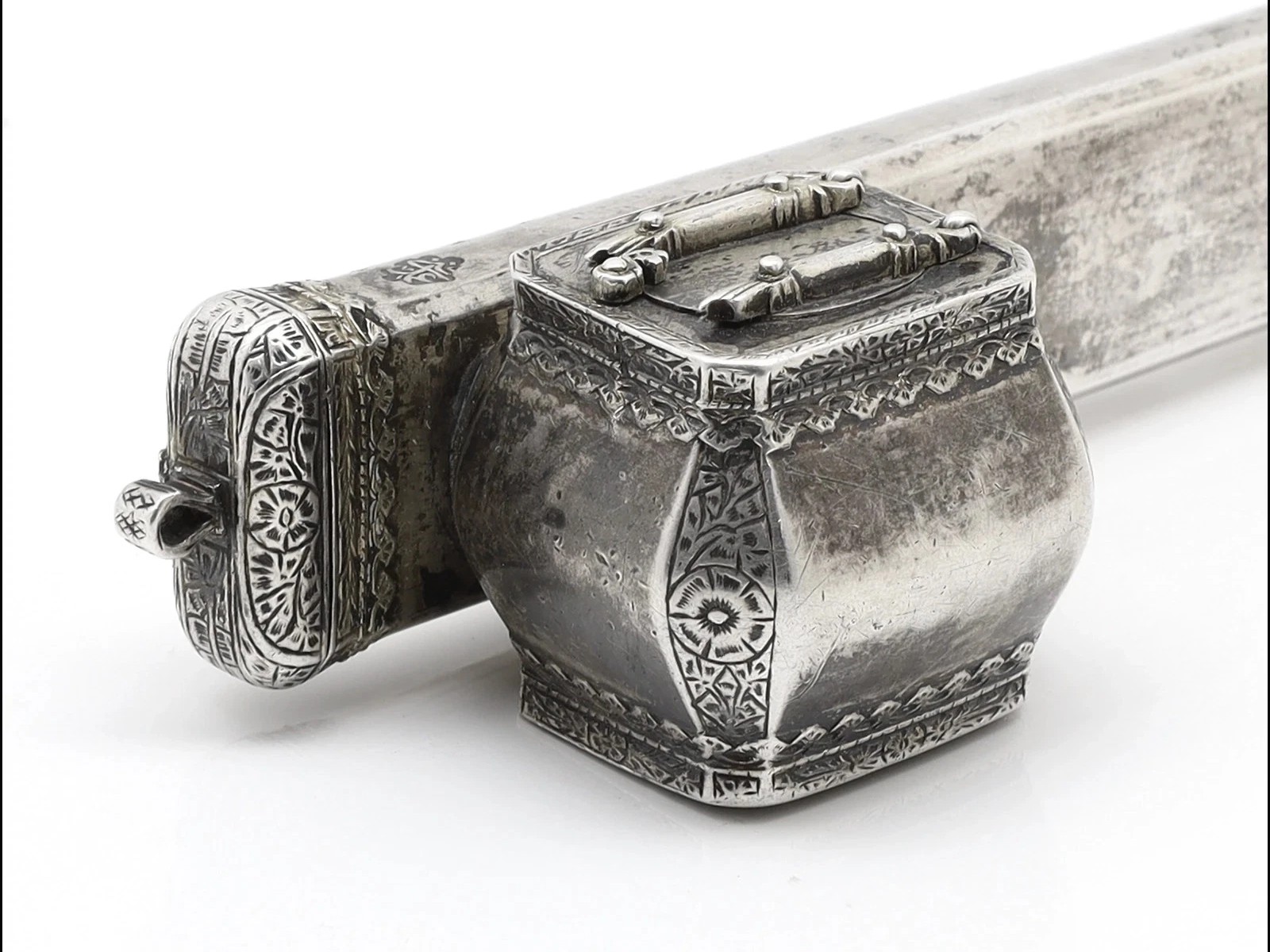
This Ottoman Divit (also known as a Qalamdan) is a portable writing set that served as a status symbol for calligraphers, merchants, and government officials throughout the Ottoman Empire. This specific example is crafted from high-grade silver, featuring the characteristic intricate chased and engraved floral motifs of the period.
Functional Design & Sections
The Divit is a masterclass in portable engineering, designed to provide a “desk on the go” for the traveling scribe. It consists of two primary integrated sections:
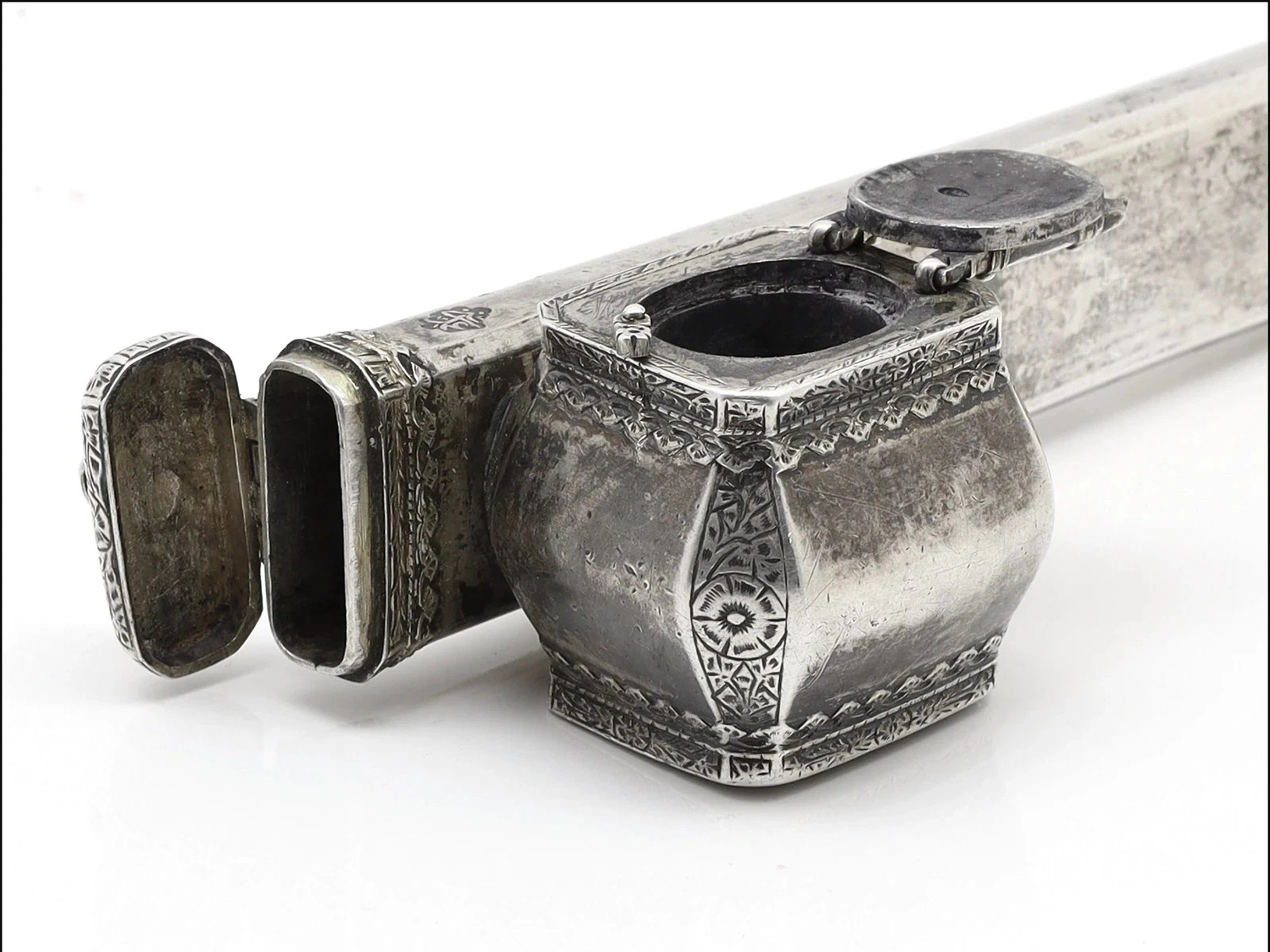
- The Qalamdan (Pen Case): The long, rectangular shaft is a hollow case designed to store reed pens (qalam). The end of the shaft features a hinged, decorative cap that allows the scribe to slide the pens in and out securely.
- The Likka (Inkwell): The bulbous, square-ish container attached to the side is the inkwell.
- The Interior: Inside this section, calligraphers would place a wad of raw silk or wool (likka) soaked in ink. This prevented the ink from spilling if the set was tilted and controlled the amount of ink taken up by the pen.
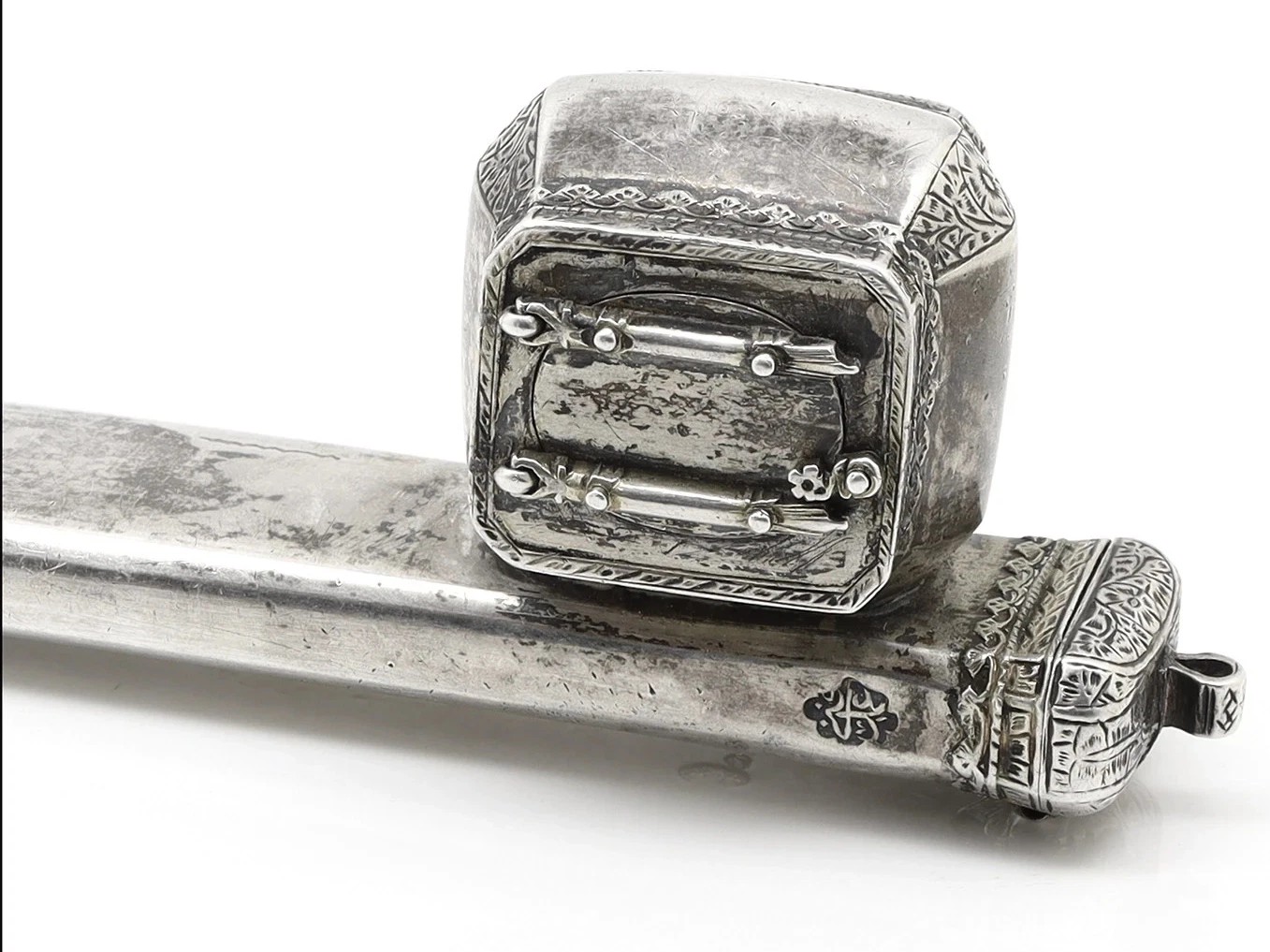
- Dual Lids: Interestingly, this model features a decorative outer hinged lid and a smaller internal mechanism or secondary lid to ensure the ink remained airtight and moist.
Usage
The Divit was typically worn tucked into a silken sash or belt (kusak).
- The inkwell acted as a “stopper,” preventing the long pen case from sliding through the belt.
- It was positioned diagonally across the torso or at the waist, allowing the owner easy access to their tools while signaling their literacy and professional rank.
Origin and Dating
- Where it was made: This is a classic product of the Ottoman Empire, likely manufactured in a major metalworking center such as Istanbul. The style of the floral engraving and the presence of small, stamped marks (likely tughra or sah marks) on the shaft and lid are consistent with Ottoman silver standards.
- How old is it: Based on the decorative “tulip-style” and scrolling foliage motifs, this piece most likely dates to the 19th century. During this era, silver divits became increasingly ornate as they transitioned from purely functional tools to luxury accessories.
Technical Details
The small loop at the very top of the pen case lid was occasionally used to attach a cord or a small seal (muhur).
In Ottoman silver, the Tughra (the Sultan’s calligraphic monogram) is the primary “hallmark” used to date an object to a specific reign.
Identifying the Reign
Looking closely at the shaft and near the inkwell lid, we see two distinct types of stamps:
- The Tughra (Top Stamp): This is the complex, scrolling mark. The specific structure of the beyze (the loops on the left) and the sere (the text at the bottom) is most consistent with the reign of Sultan Abdulhamid II (r. 1876–1909).
- His tughra is one of the most common on high-quality silver writing sets from this period, as the late 19th century saw a peak in the production of ornate silver divits for the imperial bureaucracy.
- The Sah Mark (Bottom Stamp): Below the tughra, there is a smaller, more compact mark. This is the Sah mark, an assay stamp used by the Ottoman mint to guarantee the silver purity (typically .900 or 90% silver).
Key Evidence for Late 19th Century Origin
- The Ornamentation: The “Tulip period” influence is still visible, but the execution here is more characteristic of the Baroque-influenced Ottoman style of the late 19th century. The precision of the chasing suggests it was made in a prominent Istanbul workshop.
- Maker’s Marks: While the Sultan’s mark provides the date, some divits also feature a maker’s mark (often in Armenian or Arabic script). One of the most famous silversmiths for these sets was Vehbi, whose work frequently appears at auction with the tughra of Abdulhamid II or his predecessor, Abdulmecid I.
Summary of Identification
| Attribute | Identification |
| Sultan | Abdulhamid II (likely) |
| Reign Dates | 1876 – 1909 |
| Purity | 80% to 90% Silver (Ottoman standard) |
| City of Origin | Istanbul, Turkey |
This piece isn’t just a pen holder; it’s a piece of imperial history from the final decades of the Ottoman Empire. This is a sophisticated “hybrid” example that combines ink and pen storage in a single portable unit.
Sold for $1545 in January 2026
Content disclaimer. The information posted is the owner’s best knowledge and may not have been vetted by the SOIC. We welcome comments, corrections, and additions, working to make our website information comprehensive and accurate.
Join the Society of Inkwell Collectors (SOIC) – it’s free!
Founded in 1981 as a non-profit organization,
we are documenting inkwells (and accessories).
We’re here to help and inform!