


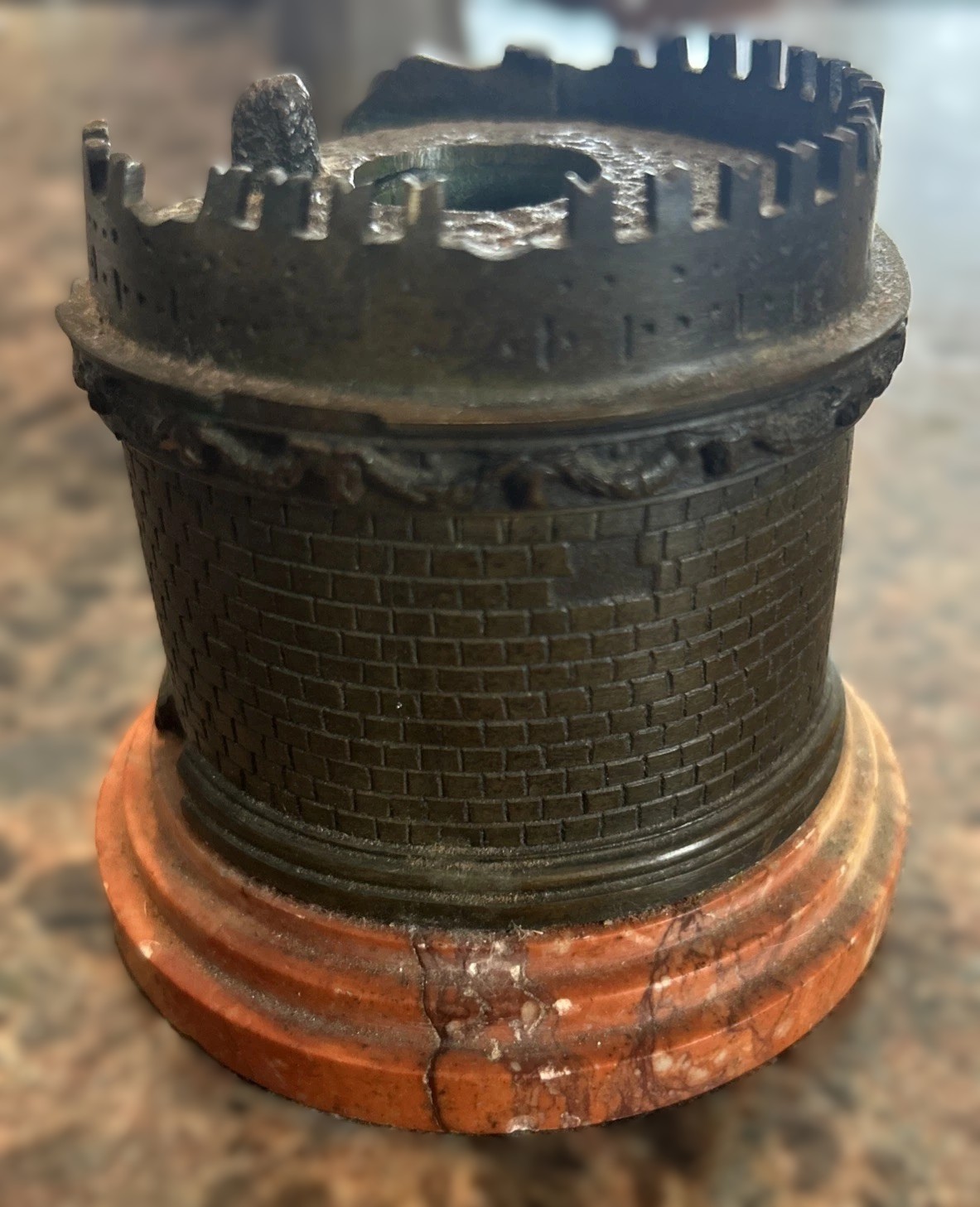


Tomb of Caecilia Metella Inkwell
| Categories | Figural - Inanimate, Souvenir |
| Type | Buildings / Structures, Grand Tour |
| Material | Bronze, Marble |
| Markings | Unmarked |
| Manufacturer | Undetermined |
| Origin | Italy |
| Date or Era | circa 1840 |
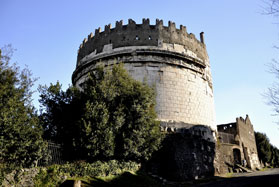
This bronze inkwell is a miniature replica of the Tomb of Caecilia Metella, one of the most iconic monuments along Rome’s ancient Appian Way.
Description of the Inkwell
- Architecture: The inkwell depicts the tomb as it has appeared since the Middle Ages. It features a cylindrical drum with a detailed brickwork pattern and small “loopholes” or windows.
- Crenellations: The top edge is finished with battlements (crenellations). In the original Roman structure, this would have been a conical earthen mound, but this inkwell includes the medieval additions from when the tomb was used as a fortress.
- Base: It sits on a tiered, circular marble base. Based on the reddish-brown color and dark veining, this is likely Rosso Antico, a marble highly prized by 19th-century craftsmen for luxury desk accessories.
Origin & Similar Replicas
- When & Where: This piece was almost certainly made in Rome during the 19th century.
- The “Grand Tour”: Objects like this were produced as high-end souvenirs for wealthy travelers on the Grand Tour. Workshops such as those of Benedetto Boschetti (located at Via Condotti) or Luigi Valadier specialized in these “architectural miniatures” to satisfy the tastes of academic tourists.
History of the Tomb
The real monument stands at the third mile of the Via Appia Antica outside Rome.
- The Original (ca. 30–10 BC): Built for Caecilia Metella, the daughter of a Roman consul and wife of Marcus Licinius Crassus (son of the triumvir). It was a symbol of her family’s immense wealth and prestige.
- Architectural Features: The actual tomb is famous for its marble frieze decorated with ox heads (bucrania) and garlands. This decoration gave the site its medieval nickname, Capo di Bove (“Head of the Ox”).
- Fortification: In the 14th century, the Caetani family incorporated the tomb into a fortified castle. The “teeth-like” battlements seen on this inkwell are the result of this conversion into a defensive tower to control traffic and collect tolls on the road to Naples.
Based on the materials and casting style, this inkwell was likely made during the peak of the Romantic era, specifically between 1820 and 1850.
While “Grand Tour” souvenirs were produced for nearly two centuries, several specific details point to this thirty-year window:
- The Rosso Antico Marble (c. 1820–1840)
The tiered base is the strongest clue. Rosso Antico (the “ancient red” marble from Greece) was the “it” material for high-end Roman workshops in the early-to-mid 19th century. After the 1850s, workshops began using more common marbles or even slate to keep up with the increasing “mass-market” demand from tourists. The presence of high-quality, deep-red Rosso Antico suggests a date when these workshops were still catering to the upper-crust “aristocratic” traveler.
- The Casting Quality
Looking at the brickwork in tomb, the detail is remarkably crisp.
- Early 19th Century: Models were often cast using the “lost wax” method and then hand-finished with chisels to define individual bricks and the jagged “ruined” edges.
- Late 19th Century: By the 1870s and 80s, mass production took over. Replicas from that later period often look “softer” or blurrier because they were cast from worn-out molds and rarely hand-chased. This piece has the sharp, architectural “bite” associated with the higher-end Roman foundries like those of Benedetto Boschetti or Wilhelm Hopfgarten.
- The “Ruins” Aesthetic
During the 1830s, there was a specific fascination with the “fortified” look of Roman ruins. Earlier 18th-century models often tried to “reconstruct” how the tomb looked in ancient times (smooth and pristine). By the 1830s, the Romantic movement influenced collectors to prefer the “truth” of the ruin—complete with the medieval battlements and the crumbling brickwork.
Summary of Provenance
- Era: Early to Mid-19th Century (Late Regency to Early Victorian).
- Location: Rome, Italy.
- Workshop Potential: Likely a reputable Roman foundry specializing in oggetti d’arte for foreign dignitaries.
Sold for $449 in January 2026
Content disclaimer. The information posted is the owner’s best knowledge and may not have been vetted by the SOIC. We welcome comments, corrections, and additions, working to make our website information comprehensive and accurate.
Join the Society of Inkwell Collectors (SOIC) – it’s free!
Founded in 1981 as a non-profit organization,
we are documenting inkwells (and accessories).
We’re here to help and inform!