




Silverplated Base – Now Copper Double Inkstand
| Categories | Bronze - Brass - Copper |
| Material | Coppered metal |
| Markings | See Narrative |
| Manufacturer | Georg Roth & Co |
| Origin | Germany |
| Date or Era | circa 1900 |
| Measuring | 10 ¾” x 8” (Base) |
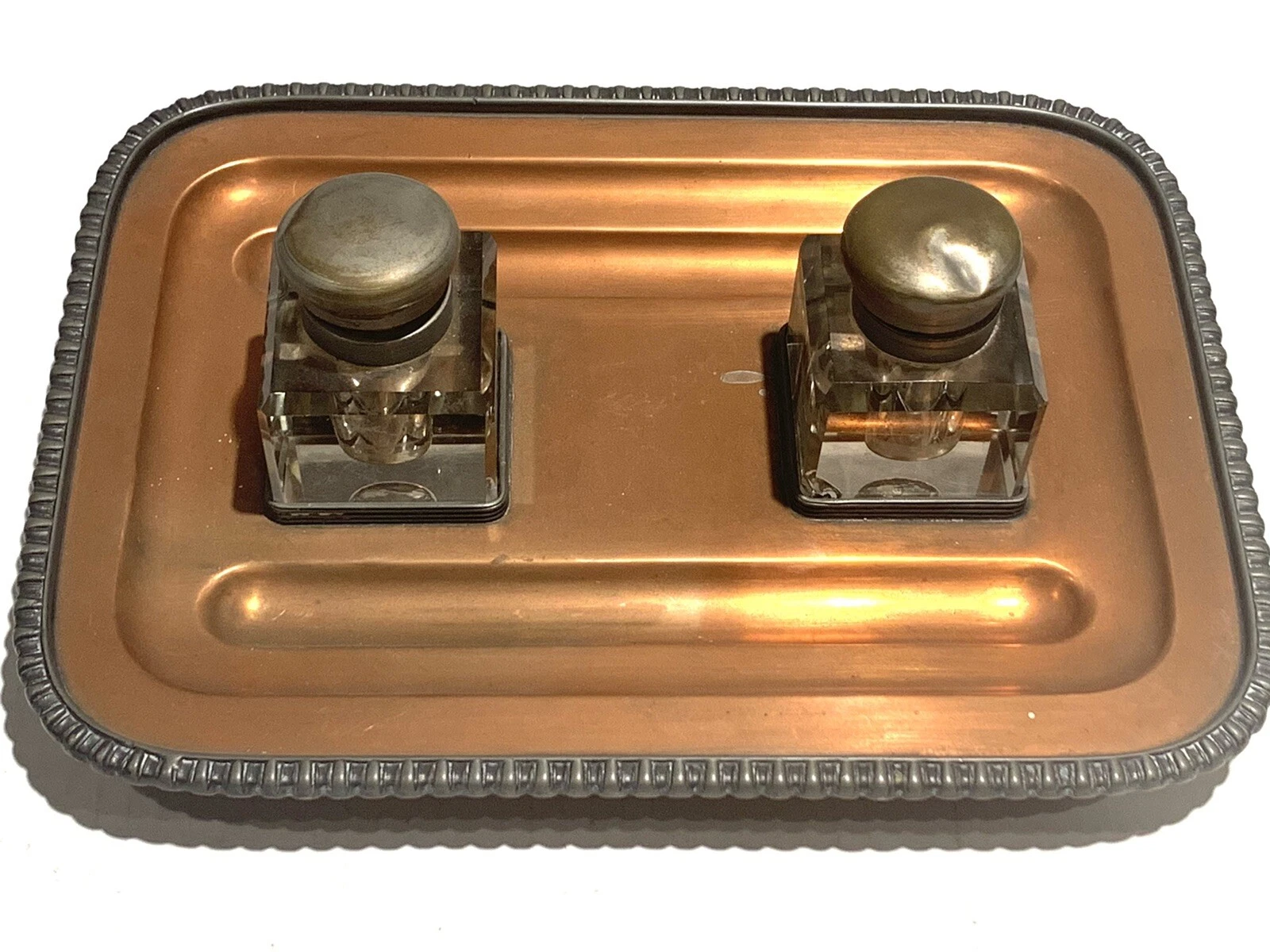
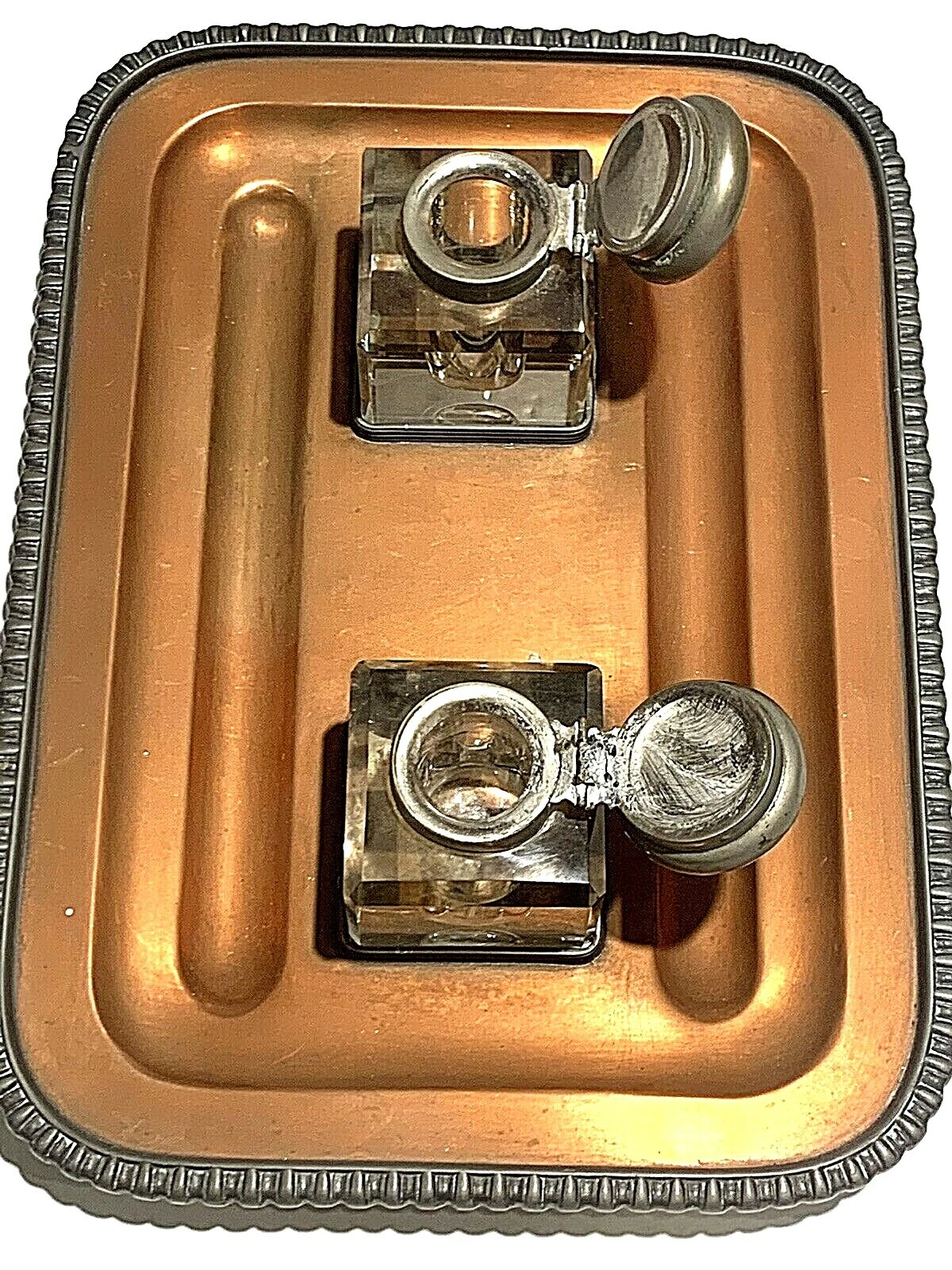
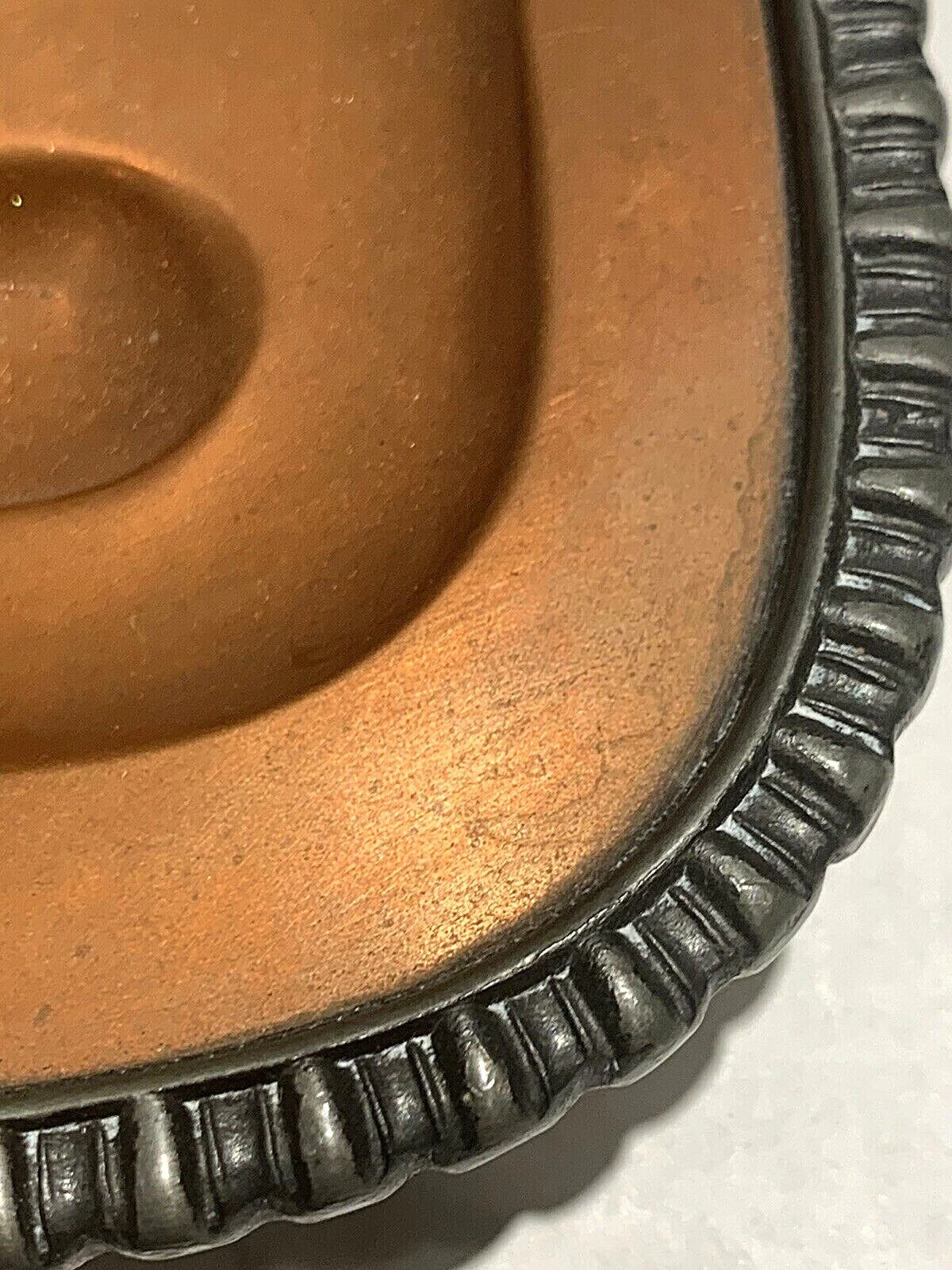
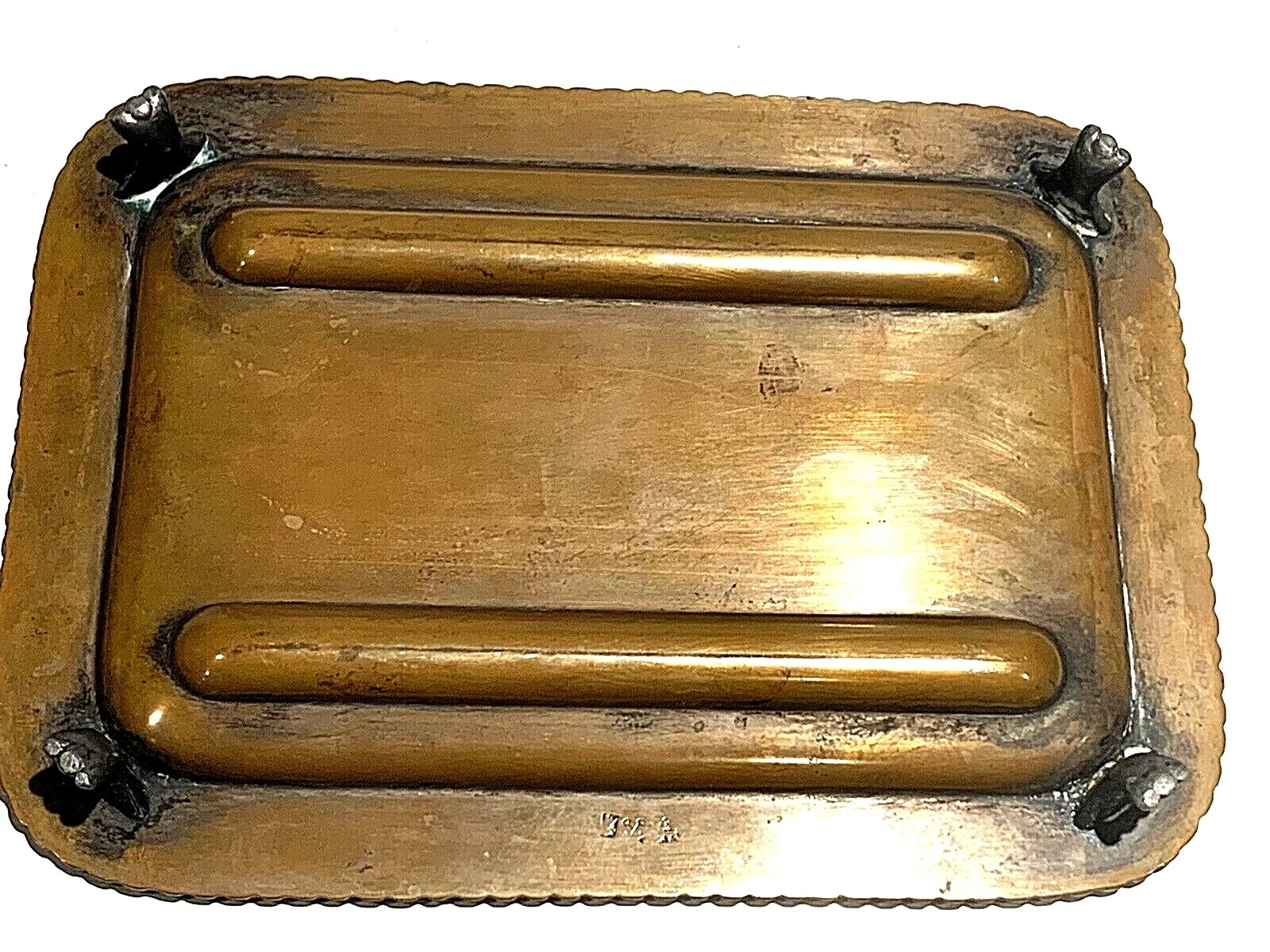
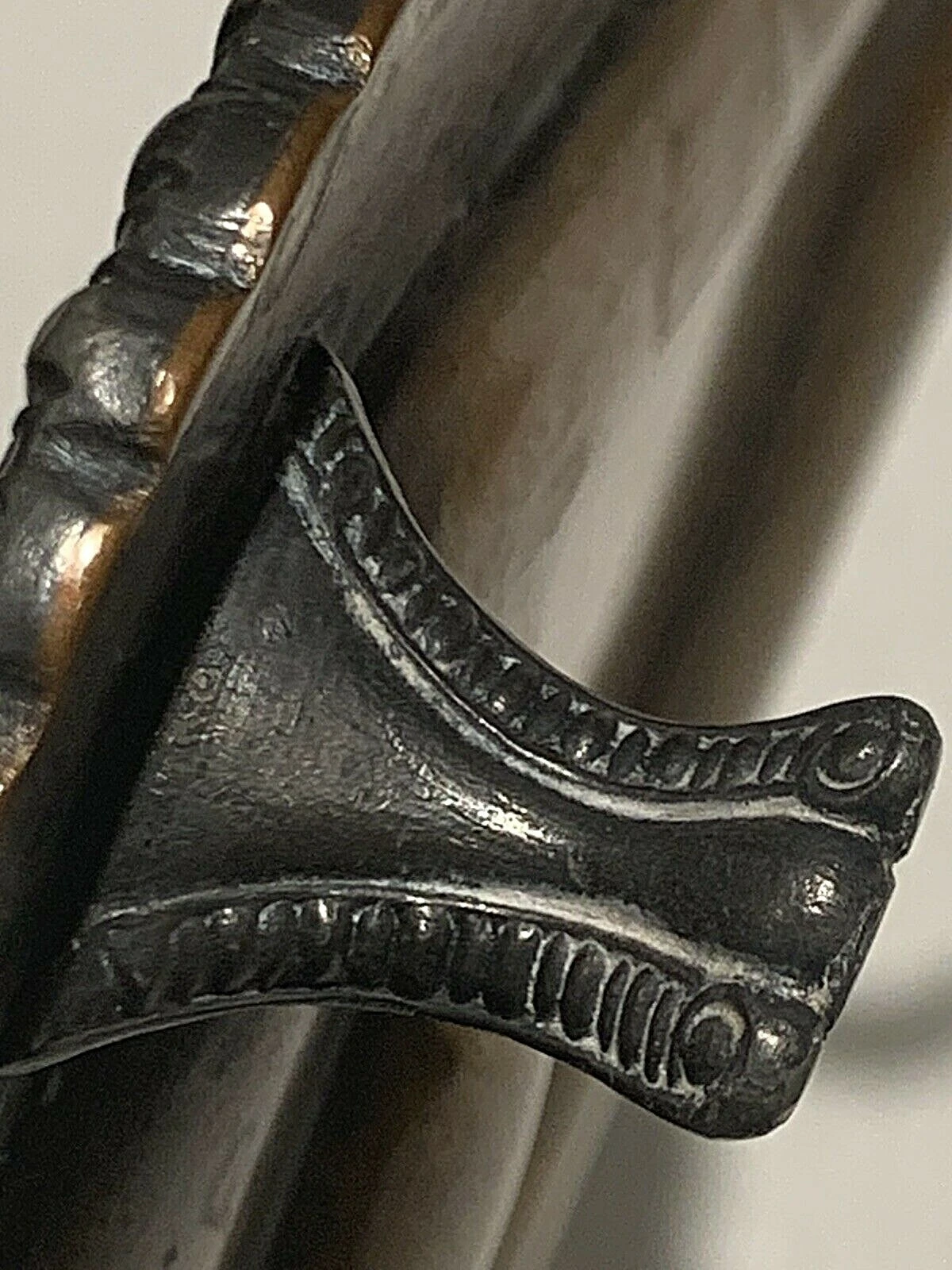
This double inkstand features a rectangular copper base with a raised, gadrooned (ribbed) silver-colored border and four matching scrolled feet. The base includes two long, recessed pen channels.
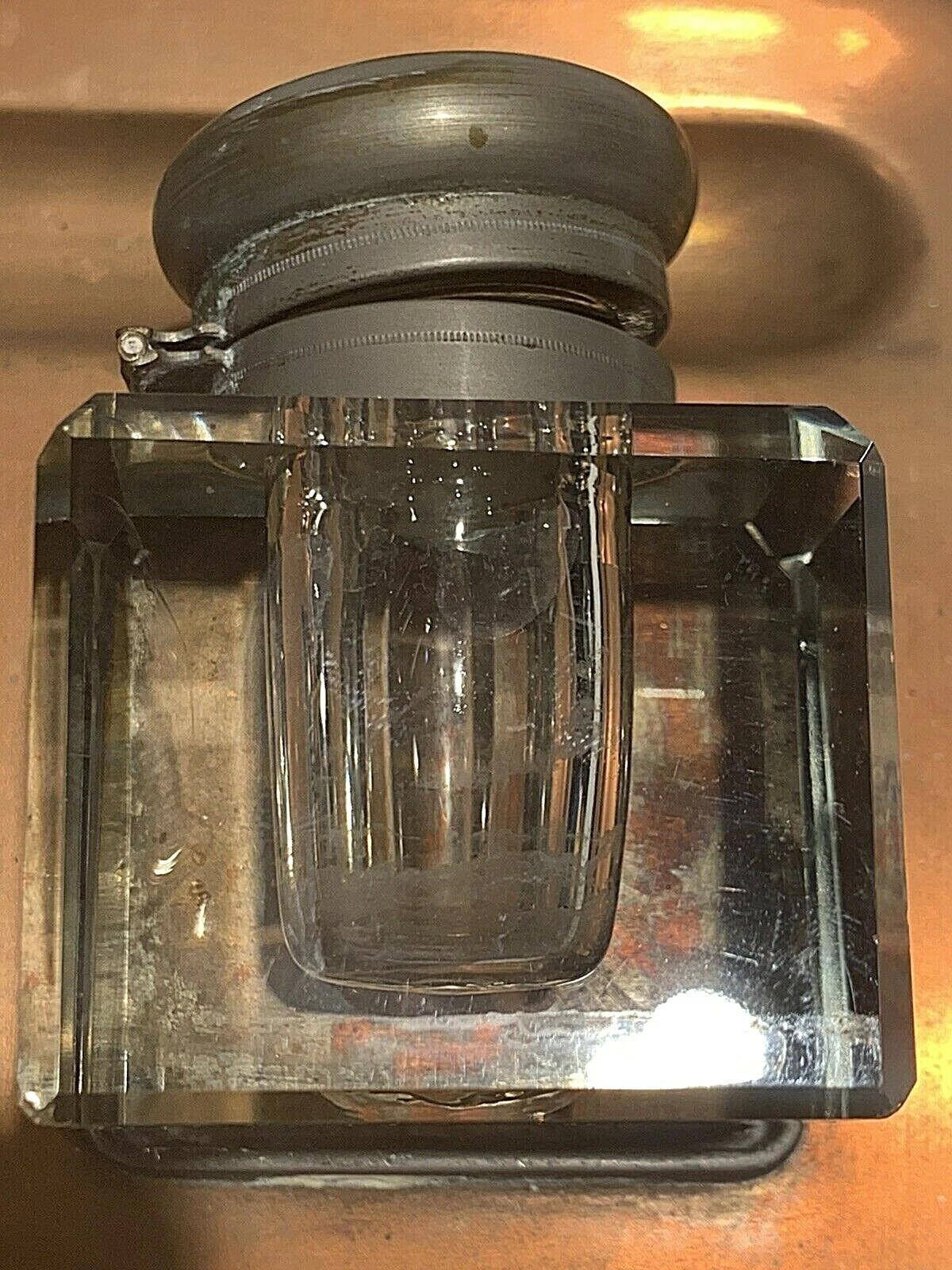
Centered on the stand are two cuboid-cut crystal inkwells. Each well is fitted with a hinged, dome-shaped metal lid.
Composition and Finish
It is highly probable that the main base was originally silverplated to match the trim and lids.
The contrast between the bright silver-colored border and the warm copper center is common in antique silverplate when the thin layer of silver (the “plate”) has been worn away through decades of polishing. This phenomenon is known as “bleeding.” Since the trim and feet are separate castings (likely made of a white metal or more heavily plated), they have retained their silver appearance, while the flat surface of the base—which receives the most friction—has reverted to its base metal, copper.
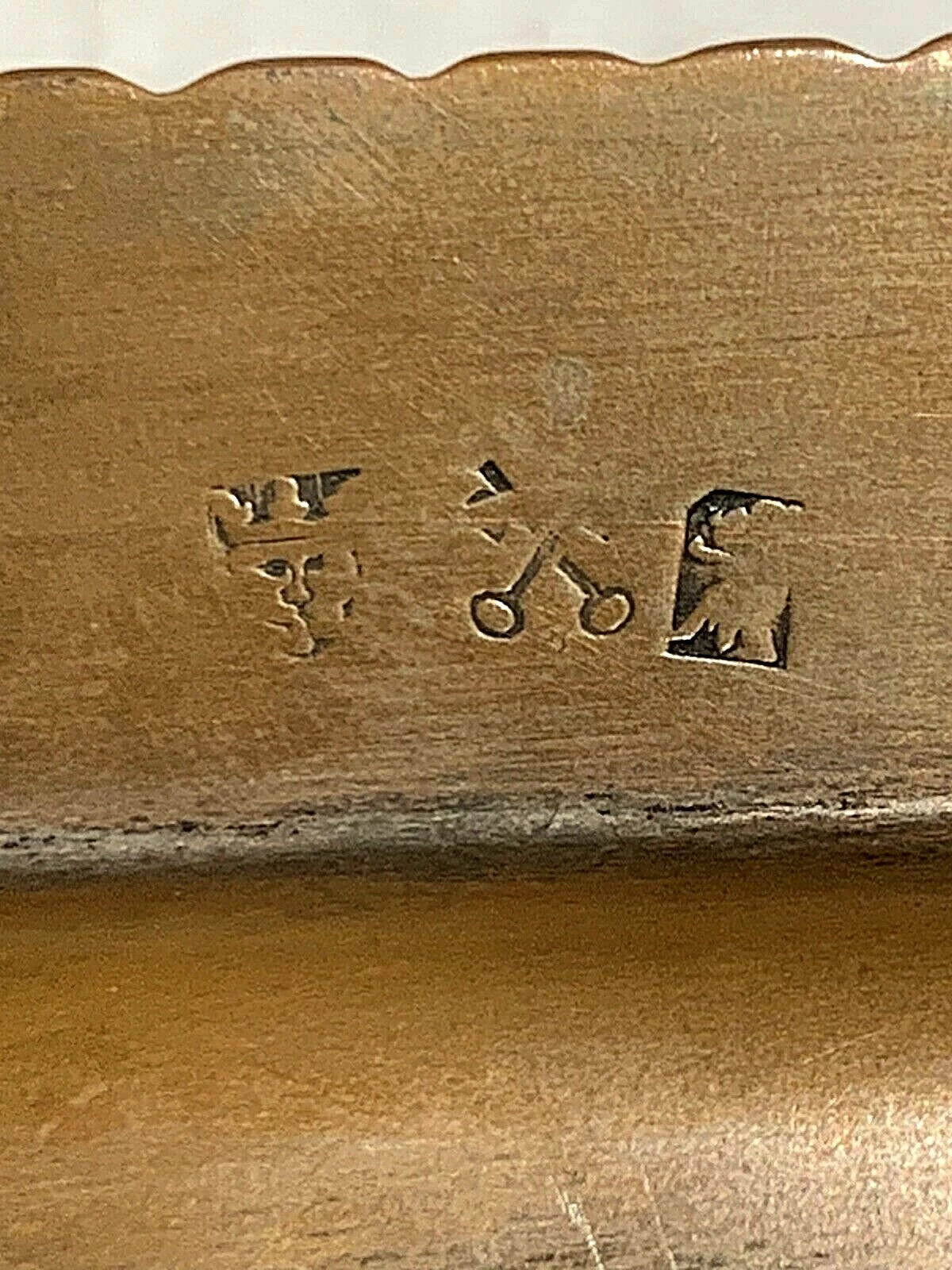
The marks and construction of this double inkstand strongly suggest it was manufactured by Georg Roth & Co. (also known as G. Roth & Co.) of Hanau, Germany, active between roughly 1891 and 1919.
Hanau was the center of a specialized “Antique Silver” industry that produced high-quality items designed to look like 17th and 18th-century masterpieces.
Analysis of the Marks
The three marks on the bottom are “pseudo-hallmarks.” They were not official government stamps but were created by the manufacturer to mimic ancient guild marks and provide a sense of prestige.
- Left (Crowned Head): This is a pseudo-town mark, designed to resemble a 17th-century European city mark (similar to the London leopard’s head). Georg Roth frequently used a crowned head (or sometimes a crowned “G”) in this style.
- Middle (Crossed Keys): These are the arms of the city of Regensburg. Hanau silversmiths often “borrowed” this symbol for their fantasy hallmarks to suggest the piece was an antique from that city.
- Right (Eagle in a Shield): This mimics the Imperial Prussian or German eagle. It was a standard prestige mark used by several Hanau firms, including Georg Roth and J.D. Schleissner & Söhne, to denote high-quality German craftsmanship.
Material: Was it once silverplated?
Yes, the main base was always silverplated copper.
While Hanau firms are famous for their solid .800 silver, they also produced a significant amount of high-quality silver-on-copper (plated) ware for the international market. The “warm” color in the center is the exposed copper base metal.
- “Bleeding”: The silver layer has worn away (or “bled”) in the areas most frequently touched or polished—specifically the flat top and bottom.
- The Border and Feet: These pieces often look more “silvery” because they are either made of a white metal alloy (like German silver/nickel silver) that was then plated, or they were cast more thickly, allowing them to retain the plating better than the flat sheet of the base.
Summary of Findings
- Manufacturer: Georg Roth & Co. (Hanau, Germany).
- Date: Circa 1890–1910.
- Material: Silverplate over copper with cut-crystal wells.
Sold for $202 in January 2026
Content disclaimer. The information posted is the owner’s best knowledge and may not have been vetted by the SOIC. We welcome comments, corrections, and additions, working to make our website information comprehensive and accurate.
Join the Society of Inkwell Collectors (SOIC) – it’s free!
Founded in 1981 as a non-profit organization,
we are documenting inkwells (and accessories).
We’re here to help and inform!