


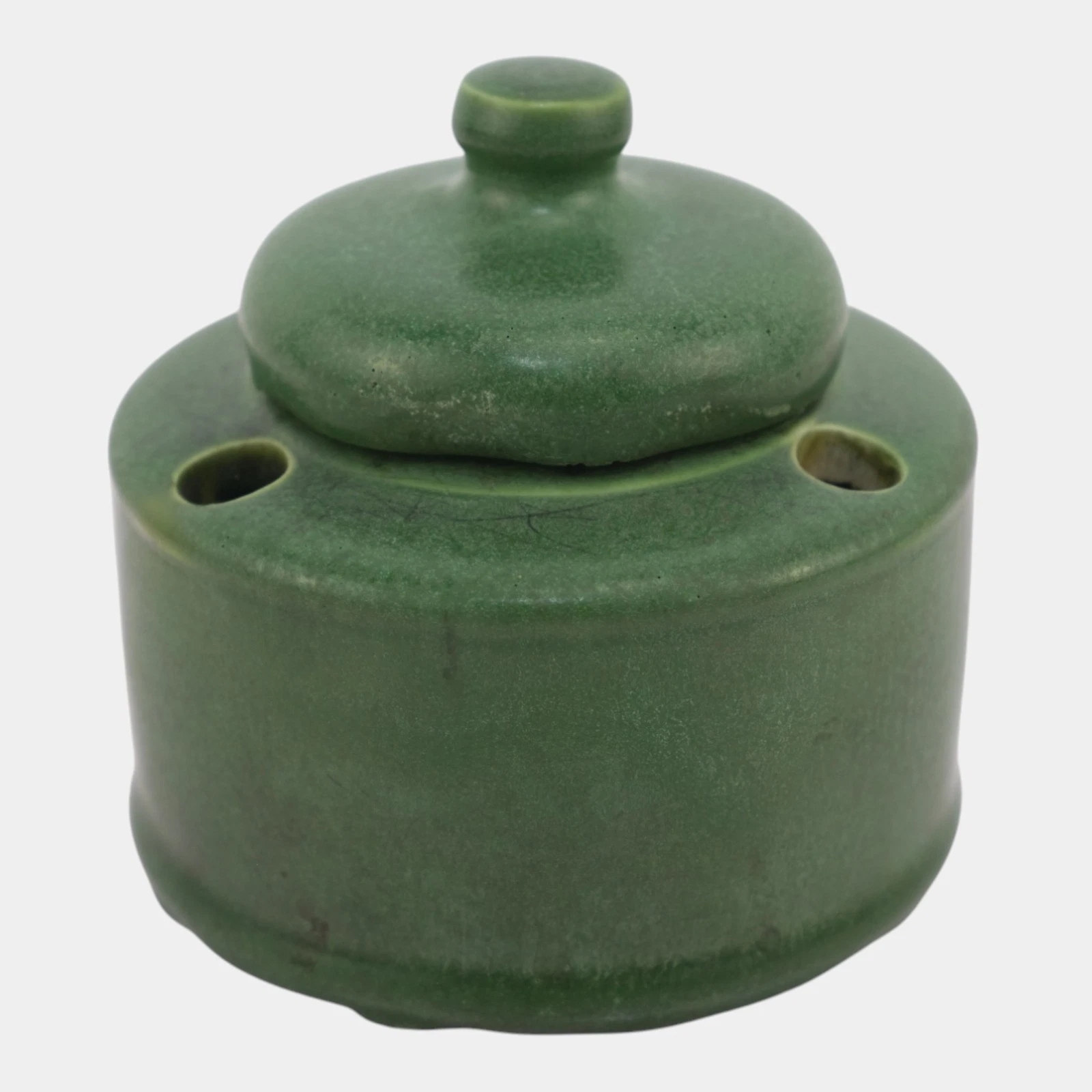
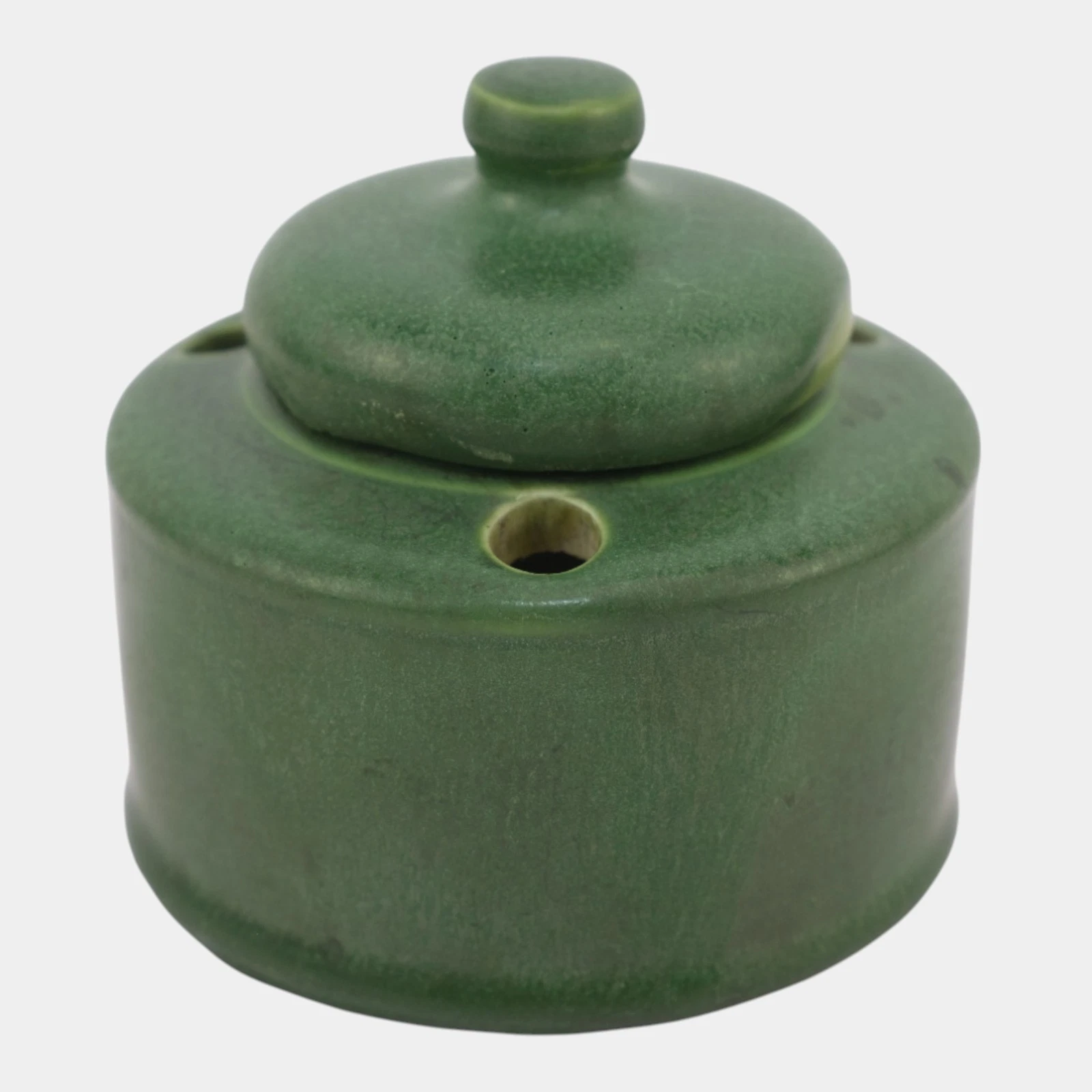
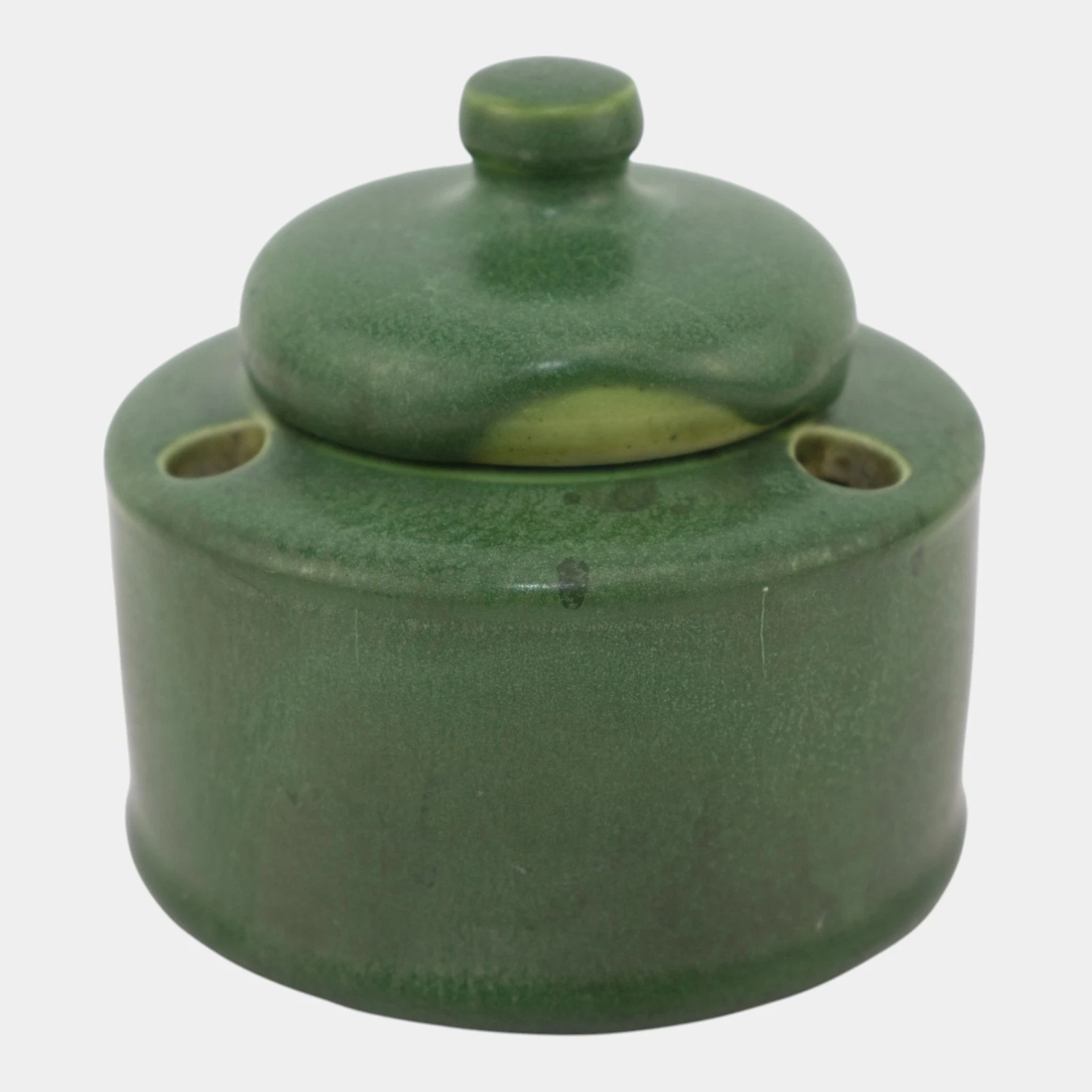
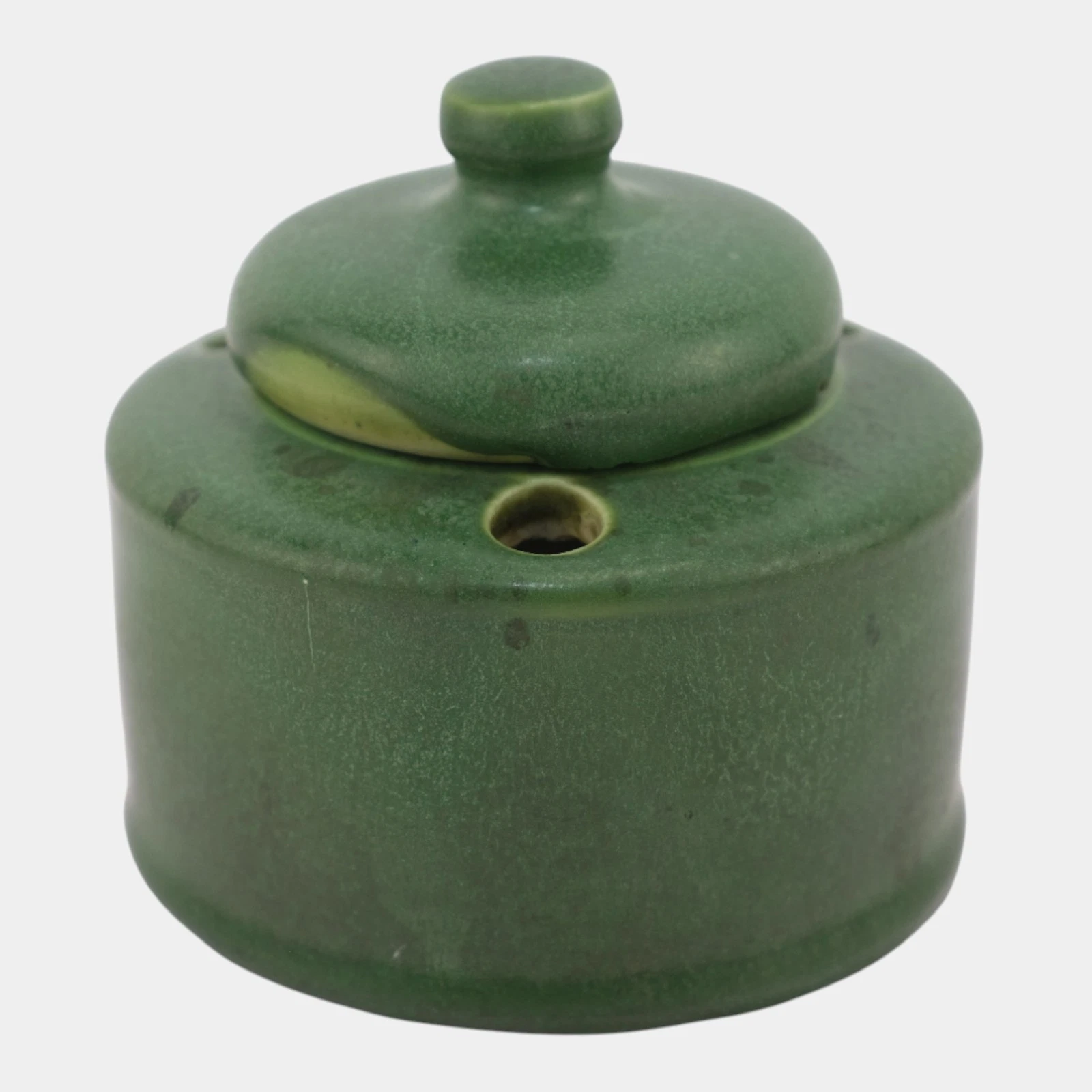
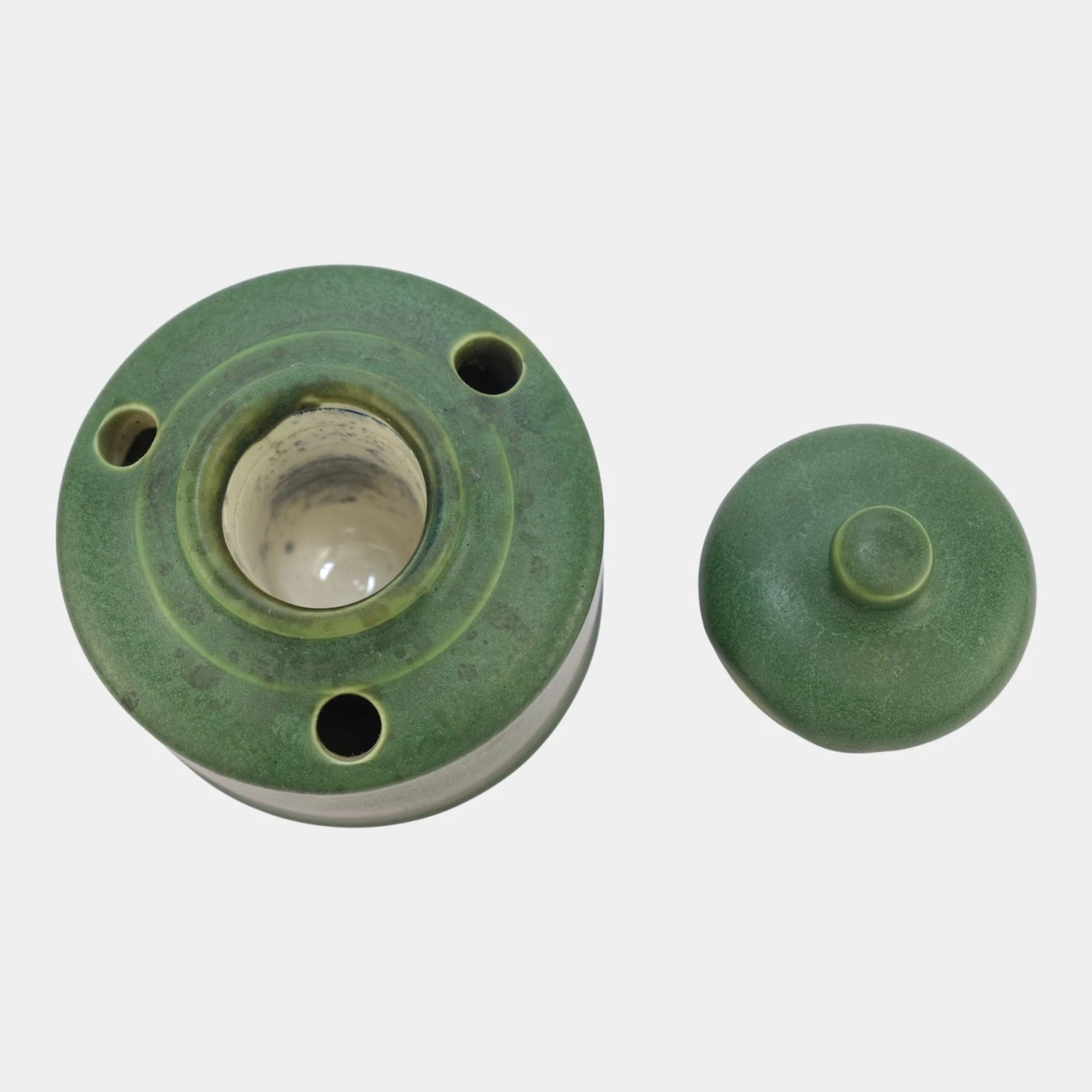
Hampshire Pottery Inkwell
| Categories | Ceramics/Porcelain "Named" Makers |
| Material | Pottery |
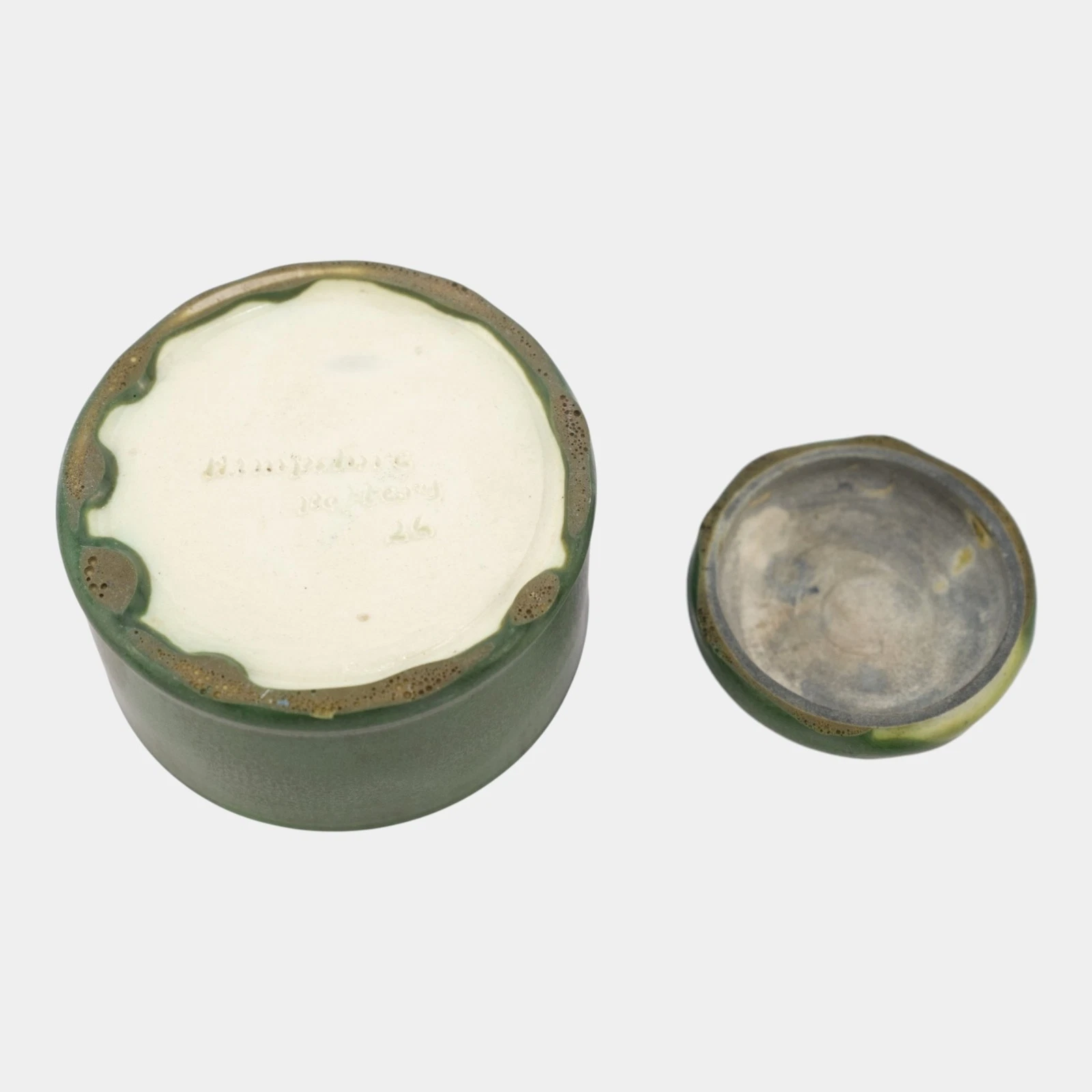
| Markings | See Narrative |
| Manufacturer | Hampshire Pottery |
| Origin | United States |
| Date or Era | circa 1910 |
| Measuring | 4 ½” diameter; 3 ¾” high |
This is a wonderful example of Hampshire Pottery, specifically their sought-after Arts & Crafts line. Because this piece carries the “Circle M” mark, it tells a very specific and rather romantic story about its origin.
The Maker & Origin
- Maker: Hampshire Pottery
- Location: Keene, New Hampshire, USA
- Founder: James S. Taft (established in 1871)
While the pottery started out making utilitarian wares like flowerpots, it became famous for its Art Pottery line, which was spearheaded by Taft’s brother-in-law, Cadmon Robertson. Robertson was a chemist who developed over 900 glazes and was the driving force behind the company’s artistic success.
The “Circle M” Mark
The “M” in a circle is one of the most distinctive marks in American art pottery.
- The Meaning: It was used by Cadmon Robertson as a personal tribute to his wife, Emoretta (whose maiden name was Taft).
- The Date: Because this mark was exclusive to Robertson’s tenure as head of production, it dates this inkwell precisely between 1904 and 1914.
- The Shape Number: The incised “26” on the bottom refers to the official shape number in the Hampshire catalog for this specific cylindrical inkwell design.
Key Features
- The Glaze: This is Hampshire’s iconic Matte Green (often called “Cucumber Green”). They actually began producing these matte glazes in 1891—seven years before their famous competitor, Grueby Faience, which made very similar (but much more expensive) hand-thrown pieces.
- The Pen Holes: The three small holes on the shoulder are functional; they were designed to hold dip pens when not in use.
Historical Significance
Hampshire Pottery represents a middle ground in the Arts & Crafts movement: it offered the high-style aesthetic of organic, matte-glazed pottery at a price point that was accessible to the burgeoning middle class of the early 20th century.
Sold for $350 in January 2026
Content disclaimer. The information posted is the owner’s best knowledge and may not have been vetted by the SOIC. We welcome comments, corrections, and additions, working to make our website information comprehensive and accurate.
Join the Society of Inkwell Collectors (SOIC) – it’s free!
Founded in 1981 as a non-profit organization,
we are documenting inkwells (and accessories).
We’re here to help and inform!