





Colorful Porcelain Inkwell by W. Goebel
| Categories | Ceramics/Porcelain "Named" Makers |
| Material | Porcelain |
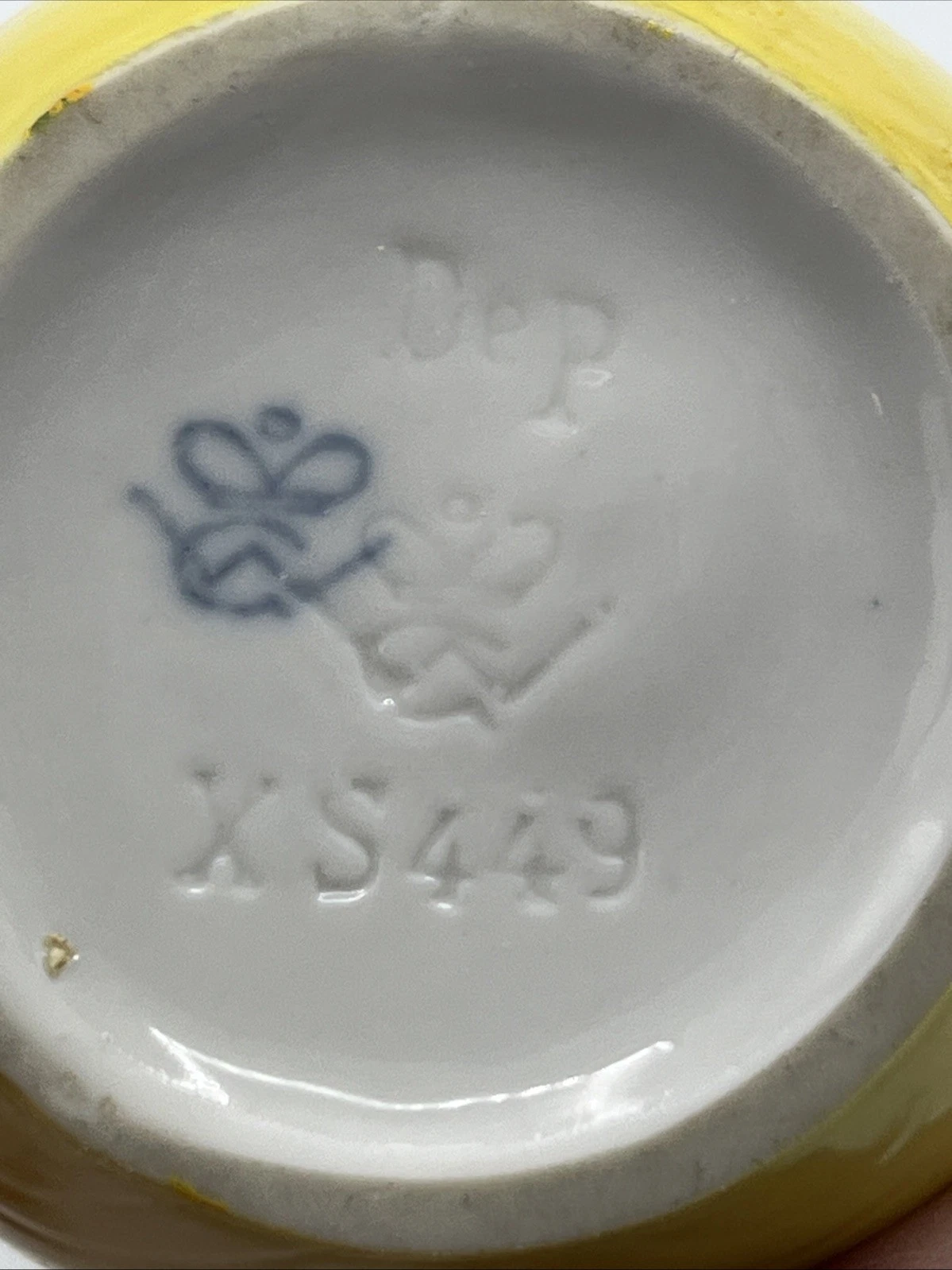
| Markings | See Narrtive |
| Manufacturer | Goebel |
| Origin | Germany |
| Date or Era | circa 1925 |
| Measuring | 2 ¾” across |
Description
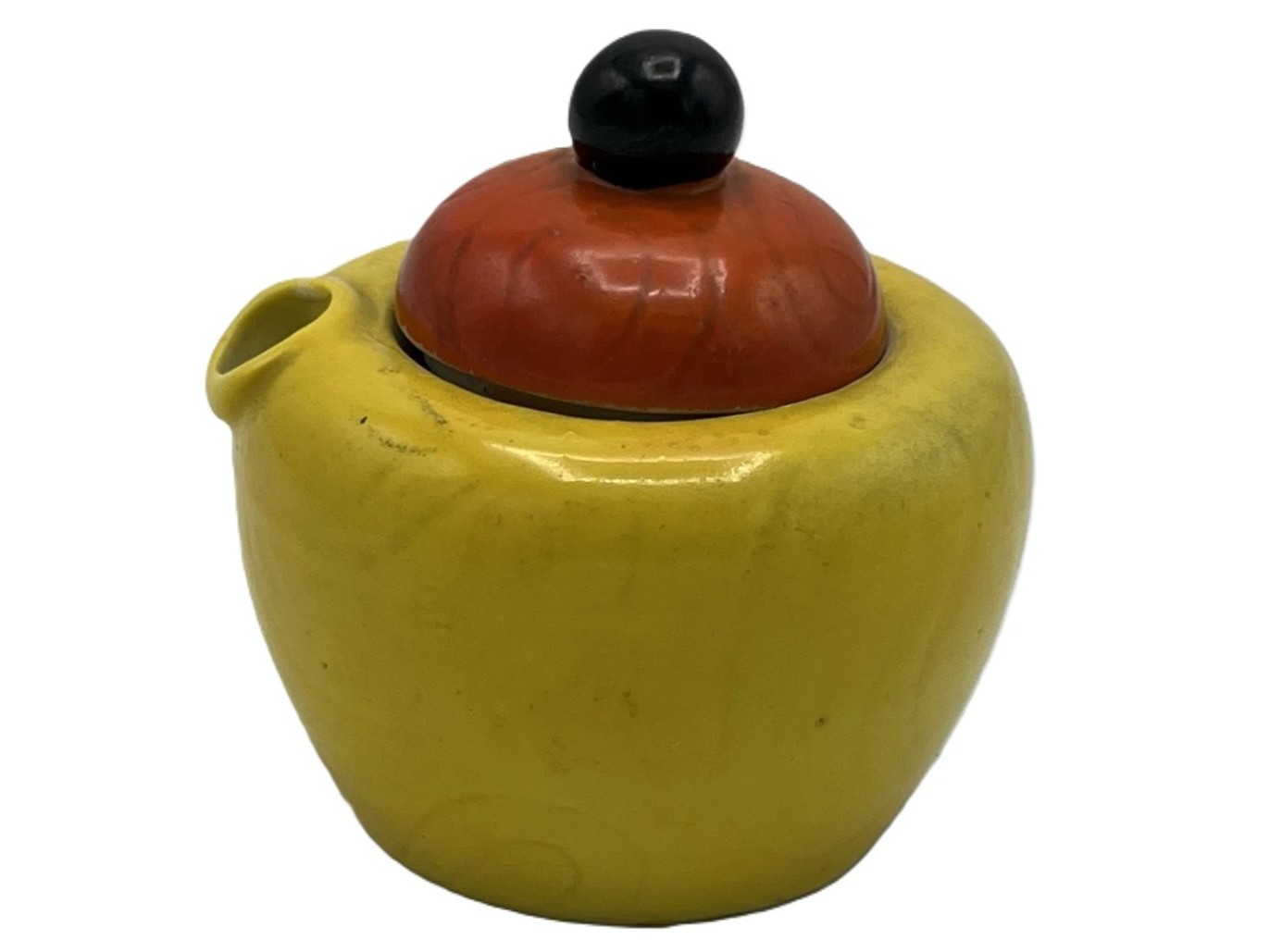
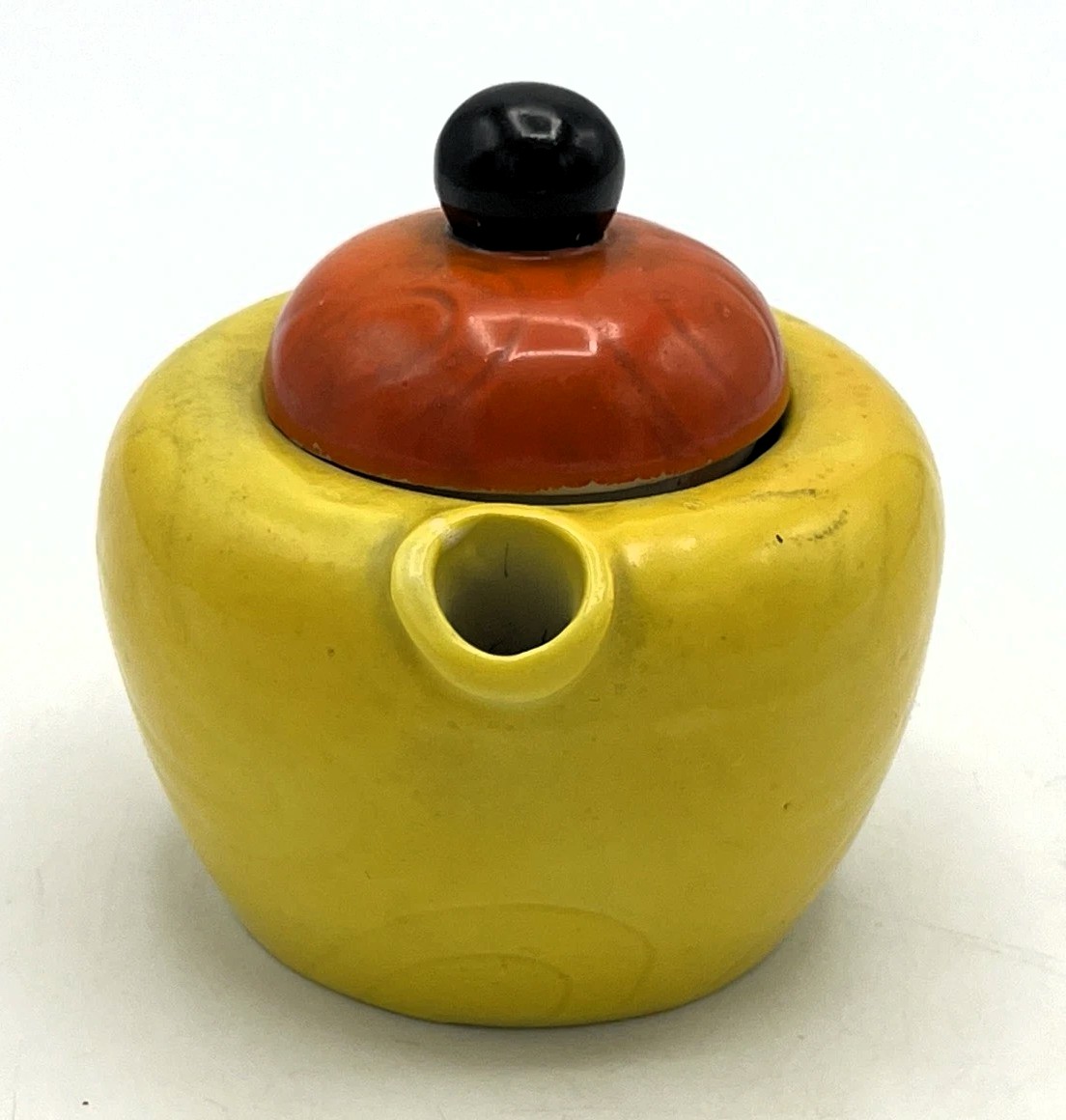
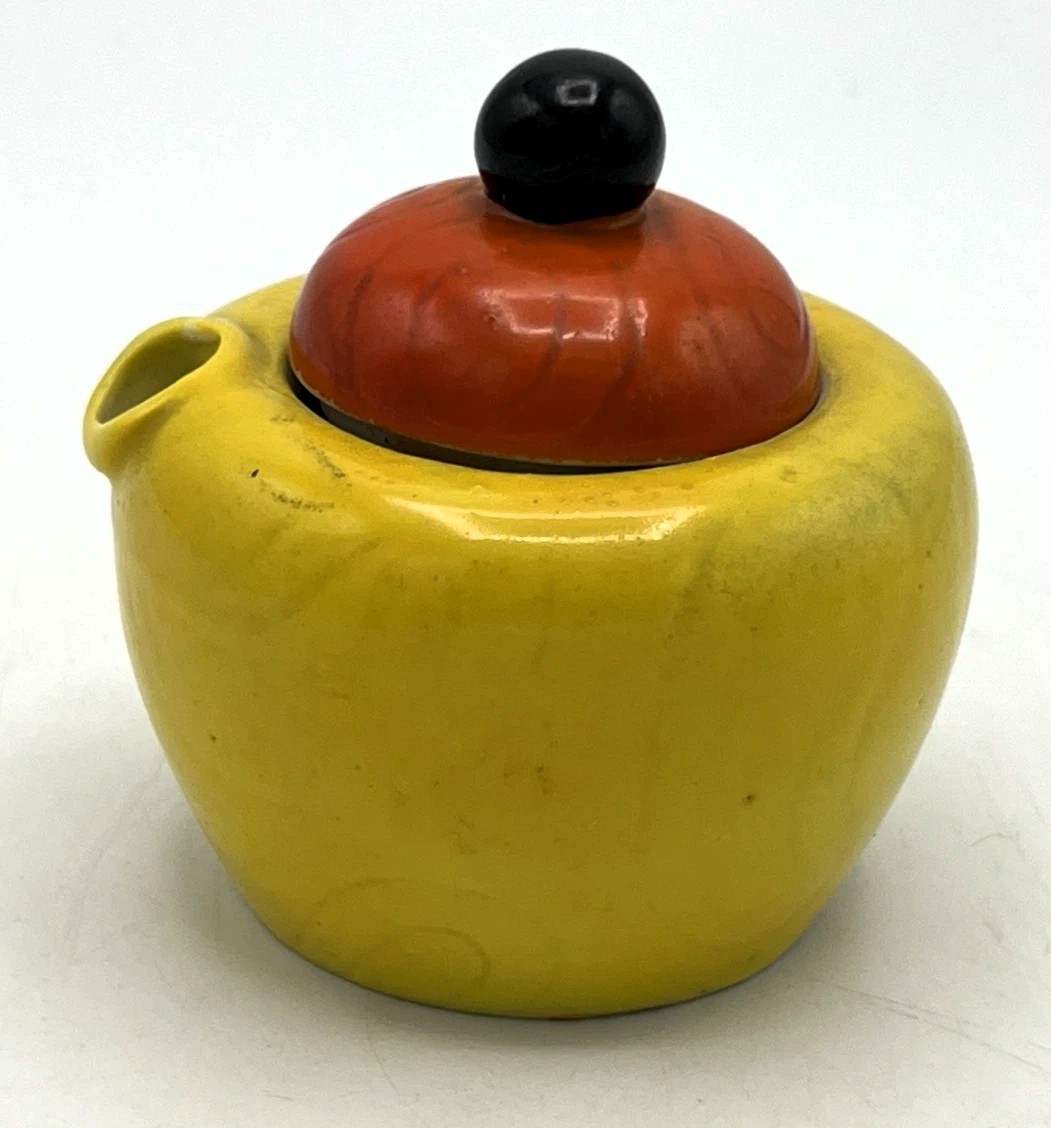
The inkwell features a rounded, almost apple-like body finished in a bright primrose yellow glaze. It is a “font” style inkwell, characterized by the small, projecting spout on the side which allows for easy dipping of a pen.
- Lid: The domed lid is finished in a contrasting deep orange or burnt red glaze, topped with a black spherical knob (finial). If you look closely at the lid, there are subtle molded lines radiating from the center, giving it a stylized floral or “pumpkin” appearance.
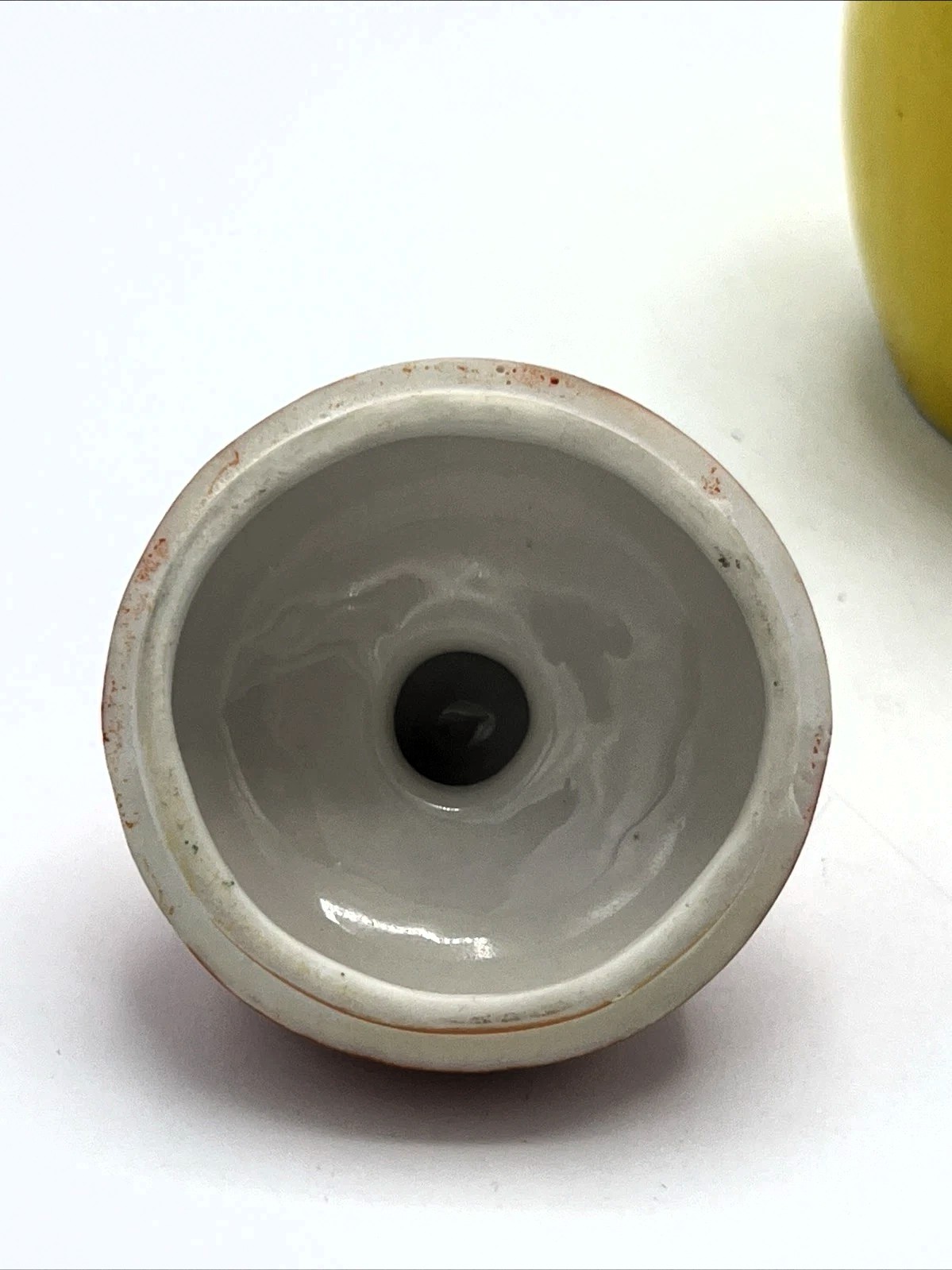
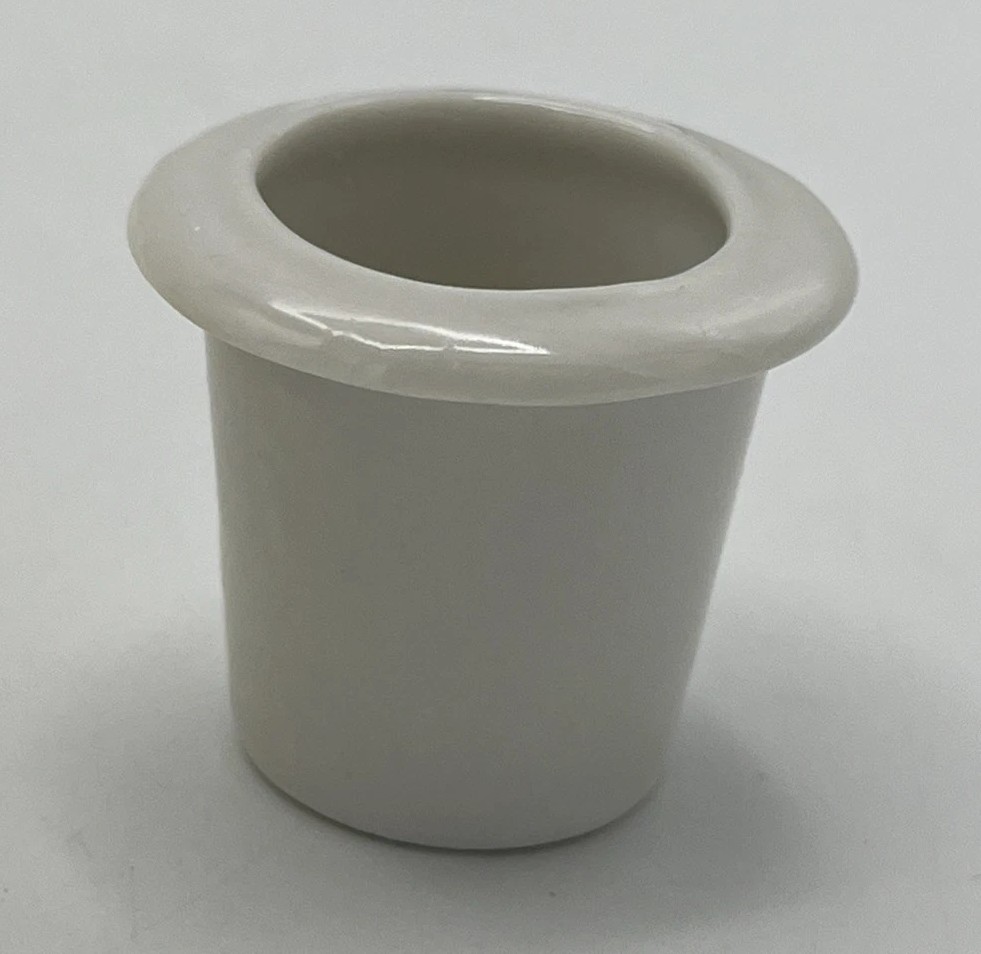
- Interior: It has its original separate, white-glazed porcelain liner.
The Marks on the Bottom
The marks on the base provide a clear “fingerprint” for its origin:
- The Blue Mark: This is a crown positioned over the stylized, intertwined letters “WG.” This is the definitive factory mark for W. Goebel Porzellanfabrik. This specific iteration of the mark was primarily used between 1923 and 1949.
- “Dep”: This is an abbreviation for Déposé (or the German Deponirt), which essentially means “Registered” or “Copyrighted.” It indicates that the design was legally protected.
- “X S 449”: This is the form or model number.
About the Manufacturer: W. Goebel
While many people today associate Goebel almost exclusively with M.I. Hummel figurines (which began production in 1935), the company has a long history of producing a wide range of high-quality decorative and functional porcelain.
- Founding: The company was founded in 1871 by Franz Detleff Goebel and his son William in Oeslau (now Rödental), Bavaria, Germany.
- The “Golden Age” of Novelties: During the 1920s and 30s—the era this inkwell likely hails from—Goebel was prolific in creating “lifestyle” items. They produced everything from luxury dinnerware and perfume lamps to quirky, colorful desk accessories like this one.
- Design Influence: The bold, primary color palette (yellow, orange, black) and the simplified, geometric form are classic hallmarks of the Art Deco movement. During the interwar period, German porcelain factories were at the forefront of combining industrial production with modernist design.
Sold for $140 in January 2026
Content disclaimer. The information posted is the owner’s best knowledge and may not have been vetted by the SOIC. We welcome comments, corrections, and additions, working to make our website information comprehensive and accurate.
Join the Society of Inkwell Collectors (SOIC) – it’s free!
Founded in 1981 as a non-profit organization,
we are documenting inkwells (and accessories).
We’re here to help and inform!