




Royal Copenhagen Double Inkstand
| Categories | Ceramics/Porcelain "Named" Makers |
| Material | Porcelain |
| Markings | See Narrative |
| Manufacturer | Royal Copenhagen |
| Origin | Denmark |
| Date or Era | circa 1923 |
| Measuring | 7” across, 3” high |
Description
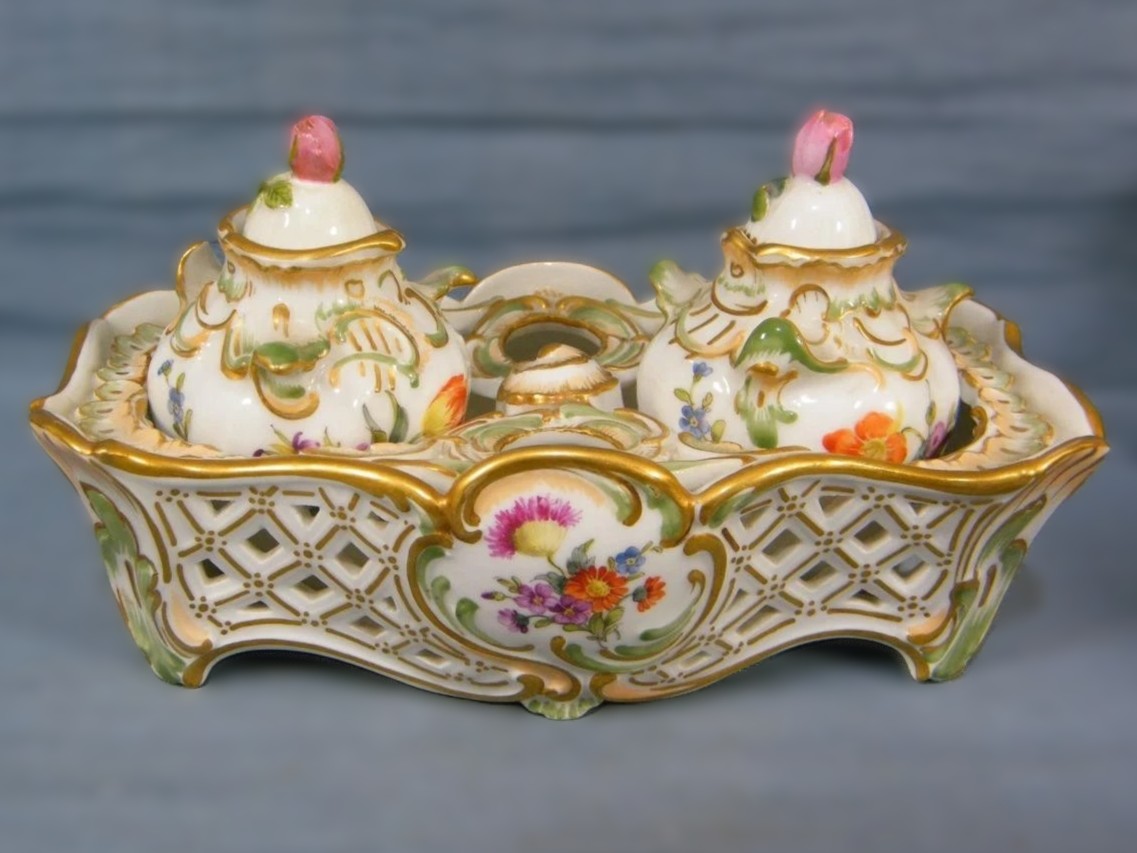
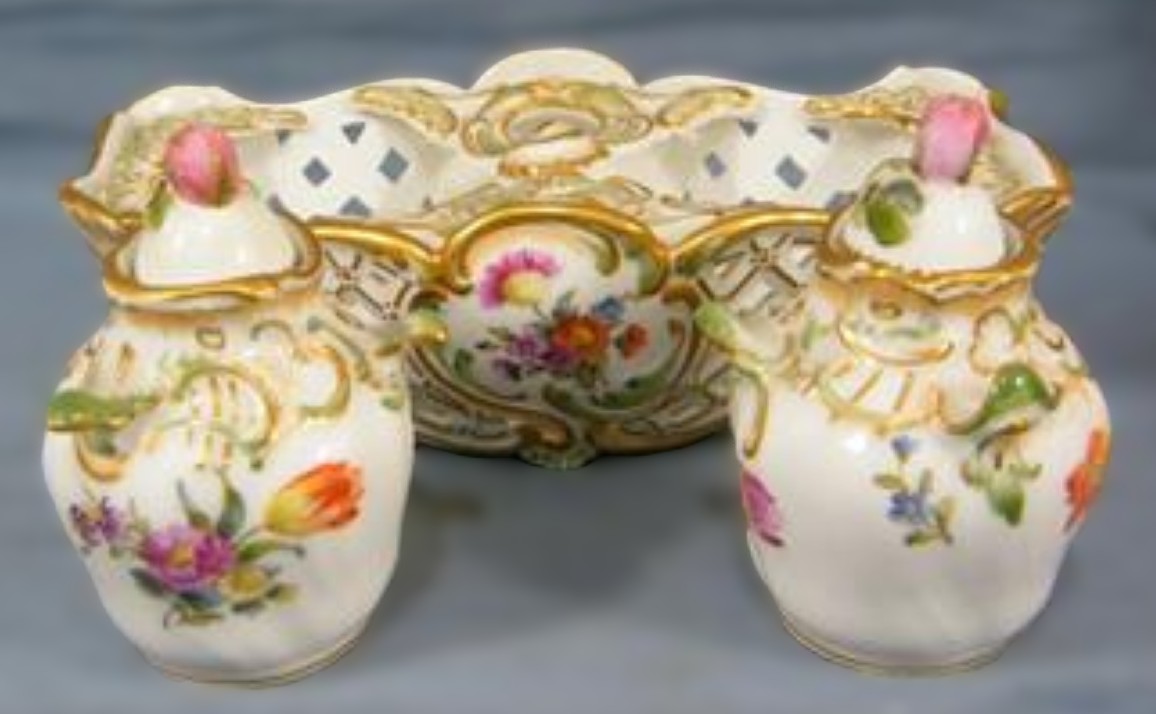
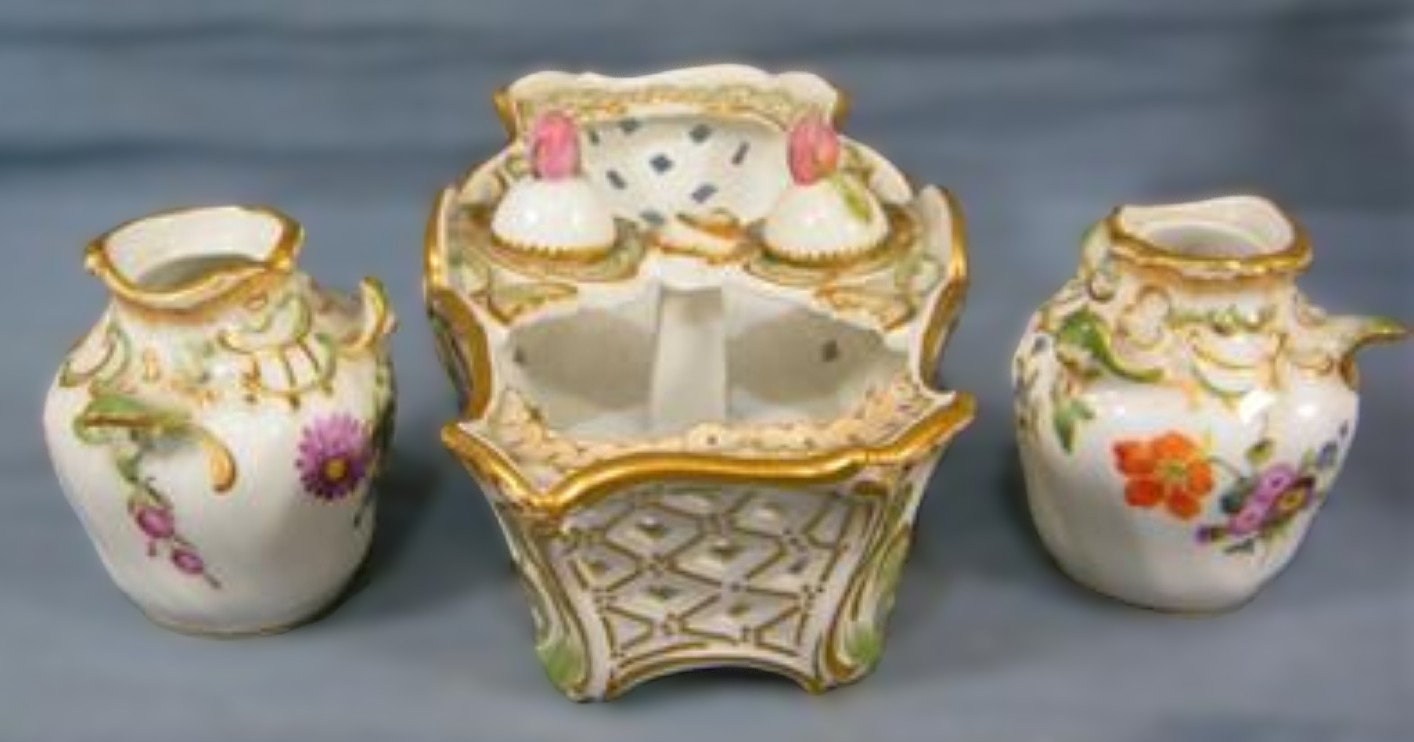
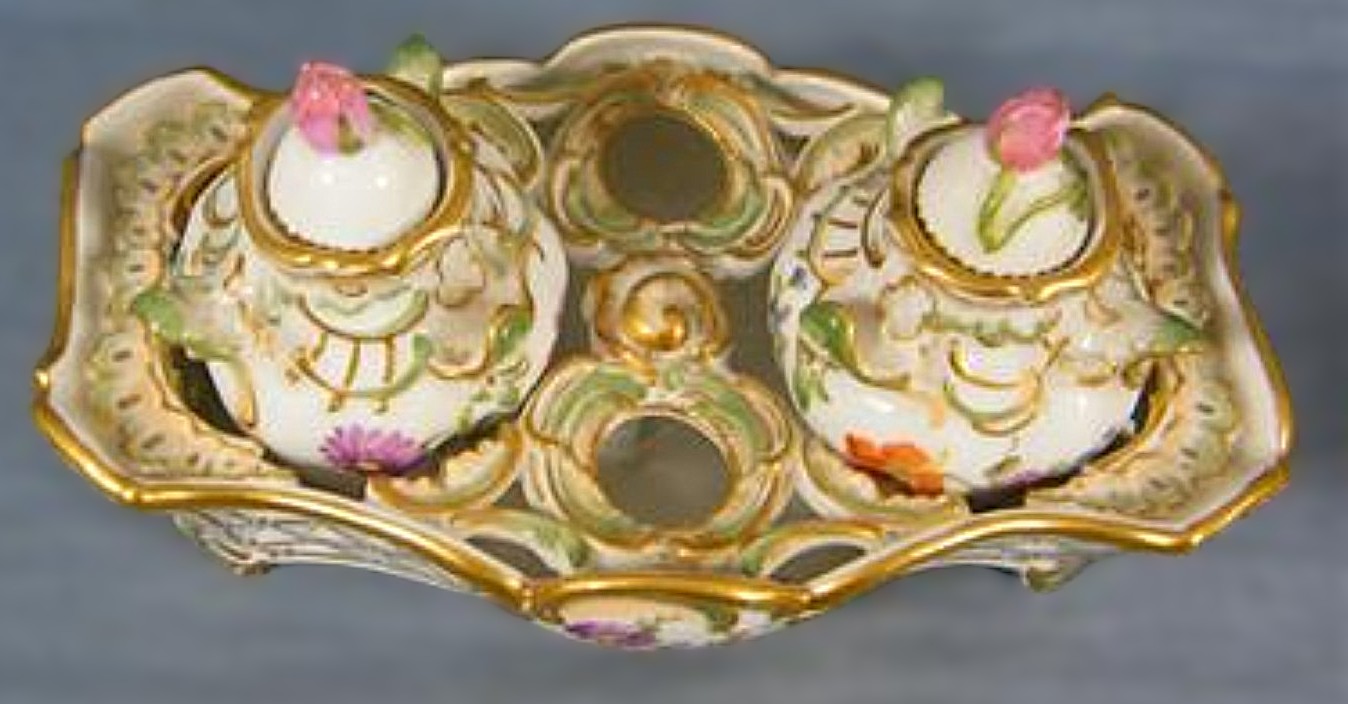
- The Base: The inkstand features a rectangular base with scalloped, gilded rims and a distinctive pierced lattice design along the sides. The front and back are centered with prominent, scroll-edged cartouches containing hand-painted bouquets – notably a large pink thistle-like flower and orange-red blossoms. The corners are accented with delicate green and gold scrollwork, terminating in four small, integrated feet.
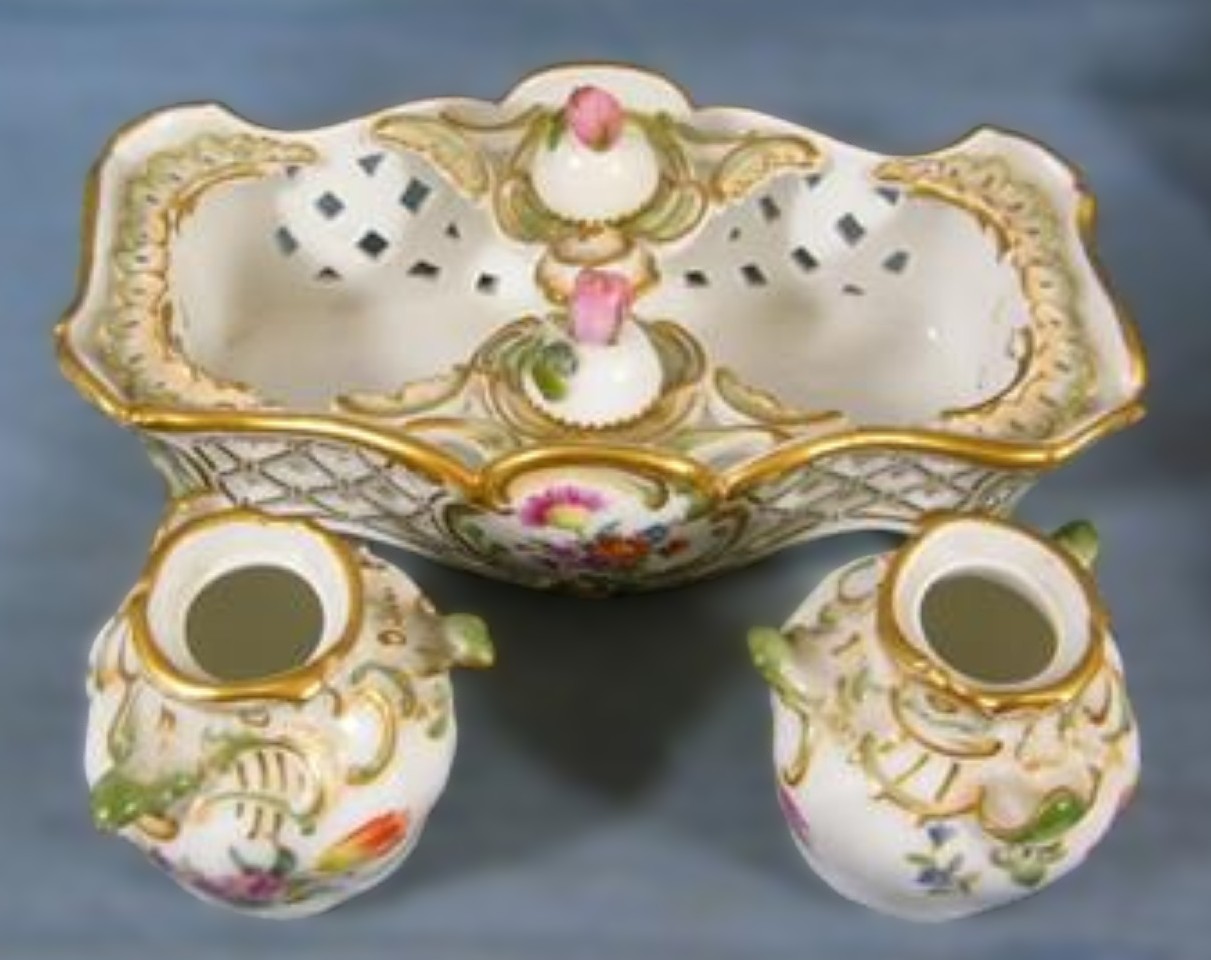
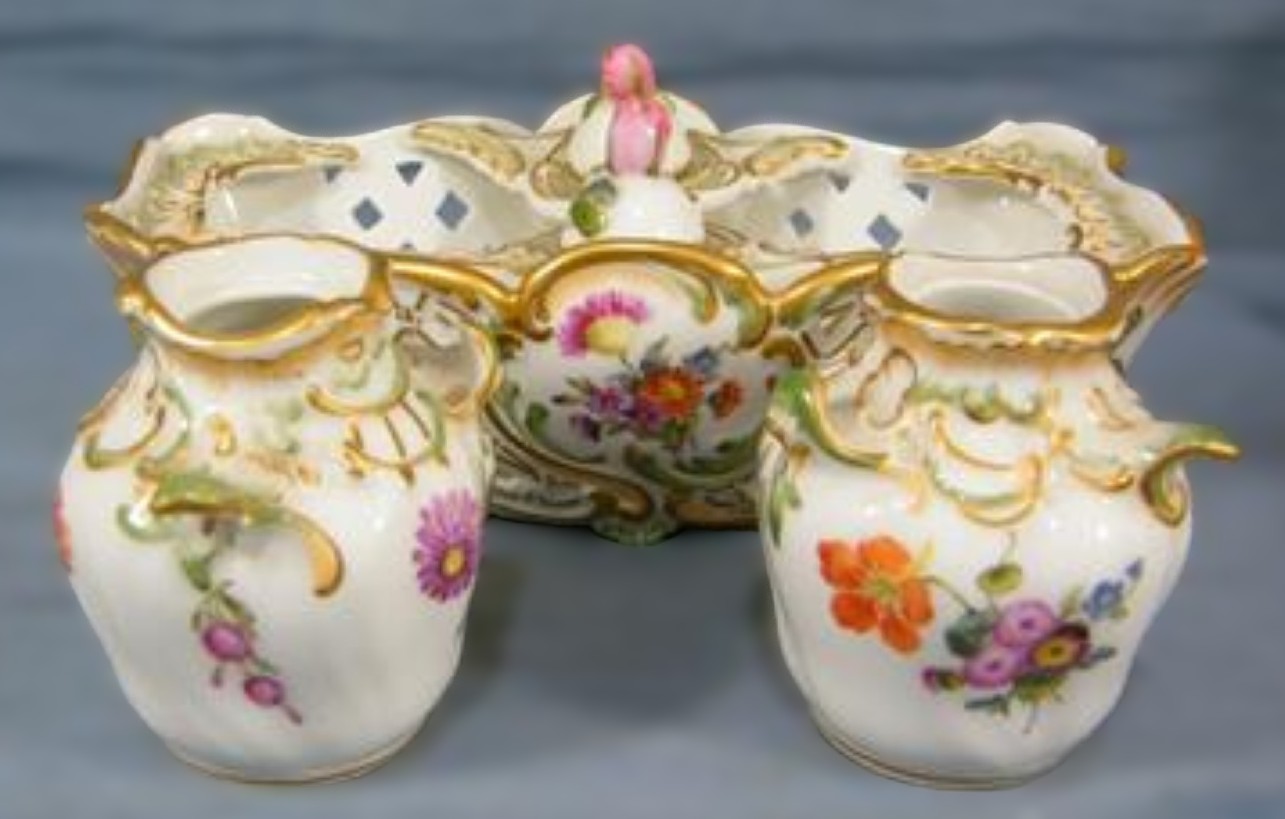
- The Twin Inkwells: Two matching, bulbous porcelain pots sit within dedicated circular recesses. They are decorated with varied floral sprays including tulips, asters, and forget-me-nots in vibrant oranges, purples, and yellows. The pots feature small, gilded scroll handles on either side.
- The Lids & Center: The lids are domed and topped with sculpted pink rosebud finials. A clever functional detail allows these lids to be placed securely in the two central, gilded apertures when the inkwells are in use.
- Material & Palette: Fine white porcelain with a high-glaze finish. The palette is rich with hand-painted polychrome enamels and heavy 24k gold gilding highlighting the edges, scrolls, and pierced sections.
Marks and Provenance
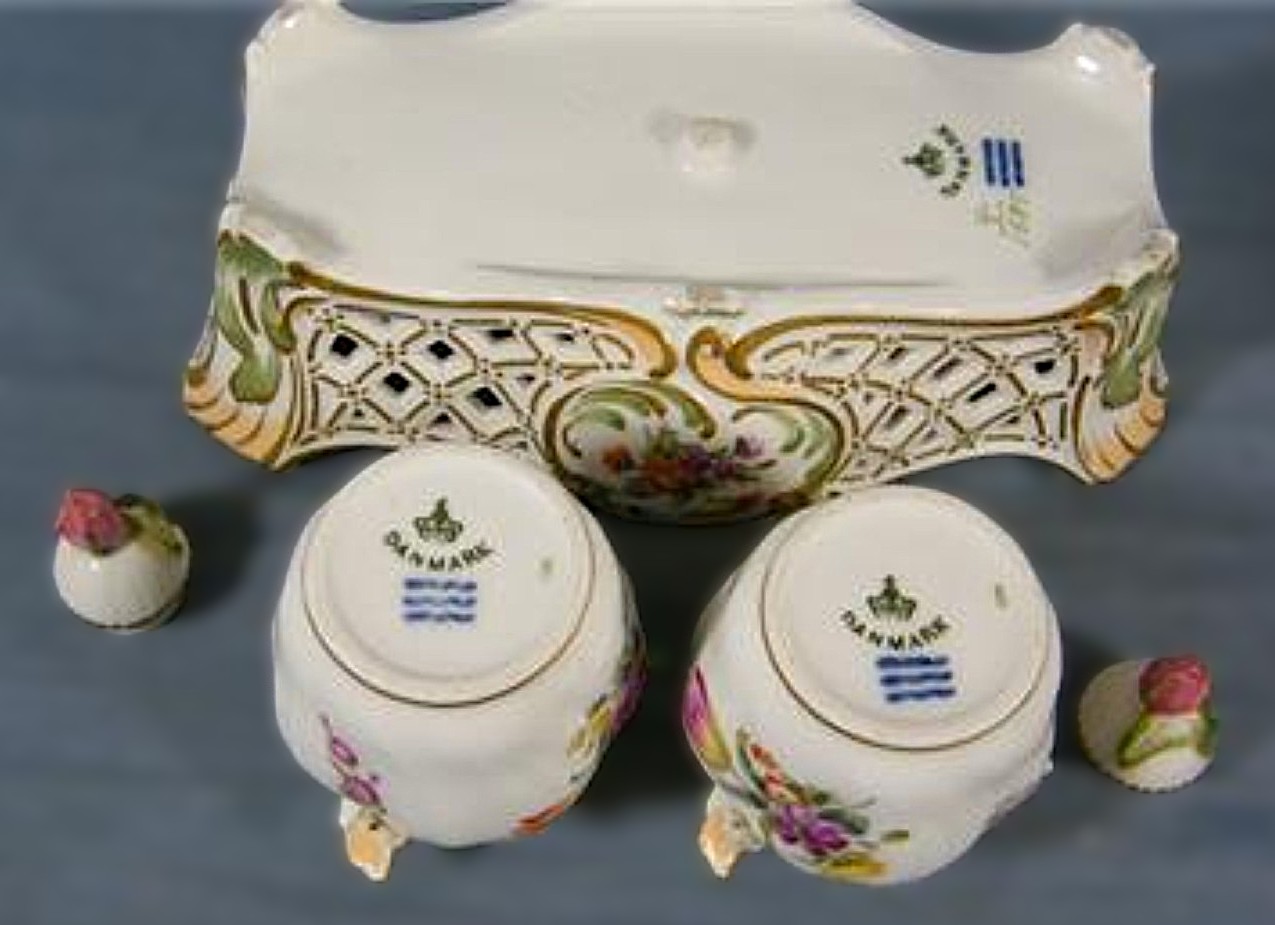
The underside of the base and pots display the iconic Royal Copenhagen marks:
- The Crown: Typically in green, representing the royal patronage.
- Three Blue Waves: Symbolizing the three straits of Denmark: the Sound, the Great Belt, and the Little Belt.
- Date Coding: The markings and the “Danmark” stamp are consistent with a 1923 production date. During this period, a small line or bar was often placed over or under specific letters in the company name to denote the year; for 1923, you will often find a bar above the ‘A’ in Copenhagen (or similar specific indicators).
A Brief History: Royal Copenhagen
Founded in 1775 by chemist Frantz Heinrich Müller under the protection of Queen Dowager Juliane Marie, the Royal Danish Porcelain Manufactory (as it was originally known) is one of the oldest and most prestigious porcelain houses in the world.
- The Blue Fluted Legacy: Its most famous pattern, Blue Fluted, was introduced in 1775 and remains a signature today.
- Flora Danica: In the late 18th century, the company produced the “Flora Danica” service, originally intended as a gift for Catherine the Great—widely considered one of the most significant porcelain sets ever created.
- Innovation & Artistry: By the time this inkstand was produced in the 1920s, Royal Copenhagen was a leader in the Art Nouveau movement (led by artistic director Arnold Krog). This piece reflects that heritage through its organic floral motifs and masterful reticulated work, which required immense skill to prevent warping during the firing process.
Sold for $275 in January 2026
Content disclaimer. The information posted is the owner’s best knowledge and may not have been vetted by the SOIC. We welcome comments, corrections, and additions, working to make our website information comprehensive and accurate.
Join the Society of Inkwell Collectors (SOIC) – it’s free!
Founded in 1981 as a non-profit organization,
we are documenting inkwells (and accessories).
We’re here to help and inform!