

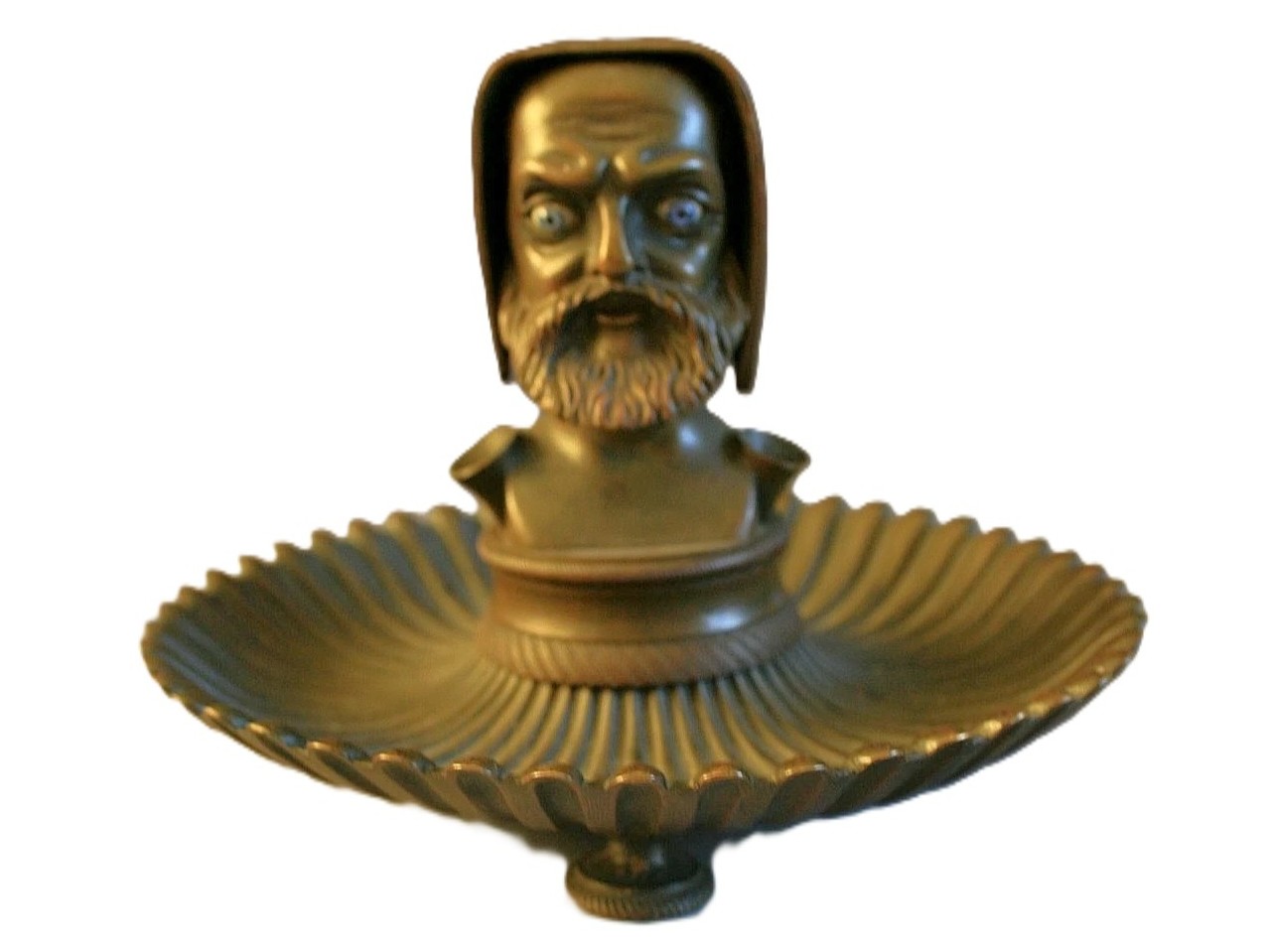



Bust of Dante
| Categories | Figural - Mythology; Literature; Religion; Fictional |
| Type | Literature |
| Material | Bronze |
| Markings | Unmarked |
| Manufacturer | Undetermined |
| Origin | France |
| Date or Era | circa 1880 |
| Measuring | 7 ⅛” diameter; 4 ¾” high |
This bronze figural inkstand is an example of the late 19th-century fascination with historical and literary themes. The bust is a masterful depiction of a figure whose identity, while not explicitly marked, carries significant cultural weight.
The Subject: A Literary and Historical Icon
The figure is widely identified as Dante Alighieri (1265–1321), the supreme Italian poet famous for the Divine Comedy.
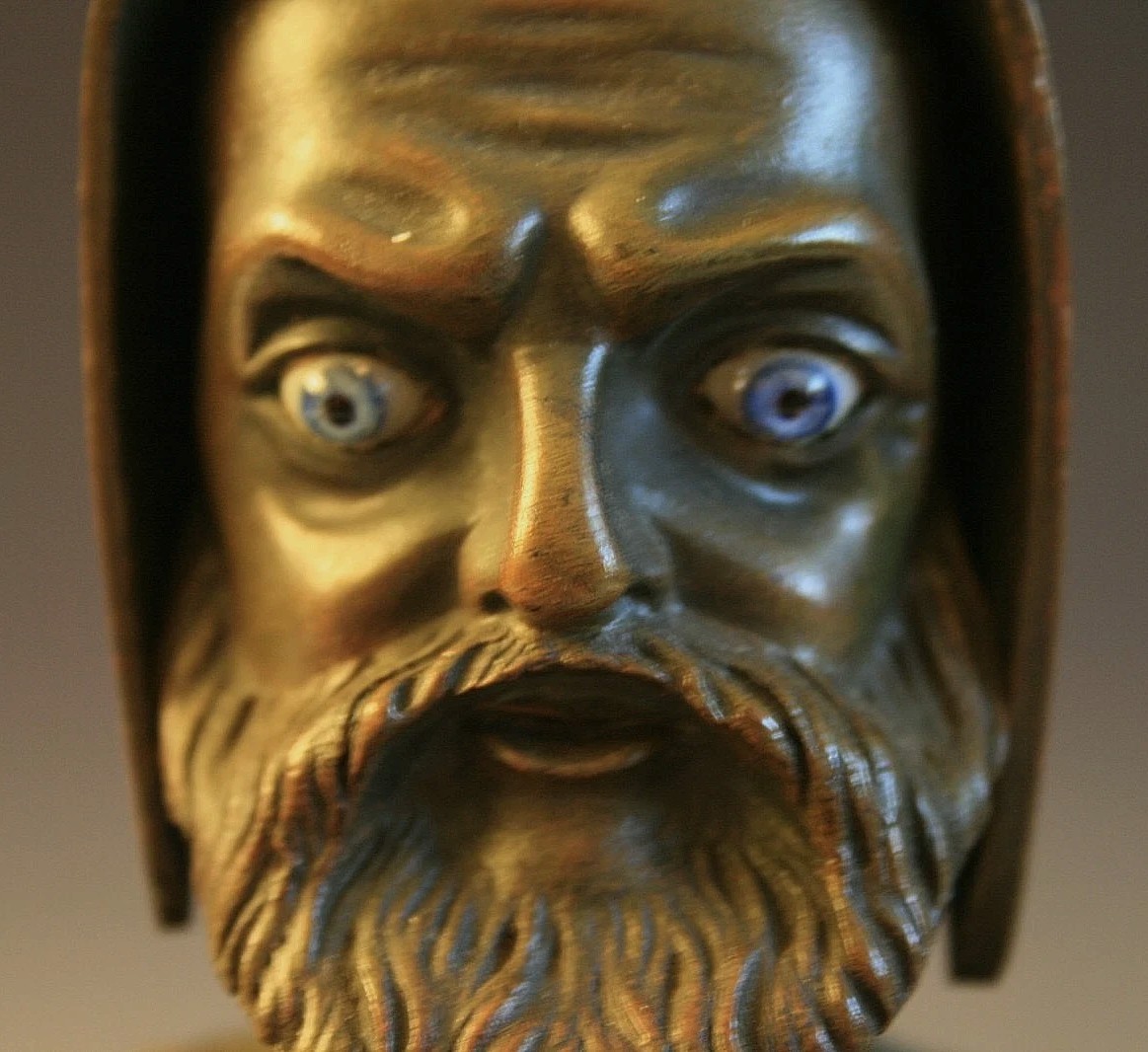
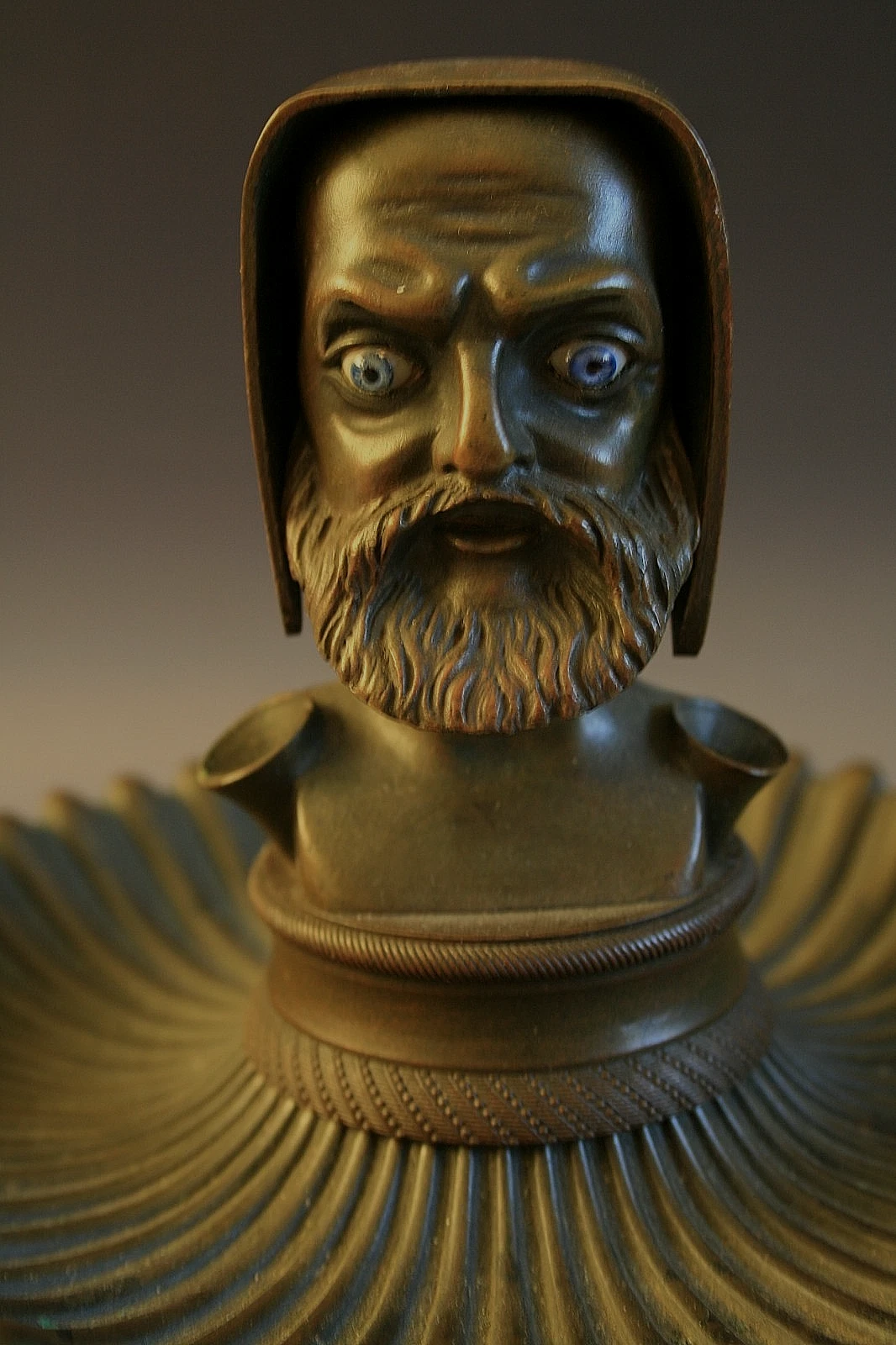
- Identifying Features: The bust captures Dante’s iconic profile, characterized by a prominent, aquiline nose and a stoic, contemplative expression.
- The Headgear: He is wearing his traditional cowl or chaperon, a soft-capped hood that was standard attire for Florentine intellectuals of the 13th and 14th centuries.
- The “Riveting” Eyes: The eyes are glass sulfurs or paperweight-style glass eyes. This technique was used to give figural bronzes a lifelike, “soulful” quality that simple metal casting could not achieve.
Description
- The Inkwell: The top of the cowl acts as a hinged lid that tilts backward on a pin hinge to reveal the reservoir.
- Missing Insert: This piece would have originally held a small, conical glass or porcelain liner.
- Material: It is crafted from patinated bronze, featuring a deep chocolate or “Medal” brown finish that has aged naturally over time.
Origin and Age
- Estimated Date: Circa 1870–1890.
- Manufacturer: While unmarked, the high quality of the casting and the specific use of glass eyes point strongly to the French foundries of Paris. Foundries such as F. Barbedienne or Tahan specialized in “Grand Tour” souvenirs—high-end bronze miniatures of historical greats intended for the libraries of the European and American elite.
- Where it was Made: Paris, France was the epicenter for this style of “desk-top sculpture” during the late Victorian era.
Historical Significance
In the 19th century, having a bust of Dante on one’s desk was a “status symbol of intellect”. Dante was revered as the father of the Italian language and a symbol of the creative struggle, making his likeness a favorite for writers and scholars.
Sold for $350 in January 2026
Content disclaimer. The information posted is the owner’s best knowledge and may not have been vetted by the SOIC. We welcome comments, corrections, and additions, working to make our website information comprehensive and accurate.
Join the Society of Inkwell Collectors (SOIC) – it’s free!
Founded in 1981 as a non-profit organization,
we are documenting inkwells (and accessories).
We’re here to help and inform!