

Inkipedia


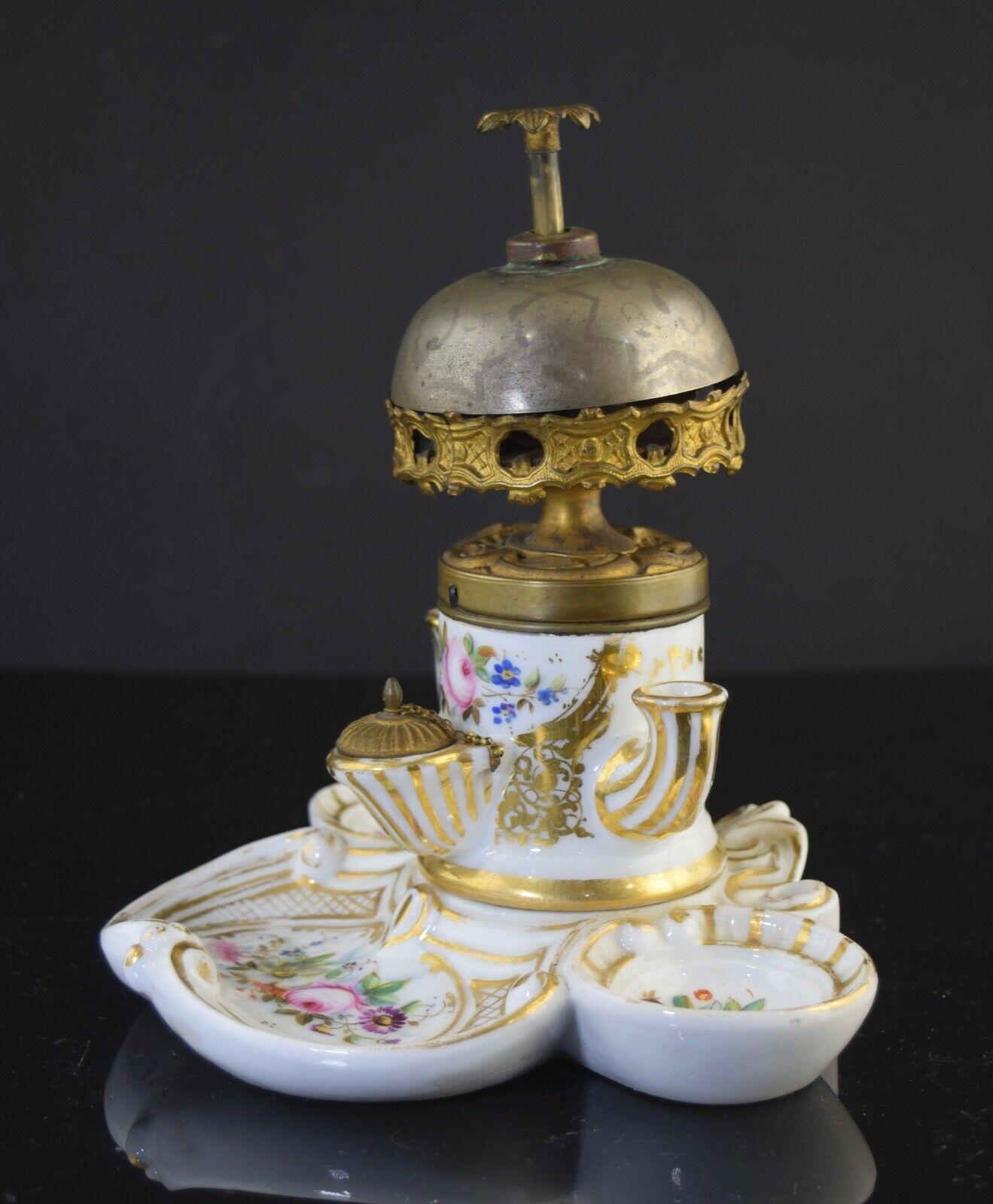
French Porcelain “Pump” Inkwell with Servants Bell
| Categories | Dual Purpose Inkstands, Mechanical - Pump / Siphon |
| Type | Pump |
| Material | Metal, Porcelain |
| Markings | Unmarked |
| Manufacturer | Undetermined |
| Origin | France |
| Date or Era | circa 1860 |
| Measuring | 6 ¼” x 5 ½” x 6 ½” high |
This unusual French “pump” porcelain inkstand is a multi-functional desk accessory, dating to the mid-19th century. It is a rare example that combines a mechanical inkwell with a spring-loaded servant’s bell.
Description
- The Base: The inkstand features an elaborate white porcelain base consisting of a large, scalloped pen tray at the front and two integral quill or pen holders on the side.
- Decoration: The porcelain is elegantly decorated with hand-painted floral sprays of pink roses and blue wildflowers, framed by heavy gilded scrollwork and horizontal banding.
- Bell: A metal bell with a star-patterned surface is integrated into the top of the design, supported by a decorative gilt-brass openwork gallery.
Mechanism and Function
This piece features two distinct mechanical systems:
- The Bell Mechanism: The top of the bell is fitted with a small, palm-sized finial plunger. When this plunger is pushed down, it triggers an internal spring-loaded hammer that strikes the side of the bell to signal for a servant.
- The Pump Inkwell: Below the bell and brass gallery sits a standard “pump” or displacement mechanism. Turning the brass cap below the bell lowers an internal plunger into the ink reservoir, forcing ink up into the small porcelain dipping font at the front.
- Ink Preservation: Reversing the turn lifts the internal plunger, creating a vacuum that draws the ink back into the airtight central cylinder to prevent evaporation.
Origin and Age
- Maker: While the porcelain and metal are unmarked—except for the star pattern on the bell itself—the design and high-quality “Articles de Paris” craftsmanship are characteristic of the French Palais Royal workshops.
- Attribution: Mechanical inkstands of this complexity were often the work of masters like Alphonse Giroux or Tahan, who specialized in integrating clocks, bells, and music boxes into high-end desk furniture.
- Age: Circa 1860–1870. The combination of Rococo Revival porcelain forms and refined mechanical features was highly popular during the Second French Empire.
Estimated value: $300
Content disclaimer. The information posted is the owner’s best knowledge and may not have been vetted by the SOIC. We welcome comments, corrections, and additions, working to make our website information comprehensive and accurate.
Join the Society of Inkwell Collectors (SOIC) – it’s free!
Founded in 1981 as a non-profit organization,
we are documenting inkwells (and accessories).
We’re here to help and inform!