



Gravity-Fed “Fountain” Inkwell
| Categories | Mechanical - Pump / Siphon |
| Type | Fountain |
| Material | Porcelain |
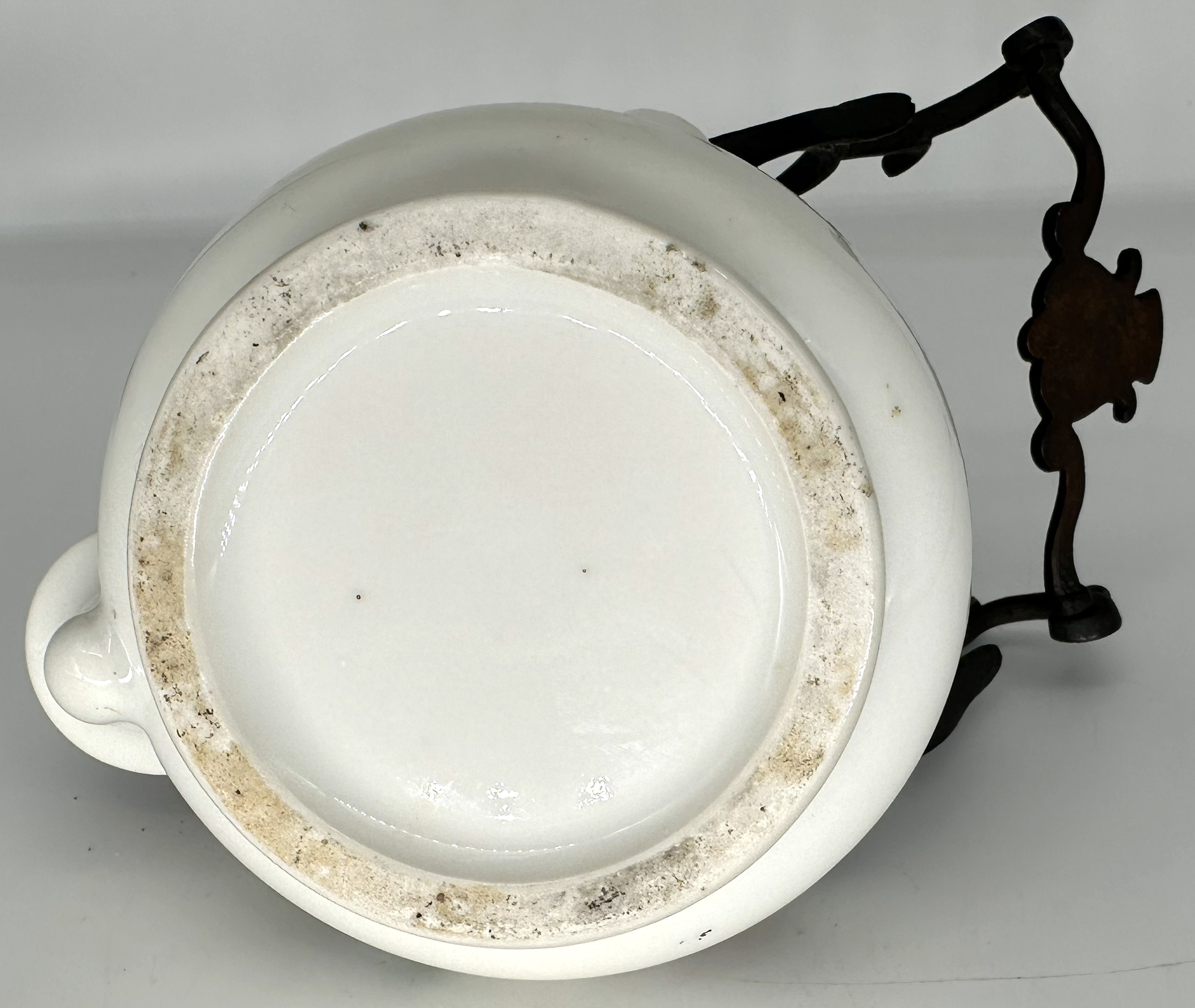
| Markings | Unmarked |
| Manufacturer | Undetermined |
| Origin | France |
| Date or Era | circa 1860 |
| Measuring | 6 ½” long (inkwell and pen rack); 3 ½” diameter (kettle portion); 4 ¼” high |
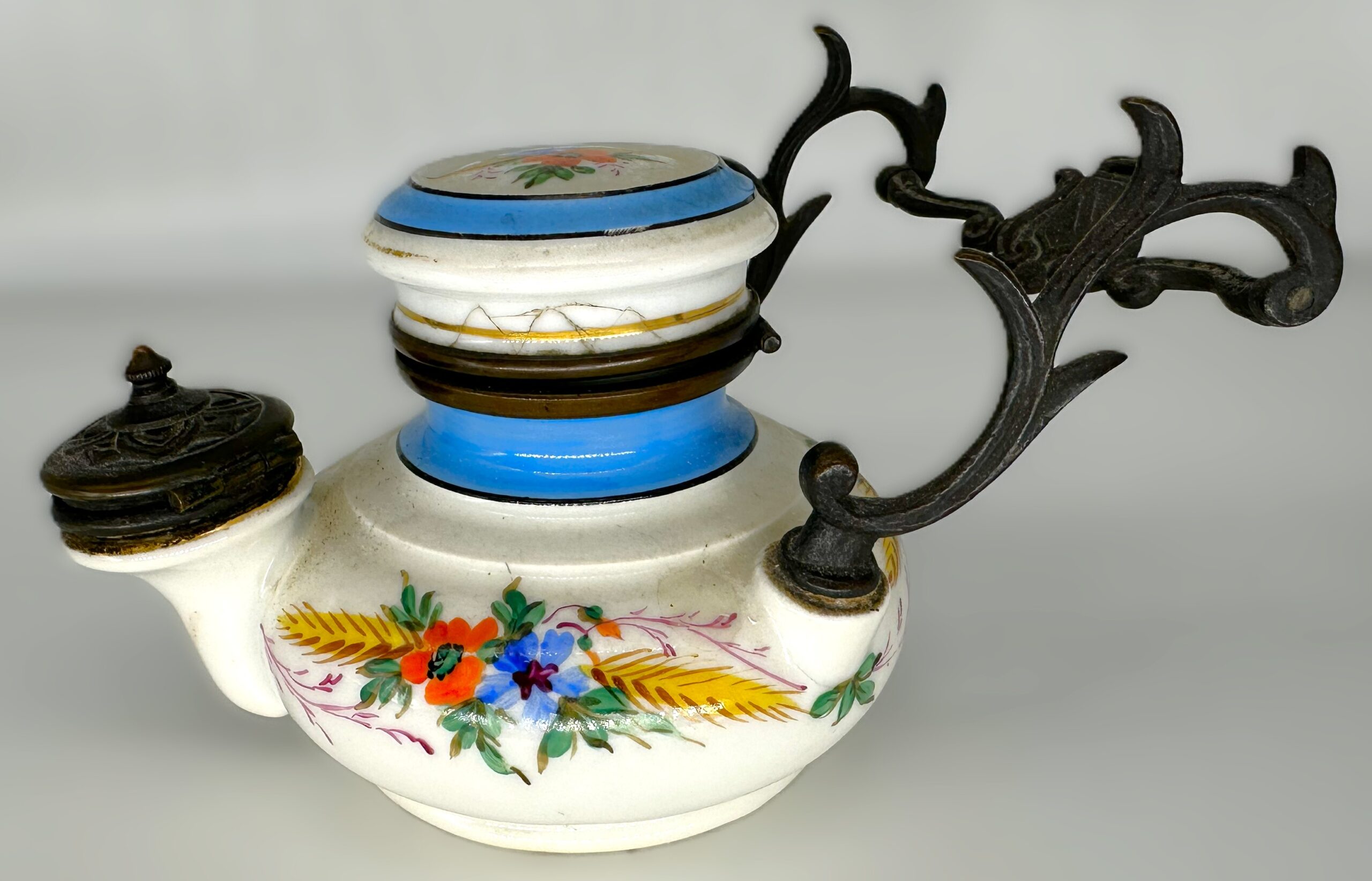
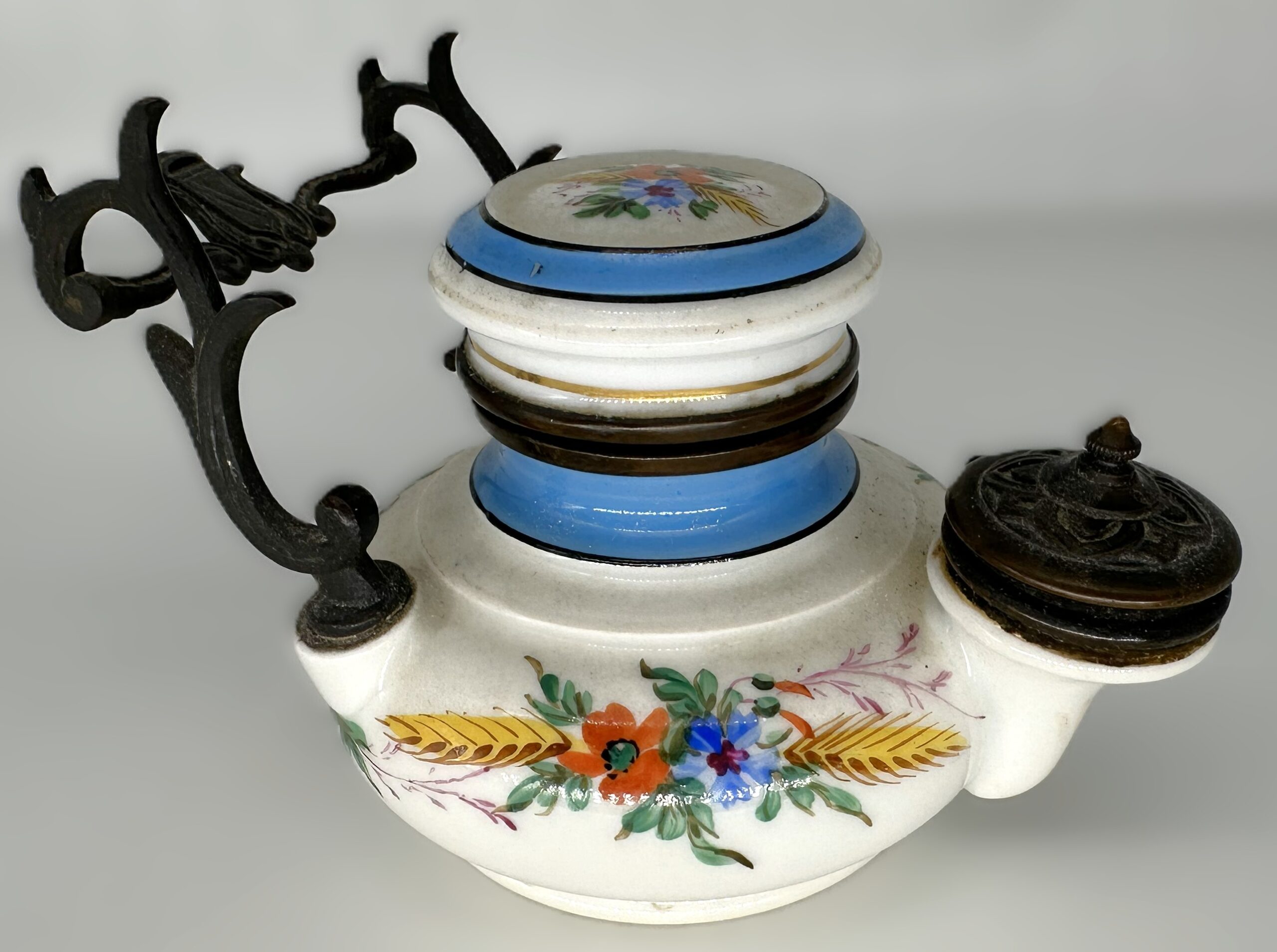
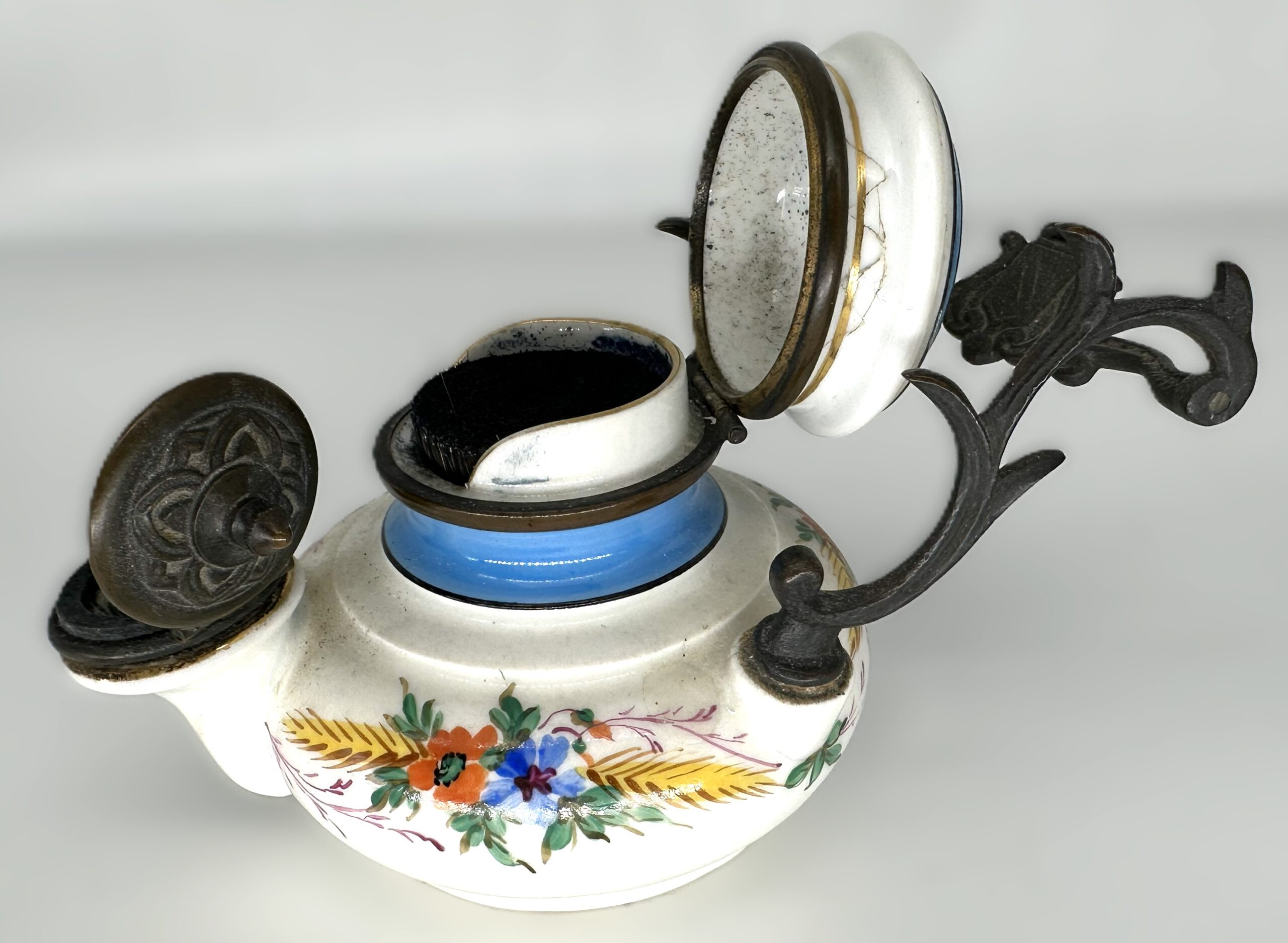
This porcelain inkstand is a unique example of a gravity-fed “fountain” inkwell in the form of a tea kettle, a popular design from the mid-to-late 19th century.
Physical Description and Function
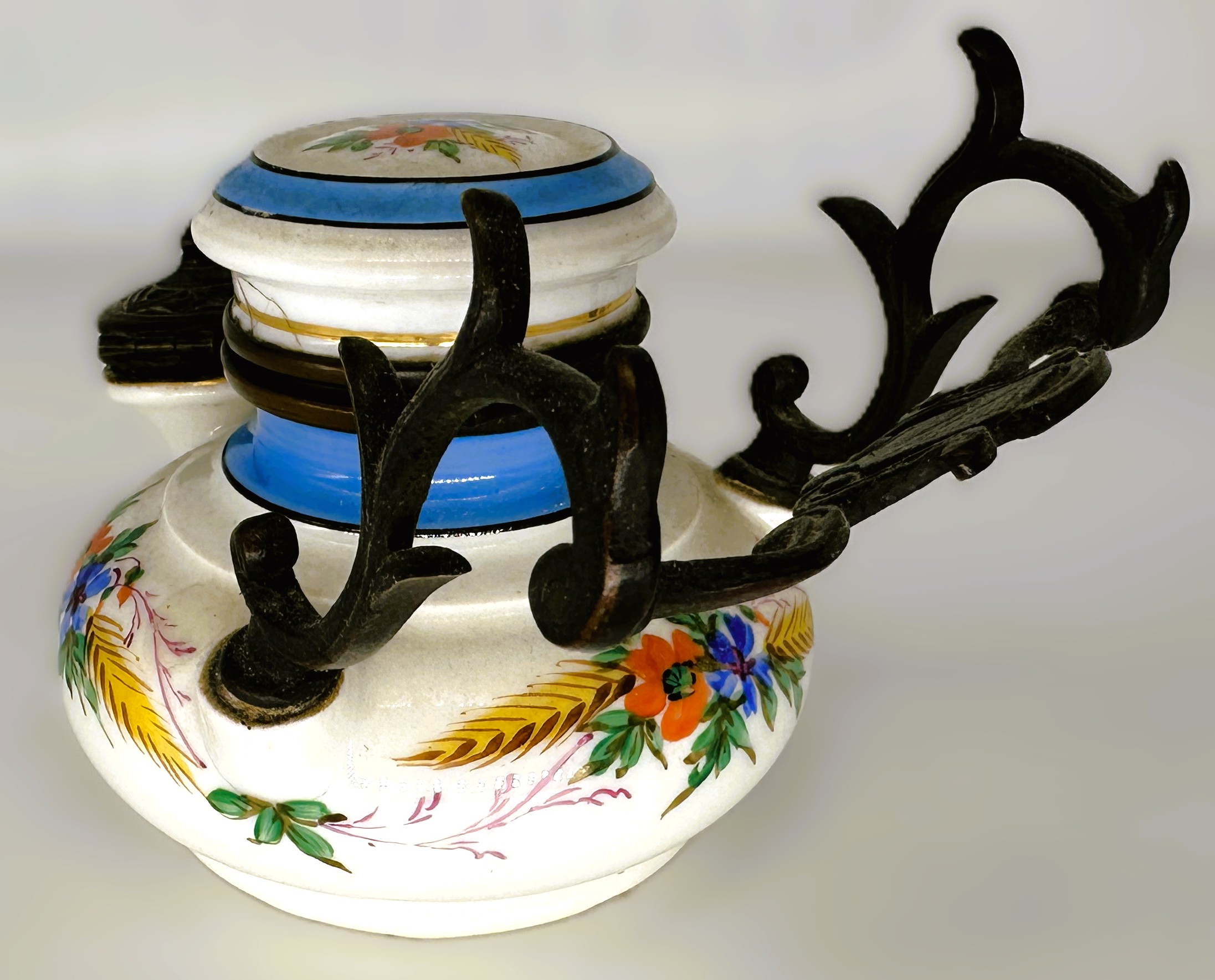
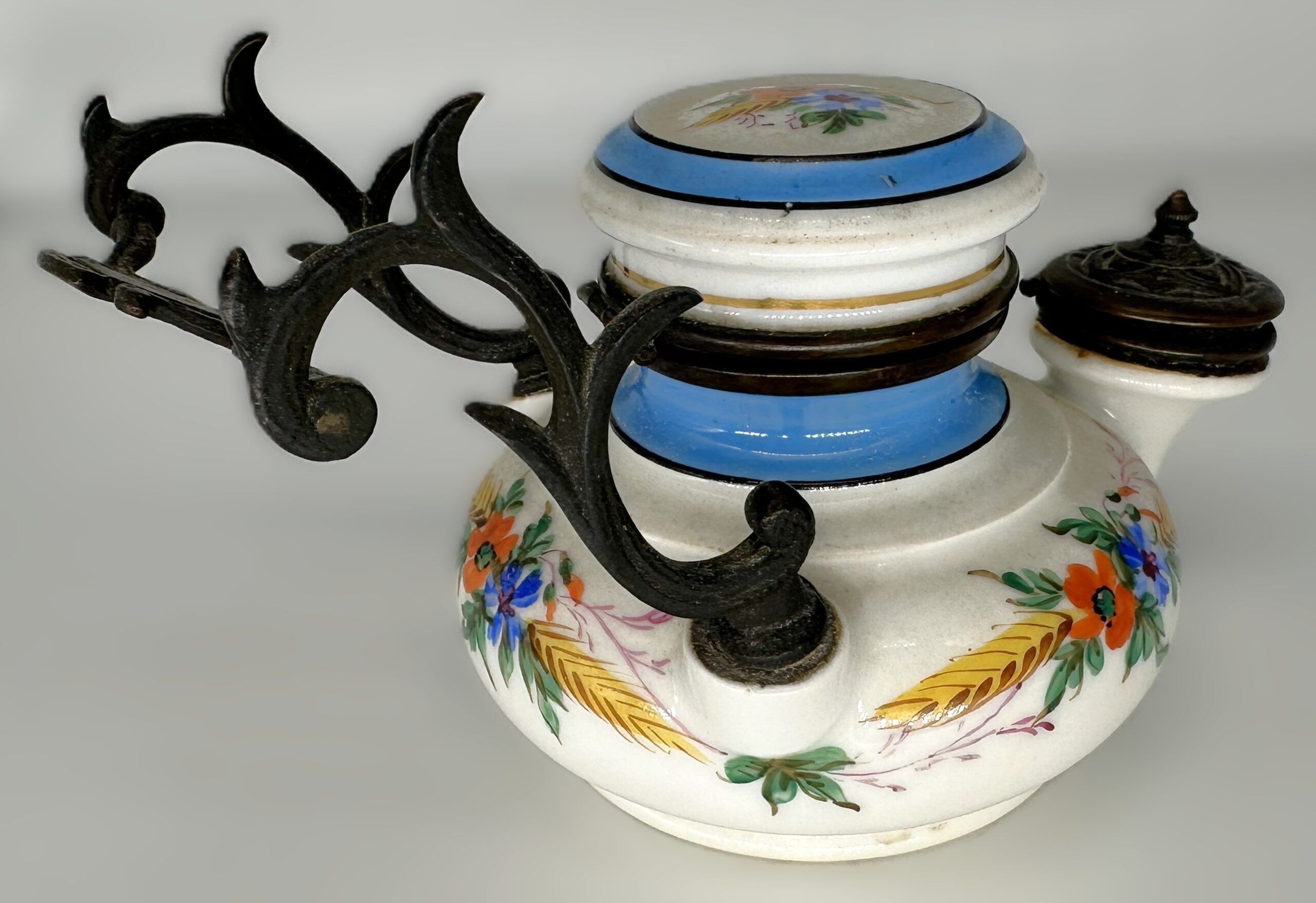
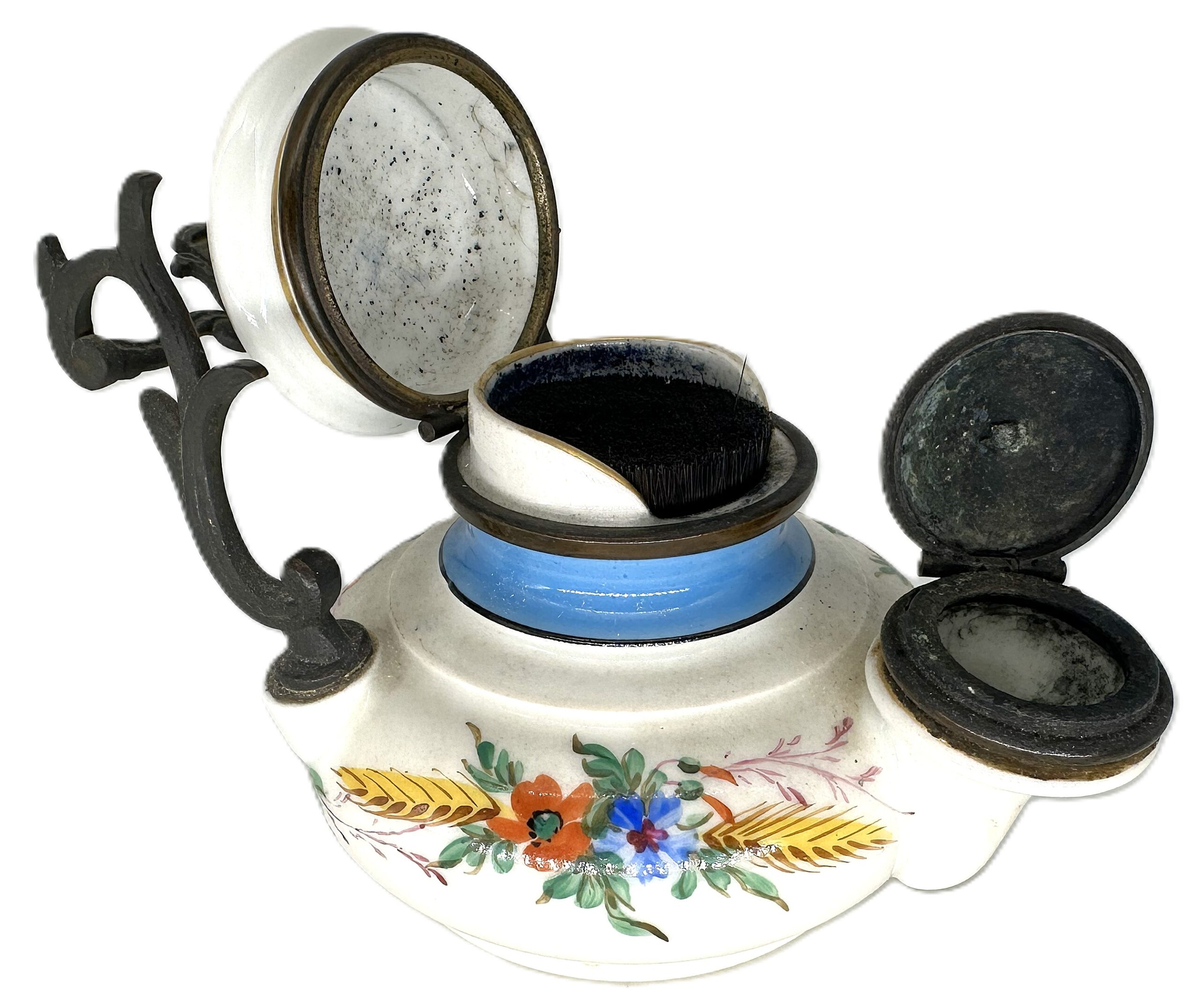
- Form: The body is crafted in the shape of a miniature tea kettle, featuring a rounded porcelain reservoir and a prominent “spout” or font at the front.
- Gravity Mechanism: It functions on a basic hydraulic principle. The main body holds a larger supply of ink, which flows by gravity into the smaller font at the front. This ensures a constant, shallow supply of ink for dipping without the need to submerge the pen deeply.
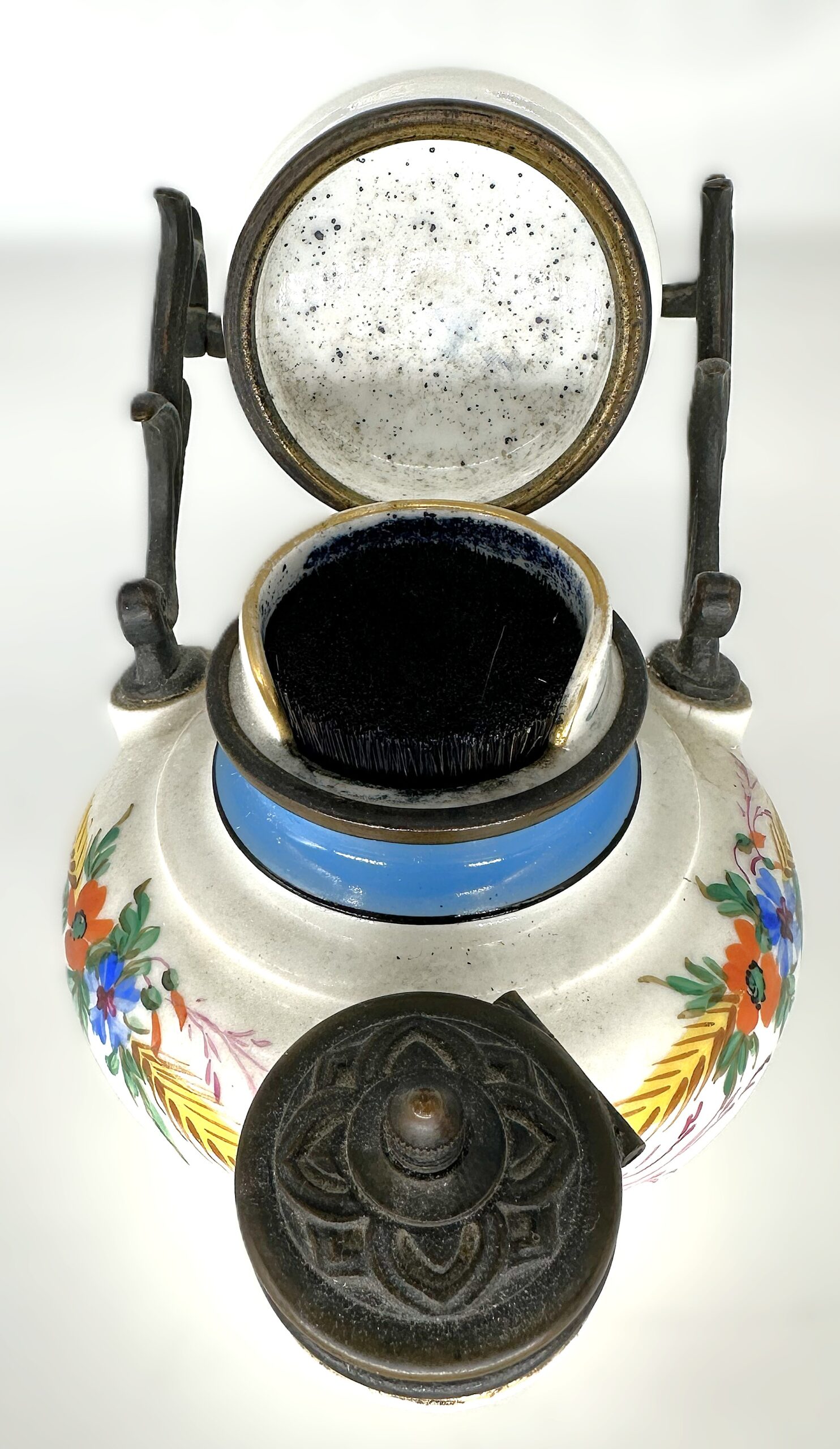
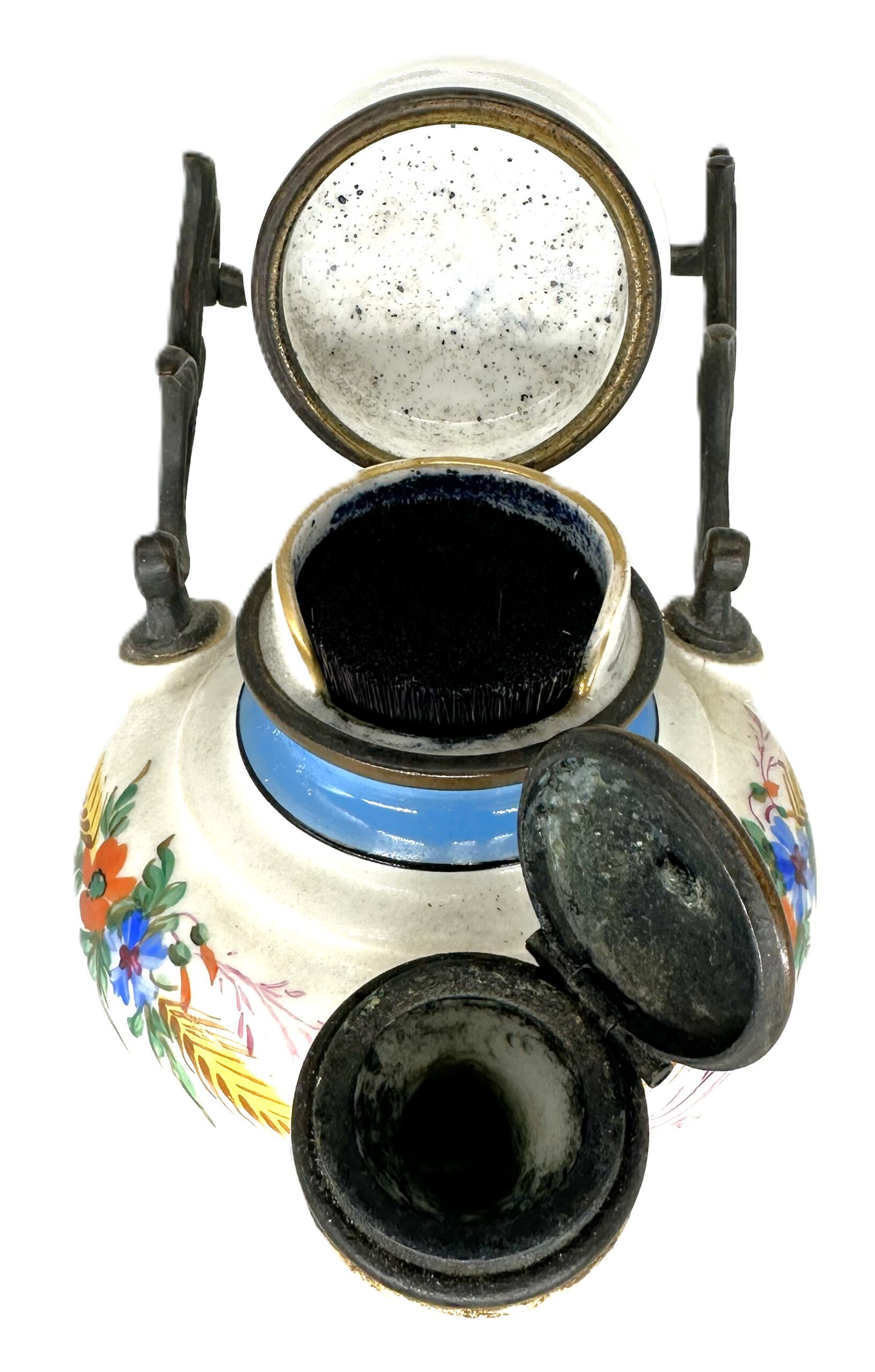
- The Font: The front “spout” is protected by a small, hinged brass lid decorated with a raised, multi-petal floral motif.
- Pen Wipe: The top of the “kettle” features a larger hinged lid. Inside is a recessed chamber containing a cluster of stiff, dark bristles – likely made of horsehair. This served as a built-in pen wipe to clean excess ink or paper fibers from the nib of a dip pen.
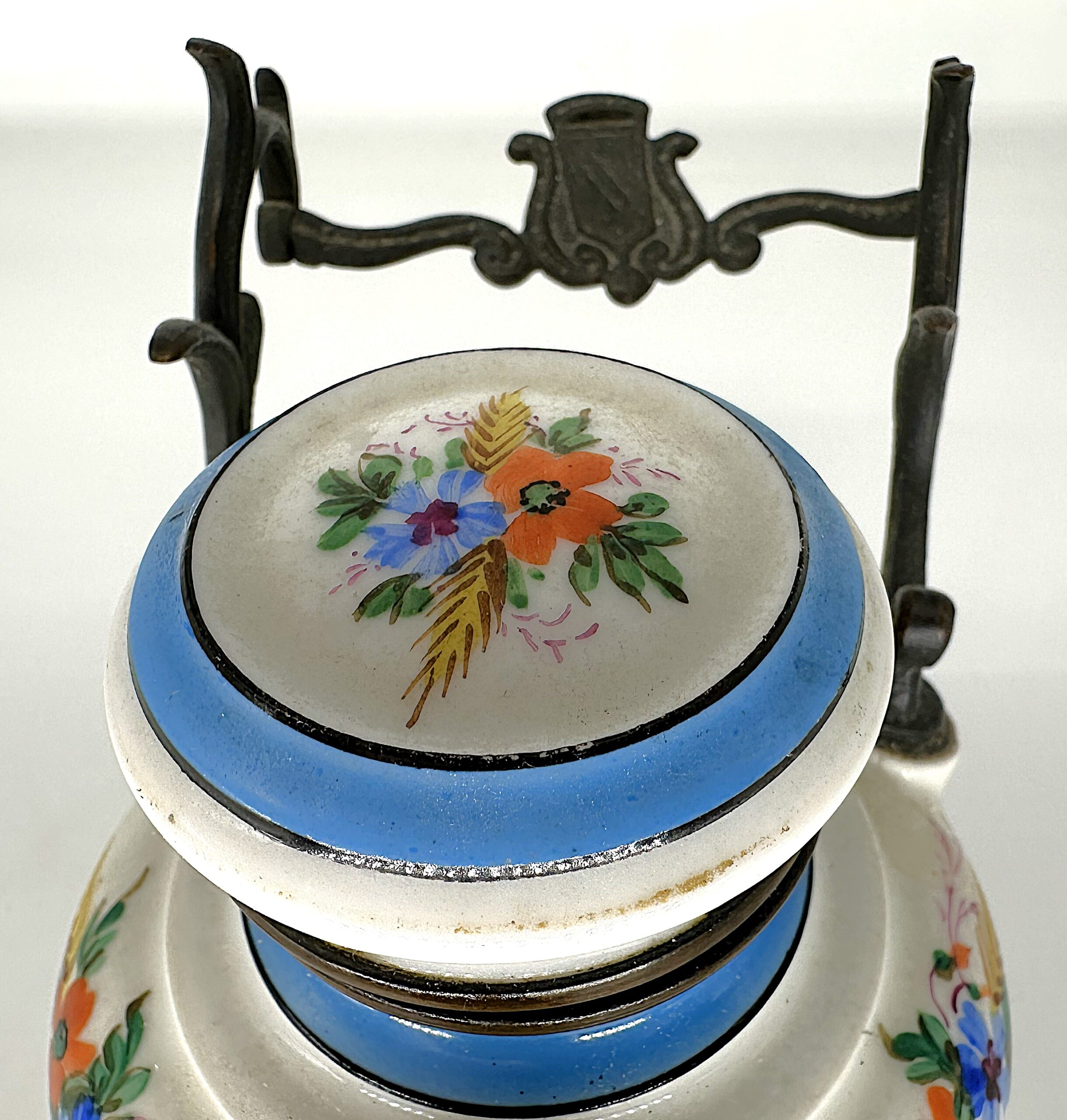
- Pen Holder: Attached to the back of the porcelain body is an ornate, dark-patinated brass pen rack. The rack consists of two scrolling arms designed to cradle a pen horizontally. At the center of the rack is a small, cast heraldic shield or crest. While the specific lineage of the shield is difficult to identify here, it was a common decorative motif used by European manufacturers to add an air of “aristocratic” prestige to office supplies.
Material and Decoration
- Porcelain: The body is made of porcelain with a glossy glaze. There are no visible maker’s marks on the underside, which is common for smaller workshops.
- Decoration: The inkwell is adorned with vibrant floral sprays featuring poppies and cornflowers, accented by golden wheat stalks.
- Technique: Based on the precision and repetitive nature of the fine lines in the wheat, this is likely a hand-colored lithographic transfer. A basic outline was transferred to the piece, and then the bright colors were filled in by hand before the final firing.
- Origin: The “tea kettle” form and the specific floral palette are highly characteristic of French (Paris/Limoges) or Bohemian porcelain from the 1860s to 1880s.
Additional Context and Similar Examples
These kettle-form inkstands are often referred to as “Siphon” or “Fountain” inkwells. While this one lacks a mark, very similar models were produced by:
- Jacob Petit (Paris): Known for exuberant, colorful porcelain novelties in botanical and household forms.
- Gisclard (France): A specialist in mechanical and gravity-fed desk accessories.
- Bohemian Factories: Several factories in the Karlovy Vary region produced these for the export market, often mimicking French styles.
Functional Details of the “Tea Kettle” Form
- The Font and Gravity Feed: This is a fountain inkwell. The main reservoir (the “kettle”) holds a large supply of ink. Through natural atmospheric pressure, a small amount of ink is fed into the front font (the “spout”). This prevents the ink from drying out while keeping only a shallow “dip” available at the surface.
- The Pen Wipe: The upper hinged lid reveals a recessed compartment filled with stiff, dark bristles, likely horsehair.
- The Decoration: The floral motif—featuring poppies, cornflowers, and wheat—is highly characteristic of “Vieux Paris” (Old Paris) porcelain. The precision of the wheat stalks suggests a hand-colored transfer process: a black lithographic outline was applied to the porcelain, and the colors were then painted over it by hand before firing.
Historical Context & Maker
While this piece is unmarked (a common trait for items intended for general retail in Paris or export), this specific “kettle and rack” casting is frequently attributed to French porcelain decorators or workshops in the Alsace/Bohemia region. The shield with a diagonal band is notably the coat of arms for the City of Strasbourg, a major center for high-quality ceramics during this era.
Estimated value: $150
Content disclaimer. The information posted is the owner’s best knowledge and may not have been vetted by the SOIC. We welcome comments, corrections, and additions, working to make our website information comprehensive and accurate.
Join the Society of Inkwell Collectors (SOIC) – it’s free!
Founded in 1981 as a non-profit organization,
we are documenting inkwells (and accessories).
We’re here to help and inform!