






The Hutchins “Automatic” Inkstand
| Categories | Mechanical - Levered or Rotating Lids |
| Material | Cast iron |
| Markings | See Narrative |
| Manufacturer | Special Novelty Works |
| Origin | United States |
| Date or Era | circa 1885 |
| Measuring | 5 ½” x 4” x 2 ⅜” high |
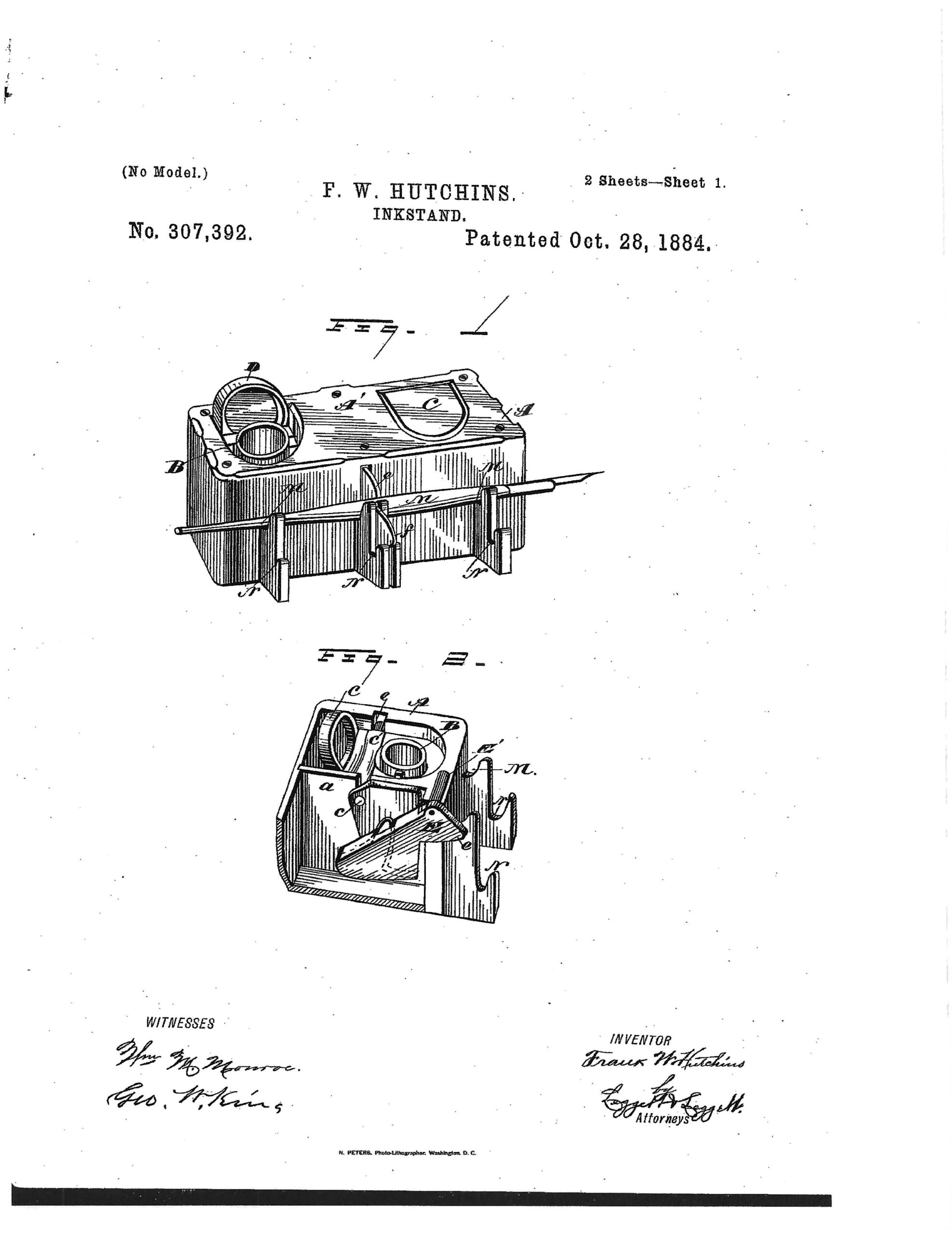
| Patent | Patent No. 307,392 dated October 28, 1884 |
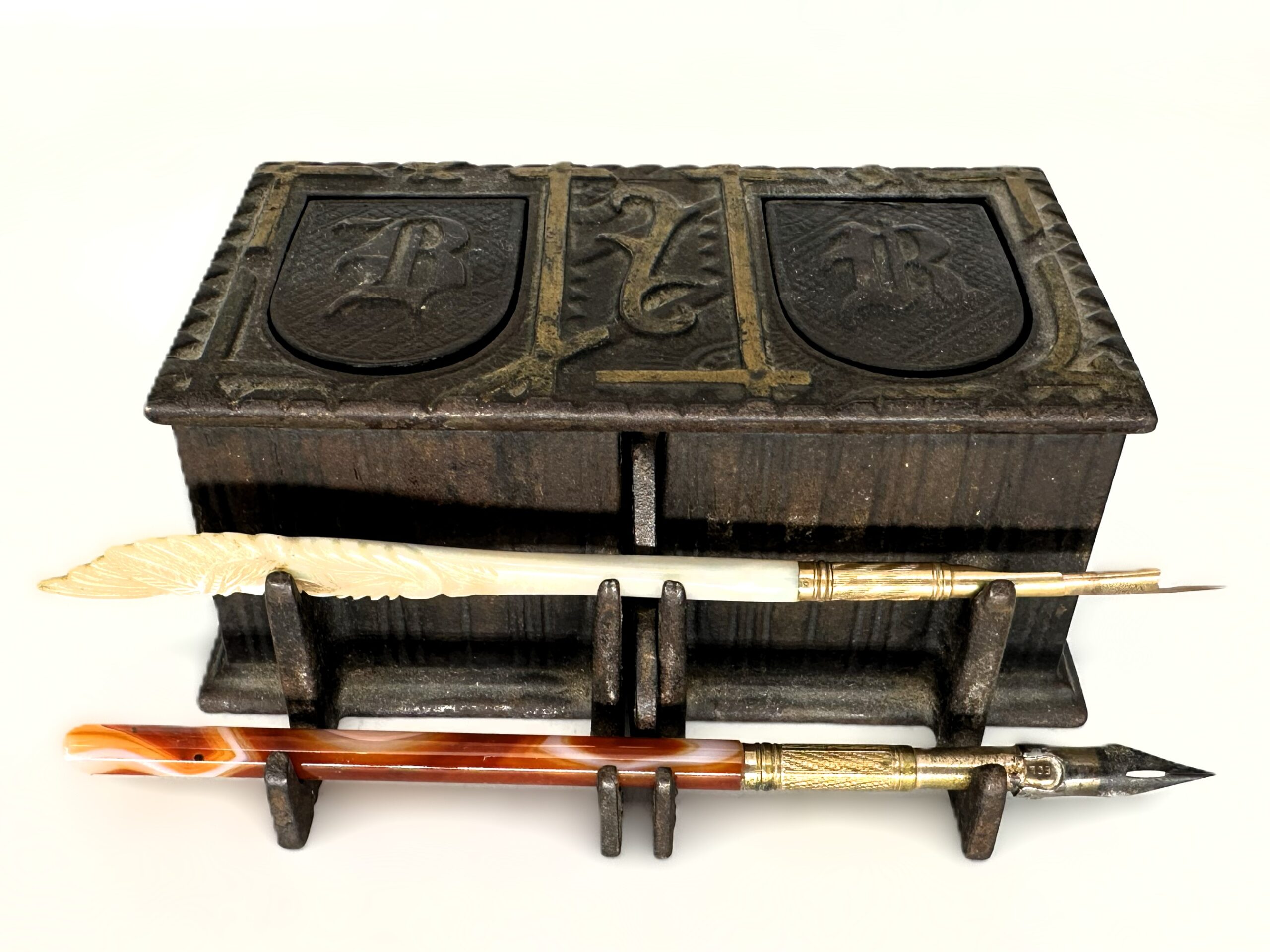
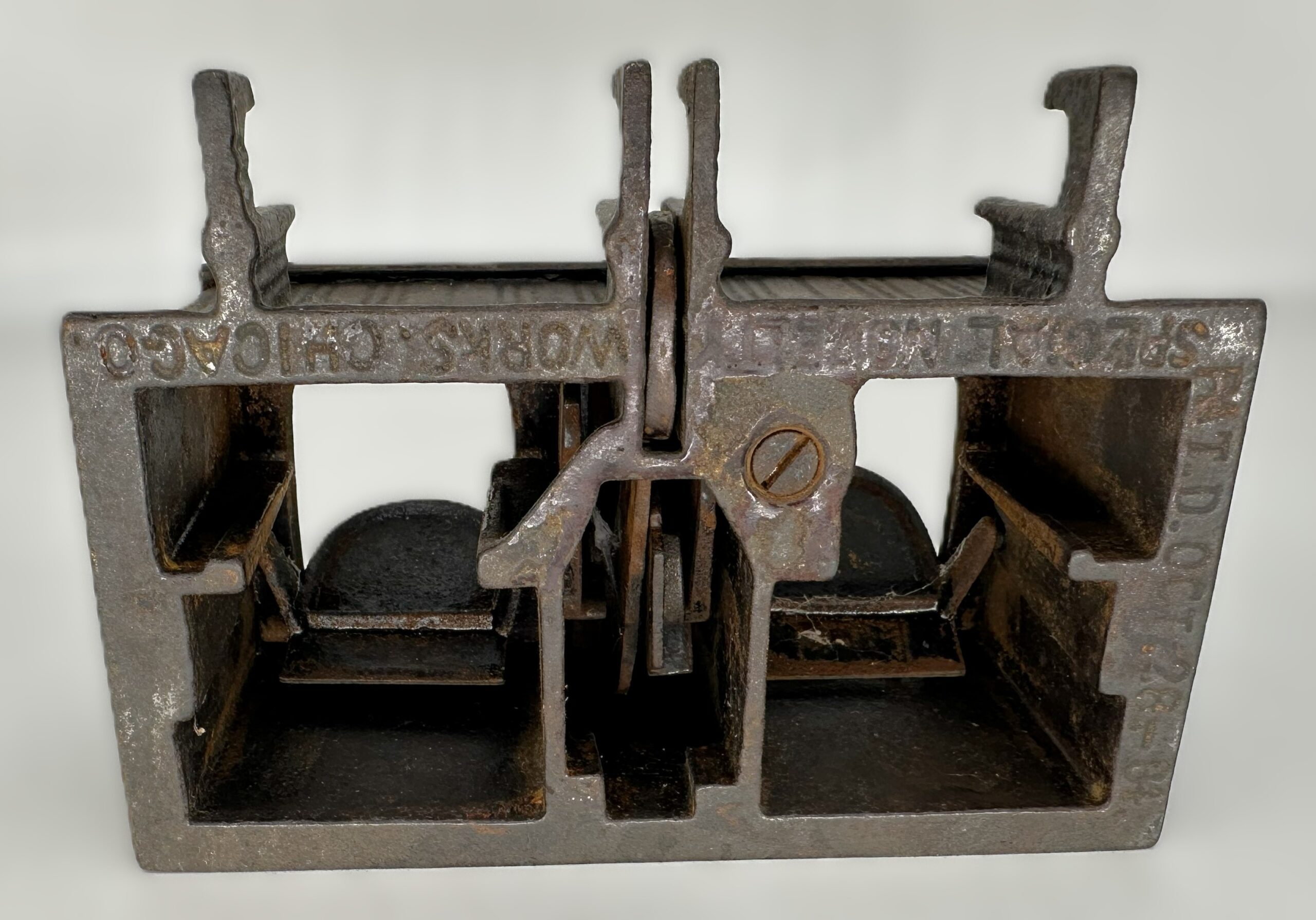
This cast iron inkstand is a sophisticated example of mechanical design, produced by the Special Novelty Works of Chicago based on a patent by Frank W. Hutchins.
Description of the Inkstand
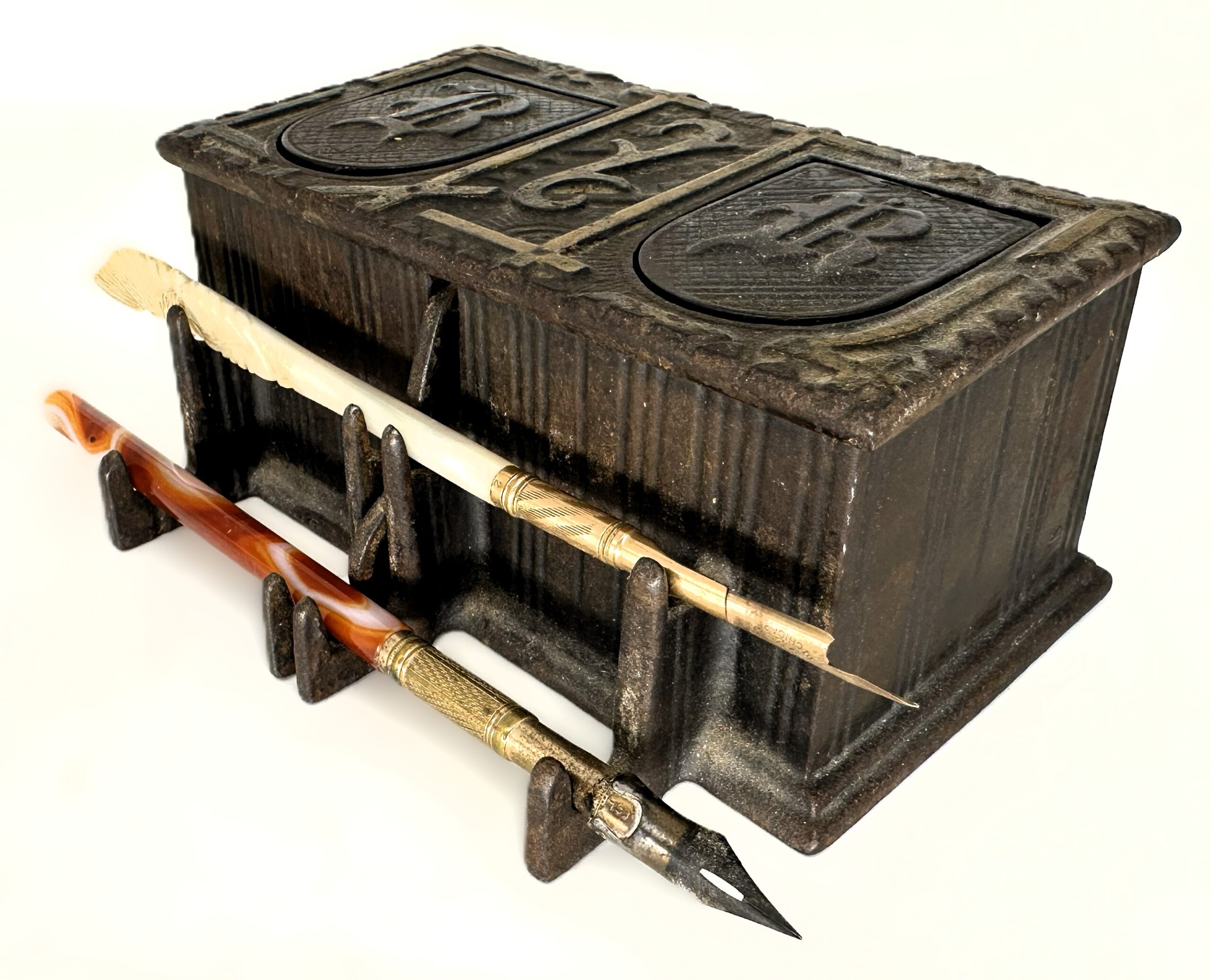
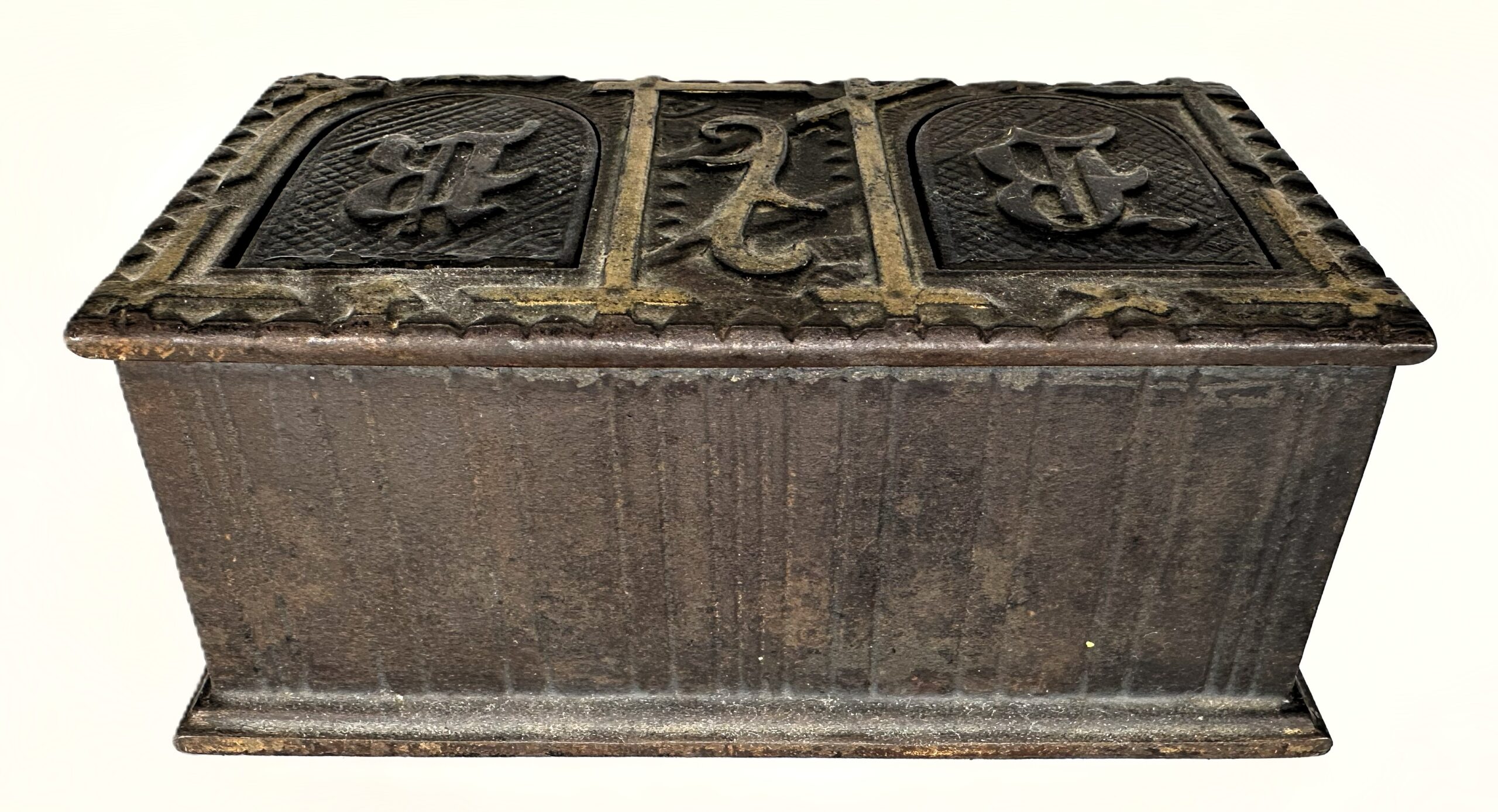
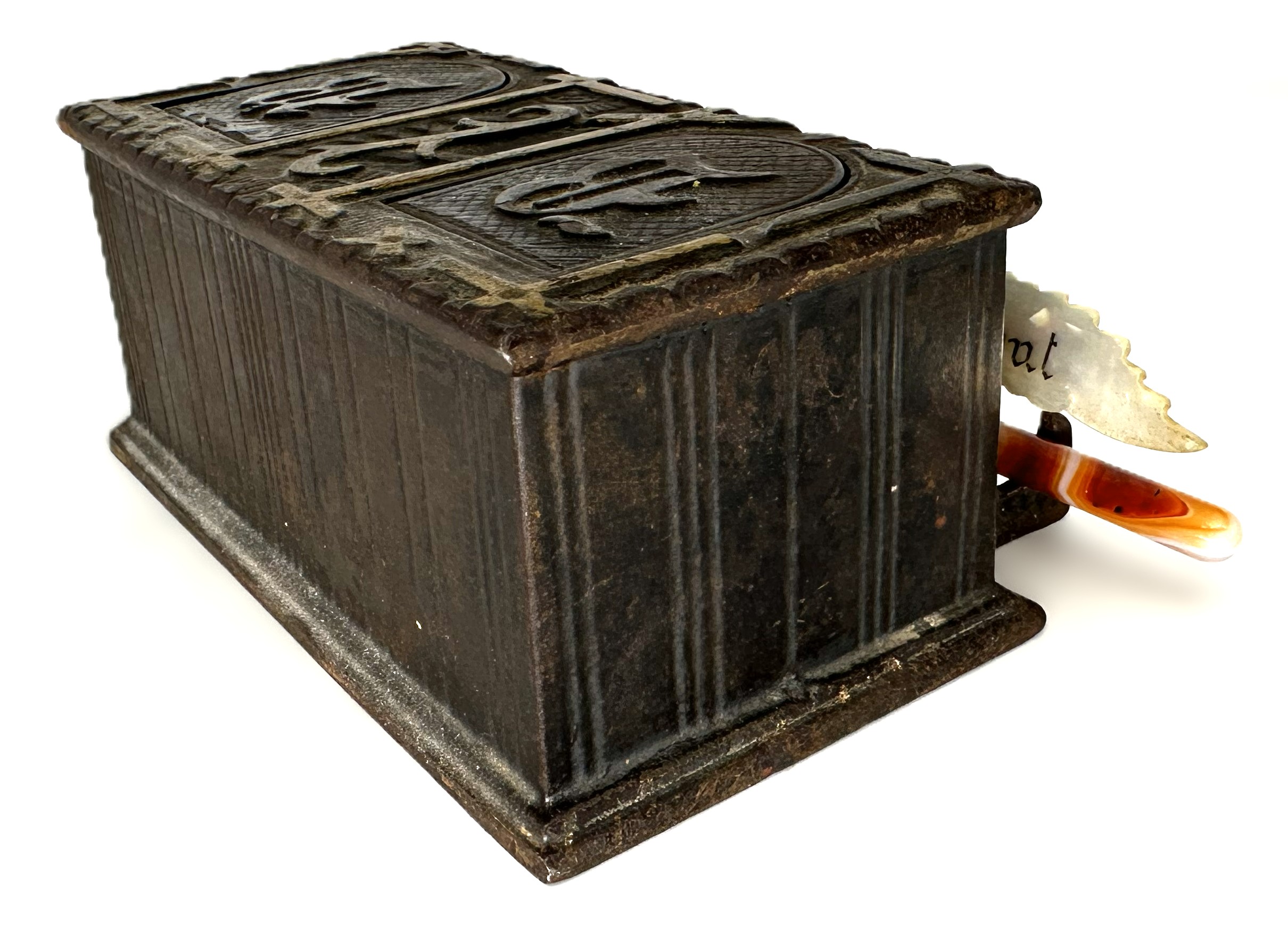
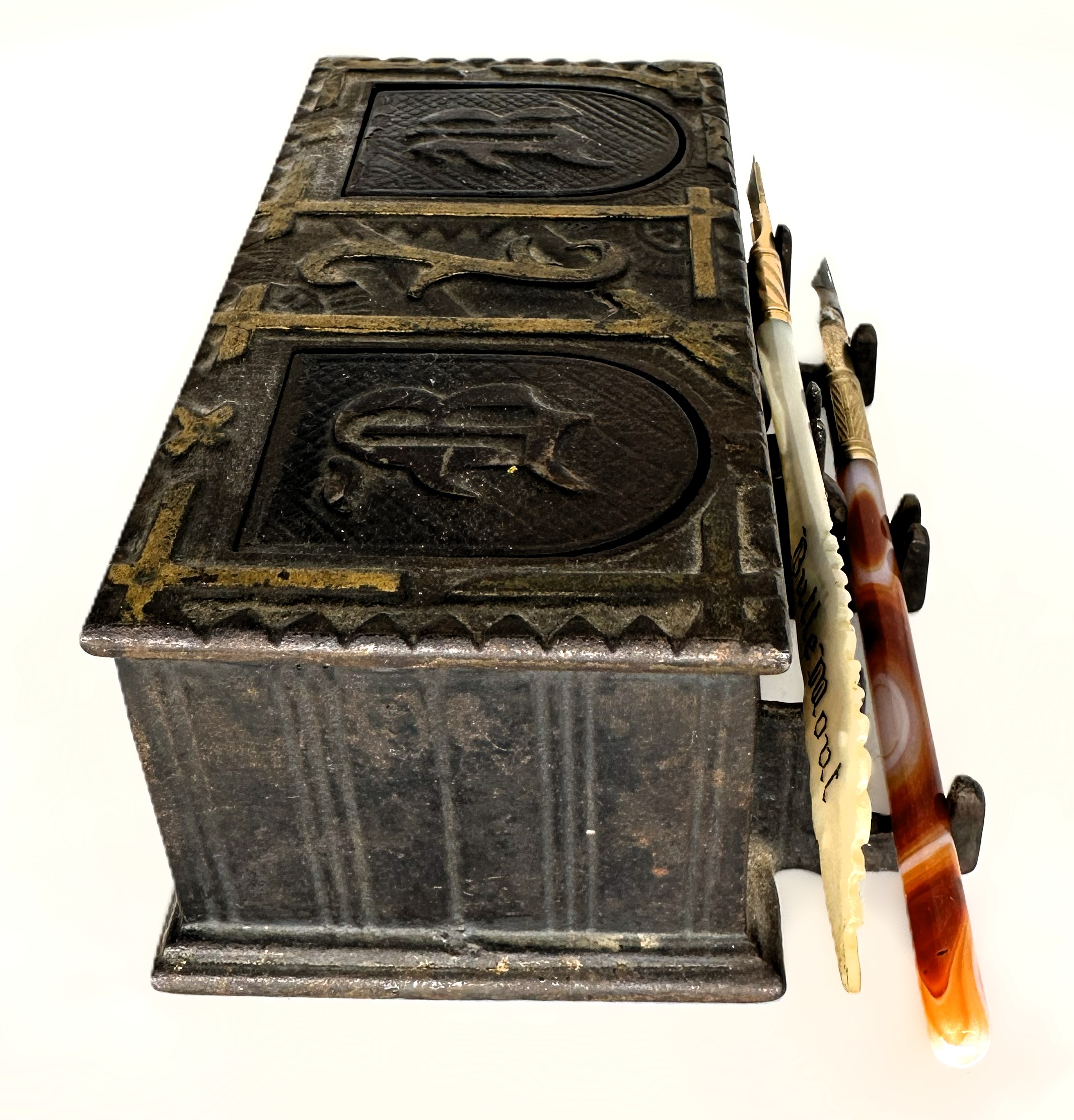
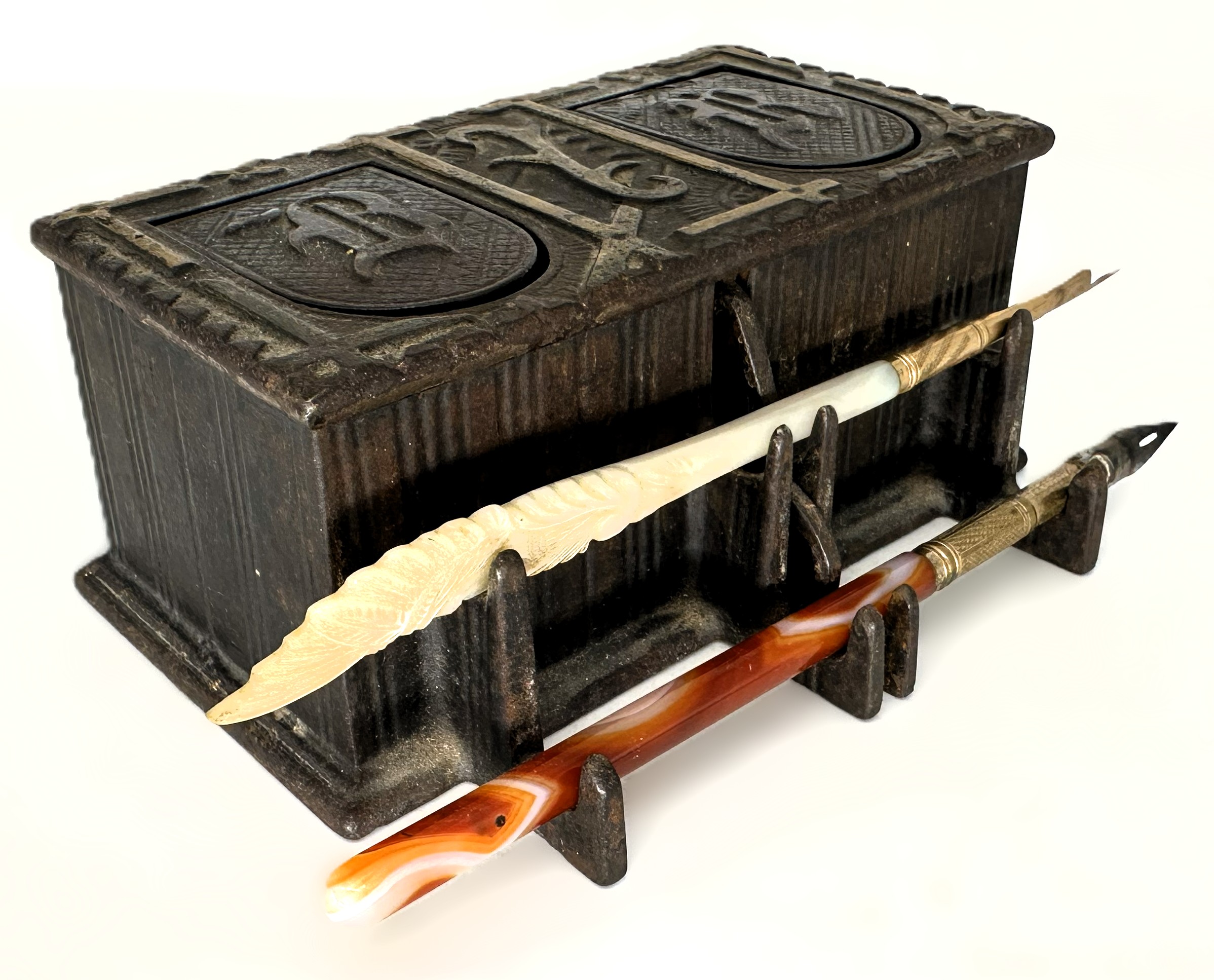
- Form and Material: The inkstand features a heavy, rectangular cast iron body with vertical ribbing and an open bottom for easier casting.
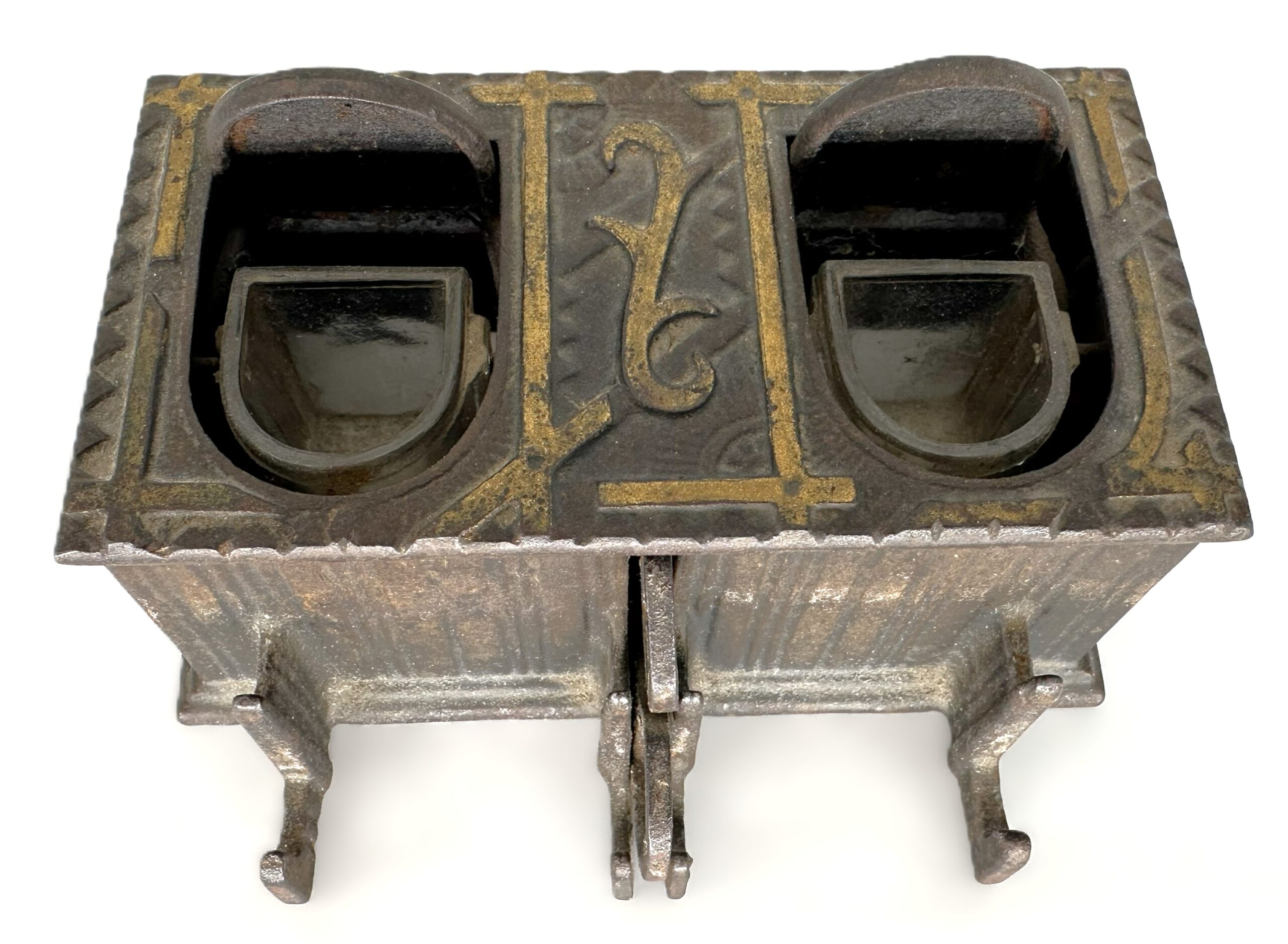
- Lids: It is equipped with two hinged, shield-shaped lids decorated with low-relief Gothic-style lettering.
- The left lid is embossed with a “B”, traditionally designating Black ink.
- The right lid is embossed with an “R”, designating Red ink.
- Pen Rests: Protruding from the front are two sets of brackets or rests designed to hold pens.
- Markings: The underside is stamped: “SPECIAL NOVELTY WORKS, CHICAGO PAT’D OCT. 28, 84”.
Summary of Patent No. 307,392 (October 28, 1884)
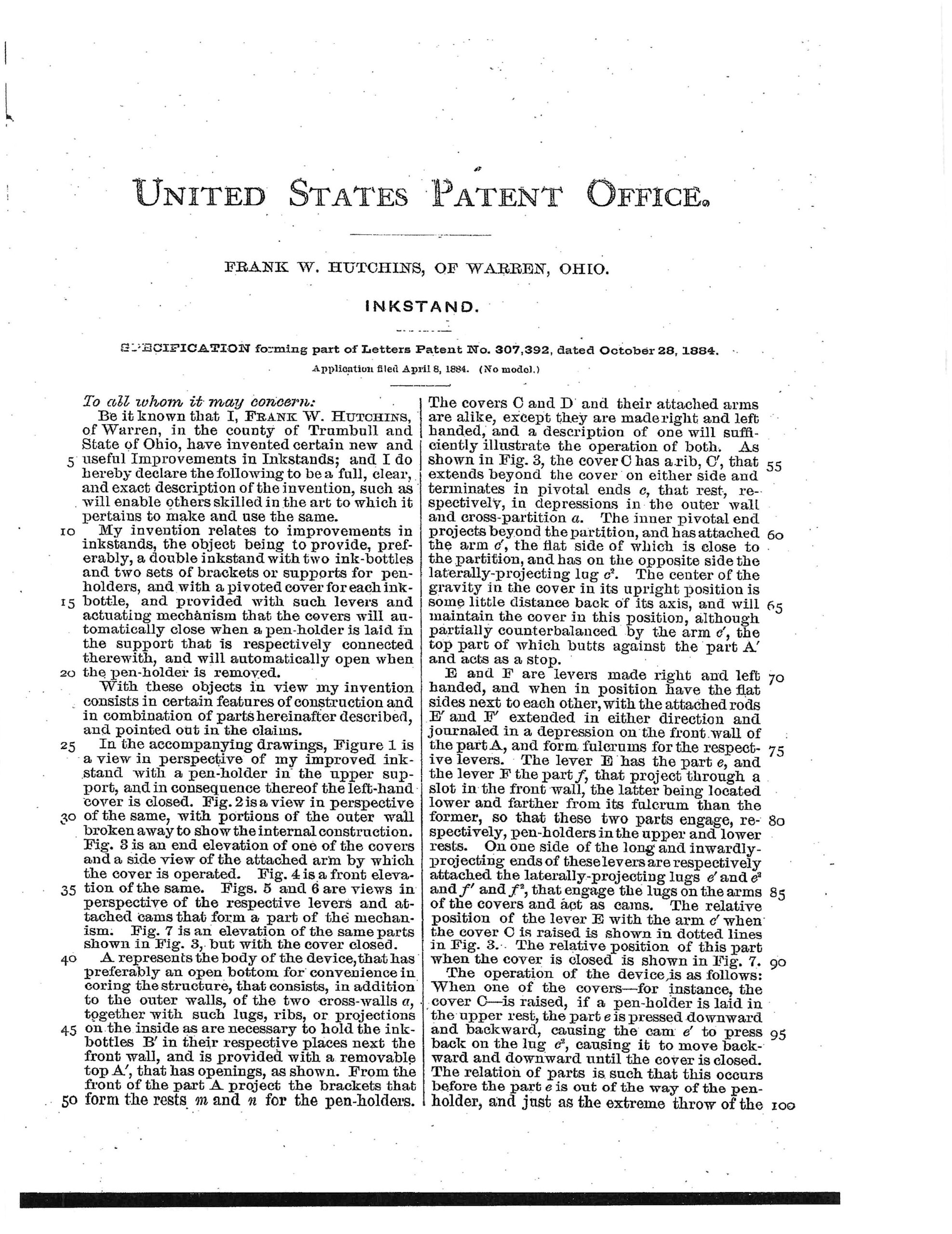
Frank W. Hutchins of Warren, Ohio, designed this “automatic” inkstand to keep ink fresh and free from dust while allowing for one-handed operation.
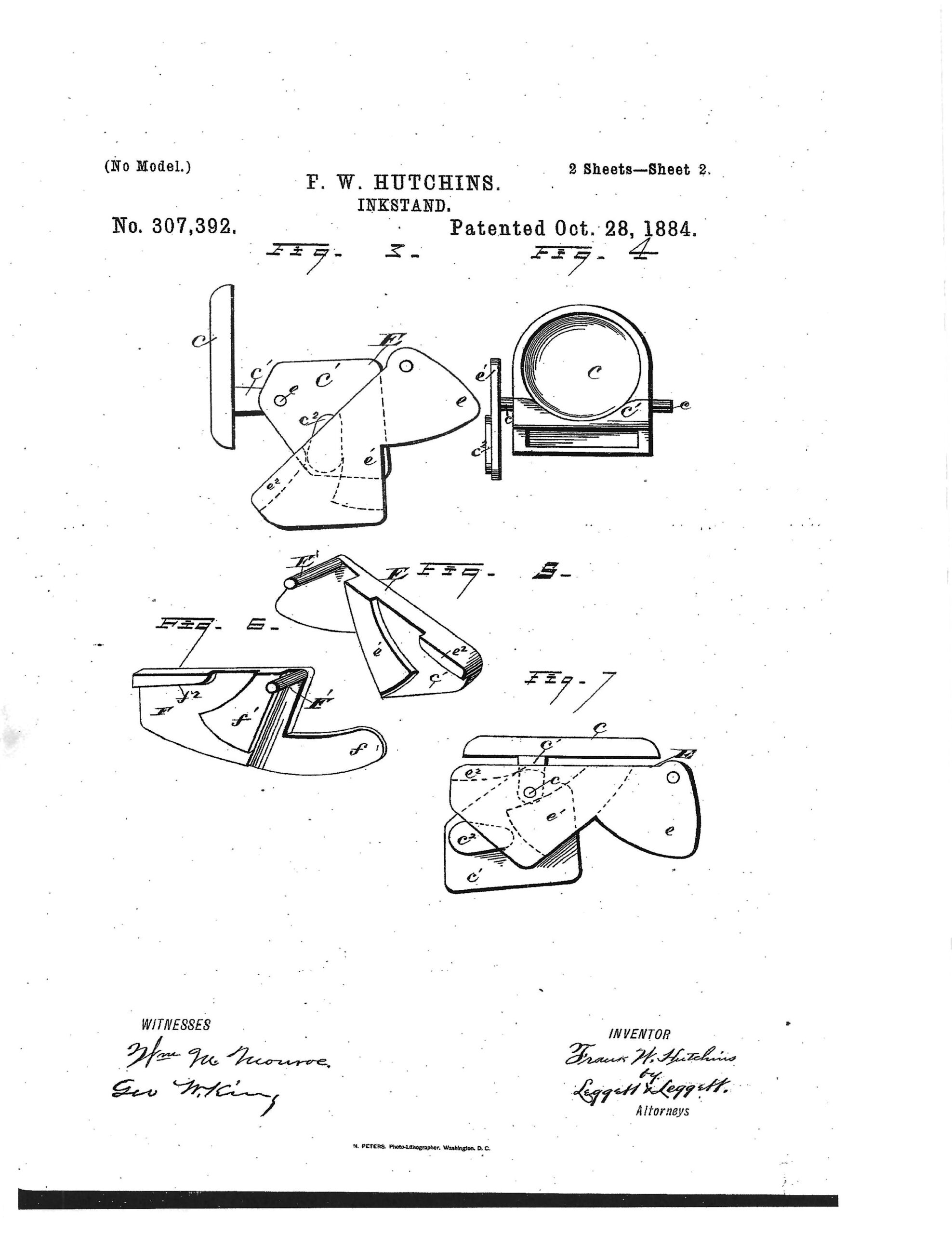
- The Mechanism: The key innovation is a system of weighted levers and cams that link the pen rests to the inkstand’s lids.
- Automatic Operation:
- Opening: When you lift a pen from its rest, the weight of the lever’s inner end causes a lug to press on the cover’s arm, raising it past its center of gravity so it falls open.
- Closing: When the pen is returned to the rest, the lever is pressed downward, forcing a cam against the cover’s lug to push it back until it falls shut.
- Double Utility: The patent specifies that having two separate wells—often for different colored inks—prevents the liability of “mistake” by ensuring only the well for the specific pen being used is open.
Manufacturer and Additional Context
- The Maker: Special Novelty Works was a Chicago-based firm specializing in cast iron “automatic” or mechanical devices during the late 19th century.
- The Inventor: While the manufacturer was in Chicago, Frank W. Hutchins resided in Warren, Ohio.
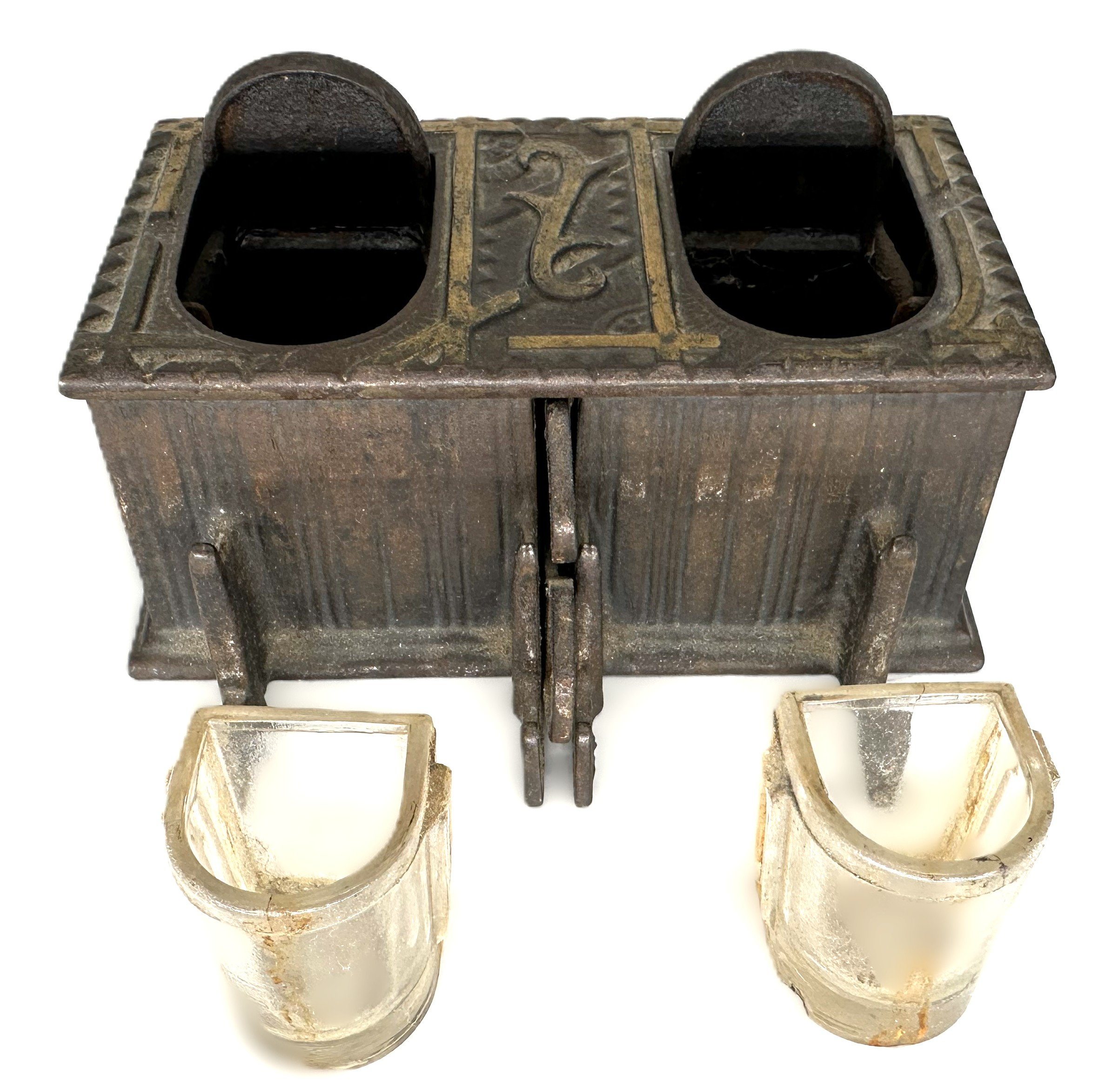
- Variations: These inkstands came with custom-fitted glass inserts.
- Gothic Aesthetic: The use of heavy cast iron and “Old English” or Gothic lettering was a popular design trend in the 1880s, intended to give functional desk items a sense of permanence and historical prestige.
Why It Is Uncommon Today
- Manufacturer Specialization: The Special Novelty Works (or Special Novelty Iron Works) of Chicago was a smaller, niche manufacturer that focused on “automatic” or mechanical cast iron items in the late 19th century. Unlike massive firms like Bradley & Hubbard, their production runs were likely more limited.
- Mechanical Fragility: The “automatic” feature—where removing a pen triggers the lid to open via a series of internal weights and cams—was sophisticated for the 1880s but prone to damage over time. Many of these units were discarded once the internal mechanisms seized or the specialized glass inserts were broken.
Historical Context
- This inkstand was part of a wave of Victorian “automation” designed to solve the problem of ink evaporation and dust. The inventor, Frank W. Hutchins, specifically designed this “double utility” model to prevent users from accidentally dipping a black-ink pen into red ink by ensuring only the well for the specific pen being used would open.
Estimated value: $175.00
Content disclaimer. The information posted is the owner’s best knowledge and may not have been vetted by the SOIC. We welcome comments, corrections, and additions, working to make our website information comprehensive and accurate.
Join the Society of Inkwell Collectors (SOIC) – it’s free!
Founded in 1981 as a non-profit organization,
we are documenting inkwells (and accessories).
We’re here to help and inform!