

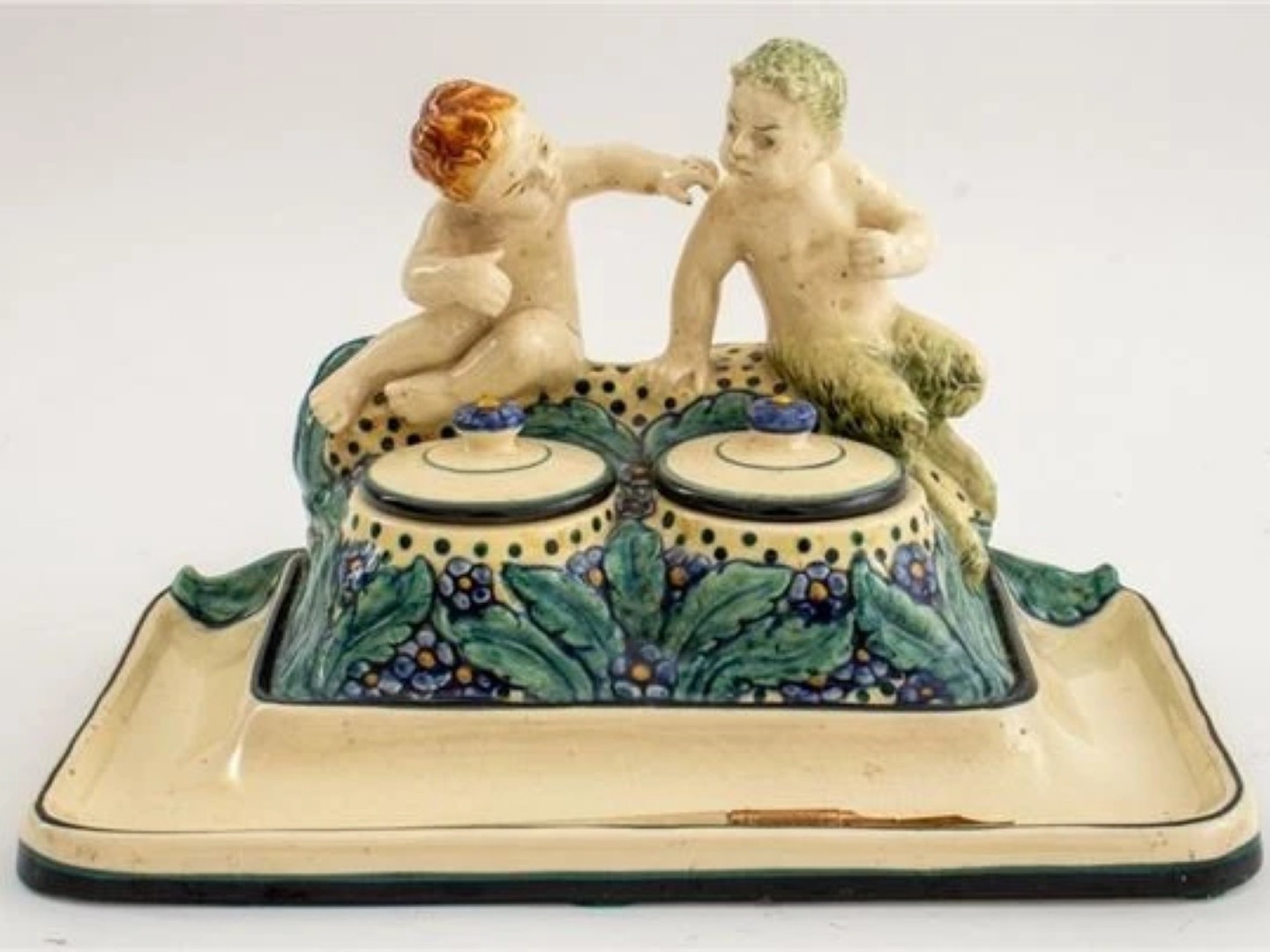
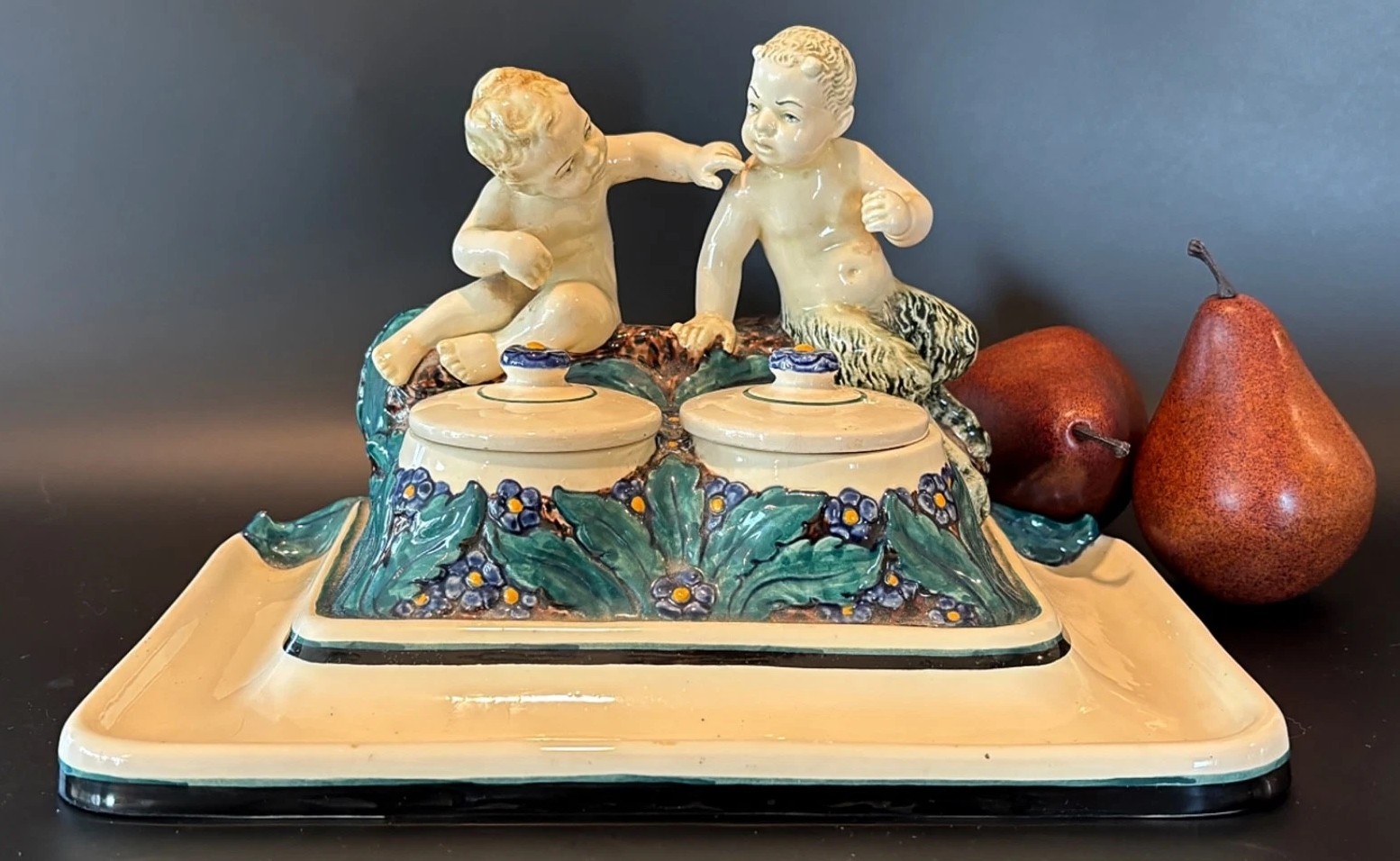
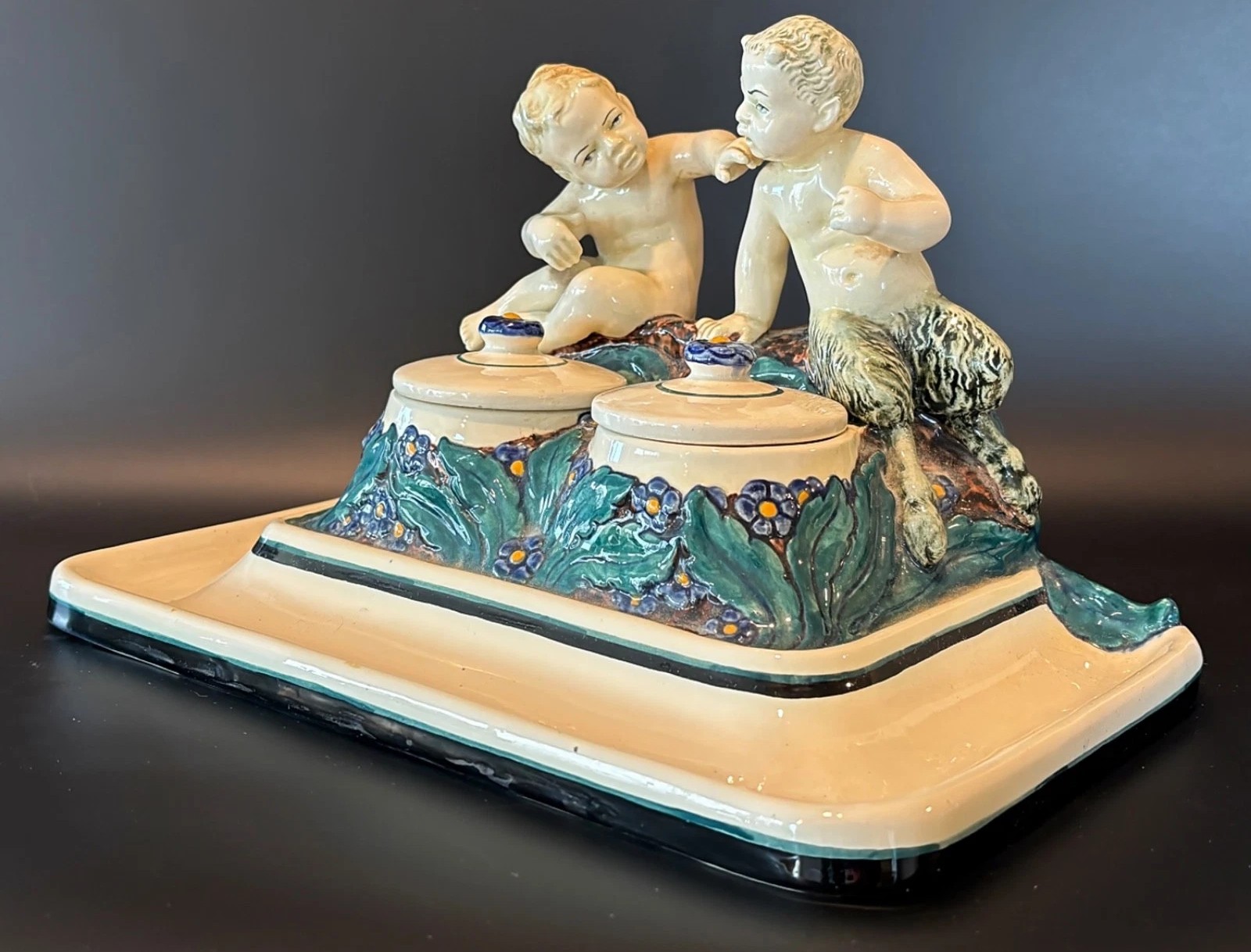
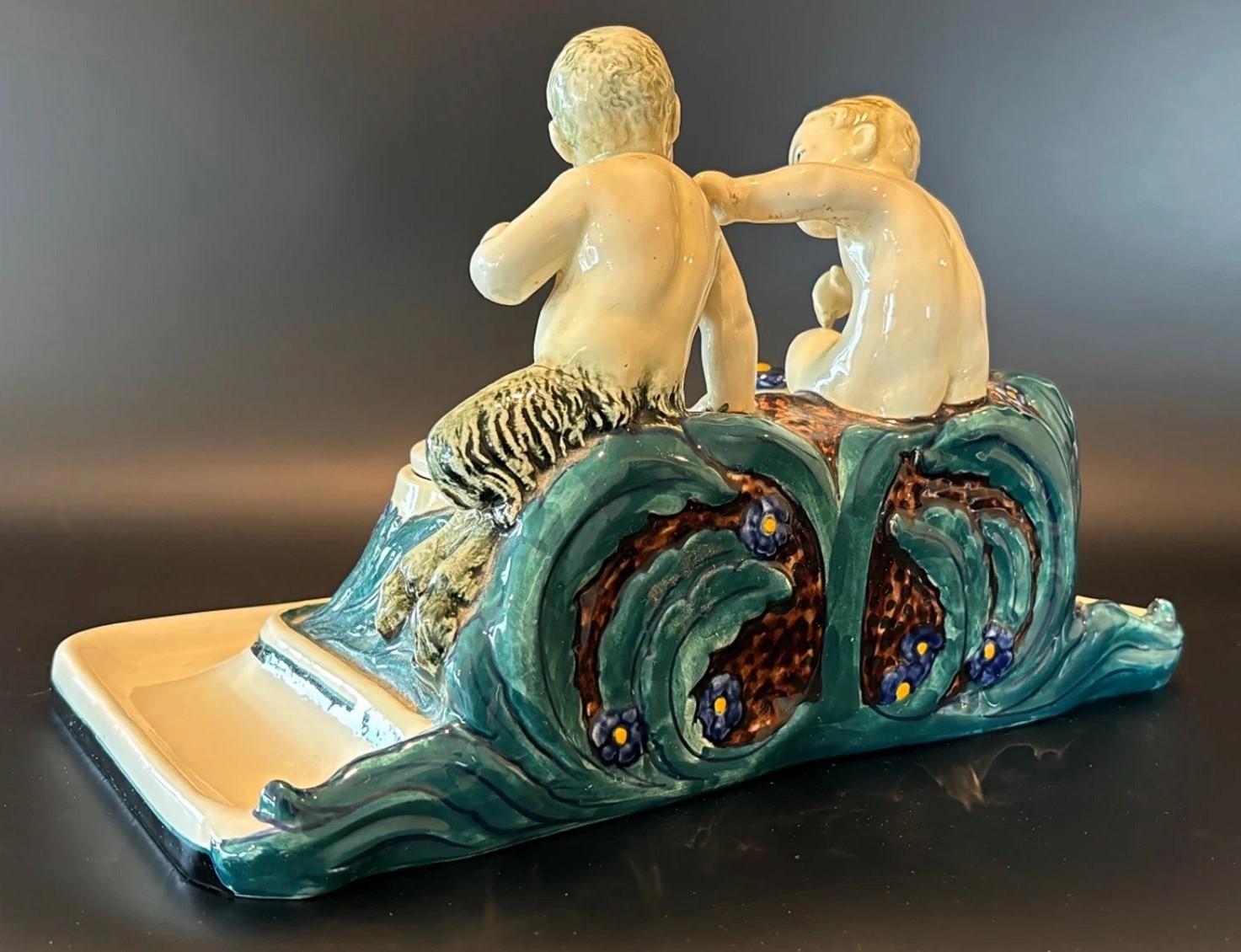
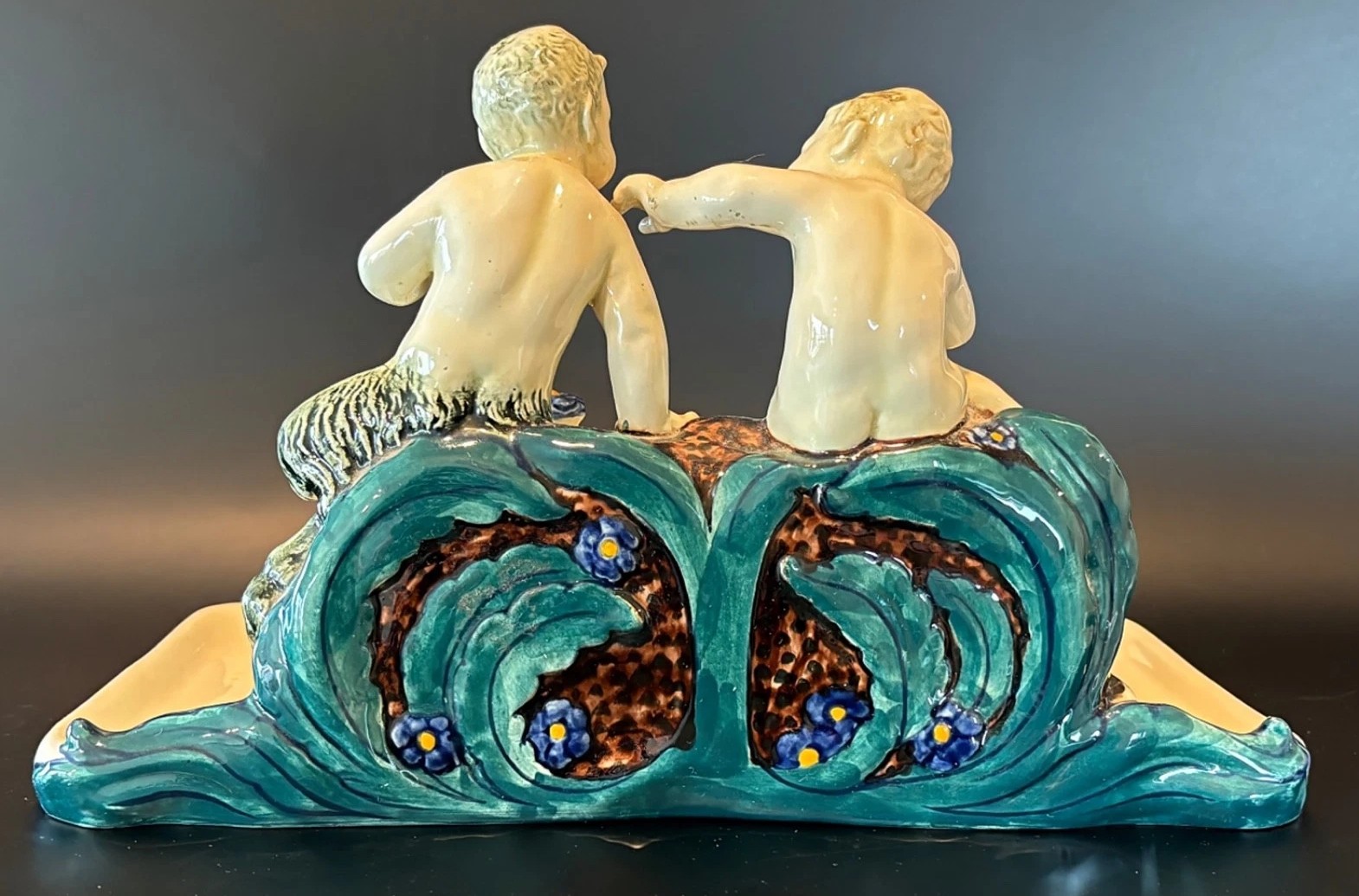
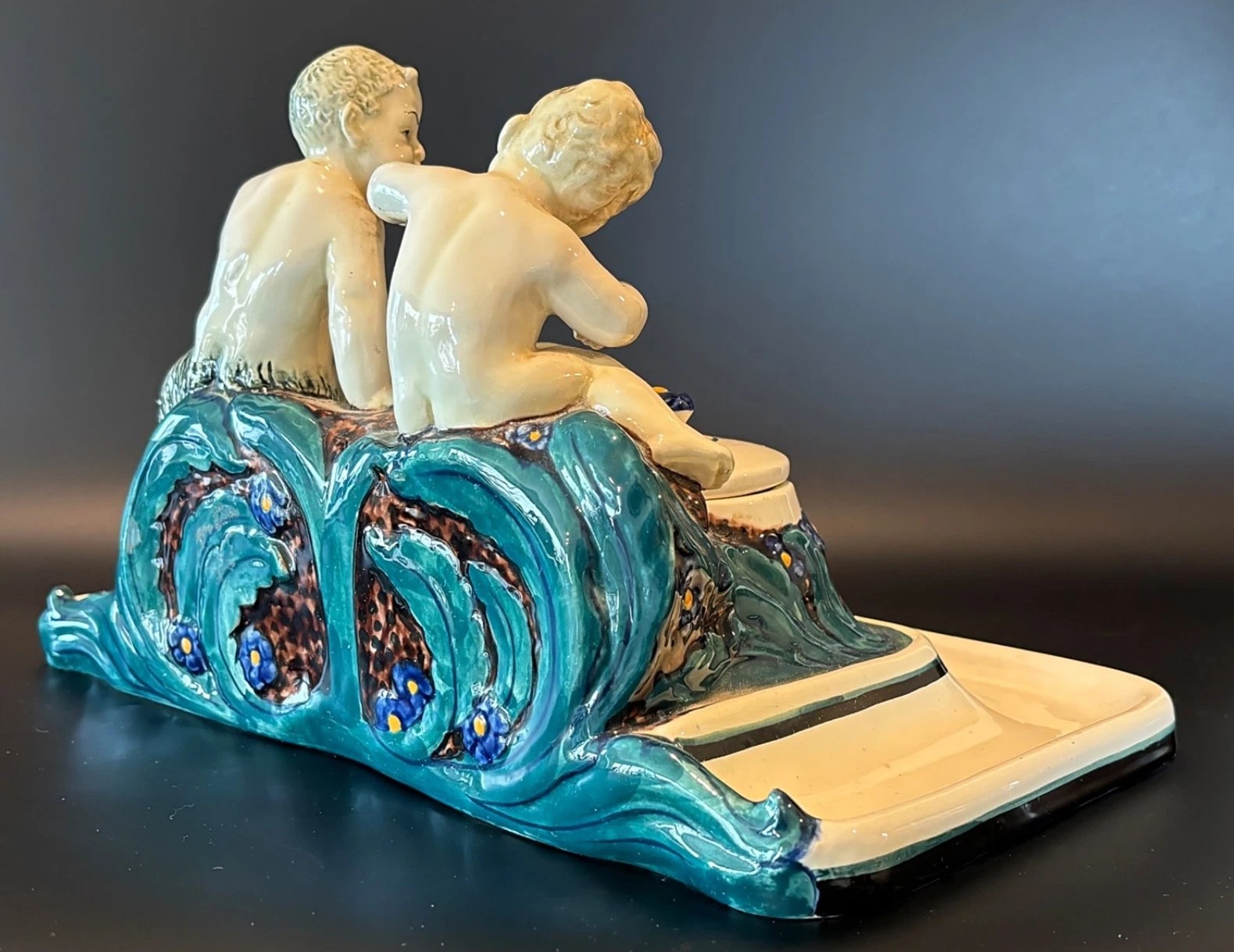
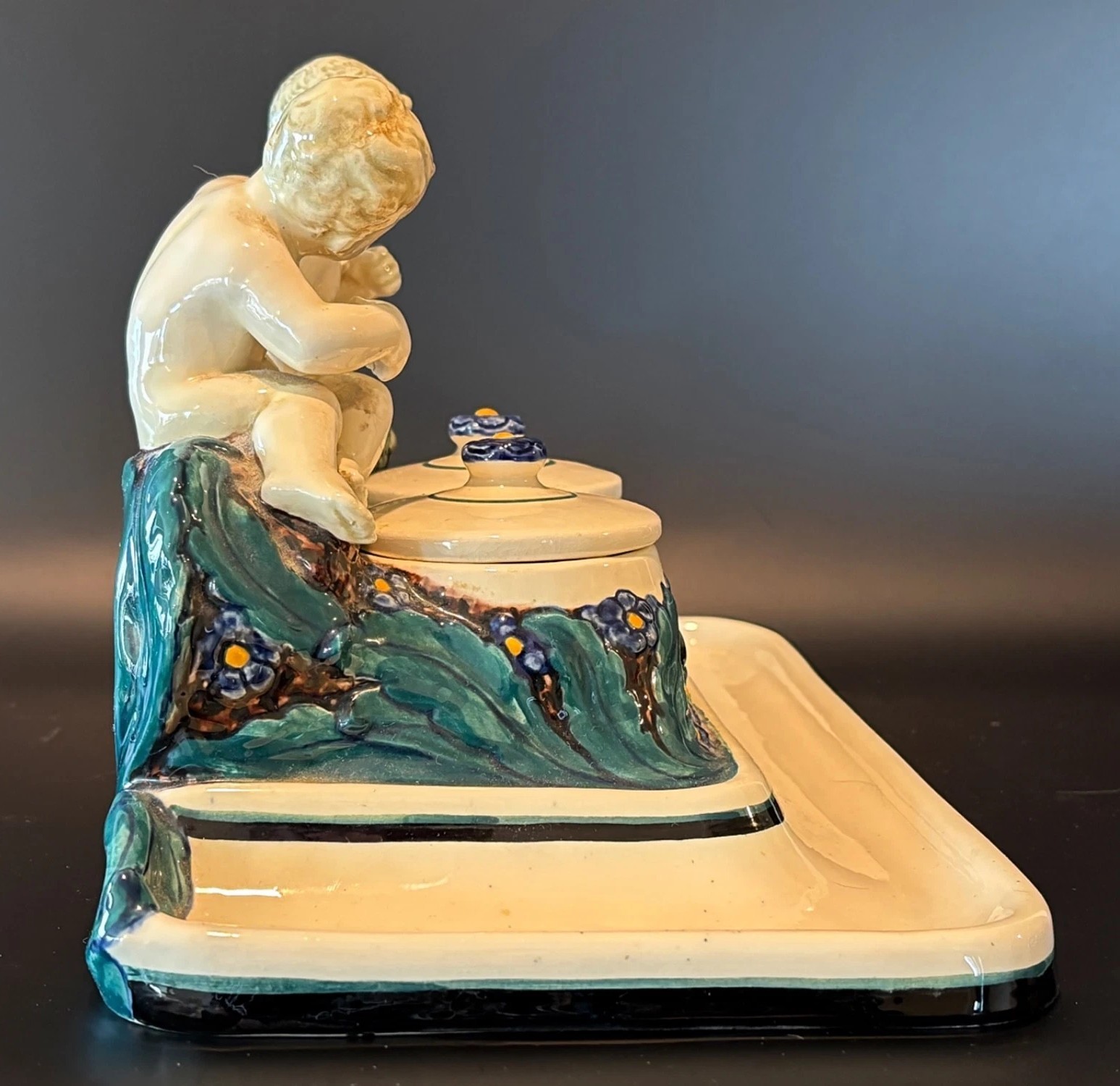
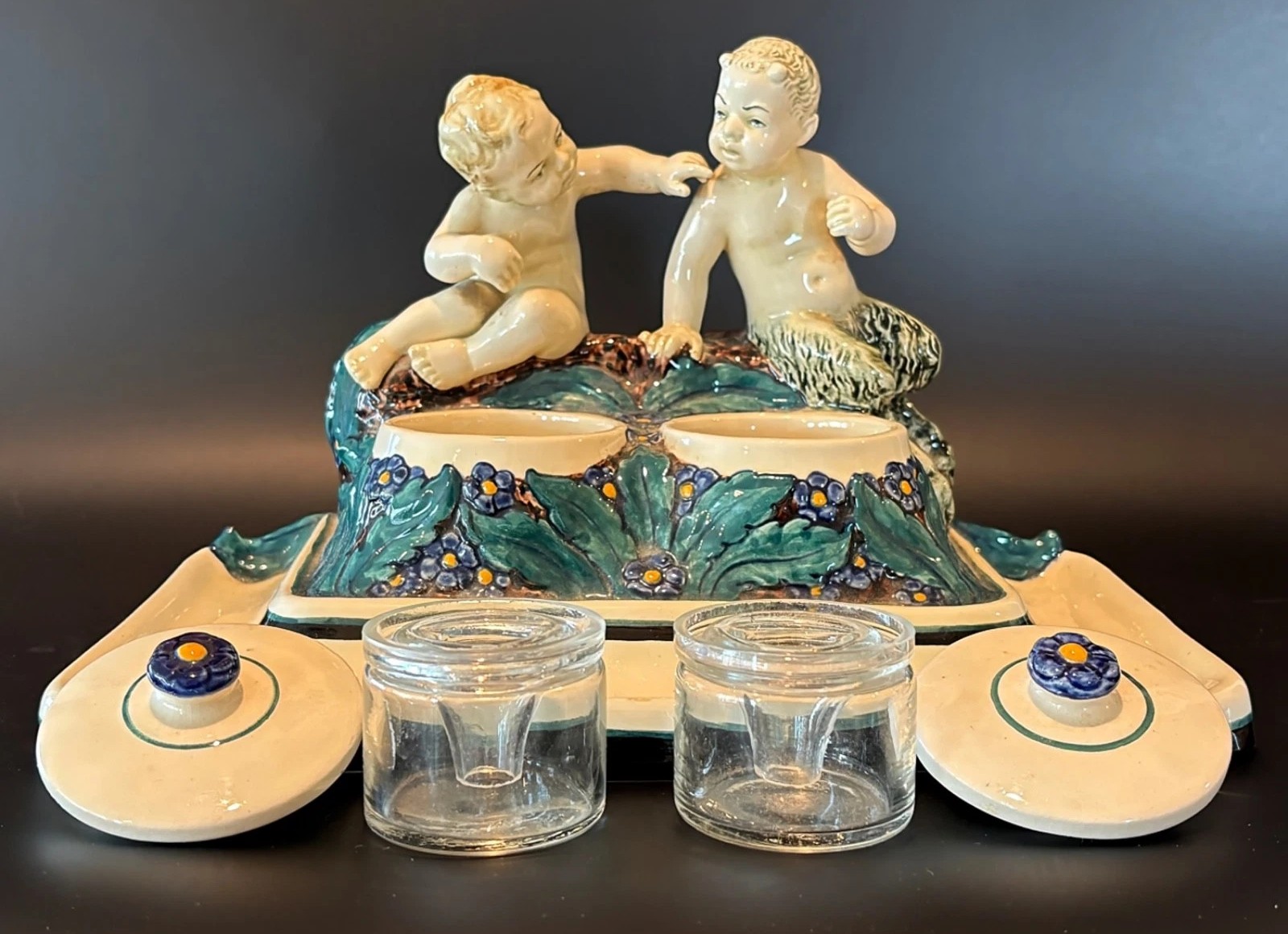
Karlsruhe Majolica Inkstand – Putto and Faun
| Categories | Ceramics/Porcelain "Named" Makers |
| Type | Cupid / Cherub / Angel |
| Material | Majolica |
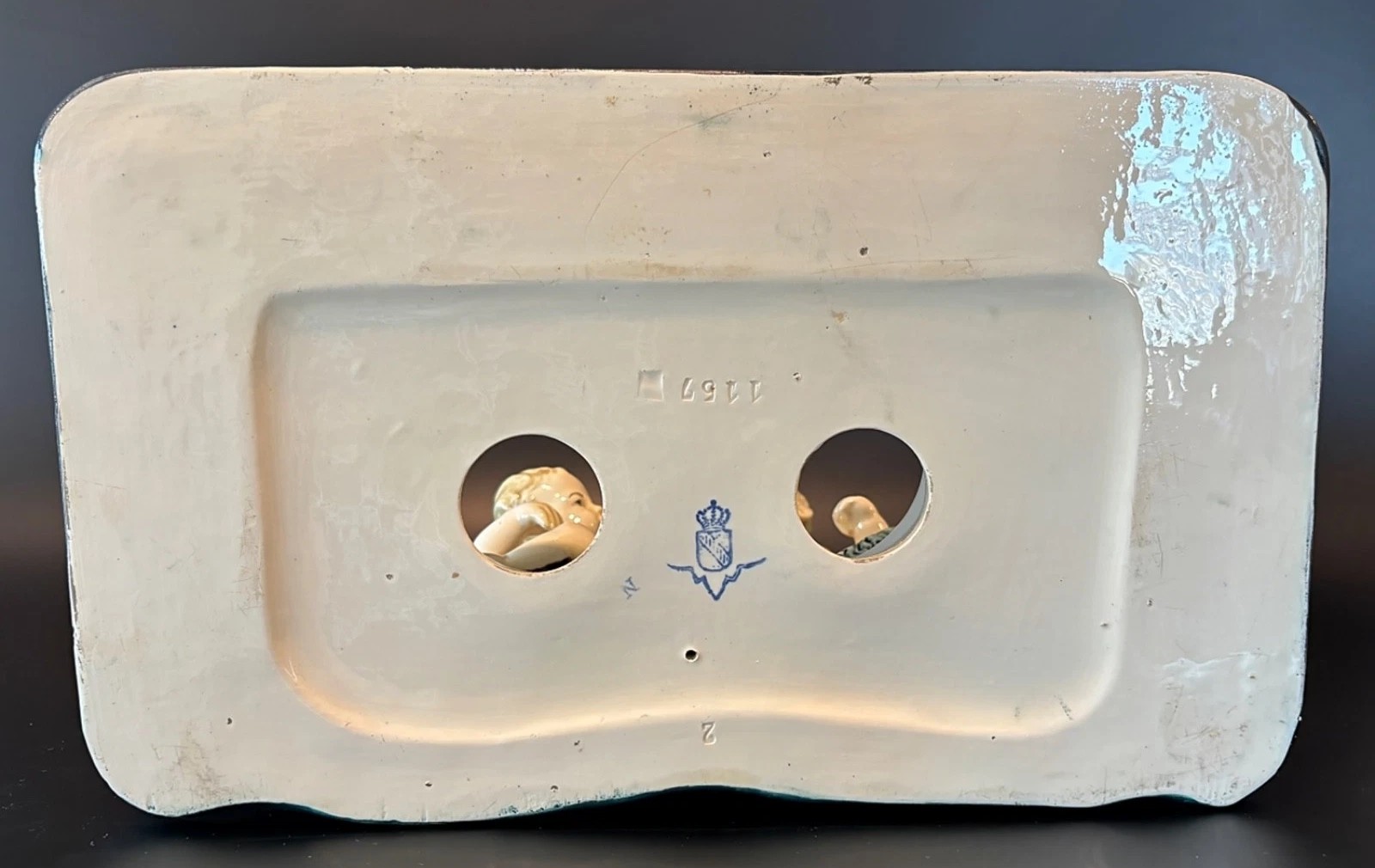
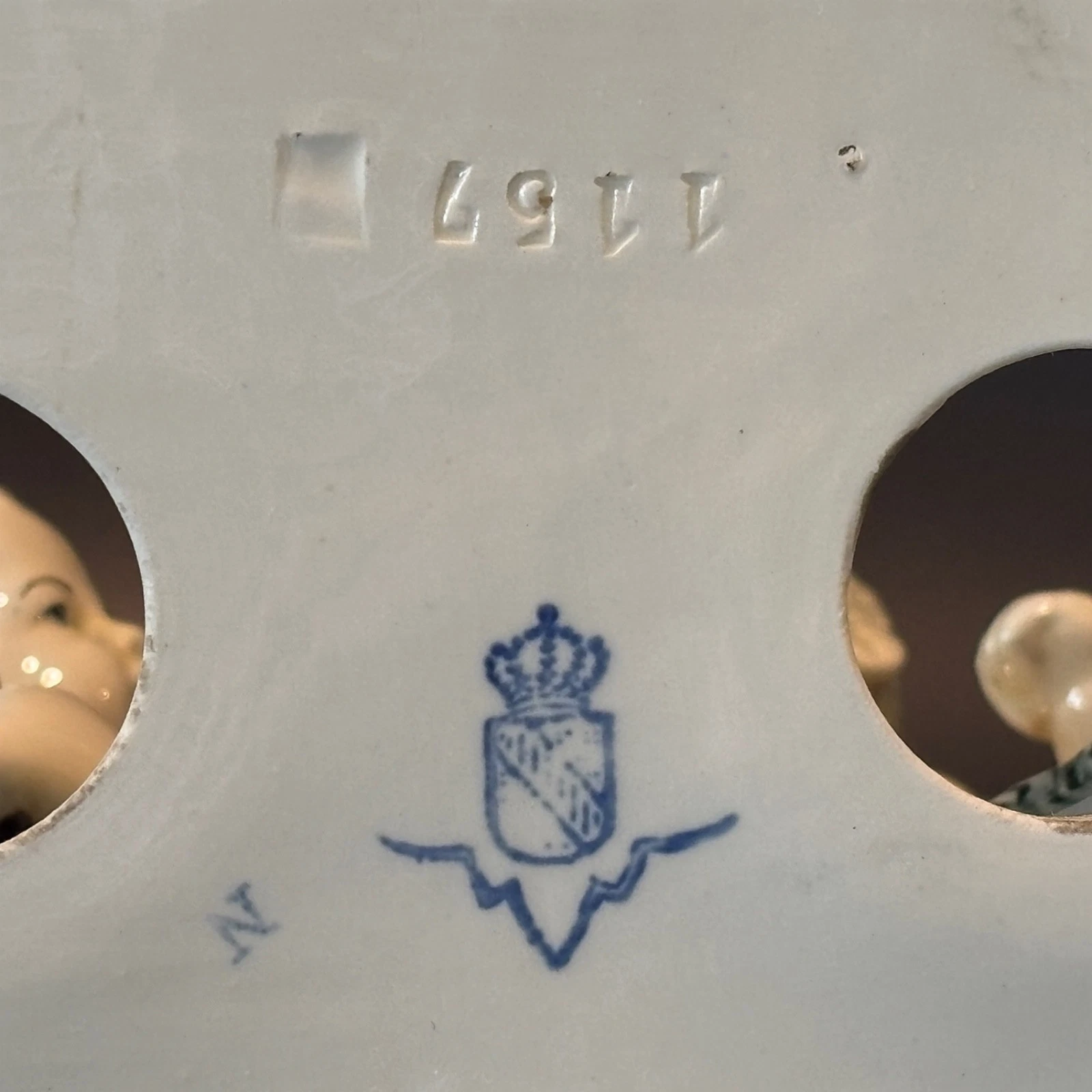
| Markings | See Narrative |
| Manufacturer | Karlsruhe Majolica Works |
| Origin | Germany |
| Date or Era | circa 1910 |
| Measuring | 11” x 6 ½” x 7” high |
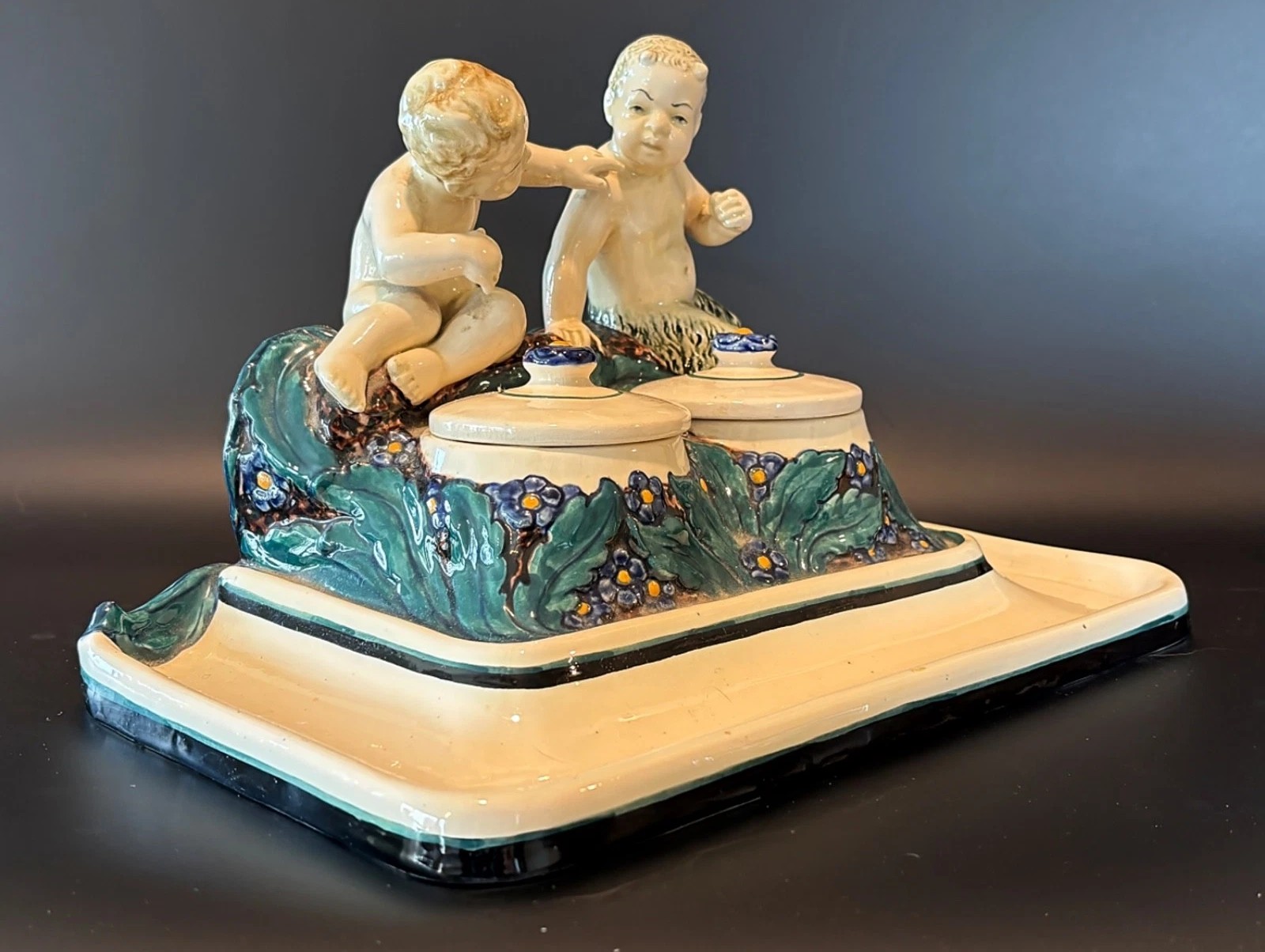
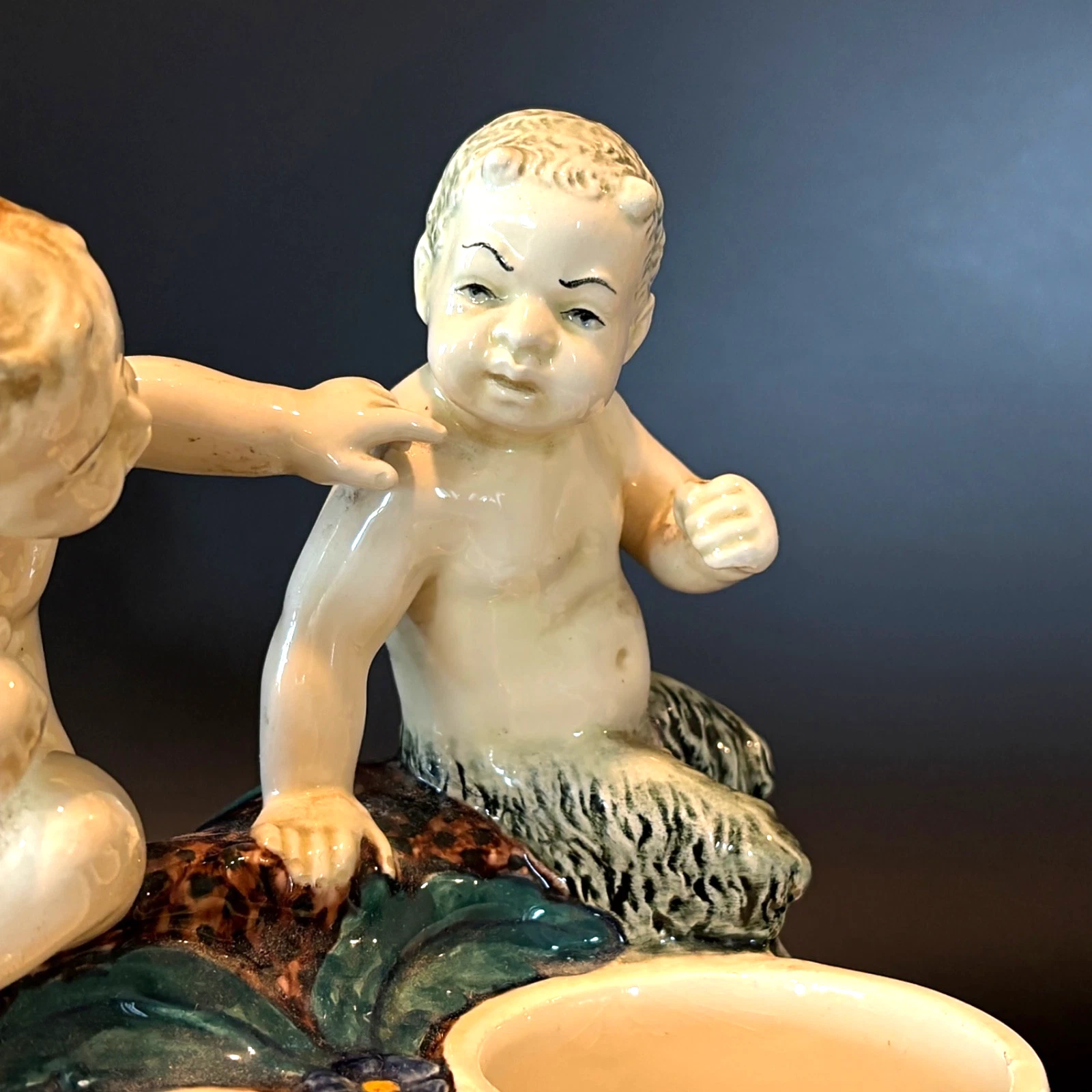
This Karlsruhe Majolica inkstand combines classical mythological themes with the vibrant, sculptural aesthetic of the Art Nouveau (Jugendstil) period.
Detailed Physical Description
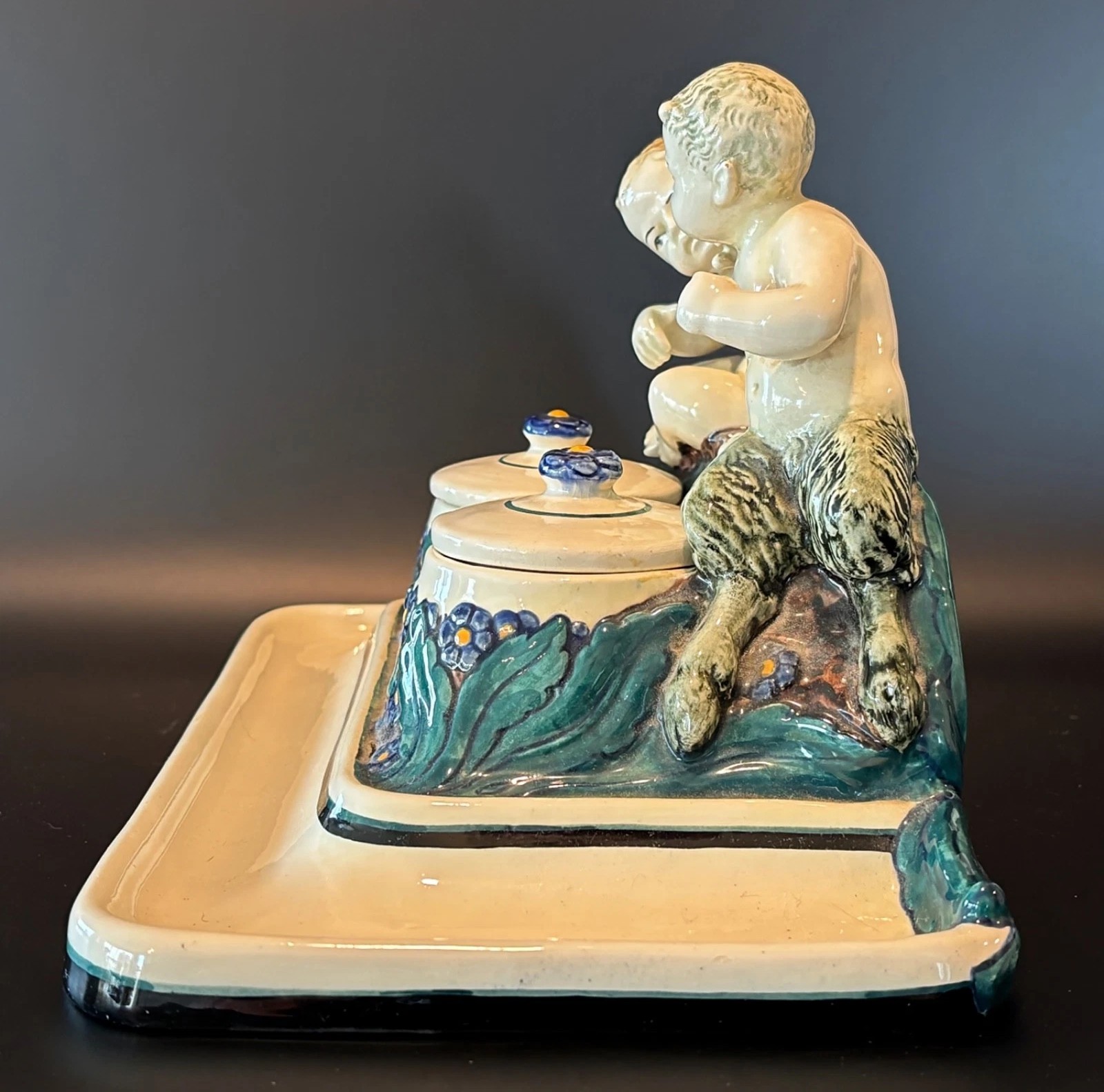
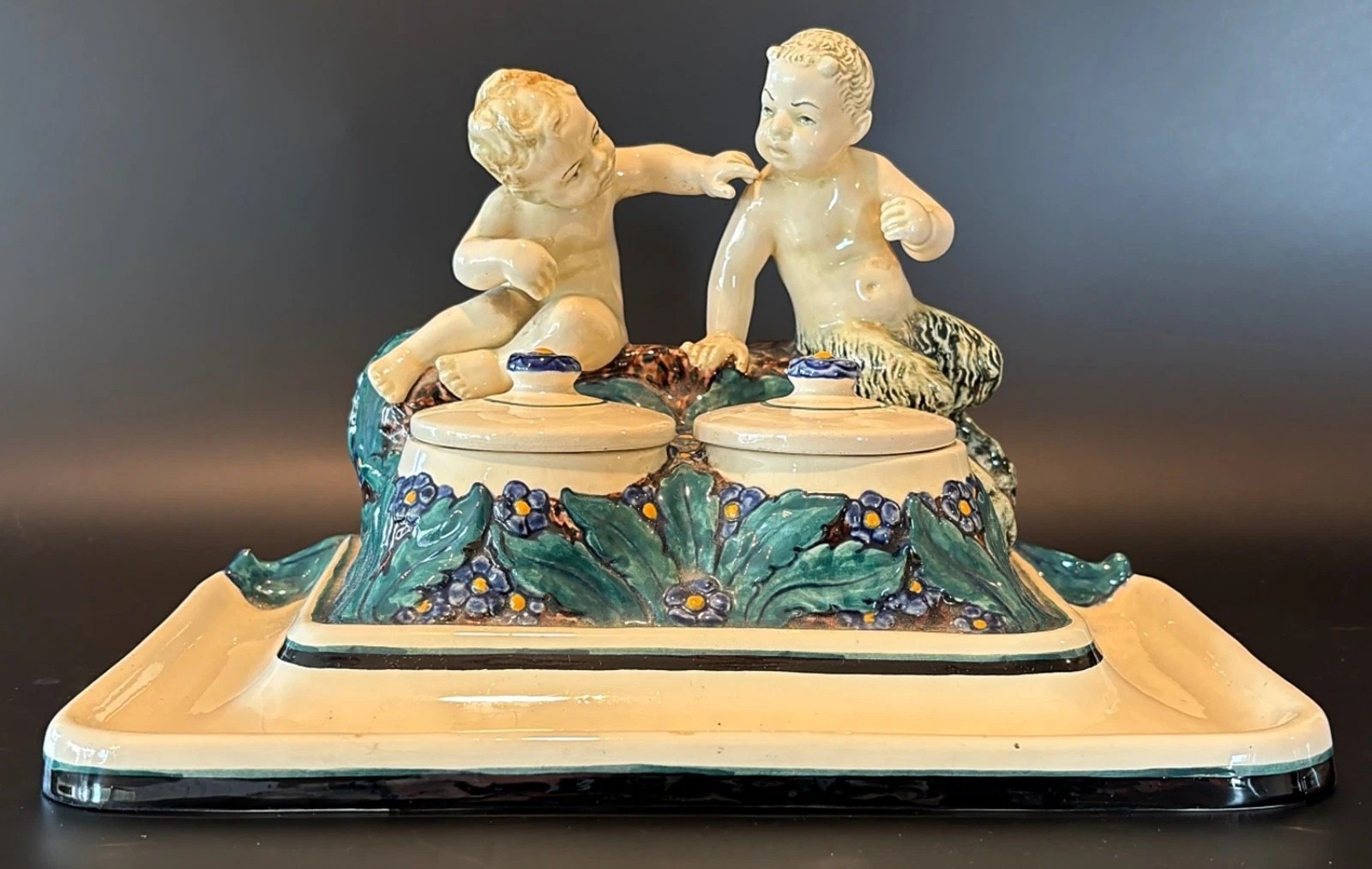
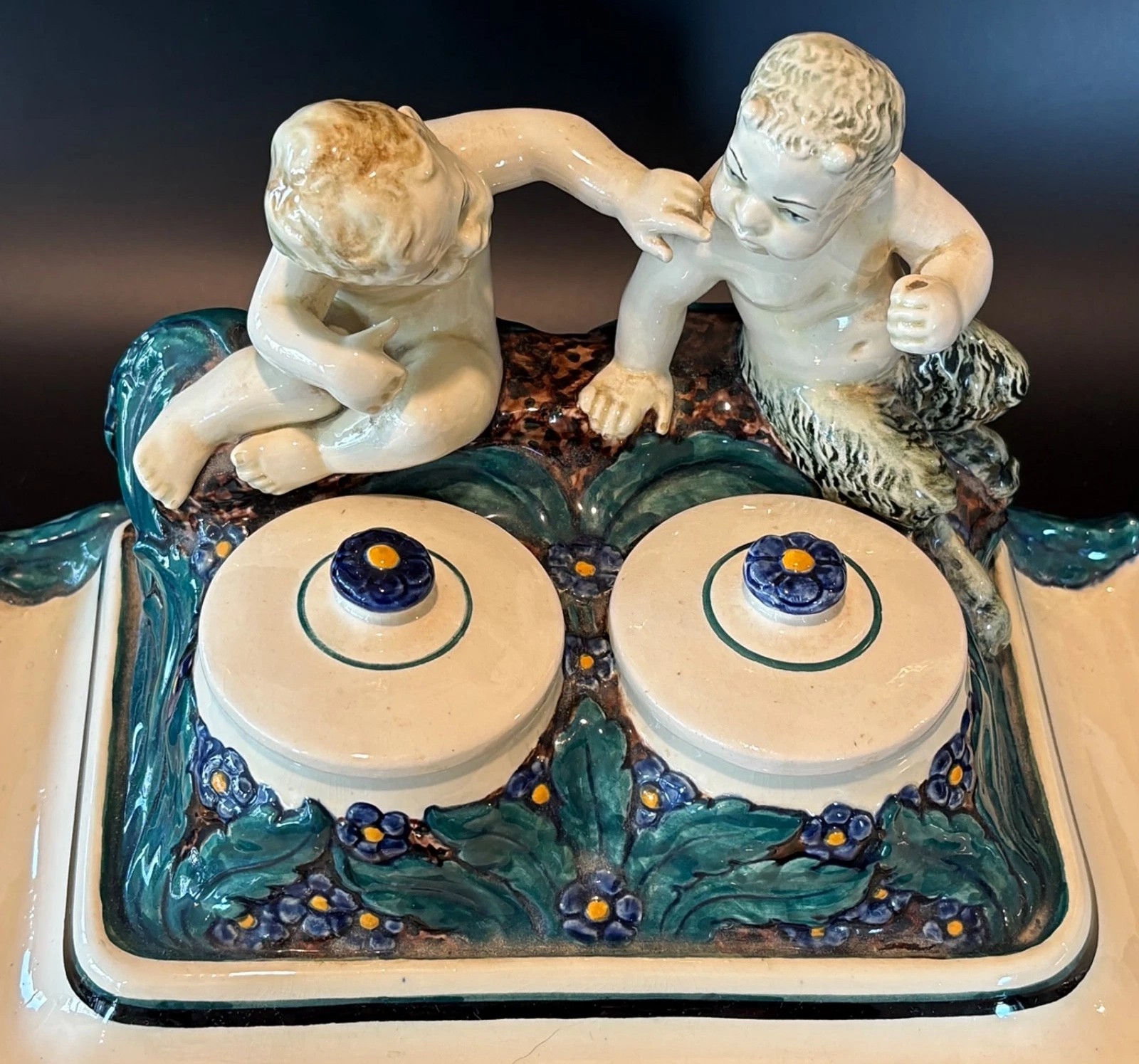
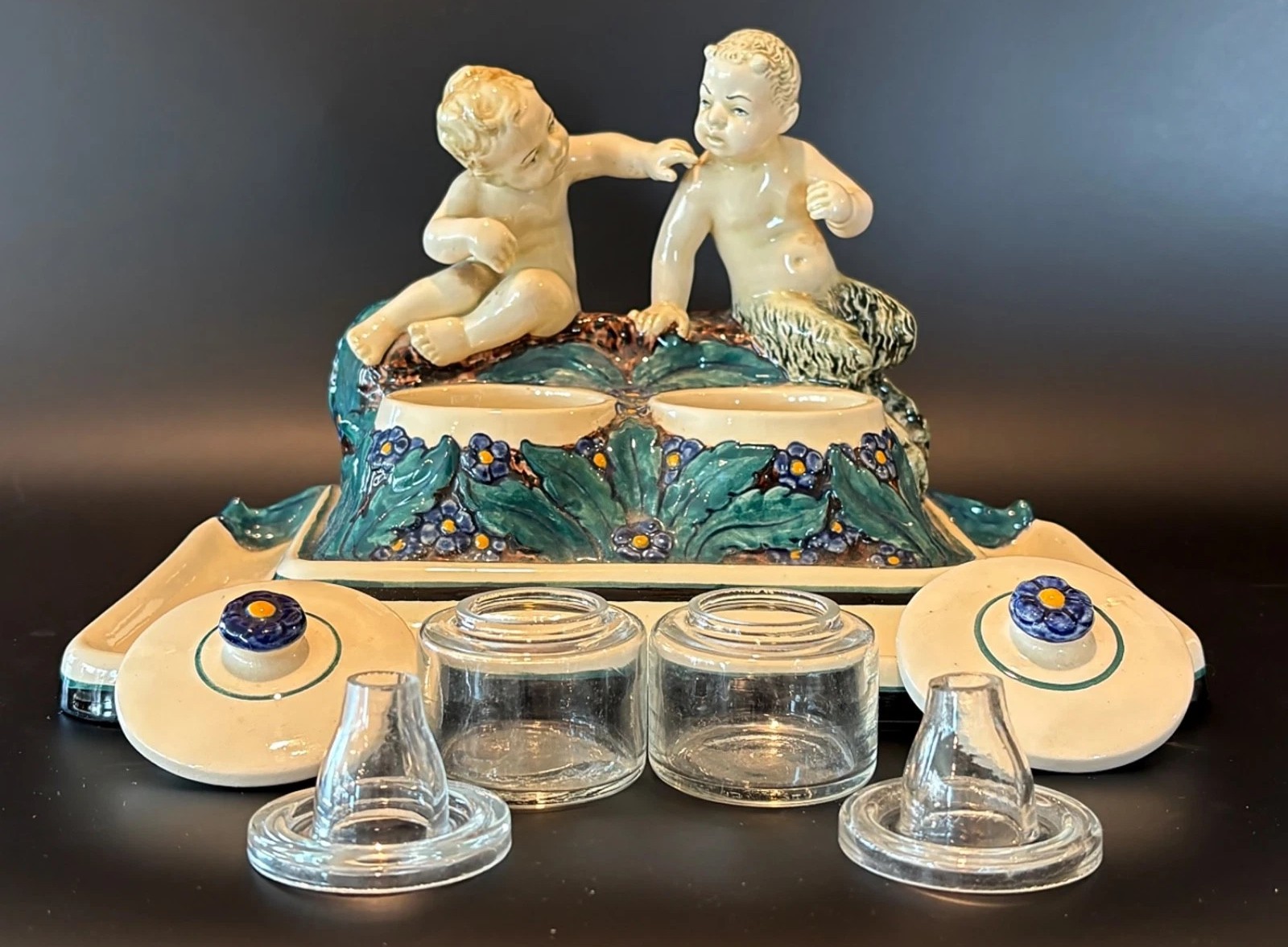
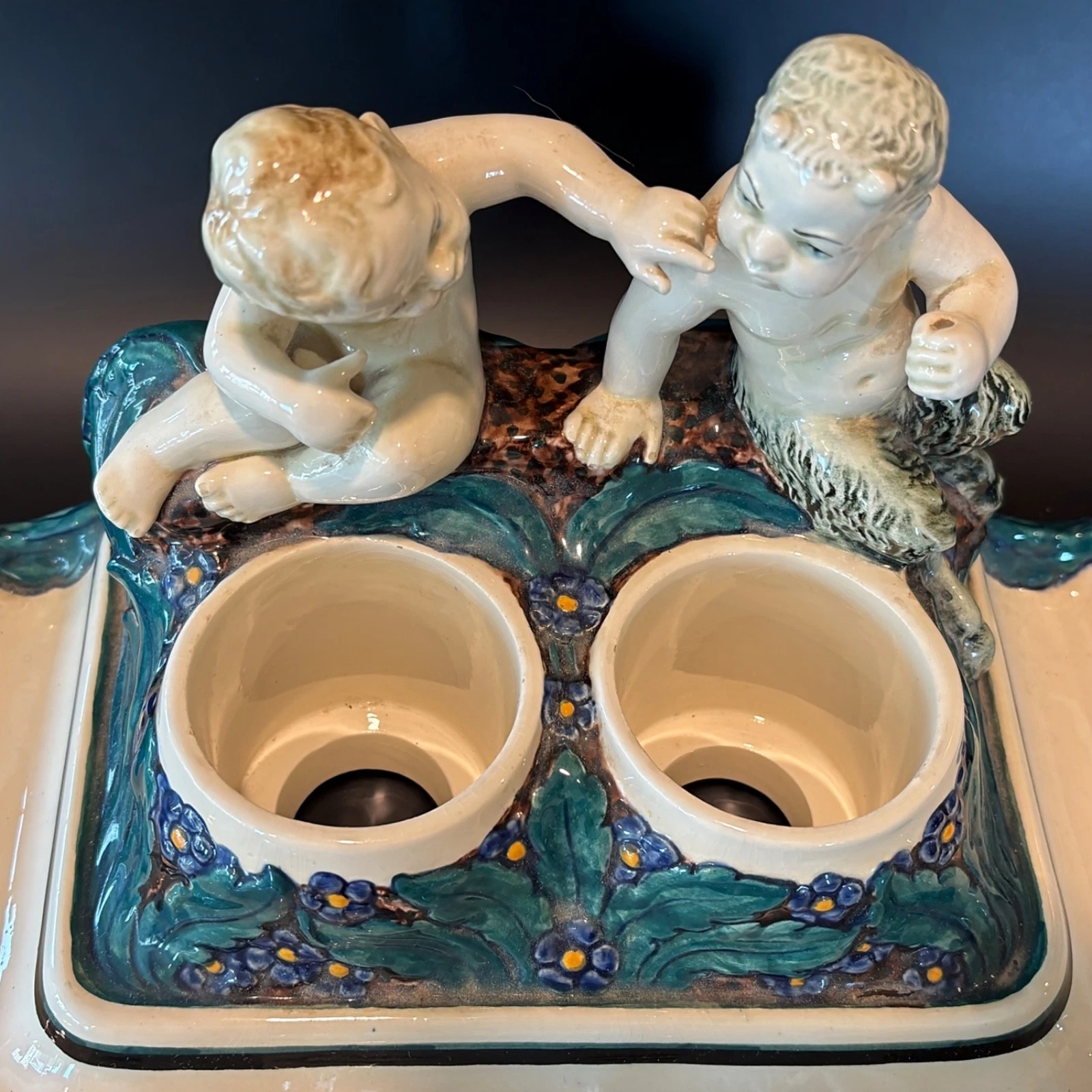
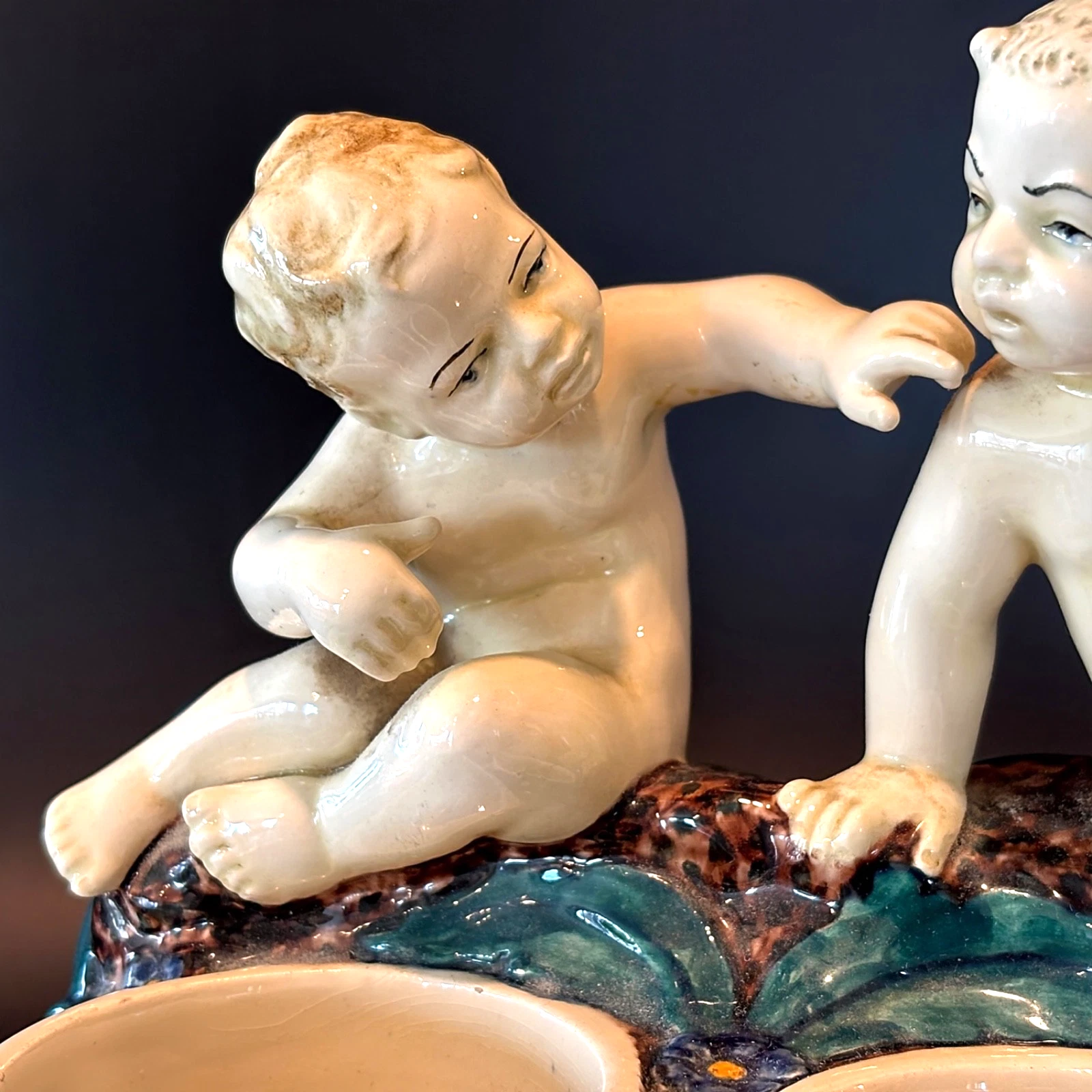
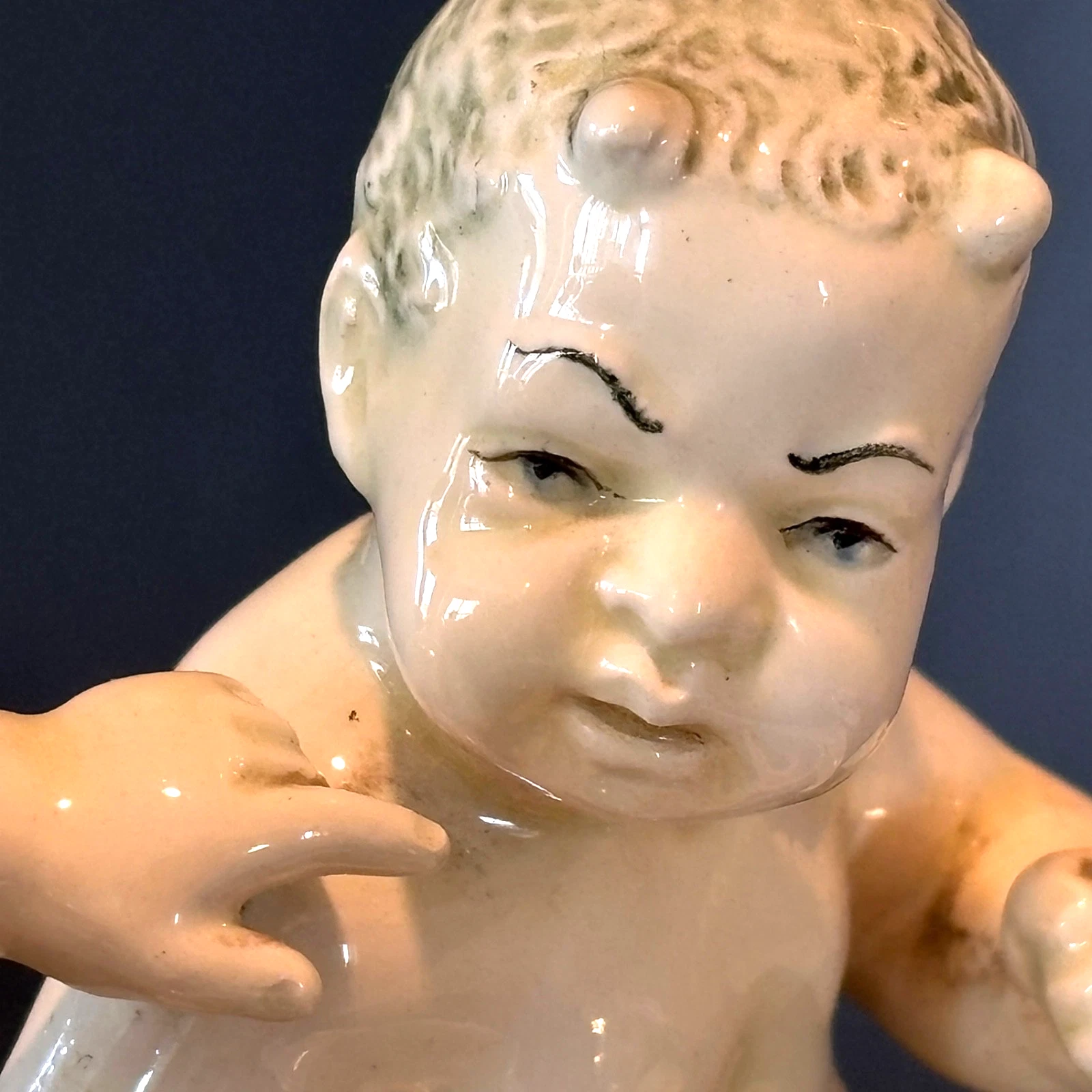
- The Sculptural Group: The centerpiece of the stand is a hand-sculpted scene featuring a Putto (cherub) and a young Faun (Pan). They are depicted in a playful interaction: the Putto leans toward the Faun, perhaps offering a secret, while the Faun, identifiable by his goat-like legs and small horns, gazes back with a mischievous expression.
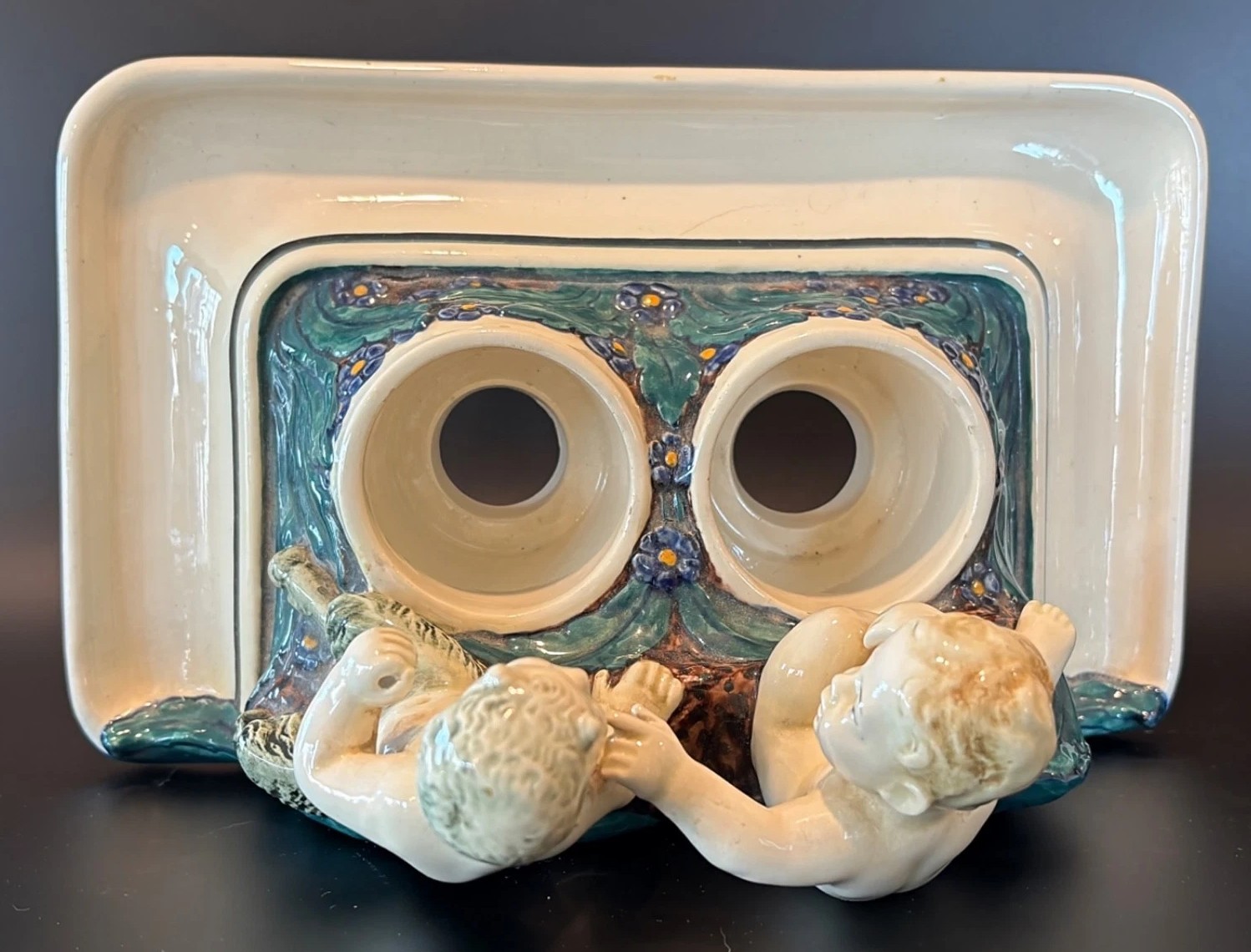
- The Floral Ornamentation: The base of the stand is draped in lush, hand-painted garlands of stylized flowers. The color palette is exceptionally rich, utilizing the high-gloss glazes for which Karlsruhe is famous: deep cobalt blue, emerald-green, warm ocher, delicate violet, and amber.
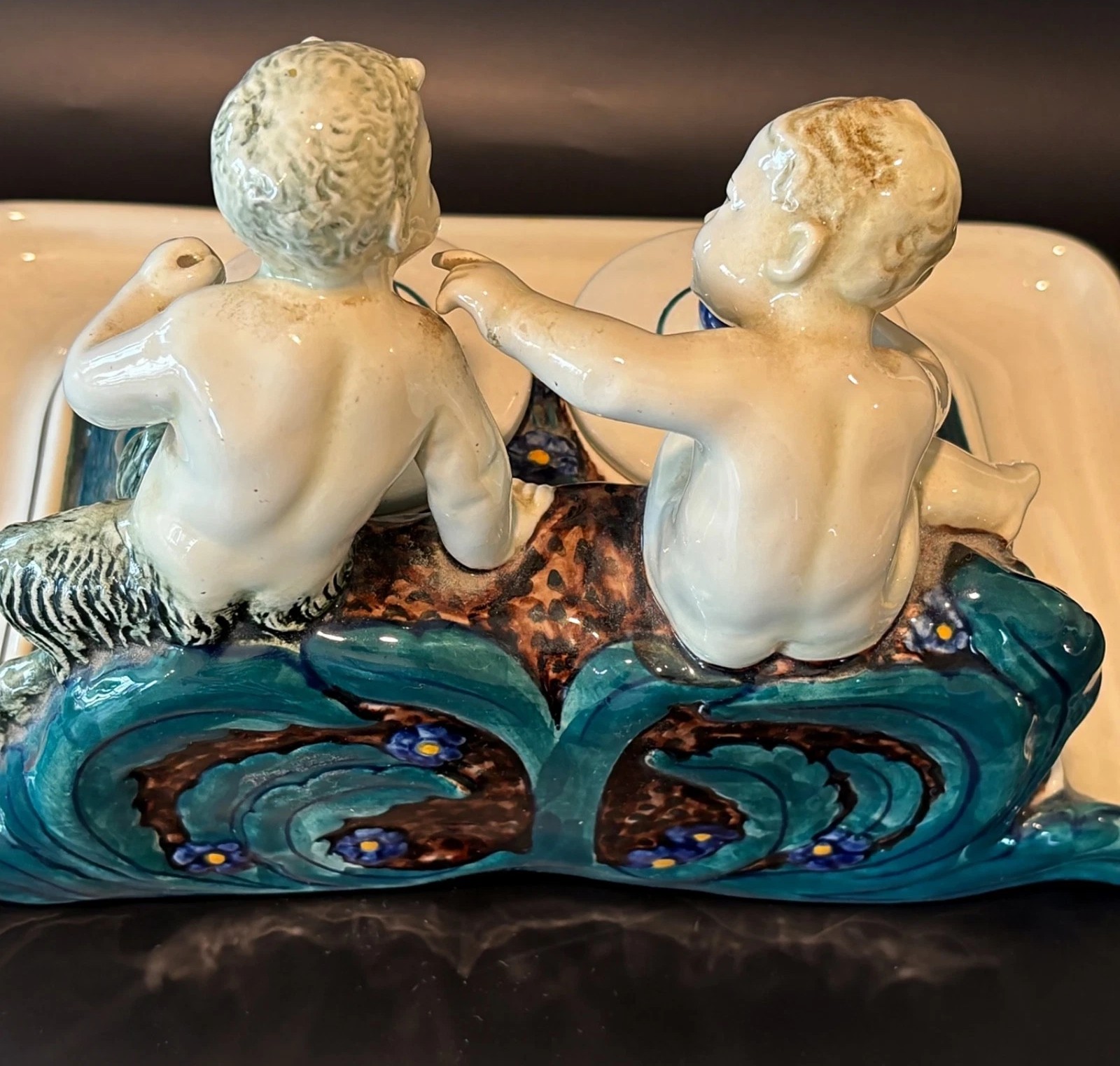
- The Back and Pen Tray: The reverse of the stand features an intricate frond and foliate motif that flows into stylized wave patterns. The forward-extending tray is designed as a smooth, glazed pen rest, framed by a dark emerald border.
- The Inkwells: The set features double ceramic inkwells with matching lids. Each lid is topped with a blue-and-yellow floral finial. When lifted, they reveal two original, clear glass inserts.
Identification and Age
- Markings: The underside is incised with the Form Number 1157 and bears the blue stamped Karlsruhe factory mark featuring a crowned shield.
- Estimated Age: Circa 1910–1915. This specific design was created during the peak of Wilhelm Süs’s influence at the factory, when he was blending traditional majolica techniques with modern Jugendstil forms.
About the Designer: Wilhelm Süs
Wilhelm Süs (1861–1933) was the most pivotal figure in the history of the Karlsruhe Majolica Works.
- Founding Influence: In 1901, Süs co-founded the Grand Ducal Majolica Manufactory (Großherzogliche Majolika-Manufaktur) in Karlsruhe alongside fellow artist Hans Thoma. This was done at the request of Grand Duke Friedrich I of Baden, who wanted to revitalize local art industries.
- The “Karlsruhe Style”: Süs was responsible for elevating the factory from a local workshop to an internationally recognized center for high-art ceramics. He specialized in these “allegorical figure groups,” where he used the bright, liquid glazes of Italian majolica to interpret German folk and mythological themes.
- Technical Innovation: He was instrumental in developing the factory’s signature liquid-lead glazes that allowed for the “bleeding” of colors seen in the floral garlands, a technique that became a hallmark of the Karlsruhe style.
- Artistic Style: Süs was heavily influenced by the Wiener Werkstätte (Vienna Workshops). His work is characterized by a “sculptural” approach where the utility of an object—like an inkwell—is integrated into a larger figurative scene.
- Legacy: His works from this period, particularly those with the 1100-series form numbers, are known for their whimsical characterization and the technical brilliance of the multi-colored glazes.
Form 1157 in the Factory Catalog
While complete original 1910 paper catalogs are rare today, Form 1157 is documented in the factory’s production archives and historical retrospectives as part of the “1100 Series”.
- Production Era: This series was introduced between 1910 and 1912.
- Designer Attribution: The “Putto and Faun” motif is a signature of Wilhelm Süs’s early work, which often focused on mythological figures interpreted through a whimsical, Germanic lens.
- Color Variants: In the original sales offerings of that era, Form 1157 was typically produced in a polychrome (multi-colored) high-gloss finish. While this set features a rich palette of blue, ocher, and violet, the factory also offered “toned down” versions with a more monochromatic green or amber-over-cream glaze to suit different tastes.
Sold for $218 in December 2025
Content disclaimer. The information posted is the owner’s best knowledge and may not have been vetted by the SOIC. We welcome comments, corrections, and additions, working to make our website information comprehensive and accurate.
Join the Society of Inkwell Collectors (SOIC) – it’s free!
Founded in 1981 as a non-profit organization,
we are documenting inkwells (and accessories).
We’re here to help and inform!