

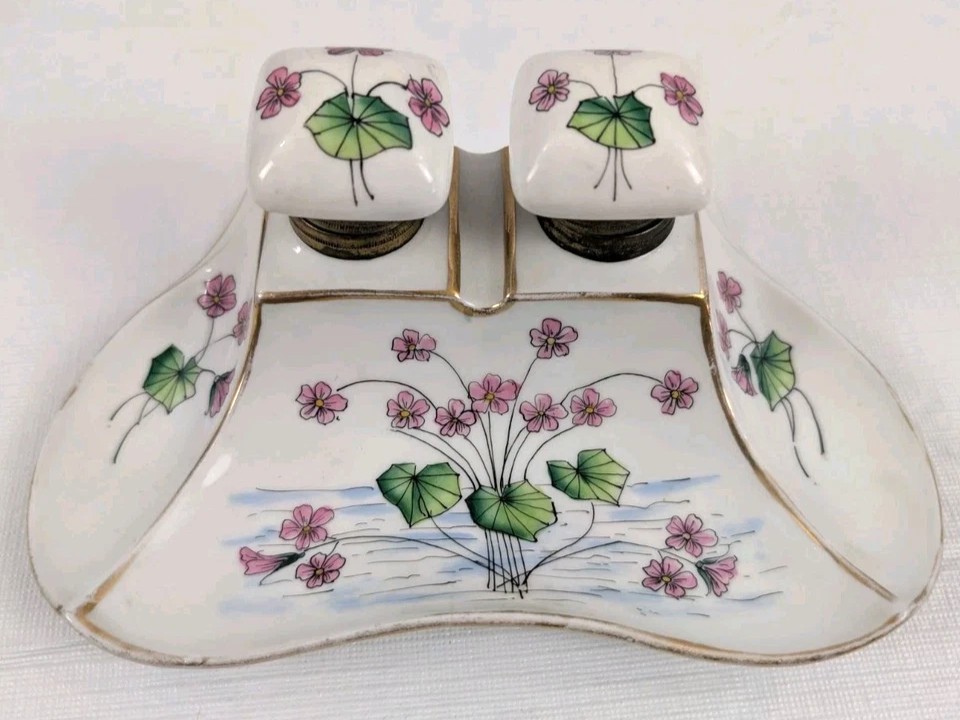
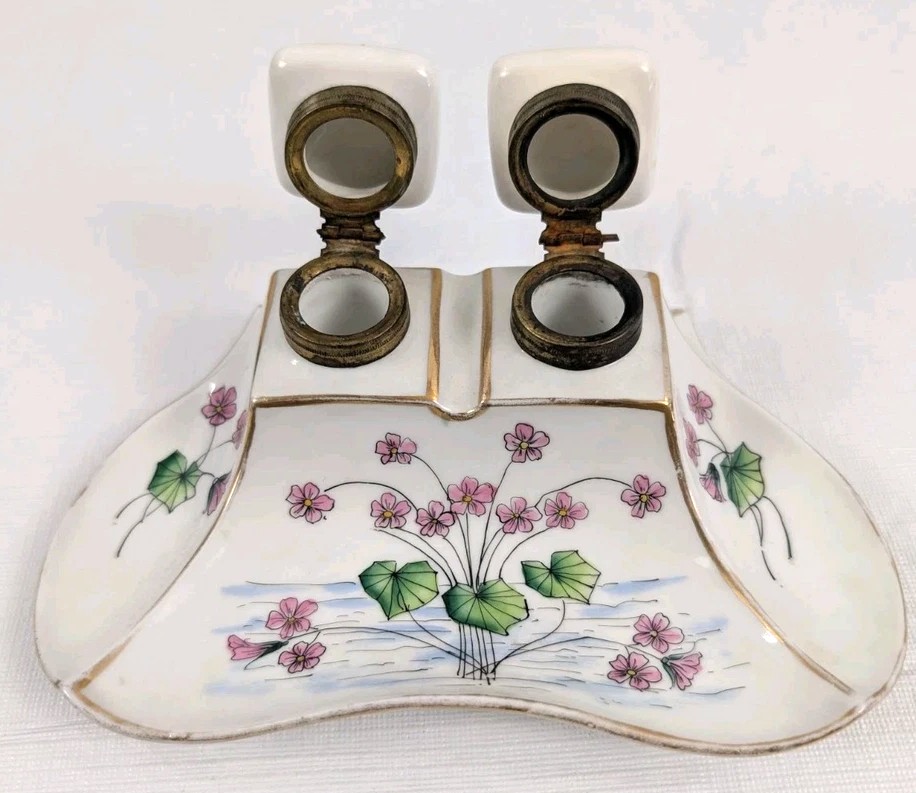
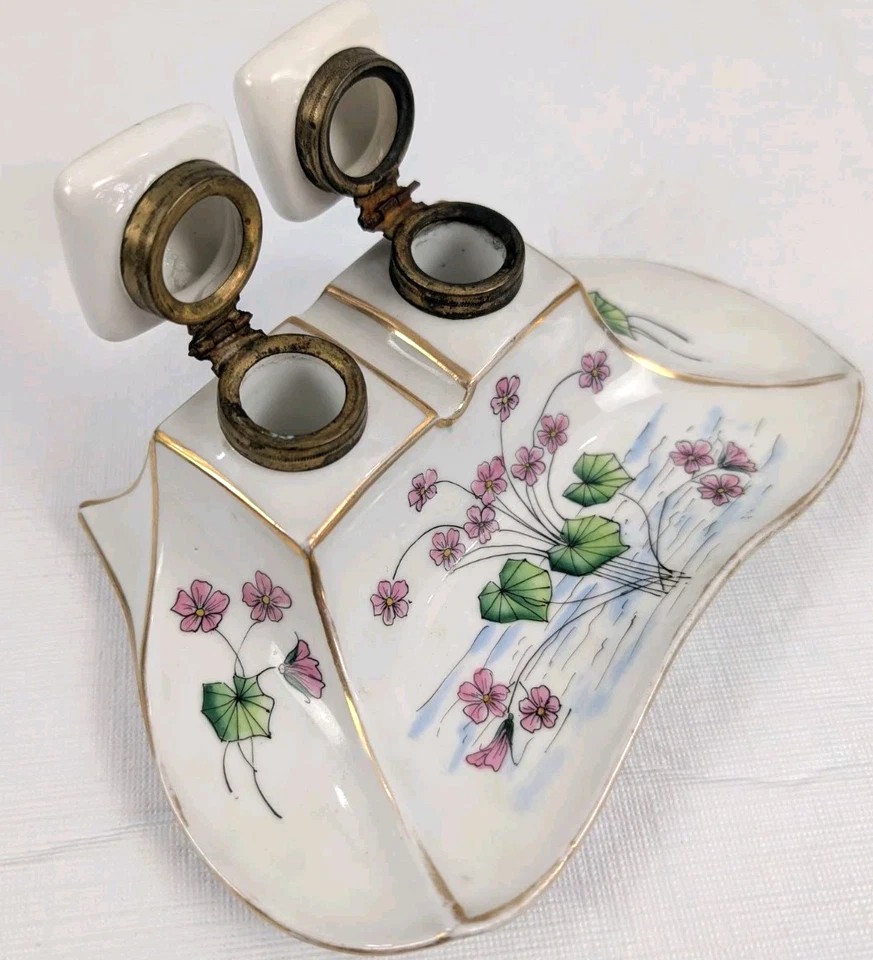
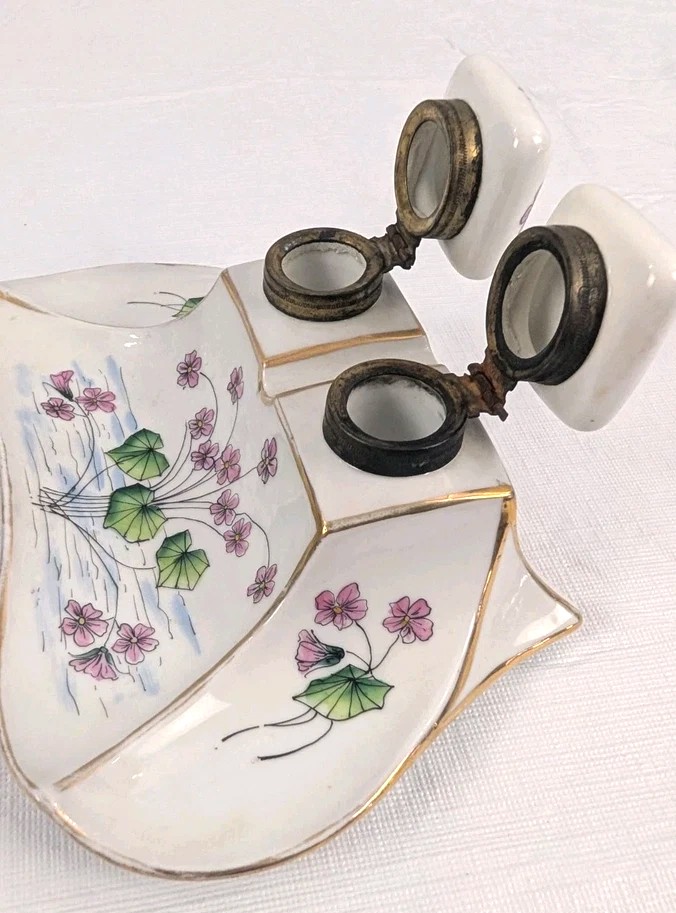
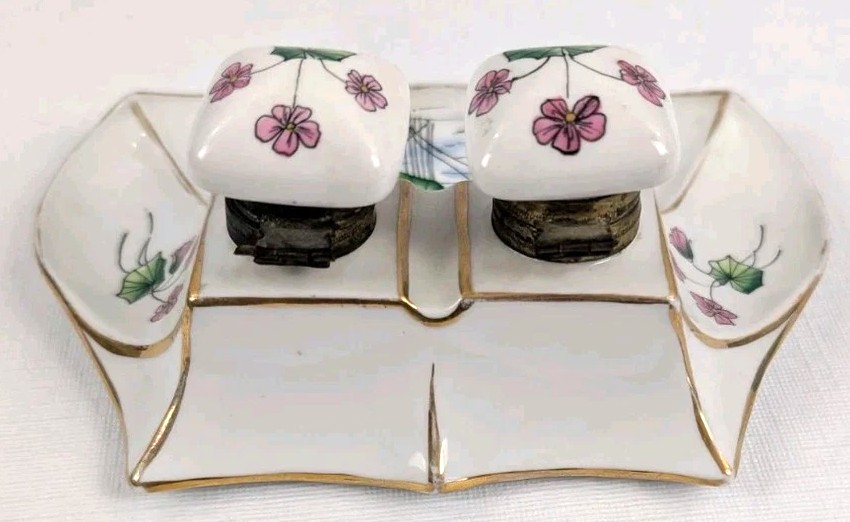
Porcelain Double Inkstand
| Categories | Ceramics/Porcelain non-Figural |
| Material | Porcelain |
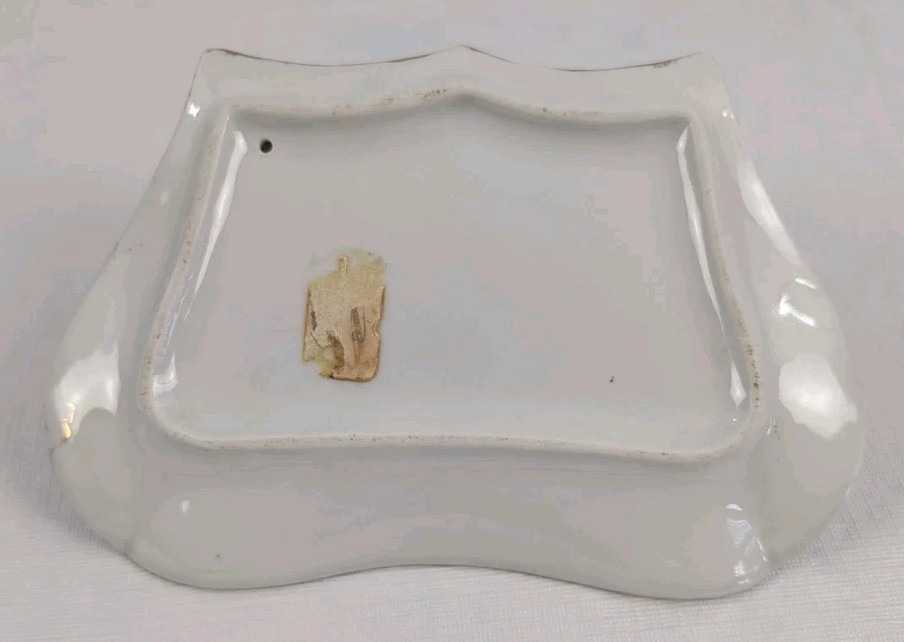
| Markings | Unmarked |
| Manufacturer | Undetermined |
| Origin | Undetermined |
| Date or Era | circa 1890 |
| Measuring | 7” x 4 ½” x 2 ½” high |
This unmarked porcelain double inkstand likely originated from a Continental workshop.
Identifying the Origin
The absence of a mark is a significant clue in itself. While large factories like Meissen or Sèvres were meticulous about hallmarking, many smaller high-quality European firms were not.
- “Old Paris” (Vieux Paris): This is the most probable origin. From roughly 1830 to 1890, dozens of small porcelain workshops operated in and around Paris. They produced exceptionally fine, hand-painted wares but rarely used factory marks to avoid the high taxes and regulations associated with established brands.
- Thuringian/German: If a piece features very delicate, high-relief floral encrustations (flowers that “pop” off the surface), it may be from the Thuringia region of Germany, where many smaller factories produced “Dresden style” wares without consistent marks.
Physical Description
- The Material: It is hard-paste porcelain.
- Decoration: Floral Motifs: The “sprig” or “bouquet” style of hand-painted flowers was the universal language of 19th-century porcelain. Gilding: The gold trim is gold leaf with some rubbing and wear.
Sold for $40 in December 2025
Content disclaimer. The information posted is the owner’s best knowledge and may not have been vetted by the SOIC. We welcome comments, corrections, and additions, working to make our website information comprehensive and accurate.
Join the Society of Inkwell Collectors (SOIC) – it’s free!
Founded in 1981 as a non-profit organization,
we are documenting inkwells (and accessories).
We’re here to help and inform!