



Folk Art – Reclining Alpine Man
| Categories | Figural - Persons |
| Material | Glass, Wood |
| Markings | Unmarked |
| Origin | Germany |
| Date or Era | circa 1900 |
| Measuring | 6” across |
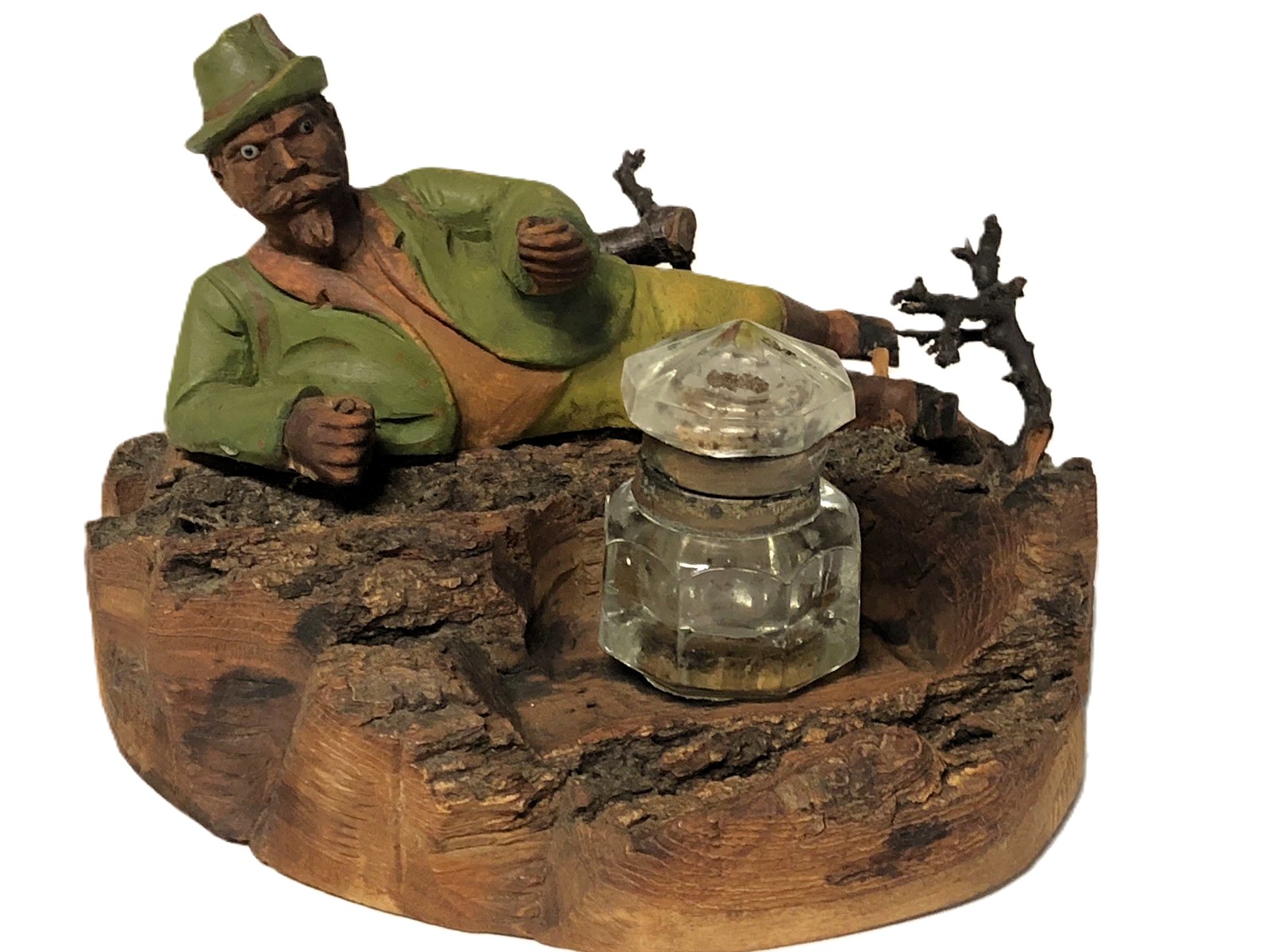
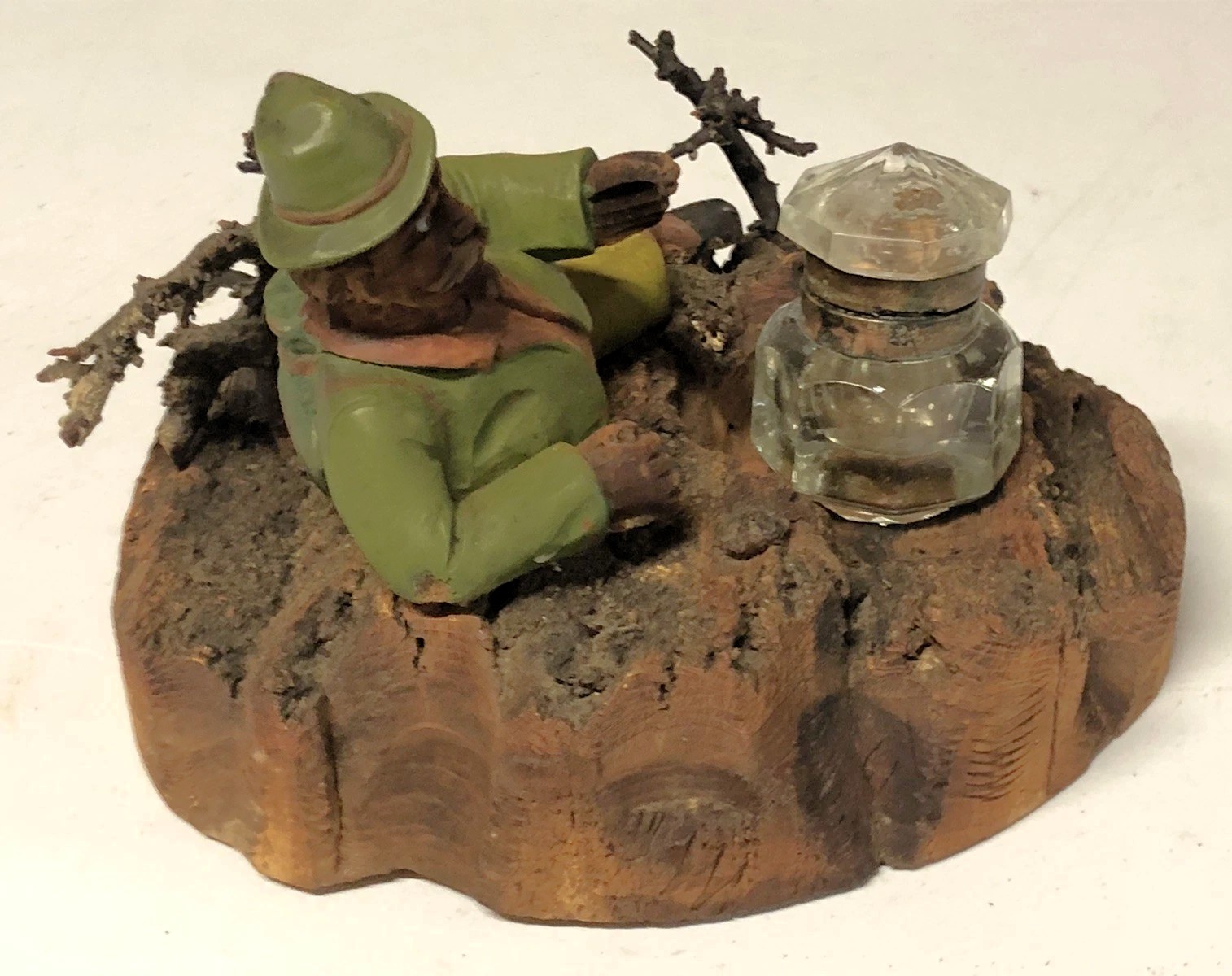
This unique piece of folk art is a hand-carved figural inkstand modeled from a single block of wood, capturing a rustic, pastoral scene.
Physical Description & Features
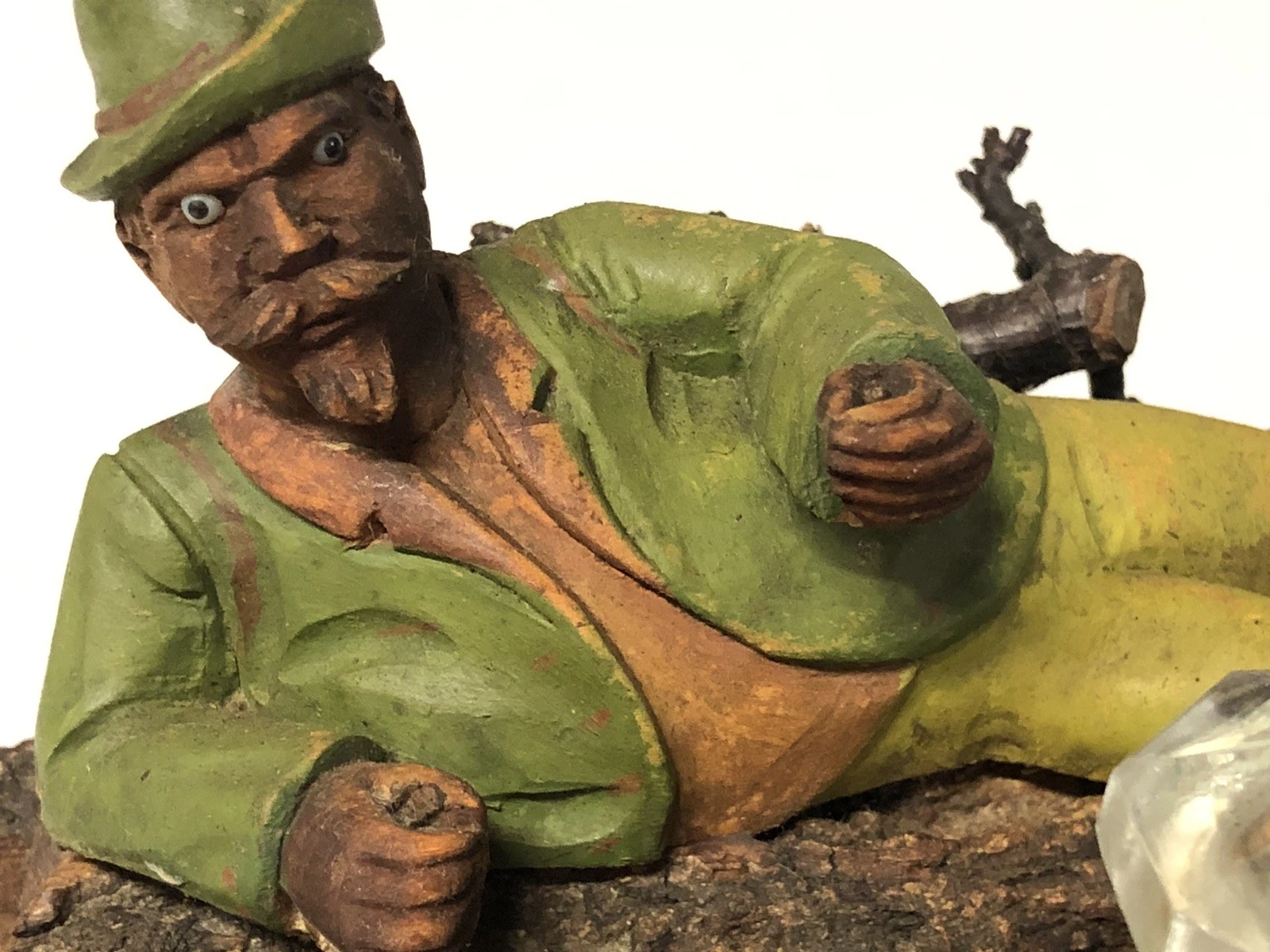
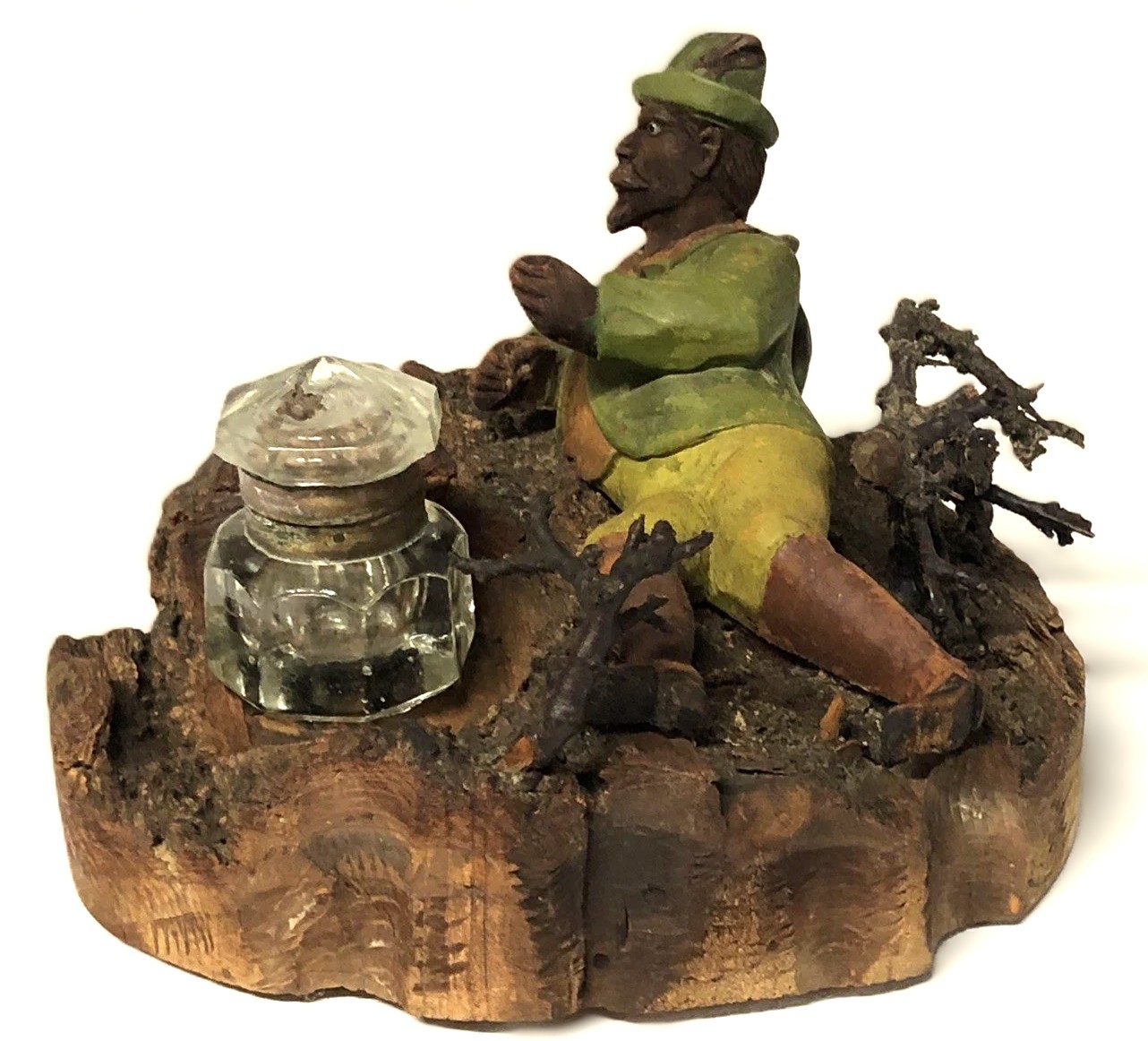
- The Figure: The centerpiece is a reclining man resting on his side, dressed in traditional alpine-style attire, including a green jacket, a brimmed hat, and tall boots. His face is highly expressive, featuring a prominent mustache, a goatee, and arresting glass eyes that give the carving a lifelike, almost startling presence.
- The Missing Element: His hands are positioned as if they were originally gripping a long, thin object. Given the context of the piece, he most likely held a wooden walking stick or a long alpine horn, which has since been lost.
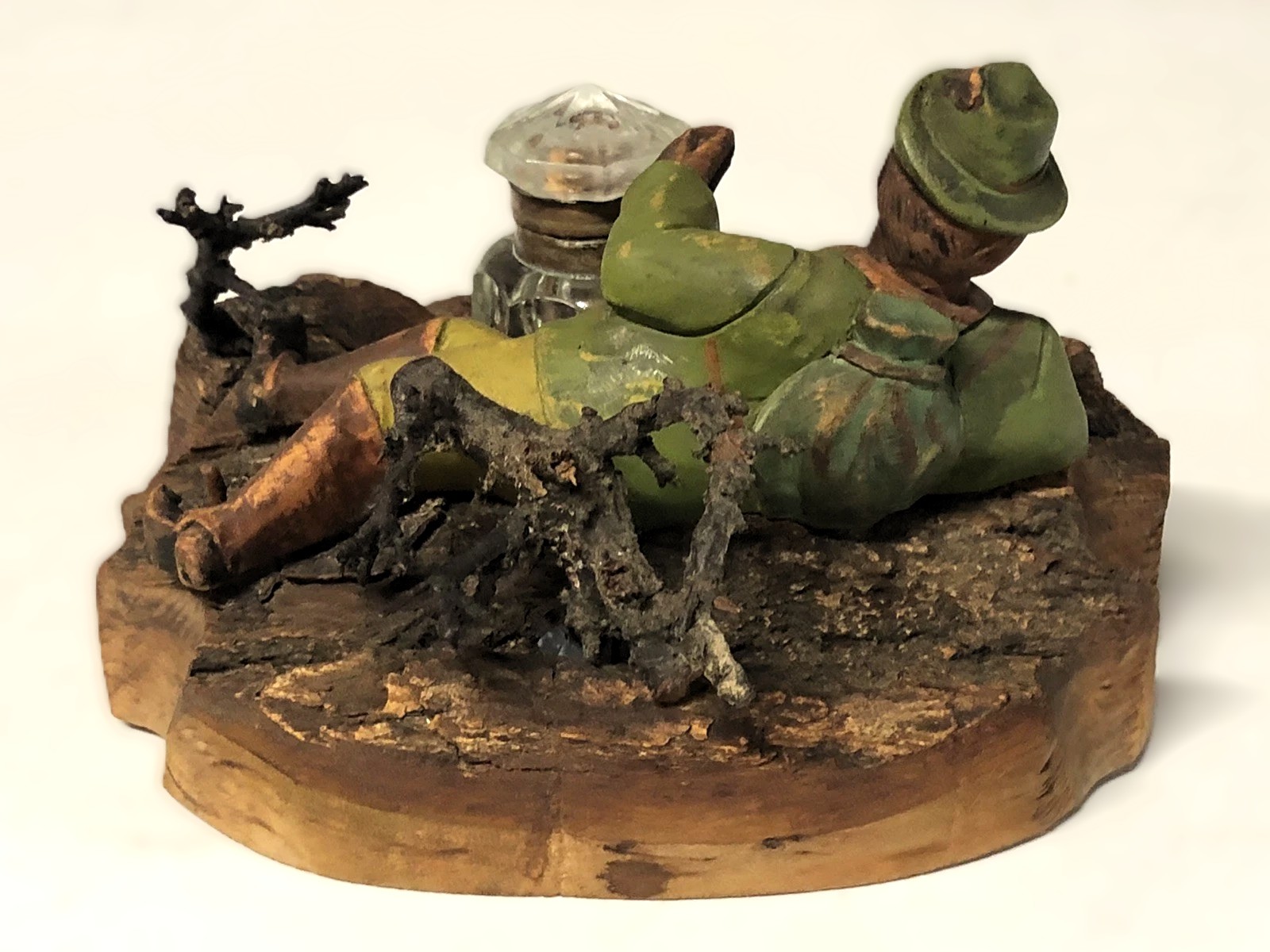
- Pen Holder: The “underbrush” or tangled branches behind the man are not merely decorative; they are designed as a naturalistic pen rest. A dip pen would have been cradled across these wooden “twigs” when not in use.
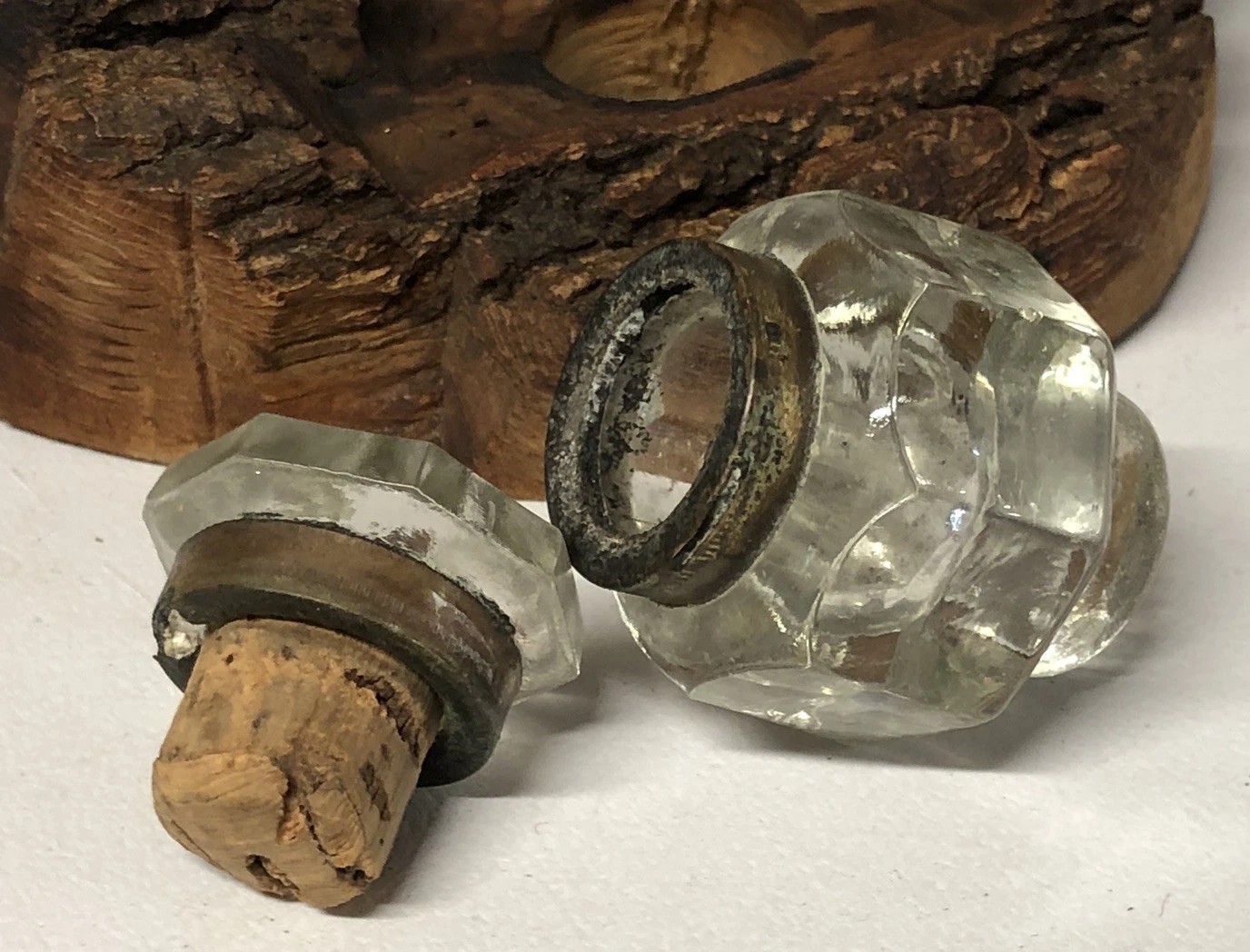
- The Inkwell: The set includes a faceted glass inkwell with a stem base that fits into a precisely carved circular hole in the wood. The lid is a matching faceted glass cap with a cork stopper that pulls out to provide access to the ink.
Origin: Is it Black Forest?
While this piece shares the spirit of Black Forest carvings, it is best described as a work of Alpine Folk Art.
- Style: Traditional Black Forest carvings (primarily from Brienz, Switzerland) were highly commercialized and often featured bears or dogs. This piece, with its rough-hewn base that retains the natural bark texture of the wood, is more characteristic of “vernacular” or village folk art.
- Region: It was likely made in the Austrian or German Alps. The clothing—specifically the hat and jacket—mirrors the Tracht (traditional costume) of these regions.
- Commercial vs. Private: This was not made for commercial purposes. The hand-painted finish and the inclusion of glass eyes in a human figure suggest it was a labor-intensive “one-off” piece, perhaps made by a skilled hobbyist or a local village carver rather than a factory.
Estimated Age
- Circa 1880–1910.
- The use of inserted glass eyes and the specific style of the faceted glass inkwell with a cork stopper are most consistent with the Late Victorian to Edwardian era.
Sold for $44 in December 2025
Content disclaimer. The information posted is the owner’s best knowledge and may not have been vetted by the SOIC. We welcome comments, corrections, and additions, working to make our website information comprehensive and accurate.
Join the Society of Inkwell Collectors (SOIC) – it’s free!
Founded in 1981 as a non-profit organization,
we are documenting inkwells (and accessories).
We’re here to help and inform!