

Inkipedia


Bennington Lion’s Head Inkwell
| Categories | Ceramics/Porcelain Figural |
| Type | Lion |
| Material | Pottery |
| Markings | Unmarked |
| Manufacturer | Bennington |
| Origin | United States |
| Date or Era | circa 1855 |
| Measuring | 3 ½” long; 1 ⅞” high |
- Description and Design
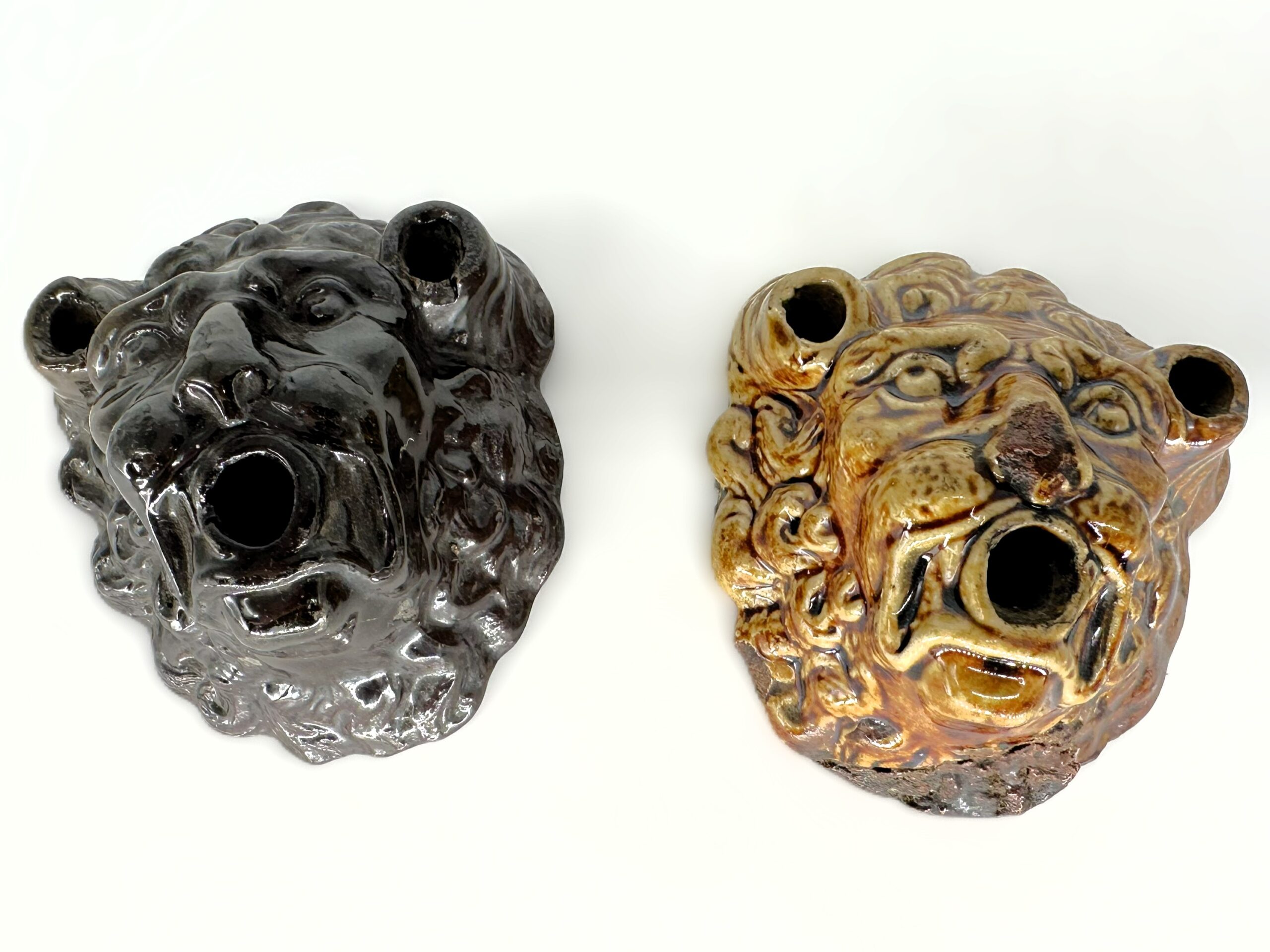
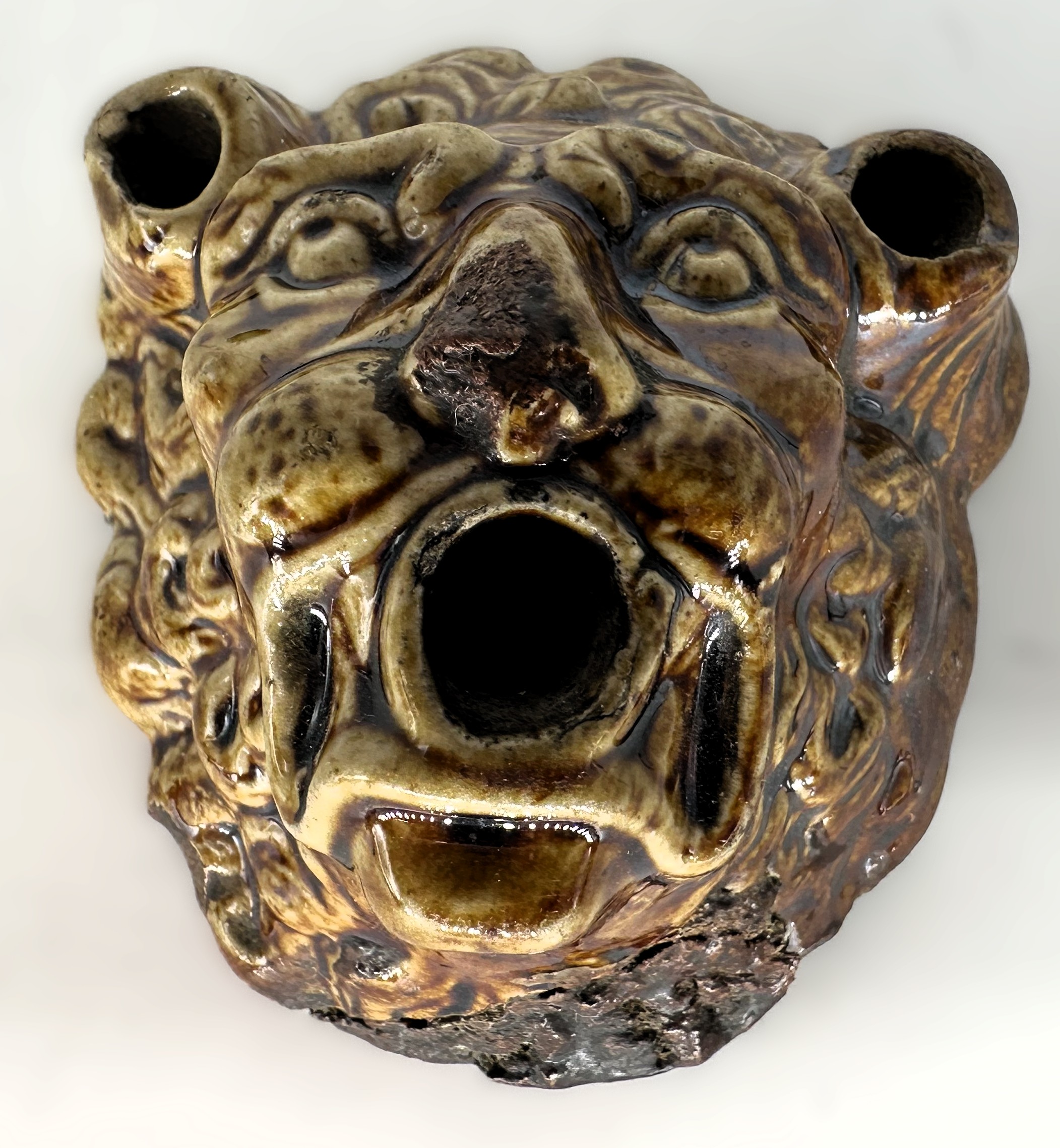
This inkwell is a figural novelty piece made from earthenware and finished with the characteristic mottled brown glaze.
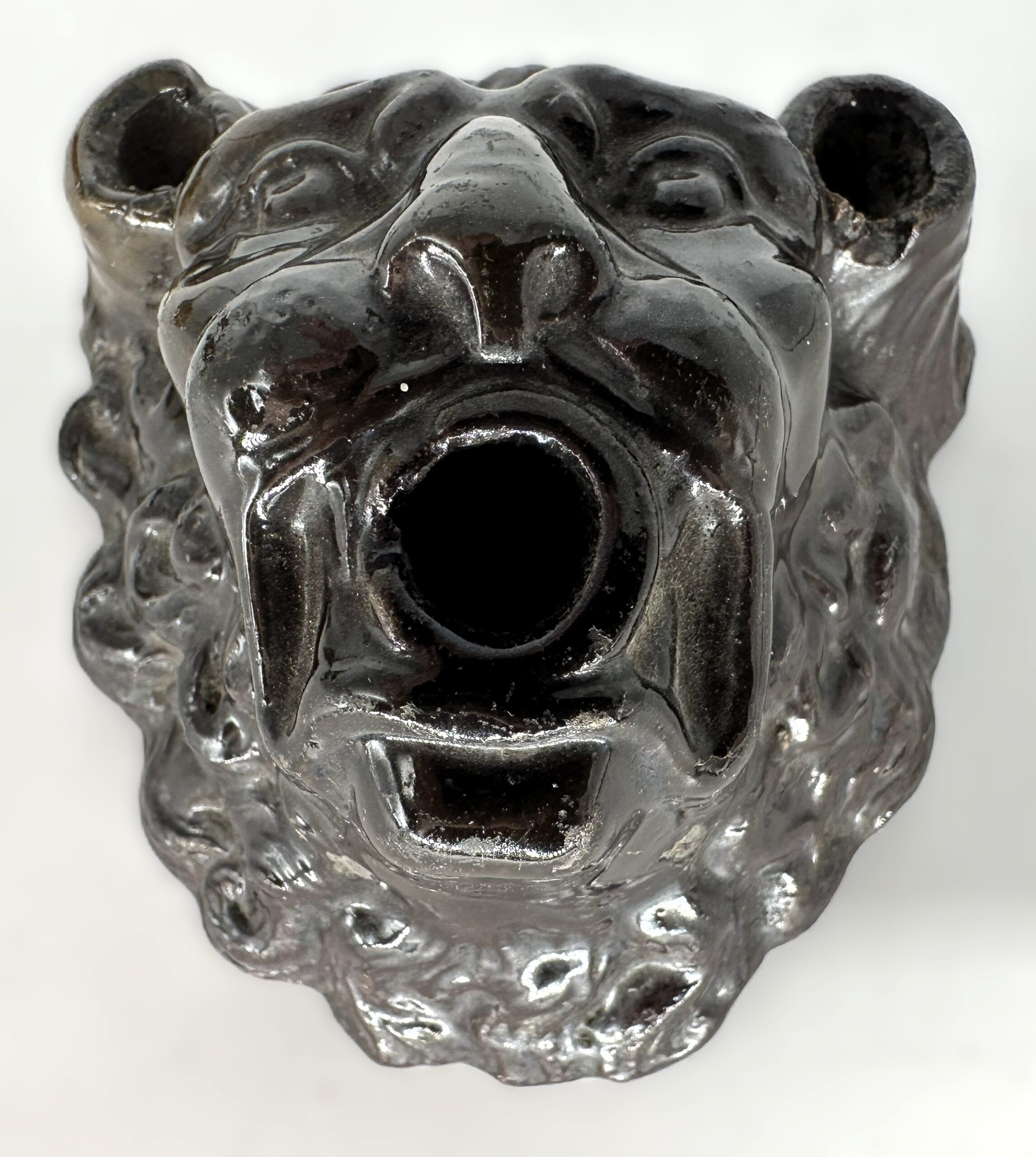
- Subject and Form: The inkwell is molded in the shape of a lion’s head. The lion has a finely detailed face, featuring deeply recessed eyes, a pronounced nose, and a flowing mane that surrounds the face. The quality of the molding is consistently sharp, which is a hallmark of the Bennington factory’s technical skill.
- Material and Finish:
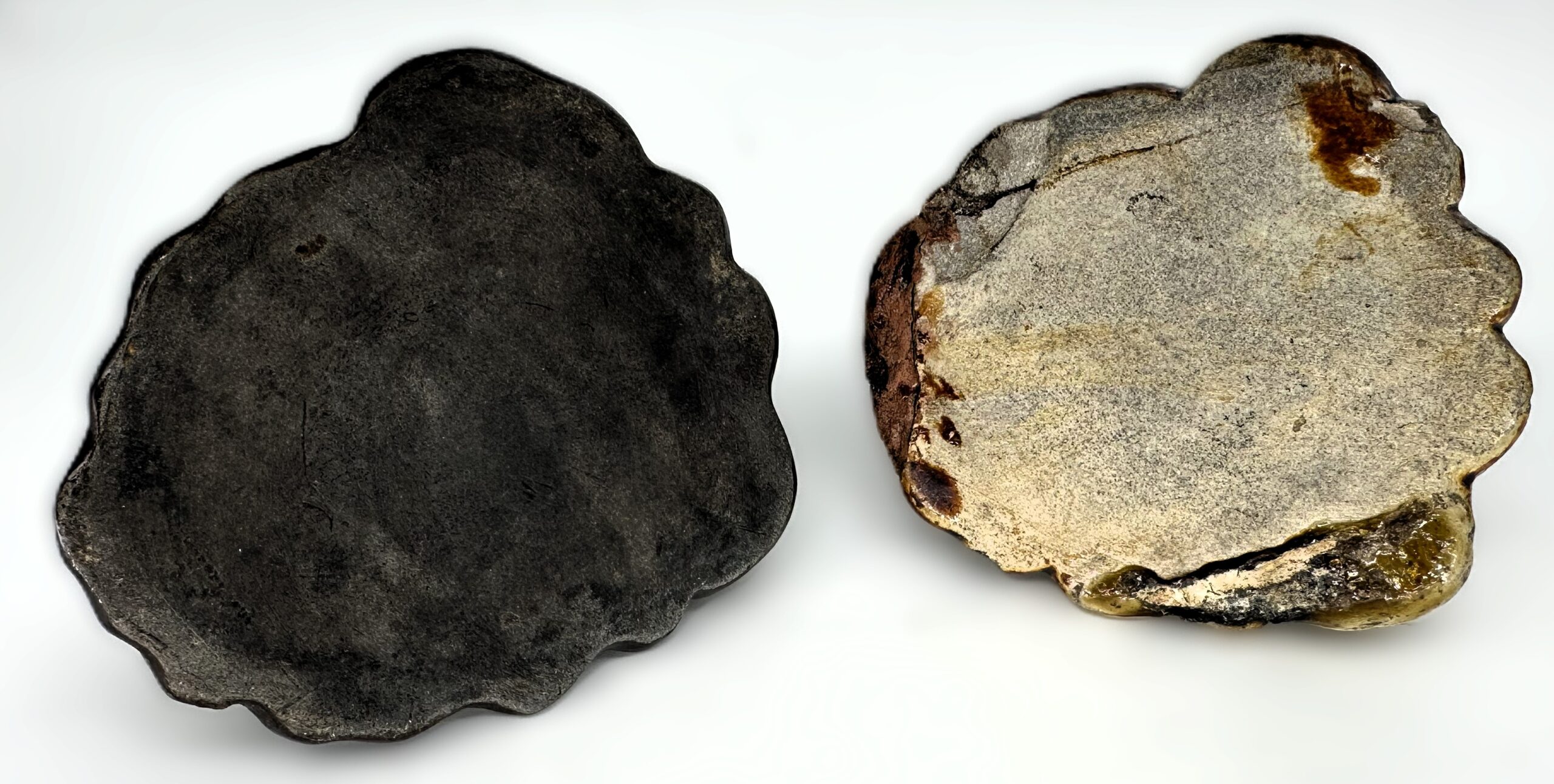
- Clay Body: Typically made from a yellowware or yellowish-buff earthenware clay body.
- Glaze: Finished in the signature Bennington glaze (the American variant of Rockingham glaze). This is a mottled brown lead glaze that pools and breaks unevenly, creating rich, dark-brown areas contrasting with lighter, yellowish-ochre areas, giving it a dramatic, streaked appearance.
- Functionality: The piece integrates all the necessary functions of a desk inkwell:
- Ink Dipping Hole: The lion’s open mouth serves as the ink reservoir opening, where the quill or dip pen would be inserted to access the ink.
- Pen Holders: The two holes (or indentations) in the lion’s ears served as resting places for quill pens when not in use.
- Origin and Historical Context: Bennington, VT
- Maker: This inkwell was produced by the United States Pottery Company (U.S. Pottery Co.) of Bennington, Vermont. This company operated the famous Bennington pottery works, which was under the leadership of Christopher Webber Fenton during this period.
- Production Date: The specific mold number (No. 182) for this inkwell was first introduced around 1853. Production of this model ceased around 1858 when the pottery briefly closed and was not typically included in later catalogs.
- Mold Identification: In the Bennington catalog, this inkwell form is typically listed as a “Lion Inkstand” and is assigned a factory mold number, often No. 182.
- Significance: The Lion’s Head Inkwell, along with the “Hound Handle Pitcher” and other ornate forms, represents the pinnacle of American Rockingham ware. It shows Bennington’s ability to create highly complex, multi-part molds that rivaled the finest English pottery of the era. The form itself capitalizes on the Romantic era’s appreciation for naturalistic subjects.
III. Additional Information
- Designer: While not definitively documented, many of the complex ornamental forms at Bennington during this period are often attributed to the master modeler Daniel Greatbach, who worked at the U.S. Pottery Co. from 1852 to 1858.
- Marking: These inkwells are rarely marked, but when they are, the mark is usually impressed on the bottom and may read “U.S. POTTERY CO. BENNINGTON, VT.” or “PATENTED 1849” (referencing a patent related to the glaze).
- Rarity: Because of the factory’s limited production run of this specific mold (1853–1858) and the high attrition rate of pottery over time, intact Lion’s Head Inkwells are considered rare.
Estimated value: $100
Content disclaimer. The information posted is the owner’s best knowledge and may not have been vetted by the SOIC. We welcome comments, corrections, and additions, working to make our website information comprehensive and accurate.
Join the Society of Inkwell Collectors (SOIC) – it’s free!
Founded in 1981 as a non-profit organization,
we are documenting inkwells (and accessories).
We’re here to help and inform!