






Milk Glass Inkwell with Filigree
| Categories | Glass - Non-figural |
| Material | Glass, Ormolu |
| Markings | Unmarked |
| Manufacturer | Undetermined |
| Origin | Undetermined |
| Date or Era | circa 1890 |
| Measuring | 2” x 2” x 4 ¼” high |
Form and Materials
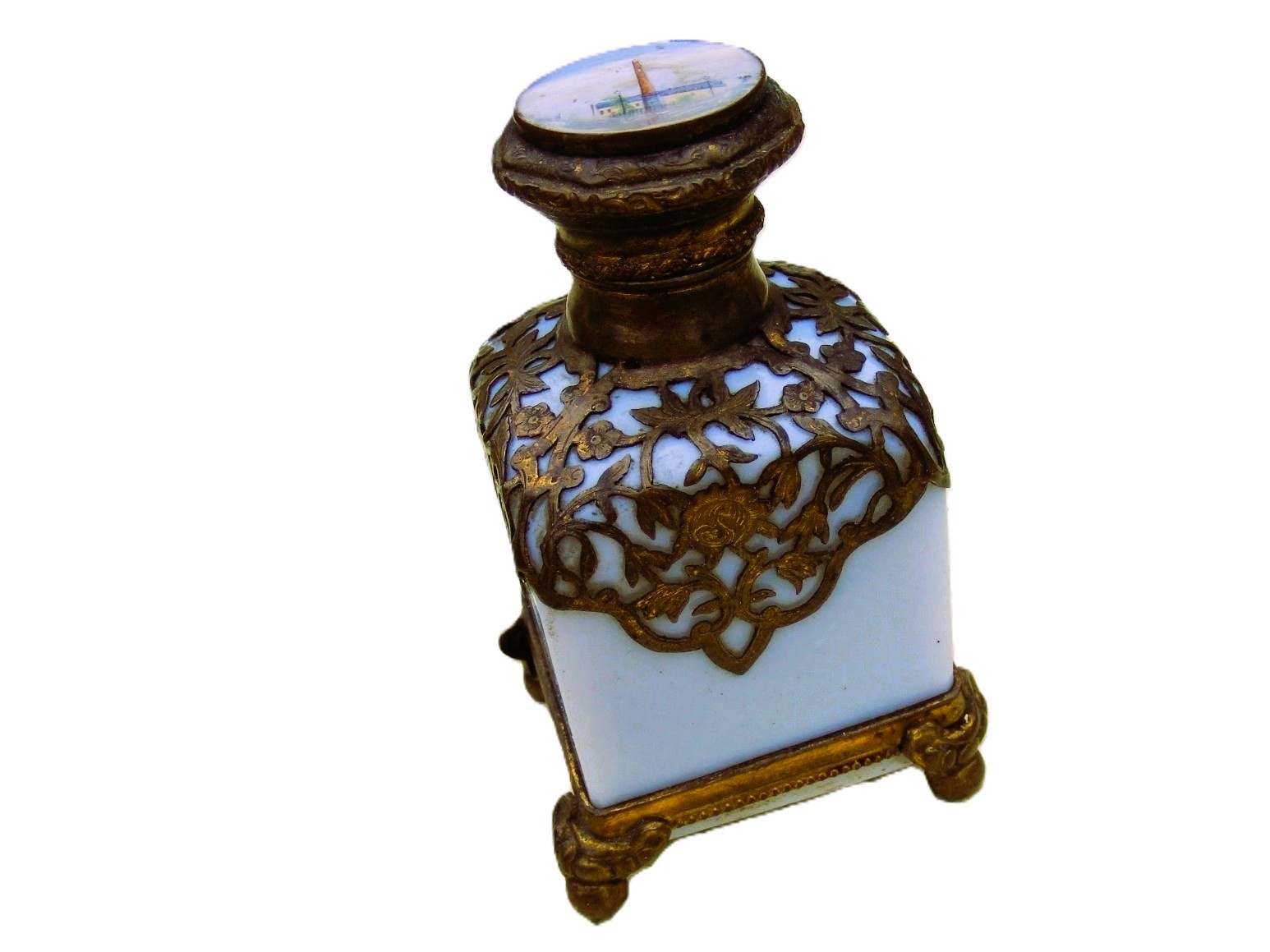
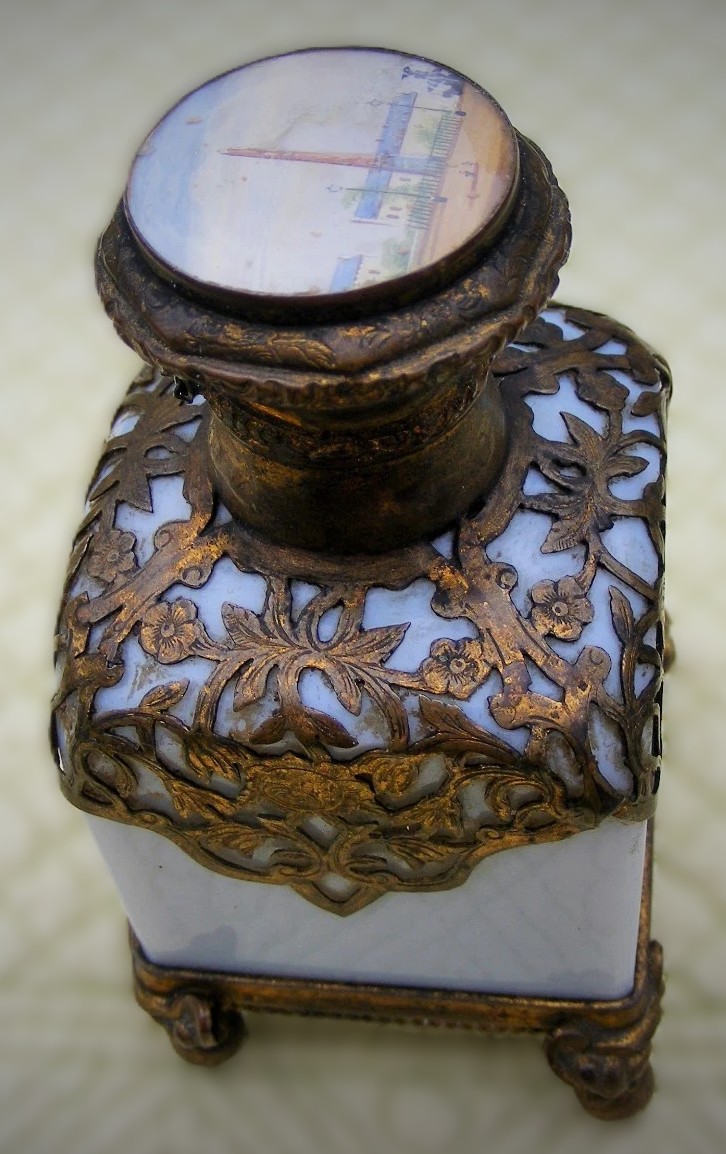
- Body (Glass): The main body of the inkwell is a square shape with angled or beveled corners, made of opaque or translucent milk glass. This white glass was very popular during the late Victorian period.
- Base: The underside of the glass base shows a circular mark which is a mold mark or a plunger mark—a smooth impression resulting from mechanical manufacturing, consistent with a date after the mid-19th century.
- Metal Filigree Casing: The square glass body is held within an ornate, supportive filigree or cage-like metal holder.
- Material: The casing is ormolu (gilt brass).
- Design: The filigree design is elaborate, featuring C-scrolls, floral elements, and foliate motifs, which are typical of Victorian or Neoclassical Revival styles.
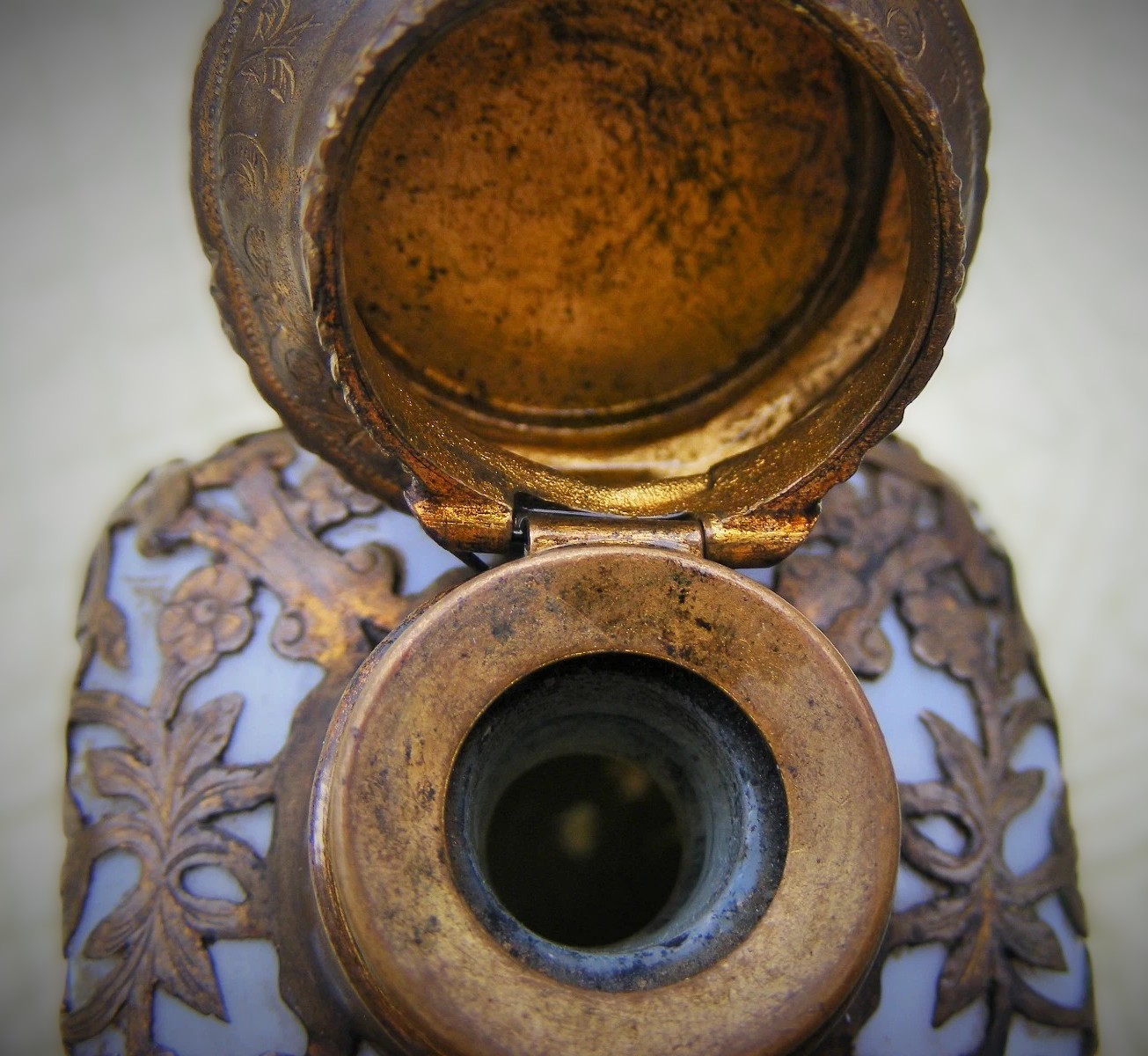
- Lid and Scene: The hinged metal lid is the most distinctive feature.
- Hand-Painted Scene: Encased beneath a protective glass or clear cover is a miniature, hand-painted scene. The scene depicts figures around a fountain, ornate lamp posts, and a background structure (which looks like a multi-storied building with a tower or large chimney), suggesting a romanticized European public square or plaza.
Style Refinement
While highly ornate filigree often points toward French luxury goods, the defined, square, and highly structured form, combined with the intricate gilt metalwork, places it in the Late Victorian/Edwardian era (c. 1880–1900). This combination of traditional Neoclassical ornamentation with a stricter geometric form was characteristic of the decorative trends leading up to the 20th century.
Age and Origin Estimate
- Age: Late 19th Century (c. 1880–1900). This period favored the combination of milk glass, high-quality gilt-metal monture, and small, detailed decorative scenes.
- Origin: The style strongly suggests a European origin, most likely French (where the art of ormolu and filigree mounting was mastered) or possibly Austrian/Bohemian, which specialized in both the glass body and intricate metal casing.
Sold for $88 in October 2025
Content disclaimer. The information posted is the owner’s best knowledge and may not have been vetted by the SOIC. We welcome comments, corrections, and additions, working to make our website information comprehensive and accurate.
Join the Society of Inkwell Collectors (SOIC) – it’s free!
Founded in 1981 as a non-profit organization,
we are documenting inkwells (and accessories).
We’re here to help and inform!