


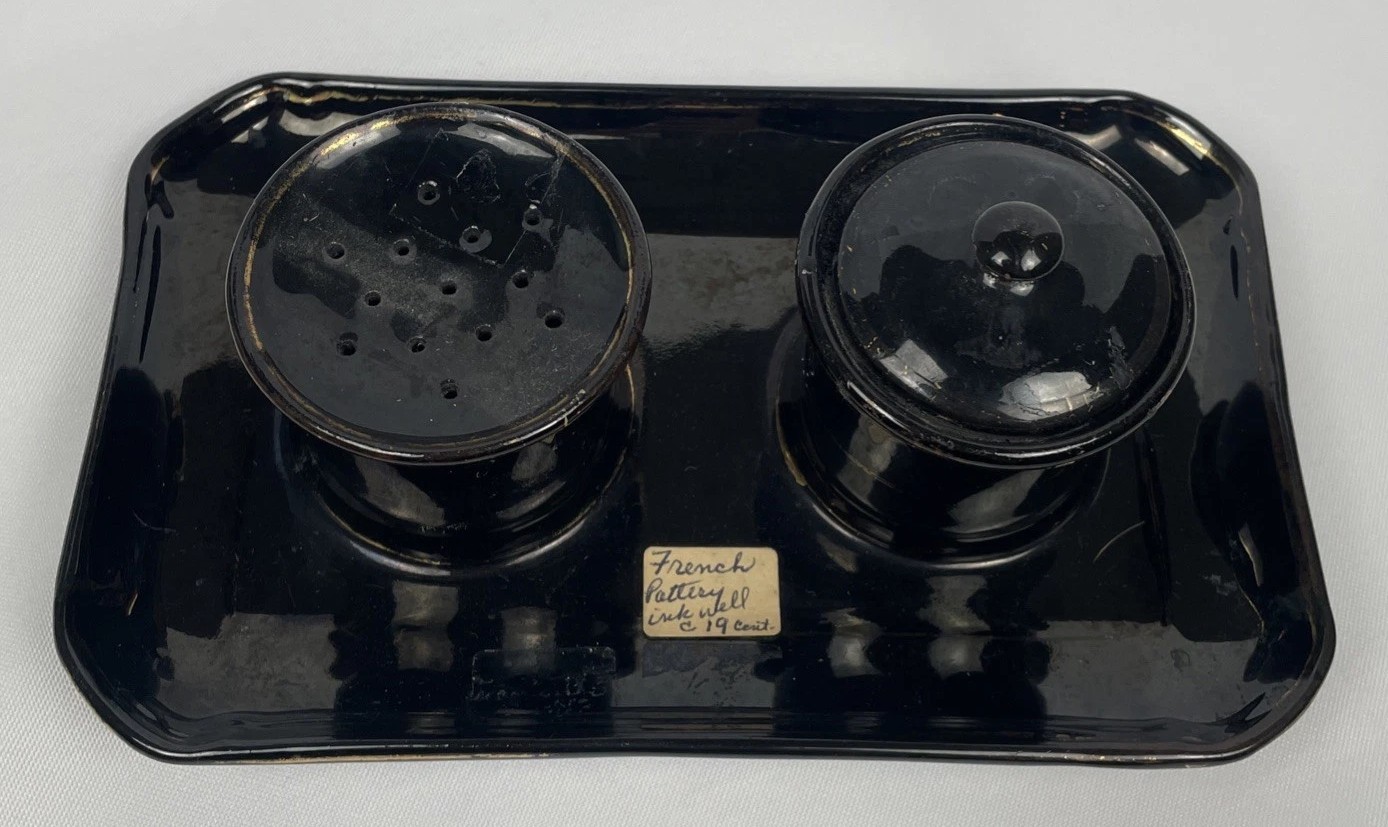


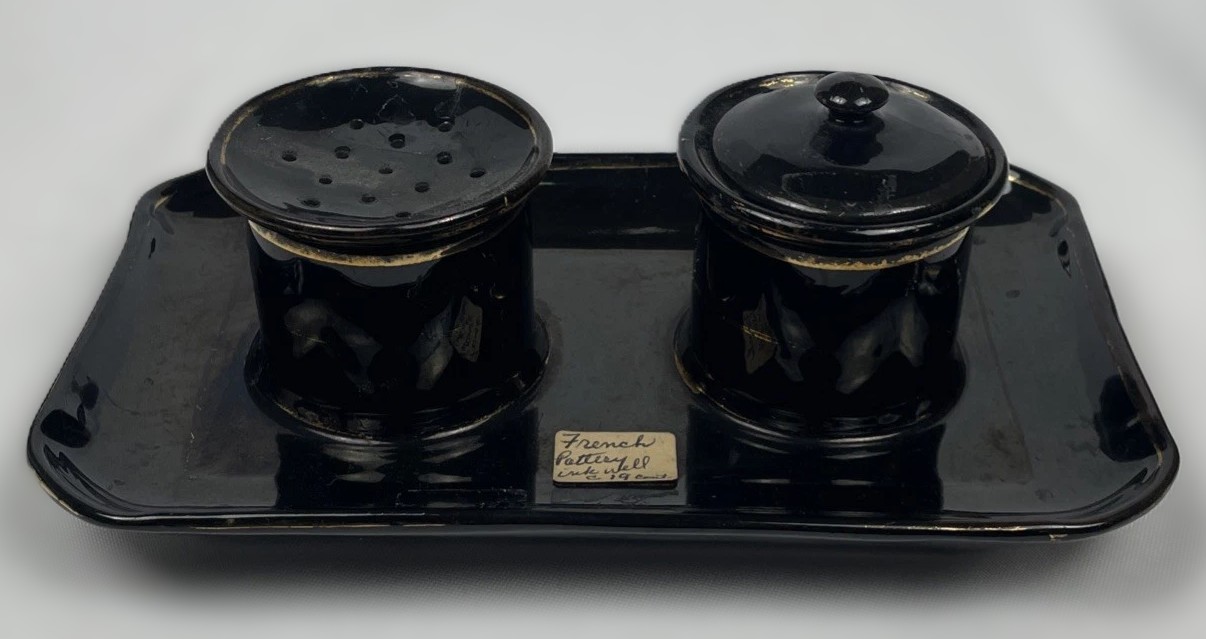
Sarreguemines Black Ceramic Desk Set (Standish)
| Categories | Ceramics/Porcelain "Named" Makers |
| Material | Pottery |
| Markings | Unmarked |
| Manufacturer | Sarreguemines |
| Origin | France |
| Date or Era | circa 1850 |
| Measuring | 8” x 5” x 3” high |
This desk set has two pieces resting on an integrated tray. It is characterized by its rich, dark color and the fine detail typical of 19th-century French earthenware.
- Materials and Construction
- Manufacturer: Sarreguemines (Faïencerie de Sarreguemines), a major French ceramics factory, particularly famous from the early 19th century into the 20th century.
- Material: Black Ceramic Pottery (likely a fine earthenware or stoneware).
- Finish: The entire piece features a lustrous black glaze.
- Form: The set is composed of three parts: a sculpted tray/base and two separate pots.
- Components and Functionality
The set holds the two essential dry and wet components needed for writing with a dip pen:
- The Tray/Base (Pen Rest)
- The overall base is a shaped, oblong tray with slightly raised edges.
- It has two circular recesses molded into the surface where the inkwell and pounce pot sit securely.
- The Inkwell
- This is a cylindrical container with a matching domed, lift-off lid.
- It was designed to hold the ink.
- The Ponce Pot (or Pounce/Sand Pot)
- This is the companion pot, identical in shape and size to the inkwell.
- The lid of this pot is perforated (has small holes), often resembling a shaker top.
III. The Role of the Ponce Pot (Pounce/Sand)
The inclusion of the ponce pot (or sander) marks this piece as a traditional writing accessory designed for use with early inks and paper:
- Drying Ink: Before the widespread use of blotting paper, fine powder was sprinkled over freshly written ink to absorb excess liquid and hasten the drying process, preventing smudging. This material was often finely powdered sand, pumice, or cuttlefish bone (known as pounce).
- Preparing Paper: In the 18th and 19th centuries, paper was often unsized or rough. Pounce was also used to rub the surface of the paper before writing to provide a smoother, less absorbent surface, which prevented the ink from bleeding or feathering.
- Estimated Date
Based on the material, style, and the inclusion of a dedicated ponce pot, this Sarreguemines desk set likely dates to the Mid-to-Late 19th Century (c. 1850–1900). It reflects the industrial quality and high standard of decorative ceramic goods for which the factory was known.
Sold for $86 in October 2025
Content disclaimer. The information posted is the owner’s best knowledge and may not have been vetted by the SOIC. We welcome comments, corrections, and additions, working to make our website information comprehensive and accurate.
Join the Society of Inkwell Collectors (SOIC) – it’s free!
Founded in 1981 as a non-profit organization,
we are documenting inkwells (and accessories).
We’re here to help and inform!