

Inkipedia
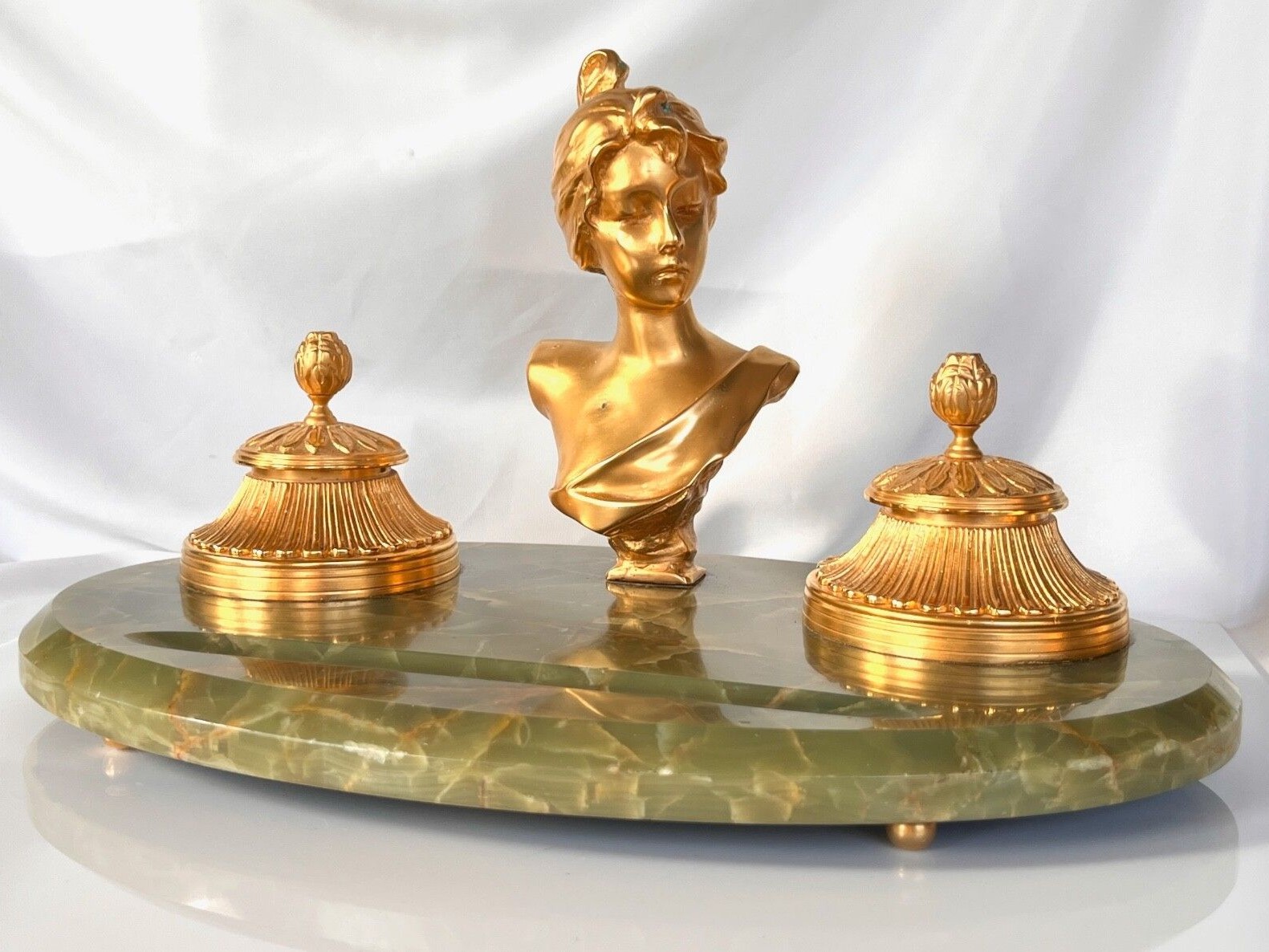
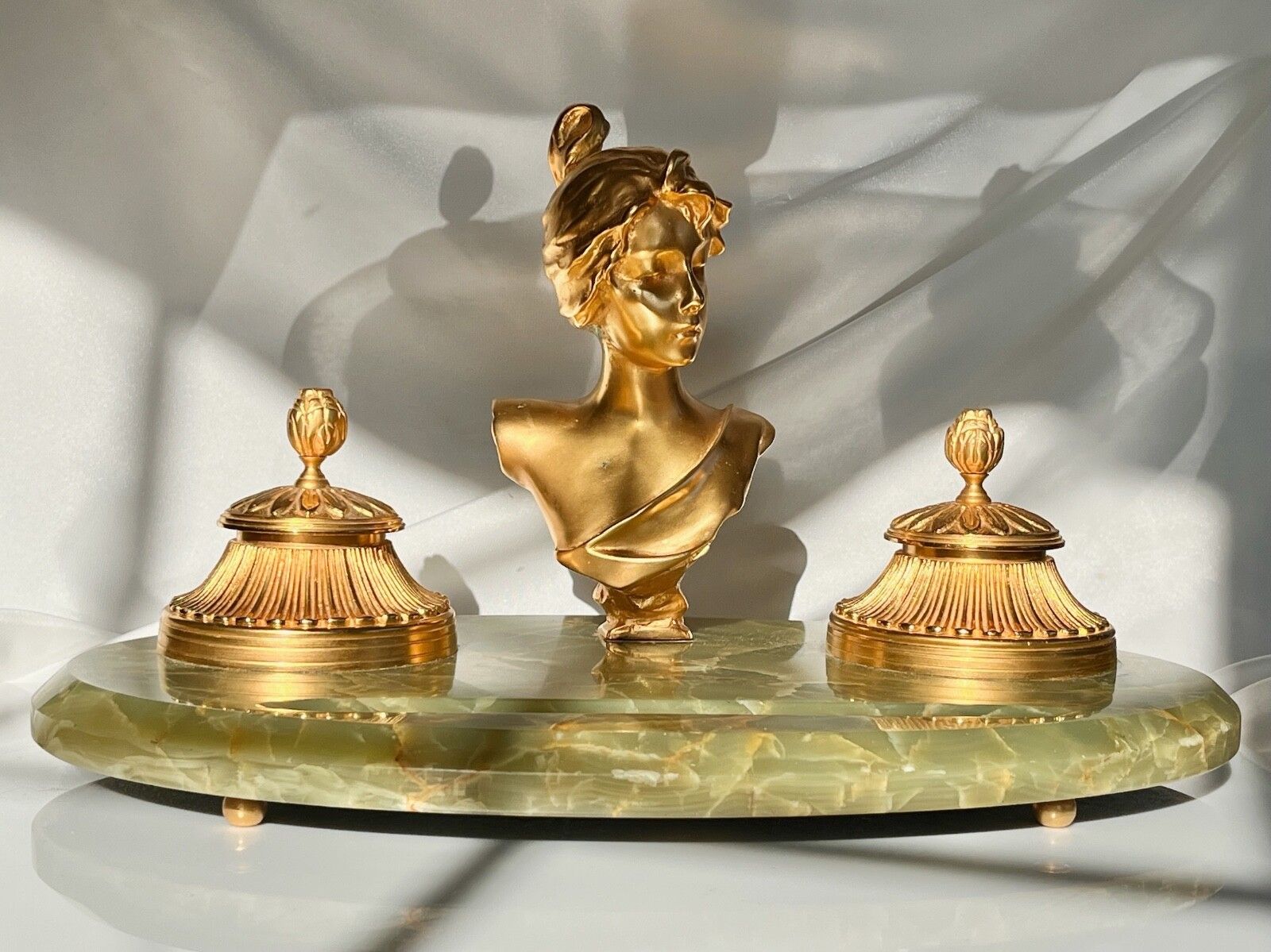

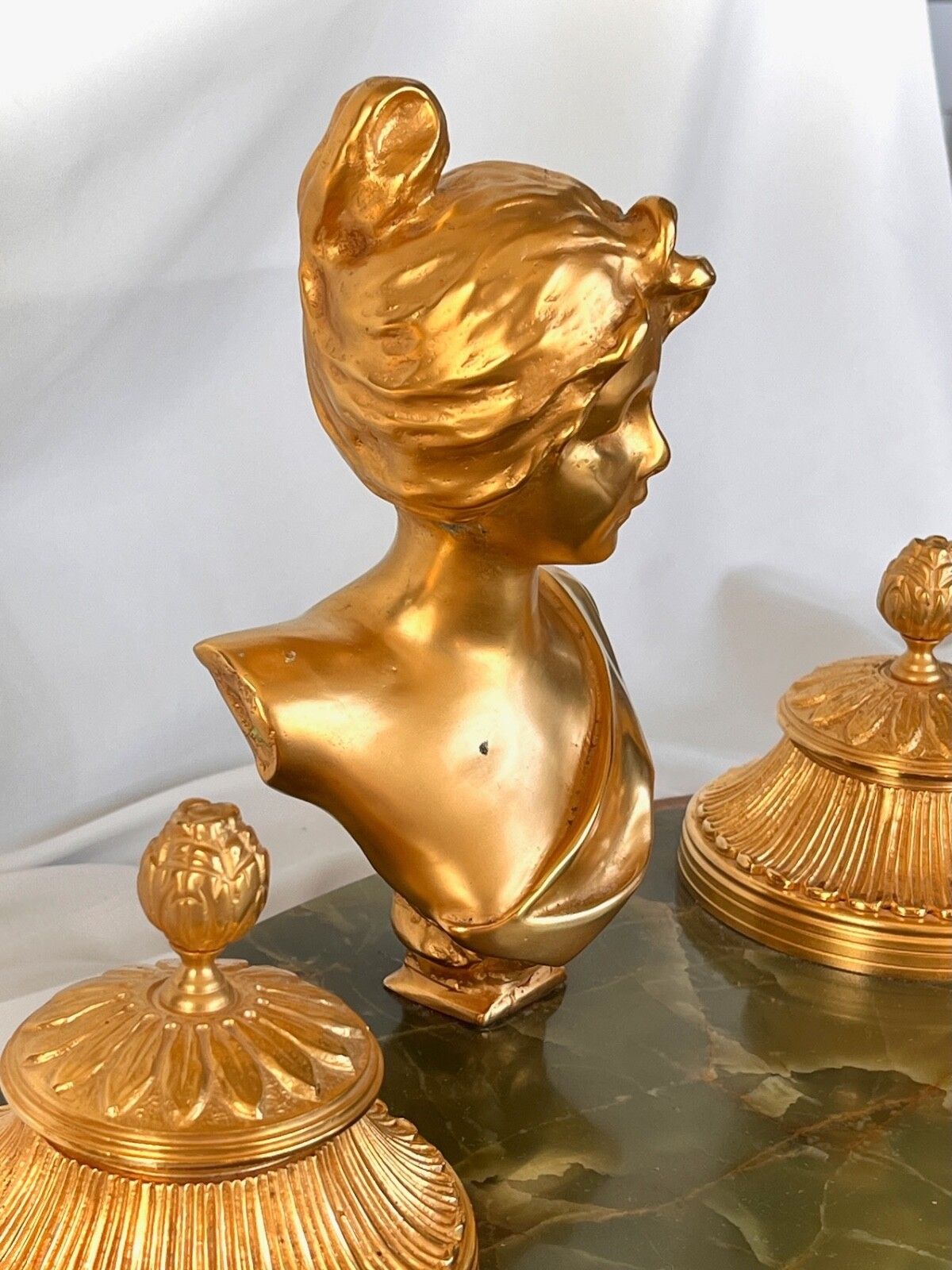

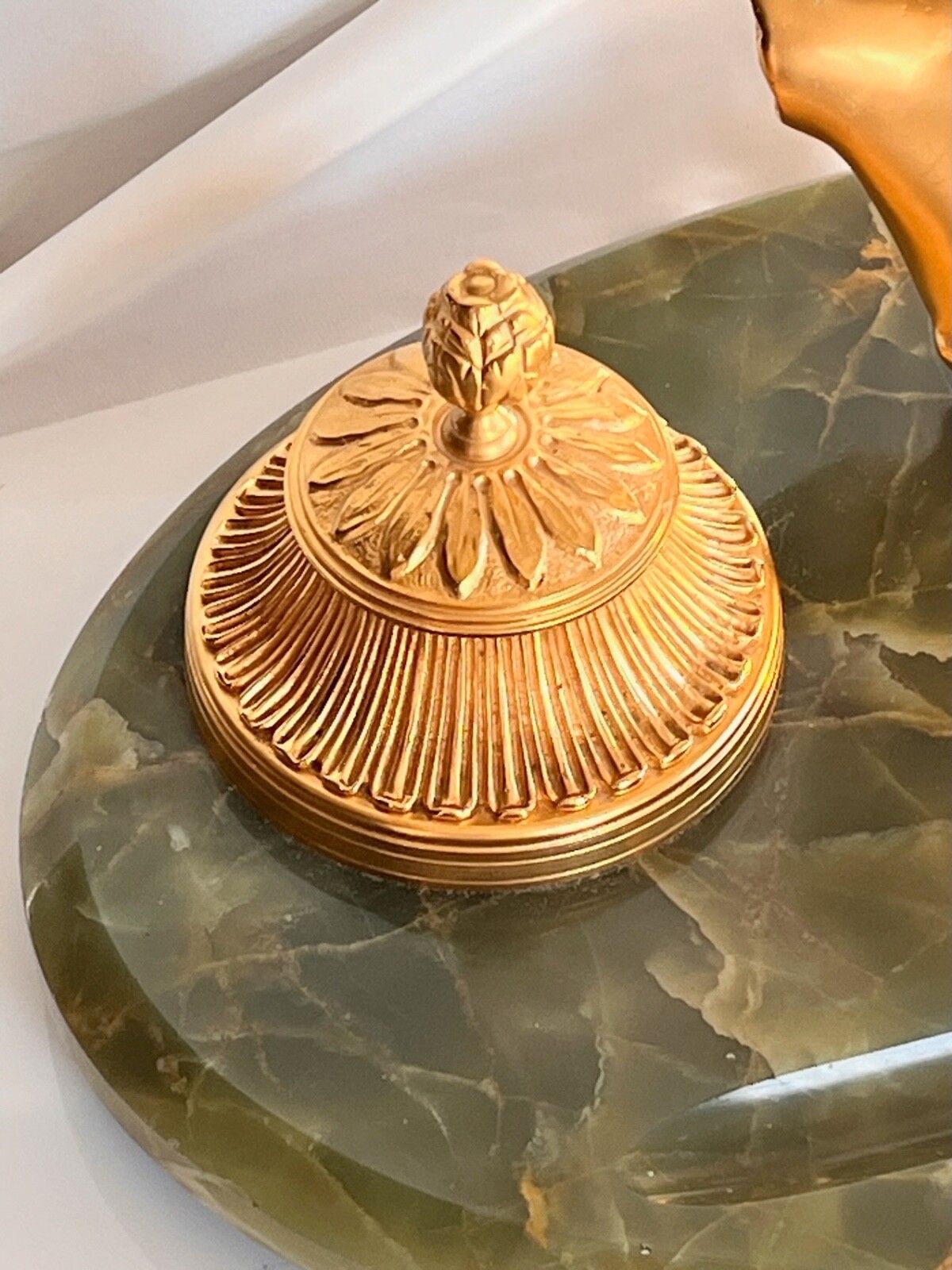


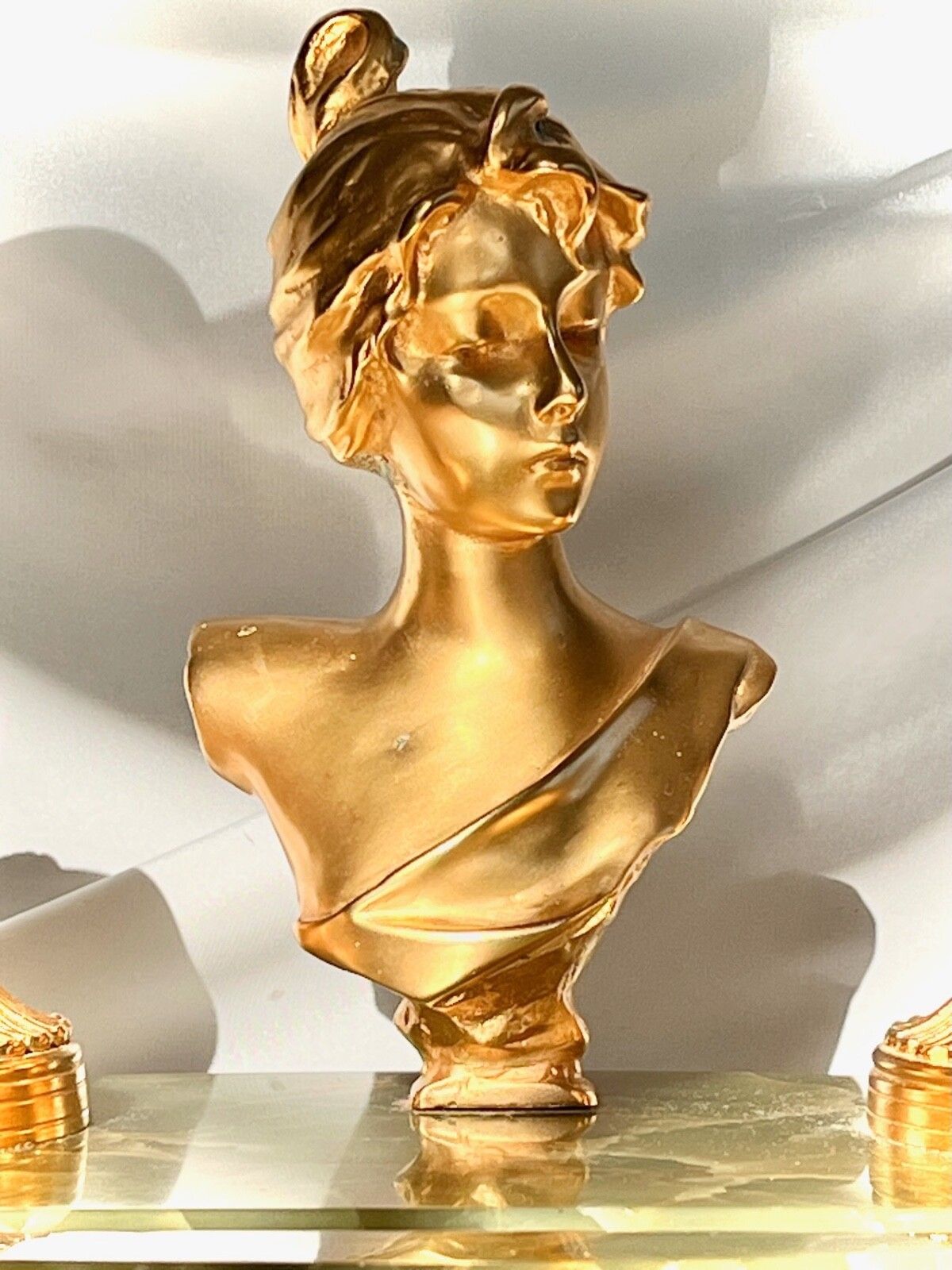


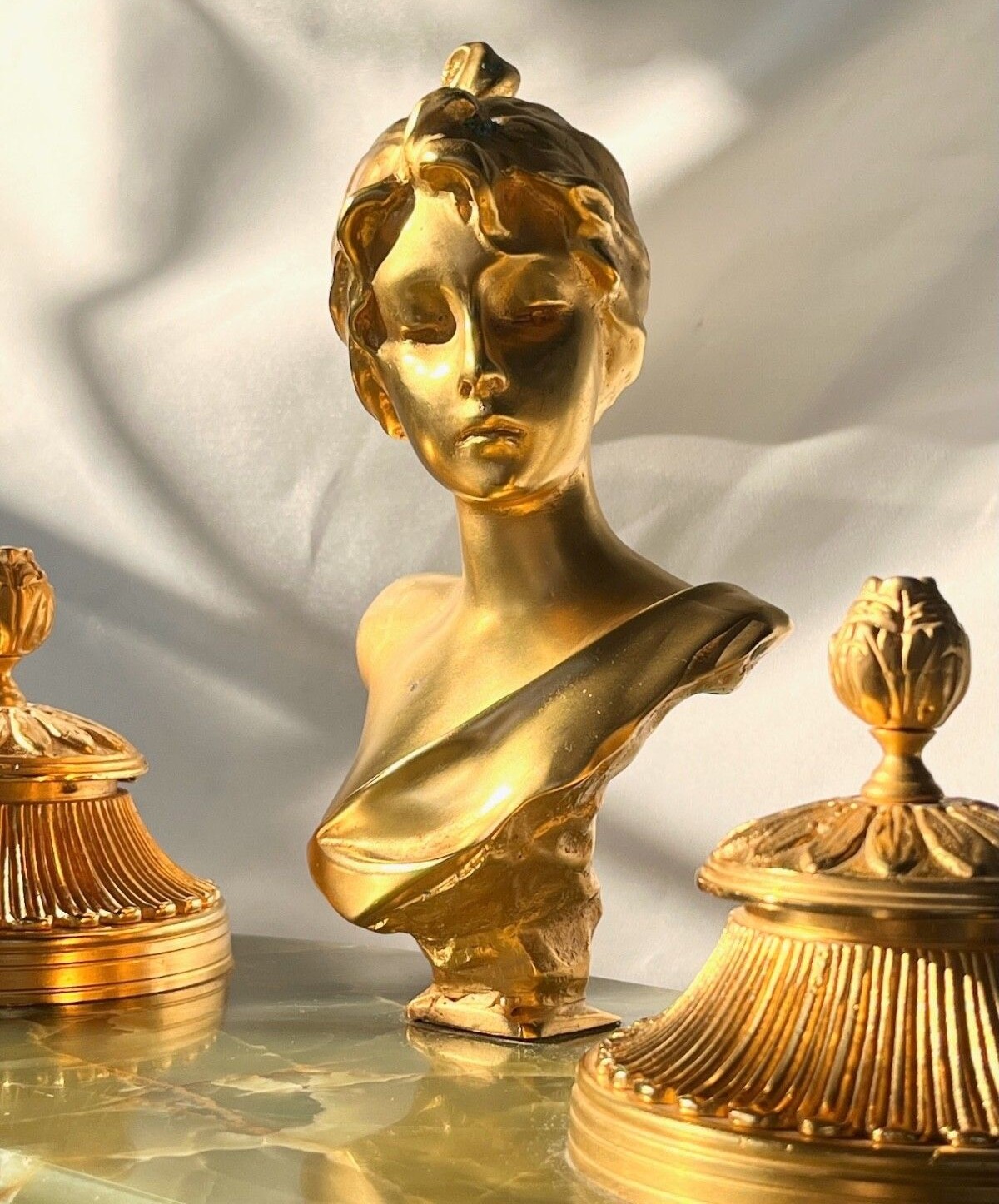
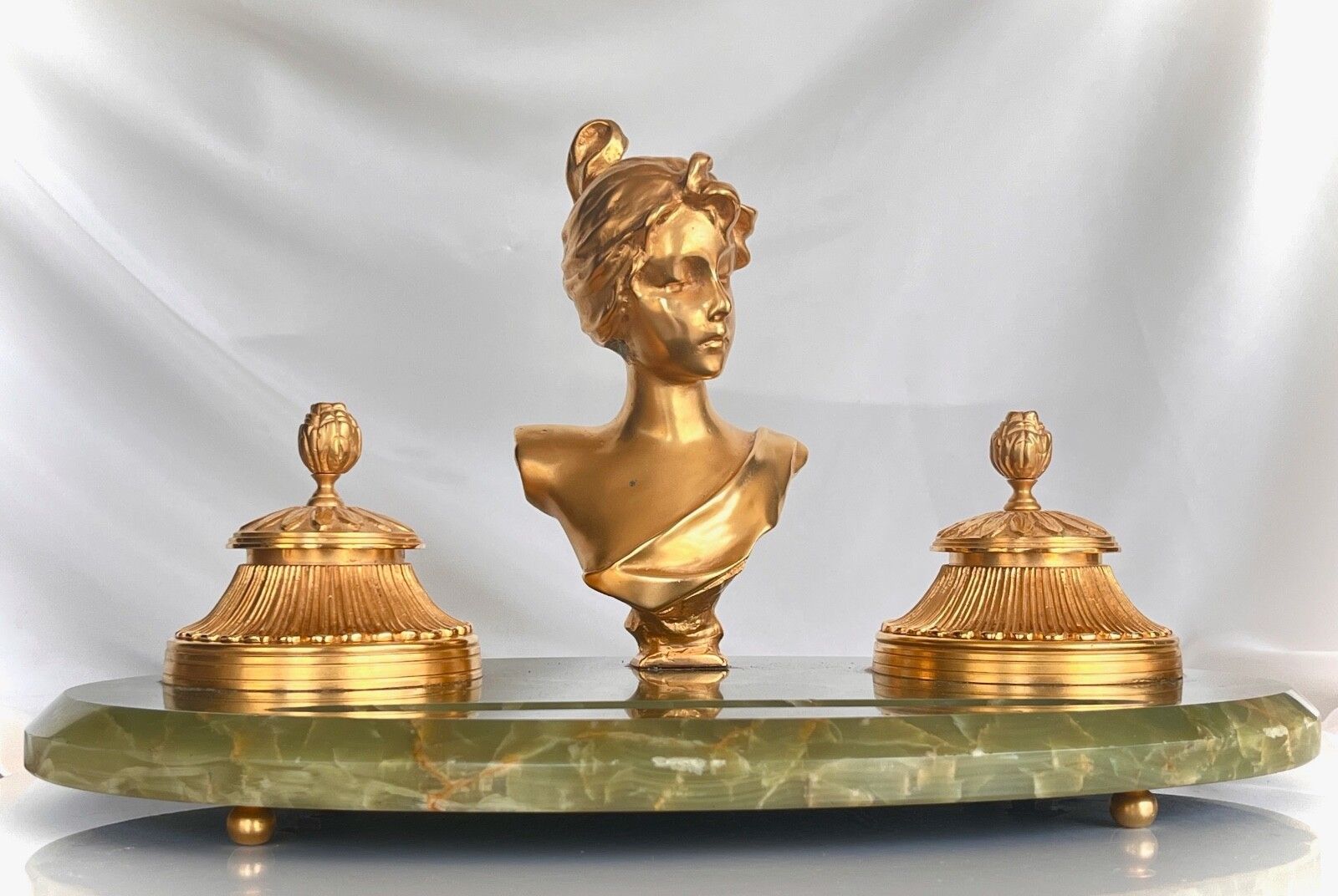
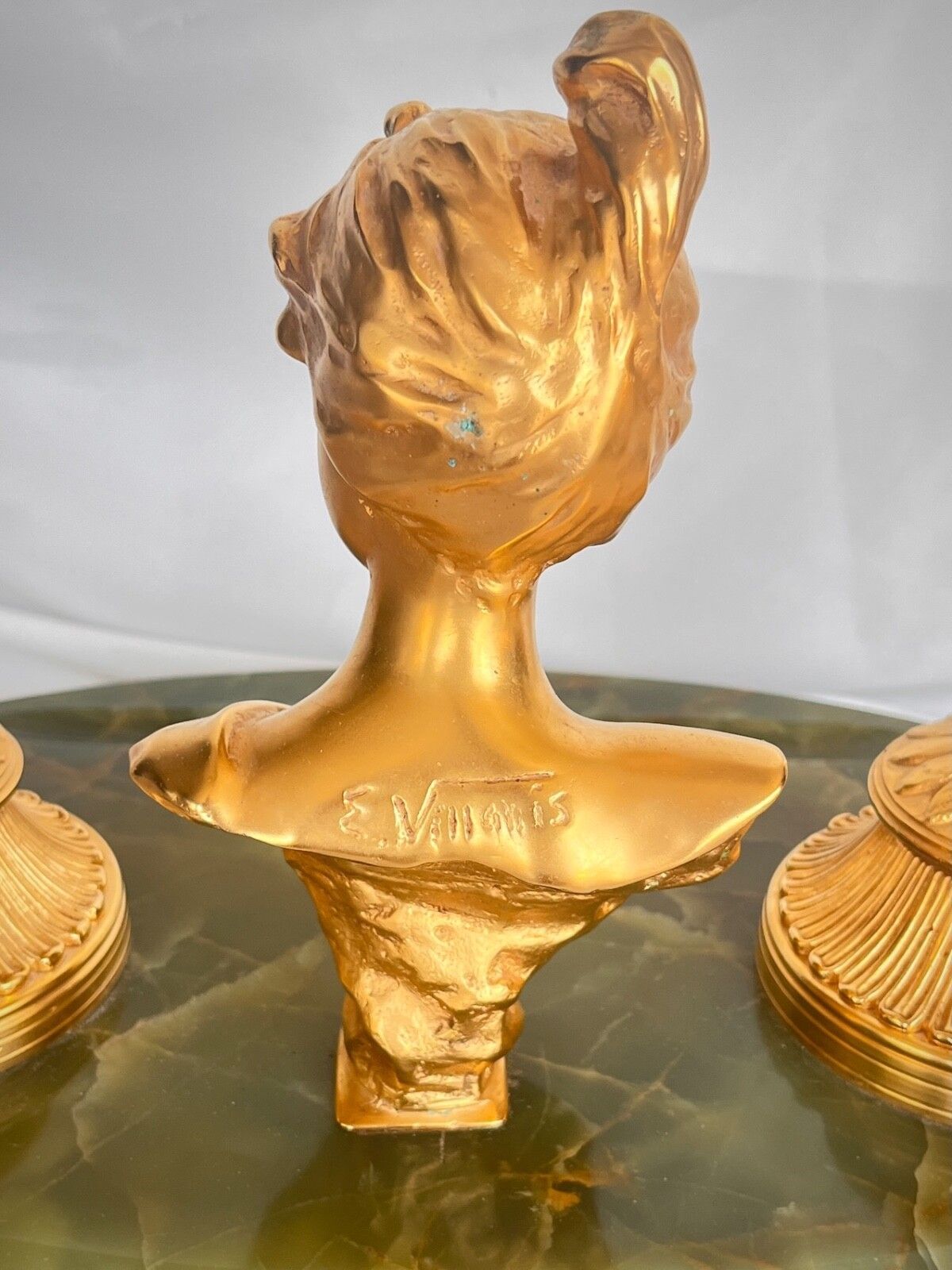

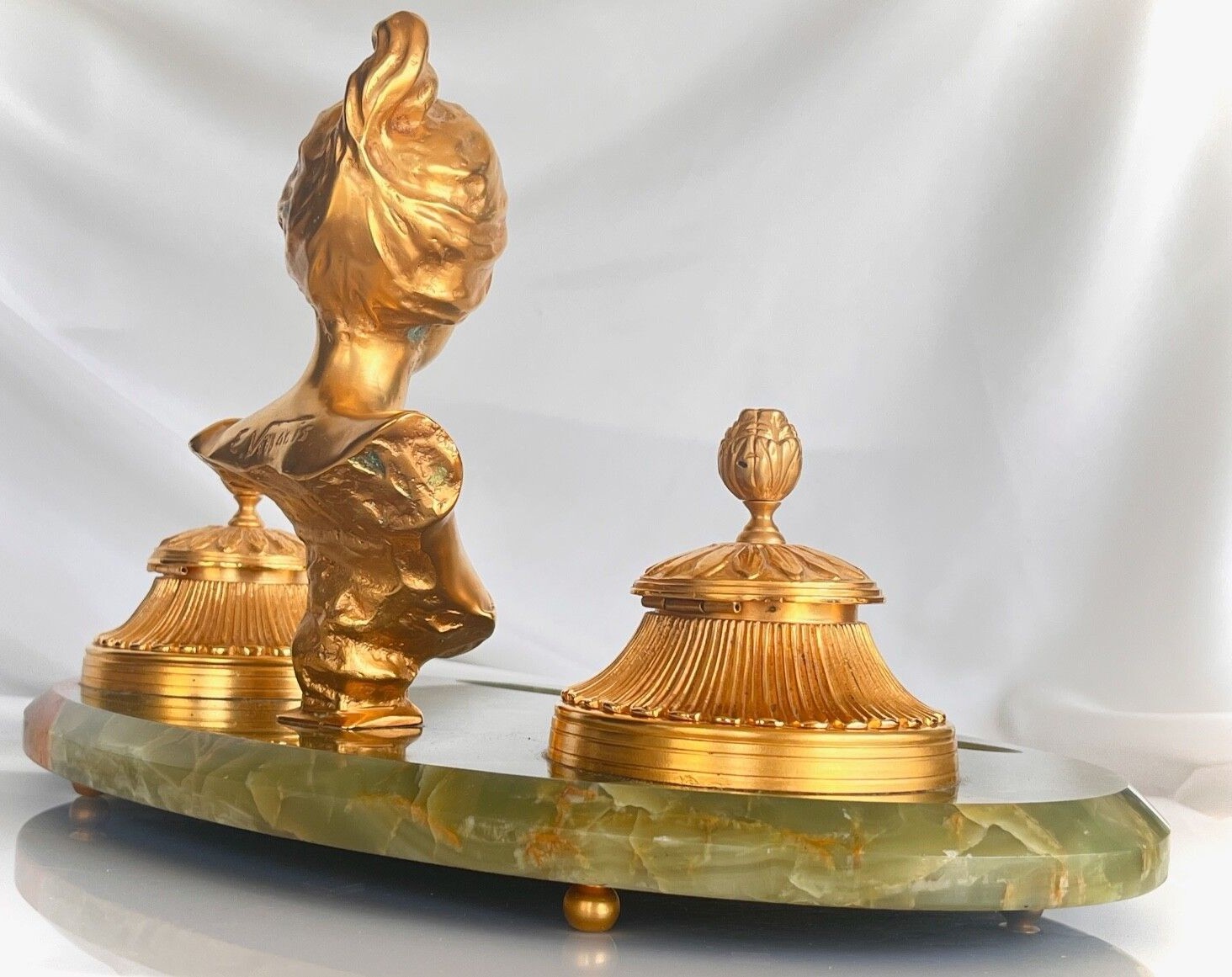
Doré Bronze Bust of a Woman
| Categories | Art Nouveau |
| Material | Gilt Bronze, Onyx |
| Markings | E Villanis |
| Manufacturer | Emmanuel Villanis |
| Origin | France |
| Date or Era | circa 1900 |
| Measuring | 15” x 9 ½” x 8 ½” high |
Description of the French Double Inkstand
This piece is an Art Nouveau French double inkstand, distinguished by the following features:
- Bust: A central, prominent Doré bronze bust of a woman. The bust is the work of Emmanuel Villanis, with his signature “E. Villanis” visible on the back. The style is characteristic of Art Nouveau, featuring a graceful, idealized female face.
- Inkwells: Two inkwells flank the bust. They are covered with hinged lids, each topped with a decorative acorn finial. The inkwells contain removable glass inserts.
- Base: The entire assembly rests upon a polished onyx base.
- Functionality: The front of the base features a recessed pen channel.
- Feet: The base is supported by small, decorative ball feet.
- Material and Finish: The metal components, particularly the bust, are “Doré bronze,” indicating a gilded or fire-gilt bronze finish, which gives the piece its rich, golden color.
Information on the Artist: Emmanuel Villanis
The inkstand is attributed to the renowned French sculptor:
- Name: Emmanuel Villanis
- Life: (1858–1914)
- Background: Born in Lille, France, to Italian parents. He studied at the Accademia Albertina in Turin before establishing himself in Paris in 1885.
- Style: He is one of the most prominent sculptors of the Art Nouveau period (also known as Belle Époque in France). His work blends Neoclassical traditions with the elegant, flowing lines and decorative detail of Art Nouveau.
- Subject Matter: Villanis is best known for his small-scale bronze busts and figures of beautiful and expressive women, often inspired by mythology, opera, and literature (e.g., Bohemienne, Judith, Dalila, Cendrillon).
- Signature: His pieces are typically signed “E. Villanis,” as noted on this inkstand.
Estimated Age
Based on the artist’s career and style:
- Time Period: The inkstand is characteristic of the Art Nouveau era.
- Estimate: Objects like this Villanis inkstand are generally dated to the Late 19th to Early 20th Century, specifically circa 1890–1910. This falls squarely within the most productive period of Villanis’s career.
Sold for $700 in October 2025
Content disclaimer. The information posted is the owner’s best knowledge and may not have been vetted by the SOIC. We welcome comments, corrections, and additions, working to make our website information comprehensive and accurate.
Join the Society of Inkwell Collectors (SOIC) – it’s free!
Founded in 1981 as a non-profit organization,
we are documenting inkwells (and accessories).
We’re here to help and inform!