








French Gilded Bronze Inkstand with Putti
| Categories | Figural - Mythology; Literature; Religion; Fictional |
| Type | Cupid / Cherub / Angel |
| Material | Gilt Bronze |
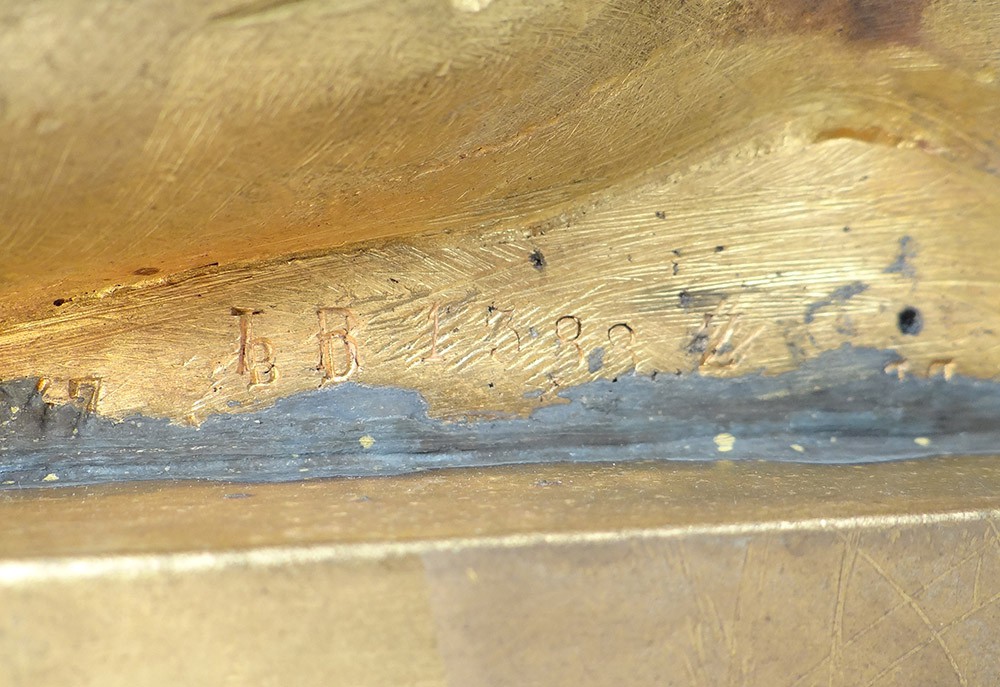
| Markings | See Narrative |
| Manufacturer | Barbedienne Foundry |
| Origin | France |
| Date or Era | circa 1880 |
| Measuring | 16 ⅛” x 9 ⅜” x 10 ⅝” high |
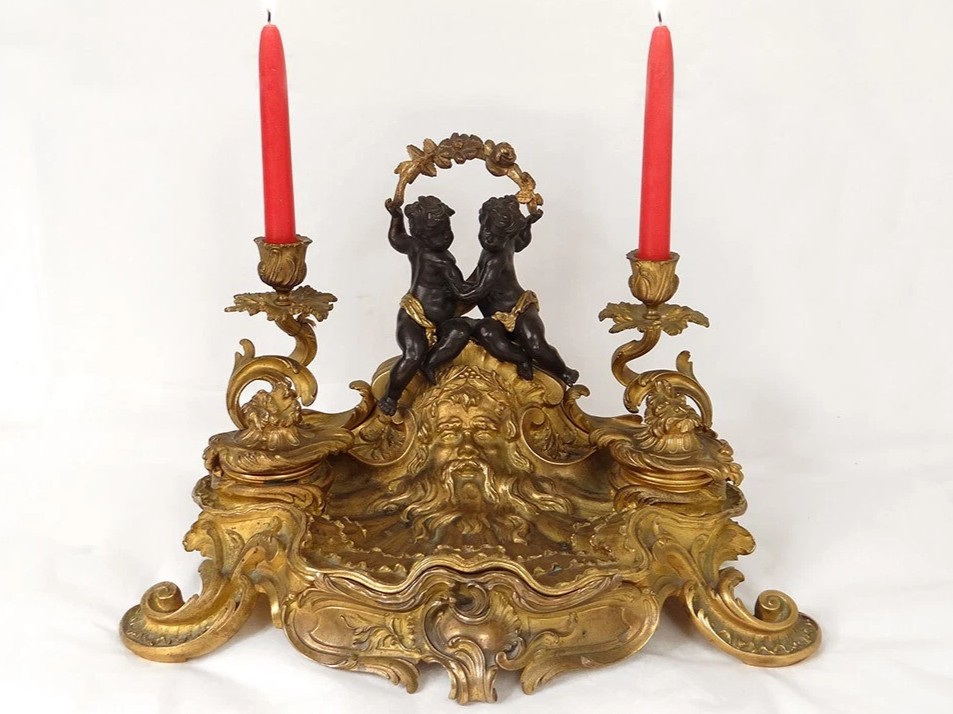
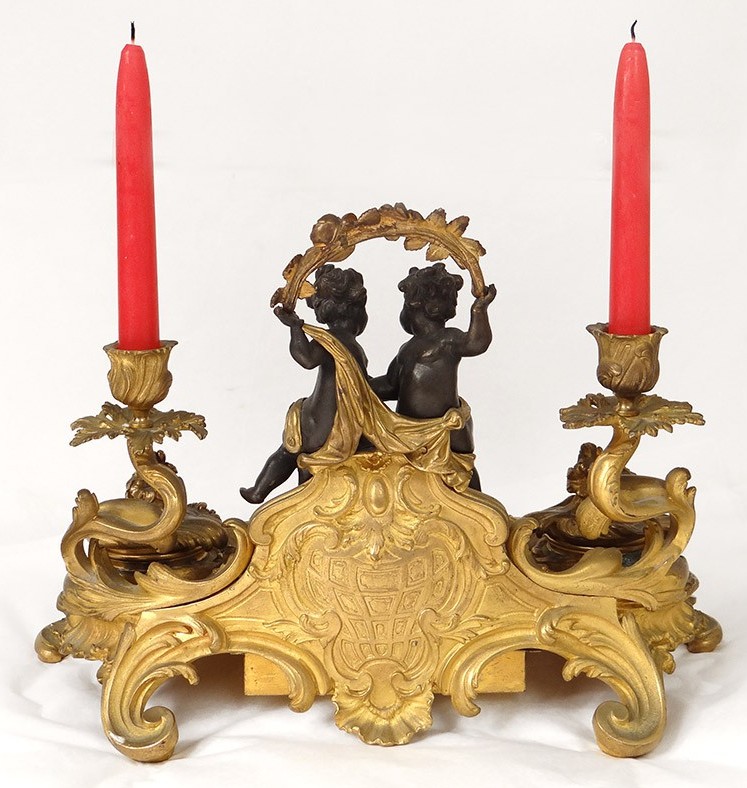
This is an elaborate example of a French Gilded Bronze Inkstand (encrier), likely dating from the mid-to-late 19th century (Second Empire or Belle Époque). The style is detailed Neoclassical, designed for an opulent desktop.
Description of the French Gilded Bronze Inkstand
- Materials and Overall Form
- Material: The entire piece is constructed from cast bronze finished with heavy gilding (a technique often called ormolu in French decorative arts). The gilding is fire-gilt or high-quality electroplating, contributing to the rich, warm color and luster.
- Structure: It is a large, complex, rectangular inkstand resting on small feet. The design is symmetrical.
- Key Figural Elements
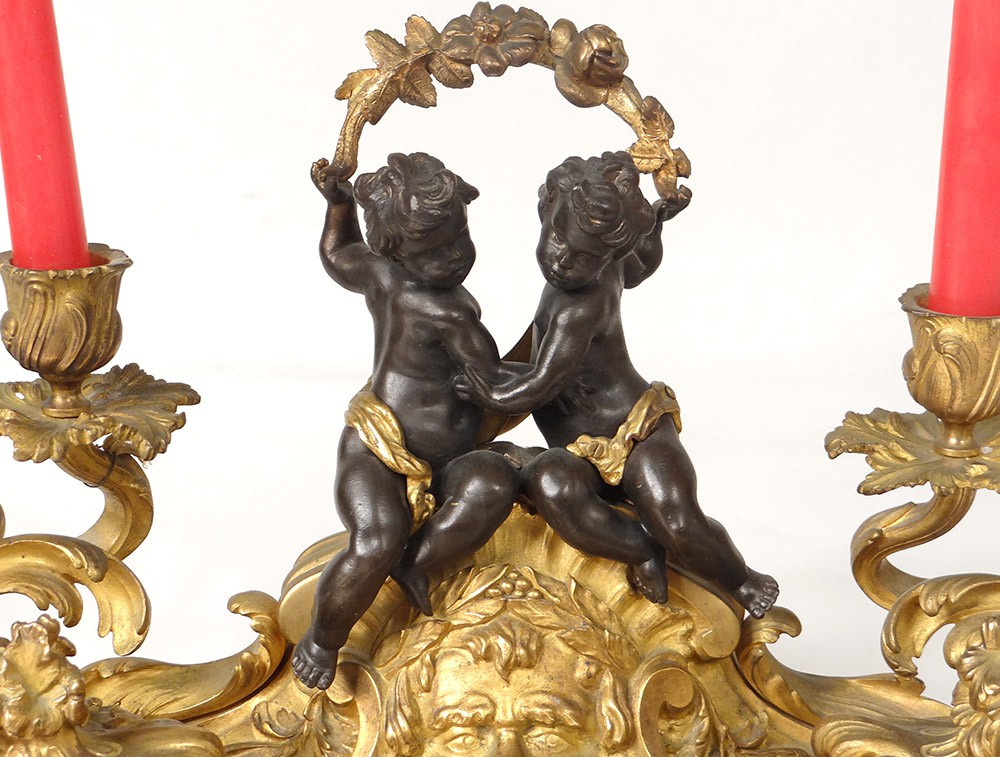
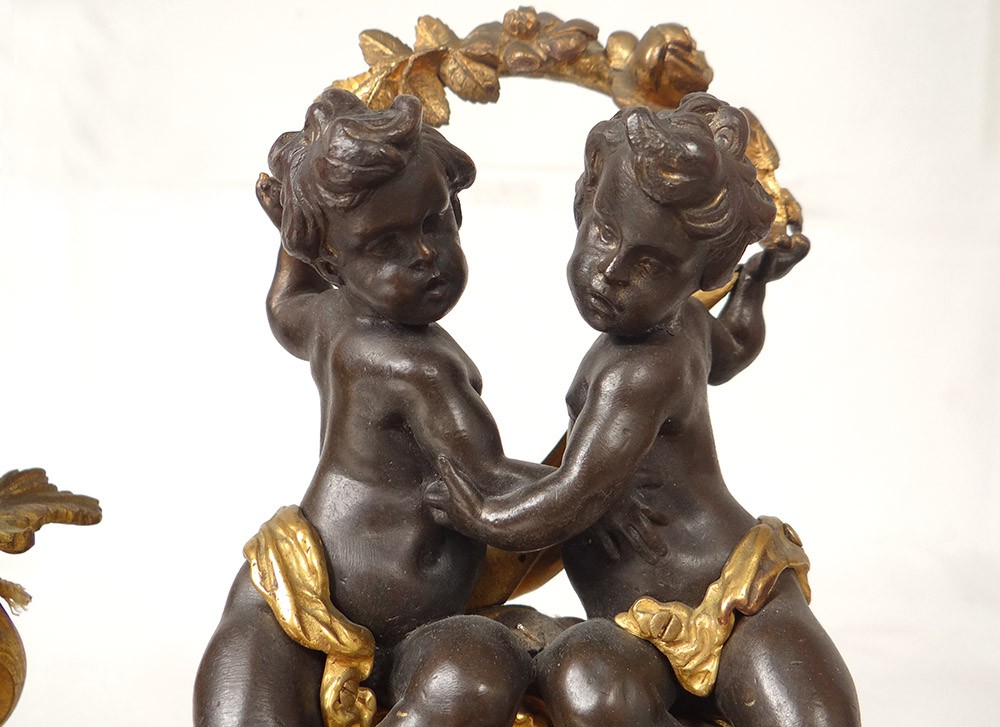
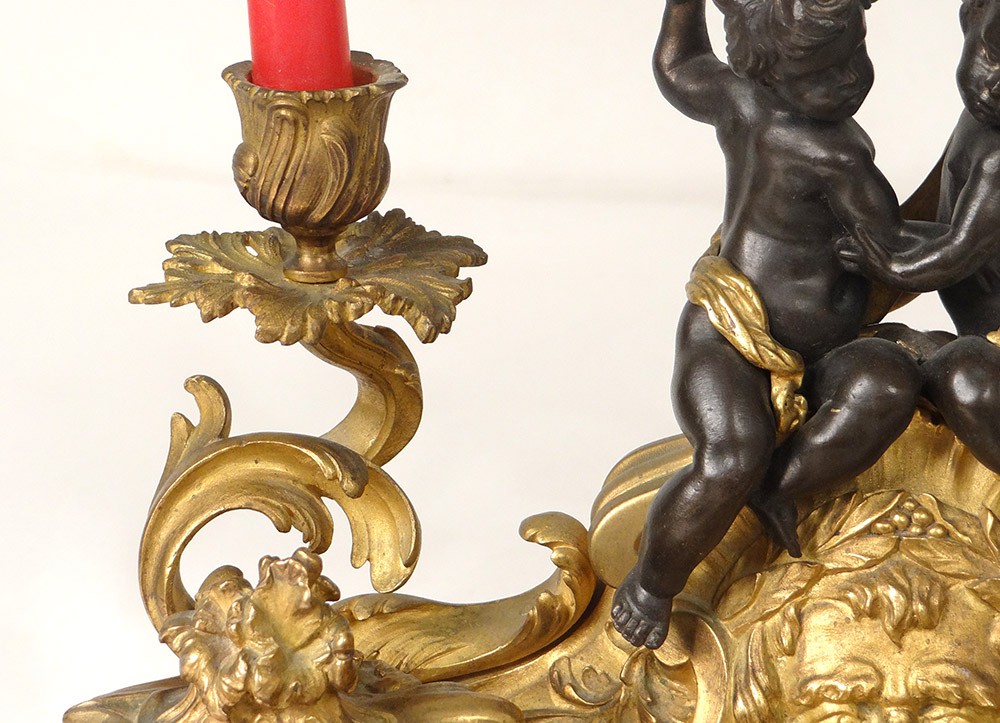
- Putti: The central, dominant feature is the pair of putti (or small cherubic figures). They are modeled in high relief, lively poses, embracing or engaged in a playful activity. Putti are frequently used in classical and Renaissance-revival themes, often symbolizing love, childhood, or simply decorative whimsy.
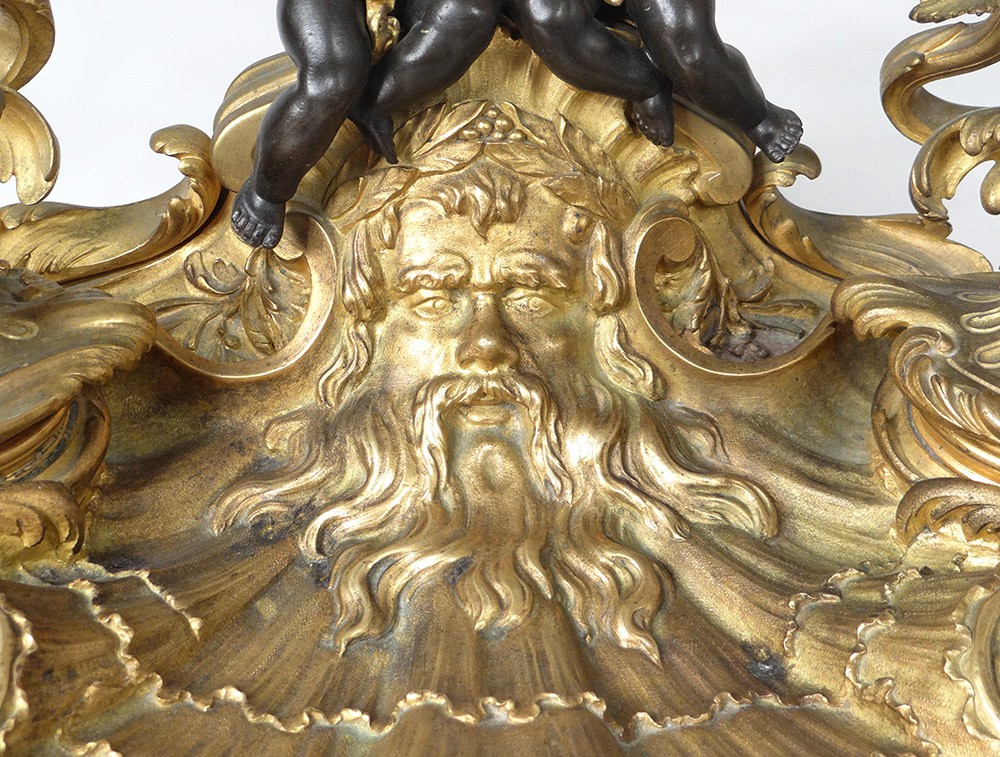
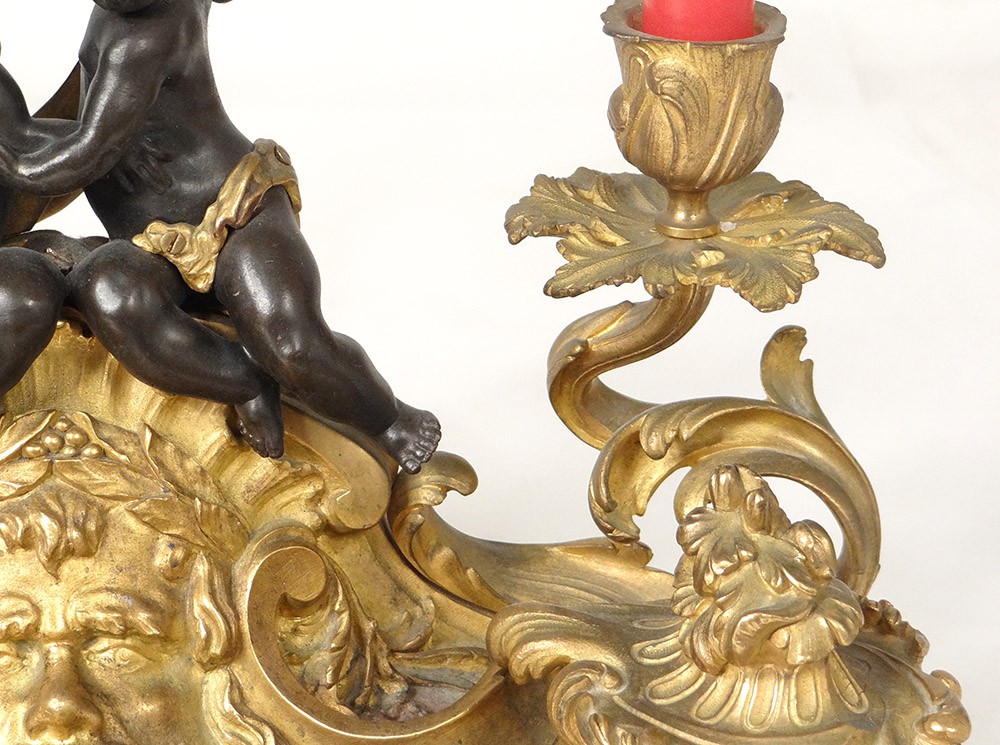
- Mask/Face (Classical Motif): The base is decorated with a central classical mask or face. Given the context, this is a stylized representation of a Greek or Roman deity, possibly Bacchus (Dionysus), the god of wine and revelry, or a Satyr/Faun.
- The crown of leaves and berries—most likely grape leaves and clusters of grapes—identifies the mask as a depiction of Bacchus (the Roman god) or Dionysus (the Greek god) or a figure from his retinue, such as a Satyr or a Faun.
- Identification: Bacchus or a Satyr
| Deity/Figure | Identifying Characteristics | Why it Fits Your Inkstand |
| Bacchus (Dionysus) | God of wine, harvest, fertility, madness, and religious ecstasy. Often crowned with ivy, grapevines, or laurel. | The crown of leaves and berries/grapes is the definitive iconographic feature for this deity in both classical and Renaissance-revival art. |
| Satyr / Faun | Mythological figures who are companions of Bacchus/Dionysus. They represent wild nature and revelry. | They are frequently depicted as masks (or busts) with similar crowns, sometimes with small horns, as part of Bacchanalian decorations. |
III. Functionality and Accessories
The inkstand is functional, designed to hold all necessary writing implements:
- Inkwells: There are two cylindrical inkwells, one flanking the central putti on each side. They are integrated into the bronze setting and feature matching gilded, lift-off lids with decorative tops.
- Candle Sconces: Flanking the entire arrangement are two curved arms which act as small candle sconces (for wax heating or light). Their elegant, scrolled design complements the overall ornate aesthetic.
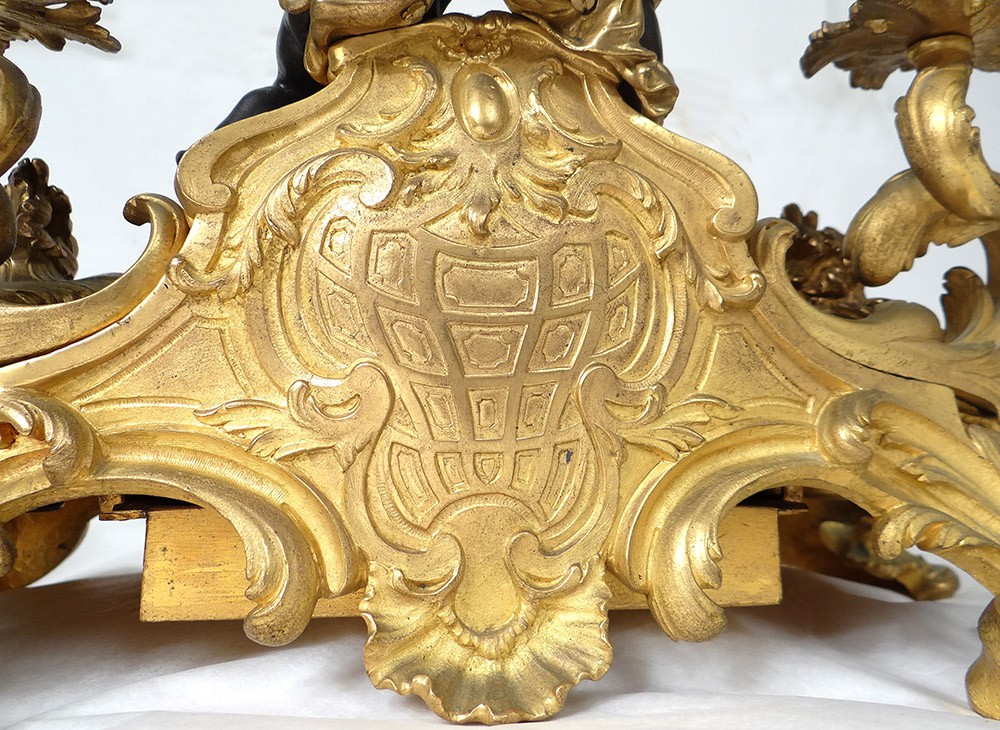
- Drawer: A long, shallow pull-out drawer is seamlessly integrated into the center of the base, beneath the putti. This drawer would have been used to hold blotting sand, wax seals, stamps, or small writing accessories.
- Marking: The presence of a number under the drawer is common for French or European bronze foundries, serving as an inventory number or model number used for cataloging and production tracking.
This inkstand is a superb example of the French goût Grec (Greek taste) combined with the love for detail and opulence characteristic of the 19th-century decorative revival styles.
- Style Identification: Rococo Revival
The Rococo Revival style, prominent in France during the mid-to-late 19th century (the reigns of Louis Philippe and Napoleon III / Second Empire), is characterized by the following elements seen on this piece:
| Feature | Description on This Inkstand |
| Scrolling/Ornamentation | The bronze base features asymmetrical, lively, C- and S-scrolls with swirling leaf forms (foliage and acanthus leaves). This type of dynamic, often curvilinear, organic scrollwork is the hallmark of the Rococo (Louis XV) period, which was revived in the 19th century. |
| Figural Elements | The prominent presence of putti (cherubs) and the central mask is characteristic of the Rococo tradition, which favored lighthearted, mythological, and pastoral scenes over the stricter classicism of the Louis XVI or Empire styles. |
| Material & Finish | The liberal use of gilded bronze (ormolu) was essential to the Rococo Revival, creating a luxurious and dazzling effect, often imitating the grandeur of the 18th-century French court. |
The combination of the formal, multi-functional layout (with inkwells, sconces, and a drawer) and the exuberant Rococo scrollwork make this piece a quintessential example of Second Empire luxury deskware.
- Possible Foundry: BB 1389 Mark
The reading of BB 1389 (or a similar four-digit number beginning with a “B” or “BB”) points to one of the most famous and prolific French bronze foundries of the 19th century.
Identification: Ferdinand Barbedienne
The combination of:
- The high-quality Gilt Bronze (Ormolu)
- The elaborate Rococo Revival (Louis XV Style).
- The subject matter of Putti and a Bacchic
- A stamped numerical mark like 1389.
- A perceived “BB”
All of these elements align with the production of the Maison Barbedienne (Ferdinand Barbedienne Foundry), which operated in Paris from 1838 to 1954.
Analyzing the Marking BB 1389
- The Number (1389): Large French foundries like Barbedienne, Susse Frères, and Thiébaut Frères used extensive, sequentially numbered catalogs for their models. Four-digit numbers in the thousands range were common for non-sculptural decorative arts like yhis encrier (inkstand), dating it to the middle or later part of the 19th century (c. 1850–1900).
- The Prefix (“BB”): While many pieces are simply marked “F. BARBEDIENNE” or “F. B.”, a marking that looks like “BB” could be interpreted in several ways:
- B for Bronze, followed by the number.
- BB is often associated with the Barbedienne/Collas partnership (Société Collas et Barbedienne), though “BB” is not an official, consistent signature like the full name stamp.
- It may simply be an internal casting or bench mark that happens to resemble the letters, but it often indicates a major foundry.
Conclusion
The model number 1389 on a French Rococo Revival inkstand of this quality and style is highly indicative of a FerdinandBarbedie nne Foundry product. Barbedienne was known for creating a vast range of decorative bronze pieces in historical revival styles, and their meticulous numbering is a hallmark of their operation.
Sold for $4929 in October 2025
Content disclaimer. The information posted is the owner’s best knowledge and may not have been vetted by the SOIC. We welcome comments, corrections, and additions, working to make our website information comprehensive and accurate.
Join the Society of Inkwell Collectors (SOIC) – it’s free!
Founded in 1981 as a non-profit organization,
we are documenting inkwells (and accessories).
We’re here to help and inform!