

Inkipedia

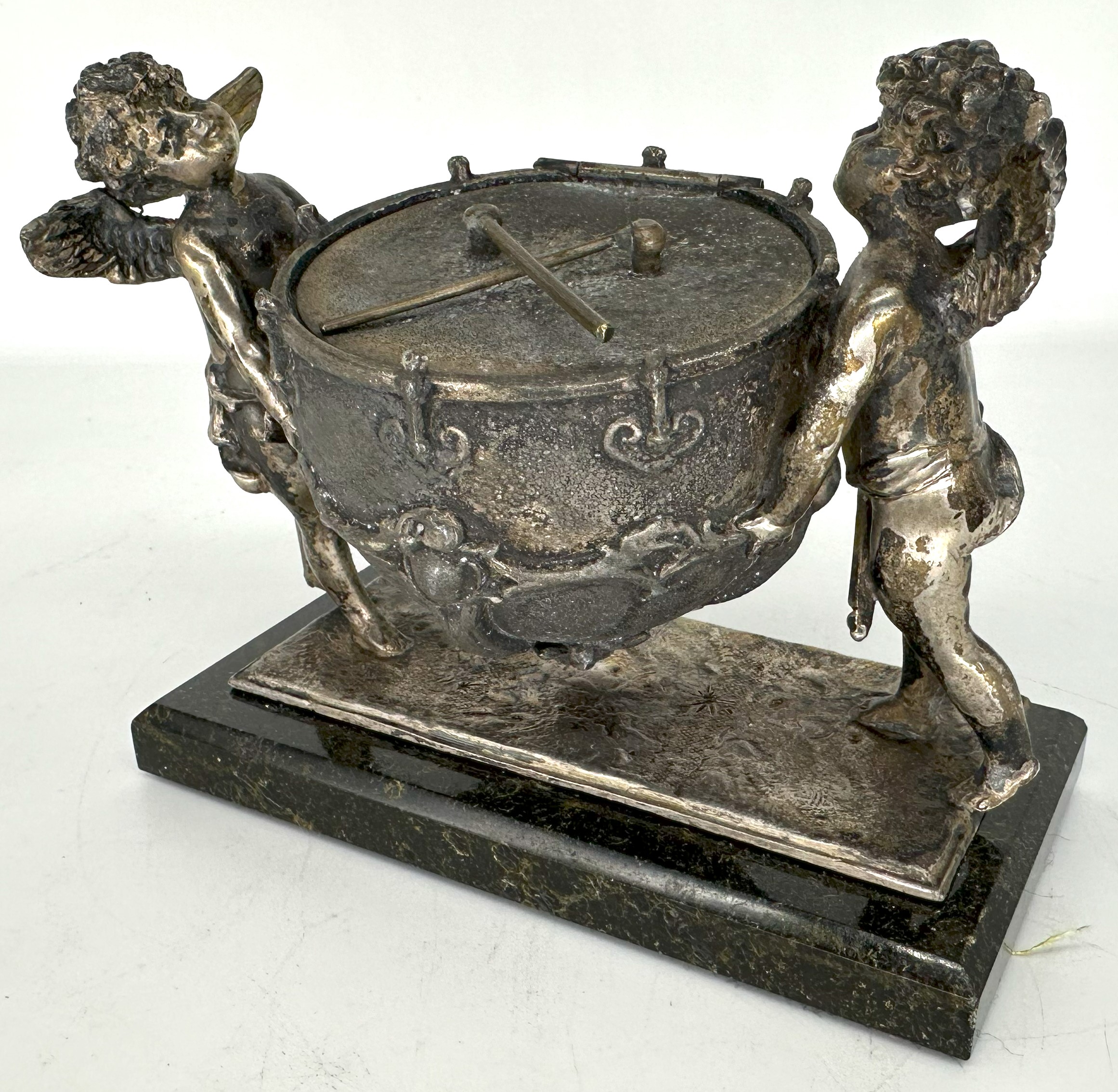
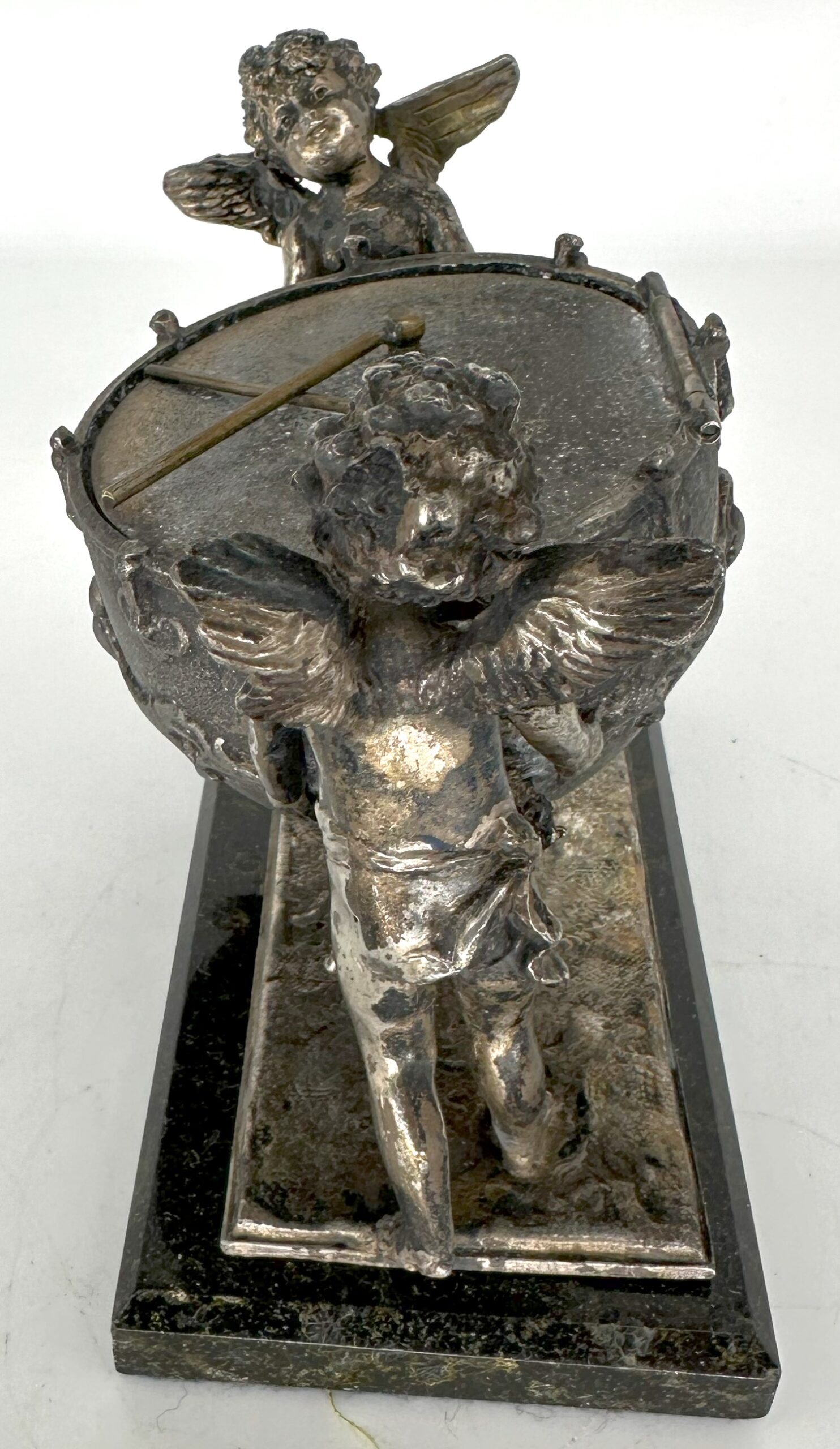
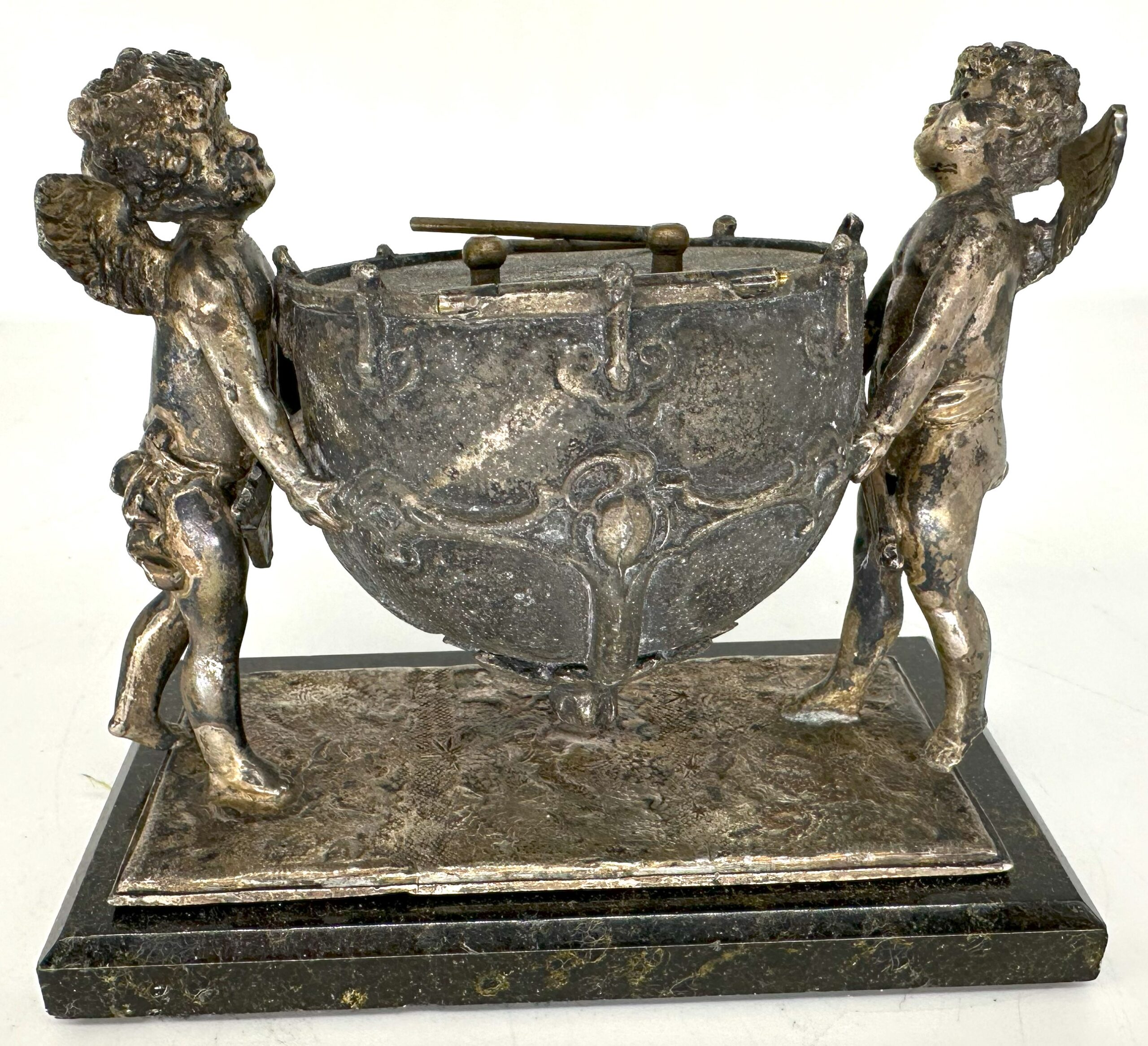


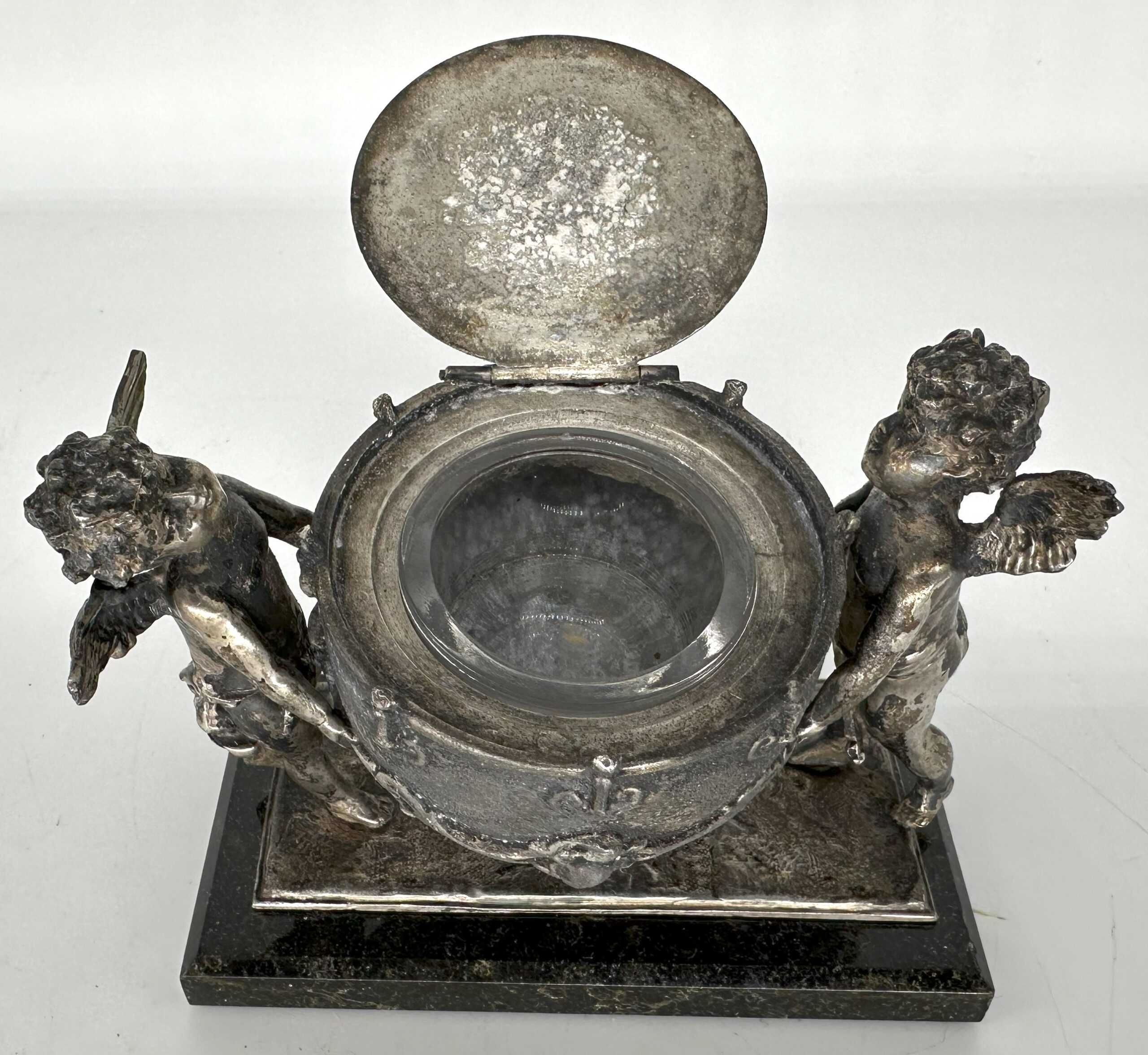
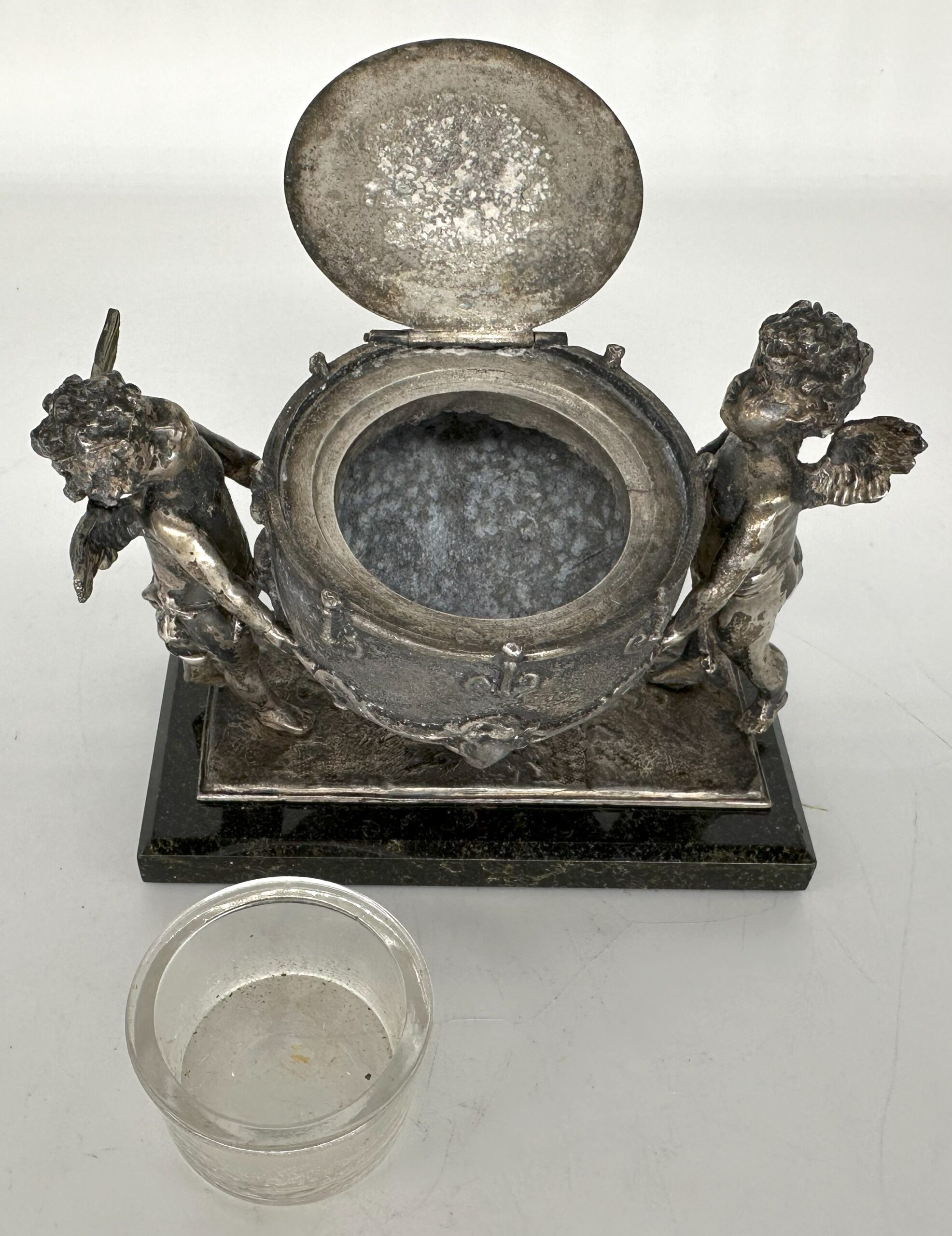
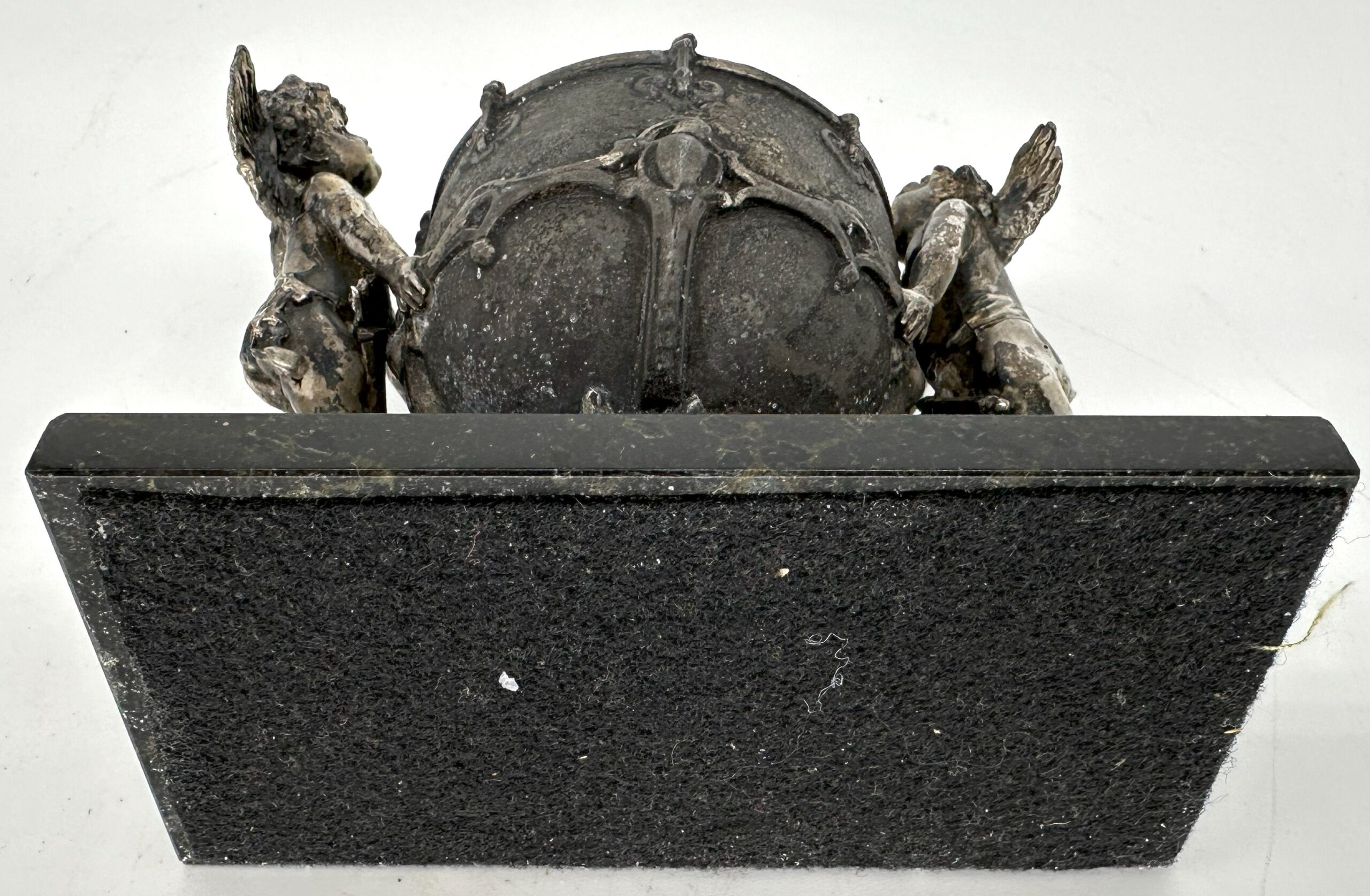
Cherubs Carry a Kettledrum
| Categories | Figural - Mythology; Literature; Religion; Fictional |
| Type | Cupid / Cherub / Angel |
| Material | Silverplate |
| Markings | Unmarked |
| Manufacturer | Undetermined |
| Origin | France |
| Date or Era | circa 1890 |
| Measuring | 4 ⅞” x 2 ½” x 4 ¼” high |
Description
- Figural Composition: Two finely sculpted, winged cherubs (or putti) in dynamic, leaning poses carry a large, central timpani (kettledrum) suspended between them.
- Drum & Inkwell Construction: The kettledrum body is cast with raised rocaille flourishes, strapwork, and tension rods. The flat drum skin serves as a hinged lid, featuring two crossed drum mallets that function as a decorative finial handle.
- Interior: Lifting the lid reveals a deep metal well containing a removable cylindrical clear glass insert.
- Plinth & Base: The figures rest on a cast, textured metal plinth with a raised border, which is mounted to a rectangular, beveled slab of dark green/black variegated marble (likely Verde Antico or Belgian Black marble).
- Material & Finish: Cast white metal or spelter (régule) originally finished in electroplated silver, showing significant authentic wear, oxidation, and exposed base metal consistent with age.
Origin, Maker & Date
- Where Was It Made? France. The Neoclassical-meets-Rococo revival aesthetic—drawing heavily on the whimsical 18th-century putti motifs popularized by French sculptors like Clodion—was predominantly manufactured in French foundries.
- Who Made It? Unidentified Foundry / Metalworker. Such decorative desk accessories were widely produced by Parisian foundries and bronziers (fabricants de bronzes et régules) as unsigned commercial decorative wares. Spelter desk pieces mounted on marble bases rarely bore maker signatures unless affiliated with specific luxury houses.
- When Was It Made? Circa 1880–1905 (Late 19th to early 20th Century / Belle Époque era). The combination of spelter casting, electroplated silvering, a beveled marble plinth, and a molded drop-in glass well aligns directly with late Victorian and Belle Époque desk accessories.
Estimated value: $75
Content disclaimer. The information posted is the owner’s best knowledge and may not have been vetted by the SOIC. We welcome comments, corrections, and additions, working to make our website information comprehensive and accurate.
Join the Society of Inkwell Collectors (SOIC) – it’s free!
Founded in 1981 as a non-profit organization,
we are documenting inkwells (and accessories).
We’re here to help and inform!