

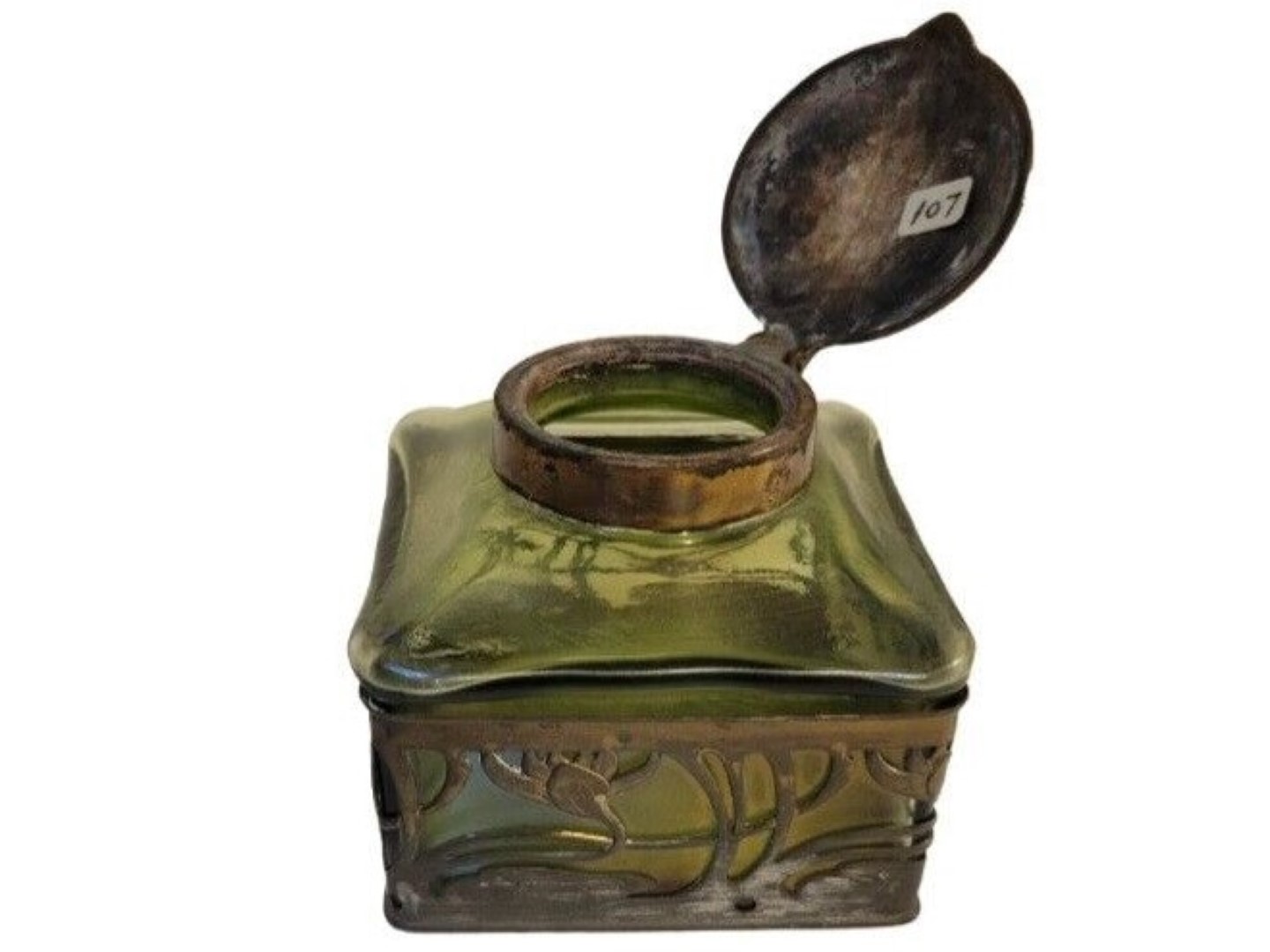
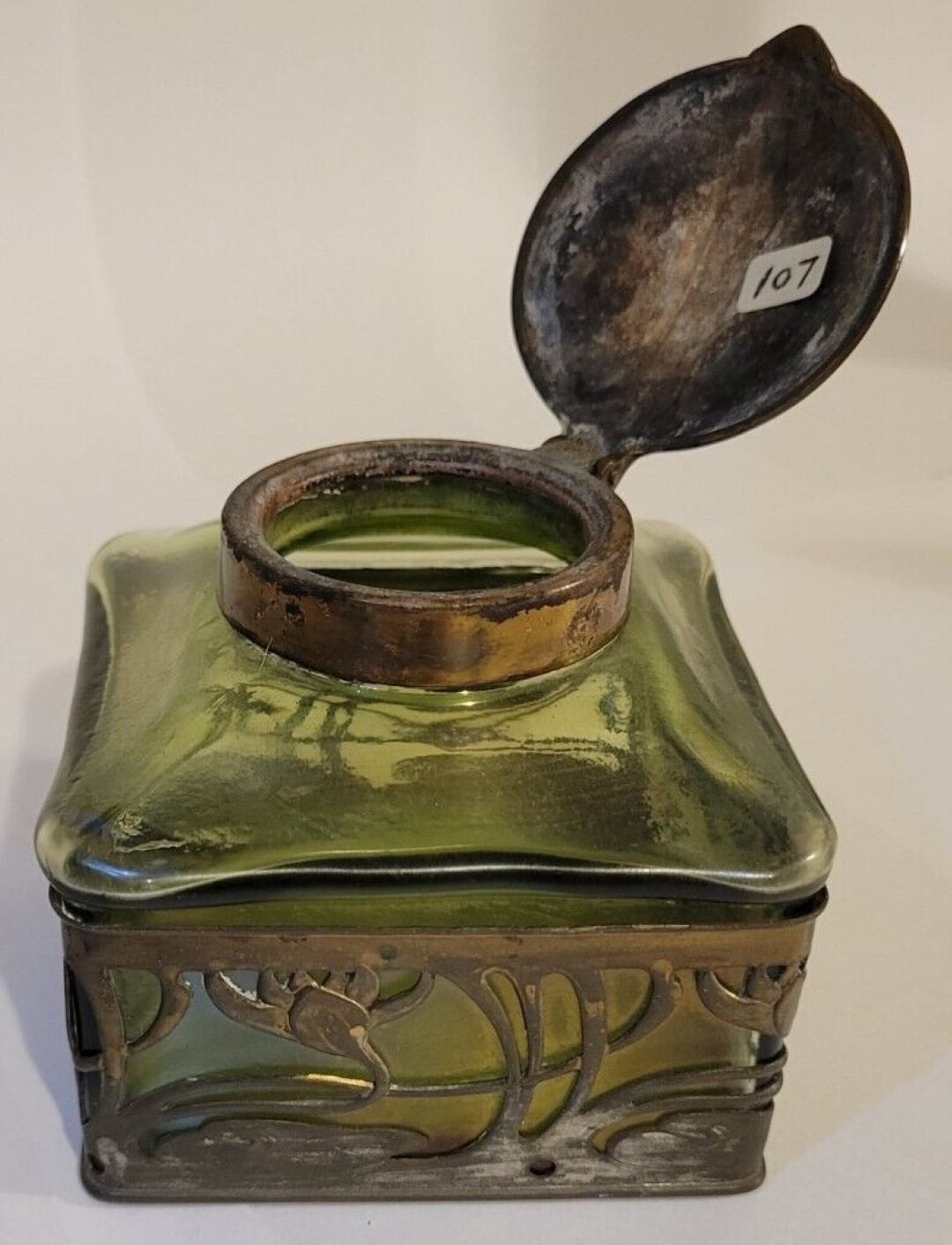
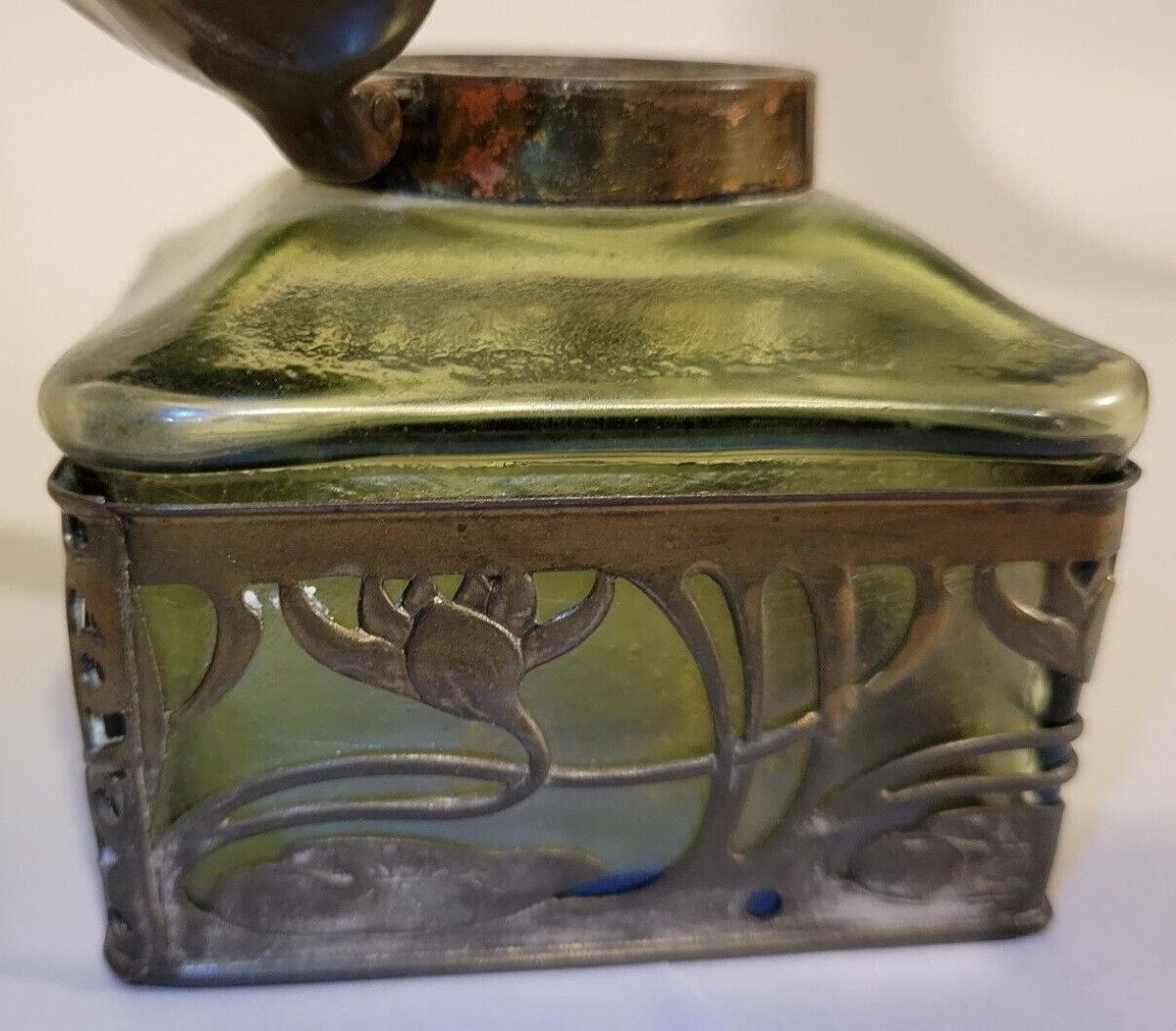
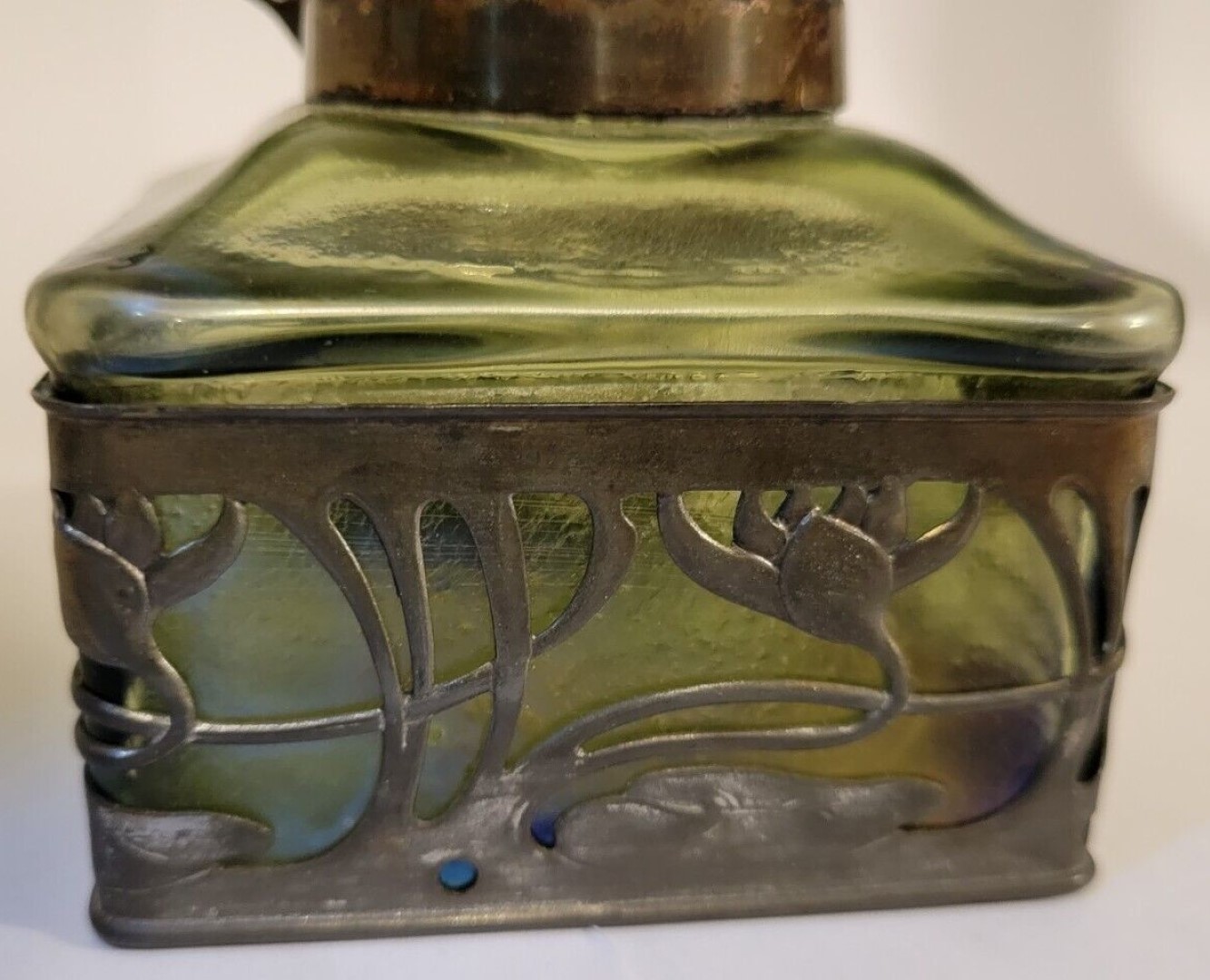
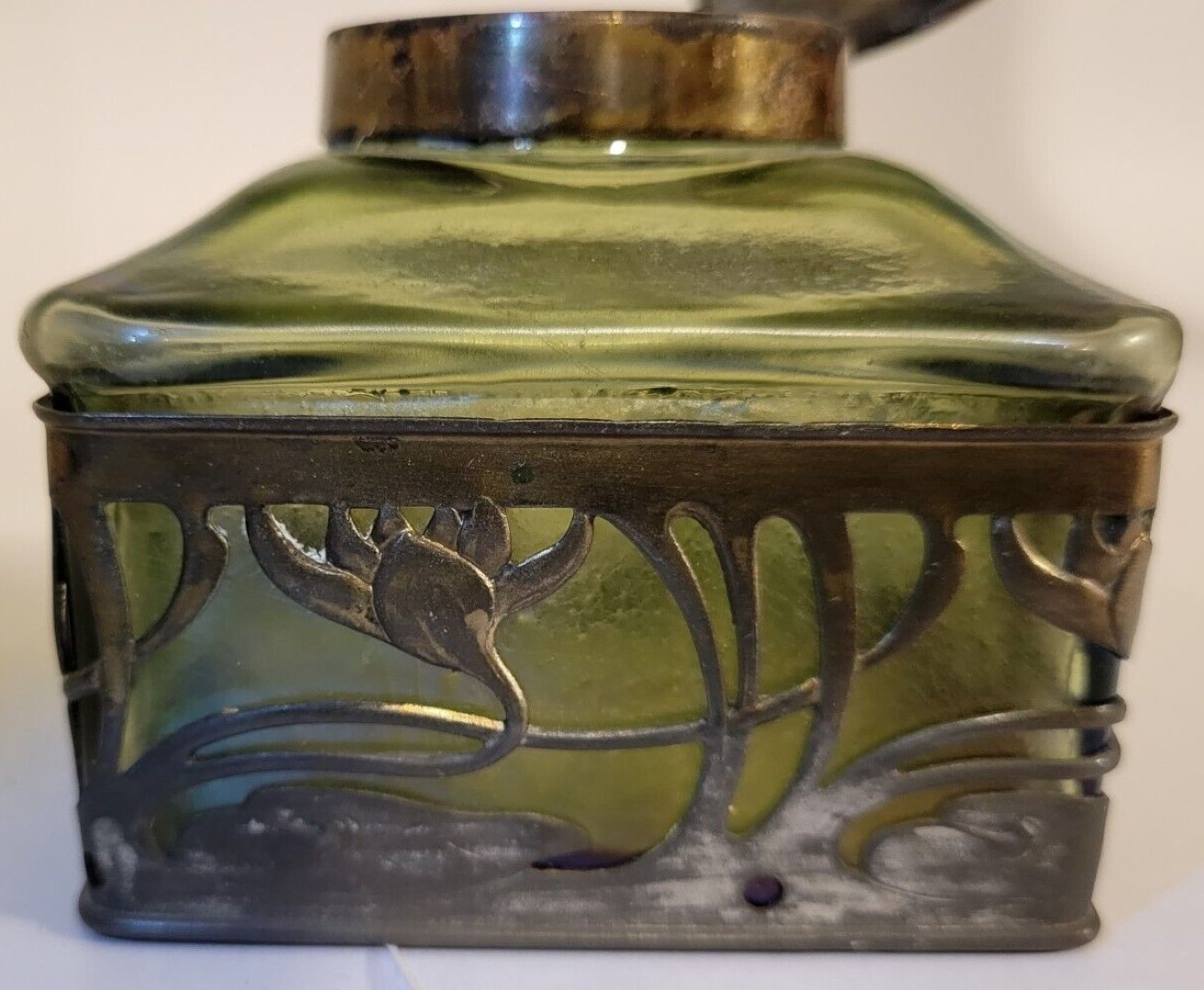
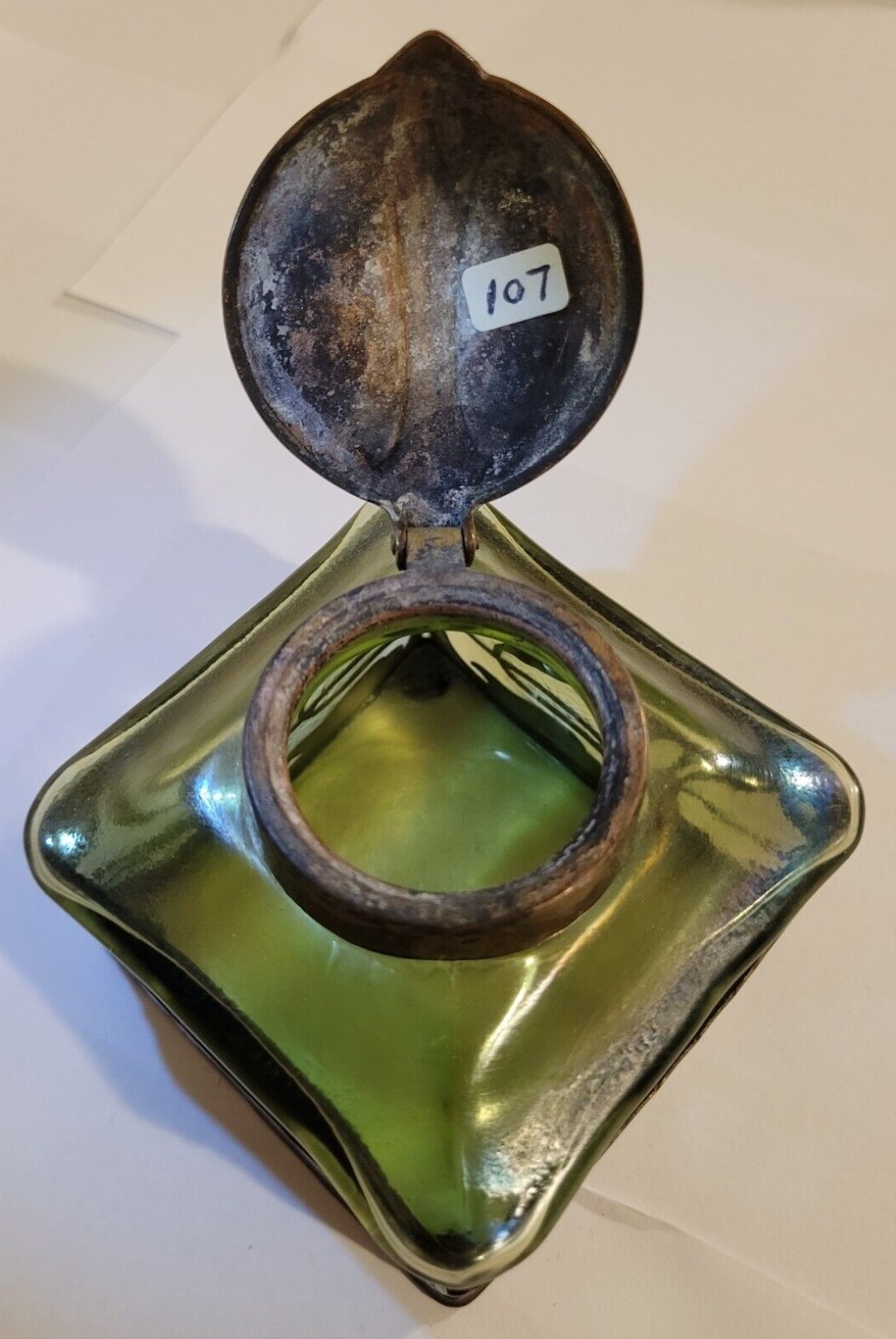
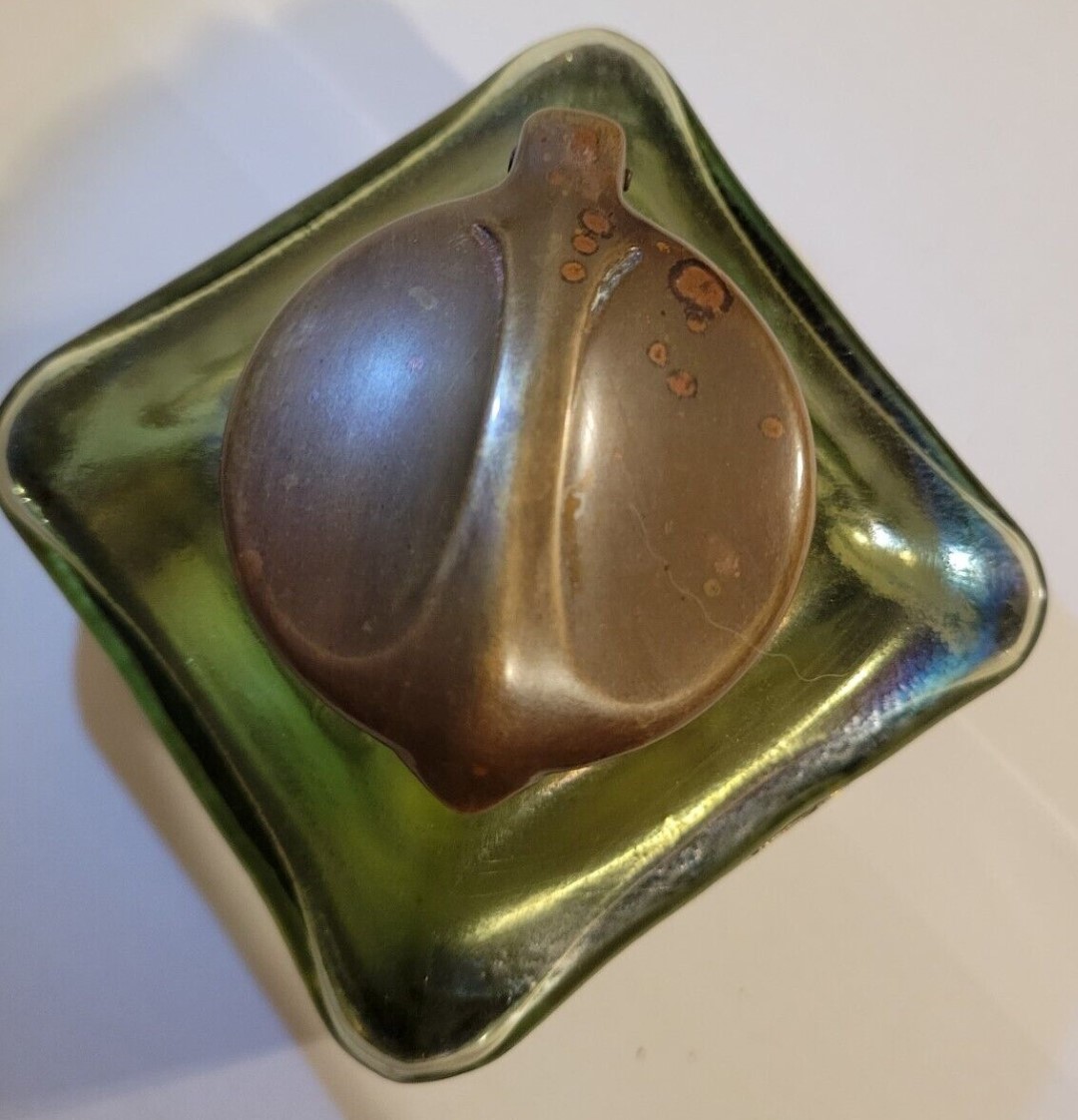
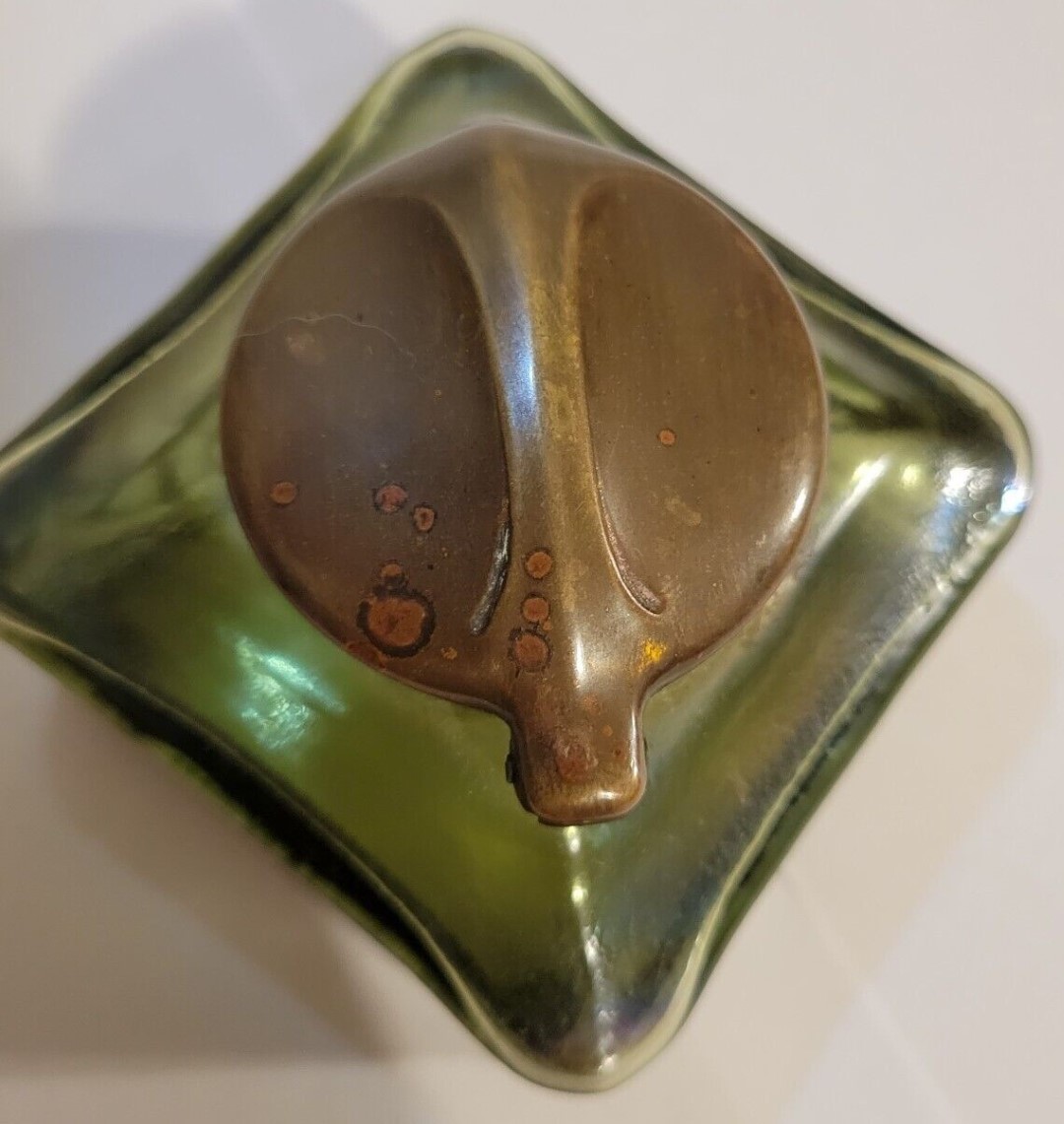
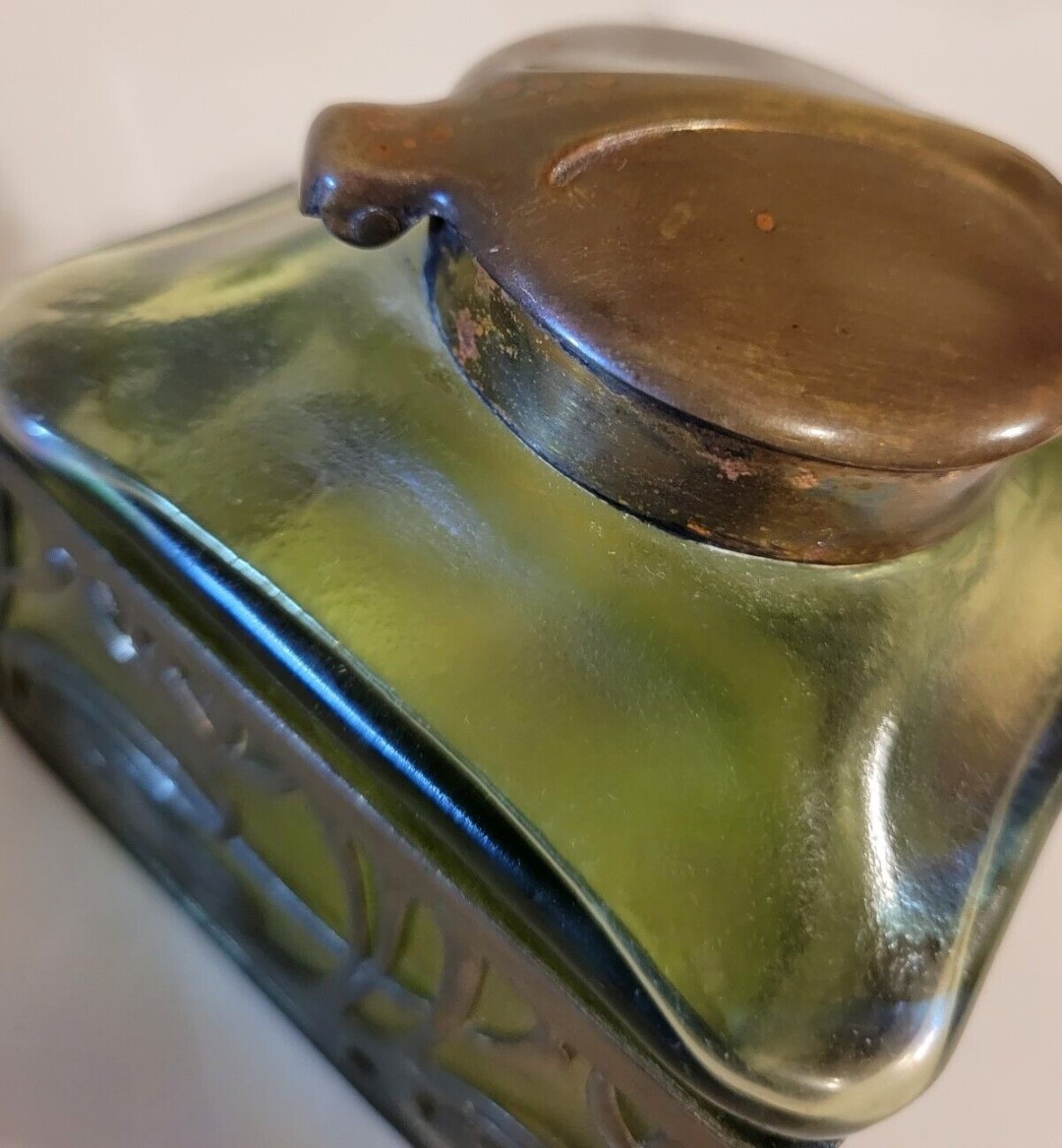
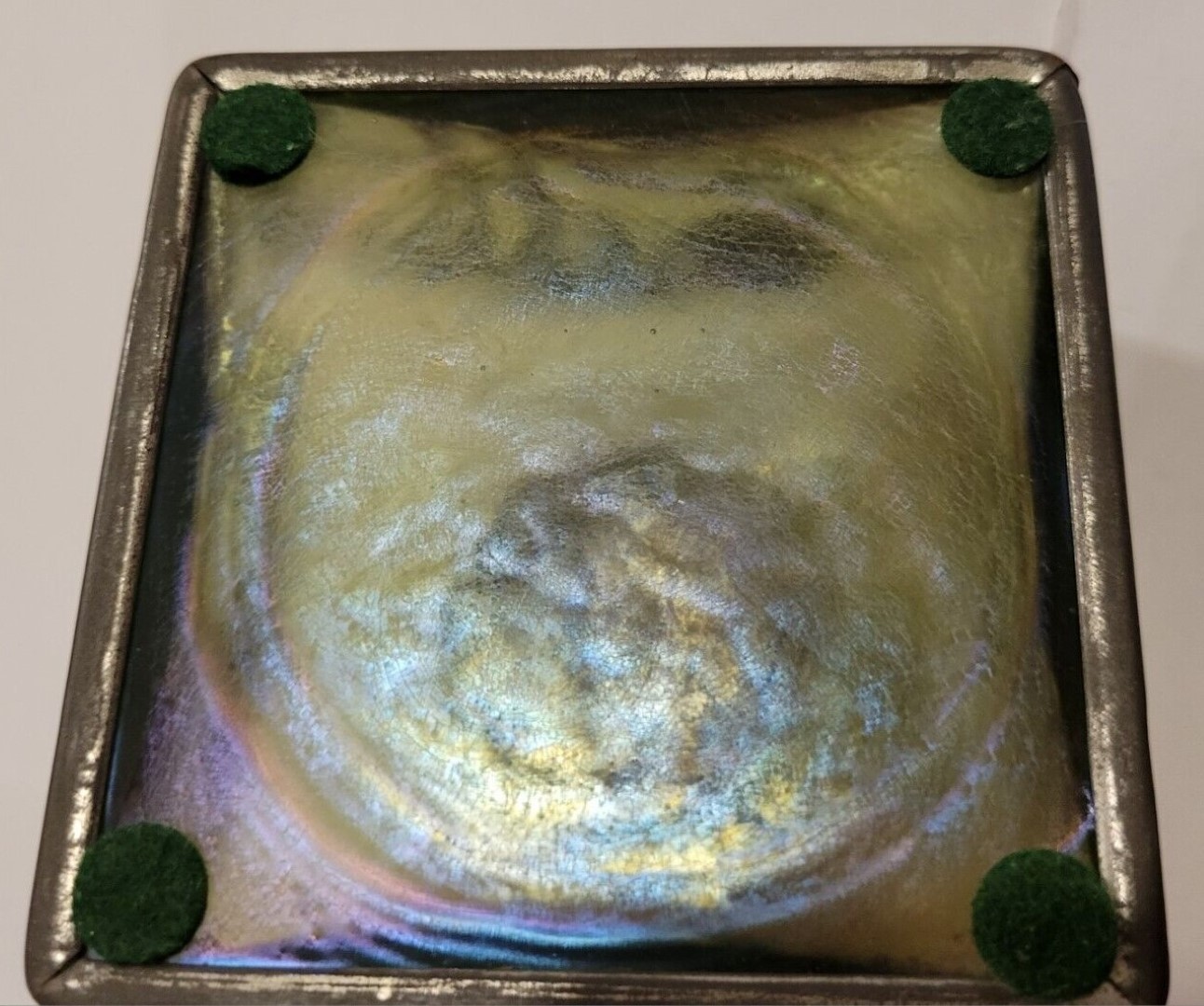
Bohemian Art Glass Inkwell with Water Lily Overlay
| Categories | Bohemian Art Glass |
| Material | Glass |
| Markings | Unmarked |
| Manufacturer | Kralik |
| Origin | Bohemia |
| Date or Era | circa 1905 |
| Measuring | 3 ¼” square; 3 ¼” high |
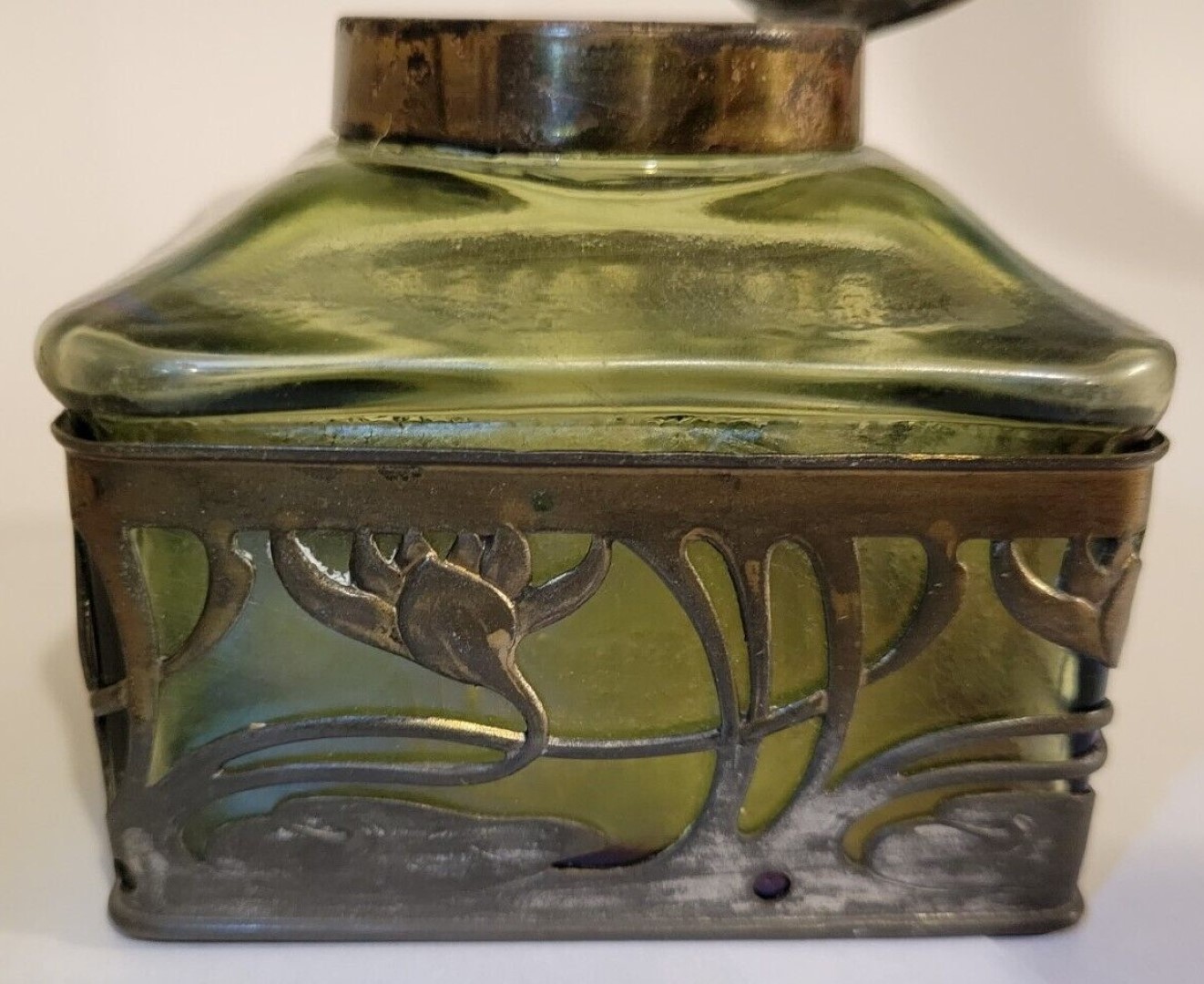
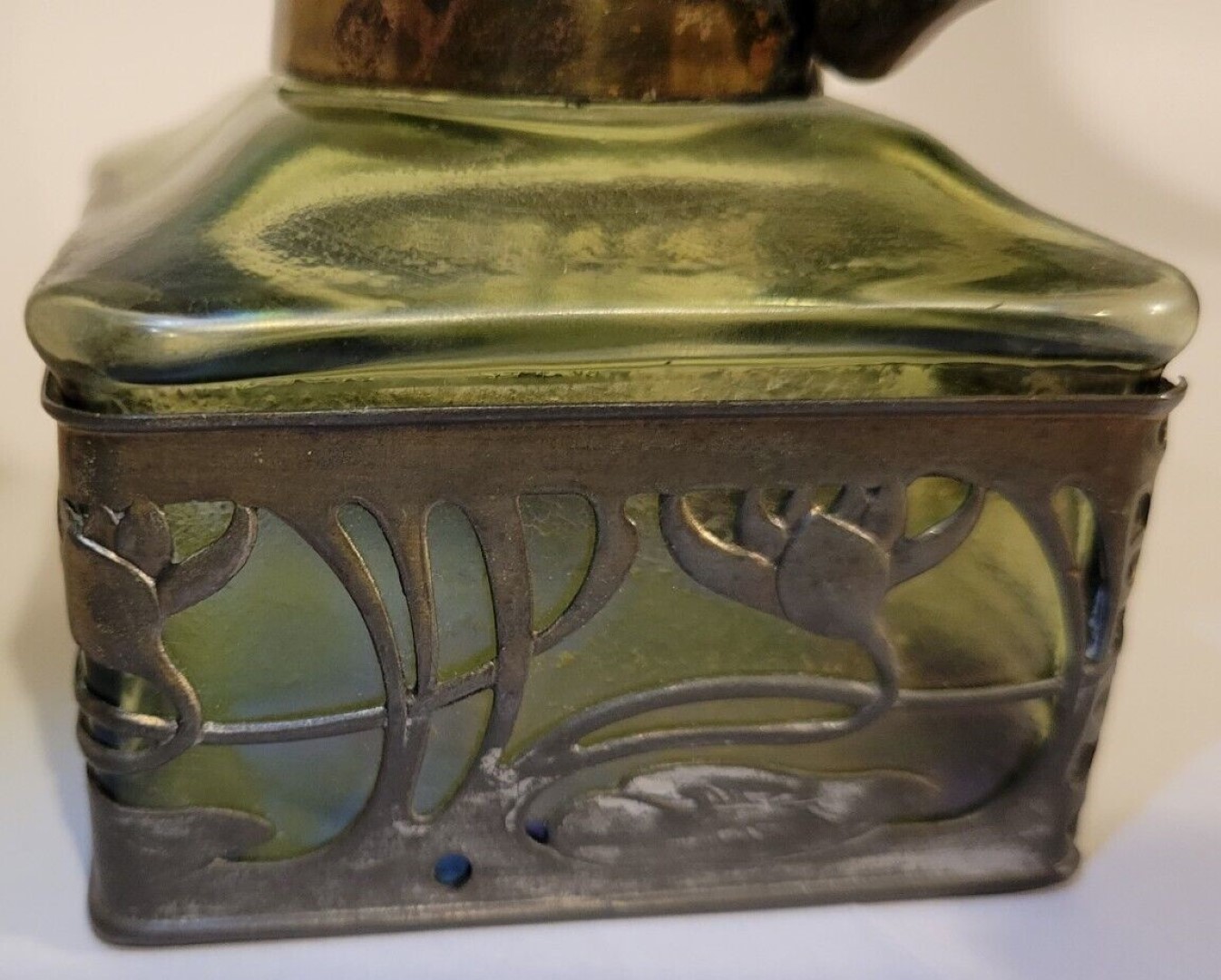
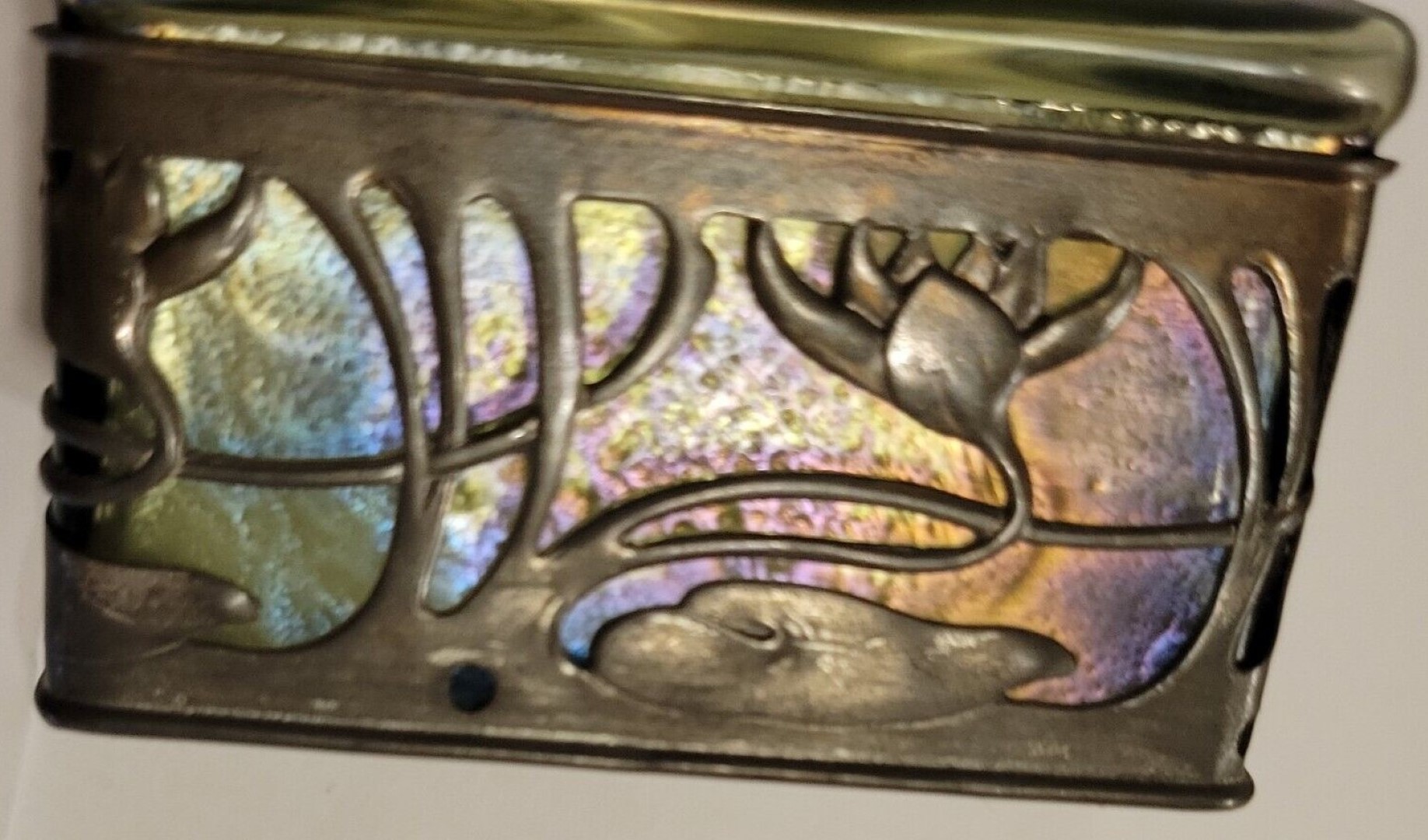
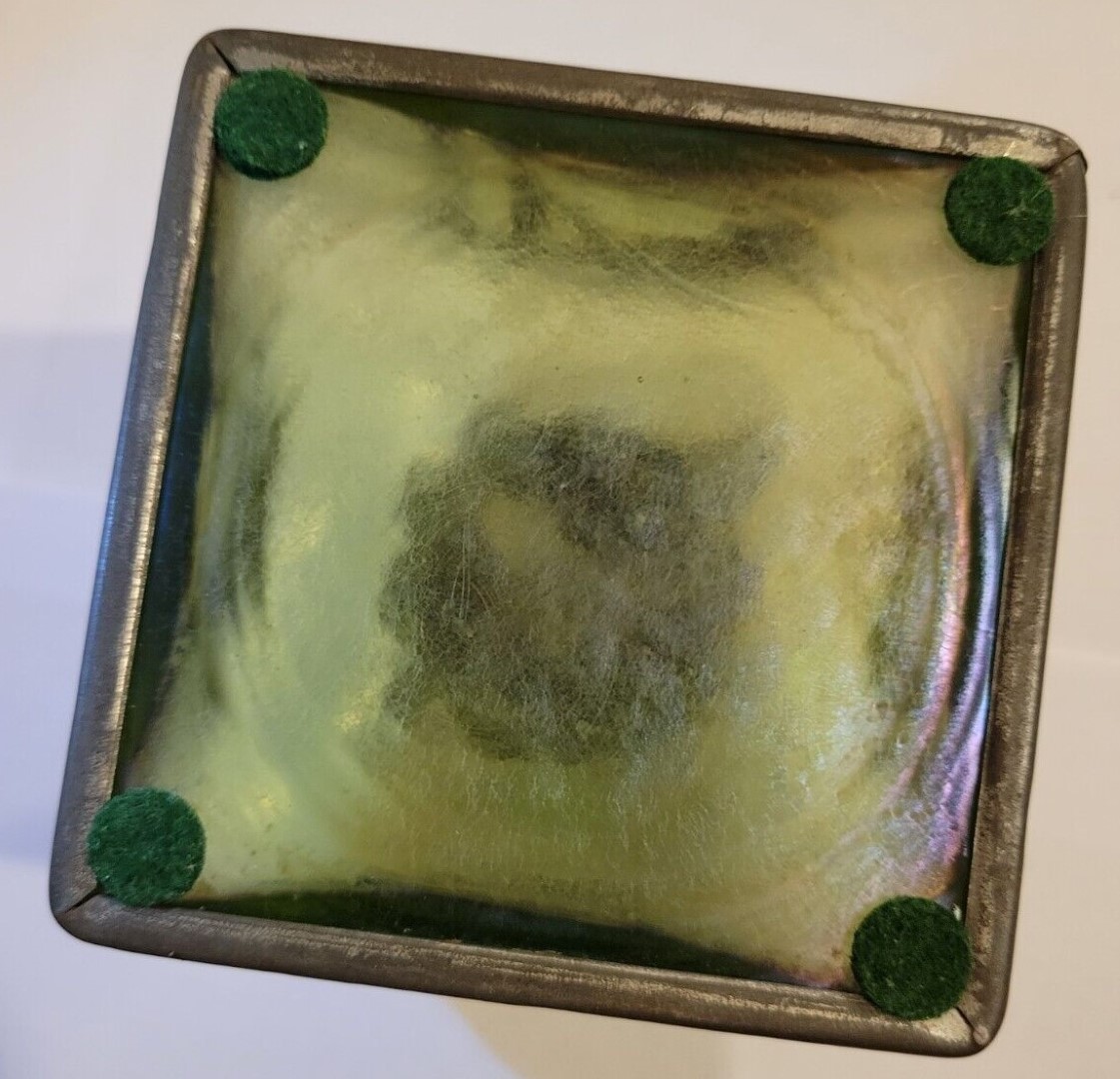
This Bohemian art glass inkwell features a square body with rounded corners and an iridescent finish. The glass is typically found in deep, saturated hues such as this lush, vibrant green. In the green iridescent variations, the surface is often treated with a reduction-fumed finish that produces a lustrous, oil-slick sheen, shifting dynamically between vivid lime, emerald, and metallic gold tones when viewed from different angles. The glass body has been hand-blown directly into a decorative, pierced metal casing—or armature—exploding with sweeping waterlily tendrils and whiplash Jugendstil lines. While this specific design has sometimes been misattributed to the “Glass Empire” factories of Carl Stölzle (such as Suchenthal) in old auction listings, diagnostic manufacturing features and legal patent records firmly reattribute the piece to Wilhelm Kralik Sohn.
Examples of this exact water lily overlay inkwell carry stamped identification markings on the underside of the copper-alloy hinge mechanism that provide an ironclad geographic and corporate timeline:
- O.E.P. 10385 (Oesterreichisches Patent / Austrian Patent)
- D.R.G.M. 168180 (Deutsches Reich Gebrauchs Muster / German Imperial Utility Model)
These intellectual property filings protect the specific lid and mechanical collar design, registered right at the turn of the century (circa 1901–1902) across both German and Austrian jurisdictions to protect Kralik’s vital export markets.
The firm, which evolved out of a glassworks founded in 1815 by Johann Meyr, officially became known as Wilhelm Kralik Sohn in the 1880s following a division of the family estate. Operating primarily out of the Eleonorenhain (Eleonorahütte) and Ernstbrunn (Ernstshütte) glassworks in Bohemia, Kralik became a commercial juggernaut renowned for brilliant, reduction-fumed iridescent art glass explicitly designed to compete with high-end contemporaries like Loetz and Tiffany.
The production technique of blowing vibrant glass directly into a pre-cast metal cage to create a bulbous, sculptural overlay texture is a signature hallmark of Kralik’s Art Nouveau/Jugendstil production period. Kralik consistently utilized this specific 1902 patented hardware combination across a variety of their glass styles, making these hidden stamp numbers the ultimate fingerprint for proper historical attribution.
Cross reference to: Kralik Iridescent Glass with Water Lily Overlay – The Society of Inkwell Collectors (SOIC)
Sold for $222 in September 2023
Sold for $190 in November 2024
Content disclaimer. The information posted is the owner’s best knowledge and may not have been vetted by the SOIC. We welcome comments, corrections, and additions, working to make our website information comprehensive and accurate.
Join the Society of Inkwell Collectors (SOIC) – it’s free!
Founded in 1981 as a non-profit organization,
we are documenting inkwells (and accessories).
We’re here to help and inform!