


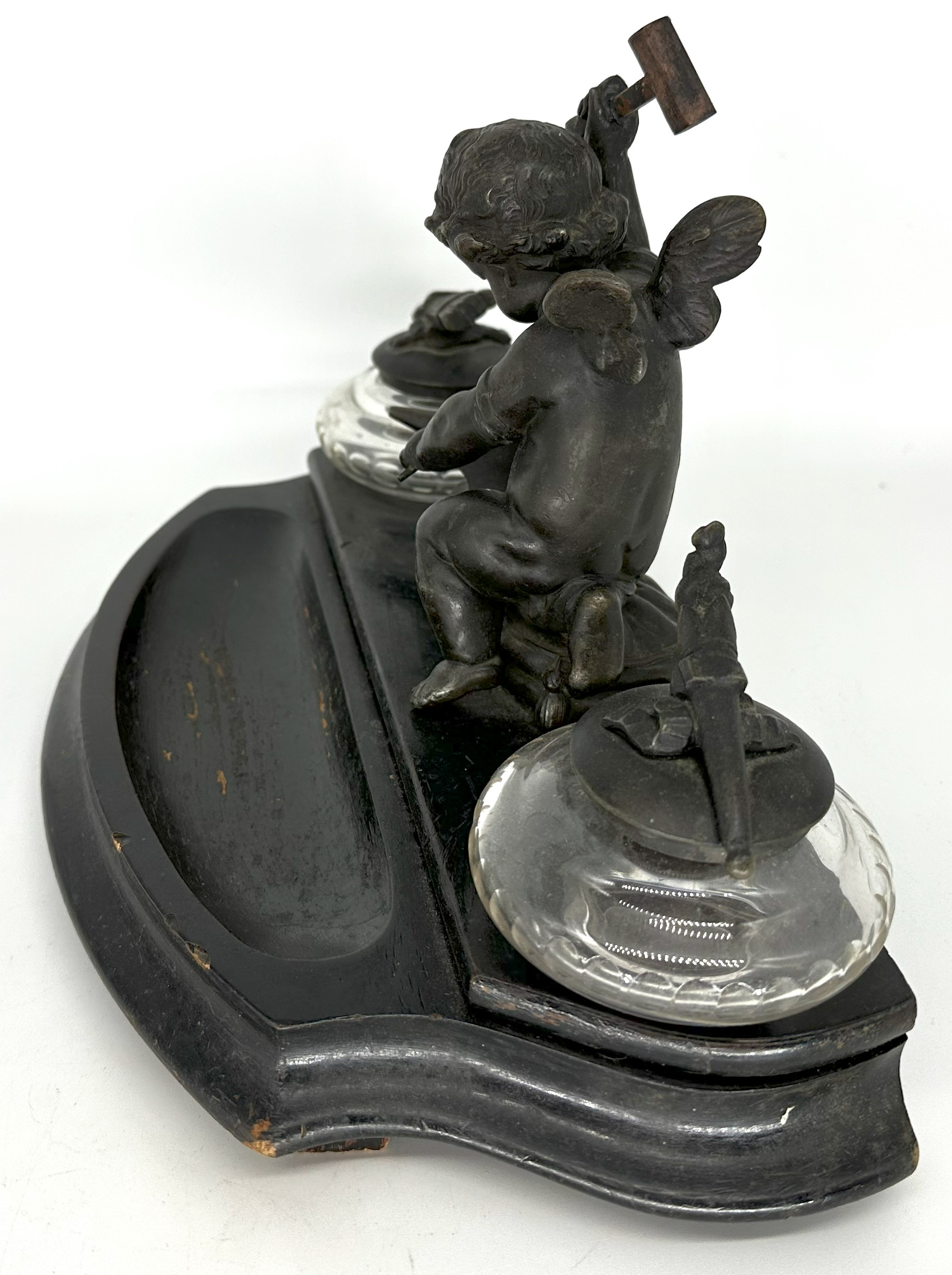
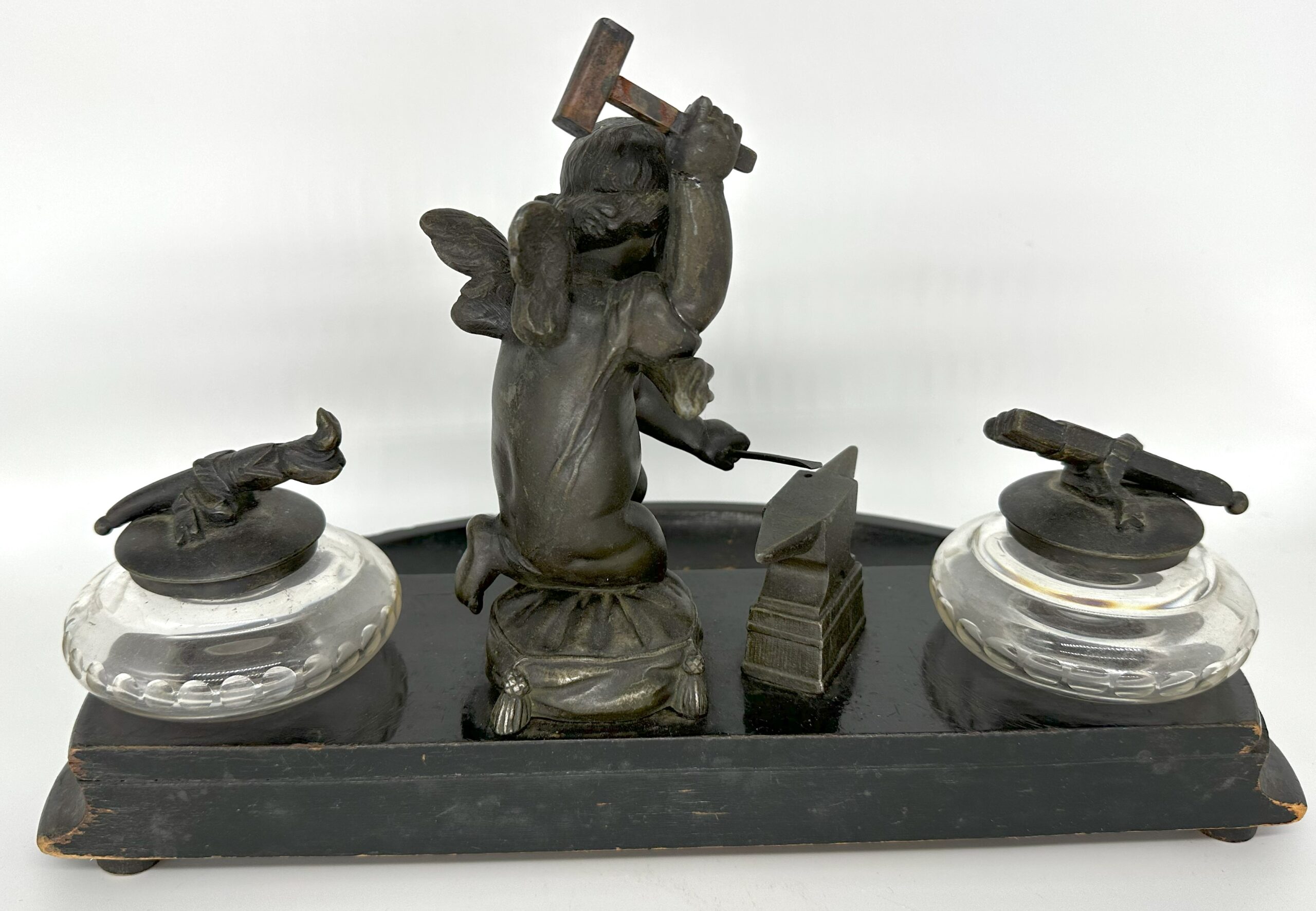


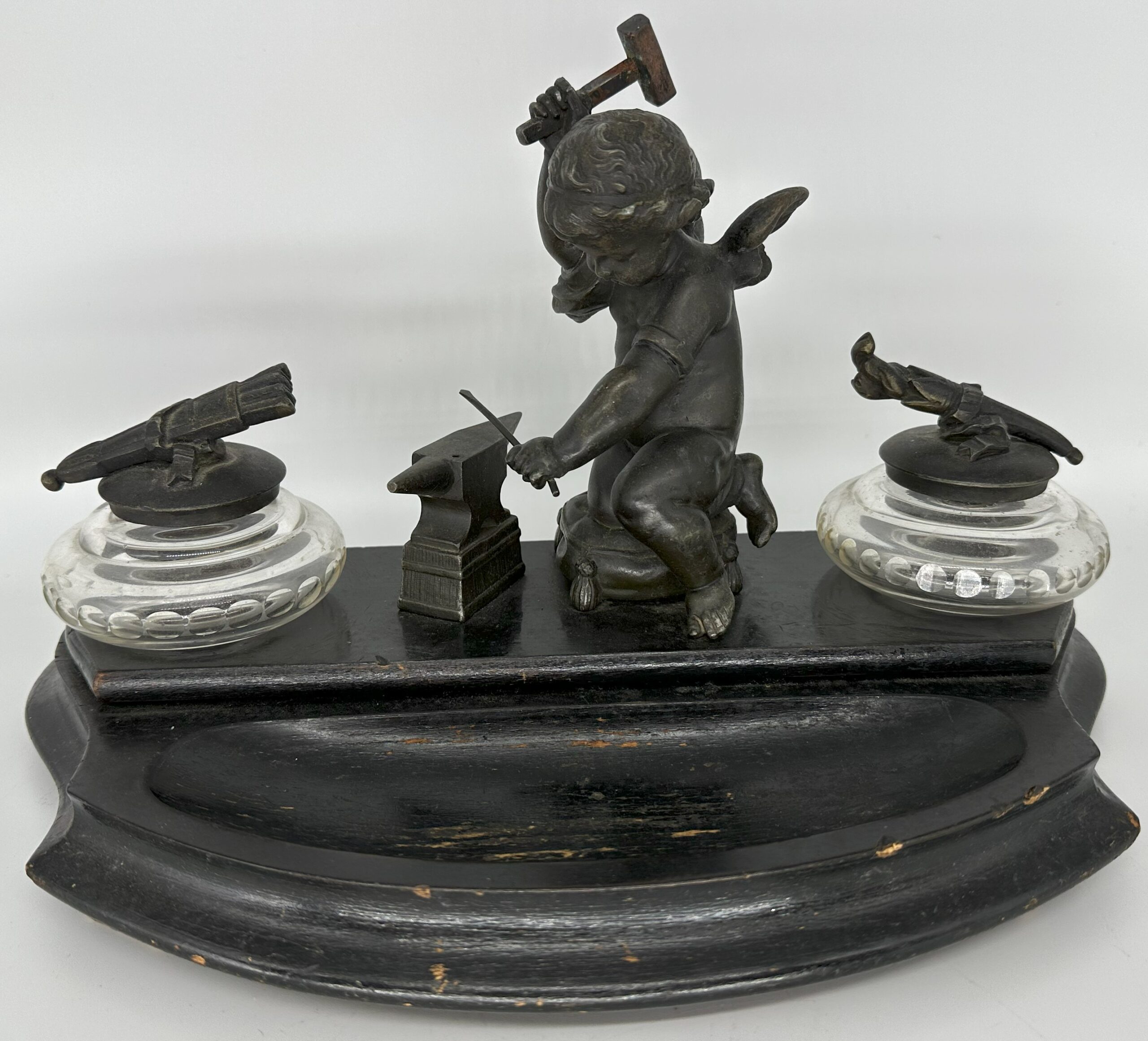
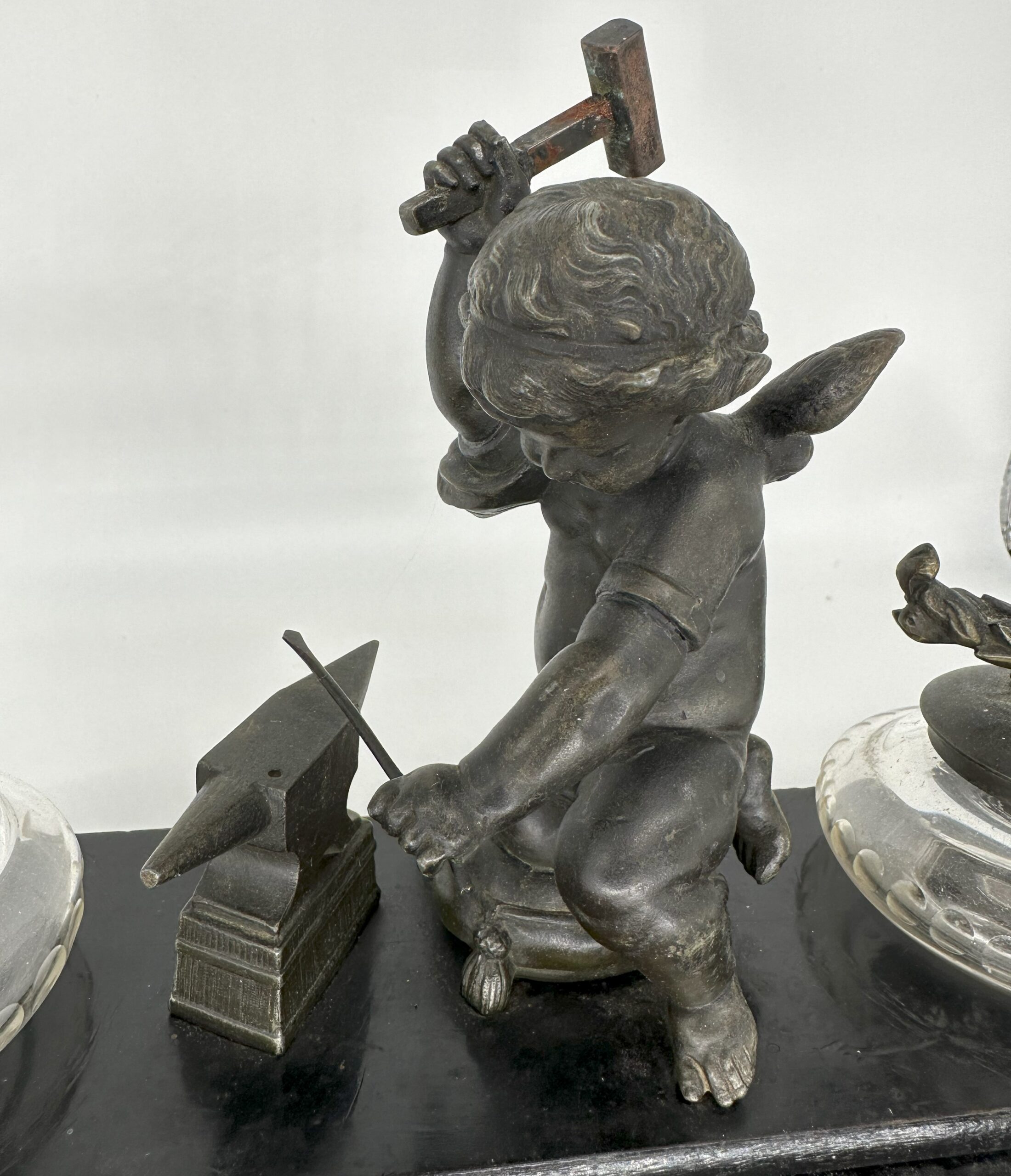
Cupid Forging an Arrow
| Categories | Figural - Mythology; Literature; Religion; Fictional |
| Type | Cupid / Cherub / Angel |
| Material | White metal, Wood |
| Markings | Unmarked |
| Manufacturer | Undetermined |
| Origin | France |
| Date or Era | circa 1880 |
| Measuring | 13 ½” x 7” x 8” high |
This double-well inkstand is an allegory of romantic love.
Historical Context
- Origin: France (Continental Europe)
- Period/Date: Late 19th Century (circa 1870–1890)
- Maker: Unmarked / Unknown French foundry or decorative arts atelier. High-end desk pieces of this era were frequently cast by Parisian bronze and spelter foundries and sold unmarked through luxury retailers (marchands-merciers) or stationery purveyors.
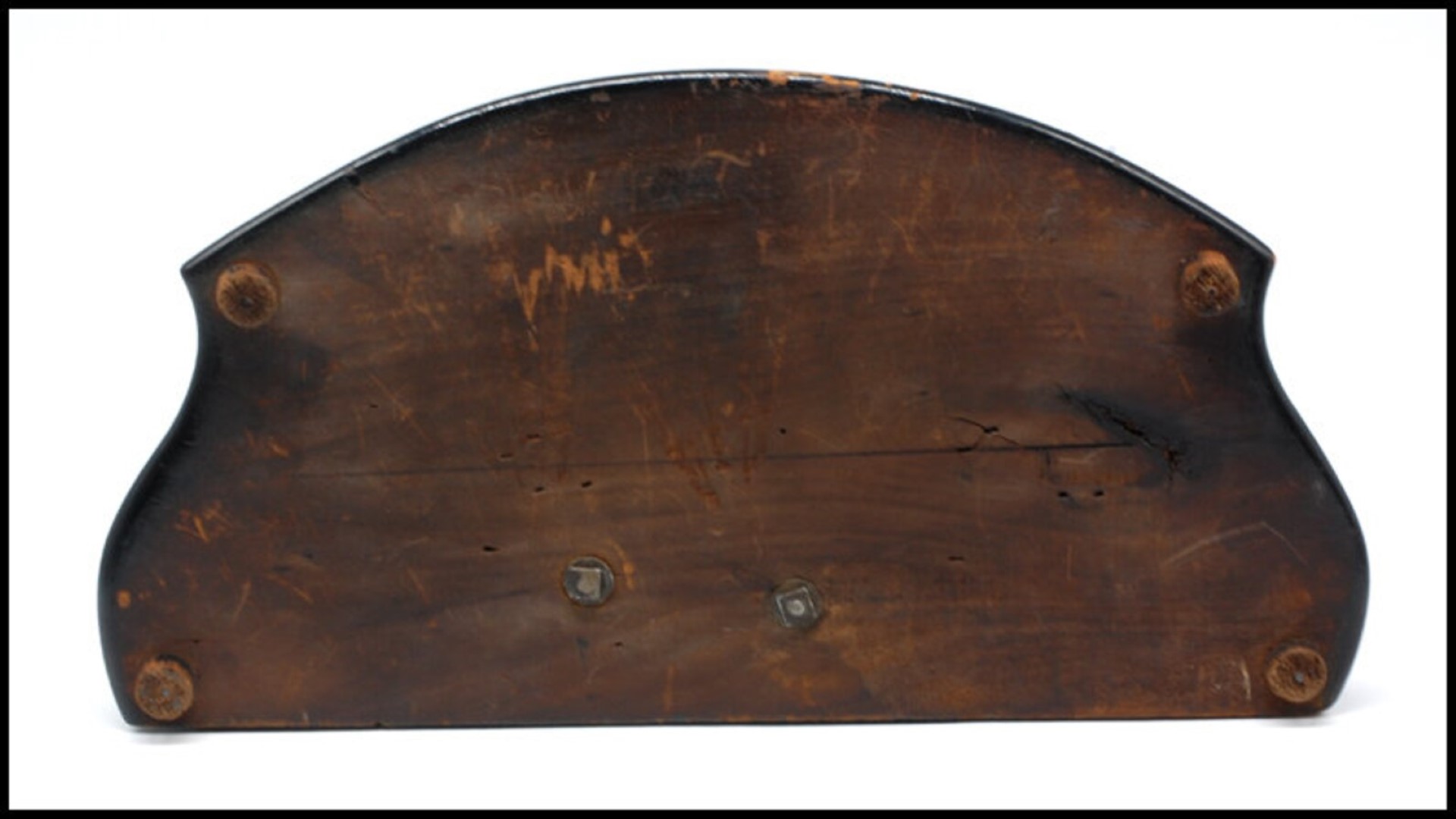
- Materials: Patinated cast metal (spelter/white metal), molded clear glass inkwells, and an ebonized carved hardwood base secured with square-cut iron nuts on the underside.
Description
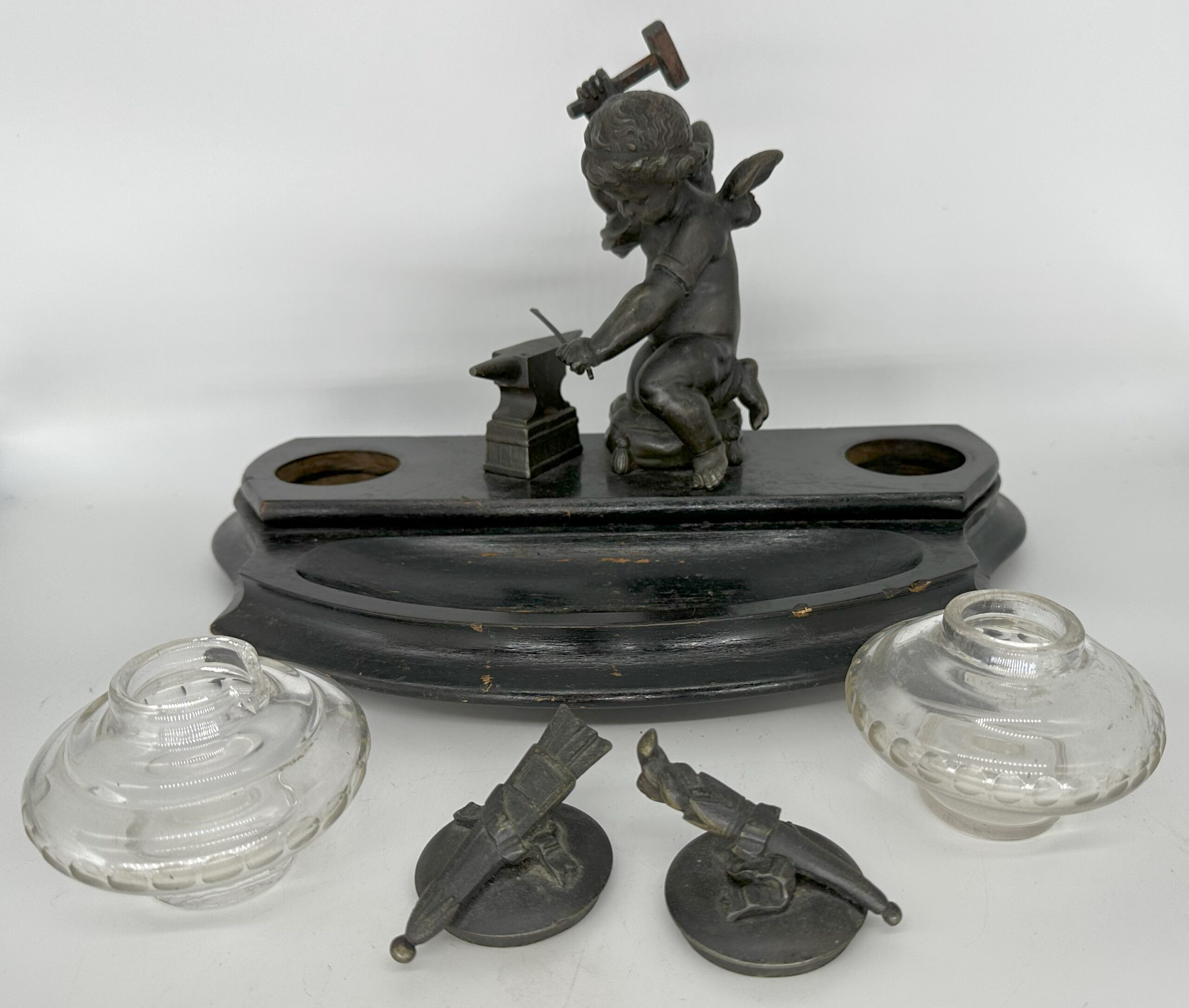
Late 19th-Century French Figural Double Inkstand – “Cupid at the Anvil”
A French Napoleon III period figural inkstand featuring a central sculpture of winged Cupid kneeling upon a tasseled cushion. The deity is forging love’s arrow on a blacksmith’s anvil, raised hammer in hand.
Cupid is flanked by two heavy molded glass inkwells featuring thumbprint/fluted decorative rims. Each inkwell retains its figural cast lid: one surmounted by a quiver of arrows, the other by the torch of passion. Set onto a shaped ebonized wooden plinth with an integrated, scooped pen trough and turned bun feet.
Key Identification Details
- Iconography: The attributes are standard Classical/Neoclassical iconography—the torch represents burning passion/arousal of love, while the quiver and forged arrow signify the piercing strikes of infatuation.
- Construction & Hardware: The hand-cut square nuts and threaded rods visible on the underside are typical for assembly methods between 1860 and 1890.
Estimated value: $300
Content disclaimer. The information posted is the owner’s best knowledge and may not have been vetted by the SOIC. We welcome comments, corrections, and additions, working to make our website information comprehensive and accurate.
Join the Society of Inkwell Collectors (SOIC) – it’s free!
Founded in 1981 as a non-profit organization,
we are documenting inkwells (and accessories).
We’re here to help and inform!