

Bowling – Early 9 Pin
| Categories | Sports |
| Type | Bowling |
| Material | White metal |
| Markings | Unmarked |
| Manufacturer | Undetermined |
| Origin | Undetermined |
| Date or Era | circa 1900 |
| Measuring | 16" x 8" x 6" high |
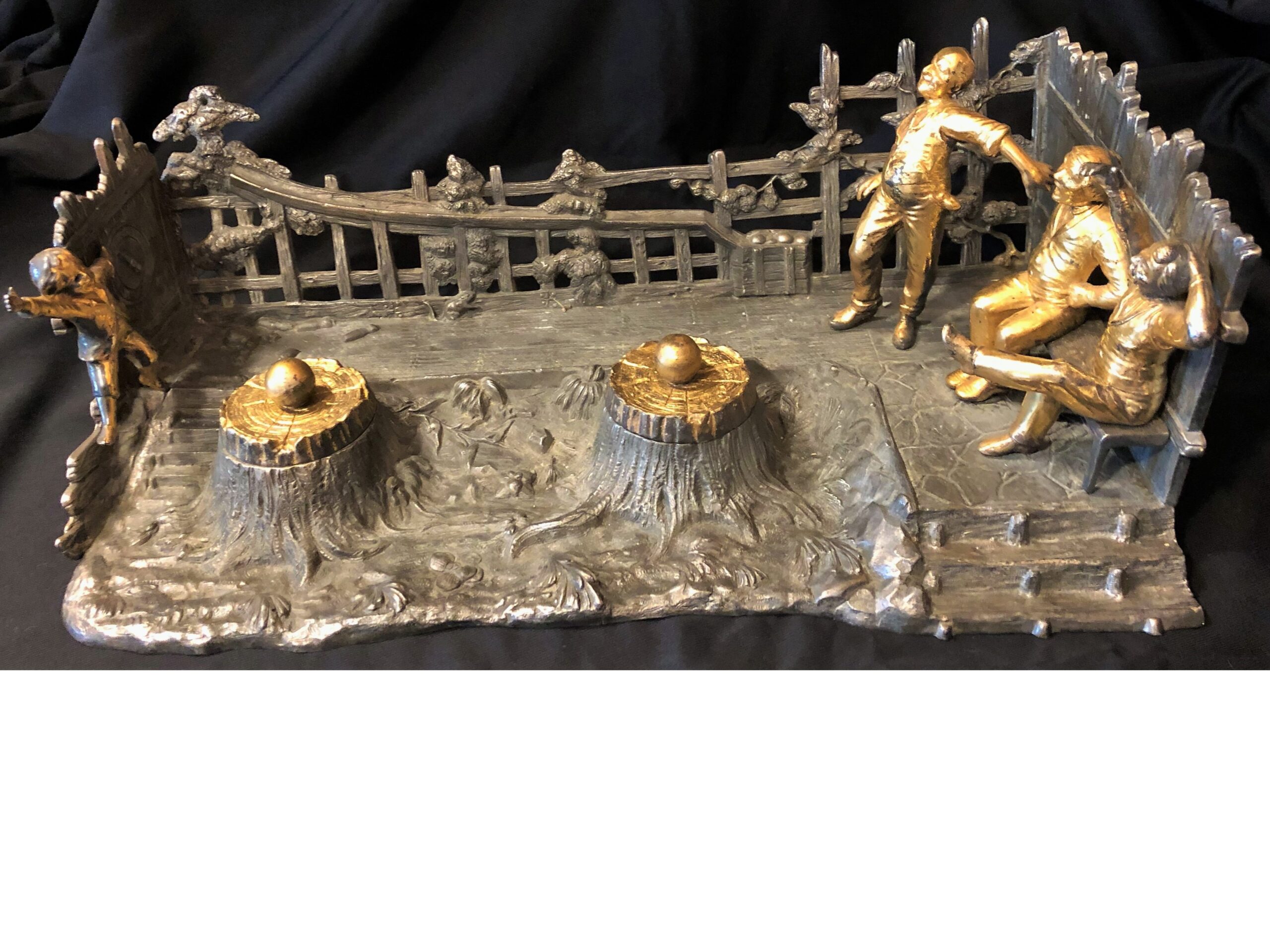
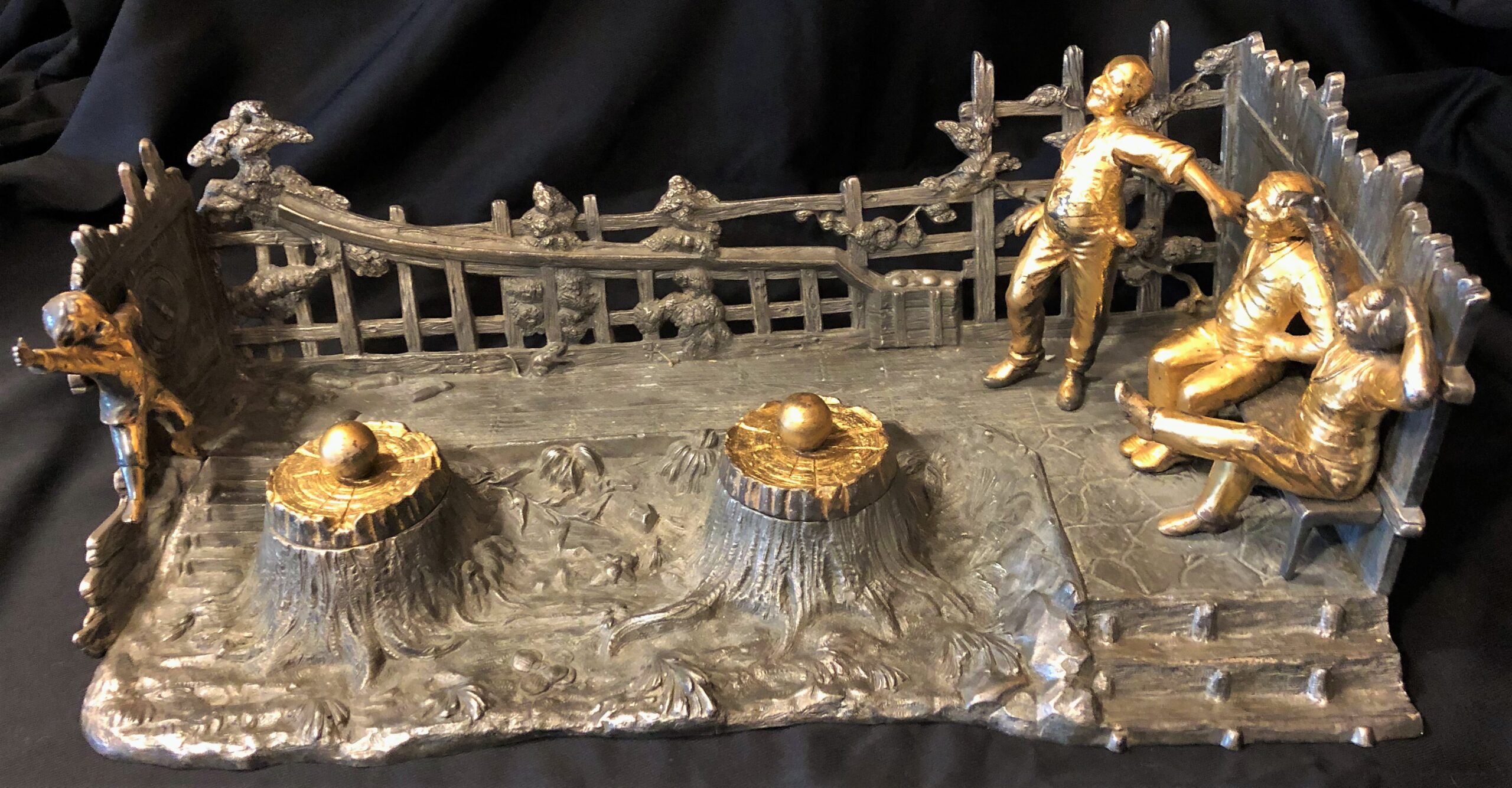
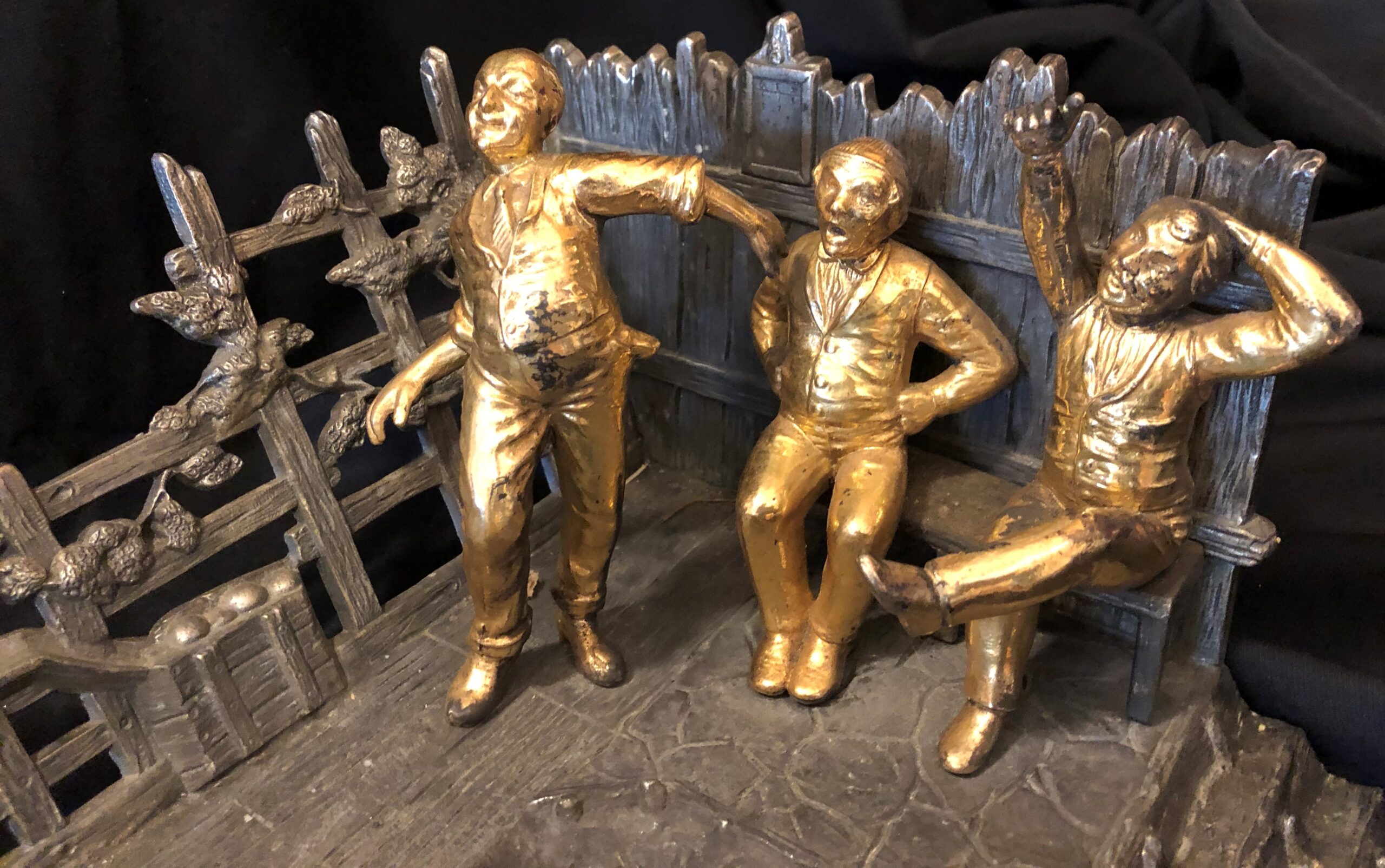
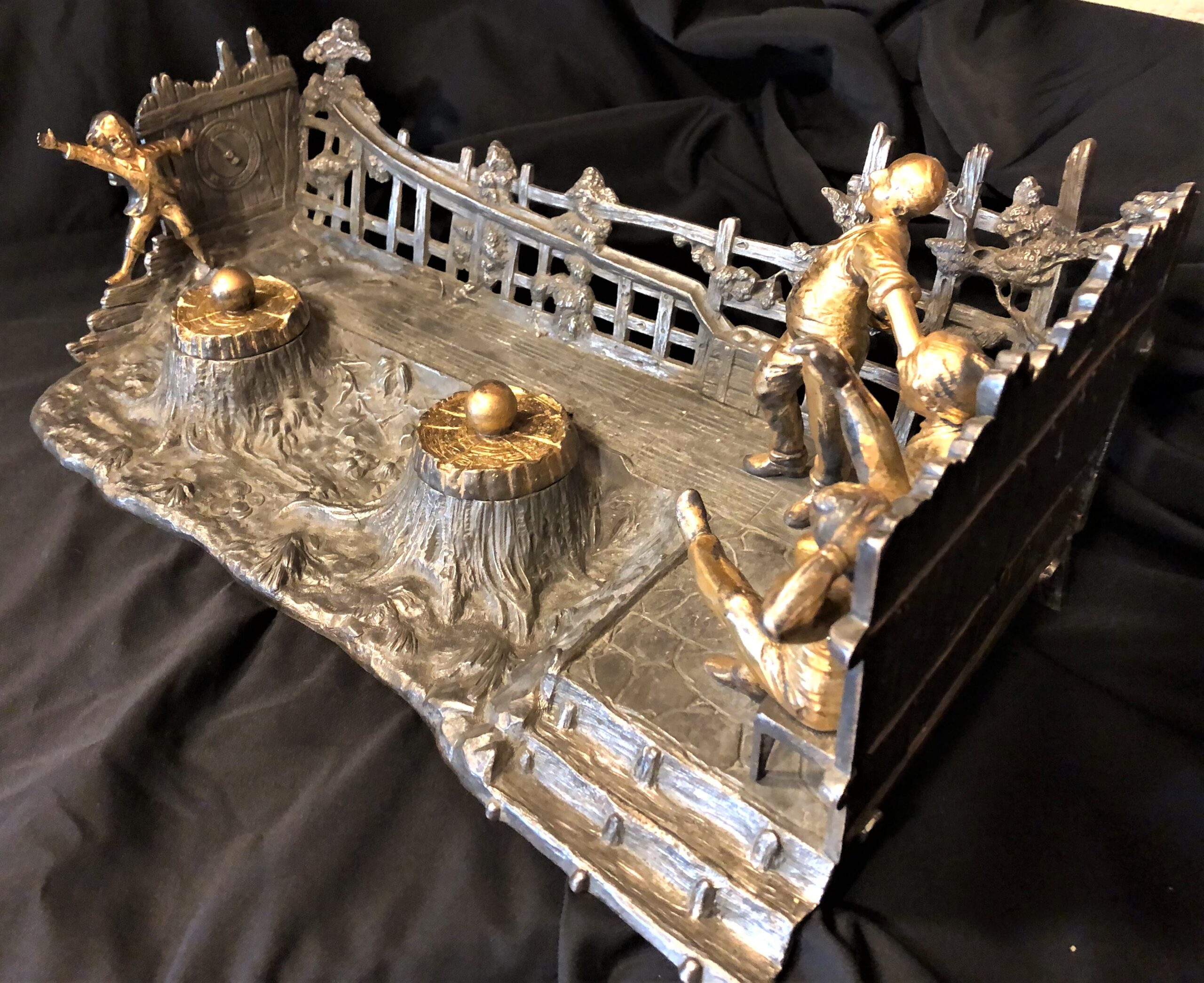
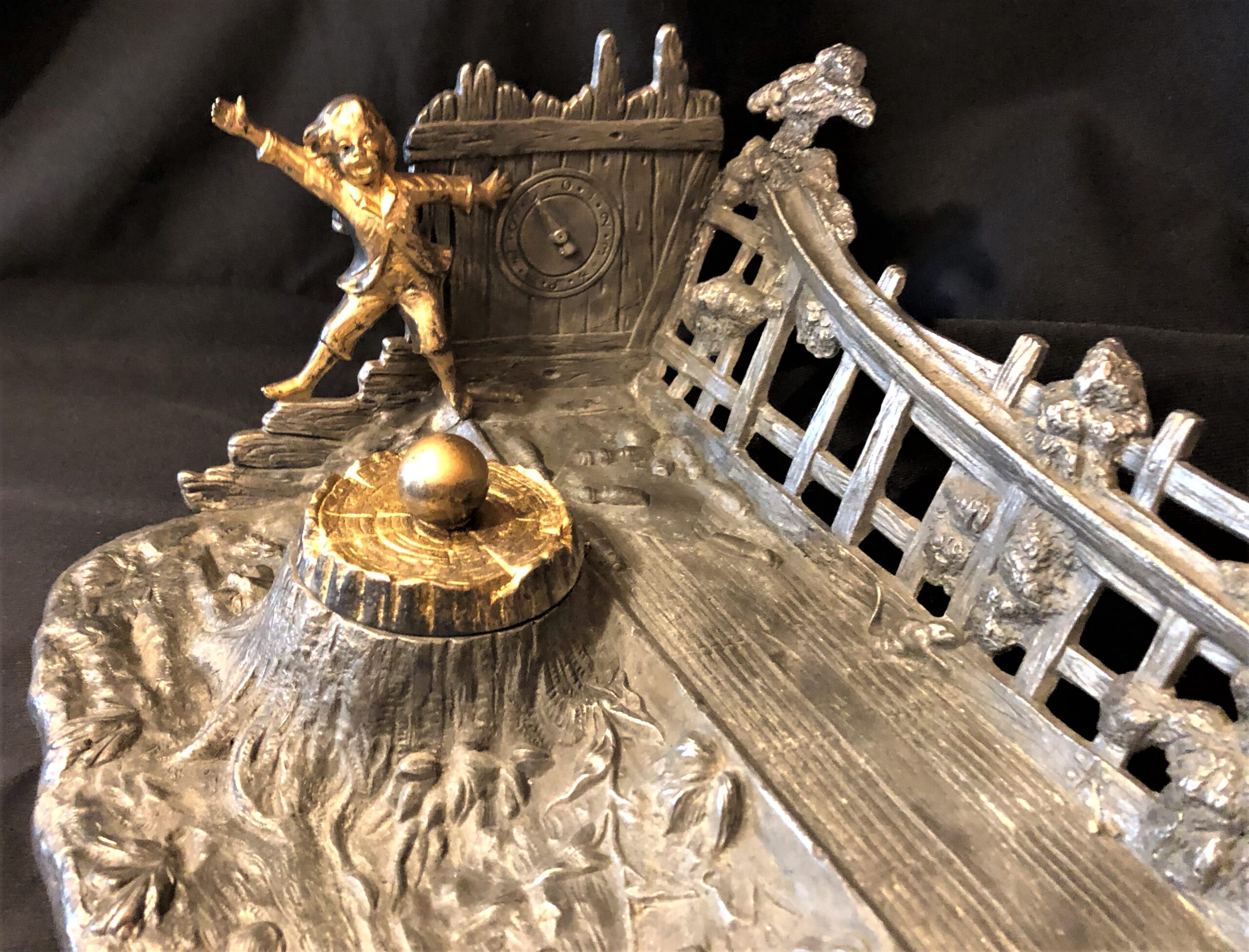
This large inkstand depicts men and boy playing a lawn game – 9 Pin bowling. The figures are gold-plated. One gentleman has just bowled. Another looks in astonishment. The third lifts his hand cheering. At the other end is a young boy, the pinsetter. 9 pins have fallen, and the mounted counter points to 9.
Details & Design Elements
- The Scene: Unlike standard desk accessories, this large inkstand (measuring roughly 16″ x 8″ x 6″ high) captures a dynamic, narrative sports scene of men and a boy playing 9-pin bowling (a traditional lawn or alley game popular before the modern 10-pin setup dominated the United States).
- The Figures: The composition features finely cast, gold-plated figures in action: one gentleman has just delivered his ball, another reacts in astonishment, and a third raises his hand in cheer.
- The Pinsetter & Counter: Positioned at the opposite end is a young boy acting as the pinsetter, with nine fallen pins and a mounted mechanical counter explicitly pointing to the score of “9”.
Historical & Thematic Context: Early 9-Pin Bowling
- The Game: Nine-pin bowling (often set up in a diamond shape with a distinct “King Pin” in the center) has deep historical roots in Europe and early America. In fact, it was so widespread and prone to heavy wagering in 19th-century America that several U.S. municipalities temporarily outlawed it—leading to the evolution of 10-pin bowling to bypass the legislation.
- Sports Memorabilia & Figural Castings: Around the turn of the 20th century, European foundries (particularly in Austria and Germany, known for Vienna bronzes) and American manufacturers frequently produced whimsically detailed, narrative figural desk sets celebrating parlor pastimes, lawn games, and sports.
Estimated value: $350
Content disclaimer. The information posted is the owner’s best knowledge and may not have been vetted by the SOIC. We welcome comments, corrections, and additions, working to make our website information comprehensive and accurate.
Join the Society of Inkwell Collectors (SOIC) – it’s free!
Founded in 1981 as a non-profit organization,
we are documenting inkwells (and accessories).
We’re here to help and inform!